

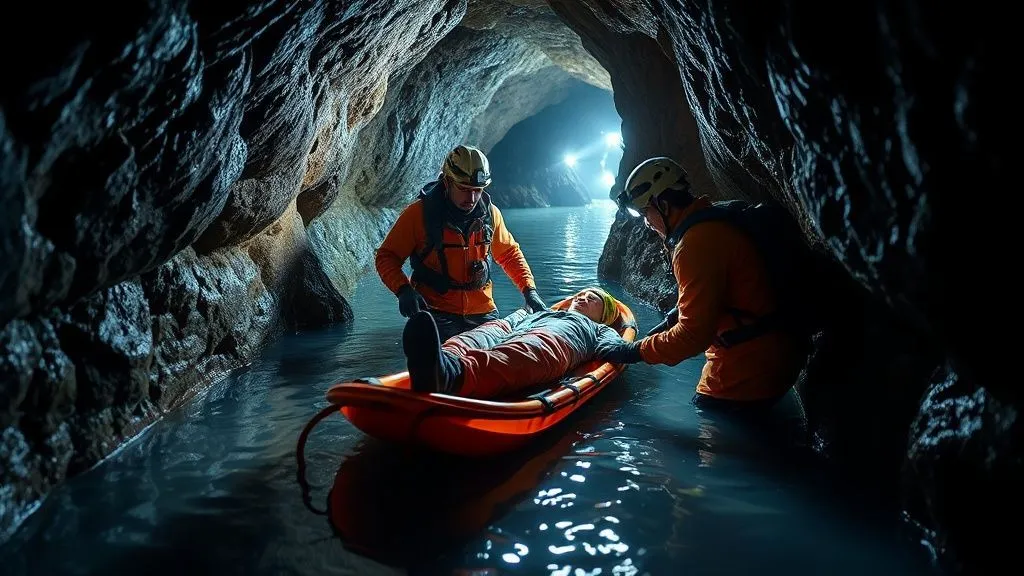
Urgent: How to Safely Extract an Injured Caver from a Tight, Flooded Passage?
For over two decades exploring the subterranean world, I've witnessed the raw beauty and unforgiving dangers that lie beneath our feet. I've also been part of, or observed, countless incidents where human error, natural hazards, or a combination of both, turned an exhilarating adventure into a desperate struggle for survival. The scenario of an injured caver trapped in a tight, flooded passage is, without doubt, one of the most terrifying and complex challenges a rescue team can face.
The confluence of extreme confinement, the relentless chill of subterranean water, and the critical medical needs of an injured individual creates a crucible of stress. Every minute counts, every decision is magnified, and the psychological toll on both the victim and the rescuers is immense. This isn't just about moving a person; it's about orchestrating a symphony of specialized skills, equipment, and unwavering resolve in an environment designed to thwart such efforts.
In this definitive guide, drawing from my extensive experience in adventure caving and rescue operations, I will lay out a comprehensive, actionable framework. We'll delve into immediate assessment, critical communication strategies, the deployment of specialized gear, advanced extraction techniques for both tight and flooded conditions, and the paramount importance of team dynamics. My aim is to provide you with the expert insights and practical steps needed to navigate this incredibly challenging situation, ensuring the best possible outcome when confronted with the urgent task of extracting an injured caver from a tight, flooded passage.
The Golden Hour: Initial Assessment and Stabilization in the Abyss
When an incident occurs in a cave, particularly one involving injury in a tight, flooded passage, the initial response within the first 60 minutes – often referred to as the 'Golden Hour' – is absolutely critical. This period dictates the trajectory of the entire rescue, influencing the victim's survival chances and the safety of the rescue team. My experience has shown that a calm, systematic approach during this chaotic phase is non-negotiable.
Scene Safety and Primary Survey
Before any direct intervention, the immediate environment must be assessed for hazards. Is there risk of further rockfall, rising water levels, or unstable ground? Rescuer safety is paramount; a second casualty complicates everything. Once the scene is deemed as safe as possible, focus turns to the injured caver.
- Secure the Area: Stabilize any immediate environmental threats. This might involve setting up temporary anchors, diverting water flow if possible, or positioning spotters for hazards.
- Initial Medical Assessment (ABCDE): Perform a rapid primary survey: Airway, Breathing, Circulation, Disability (neurological status), Exposure (for hypothermia). Address life-threatening issues immediately. Is the airway clear? Is the caver breathing? Is there significant bleeding?
- Prevent Further Injury: Immobilize suspected fractures, especially spinal injuries, using whatever means available, even if improvised. Keep the caver as still as possible to prevent exacerbating injuries during the assessment.
- Communicate with the Caver: Establish rapport. Ask simple questions to gauge their consciousness and mental state. Reassure them, explain what you are doing, and maintain a calm demeanor.
Communication is King
Effective communication is the backbone of any successful rescue, but it becomes exponentially harder in a tight, flooded, noisy cave. I've seen rescues falter not due to lack of skill, but due to communication breakdowns.
- Internal Team Communication: Use clear, concise language. Establish hand signals or light signals if verbal communication is impossible due to noise or distance. Designate a communication leader.
- Surface-to-Underground Link: If possible, establish a cave radio link (e.g., Nicola system, HeyPhone) to the surface. This allows for critical information transfer regarding medical needs, equipment requests, and team status. Without this, the rescue is effectively blind.
- Information Relay: Ensure all critical information – injury details, patient status, environmental conditions – is accurately relayed up the chain of command to surface support.
"In the dark, wet confines of a cave, fear is a tangible presence. A rescuer's calm voice, clear instructions, and steady presence are often as vital as any medical intervention for a traumatized caver. Never underestimate the psychological first aid you provide." - Personal observation.
The initial moments are about control: controlling the scene, controlling the patient's immediate medical needs, and controlling the flow of vital information. This foundational work sets the stage for the complex extraction ahead.
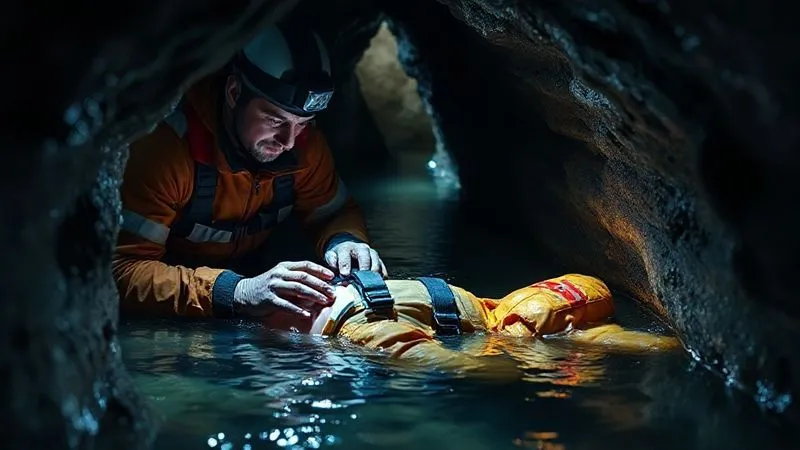
Specialized Equipment: Your Lifeline in a Liquid Labyrinth
Attempting to extract an injured caver from a tight, flooded passage without the right gear is akin to trying to empty a swimming pool with a teacup – futile and dangerous. In my years, I've seen how dedicated, cave-specific rescue equipment can make the impossible merely improbable. While improvisation is a skill every caver must possess, relying solely on it for a serious rescue is a recipe for disaster. The environment demands robust, waterproof, and specialized tools.
Here's a breakdown of critical gear for this type of extreme rescue:
- Waterproof Medical Kits: Must be robust, watertight, and contain items specifically for trauma, hypothermia, and prolonged care in a wet environment. Think sterile dressings, splints, pain relief (where permissible and trained), and robust thermal blankets.
- Specialized Stretchers: Standard stretchers are often too rigid. The Skedco stretcher, a flexible, roll-up design, is invaluable for tight passages. The Neil Robertson stretcher, while bulkier, offers excellent immobilization in certain scenarios. For truly aquatic environments, custom-designed floating stretchers or backboards are crucial.
- Communication Devices: Beyond standard radios, cave radios (like the HeyPhone or Nicola system) are essential for through-rock communication to the surface. For close-quarters, noisy environments, bone-conduction headsets can improve team communication without removing hearing protection.
- Emergency Thermal Blankets & Bivvy Bags: Mylar blankets are a start, but proper cave-specific thermal bivvy bags (e.g., Blizzard Survival Bags) are paramount to combat hypothermia in wet, cold conditions.
- Diving Gear (for rescuers): If passages are fully submerged, trained cave divers with appropriate rebreathers or open-circuit scuba gear, along with specialized dry suits, are absolutely necessary. This is a highly specialized skill set.
- Technical Rope Rescue Gear: Low-stretch caving ropes, robust carabiners, specialized pulleys (e.g., progress capture pulleys), ascenders, descenders, and strong anchors are fundamental for setting up hauling and lowering systems.
- Lighting: Redundant, powerful, waterproof headlamps and backup lights are critical. The dark truly is absolute underground.
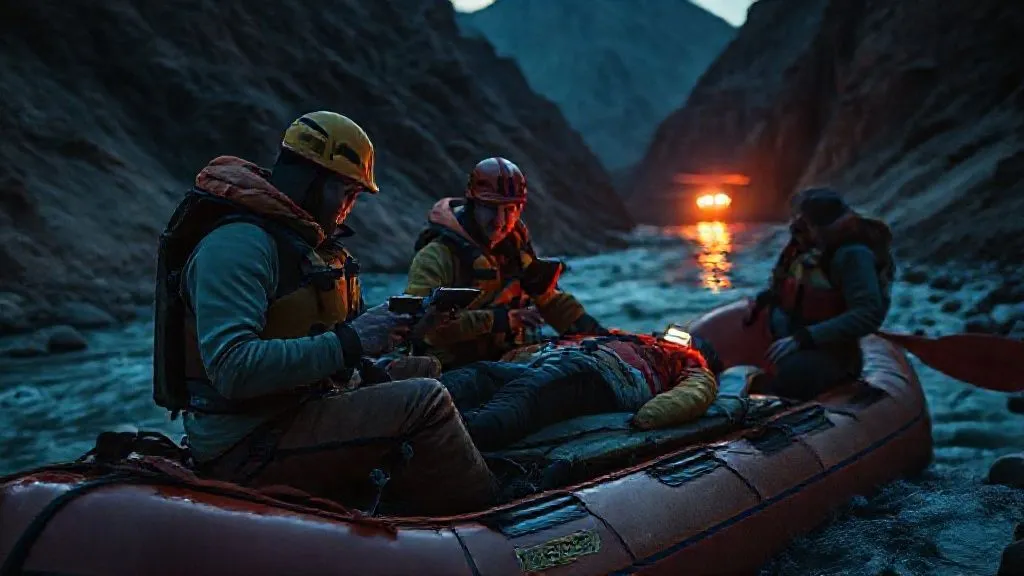
- Buoyancy Aids: For both the injured person and rescuers, buoyancy vests or small inflatable rafts can be crucial for moving through flooded sections, reducing friction, and preserving rescuer energy.
Improvised Solutions vs. Dedicated Rescue Gear
While every caver should know how to improvise a splint or a basic hauling system, a full-scale rescue of an injured caver from a tight, flooded passage demands dedicated, tested equipment. Improvisation introduces variables, increases risk, and often prolongs an already time-sensitive operation. Investment in proper rescue gear, and regular training with it, is a hallmark of any serious caving organization or rescue team.
For example, while a sleeping pad can provide some insulation, it pales in comparison to a purpose-built thermal bivy. A standard backpack can't replace a flexible stretcher designed to navigate tortuous passages. This isn't just about comfort; it's about efficacy and safety for all involved.
| Equipment Type | Standard Use | Cave-Specific Rescue Use |
|---|---|---|
| Stretcher | Rigid, flat transport | Flexible (Skedco), rollable, sometimes buoyant, narrow profile |
| Communication | Mobile phone, walkie-talkie | Cave radio (through-rock), bone-conduction headsets, light signals |
| Thermal Protection | Mylar blanket, sleeping bag | Blizzard Survival Bag, waterproof bivy, chemical heat packs |
| Lighting | Flashlight, camping headlamp | Multiple redundant, high-lumen, waterproof LED headlamps |
Navigating the Confinement: Techniques for Tight Passages
The phrase "tight passage" takes on a whole new meaning when you're trying to maneuver an injured, possibly unconscious, person through it. Add water to the mix, and the challenge escalates dramatically. I've spent countless hours squeezing through passages barely wider than my shoulders, and the thought of doing that with a patient is daunting. It requires meticulous planning, precise execution, and often, an uncomfortable level of intimacy with the rock.
Low-Angle Rope Systems and Hauling
Mechanical advantage is your best friend in tight spaces. Even a small amount of extra force can make the difference between being stuck and moving forward. Low-angle rope systems are vital for horizontal or slightly inclined passages.
- Anchor Selection: Identify strong, reliable anchor points (natural rock features, bolted anchors) upstream and downstream. Redundancy is key.
- Pulley Systems: Employ simple (e.g., Z-drag) or complex mechanical advantage systems (e.g., 3:1, 5:1) to reduce the force needed to pull the stretcher. Friction from the passage walls will be significant, so anticipate needing more mechanical advantage than you would in open air.
- Friction Management: Use edge protection (tarps, rope protectors, even old wetsuits) at sharp bends or constrictions to prevent rope abrasion and reduce friction on the stretcher itself. Sometimes, a 'human pulley' where rescuers position themselves to guide the stretcher can be effective.
- 'Piggyback' Techniques: In extremely tight spots, a rescuer might have to literally 'piggyback' the stretcher – pushing it with their feet and pulling with their hands, inch by agonizing inch. This is physically demanding and requires excellent coordination.
- Constant Communication: The team pulling must be in constant communication with the team guiding the stretcher to avoid snagging, pinching, or further injuring the patient.
Water-Assisted Movement
Flooded passages, paradoxically, can sometimes aid movement by providing buoyancy, but they also introduce new dangers like strong currents and hypothermia.
- Utilizing Buoyancy: If the passage is sufficiently flooded, the water's buoyancy can significantly reduce the weight of the stretcher and patient, making movement easier. Specialized floating stretchers or simply placing buoyancy aids (e.g., small inflatable bags, closed-cell foam) under a Skedco can be highly effective.
- Managing Currents: Strong currents are a major hazard. Rescuers must be trained in swiftwater rescue techniques. Ropes must be used not just for hauling, but also for safety lines to prevent the stretcher or rescuers from being swept away. Consider diverting or bailing water if the flow is manageable and critical to patient safety.
- Preventing Immersion/Submersion: While using water for buoyancy, ensure the patient's head and airway are always clear of the water. This is paramount. If full submersion is unavoidable for short sections, specialized dive rescue teams with full face masks and rebreathers are essential, and the patient must be secured to prevent aspiration.
"A successful extraction from a tight, flooded passage is a testament to meticulous planning, relentless training, and the unwavering trust within a rescue team. It's a ballet of brute force and delicate precision." - A rescue veteran's insight.
Each constriction, each pool of water, presents a unique puzzle. There is no one-size-fits-all solution; adaptability and creative problem-solving are as important as the physical techniques themselves. The goal is always to move the patient safely, efficiently, and with minimal additional trauma.
The Flooded Challenge: Water Management and Hypothermia Prevention
Water is both a friend and a formidable foe in cave rescues. It can aid buoyancy but also rapidly steal body heat, create treacherous currents, and obscure visibility. When an injured caver is in a flooded passage, managing the water and preventing hypothermia becomes an immediate, life-threatening concern. I've seen how quickly a stable patient can deteriorate when exposed to cold water.
Managing Water Levels and Flow
Understanding and, if possible, controlling the water environment is crucial.
- Assessing Flow and Depth: Immediately assess the direction, strength, and depth of the water flow. Can the water level be expected to rise or fall? This dictates strategy.
- Diverting Water: In some cases, temporary dams or channels can be constructed using rocks, sandbags (if available), or even tarps to divert water away from the immediate patient area or to reduce flow through a critical passage. This is often labor-intensive but can be a game-changer.
- Bailing: For smaller pools or sections, bailing water out manually with buckets or pumps (if power is available and safe) can create drier working conditions or lower water levels sufficiently to allow easier passage of the stretcher.
- Rope Systems in Current: If strong currents are present, establish robust high-line or low-line tensioned rope systems for both rescuers and the stretcher. This provides a stable path and prevents being swept away. Rescuers must be tethered.
Combating Hypothermia
Hypothermia is a silent killer in cold, wet cave environments. An injured person, especially, is highly susceptible due to immobility, shock, and compromised circulation. Prevention and aggressive treatment are paramount.
- Immediate Insulation: As soon as possible, remove any wet clothing if safe to do so, and replace with dry layers. Encase the patient in multiple layers of thermal blankets, especially cave-specific survival bags (e.g., Blizzard Survival Bags), which are designed to trap body heat even when wet.
- Chemical Heat Packs: Strategically place chemical heat packs (e.g., HotHands, Body Warmers) in critical areas like the armpits, groin, and neck, but ensure a layer of clothing is between the pack and skin to prevent burns.
- Warm Fluids (if conscious): If the patient is conscious and able to swallow, offer warm, sugary drinks. Avoid alcohol or caffeine. This helps rewarm the core from the inside.
- Insulated Base: Get the patient off the cold, wet rock or out of the water onto an insulated mat or stretcher. Even a small layer of closed-cell foam makes a significant difference.
- Monitor Core Temperature: If trained and equipped, continuously monitor the patient's core body temperature. This guides rewarming efforts.
- Rescuer Hypothermia: Do not forget your own team. Rescuers are also exposed to these conditions and must manage their own thermal regulation to remain effective. Rotate personnel if possible.
According to the Wilderness Medical Society, even mild hypothermia can impair judgment and coordination, making rescue efforts more dangerous. This underscores the urgency of proactive hypothermia management.
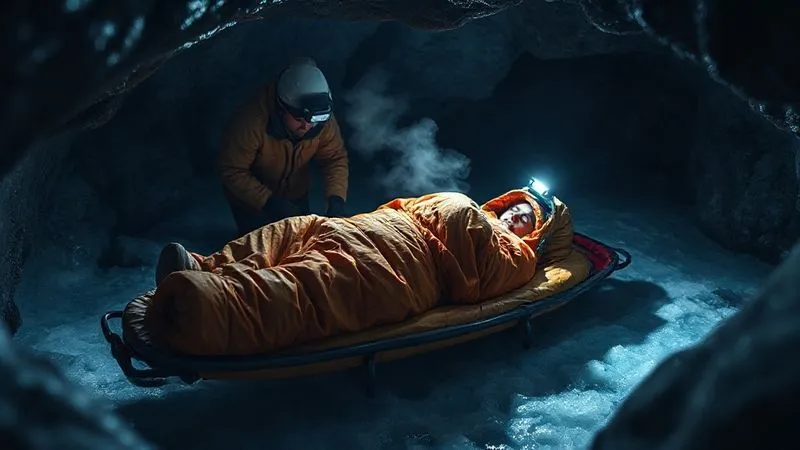
Case Study: The "Whispering Waters" Extraction
Case Study: The "Whispering Waters" Extraction
In the labyrinthine depths of the "Whispering Waters" cave system, a formidable challenge emerged. A seasoned caver, Sarah, experienced a fall in a particularly narrow, flooded siphon section, resulting in a suspected fractured tibia and severe lacerations. The passage, known as "The Serpent's Coil," was notorious for its tight squeeze and waist-deep, fast-flowing water, making the urgent task of extracting an injured caver from a tight, flooded passage seem almost insurmountable.
The incident commander, drawing on years of experience, immediately initiated a multi-pronged response. First, a rapid assessment team reached Sarah, stabilizing her leg with an improvised splint and securing her in a lightweight thermal bivy to combat the onset of hypothermia. Communication was established using a HeyPhone system to the surface, relaying Sarah's condition, the passage dimensions, and the estimated water flow. This early, accurate information was crucial for surface teams to stage appropriate specialized gear.
The extraction team deployed a modified Skedco stretcher, equipped with additional buoyancy cells and a custom-fitted head immobilizer. Through the tightest sections, rescuers utilized a 'human chain' technique, with cavers positioned every few meters to manually push and pull the stretcher, leveraging the water's buoyancy where possible. In sections with stronger currents, a tensioned diagonal line was rigged across the passage, allowing rescuers to ferry the stretcher safely without being swept downstream. Water diversion efforts were also implemented at a choke point, reducing the flow and making the final, most constricted siphon navigable.
The process was agonizingly slow, taking over 18 hours to cover a mere 500 meters. However, the meticulous planning, the deployment of specialized gear, relentless communication, and the sheer grit of the rescue team paid off. Sarah was extracted, hypothermic but stable, and later made a full recovery. This incident became a critical learning experience, reinforcing the absolute necessity of pre-planning, specialized training, and a deep understanding of the unique challenges posed by tight, flooded cave passages.
Medical Considerations: Beyond First Aid in Extreme Environments
While basic first aid is fundamental, the medical management of an injured caver in a remote, cold, and wet underground environment demands a heightened level of expertise. The challenges extend far beyond what one might encounter in a typical wilderness first aid scenario. As an expert, I emphasize that understanding these nuances can significantly impact patient outcomes when dealing with the urgent need to extract an injured caver from a tight, flooded passage.
Pain Management and Shock Prevention
An injured caver will likely be in considerable pain, which exacerbates shock and can hinder cooperation during extraction. Effective pain management, even with limited resources, is crucial.
- Immobilization: Proper immobilization of fractures and suspected spinal injuries is the most effective way to reduce pain and prevent further damage during movement. Use splints, cervical collars, and backboards as appropriate.
- Non-Opioid Pain Relief: If trained and authorized, administer appropriate non-opioid pain medication. Opioids can depress respiration and consciousness, which are risky in confined, remote environments. Always consult with remote medical support if available.
- Shock Management: Keep the patient warm, elevate legs (if no suspected spinal injury and feasible), and manage any bleeding. Reassurance and psychological support are also critical in preventing psychological shock.
- Fluid Replacement: While challenging in a cave, if prolonged extraction is anticipated and the patient is conscious, oral rehydration solutions can help combat dehydration and maintain electrolyte balance. IV fluids are usually only administered by highly trained medical personnel with specific protocols.
Preventing Secondary Injuries and Infection
The environment itself poses risks for secondary injuries and infection.
- Spinal Immobilization: Any suspected spinal injury requires full immobilization before movement. This is incredibly difficult in tight passages but absolutely essential. Use a rigid backboard or a specialized full-body immobilization device designed for confined spaces.
- Wound Care: Clean all wounds as thoroughly as possible with sterile water or saline. Apply appropriate dressings. The risk of infection from cave water (which can contain various bacteria and pathogens) is high, so protecting open wounds is paramount.
- Thermal Protection: Reiterate the importance of continuous thermal protection. Hypothermia doesn't just reduce comfort; it impairs coagulation, increases infection risk, and slows recovery.
- Monitoring Vitals: Regularly monitor the patient's vital signs (pulse, respiration, level of consciousness, skin color, temperature). Any deterioration must be immediately communicated to the medical lead and surface support.
For deeper insights into wilderness medical protocols, refer to resources from organizations like the Wilderness Medical Society, which provides guidelines for managing injuries in extreme environments.
Team Dynamics and Psychological Resilience
A cave rescue, especially one as complex as extracting an injured caver from a tight, flooded passage, is never a solo endeavor. It's a crucible for team dynamics. The psychological strain on rescuers, operating under immense pressure in a hostile environment, is profound. As an experienced specialist, I've observed that the success of these operations often hinges as much on the team's cohesion and mental fortitude as it does on their technical skills.
Leadership and Roles
Clear leadership and predefined roles are essential to avoid chaos and ensure efficient decision-making.
- Incident Commander (IC): The ultimate decision-maker, responsible for overall strategy, resource allocation, and communication with surface support. Often remains at a strategic point, not necessarily at the patient's side.
- Medical Lead: A trained medical professional (WEMT, paramedic, doctor) responsible for patient care, vital sign monitoring, and medical decision-making.
- Rigging Lead: Expert in rope systems, anchors, and mechanical advantage. Oversees all technical rigging for movement and safety.
- Communication Lead: Manages internal and external communication, ensuring accurate and timely information flow.
- Support Personnel: Cavers assisting with various tasks, from carrying gear to providing physical assistance in moving the stretcher. Rotation is key for these roles to manage fatigue.
Managing Stress and Fatigue
Rescue operations can last for days, pushing human endurance to its limits. Managing stress and fatigue is not a luxury; it's a critical operational necessity.
- Rotations: Implement regular rotations of personnel, especially those performing physically demanding tasks. Even short breaks can significantly improve focus and reduce error.
- Nutrition and Hydration: Ensure rescuers have access to high-energy, easily consumable food and plenty of water. Dehydration and hunger impair judgment.
- Psychological First Aid: Maintain open communication within the team. Encourage team members to voice concerns. Acknowledge the difficulty of the situation. A positive, supportive atmosphere can significantly boost morale.
- Pre-briefing and Debriefing: Before the operation, a thorough pre-briefing sets expectations. After, a critical incident stress debriefing is vital for processing the experience and preventing long-term psychological impact.
"Training is not just about mastering techniques; it's about forging the bonds of trust and resilience that will hold a team together when the cave itself seems determined to pull them apart. Without trust, even the best gear is useless." - My personal philosophy on team preparation.
Post-Extraction: Debriefing and Learning
The moment an injured caver is brought to the surface is a moment of profound relief, but it's not the end of the rescue operation. A critical phase follows, encompassing immediate medical transfer, equipment recovery, and perhaps most importantly, a thorough debriefing. I've learned that truly successful operations aren't just about saving a life, but about learning from the experience to enhance future preparedness and capabilities when faced with the urgent requirement to extract an injured caver from a tight, flooded passage.
- Medical Transfer: Ensure a seamless handover of the patient to awaiting paramedics or medical professionals. Provide a concise, accurate report on the patient's condition, injuries, interventions performed, and any changes observed during extraction.
- Equipment Recovery and Maintenance: All rescue gear must be accounted for, recovered from the cave, cleaned, inspected for damage, and properly maintained. Damaged equipment must be repaired or replaced. This ensures readiness for the next emergency.
- Critical Incident Stress Debriefing (CISD): This is an essential step for the mental well-being of the rescue team. Facilitated by a trained professional, it allows rescuers to process the intense emotional and psychological impact of the event. It's not therapy, but a structured process to normalize reactions and identify those who might need further support.
- Lessons Learned Analysis: Conduct a formal review of the entire operation. What went well? What could have been done better? Were protocols followed? Was the equipment adequate? This analysis should be candid, constructive, and focused on systemic improvement, not blame.
- Report Writing: A detailed incident report is crucial for documentation, legal purposes, and institutional memory. It should cover timelines, personnel involved, patient details (anonymized), techniques used, challenges encountered, and recommendations for future training or equipment.
Organizations like the National Cave Rescue Commission (NCRC) in the US and similar bodies globally emphasize the importance of continuous learning and sharing of best practices in cave rescue. Every incident, successful or otherwise, offers invaluable lessons.
Frequently Asked Questions (FAQ)
What's the absolute first step a solo caver should take if their partner is injured in a tight, flooded passage? The absolute first step is to ensure your own safety. If you become a second casualty, you've compounded the problem. After ensuring your safety, try to communicate with your partner to assess their condition. If possible and safe, provide immediate first aid (e.g., stopping severe bleeding, ensuring an open airway) and protect them from hypothermia. Then, if there's no immediate life-threatening danger that you can mitigate, your priority shifts to summoning help. This usually means carefully exiting the cave yourself to alert surface support, as attempting a solo rescue in such conditions is almost always futile and dangerous.
How do you communicate effectively in a noisy, wet, and confined space when verbal commands are impossible? In such challenging environments, reliance shifts to pre-arranged non-verbal communication. Light signals (e.g., specific flashes for 'stop,' 'go,' 'more slack'), hand signals (if line of sight is possible), and even specific tugs on a communication line can be used. Bone-conduction headsets can also be incredibly effective for localized team communication, as they bypass ambient noise. Training with these methods in realistic conditions is vital.
What if the passage is too tight for even a flexible stretcher like a Skedco? This is a critical and incredibly difficult scenario. It might necessitate advanced techniques like 'verticalizing' the patient (moving them upright) through very short, extremely tight sections, or even, in rare and desperate cases, carefully removing non-load-bearing parts of the stretcher. In some extreme situations, it may require a diver to guide the patient through a fully submerged siphon. This highlights the importance of detailed cave surveys and pre-planning; if a passage is known to be impassable for a stretcher, alternative routes or specialized dive teams must be considered from the outset.
How important is pre-planning and reconnaissance for these specific scenarios? Pre-planning is paramount. For known cave systems, rescue teams often conduct reconnaissance missions, mapping out potential choke points, identifying bypasses, and assessing water dynamics. Knowing the cave's geology, hydrology, and typical conditions allows for strategic staging of equipment and personnel, significantly reducing response times and improving efficacy. It transforms a reactive scramble into a proactive, informed operation.
What are the biggest risks to rescuers in this situation, beyond the obvious physical dangers? Beyond physical hazards like rockfall, drowning, or injury from confined spaces, rescuers face significant psychological risks. These include critical incident stress, compassion fatigue, and the immense pressure of decision-making under life-or-death circumstances. Hypothermia and exhaustion are also major physiological risks. Maintaining team morale, ensuring adequate rest, and providing post-incident psychological support are crucial for rescuer well-being.
Key Takeaways and Final Thoughts
Successfully navigating the urgent challenge of extracting an injured caver from a tight, flooded passage is one of the most demanding tasks in adventure rescue. It is a testament to the power of human ingenuity, resilience, and unwavering dedication. My decades in the field have taught me that while the technical skills are critical, the human element – communication, teamwork, and psychological fortitude – is equally, if not more, important.
- Prioritize Safety: Always ensure rescuer safety first. A second casualty is a catastrophic failure.
- Act Swiftly, Systematically: The 'Golden Hour' is vital for initial assessment, stabilization, and communication.
- Leverage Specialized Gear: Invest in and train with cave-specific rescue equipment; improvisation is a last resort.
- Master Complex Techniques: Develop proficiency in low-angle rope systems, friction management, and water-assisted movement.
- Combat Hypothermia Aggressively: This is a primary threat; proactive thermal management is non-negotiable.
- Foster Strong Team Dynamics: Clear leadership, defined roles, and open communication are the bedrock of success.
- Learn and Adapt: Every rescue is a learning opportunity. Debrief thoroughly and integrate lessons into future training.
The subterranean world demands respect, preparation, and an unyielding commitment to safety. While we hope such an extreme scenario never arises, being prepared with the knowledge and skills outlined here can make all the difference between tragedy and triumph. Stay vigilant, train hard, and always prioritize the well-being of your team and those you seek to save.
Recommended Reading
- 5 Proven Ways Your Secluded Beach Vacation Will Truly Recharge You
- Reverse Executive Burnout: 7 Pillars of Fitness Retreat Success
- World Cruise Visas: 7 Strategies for Stress-Free Multi-Country Travel
- Optimizing Visitor Flow: 7 Strategies to Protect Fragile Ancient Ruins
- Quantifying Purpose: Measuring Social Impact of Employee Volunteer Travel Programs



Your email address will not be published. Required fields are marked *