

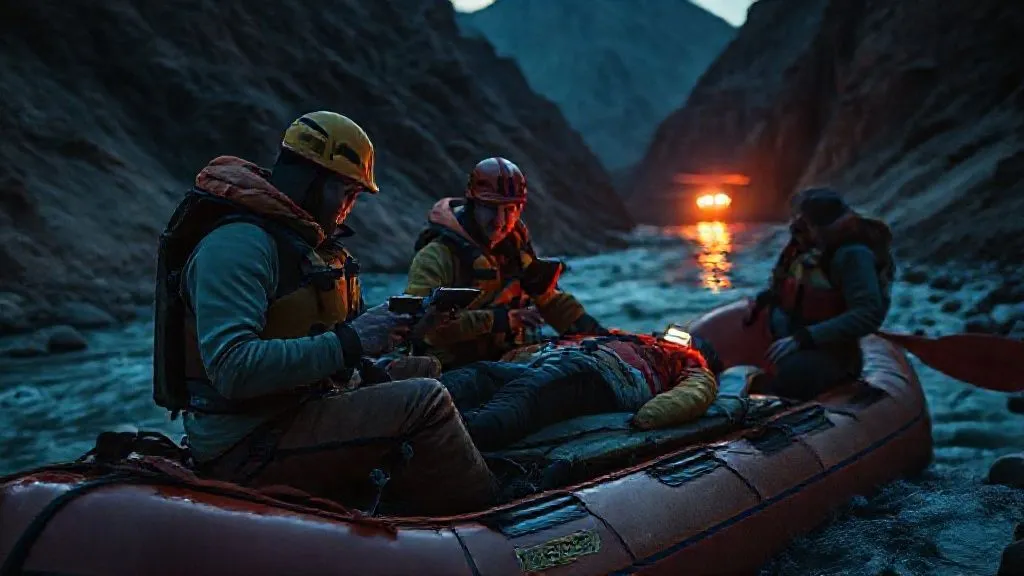
How to Handle Remote White Water Rafting Emergency Evacuations?
For over two decades navigating some of the planet's most formidable rivers, I've witnessed the exhilarating highs and the terrifying lows that come with adventure. I've seen groups meticulously plan every detail, only to be blindsided by an unforeseen incident, and I've also seen the incredible resilience and resourcefulness of a well-prepared team when disaster strikes far from civilization.
The stark reality of remote white water rafting is that help isn't just a phone call away. When an emergency unfolds — be it a severe injury, a hypothermic crisis, or a lost boater — your immediate actions and preparedness can mean the difference between a successful rescue and a tragic outcome. The challenges of isolation, communication blackouts, and limited resources amplify every decision, making a robust emergency plan not just advisable, but absolutely non-negotiable.
In this definitive guide, I'll share the frameworks, strategies, and hard-earned insights from my years on the river. We'll explore everything from proactive planning and communication protocols to on-river incident management and execution of complex evacuations. My aim is to equip you with the knowledge and confidence to face the unthinkable, ensuring you and your team are ready to handle remote white water rafting emergency evacuations with competence and calm.
Understanding the Unique Challenges of Remote Rafting Evacuations
Before we delve into solutions, it’s crucial to grasp the specific obstacles that make remote white water rafting emergencies so uniquely demanding. This isn't a sprained ankle on a city sidewalk; this is often a life-threatening situation miles from the nearest road, let alone a hospital.
The Tyranny of Distance and Isolation
The very allure of remote rafting — untouched wilderness, pristine waters — is also its greatest hazard in an emergency. Geographic isolation means that external rescue resources, whether professional SAR teams or medical personnel, will take hours, if not days, to reach your location. Every minute counts when dealing with severe trauma or medical emergencies, and the clock starts ticking the moment an incident occurs.
Communication Blackouts
Cell service is a luxury you cannot count on in the backcountry. Vast stretches of river corridors are notorious for dead zones, rendering standard communication methods useless. This makes relaying critical information — your exact location, the nature of the emergency, patient status — incredibly difficult, hindering the response time and effectiveness of any external aid.
Limited Medical Resources
Your medical kit, no matter how comprehensive, is finite. Your team's medical training, while invaluable, has its limits. You won't have access to advanced diagnostics, surgical capabilities, or a full pharmacy. This means you must be proficient in wilderness first aid and have the skills to stabilize a patient for an extended period, often under challenging conditions.
Environmental Obstacles
The river itself, and the terrain surrounding it, can become formidable barriers to evacuation. Steep canyon walls, dense vegetation, swift currents, and unpredictable weather can impede ground-based rescue efforts and even make helicopter access impossible. Understanding these potential environmental roadblocks is vital for planning.
"In remote white water rafting, preparedness isn't just about packing the right gear; it's about cultivating a mindset of self-reliance, anticipation, and unwavering commitment to team safety. The wilderness doesn't forgive complacency."

Proactive Planning: Your First Line of Defense
The most effective emergency response begins long before you even touch the water. Proactive planning is the cornerstone of safe remote expeditions, transforming potential chaos into manageable challenges. This is where you lay the groundwork for how to handle remote white water rafting emergency evacuations.
Comprehensive Risk Assessment
Every river, every trip, has its unique risks. Before embarking, conduct a thorough risk assessment, considering:
- River Specifics: Class ratings, known hazards (strainers, sieves, hydraulics), water levels, portage routes.
- Environmental Factors: Weather patterns, potential for flash floods, wildlife, terrain.
- Group Dynamics: Experience levels, medical conditions, fitness, swimming ability.
- Equipment Condition: Age and integrity of rafts, paddles, PFDs, dry bags, repair kits.
Detailed Float Plan & Leave No Trace Principles
A comprehensive float plan is your lifeline to the outside world. This document, left with a trusted contact, should include:
- Detailed itinerary (put-in, take-out, planned campsites, estimated daily mileage).
- Names, contact information, and emergency contacts for all participants.
- Medical conditions, allergies, and medications for each person.
- Vehicle descriptions and license plates.
- A clear “trigger time” — the specific date and time when your contact should initiate an alarm if they haven’t heard from you.
Always adhere to Leave No Trace principles, not just for environmental stewardship, but because a clean camp and responsible behavior minimize preventable incidents.
Assembling the Right Gear & Medical Kit
Your gear is your extended team. Invest in high-quality, reliable equipment and know how to use it. Beyond standard rafting gear, your emergency kit should include:
- Advanced Medical Kit: Tailored for wilderness trauma and illness, including splinting materials, wound care, medications, and personal prescriptions.
- Communication Devices: Satellite messenger/phone, personal locator beacon (PLB), two-way radios (for intra-group communication).
- Shelter & Warmth: Emergency bivy sacks, extra warm layers, sleeping bags, tarps.
- Signaling Devices: Whistle, signal mirror, brightly colored flag/panel, headlamps with strobe function.
- Repair Kits: For rafts, paddles, dry bags, and other critical gear.
- Navigation Tools: Topographic maps, compass, GPS device (with extra batteries).
- Water Purification: Filters, tablets, or other reliable methods.
Team Training & Roles
A group of individuals becomes a team through training. Everyone on the trip should have a basic understanding of what to do in an emergency, but specific roles should be assigned and practiced:
- Designate a Trip Leader: Responsible for overall decision-making, communication, and incident command.
- Assign a Medical Lead: Someone with advanced wilderness first aid or WFR certification to manage patient care.
- Establish a Communications Officer: Responsible for operating satellite devices and relaying information accurately.
- Practice Rescue Scenarios: Simulate common emergencies — person overboard, raft flip, injury — and walk through the response steps.
- Review First Aid: Before every trip, refresh everyone on basic first aid, CPR, and how to use the medical kit.
| Item | Qty | Purpose |
|---|---|---|
| Satellite Messenger (InReach/Zoleo) | 1-2 per group | Two-way communication, GPS tracking, SOS button |
| Personal Locator Beacon (PLB) | 1 per group | Dedicated emergency signal to SAR |
| Comprehensive Wilderness First Aid Kit | 1 large kit | Treating trauma, illness, and stabilizing patients |
| Emergency Bivy Sacks/Shelter | 1 per person | Hypothermia prevention, emergency shelter |
| Signal Mirror & Whistle | 1 per person | Auditory and visual signaling |
| Raft Repair Kit (patches, adhesive) | 1 per raft | On-the-fly raft repairs |
| Topographic Maps & Compass | 1 set per raft | Navigation and location identification |
| Water Filter/Purification Tablets | Sufficient supply | Ensuring potable water supply |
Establishing Robust Communication Protocols
When you're miles from the nearest road, effective communication is your lifeline. It's not just about having the right device; it's about having a clear plan for its use. This is paramount for how to handle remote white water rafting emergency evacuations.
Satellite Communication Devices
These are your primary link to the outside world. I've personally relied on them countless times, and they've saved lives. There are two main categories:
- Satellite Messengers (e.g., Garmin inReach, Zoleo): These offer two-way text messaging, GPS tracking, and a dedicated SOS button that connects you to a 24/7 monitoring center. They are relatively affordable and user-friendly.
- Satellite Phones (e.g., Iridium, Globalstar): These provide voice communication, much like a regular cell phone, but via satellite. They are more expensive but offer direct verbal communication, which can be critical for complex situations.
- Personal Locator Beacons (PLBs): These are single-purpose devices that transmit an emergency signal to a global search and rescue network via satellite. They don't offer two-way communication but are highly reliable for alerting authorities to your distress.
Before your trip, ensure devices are fully charged, tested, and you understand their operation inside and out. Share the device's unique ID with your emergency contact.
For more detailed information on choosing the right device, I highly recommend checking out resources from organizations like Garmin InReach or Iridium Satellite Communications.
Emergency Signaling (Visual & Audible)
Even without satellite communication, you can still signal for help:
- Visual Signals:
- Signal Mirror: Use it to flash passing aircraft or distant search parties. Practice using it beforehand.
- Brightly Colored Clothing/Tarps: Lay out contrasting colors in an open area to create a visible distress signal from the air.
- Fires: Three fires in a triangle is a universal distress signal. Add green vegetation to create smoke for daytime signaling.
- Audible Signals:
- Whistle: Three short blasts is a universal distress signal. Carry a pea-less whistle attached to your PFD.
- Shouting: While limited in range, sustained shouting can attract attention from nearby groups.
Pre-arranged Check-in Schedules
Beyond your float plan, establish a daily check-in routine with your trusted contact. Even a simple, pre-arranged “all clear” message via satellite messenger provides immense peace of mind. If a check-in is missed, it triggers your contact to initiate the emergency protocol outlined in your float plan. This proactive communication strategy is essential for how to handle remote white water rafting emergency evacuations.
"The most sophisticated satellite device is useless if you don't know how to operate it, or if its batteries are dead. Reliability in remote communication comes from consistent practice and disciplined power management."

On-River Incident Management: The Golden Hour
When an emergency strikes, the initial response — often referred to as the “golden hour” — is critical. Your ability to maintain composure, assess the situation, and take immediate, effective action will directly impact the outcome. This phase is where your training for how to handle remote white water rafting emergency evacuations truly comes into play.
Scene Safety & Patient Assessment (PRIMARY Survey)
Your first priority must always be scene safety. Before rushing in, quickly assess any ongoing hazards — is the patient still in the water? Are there further river hazards? Only proceed when it's safe to do so. Once the scene is secure:
- STOP, LOOK, LISTEN, THINK: This mantra from wilderness medicine is crucial. Stop the boat, look at the situation, listen for cries for help, and think about your plan.
- PRIMARY Survey: Rapidly assess the patient for life-threatening conditions (ABCDE):
- Airway: Is it open?
- Breathing: Is the patient breathing? Are they breathing effectively?
- Circulation: Is there a pulse? Any severe bleeding?
- Disability: Assess neurological status (AVPU: Alert, Verbal, Pain, Unresponsive).
- Environment: Protect from further harm (hypothermia, hyperthermia).
Address any immediate life threats found during the primary survey before moving on.
Stabilizing the Patient & Providing Immediate Care
Once life threats are addressed, focus on stabilizing the patient:
- Control Bleeding: Apply direct pressure, elevation, and if necessary, a tourniquet for severe arterial bleeds.
- Manage Shock: Keep the patient warm, elevate legs (if no spinal injury), and provide fluids if conscious and able to swallow.
- Immobilize Injuries: Splint fractures and dislocated joints to prevent further damage and reduce pain.
- Protect from Environment: Hypothermia is a constant threat on the river. Get the patient into dry clothing, use sleeping bags, emergency blankets, and create a sheltered space.
- Monitor Vitals: Regularly check pulse, respiration, skin color, and level of consciousness. Document everything.
Remember, your goal in the wilderness is to prevent further harm and maintain life until professional help arrives, which could be hours or days away. For in-depth training on these skills, consider a NOLS Wilderness Medicine course.
Initiating the Evacuation Process
Once the patient is stabilized and immediate threats are managed, the decision to evacuate must be made. This decision is often complex, weighing the severity of the injury against the risks and resources required for evacuation. If an evacuation is necessary:
- Activate Communication Device: Use your satellite messenger or phone to send an SOS or contact your pre-arranged emergency contact.
- Provide Critical Information: Be precise. State your exact GPS coordinates, the number of patients, nature of injuries/illness, patient's vital signs, resources available, and any hazards at your location.
- Establish an Incident Command System (ICS): Even in a small group, assigning roles (medical lead, communications lead, logistics lead) streamlines the response and prevents confusion.
- Prepare for Evacuation: Begin preparing the patient for transport, whether by raft, foot, or air.
Executing the Evacuation: Ground, Water, and Air Strategies
The method of evacuation will depend on the patient's condition, the terrain, and the availability of external resources. Your expertise in how to handle remote white water rafting emergency evacuations becomes critical here.
Self-Evacuation & Assisted Carry
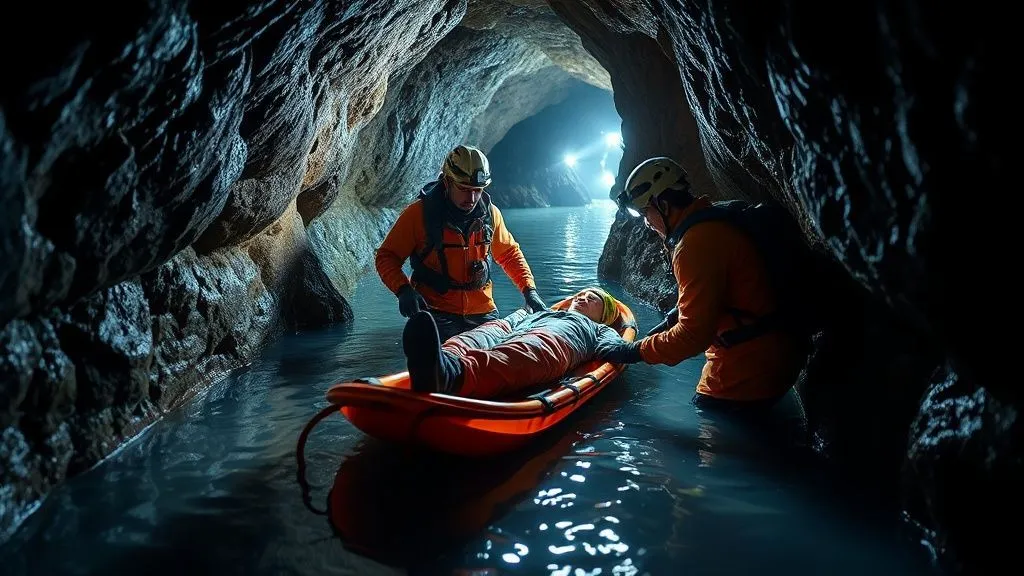
For minor injuries or illnesses where the patient is mobile and the distance is manageable, self-evacuation (walking out) might be an option. For more severe but non-life-threatening injuries, an assisted carry using improvised stretchers or specialized rescue litters may be necessary. This is physically demanding and slow, often requiring multiple people.
Water-Based Evacuation Techniques (Raft as Stretcher)
Your raft can be an invaluable tool for evacuation. For a patient who cannot walk, a raft can be converted into a stable, comfortable platform for transport downriver. This involves:
- Securing the Patient: Carefully place the patient on a backboard or improvised rigid stretcher within the raft, ensuring they are well-padded and protected from movement.
- Protection from Elements: Use tarps, sleeping bags, and dry bags to keep the patient warm and dry.
- Dedicated Crew: Assign paddlers specifically to manage the patient and navigate the raft cautiously, avoiding any further jostling or rapids.
This method is often the most efficient for moving a patient through river terrain, assuming the river conditions allow for safe passage.
Air Evacuation (Helicopter Rescue) - When & How to Prepare
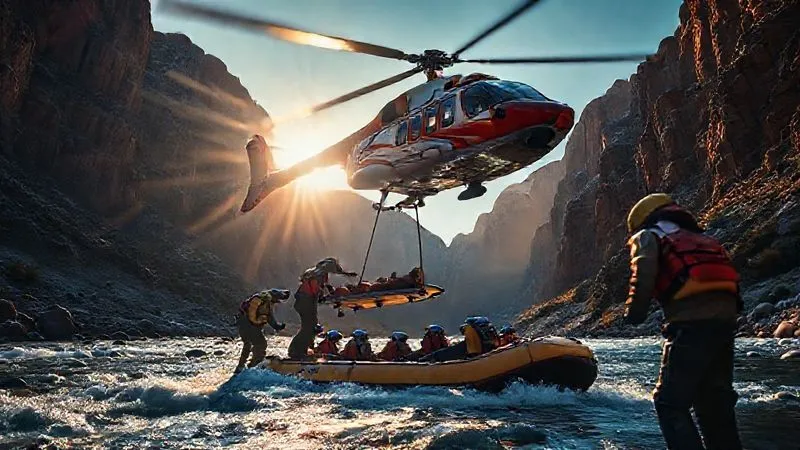
When injuries are severe, time-critical, or ground/water evacuation is impossible, air evacuation by helicopter is often the best — or only — option. However, helicopters require specific conditions:
- Clear Weather: Helicopters cannot fly in severe storms, dense fog, or high winds.
- Suitable Landing Zone (LZ): You must prepare a safe, clear, and level area for the helicopter to land.
- LZ Prep: Clear an area of at least 100x100 feet of all loose debris (tarps, hats, paddles). Mark the corners with visible objects.
- Wind Direction: Indicate wind direction with a flag or by throwing grass/dirt.
- Safety Brief: Brief your team on helicopter safety — approach only when signaled, stay clear of tail rotor, secure all loose items.
- Communication: Maintain clear communication with the helicopter crew if possible (via satellite phone or pre-arranged radio frequencies).
Case Study: The Grand Canyon Rescue
Case Study: The Grand Canyon Rescue
In 2018, a private rafting trip through the Grand Canyon faced a dire situation: a guide suffered a severe, open leg fracture after a fall on a challenging portage. The remote location, combined with the technical nature of the injury, demanded immediate and precise action. The trip leader, a seasoned veteran, initiated their well-rehearsed emergency plan. First, the medical lead, a Wilderness First Responder, stabilized the fracture, controlled bleeding, and managed the patient's pain, carefully documenting vitals. Concurrently, the communications officer activated their satellite phone, relaying precise GPS coordinates, patient status, and the immediate need for air evacuation to their pre-notified emergency contact. While waiting for rescue, the team cleared a makeshift landing zone on a wide, sandy beach, secured all loose gear, and prepared the patient for transport. Within six hours, a rescue helicopter arrived, landing safely in the prepared LZ, and successfully evacuated the patient. This incident highlighted the critical importance of a well-trained team, reliable communication, and meticulous planning for how to handle remote white water rafting emergency evacuations.
Post-Evacuation Procedures & Lessons Learned
The evacuation of a patient isn't the end of the incident; it's a critical transition point. What happens next, both immediately after and in the long term, is vital for team well-being and future preparedness. This stage contributes significantly to refining your approach to how to handle remote white water rafting emergency evacuations.
Debriefing the Team
Once the immediate crisis has passed, and the patient is safely off the river, a thorough debriefing with your remaining team is essential. This is not about blame, but about learning. Discuss:
- What went well?
- What could have been done better?
- Were there any communication breakdowns?
- Did the gear perform as expected?
- How did individuals feel and cope with the stress?
This debriefing helps process the event and solidify lessons learned for future trips.
Reporting & Documentation
Detailed documentation of the incident is crucial. This includes:
- Incident Report: A chronological account of events, from the initial incident to the patient's evacuation.
- Medical Log: All patient vital signs, treatments administered, medications given, and changes in condition.
- Photos/Videos: If appropriate and safe, visual documentation of the scene or injuries can be helpful.
This information is vital for medical professionals taking over care, for insurance purposes, and for future training improvements. For examples of incident reporting, you can often find templates through organizations like American Whitewater.
Psychological First Aid
Experiencing a remote emergency can be traumatic for everyone involved, not just the patient. Be mindful of your team's mental well-being. Encourage open communication, acknowledge feelings, and watch for signs of stress or trauma. In some cases, professional psychological support may be beneficial upon returning home.
| Category | Key Information |
|---|---|
| Incident Details | Date, Time, Location (GPS), Type of Incident, Number of People Involved |
| Patient Information | Name, Age, Known Medical Conditions, Nature of Injury/Illness, Vitals Recorded |
| Response Actions | First Aid Administered, Communication Attempts, Evacuation Method, Time Stamps |
| Resources Used | Gear Deployed, External Agencies Contacted |
| Lessons Learned | What Worked Well, Areas for Improvement, Team Feedback |
Legal and Ethical Considerations in Remote Rescues
Navigating an emergency in the wilderness also brings with it a set of legal and ethical considerations that every trip leader and participant should understand.
Good Samaritan Laws
Most jurisdictions have “Good Samaritan” laws designed to protect individuals who voluntarily provide assistance to others in an emergency from liability, provided they act in good faith and without gross negligence. However, these laws vary significantly by location and specific circumstances. While these laws generally encourage aid, they don't absolve you of responsibility for acting within the scope of your training.
Duty of Care
As a trip leader, or even as an experienced participant, you may have a “duty of care” to other members of your group. This means you have a legal and ethical obligation to take reasonable steps to prevent harm and provide aid in an emergency. This duty is why comprehensive planning, proper gear, and adequate training are not just best practices, but crucial responsibilities. Understanding your duty of care is an integral part of how to handle remote white water rafting emergency evacuations responsibly.
For more specific legal interpretations regarding wilderness rescue and liability, consulting legal resources specializing in outdoor recreation law, or organizations like the National Outdoor Leadership School (NOLS) legal resources, can be highly beneficial.
Frequently Asked Questions (FAQ)
Q: What's the most common mistake people make when facing a remote rafting emergency? In my experience, the single most common mistake is a failure to act decisively and communicate effectively. Panic or indecision can waste precious minutes, leading to delays in patient care or calling for external help. Equally detrimental is vague communication — rescue teams need precise details (GPS, patient status, hazards) to mount an effective response. A close second is underestimating the psychological impact on the team, leading to poor decision-making later on.
Q: How do I choose the best satellite communication device for my trip? The “best” device depends on your specific needs, budget, and desired level of communication. For most private rafters, a two-way satellite messenger like a Garmin inReach or Zoleo is an excellent balance of cost, functionality (messaging, tracking, SOS), and reliability. If you anticipate needing direct voice communication for complex medical consultations or coordinating intricate logistics, a satellite phone might be worth the investment. Always prioritize devices with a dedicated SOS button linked to a 24/7 monitoring center.
Q: What if I'm solo or with an inexperienced group? How does that change the evacuation plan? Going solo in remote white water is generally discouraged due to the inherent risks. If you must, your preparedness must be exponentially higher: a PLB is non-negotiable, and you must be self-sufficient in all aspects of first aid and self-rescue. With an inexperienced group, the emphasis shifts heavily to the leader's shoulders. You must over-prepare, assign very clear, simple roles, and conduct more thorough pre-trip training and scenario practice. The less experienced the group, the more robust and foolproof your emergency protocols for how to handle remote white water rafting emergency evacuations need to be.
Q: How much does a remote evacuation cost, and is it covered by insurance? Remote evacuations, especially by helicopter, can be incredibly expensive, often ranging from tens of thousands to hundreds of thousands of dollars. Standard health insurance typically does NOT cover search and rescue or medical evacuation from remote locations. It's imperative to purchase specialized wilderness travel insurance or specific SAR insurance policies that explicitly cover these costs. Always read the fine print to understand what's covered and what's not.
Q: What's the role of a Wilderness First Responder (WFR) or Wilderness EMT (WEMT) in an emergency? A WFR or WEMT is an invaluable asset to any remote trip. They possess advanced medical training specifically tailored for prolonged patient care in wilderness settings, often for days until evacuation. Their role is to provide expert medical assessment, stabilize the patient, manage pain, prevent further complications, and provide detailed medical updates to external rescue teams. They are often the medical lead in an incident command structure, guiding the team's medical response.
Key Takeaways and Final Thoughts
Navigating the wild beauty of remote white water rivers is an unparalleled adventure, but it demands respect and rigorous preparation. When it comes to how to handle remote white water rafting emergency evacuations, there are no shortcuts. Your ability to respond effectively hinges on a foundation of foresight, training, and clear communication.
- Plan Proactively: A detailed float plan, comprehensive risk assessment, and a well-equipped medical kit are non-negotiable.
- Master Communication: Invest in and know how to use satellite communication devices. Your lifeline to help depends on it.
- Train Your Team: Assign roles, practice scenarios, and ensure everyone has at least basic wilderness first aid knowledge.
- Act Decisively: In the “golden hour,” scene safety, patient assessment, and stabilization are paramount.
- Understand Evacuation Options: Be prepared for ground, water, and air evacuations, and know the requirements for each.
- Debrief and Learn: Every incident, big or small, is an opportunity to refine your protocols and strengthen your team.
The wilderness will always present its challenges, but with the right preparation and mindset, you can mitigate the risks and ensure that if an emergency arises, you and your team are ready. Embrace the adventure, but never underestimate the power of being truly prepared. Stay safe out there, and may your paddles always find the current.
Recommended Reading
- Cracking the Code: Funding Eco-Tourism Infrastructure Despite Low ROI
- Cross Country Skiing for Beginners? Essential Tips You Need Now!
- 7 Steps to Ethical Cultural Festival Tours: Beat Overtourism
- Suborbital Safety: 5 Pillars to Assure Ultra-Rich Clients' Trust
- 7 Proven Strategies for Preventing Food Safety Incidents on International Culinary Tours



Your email address will not be published. Required fields are marked *