

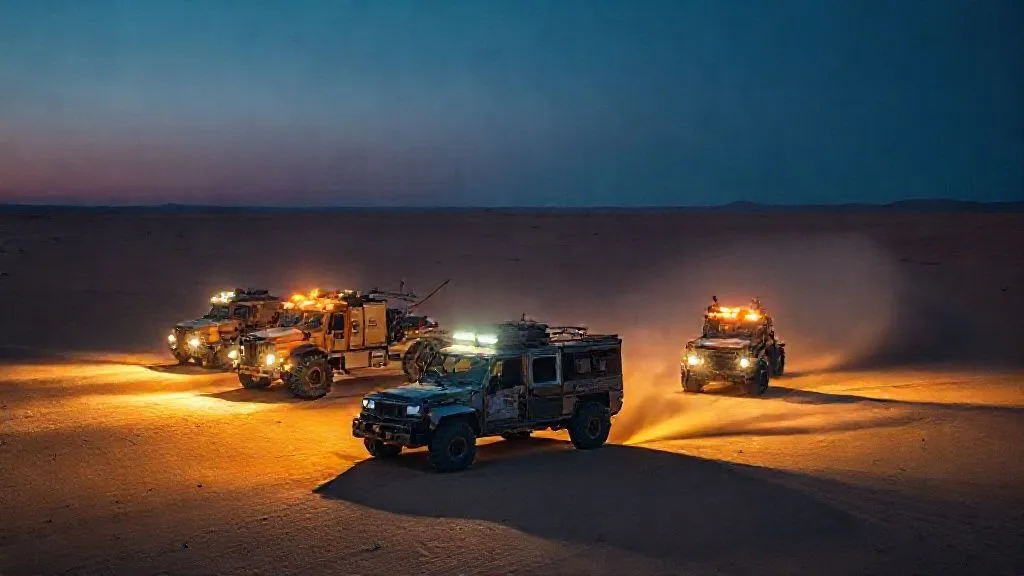
Urgent: How to Coordinate Multiple Recovery Vehicles in Remote Areas
For over two decades navigating the most unforgiving stretches of backcountry across North America, I've witnessed firsthand the sheer terror and logistical nightmare that unfolds when a single vehicle breaks down far from civilization. Now, imagine that scenario compounded: not one, but multiple vehicles incapacitated, perhaps a convoy or a group trip gone awry, requiring not just one, but several specialized recovery assets in a place where even cell service is a myth. It's a crisis I wouldn't wish on my worst enemy.
The problem isn't just a flat tire or a dead battery; it's often a complex entanglement involving terrain, weather, specialized equipment, and the safety of multiple individuals. In these remote, often hostile environments, the standard roadside assistance playbook gets thrown out the window. Without a clear, actionable strategy, what begins as an inconvenience can quickly escalate into a life-threatening situation.
This isn't about hoping for the best; it's about meticulous preparation, robust communication, and dynamic, on-the-fly decision-making. In this guide, I'll walk you through the frameworks, hard-won lessons, and expert insights I've gathered to empower you with the knowledge to coordinate multiple recovery vehicles in remote areas, transforming potential disaster into a managed resolution.
The Unique Challenges of Remote Multi-Vehicle Recovery
Coordinating a single tow in a remote area is challenging enough, but when you're dealing with multiple vehicles, the complexity multiplies exponentially. I've seen situations where a simple two-vehicle recovery turned into a multi-day ordeal due to unforeseen complications. The primary hurdles are often interconnected and unforgiving.
Firstly, logistical limitations are paramount. Remote areas typically lack infrastructure – no paved roads, no nearby repair shops, often no easily accessible fuel or supplies. Recovery vehicles themselves may struggle to reach the site, or their capacity might be insufficient for multiple, heavily loaded expedition vehicles. Access points might be limited, requiring long detours or even trail-building.
Secondly, communication blackouts are a constant threat. Standard cell service is often non-existent, leaving teams reliant on satellite phones, two-way radios, or satellite messengers. Coordinating multiple assets and personnel across vast distances without reliable communication is like trying to conduct an orchestra in a soundproof room – impossible and frustrating. A single point of failure in communication can cascade into critical delays.
Finally, environmental factors play a massive role. Extreme weather, unstable terrain (mud, sand, snow, steep inclines), and dwindling daylight can quickly turn a recovery operation perilous. The longer the delay, the greater the risk to stranded individuals from exposure, dehydration, or other medical emergencies. These aren't just inconveniences; they are genuine threats that demand respect and proactive planning.

Pre-Trip Planning: Your First Line of Defense
As the old adage goes, 'Fail to prepare, prepare to fail.' This rings especially true for remote road trips. My experience has taught me that the success of any remote recovery operation begins long before the keys are even in the ignition. It's about meticulously anticipating every possible failure point and having a contingency for each.
Comprehensive Risk Assessment and Route Planning
Before embarking, analyze your route for potential hazards: difficult terrain, river crossings, isolated sections, and known weather patterns. Identify areas with no cell service and mark potential rendezvous points or emergency exits. Consider the capabilities of each vehicle in your convoy and the skill level of each driver. A detailed risk management plan is not optional; it's essential.
Establishing a Robust Communication Protocol
- Primary Communication: Equip every vehicle with a satellite communication device (e.g., satellite phone, Garmin InReach, Starlink Roam). Ensure everyone knows how to use it and has emergency contacts pre-programmed.
- Secondary Communication: Carry powerful two-way radios (VHF/UHF) for line-of-sight communication within the convoy.
- Emergency Beacon: An EPIRB or PLB (Personal Locator Beacon) should be carried by at least one person, registered with current contact information.
- Check-in System: Establish a strict check-in schedule with an external contact person who knows your route and expected timeline. If you miss a check-in, they initiate the emergency protocol.
Assembling Your Recovery Toolkit and Skills
Beyond basic spares, your kit for a multi-vehicle scenario needs to be comprehensive. This includes heavy-duty recovery straps, snatch blocks, winches (preferably on multiple vehicles), high-lift jacks, air compressors, tire repair kits, and essential tools. Crucially, ensure that at least two people in your group are proficient in advanced recovery techniques and first aid. As Tread Lightly! advocates, responsible recreation includes being prepared for self-sufficiency.
Establishing Robust Communication Channels in Isolation
When you're miles from the nearest paved road and cell towers are a distant memory, communication becomes your lifeline. I've seen groups fall apart because they couldn't effectively talk to each other, let alone external help. This isn't just about having the gear; it's about having a practiced protocol.
Leveraging Satellite Technology
Satellite phones and devices like the Garmin InReach or Zoleo are non-negotiable for remote travel. They provide global coverage for voice calls, SMS, and emergency SOS services. Critically, ensure everyone in your party knows how to operate these devices, especially how to send an SOS signal and relay precise GPS coordinates. Regular battery checks and power bank provisions are vital. I always recommend testing your satellite device before every major trip to ensure it's functional and you're familiar with its nuances.
Two-Way Radio Systems for Convoy Coordination
For intra-convoy communication, robust two-way radios (GMRS, HAM, or commercial VHF/UHF if licensed and appropriate) are invaluable. They allow immediate, real-time communication between vehicles, which is critical during challenging maneuvers or when assessing a breakdown. Establish clear call signs and communication etiquette before you leave. These are short-range but highly reliable for immediate needs.
Developing a Clear Emergency Communication Protocol
Your external contact person is your primary link to the outside world. They should have a detailed itinerary, a list of all participants, vehicle descriptions, and emergency contact numbers for everyone. More importantly, they need a clear, pre-arranged escalation protocol:
- Initial Call-in: "We have a situation. One vehicle, minor issue, need advice."
- Urgent Call-in: "One vehicle incapacitated, no immediate danger, need recovery."
- Critical Call-in: "Multiple vehicles incapacitated, potential danger, need urgent recovery and possibly medical assistance."
- SOS Activation: "Life-threatening emergency, activating PLB/SOS."
This tiered system helps your external contact understand the severity and dispatch appropriate resources. Remember, clarity and brevity are key when every word counts.
| Communication Method | Pros | Cons | Best Use |
|---|---|---|---|
| Satellite Phone | Global coverage, voice/SMS, SOS | High cost, slower data, line-of-sight often needed | External emergency contact, detailed updates |
| Satellite Messenger (InReach/Zoleo) | Global SMS, tracking, SOS, weather | No voice, subscription needed | Regular check-ins, concise updates, tracking |
| Two-Way Radio (VHF/UHF) | Instant convoy communication, no subscription | Line-of-sight limited range, licensing may be required | Intra-convoy coordination, short-range tasks |
| PLB/EPIRB | Dedicated SOS, long battery life | One-way (SOS only), no general communication | Life-threatening emergencies, last resort |
Strategic Asset Identification and Staging
Once the distress call is out and you've established communication, the next critical step is identifying and staging the appropriate recovery assets. This isn't just about calling the nearest tow truck; it's about understanding the specific needs of your situation and the capabilities of available resources. I've learned that a mismatch here can cost hours, if not days.
Assessing the Recovery Needs
Before making any calls, accurately assess the situation:
- Number and Type of Vehicles: Are they standard SUVs, heavy overland rigs, or commercial trucks? Each requires different recovery gear.
- Nature of Incapacitation: Are they stuck in mud, broken axle, rollover, out of fuel? This dictates the required recovery technique and equipment.
- Terrain and Access: Can a standard 4x4 tow truck reach the site, or do you need specialized off-road recovery vehicles, track hoes, or even air support?
- Environmental Conditions: Current and forecasted weather will impact the type of vehicles that can safely operate and the timeline.
Providing this detailed information to recovery services is paramount. A vague description leads to delays and potentially sending the wrong equipment.
Identifying and Staging Recovery Resources
In remote areas, recovery assets are scarce. You might need to coordinate resources from multiple towns or even states. This is where your pre-trip research into local recovery services, off-road clubs, or even forestry/park service contacts comes into play. You'll likely need:
- Heavy-Duty Tow Trucks: For larger vehicles or severe damage.
- Off-Road Recovery Rigs: Specialized 4x4 vehicles with winches, traction aids, and experienced operators.
- Support Vehicles: To transport personnel, fuel, or additional equipment.
- Medical Personnel: If injuries are involved.
Staging is about strategically positioning these assets. If the recovery site is inaccessible by road, you might need to stage recovery vehicles at the nearest accessible point and then use smaller, more agile off-road rigs or even human power to reach the casualty. This requires careful coordination of arrival times and transfer points.
Real-time Coordination and Incident Command
Once recovery operations are underway, effective real-time coordination and a clear chain of command are non-negotiable. I often liken it to a military operation; without a designated leader and clear objectives, chaos ensues. This is where the Incident Command System (ICS) principles, often used by emergency services, can be invaluable, even for a small group.
Establishing an Incident Commander (IC)
Designate one person as the Incident Commander. This individual is responsible for all decision-making, communication with external recovery teams, and overall safety. Their role is to maintain situational awareness, allocate resources, and ensure all actions align with the recovery plan. This prevents conflicting orders and ensures a unified effort. The IC should ideally be someone calm under pressure, with strong communication skills, and a good understanding of the overall situation.
Dynamic Communication and Briefings
The IC must maintain constant communication with all recovery assets, both on-site and inbound. Regular, concise briefings are essential:
- Situation Updates: What's the current status of the vehicles, personnel, and environment?
- Objective Updates: What's the immediate next step and the overall goal?
- Resource Allocation: Who is doing what, where, and with which equipment?
- Safety Briefings: Highlight new hazards or changes in conditions.
This ensures everyone is on the same page and working towards a common objective. According to principles outlined by institutions like the Federal Emergency Management Agency (FEMA), a clear command structure significantly improves response efficacy.
Case Study: The 'Whiskey Creek' Convoy Rescue
How a Coordinated Effort Saved a Stranded Overland Group
In 2018, a convoy of three heavily modified overland vehicles found themselves stranded deep in the 'Whiskey Creek' wilderness, a notoriously remote and muddy region. A lead vehicle had broken an axle, and two others, attempting to assist, became deeply mired in soft ground. Cell service was non-existent. The group's designated Incident Commander, Sarah, immediately activated their Garmin InReach, sending a detailed message to their external contact, Mark, with GPS coordinates and a concise summary of the multi-vehicle predicament. Mark, following their pre-established protocol, contacted a specialized off-road recovery service 150 miles away and a local volunteer search and rescue team. Sarah, meanwhile, used their convoy's VHF radios to coordinate the on-site group, ensuring everyone remained safe, conserving resources, and preparing the vehicles for recovery. By clearly relaying terrain conditions and vehicle types, Mark was able to dispatch two heavy-duty off-road recovery trucks and a smaller support vehicle carrying additional fuel and medical supplies. The recovery took 36 hours from the initial distress call, but the clear communication, pre-planned protocols, and Sarah's decisive incident command ensured a successful, albeit challenging, outcome, avoiding what could have been a much more severe situation.
Executing the Recovery: Safety and Efficiency Protocols
With resources identified and coordination established, the actual recovery phase begins. This is often the most physically demanding and high-risk part of the operation. My years in the field have hammered home one truth: safety always, efficiency next. Rushing leads to mistakes, injuries, and further complications.
Prioritizing Safety on Site
“In remote recovery, the greatest asset isn't the winch, it's the vigilance. Complacency kills.”
Before any recovery attempt, a thorough safety briefing is paramount. Identify all potential hazards: unstable ground, steep inclines, pinch points, moving parts of recovery equipment, and environmental risks. Establish a clear safety zone around the recovery operation. All personnel involved should wear appropriate PPE (Personal Protective Equipment) including gloves, sturdy footwear, and high-visibility clothing if applicable. Never work alone, and always have a spotter.
Multi-Vehicle Recovery Techniques
When coordinating multiple vehicles, you might employ several techniques simultaneously:
- Staged Recovery: Recover one vehicle at a time, moving it to a safe, stable location before tackling the next. Prioritize vehicles that are easiest to recover or pose the greatest immediate danger.
- Daisy-Chaining: Using multiple winches or vehicles in a line to increase pulling power, especially for extremely stuck or heavy vehicles. This requires precise coordination and understanding of load limits.
- Anchor Points: Identifying and utilizing natural or created anchor points (other vehicles, trees, rock formations) for winching. Ensure these are secure and rated for the expected loads.
It's crucial that all operators understand the mechanics of each recovery tool and the forces involved. Miscalculations can lead to equipment failure or severe injury. Refer to manufacturer guidelines and established off-road recovery best practices.
Efficient Resource Management
With multiple recovery vehicles and personnel, managing fuel, water, and specialized equipment becomes critical. Maintain a log of fuel consumption for all recovery vehicles and ensure a reserve is available. Conserve water for both human consumption and, if needed, for vehicle cooling. Keep track of all recovery gear – straps, shackles, winches – to prevent loss or damage in the challenging environment. A well-organized staging area for tools and equipment can significantly improve efficiency.
| Safety Checkpoint | Status | Notes |
|---|---|---|
| PPE Worn by All Personnel | Verified | Gloves, eye protection, sturdy boots |
| Clear Safety Zone Established | Verified | Minimum 1.5x length of winch cable/strap |
| Anchor Points Secured & Rated | Verified | No weak links, tree savers used |
| Communication Protocol Active | Verified | Spotter/IC communication clear |
| Environmental Hazards Assessed | Verified | Ground stability, weather, daylight |
| Fire Extinguisher & First Aid Ready | Verified | Accessible to all |
Post-Recovery Analysis and Continuous Improvement
The successful coordination of multiple recovery vehicles in a remote area is a monumental achievement, but the work isn't truly done until you've learned from the experience. As an expert, I always emphasize the importance of a thorough debriefing. Every challenge, every success, and every near-miss offers invaluable lessons for future trips.
Conducting a Post-Incident Debriefing
Once everyone is safe and the immediate crisis has passed, gather your team (and recovery personnel if possible) for a debrief. Discuss:
- What went well? Identify effective strategies and equipment.
- What could have been better? Pinpoint communication breakdowns, equipment shortcomings, or procedural errors.
- Were the pre-trip plans adequate? Did the risk assessment miss anything?
- How effective was the Incident Commander and the chain of command?
This candid discussion is crucial for refining your protocols and improving future preparedness. Document these findings; they become your institutional knowledge.
Updating Your Preparedness Plan
Based on the debriefing, update your pre-trip checklists, communication protocols, and recovery equipment lists. Did you need a specific tool you didn't have? Was a piece of communication gear unreliable? Incorporate these learnings. Perhaps you need to invest in more robust winches, or a different type of satellite messenger, or even seek additional training in specific recovery techniques. This iterative process of learning and adapting is what truly builds resilience for remote travel.
Frequently Asked Questions (FAQ)
Q: What's the single most important piece of equipment for multi-vehicle remote recovery? While a robust winch and recovery gear are essential, I'd argue that reliable satellite communication (like a satellite phone or messenger) is paramount. Without the ability to call for help and relay precise coordinates, even the best recovery gear is useless. It's your lifeline to external assistance and coordination.
Q: How do I manage fuel for multiple recovery vehicles coming from different locations? This requires careful pre-planning. Identify potential fuel caches or staging points along the route to the incident. Communicate clearly with each inbound recovery vehicle about their fuel capacity and expected consumption. You may need to dispatch a separate support vehicle solely for fuel delivery, or arrange for extra fuel to be carried by one of the recovery assets. Factor in the rough terrain and longer distances they'll cover, which significantly increases fuel burn.
Q: What if the recovery vehicles themselves get stuck or break down? This is a very real risk in remote, challenging terrain. It underscores the importance of using experienced operators and well-maintained, capable recovery vehicles. Always have a contingency plan for the recovery vehicles themselves. This could involve having a third-party 'backup' recovery service on standby or ensuring your primary recovery assets are capable of self-recovery. The Incident Commander must be prepared to adjust the plan dynamically if this occurs.
Q: How do I handle potential injuries or medical emergencies during a multi-vehicle recovery? Medical preparedness is as crucial as mechanical preparedness. At least one person in your group should have Wilderness First Aid (WFA) or Wilderness First Responder (WFR) training. Include a comprehensive first aid kit with trauma supplies. When coordinating external recovery, always communicate any injuries or medical needs immediately. This allows emergency medical services (EMS) to be dispatched alongside or even prior to mechanical recovery, potentially via air ambulance if the situation is critical.
Q: Is it better to attempt self-recovery or wait for professional help in a multi-vehicle scenario? This is a judgment call that depends on the severity of the situation, the group's experience level, available equipment, and the safety risks. For minor incidents, self-recovery with your group's gear might be faster. However, if multiple vehicles are severely stuck, there's risk of further damage, or if safety is compromised, waiting for professional, specialized recovery is usually the safer and more effective option. The Incident Commander's role is to make this critical assessment.
Key Takeaways and Final Thoughts
Coordinating multiple recovery vehicles in remote areas is undeniably one of the most complex and high-stakes challenges any road tripper or overland enthusiast can face. It's a test of preparedness, resilience, and leadership. But as I've aimed to convey, with meticulous planning and a structured approach, you can navigate even the direst of circumstances.
- Preparation is paramount: Your pre-trip planning, including detailed risk assessments and comprehensive gear, forms the bedrock of a successful recovery.
- Communication is your lifeline: Invest in robust satellite communication and establish clear, practiced protocols for both internal and external communication.
- Incident Command is essential: Designate a leader and adhere to a structured command system to ensure clear decision-making and coordinated efforts.
- Safety above all: Every recovery attempt carries inherent risks; prioritize the safety of all personnel over speed or equipment.
- Learn from every experience: Debrief, analyze, and continuously refine your preparedness plans.
Remember, the wilderness is an unforgiving teacher, but with the right knowledge and a proactive mindset, you can face its challenges head-on. Stay safe out there, prepare diligently, and may your adventures always lead you home.
Recommended Reading
- Spotting Fakes: 7 Expert Tips for Authentic Artisan Quality in Markets
- Glacier Whiteout Panic: 7 Expert Steps to Reassure Clients & Stay Safe
- 7 Steps to Prevent Cultural Appropriation in Festival Tours
- 7 Ways to Maximize Urban Park Visits on Short City Breaks
- 5 Critical Steps: Safeguarding Against Zoonotic Risks in Wildlife Rescue



Your email address will not be published. Required fields are marked *