


How to Guarantee On-Time Arrival via Budget Public Transit?
For over 15 years in the budget travel niche, I've seen countless incredible journeys almost derailed, or worse, completely ruined, by a seemingly innocuous factor: public transit delays. I vividly recall a frantic traveler missing a crucial international connection in Berlin because a local tram, usually reliable, suffered an unexpected 20-minute stoppage. That single delay cascaded into missed flights, rebooking fees, and a significant dent in their carefully planned budget.
The promise of budget public transit is undeniable – cost-effective, environmentally friendly, and often offering a true taste of local life. Yet, the nagging fear of being late, missing a tour, or arriving flustered at an important meeting can transform that promise into a source of immense anxiety. We’ve all been there: staring at a static departure board, checking our watch for the tenth time, feeling helpless as minutes tick by.
But what if I told you there are proven, expert-level strategies that can dramatically increase your chances of guaranteeing on-time arrival, even when relying on the most budget-friendly public transport options? This isn't about luck; it's about preparation, smart planning, and a deep understanding of urban transit dynamics. Join me as I break down the actionable frameworks, real-world case studies, and expert insights that will empower you to reclaim control over your travel schedule.
Master Your Pre-Departure Research: The Digital Reconnaissance
The foundation of any successful budget transit journey isn't a secret route or a special pass; it's meticulous, real-time research. In today’s digital age, information is your most powerful ally against unforeseen delays. I always tell aspiring budget travelers: don't just know your route, know your route's pulse.
Leveraging Real-Time Tracking Apps
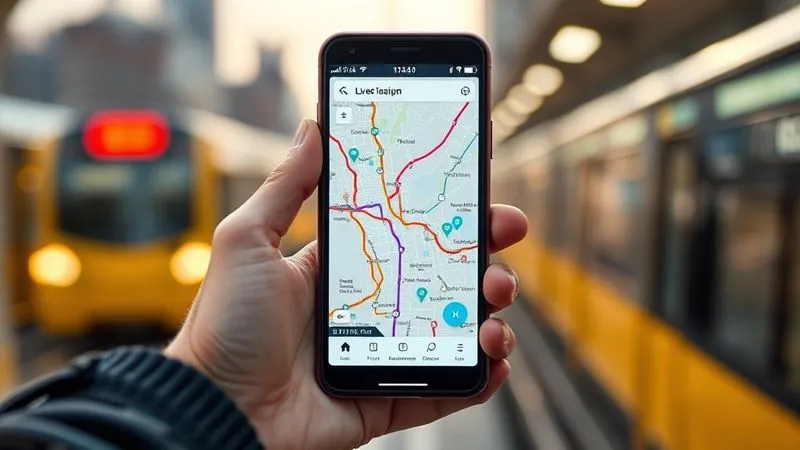
Gone are the days of guessing. Modern transit apps provide live updates on vehicle locations, estimated arrival times, and critical service alerts. Applications like Citymapper, Moovit, or Google Maps' transit feature are invaluable tools. They don't just show you the schedule; they show you where your bus or train actually is right now.
When I’m planning a trip, I don’t just look up the route once. I check it multiple times leading up to departure, and again just before I leave my accommodation. This constant vigilance allows you to spot potential issues – a bus running 10 minutes late, a subway line with reported signal problems – before they impact your journey.
- Real-time Tracking: See your vehicle's exact location on a map.
- Predictive ETAs: Get more accurate arrival times based on current traffic and service conditions.
- Service Alerts: Receive instant notifications about delays, diversions, or cancellations.
- Alternative Routes: Quickly find other options if your primary route is compromised.
"Information asymmetry is the enemy of punctuality. Arm yourself with real-time data, and you gain a significant advantage in urban transit." – Industry Veteran Insight.
Understanding Peak Hours and Alternative Routes
Every city has its rhythm, and public transport is its heartbeat. Understanding peak hours – typically morning and evening commutes – is crucial. During these times, not only are vehicles more crowded, but the likelihood of delays due to increased traffic, passenger boarding times, and minor incidents also rises significantly. If you have flexibility, adjust your travel times to avoid these congested periods.
Furthermore, always have a mental (or digital) backup route. What if your primary bus line is stuck in a massive traffic jam? Is there a subway station a short walk away? Could a different bus route get you close enough to walk the rest? Proactive identification of these alternatives can save precious minutes and significant stress when things go wrong.
| Transit App | Key Feature | Best For |
|---|---|---|
| Google Maps | Ubiquitous, comprehensive, good for basic real-time data | General planning, familiar cities |
| Citymapper | Multi-modal routing, highly accurate real-time updates, disruption alerts | Complex journeys, unfamiliar cities, critical timings |
| Moovit | Community-driven data, live directions, user reports on conditions | Emerging markets, local insights, diverse transport options |
Strategic Scheduling: Building in Buffer Time
One of the most common mistakes I observe, even among seasoned travelers, is calculating travel time with zero margin for error. This is a recipe for stress and missed connections. Public transit, by its very nature, operates within a complex ecosystem of variables – traffic, weather, passenger volume, mechanical issues – all of which can introduce delays.
The 15-Minute Rule
My cardinal rule for budget public transit is the "15-Minute Buffer." Whatever the estimated travel time, add at least 15 minutes to it. If a journey is projected to take 30 minutes, mentally (and practically) allocate 45 minutes. For longer or more complex journeys involving multiple transfers, I often extend this to 20-30 minutes per hour of travel. This isn't about being pessimistic; it's about being realistic and proactive.
This buffer serves as your personal safety net. If everything runs perfectly, you arrive early, which is a far more pleasant experience than arriving late. If there’s a minor hiccup, your buffer absorbs it, allowing you to maintain your schedule without panic. According to a study by the American Public Transportation Association (APTA), even small, unforeseen delays can significantly impact rider satisfaction and perceived reliability.
Identifying Critical Transfer Points
Transfers are often the weakest links in a public transit chain. A missed connection at a major hub can easily add 30 minutes or more to your journey. When planning, pay special attention to these points. Are there frequent connections? Is the transfer platform easy to find? How long is the typical wait between connecting services?
- Estimate Base Travel Time: Use a reliable app for the direct journey estimate.
- Identify Transfer Points: Note every point where you switch vehicles or lines.
- Assess Transfer Risk: Consider factors like frequency of next service, station size, and walking distance between platforms.
- Add Buffer: For single-leg journeys, add 15 minutes. For each transfer, add an additional 5-10 minutes on top of the connection time.
- Recalculate Total: This new total is your realistic, buffered travel time.
By strategically building in these margins, you transform potential stress into a relaxed, controlled journey. It’s a small investment of time on the front end that pays dividends in peace of mind.
The Art of the Early Bird: Why Leaving Sooner is Your Best Friend
Beyond simply adding buffer time, there’s immense psychological and practical power in simply leaving earlier than you think you need to. This isn't just about avoiding lateness; it's about optimizing your entire travel experience and minimizing stress. I've found that the few extra minutes spent waiting comfortably at your destination are infinitely preferable to the frantic rush of being behind schedule.
Psychological Benefits of Early Arrival
Arriving early allows you to gather your thoughts, grab a coffee, review your notes, or simply take a moment to observe your surroundings. This calm start sets a positive tone for whatever appointment, tour, or activity awaits you. The mental space gained from not rushing is invaluable, especially when traveling in unfamiliar environments. It reduces cortisol levels and enhances your overall well-being, directly contributing to a more enjoyable travel experience.
As renowned author and speaker Seth Godin often says, "The easiest way to stand out is to do something better than anyone else." In this context, 'better' means being consistently on time, or even early, which is a rare and respected trait in a world constantly battling delays.
Avoiding the "Domino Effect" of Delays
Public transport operates on a delicate balance. A small delay, like a longer-than-usual boarding process at one stop, can ripple through the entire system. If you're relying on tight connections, even a five-minute delay can cause you to miss your next leg, triggering a "domino effect" that can cost you hours. Leaving earlier proactively breaks this chain.
By being at the stop well before the scheduled departure, you're not just ready for your service; you're also positioned to react if it's running early (it happens!) or if there's an immediate, visible issue. You can observe the situation, consult your apps, and make an informed decision about whether to wait or pivot to an alternative plan.

Navigating Unexpected Disruptions: Your On-the-Go Emergency Kit
No matter how meticulously you plan, unforeseen disruptions are an inherent part of budget public transit. A sudden signal failure, a broken-down bus, or even a major event causing route diversions can throw a wrench into your plans. The key isn't to prevent these; it's to be prepared to adapt swiftly. This is where your "on-the-go emergency kit" of information and tools becomes indispensable.
Real-Time Alert Subscriptions
Beyond checking apps, many transit authorities offer direct alert services. Subscribing to SMS or email alerts for the specific lines you plan to use can give you a crucial head start. Imagine getting a text message about a subway line closure just as you're about to leave your hotel – that's invaluable time saved, allowing you to adjust before you even step out the door.
Additionally, following local transit authority social media accounts (e.g., Twitter) can provide immediate, community-sourced updates that sometimes outpace official app notifications. These platforms often host live Q&A sessions during major incidents, offering insights you won't find elsewhere.
Backup Route Identification
This goes beyond simply knowing an alternative route; it's about having a pre-vetted alternative. Before any critical journey, I always identify at least one completely different mode of transport or route. If the subway is down, can I take a bus and then walk? Is there a slightly more expensive but reliable ride-share option that’s viable for a critical appointment?
Case Study: How Anya Saved Her Flight Connection in Lisbon
Anya, a budget traveler heading to the Lisbon airport for a connecting flight, meticulously planned her metro journey. However, 30 minutes before her planned departure, she received an SMS alert from Lisbon Metro about a major line disruption affecting her route. Instead of panicking, Anya immediately consulted her pre-identified backup plan: a combination of a different bus line and a short, budgeted ride-share for the final leg. Because she had already researched the bus schedule and knew the approximate ride-share cost, she calmly executed her alternative. She arrived at the airport 10 minutes earlier than her original buffered time, completely stress-free. This resulted in a successful connection and a significant saving on rebooking fees.
- Fully Charged Phone: For apps, communication, and digital tickets.
- Portable Power Bank: Essential for extended use of your phone.
- Offline Maps: Download maps of your destination city to navigate without data.
- Small Amount of Local Currency: For unexpected taxi fares or street food during long waits.
- Headphones & Entertainment: To pass the time calmly if delays occur.
Your emergency kit isn't just physical; it's mental. The ability to pivot without panic is a skill honed through preparation and experience. According to a Brookings Institute report on urban mobility, resilient transport systems, much like resilient travelers, are those that can adapt to rapid changes.
Route Optimization Beyond the Obvious: The Multi-Modal Advantage
Budget public transit doesn't always mean sticking to a single bus or train line. Often, the most efficient and reliable journeys involve combining different modes of transport. This multi-modal approach can unlock faster routes, bypass congested areas, and even offer a more enjoyable travel experience. It’s about leveraging the strengths of various transport options to create a seamless journey.
Integrating Walking and Cycling
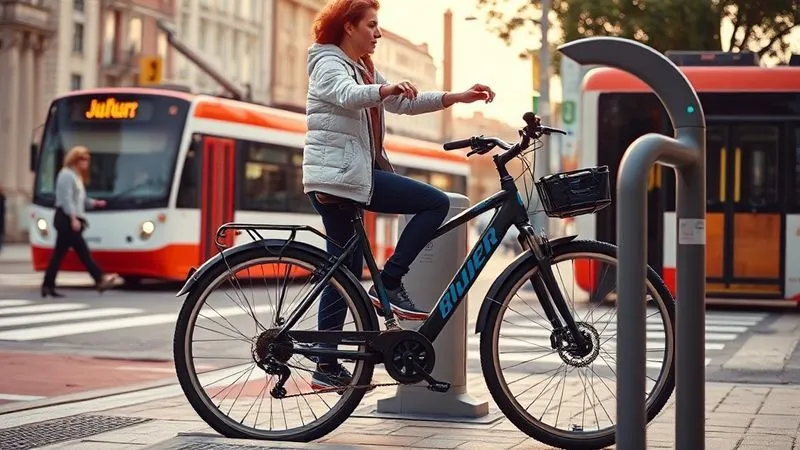
Don't underestimate the power of your own two feet, or a rented bike. For shorter distances, walking or cycling can often be faster than waiting for a bus or navigating a complex subway system, especially in dense city centers. Many cities are increasingly bike-friendly, offering public bike-sharing schemes that are incredibly affordable.
I often find that a 15-20 minute walk at the beginning or end of a journey, or between two different transit lines, can be a huge time-saver. It eliminates the wait time for a connection and provides a pleasant opportunity to experience the city. Plus, it’s great exercise! Always check the walkability of your route using apps that estimate walking times accurately.
When to Splurge (Minimally) on Ride-Shares
While the goal is budget travel, there are critical moments when a minimal splurge on a ride-share service (like Uber or Bolt) can prevent a catastrophic delay or missed connection. This isn't about ditching public transit entirely, but about using ride-shares as a strategic "bailout" option.
Consider this for:
- Last Mile/First Mile: When public transport doesn't quite reach your exact destination, or the walk is too long with luggage.
- Critical Deadlines: If missing an event, flight, or meeting would incur significant financial or personal cost.
- Late Night/Early Morning: When public transport frequency is low, and waiting times are excessive.
- Unexpected Delays: As a last resort when all budget public transit options have failed.
The key is to pre-determine your "splurge threshold" – a maximum amount you're willing to pay for a ride-share in an emergency. This prevents impulse overspending while still offering a vital safety net. It’s about being pragmatic, not purist, with your budget.
Local Wisdom: Tapping into Community Insights
While apps and official alerts are crucial, some of the most valuable insights into public transit reliability come from the people who use it every day: the locals. Their collective experience can uncover nuances, shortcuts, and potential pitfalls that no algorithm can fully capture. Engaging with local communities, even briefly, can provide an unparalleled advantage.
Engaging with Local Forums and Social Media Groups
Before a trip, I often search for local Facebook groups or Reddit subreddits dedicated to the city's public transport or general travel. These communities are goldmines of information. You can ask specific questions about route reliability, common delay points, or even the best times to travel on a particular line. Locals will often share real-time observations, tips on avoiding crowds, or warnings about ongoing construction that might affect your journey.
For example, a quick post asking, "How reliable is the X bus line between 8-9 AM?" can yield responses like, "Always takes an extra 15 minutes because of school traffic," or "Avoid it, the Y tram is much faster at that time." This ground-level intelligence is incredibly powerful for fine-tuning your plans.
Observing Local Travel Patterns
Once you're on the ground, become an observer. Pay attention to how locals navigate the system. Do they always seem to avoid a particular station? Are there specific times when a certain bus stop is unusually crowded? Are there unofficial 'queues' or boarding patterns that, if followed, make your journey smoother?
"The best transit app is often the collective wisdom of a city's inhabitants. Listen, observe, and learn from those who live and breathe the local rhythm." – Seasoned Traveler Proverb.
This observational learning is especially useful in cities where formal information might be less robust or frequently updated. It’s a subtle but effective way to build your own intuitive understanding of the transit system's true operational patterns, beyond what's printed on a schedule.
Don't be afraid to strike up a friendly conversation with a local while waiting for a bus or train. A simple "Is this train usually on time?" or "Any tips for getting to [destination] efficiently?" can unlock a wealth of practical advice. Most people are happy to help a polite traveler.
The Power of Proximity: Choosing Accommodation Wisely
When planning a budget trip, accommodation costs often dominate the decision-making process. While finding the cheapest bed is tempting, I've learned that choosing accommodation based purely on price without considering its proximity to reliable public transport can be a false economy. The extra cost of being far from transit, or relying on less frequent options, can quickly erode any savings and significantly impact your punctuality and overall travel experience.
Proximity to Key Transport Hubs
Prioritize staying near major transport hubs – subway stations, central bus terminals, or tram lines with high frequency. Even if it means paying a slightly higher nightly rate, the benefits are immense:
- Reduced Travel Time: Less time spent commuting means more time for sightseeing or business.
- Increased Reliability: Major lines and hubs typically have more frequent service and better real-time information.
- More Options: If one line is disrupted, you'll likely have multiple alternative routes available from a central hub.
- Safety & Convenience: Easier to return to your accommodation late at night.
A small investment in location can save you hours of travel time and stress over the course of your trip. According to a Forbes article on the importance of location in real estate and beyond, accessibility to transportation remains a prime factor in perceived value, and this extends to temporary accommodation.
Researching Off-Peak Transit Options from Your Stay
Even if your accommodation is near a major hub, it's wise to research its transit options during off-peak hours, especially if you plan early morning departures or late-night returns. Some lines reduce frequency drastically or cease operation entirely after a certain time.
| Accommodation Type | Daily Cost | Transit Access | Reliability Score (1-5) | Hidden Costs (delays, taxis) |
|---|---|---|---|---|
| Hostel A (City Center) | $40 | 2 min walk to Metro (3 lines), Bus (5 lines) | 5 | $0-$5 |
| Guesthouse B (Outskirts) | $30 | 15 min walk to Bus (1 line), 30 min bus to Metro | 2 | $15-$30 |
| Hotel C (Near Airport) | $60 | Direct Airport Metro, Limited City Connections | 4 | $5-$10 (for city center) |
Always check the full operating hours of relevant lines. Sometimes, a slightly more expensive hotel near a 24-hour bus line might be more "budget-friendly" in the long run than a cheaper option requiring expensive late-night taxis.
Mental Fortitude and Adaptability: The Traveler's Mindset
Even with all the planning, research, and backup strategies in the world, public transit delays can still happen. The difference between a minor inconvenience and a travel disaster often lies not just in your external preparation, but in your internal mindset. Cultivating mental fortitude and a strong sense of adaptability is arguably as important as any app or schedule.
Embracing Flexibility
Travel, especially budget travel, demands flexibility. Rigid adherence to a schedule, without allowance for the unpredictable, will only lead to frustration. I've learned to view minor delays not as failures, but as unexpected opportunities – perhaps to discover a new coffee shop, read a few more pages of a book, or simply practice mindfulness. It’s about reframing the situation.
Instead of thinking, "This bus is 10 minutes late, my day is ruined," try, "Okay, 10 minutes. What can I do with this time? Do I need to recheck my next connection? Is there a quicker route I overlooked?" This shift in perspective transforms you from a victim of circumstance into an active problem-solver.
Managing Stress During Delays
Stress can cloud judgment and lead to poor decisions. When faced with a delay:
- Take a Deep Breath: Acknowledge the frustration, then let it go. Panic won't make the bus arrive faster.
- Re-evaluate, Don't React: Quickly check your apps for new ETAs or alternative routes. Don't immediately jump into an expensive taxi unless absolutely necessary.
- Communicate: If you're meeting someone, send a quick message about the delay. Transparency reduces their stress and yours.
- Distract Yourself: Listen to music, read a book, or observe the world around you. Engage in something that shifts your focus away from the delay itself.

Remember, the goal is not to eliminate all delays – that's impossible. The goal is to minimize their impact on your journey and your well-being. A resilient traveler is one who can roll with the punches and still emerge with their plans, and their peace of mind, largely intact.
The Data-Driven Traveler: Tracking Your Own Performance
As an expert in optimizing travel, I always emphasize the power of personal data. While official transit data is useful, nothing is quite as insightful as tracking your own actual travel experiences. This isn't about becoming an obsessive planner, but rather about gathering empirical evidence to refine your future strategies and truly guarantee on-time arrival via budget public transit for your specific travel patterns.
Simple Journey Logging
For critical or frequently used routes, consider keeping a simple log. This could be a note on your phone or a small notebook. For each journey, record:
- Date & Time: When did you start?
- Planned Arrival: What was your target arrival time?
- Actual Arrival: When did you actually arrive?
- Route Taken: Which specific lines/transfers did you use?
- Delay Reason (if any): Traffic, mechanical, crowds, etc.
- Notes: Any specific observations (e.g., "bus always slow on Tuesdays").
Over time, this log will reveal patterns. You might discover that the bus is consistently 5-7 minutes late on a particular morning, or that a specific transfer point is always more congested than expected. This personal data is far more relevant to your specific travel needs than any generalized statistic.
Identifying Personal Delay Patterns
Analyzing your journey log allows you to identify your own "personal delay patterns." Perhaps you consistently underestimate walking times, or you always arrive too late for a smooth transfer. This self-awareness is crucial for truly mastering your budget transit strategy. You can then adjust your buffer times, route choices, or departure times with precision, based on your reality, not just theoretical schedules.
This approach moves beyond reactive problem-solving to proactive optimization. It transforms you from a passenger simply riding the system to an active participant in designing your own efficient travel experiences. By understanding where you tend to lose time, you can implement targeted adjustments. This iterative process of planning, executing, logging, and refining is the ultimate secret to consistently arriving on time.
Ultimately, the goal is not perfection, but consistent improvement. The more data you collect, the smarter your future travel decisions will become, leading to a consistently smoother and more punctual budget travel experience.
Frequently Asked Questions (FAQ)
Q: Is it really possible to guarantee on-time arrival with budget public transit, given its inherent unpredictability? A: While "guarantee" is a strong word, and absolute certainty is impossible with any form of transport, these strategies dramatically increase your probability of on-time arrival. By combining meticulous research, strategic buffering, proactive disruption management, and a flexible mindset, you move from hoping to actively controlling your journey. It's about minimizing risks and maximizing preparedness.
Q: What if I'm in a city with very unreliable public transport and no real-time apps? A: In such cases, local wisdom becomes even more critical. Talk to hotel staff, locals, or shopkeepers about typical delays and alternative options. Observe patterns yourself. Prioritize walking/cycling for shorter distances. Build in even larger buffer times, and consider slightly higher-cost options (like ride-shares for critical legs) as a last resort, budgeting for them in advance. Offline maps are essential here.
Q: How much buffer time is truly sufficient for a complex journey with multiple transfers? A: For a journey with multiple transfers (e.g., 2+ changes) lasting over an hour, I recommend a minimum of 20-30 minutes of buffer for the entire trip, plus an additional 5-10 minutes specifically for each transfer point. So, if a 90-minute journey has two transfers, you might aim for a total allocation of 120-130 minutes. Always err on the side of caution for critical appointments.
Q: Should I always avoid peak hours, even if it means significantly altering my schedule? A: Not always, but be acutely aware of the trade-offs. If your schedule allows, avoiding peak hours is highly recommended for increased comfort and reliability. If you must travel during peak times, double down on all other strategies: use real-time apps, build in extra buffer, and have a clear backup plan. The risk of delays is simply higher, so your preparedness must match.
Q: Are there any specific apps or tools you recommend for international budget travel? A: For global coverage, Google Maps is a solid baseline, especially for its walking/cycling directions and basic transit info. Citymapper excels in major global cities for its detailed multi-modal routing and real-time data. Moovit is strong in many emerging markets due to its community-driven updates. Always download offline maps for your destination region. Additionally, local transit authority apps, if available, are often the most accurate for their specific network.
Key Takeaways and Final Thoughts
Navigating budget public transit punctually isn't about magic; it's a skill honed through strategic planning, leveraging technology, and cultivating a resilient mindset. As an industry veteran, I’ve seen the transformative power of these strategies firsthand, turning potential travel nightmares into smooth, enjoyable journeys.
- Embrace Digital Reconnaissance: Use real-time apps and alerts as your primary defense.
- Build in Buffer Time: The "15-Minute Rule" is your non-negotiable safety net.
- Be the Early Bird: Arriving early reduces stress and provides a crucial reaction window.
- Prepare an Emergency Kit: Have backup routes, essential tools, and mental flexibility.
- Optimize with Multi-Modal Travel: Don't fear combining walking, cycling, or even occasional ride-shares.
- Tap into Local Wisdom: Communities offer invaluable, real-world insights.
- Choose Accommodation Strategically: Proximity to transit is worth the investment.
- Cultivate Mental Fortitude: Adaptability and a calm demeanor are your best assets during delays.
- Track Your Performance: Personal data helps you refine and perfect your strategy over time.
The journey itself is part of the adventure, and by mastering these techniques, you're not just guaranteeing on-time arrival; you're elevating your entire budget travel experience. Go forth with confidence, plan smartly, and let your budget public transit adventures be stress-free and perfectly punctual. The open road (or track, or bus lane) awaits!
Recommended Reading
- Cross Country Skiing for Beginners? Essential Tips You Need Now!
- Cut Ski Resort Energy by 20%: Expert Strategies & Real-World Wins
- 7 Thrilling Extreme Sports: Master Safety & Maximize Adventure
- Unlock Serenity: The Secret to Finding Quiet Festival Camping Spots
- How Busy Executives Conquer Event Travel: 7 Strategies





Your email address will not be published. Required fields are marked *