


How to Resolve Last-Minute Sleeper Train Cabin Class Downgrades Effectively?
For over two decades, I've crisscrossed continents by rail, experiencing the unparalleled romance of sleeper trains. Yet, amidst the serene clickety-clack, I've also witnessed – and personally endured – the jarring disruption of a last-minute cabin class downgrade. It's more than just an inconvenience; it can derail carefully laid plans, dampen spirits, and leave you feeling utterly helpless.
The sudden news that your booked private sleeper, perhaps a deluxe compartment you've anticipated for months, is no longer available, and you're being moved to a less comfortable or shared space, is profoundly frustrating. It often comes with little explanation, less apology, and a lingering sense of injustice. You've paid for a premium experience, and suddenly, it's snatched away, leaving you scrambling for solutions.
But here's the crucial insight I've gained: you are not powerless. In this definitive guide, drawn from years of industry experience and countless journeys, I'll walk you through a robust framework to not only address but effectively resolve last-minute sleeper train cabin class downgrades. We'll cover everything from understanding your passenger rights to negotiating fair compensation, leveraging technology, and even implementing preventative measures to safeguard your next rail adventure.
Understanding Your Rights: The Foundation of Resolution
Know Your Ticket Terms & Conditions
The first line of defense against any travel disruption, especially a downgrade, lies in the fine print of your ticket. I've seen too many travelers overlook this critical step. Every ticket you purchase is a contract between you and the railway operator, outlining their obligations and your entitlements.
Before you even board, or certainly the moment you receive a downgrade notification, pull up those terms and conditions. Look for clauses related to 'service changes,' 'disruptions,' or 're-routing and compensation.' These documents often explicitly state what the railway is legally obliged to offer in such scenarios.
Key takeaway: Your contract with the railway is your most powerful tool. Familiarize yourself with it. It dictates the boundaries of what you can reasonably expect and demand.
International vs. Domestic Passenger Rights
The landscape of passenger rights varies significantly depending on where you're traveling. For instance, within the European Union, rail passenger rights are largely governed by Regulation (EC) No 1371/2007. This regulation provides robust protections, including rights to re-routing, refunds, and compensation for delays, and crucially, for class downgrades.
Outside the EU, national regulations apply, which can range from very comprehensive to almost non-existent. For example, in countries like Japan, railway companies often have strong internal policies for service recovery, even if statutory rights are less explicit. Conversely, some developing nations might offer fewer formal protections.
My advice: Always do a quick search for 'rail passenger rights [country name]' before your journey. This proactive step can save you immense frustration later. Knowing whether you're entitled to a 25%, 50%, or even 100% refund for the downgraded segment, as is often stipulated, empowers your negotiations.
"Knowledge of your rights isn't just about what you can demand; it's about understanding the railway's obligations and framing your request within that legal and ethical boundary. It transforms a frustrated complaint into an informed negotiation."
For a comprehensive overview of EU rail passenger rights, I highly recommend consulting the official European Union transport website: EU Rail Passenger Rights.
Immediate Actions at the Station or Onboard
Document Everything: Your Evidence Arsenal
In the heat of the moment, it's easy to forget the power of documentation. However, I've learned that a well-substantiated claim is an undeniable claim. The instant you're informed of a downgrade, start collecting evidence. This isn't about being confrontational; it's about protecting your interests.
What to document:
- Original ticket/booking confirmation clearly showing your booked cabin class.
- Any new ticket or boarding pass issued with the downgraded class.
- Photos or videos of the downgraded cabin, especially if it doesn't meet the promised standards (e.g., cleanliness, amenities).
- Screenshots of any digital communication regarding the downgrade (emails, app notifications).
- Names and positions of any railway staff you speak with, along with the date and time.
- A brief written summary of the conversation, noting key points and outcomes.
This 'evidence arsenal' will be invaluable if your initial attempts to resolve the issue are unsuccessful and you need to escalate your complaint. It provides concrete proof of the discrepancy between what you paid for and what you received.
Engaging with Staff: Approach and Persistence
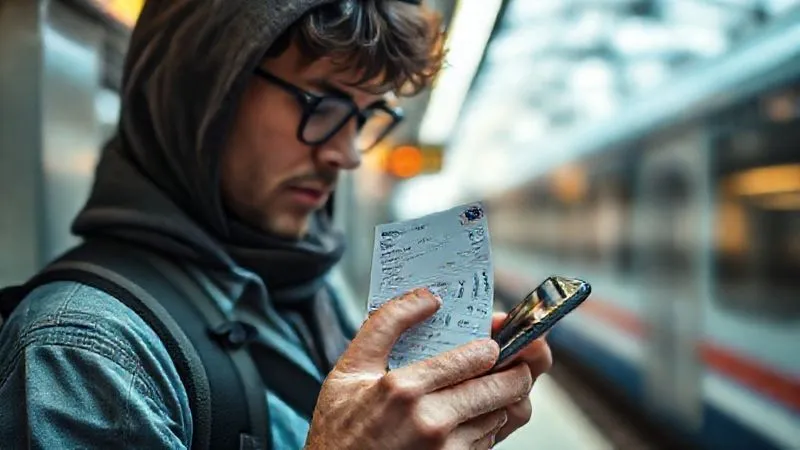
Your first point of contact will likely be a train conductor, a station manager, or customer service personnel. How you approach this interaction can significantly influence the outcome. I always advocate for a firm but polite demeanor. Remember, the individual you're speaking with is rarely responsible for the downgrade itself.
Clearly state the problem: "I booked a [original cabin class] and have been assigned a [downgraded cabin class]. This is a downgrade, and I'd like to understand why and what options are available." Present your original ticket and any downgrade notification.
Tip: If the first person you speak with cannot help, politely ask to speak with their supervisor or a more senior staff member. Persistence, coupled with a calm and rational explanation of your situation and rights, often yields better results than anger or aggression. Ensure you get a reference number for your complaint if one is offered.
Negotiating for Fair Compensation or Alternatives
Beyond the Refund: What to Ask For
Many travelers automatically think 'refund' when facing a downgrade. While a partial refund for the difference in class is a baseline expectation, in my experience, there's often more you can negotiate for. Railway companies, especially those valuing customer loyalty, have a range of tools at their disposal to make amends.
Consider asking for:
- A partial refund: This is standard, covering the fare difference between the booked and actual class. Ensure it's not just the difference in ticket price, but a fair compensation for the loss of amenity.
- Future travel credit or vouchers: Especially useful if you're a frequent train traveler. Sometimes the value offered in credit can exceed a cash refund.
- Upgrade on a subsequent leg: If your journey involves multiple segments, inquire if they can upgrade you on a different part of your trip.
- Meal vouchers: For long journeys, particularly if the downgraded class offers fewer dining amenities.
- Lounge access: If available at your departure or arrival station, this can be a welcome perk.
- Priority boarding or other perks: Small gestures that can significantly improve your overall experience.
My strategy: Present a few options. "While I appreciate the offer of a partial refund, I would also be open to a travel credit of [X amount] or perhaps an upgrade on my connecting journey to [City Y] if that's possible." This shows flexibility and opens the door for a more creative solution.
"Don't just accept the first offer. Railway companies often have discretionary budgets for customer service recovery. A polite, informed negotiation can unlock more substantial compensation or more appealing alternatives."
Case Study: How Maria Resolved Her Midnight Downgrade Dilemma
Maria, an avid night train enthusiast, booked a deluxe private sleeper cabin for a cross-European journey from Paris to Venice, a trip she had dreamed of for years. Just hours before departure, she received an email notifying her of a downgrade to a standard couchette compartment due to "unforeseen operational issues." Initially distraught, Maria remembered the advice to act decisively.
Upon arrival at the station, she calmly approached the customer service desk, presenting her original booking and the downgrade notification. She politely but firmly explained that a couchette was not comparable to a deluxe sleeper and requested a clear explanation and compensation plan. When the initial offer was a mere 20% refund, Maria, armed with knowledge of her rights, pointed out the significant difference in comfort and privacy she was losing.
She then proposed an alternative: a 50% refund for that segment of the journey, plus a €100 travel voucher for a future trip on their network. After a brief consultation with a supervisor, the railway agreed. Maria not only received a fair refund but also a credit that she used for a delightful weekend trip the following month. This outcome transformed her initial frustration into a testament to effective advocacy.
Escalating Your Complaint: When Initial Efforts Fail
Formal Complaint Procedures: Channels and Timelines
If your immediate efforts at the station or onboard don't yield a satisfactory resolution, it's time to engage with the railway's formal complaint process. Most reputable railway companies have dedicated customer relations departments designed to handle such issues. This typically involves submitting a written complaint, either via an online form on their website or by postal mail.
Key elements of a formal complaint:
- Your full name, contact details, and booking reference.
- A clear, concise, chronological account of what happened, including dates, times, and names of staff you interacted with.
- All supporting documentation (copies of tickets, downgrade notifications, photos, conversation summaries).
- A clear statement of what resolution you are seeking (e.g., specific refund amount, travel voucher).
Crucially, pay attention to any stated timelines for lodging complaints. Many railways require complaints to be submitted within a certain period (e.g., 28 days, 3 months) after the incident. Missing these deadlines can jeopardize your claim.
Consumer Protection Agencies & Ombudsman
Should the railway company's internal complaint procedure fail to provide a satisfactory outcome, you have further avenues for recourse. Depending on your location, there are often independent bodies designed to mediate or rule on disputes between consumers and service providers.
In the UK, for example, the Rail Ombudsman provides an impartial and free service for resolving complaints that train companies haven't been able to fix. Similarly, many countries have national consumer protection agencies or industry-specific ombudsman services that can intervene.
My recommendation: Exhaust the railway's internal process first. Only then, with their final response (or lack thereof), should you approach an external body. These organizations typically require proof that you've attempted to resolve the issue directly with the service provider.
For travelers in the UK, the Rail Ombudsman is an excellent resource for unresolved complaints.
Leveraging Technology & Social Media for Resolution
The Power of Public Discourse (Used Responsibly)
In today's interconnected world, social media platforms can be powerful tools for gaining attention and resolution, but they must be used judiciously. A well-crafted, factual post on Twitter, Facebook, or Instagram, tagging the railway company, can sometimes elicit a quicker response than traditional channels.
Best practices for social media engagement:
- Be factual and concise: Stick to the core details of your downgrade, without excessive emotion or personal attacks.
- Tag the official account: Use their verified handles to ensure your message reaches them.
- Include relevant photos: A photo of your original ticket next to your downgraded space can be very impactful.
- State your desired outcome: Clearly articulate what you're seeking (e.g., "seeking fair compensation for class downgrade").
- Avoid inflammatory language: Public shaming can backfire. Aim for a firm, professional tone.
Railway companies are often sensitive to public perception, and a visible complaint can sometimes prompt their social media response teams to reach out directly for resolution. However, always be prepared to move the conversation to private channels once they engage.
Utilizing Travel Insurance: Your Safety Net
Many travelers overlook the potential role of travel insurance in mitigating the impact of downgrades and other disruptions. While not all policies cover every scenario, comprehensive travel insurance often includes benefits for travel delays, interruptions, and sometimes even specific compensation for a loss of booked amenities.
Before your trip, meticulously review your policy's terms and conditions. Look for clauses related to 'trip interruption,' 'travel inconvenience,' or 'missed connection' benefits. Some premium credit cards also offer robust travel protection plans that might cover such events.
If you have a valid claim, gather all your documentation (as discussed earlier) and contact your insurance provider as soon as possible. They will guide you through their claims process, which might involve submitting copies of your tickets, railway's response, and any receipts for additional expenses incurred.
Understanding what your policy covers can provide a crucial safety net, particularly for significant downgrades or disruptions that lead to substantial financial loss or additional unexpected costs.
For a detailed understanding of what travel insurance typically covers, resources like Forbes Advisor offer excellent guides: What Does Travel Insurance Cover?
Preventative Measures: Booking Smart to Minimize Risks
While you can't entirely eliminate the risk of a last-minute downgrade, you can significantly reduce its likelihood and impact by adopting smart booking strategies. In my years of experience, a little foresight goes a long way.
Choosing Reputable Operators & Booking Platforms
Not all railway companies are created equal, and neither are all booking platforms. When planning a critical journey, especially one involving a sleeper train, research the operator's reputation for reliability and customer service. Look for reviews that specifically mention their handling of disruptions or changes.
Booking directly with the railway company, rather than a third-party aggregator, can sometimes simplify the resolution process. Direct bookings often mean direct communication channels, fewer intermediaries, and a clearer path to escalation if issues arise.
My tip: If using a third-party site, ensure they have a clear policy for assisting with disruptions and check their customer service ratings.
Booking Flexibility vs. Price: A Strategic Choice
It's tempting to always opt for the cheapest, non-refundable ticket. However, for journeys where a specific cabin class is paramount (like a sleeper train experience), investing in a more flexible ticket can be a wise decision. Flexible tickets often come with options for changes or cancellations, and sometimes, better protection against operational changes.
Consider the value of peace of mind. A slightly higher fare for a flexible ticket might offer greater leverage or easier rebooking options should a downgrade occur, potentially saving you more stress and money in the long run than a rigid, cheaper fare.

Another aspect is timing. Booking well in advance can secure your desired cabin, but sometimes, very last-minute bookings might be more susceptible to operational changes as capacities shift. There's a sweet spot, often a few weeks to a couple of months out, where availability is good, and last-minute disruptions are less likely.
| Scenario | Risk Level | Mitigation Strategy |
|---|---|---|
| Last-Minute Cabin Downgrade | Medium-High | Know passenger rights, document everything, negotiate compensation, consider flexible tickets |
| Train Cancellation | Medium | Rebooking or full refund, travel insurance claim, check operator's policy |
| Significant Delay (2+ hours) | Medium | Compensation based on delay duration, meal vouchers, travel insurance for missed connections |
| Lost Luggage | Low-Medium | Document contents, file claim immediately, travel insurance coverage |
The Psychological Impact & How to Maintain Composure
Beyond the practicalities and financial implications, I've observed that a last-minute downgrade can have a significant psychological impact. It can turn excitement into anxiety, anticipation into anger, and leave you feeling helpless. Managing these emotions is just as crucial as managing the logistics.
Managing Stress and Frustration
My first piece of advice when faced with such a situation is to take a deep breath. A moment of calm can prevent an emotional reaction that might hinder a productive resolution. Remember that getting angry or overly emotional with staff rarely helps; it often creates a barrier to communication.
Practical tips for maintaining composure:
- Step away if possible: If you're at the station, find a quiet corner to collect your thoughts before engaging with staff.
- Focus on facts, not feelings: While your feelings are valid, present your case based on the facts of your booking and the discrepancy.
- Remind yourself of your goal: Your objective is resolution, not retribution. Keep that in mind during interactions.
- Have a plan B (even a mental one): Knowing you have a fallback, even just the intention to escalate, can be empowering.
This isn't to say your frustration isn't justified, but channeling it constructively is key to achieving a positive outcome. A calm, assertive approach is far more effective in getting railway staff to empathize and assist.

The Long-Term Perspective: Learning from Experience
Every travel disruption, including a downgrade, is an opportunity to learn. After the dust settles, take a moment to reflect on what happened. What could you have done differently? What did you do well? Did your knowledge of passenger rights or your insurance policy prove useful?
This reflective process can transform a negative experience into valuable expertise for future journeys. You become a more resilient, informed traveler, better equipped to handle the inevitable bumps in the road (or track, in this case). It’s about building confidence and becoming your own best advocate in the vast world of travel.
Frequently Asked Questions (FAQ)
Can I refuse a sleeper train cabin downgrade? Technically, yes, you can refuse to accept the downgraded cabin. However, this might mean you forfeit your travel on that specific train or even that leg of your journey, as the railway might not have any other alternative to offer. It's often more strategic to accept the downgrade under protest, document everything, and then pursue compensation for the difference and inconvenience. Refusing outright could be seen as voluntarily canceling your trip, potentially impacting your right to a refund or compensation.
What if the train staff is unhelpful or dismissive? If initial interactions with onboard or station staff are unhelpful, remain calm and politely ask to speak with a supervisor or a more senior manager. If that's not possible, or if they too are dismissive, ensure you have documented their names (if provided) and the time of interaction. Proceed directly to the formal complaint procedure with the railway company's customer relations department, providing all your collected evidence. Mentioning that you've attempted to resolve the issue with staff but were unsuccessful strengthens your formal complaint.
Is it worth suing a railway company over a downgrade? For most individual cabin class downgrades, pursuing legal action through a lawsuit is generally not cost-effective. The legal fees and time involved would likely far outweigh the potential compensation for the downgrade itself. However, for significant and repeated breaches of contract, or if a downgrade leads to substantial consequential damages (e.g., missing a crucial connection for a non-refundable event, which is exceptionally rare for just a downgrade), consulting with a consumer rights lawyer might be considered. Small claims court could be an option in some jurisdictions for smaller amounts, but formal complaints and ombudsman services are usually the most practical and effective routes.
How quickly should I expect a resolution after lodging a formal complaint? The timeline for resolution can vary significantly by railway company and jurisdiction. Typically, railway companies aim to acknowledge receipt of your complaint within a few days and provide a substantive response within 28-30 days. Some complex cases might take longer. If you don't receive a satisfactory response within their stated timeframe, or if you're unhappy with the resolution, that's when you can escalate to an external body like a national rail ombudsman or consumer protection agency, which will have their own processing times.
Does travel insurance cover emotional distress from a downgrade? Generally, standard travel insurance policies do not provide specific coverage for emotional distress resulting from a cabin class downgrade or other travel inconveniences. Their coverage is typically focused on quantifiable financial losses, such as the cost difference of the downgrade, additional accommodation expenses due to delays, or medical emergencies. While the emotional impact is very real, it's rarely a direct claimable item under typical travel insurance. Always check your specific policy details, especially for premium-tier plans, which might have broader 'inconvenience' clauses, but direct emotional distress coverage is highly uncommon.
Key Takeaways and Final Thoughts
Navigating a last-minute sleeper train cabin class downgrade can feel like a frustrating ordeal, but as an experienced traveler, I want to reiterate that you have the power to influence the outcome. By understanding your rights, acting promptly, and employing strategic communication, you can transform a potential travel disaster into a manageable situation with a fair resolution.
Here are the critical takeaways to remember for your next journey:
- Know Your Rights: Familiarize yourself with passenger regulations and your ticket's terms and conditions before you travel.
- Document Everything: Your evidence is your strongest advocate. Photos, emails, and notes are invaluable.
- Engage Calmly and Assertively: Politeness combined with persistence is far more effective than anger.
- Negotiate Smartly: Don't just settle for a partial refund; explore all compensation options.
- Escalate Systematically: Use formal complaint channels and external bodies if internal efforts fail.
- Leverage Technology: Social media can be a tool, and travel insurance a critical safety net.
- Book Strategically: Choose reputable operators and consider flexible tickets for peace of mind.
- Maintain Composure: Managing your emotions is key to effective problem-solving.
My hope is that this guide empowers you, not just to resolve a downgrade, but to approach all your train travels with greater confidence and preparedness. The romance of the rails is worth preserving, and by being an informed and assertive passenger, you contribute to a better travel experience for everyone. May your future sleeper train journeys be smooth, comfortable, and free from unexpected bumps in class.
Recommended Reading
- 7 Scenic Train Routes to Heal Executive Burnout: Your Recovery Journey?
- Mastering Multi-Stop Family Adventures: 7 Steps to Prevent Logistical Chaos
- Unearth the Secrets: What Cultural Etiquette Applies to Visiting Ancient Ruins?
- Avoid Festival Fines: Your Guide to Preventing Health Code Violations
- 7 Proven Strategies: Guaranteeing Authentic Cultural Immersion at Chaotic Festivals


Your email address will not be published. Required fields are marked *