

How to Prevent Airline Damage to Power Wheelchairs?
For over two decades in the accessible travel sector, I've witnessed firsthand the incredible freedom air travel offers, but also the heartbreaking frustration when a crucial piece of mobility equipment, like a power wheelchair, is damaged during a flight. It's a problem I've seen far too often, turning eagerly anticipated journeys into stressful ordeals.
The pain points are real and deeply personal: a broken joystick, a bent frame, a non-functional battery system – these aren't just inconveniences; they strip away independence and can derail an entire trip, leaving individuals stranded and vulnerable. The logistical nightmare of repairs or replacements while away from home is a burden no traveler should have to endure.
This article isn't just a collection of tips; it's a comprehensive framework built from years of experience and advocacy. I'll share actionable strategies, drawing on best practices and real-world insights, to significantly mitigate the risk of airline damage to your power wheelchair. You'll learn how to prepare, communicate, protect, and advocate, ensuring your mobility remains intact and your travels stress-free.
Understanding the Risks: Why Wheelchairs Get Damaged in Transit
Before we dive into prevention, it’s crucial to understand why damage occurs. It’s rarely malicious, but rather a combination of factors including tight cargo spaces, hurried loading procedures, lack of specific training for handlers, and inadequate communication regarding the wheelchair's unique needs.
Common Points of Failure
- Joysticks and Control Panels: Often exposed and vulnerable to impacts.
- Footrests and Armrests: Protruding parts that can snag or bend.
- Batteries and Wiring: Improper disconnection or handling can lead to electrical issues.
- Frames and Wheels: Heavy impacts or improper securing can cause structural damage.
- Cushions and Seating: Can be lost or damaged if not properly secured or removed.
"The single biggest factor in preventing damage is proactive, detailed preparation and clear, concise communication with every point of contact at the airline. Assume nothing, document everything."
Pre-Flight Preparation: Your First Line of Defense
Your journey to preventing damage begins long before you reach the airport. Meticulous preparation is the bedrock of a successful, stress-free trip.
1. Document Everything: The Visual Record
In my experience, having irrefutable proof of your wheelchair's condition before it leaves your sight is paramount. This isn't just a suggestion; it's a necessity for any potential claims.
- Take High-Resolution Photos and Videos: Capture every angle of your power wheelchair, paying close attention to vulnerable areas like the joystick, footrests, and battery compartment. Date-stamp or use a timestamp app for your media.
- Create a Detailed 'Condition Report': Jot down any existing scratches, dents, or wear-and-tear. This report, alongside your visual evidence, provides a baseline.
- Photograph Disassembly (if applicable): If you need to remove parts, document each step of the process. This helps handlers reassemble it correctly and proves its condition prior to removal.
- Keep a Digital and Physical Backup: Store photos and videos on your phone, a cloud service, and print out a few key images to include with your wheelchair's instructions.
2. Communicate Proactively with Airlines
Don't wait until check-in. Engaged communication ensures the airline is prepared for your specific needs.
- Notify the Airline at Booking: Inform them immediately that you will be traveling with a power wheelchair. Provide its dimensions (length, width, height), weight, and battery type (wet cell, gel cell, AGM, lithium-ion).
- Follow Up 48-72 Hours Before Flight: Reconfirm your special assistance request. Ask for confirmation that all necessary information about your wheelchair has been logged and communicated to the ground staff at both departure and arrival airports.
- Understand Airline Policies: Each airline has specific rules for mobility devices. Review them thoroughly on their website. Pay particular attention to battery regulations, as these are often the most complex. The U.S. Department of Transportation (DOT) provides excellent resources on air travel with disabilities. Learn more about your rights and airline responsibilities here.
3. Mastering Battery Management and Disconnection
This is arguably the most critical step, as improper battery handling is a leading cause of damage and can even pose safety risks.
- Identify Your Battery Type: Is it a non-spillable (gel, AGM) or spillable (wet cell) battery? Lithium-ion batteries have very specific regulations.
- Non-Spillable Batteries: For most power wheelchairs, these do not need to be removed. However, you MUST disconnect the battery terminals to prevent accidental activation. Insulate the disconnected terminals to prevent short circuits.
- Spillable Batteries: These are less common in modern power wheelchairs. If you have one, it absolutely must be removed, placed in a strong, leak-proof container, and kept upright.
- Lithium-Ion Batteries: Many airlines require these to be removed and carried into the cabin as carry-on baggage, provided they meet specific Watt-hour (Wh) limits. Always check with your airline. The FAA has detailed guidelines on lithium battery safety. Consult FAA PackSafe for the latest regulations.
- Clear Instructions: Create a laminated, step-by-step guide for battery disconnection/reconnection, and attach it directly to your wheelchair.
Strategic Packing and Securing Your Power Wheelchair
Treat your power wheelchair like a fragile, high-value item, because it is. Proper securing and protection can make all the difference.
4. Disassembly and Protective Measures
While some airlines prefer minimal disassembly, strategically removing vulnerable parts and adding protection is key.
- Remove Loose Items: Detach anything that can easily come off, such as cushions, headrests, armrests, and footrests. Label these clearly with your name and contact information, and consider taking them as carry-on if possible.
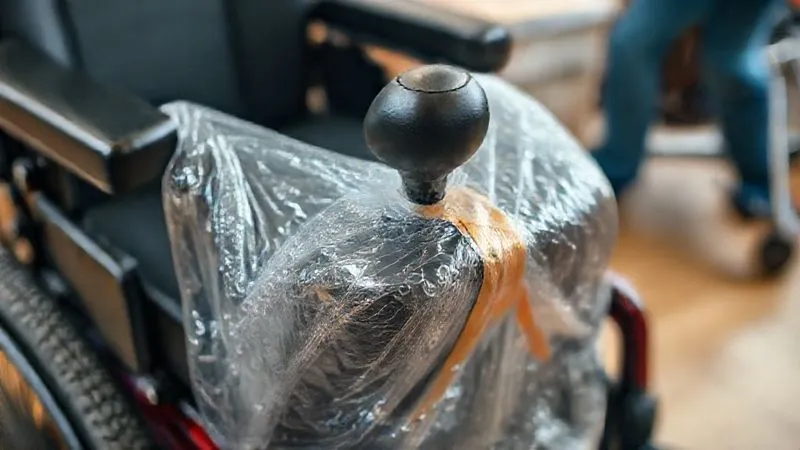
- Protect Protruding Parts: Wrap the joystick, control panel, and any other exposed electronics with thick padding (bubble wrap, foam, blankets) and secure it tightly with heavy-duty tape.
- Secure All Moving Parts: Ensure wheels are locked, and any adjustable components are in their most compact and secure position. Use bungee cords or straps to hold them firmly in place.
- Use Protective Covers: A durable, custom-fit cover or even a heavy-duty tarp secured with bungee cords can protect against scratches, dirt, and minor impacts.
- Consider a Travel Case: For smaller, more modular power chairs, investing in a hard-shell travel case can offer superior protection, although this isn't feasible for all models.
5. Crafting Clear Instructions and Labeling
Don't assume ground staff know how to handle your specific model. Provide them with a foolproof guide.
- Create a Laminated Instruction Card: Design a clear, concise, and laminated instruction card. Include:
- Your name and contact information.
- Airline and flight number.
- Wheelchair make and model.
- Battery type and clear instructions for disconnection/reconnection.
- Simple, numbered steps for operating the chair (e.g., 'to power on, press X button').
- Arrows indicating tie-down points.
- Warnings for fragile parts.
- Attach Instructions Securely: Affix multiple copies of these instructions to prominent, easily visible locations on your wheelchair using zip ties or strong adhesive.
- Use 'Fragile' and 'This Side Up' Labels: While not always strictly adhered to, these labels serve as visual cues.
Comparing common packing methods and their effectiveness:
| Method | Pros | Cons | Recommendation | |
|---|---|---|---|---|
| Basic Padding (Bubble Wrap/Foam) | Inexpensive, widely available, good for minor impacts. | Less effective against heavy impacts, can shift. | Essential minimum for vulnerable parts. | |
| Custom-Fit Covers/Tarps | Protects against scratches, dirt, weather, adds a layer of impact absorption. | May not prevent major structural damage. | Highly recommended for overall protection. | |
| Hard-Shell Travel Cases | Superior protection against heavy impacts, weather, and rough handling. | Expensive, heavy, not available for all wheelchair models. | Ideal for smaller, modular chairs; a significant investment but worthwhile. | |
| Professional Crating | Ultimate protection, custom-built for perfect fit. | Very expensive, time-consuming, impractical for most air travel. | Only for high-value, extremely fragile, or specialty chairs via cargo freight. | For typical passenger air travel, a combination of robust padding and a durable cover offers the best balance of protection and practicality. |
On the Day of Travel: Advocacy at the Airport
Your presence and clear communication at the airport are vital in ensuring your wheelchair is handled correctly.
6. Overseeing Loading and Unloading
I always advise travelers to be present and observant during the transfer process whenever possible. While you can't go onto the tarmac, you can communicate with airline staff.
- Speak with the Gate Agent: Reiterate your wheelchair's specific needs, especially battery disconnection and tie-down points. Ask if you can speak to the ground crew supervisor or lead ramp agent directly.
- Request a 'Gate Check' Tag: Even if you're checking it at the counter, ensure it has a gate check tag. This often signals to ground staff that it's a personal mobility device needing extra care.
- Observe (from a distance): If you can see the loading area from the gate, observe how your wheelchair is being handled. If you notice any concerning behavior, immediately alert the gate agent.
- Hand Over Instructions: Provide a copy of your laminated instructions directly to the ground crew or gate agent as your wheelchair is taken away.
- Take a Deep Breath: While vigilance is important, try to remain calm. Your clear, polite communication is your strongest tool.
Case Study: Sarah's Smooth Journey
Sarah, a frequent flyer who uses a sophisticated power wheelchair, once faced constant damage. After implementing a new strategy, she decided to take control. Before her next flight, she created a detailed, laminated instruction sheet with photos, clearly marked tie-down points, and step-by-step battery disconnection. She also took comprehensive pre-flight photos and spoke directly with the ramp supervisor at the gate. This proactive engagement ensured her wheelchair was carefully loaded and arrived at her destination without a scratch. Sarah's experience demonstrates that combining meticulous preparation with direct, polite advocacy can significantly improve outcomes, transforming potential stress into seamless travel.
Post-Flight Protocol: What to Do Upon Arrival
The moment you retrieve your wheelchair is critical for identifying and documenting any potential damage.
7. Immediate Inspection and Reporting Damage
This is where your pre-flight documentation becomes invaluable. Do not leave the airport without a thorough check.
- Retrieve Your Wheelchair Promptly: Go directly to the baggage claim area or special assistance area where your wheelchair will be delivered.
- Conduct a Thorough Inspection: Examine every part of your wheelchair. Check for new scratches, dents, bent components, loose wiring, and test all functions (power, joystick, tilt, recline, lights).
- Document Any Damage Immediately: Take new photos and videos of any damage found. Compare these with your pre-flight documentation.
- File a Report BEFORE Leaving the Airport: If you find any damage, no matter how minor, locate the airline's baggage service office immediately. File a formal Property Irregularity Report (PIR) or damage report. Insist on getting a copy of the report with a reference number.
- Request an Assessment: Ask the airline to have a qualified technician assess the damage while you are still at the airport, if possible.
- Keep All Documentation: Retain copies of your ticket, boarding pass, baggage claim tags, pre-flight photos/videos, and the airline's damage report. These are essential for follow-up claims.
Here's a quick checklist for your post-flight inspection:
| Component | Check For |
|---|---|
| Frame | Bends, cracks, severe scratches |
| Wheels/Tires | Damage to rims, flat tires, alignment issues |
| Joystick/Control Panel | Cracks, non-responsiveness, loose connections |
| Batteries/Wiring | Loose terminals, damaged cables, power issues |
| Footrests/Armrests | Bends, breaks, missing components |
| Seating/Cushions | Tears, stains, missing items |
| Overall Functionality | Does it power on? Does it drive straight? |

Navigating Rights and Recourse: If Damage Occurs
Even with the best preparation, accidents can happen. Knowing your rights is your strongest asset for seeking appropriate recourse.
Understanding Your Passenger Rights
In the United States, the Air Carrier Access Act (ACAA) is your shield. It mandates that airlines cannot discriminate against passengers with disabilities and must provide assistance. Under the ACAA, airlines are liable for damage to wheelchairs and other mobility aids. This liability is generally not subject to the same limitations as regular baggage. You can find detailed information on the Air Carrier Access Act (ACAA) through advocacy groups like United Spinal Association.
"Never accept 'it's just wear and tear' if your mobility aid is genuinely damaged. Your wheelchair is not a piece of luggage; it's an extension of your body and your independence. Fight for its proper repair or replacement."
If the airline's initial response is unsatisfactory, don't hesitate to escalate the issue. You can file a complaint with the U.S. Department of Transportation (DOT) Aviation Consumer Protection Division. This often prompts a more serious review of your case.
Investing in Peace of Mind: Travel Insurance and Beyond
While preparation and advocacy are crucial, sometimes an extra layer of protection can offer invaluable peace of mind.
Specialized Wheelchair Travel Insurance
Standard travel insurance policies often have limitations on high-value medical equipment. Consider specialized insurance that specifically covers mobility devices. These policies often provide higher coverage limits, quicker repair/replacement services, and cover costs associated with rental wheelchairs if yours is damaged.
Building a Support Network
Connect with accessible travel advocacy groups and online communities. These networks can offer advice, share experiences, and even provide support in dealing with airline disputes. Organizations like Wheelchair Travel offer invaluable insights and resources for travelers with disabilities.

Frequently Asked Questions (FAQ)
Q: Do I need to remove my power wheelchair battery before every flight? A: It depends on the battery type. For non-spillable batteries (gel, AGM), you typically need to disconnect the terminals and insulate them, but not remove the battery from the chair. For lithium-ion batteries, you often must remove them and carry them in the cabin, provided they meet Watt-hour limits. Spillable (wet cell) batteries usually must be removed and placed in a leak-proof container. Always confirm with your specific airline and check FAA/DOT regulations.
Q: What are the best materials to use for protecting my power wheelchair? A: Heavy-duty bubble wrap, dense foam padding, thick moving blankets, and industrial-strength tape are excellent for protecting vulnerable components like joysticks, control panels, and exposed wiring. A durable, waterproof cover or tarp secured with bungee cords can provide overall protection against scratches and dirt. For specific high-impact areas, consider custom-cut plywood or hard plastic sheets.
Q: Can I request that my power wheelchair be stored in the cabin instead of cargo? A: Unfortunately, most power wheelchairs are too large and heavy to be stored in the aircraft cabin due to space and weight restrictions. Only very small, collapsible manual wheelchairs or certain compact mobility aids might fit. Airlines are required to transport your power wheelchair in the cargo hold, free of charge, but they must take reasonable measures to protect it.
Q: What if the airline claims my damage was pre-existing? A: This is precisely why thorough pre-flight documentation (dated photos and videos) is crucial. If you have clear evidence of your wheelchair's condition before the flight, you can strongly dispute claims of pre-existing damage. Refer to your detailed condition report and visual evidence, and do not hesitate to escalate your complaint to the DOT if necessary.
Q: How long does an airline have to repair or replace a damaged power wheelchair? A: The Air Carrier Access Act (ACAA) does not specify an exact timeframe, but airlines are expected to act promptly and reasonably. They should provide a loaner wheelchair if yours is damaged, cover rental costs, and expedite repairs or replacement. If an airline is dragging its feet, filing a formal complaint with the U.S. DOT can often accelerate the process and ensure your rights are upheld.
Key Takeaways and Final Thoughts
- Document Everything: Photos and videos are your best defense.
- Communicate Proactively: Inform the airline early and often.
- Master Battery Protocols: This is non-negotiable for safety and compliance.
- Protect Vulnerable Parts: Pad, wrap, and secure with diligence.
- Provide Clear Instructions: Don't leave anything to assumption.
- Inspect Immediately: Report any damage before leaving the airport.
- Know Your Rights: The ACAA is your legal protection.
Traveling with a power wheelchair should be an empowering experience, not a source of anxiety. While airline damage remains a concern, by adopting these expert-backed strategies, you significantly empower yourself. You're not just a passenger; you're an informed advocate for your mobility. Take these steps, travel with confidence, and let your journeys be defined by discovery, not by damaged equipment.
Recommended Reading
- 7 Steps to Revive Safari Bookings Post-Wildlife Health Crisis
- 7 Proven Strategies: Extend Safari Tent Lifespan in Extreme Weather
- Busy Executive? Master Pro Solo Travel Photos in 5 Smart Steps
- Securing Capital: 7 Keys to Funding High-Risk Space Tourism
- Unlock the Secrets: How to Choose Eco-Friendly Beach Activities for Kids




Your email address will not be published. Required fields are marked *