

How to Avoid Hidden Eurail Pass Reservation Fees on Overnight Trains?
For over two decades, I've crisscrossed Europe's intricate railway networks, witnessing firsthand the magic and the occasional pitfalls of train travel. I've seen countless travelers, myself included in my early days, experience that familiar pang of frustration when a 'free' Eurail journey suddenly demands a hefty, unexpected reservation fee, especially on those alluring overnight trains. It's a common misconception that your Eurail pass covers absolutely everything, and unfortunately, this often leads to budget blowouts and travel headaches.
The allure of an overnight train is undeniable: falling asleep in one city and waking up in another, saving on accommodation, and maximizing travel time. However, the requirement for mandatory seat, couchette, or sleeper reservations, which often come with significant additional costs, can quickly turn a dream journey into a budget nightmare. These aren't just minor administrative charges; they can sometimes rival the price of a budget hotel room, completely undermining the perceived value of your pass.
But fear not! In this definitive guide, I'll draw upon my extensive experience to arm you with five actionable, expert-level strategies. You'll learn not just what these fees are, but how to proactively plan your trips, navigate complex reservation systems, and leverage smart booking tactics to significantly minimize or even entirely avoid those hidden Eurail pass reservation fees on overnight trains. Let's transform your European rail adventure into a truly cost-effective and seamless experience.
Understanding the Eurail Pass & Reservation Landscape
Before we dive into the avoidance strategies, it's crucial to grasp the fundamental distinction between your Eurail pass and a train reservation. This is where most travelers get tripped up, and understanding it is the first step towards saving money.
The 'Pass' vs. 'Reservation' Dichotomy
Your Eurail pass is a ticket to ride the trains of Europe's participating national railway companies. It grants you the *right* to travel, covering the basic fare. Think of it like a season ticket for public transport – it gets you on the bus, but it doesn't guarantee you a specific seat, especially not a luxurious one on a long-haul journey.
A Eurail pass is your golden ticket to freedom on the rails, but it's not an all-inclusive hotel on wheels. It covers the journey, not the specific comfort or priority of your chosen spot.
A reservation, on the other hand, is a booking for a specific seat, couchette, or sleeper berth on a particular train on a particular date and time. It's a separate transaction, required for many high-speed, scenic, and, crucially, all overnight trains. These fees cover the cost of the specific accommodation, the service provided (bedding, sometimes breakfast), and the allocation of a guaranteed space.
Why Overnight Trains Are Different
Overnight trains are inherently different from their daytime counterparts. They offer a unique experience, allowing you to save time and money on accommodation. However, this convenience comes at a price. Every passenger needs a designated space to sleep – whether it's a reclining seat, a shared couchette, or a private sleeper cabin. These spaces are limited, highly sought after, and therefore almost always require a mandatory, paid reservation.
The fees vary wildly based on the route, the railway company, the type of accommodation (seat, couchette, sleeper), and even the season. A basic reclining seat reservation might be as low as €3-€10, while a private sleeper compartment could easily set you back €50-€150 or more. This is where the 'hidden' costs can quickly accumulate, turning a seemingly budget-friendly travel day into an expensive one.
Strategy 1: The Art of Route Planning & Alternatives
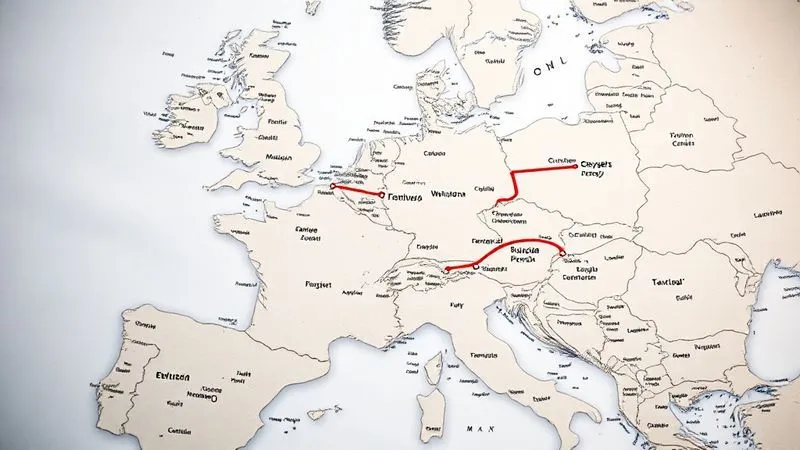
My number one piece of advice for any Eurail traveler, especially those on a budget, is to become a master planner. Proactive route planning is your most potent weapon against unexpected reservation fees. Don't just pick a destination; research how you'll get there.
Embrace Day Trains for Shorter Segments
The most straightforward way to avoid overnight reservation fees is, quite simply, to avoid overnight trains altogether. This doesn't mean you can't cover long distances; it just means breaking them up strategically. Instead of taking a direct overnight train from, say, Paris to Berlin, consider splitting the journey.
- Identify Key Hubs: Look for major cities roughly halfway through your long journey that offer good connections and possibly reservation-free day trains.
- Plan a Stopover: Use the mid-point city for a few hours of sightseeing, a meal, or even an overnight stay in a budget hostel. This can often be cheaper than a high-end sleeper reservation.
- Utilize Regional Trains: Often, the segments between major hubs can be covered by regional trains that don't require reservations.
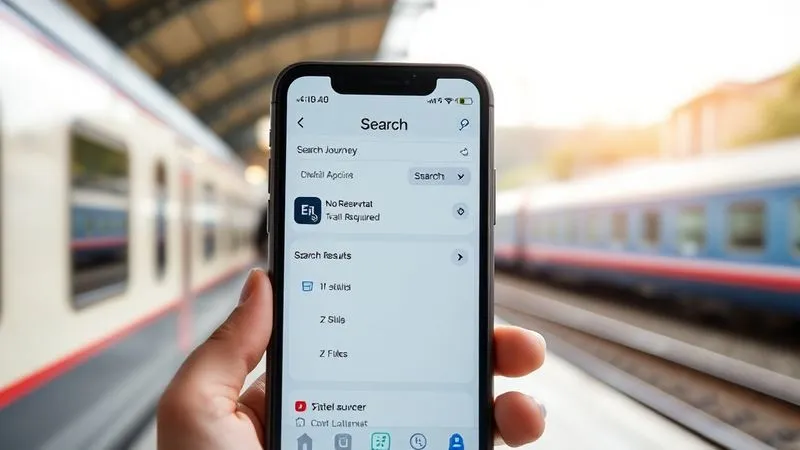
- Consult the Rail Planner App: Use the app's 'no reservation required' filter to find viable day train options.
Leverage Regional & Slower Trains
While high-speed trains are efficient, they almost always require reservations. Many European countries, especially Germany, Switzerland, Austria, and parts of France and Italy, have excellent networks of regional and intercity trains that are often reservation-free. These trains might take a little longer, but the savings can be significant.
Sometimes the scenic route is not just more beautiful, but also more budget-friendly. These slower trains often traverse stunning landscapes that you'd miss on a high-speed dash.
Case Study: Maria's Italian Adventure
Maria, a solo traveler from Canada, planned a Eurail trip through Italy. Her initial plan included an overnight train from Rome to Venice to save time and a hotel night. The sleeper reservation fee alone was quoted at €85. After researching, she opted for a different approach. She took a morning high-speed train from Rome to Florence (res. fee €10), spent the afternoon exploring Florence, and then took a regional train from Florence to Bologna (no reservation). From Bologna, she caught another regional train to Venice (no reservation), arriving in the early evening. She booked a budget hostel in Venice for €30. Her total cost for travel and accommodation was €40, saving her €45 and allowing her to see Florence for free! This demonstrates the power of breaking up journeys and utilizing reservation-free alternatives.
| Journey Type | Cost (Reservation) | Time Saved | Comfort Level | Reservation Required |
|---|---|---|---|---|
| Overnight Train (Direct) | €85 | 1 hotel night | Sleeper | Yes |
| Day Trains + Hostel | €40 | 0 hotel nights (travel during day) | Standard Seat | Partial/No |
Strategy 2: Mastering the Reservation System & Timing
Even if you decide an overnight train is essential for your itinerary, how and when you book your reservation can drastically impact the cost and availability. This is where being savvy with the booking process comes into play.
Book Early, Book Smart
Just like flights, train reservations, especially for popular overnight routes, operate on a dynamic pricing model. The earlier you book, the more likely you are to secure a cheaper reservation. High demand routes and peak seasons (summer, holidays) will see prices surge as the departure date approaches, and cheaper seats/couchettes will sell out first.
- Plan 2-3 Months Ahead: For critical overnight journeys, aim to book your reservations as soon as they become available, typically 2-3 months in advance.
- Use Official Channels: Always book through the official Eurail website's reservation service or directly through the national railway company operating the train. Third-party sites can sometimes add their own booking fees. The official Eurail reservation portal is your best bet for transparency.
- Be Flexible with Dates: If your travel dates are somewhat flexible, check prices for a few days before and after your preferred date. Weekends and national holidays often have higher demand and prices.
Understand Different Seat/Sleeper Types
Overnight trains offer a spectrum of comfort, and each comes with a different price tag. Understanding these options is key to making an informed, budget-conscious choice.
- Reclining Seats: The cheapest option, often comparable to an airplane seat. You'll likely be in a compartment with others. Expect minimal sleep, but maximum savings.
- Couchettes: These are basic bunk beds in shared compartments (4 or 6 berths). You'll typically get a pillow, sheet, and blanket. It's a step up from a seat and offers a decent night's sleep for a reasonable price. Gender-specific compartments are often available.
- Sleepers: The most comfortable and expensive option. These are private compartments, usually with 1, 2, or 3 beds, often including a sink and sometimes an en-suite toilet/shower (in deluxe versions). Ideal for couples, families, or those valuing privacy and comfort.
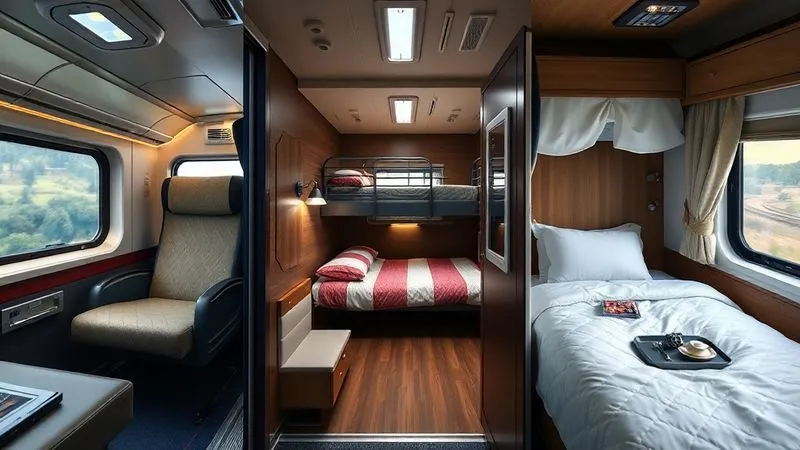
In my experience, a couchette often strikes the perfect balance between cost and comfort for budget travelers. It offers a proper bed without the premium price tag of a private sleeper.
Strategy 3: Strategic Pass Selection & Validity
Your choice of Eurail pass and how you manage your travel days can significantly influence whether you incur additional overnight reservation fees or maximize the value of your existing pass.
Leverage the '7 PM Rule'
This is one of the most powerful rules for Eurail pass holders traveling on overnight trains, and it's often overlooked. The 7 PM Rule states that if you board an overnight train that departs after 7:00 PM (19:00) and arrives after 4:00 AM (04:00), and you have a Flexi Pass (where you choose your travel days), you only need to use one travel day – the day of arrival. The departure day does not need to be a travel day.
The '7 PM Rule' is your best friend for maximizing travel days on overnight journeys. It essentially gives you a free travel day for your departure, stretching the value of your pass.
This means you can start your journey on an overnight train, marking the arrival day on your pass, and still have a full travel day available for your departure city if you choose to use it for daytime travel. For continuous passes, the rule doesn't apply as every day is a travel day anyway.
For a detailed breakdown and examples, I always recommend checking Eurail's official guide on the 7 PM rule. Understanding and applying this rule correctly can save you precious travel days, which directly translates to saving money, especially if you're on a limited-day pass.
Strategy 4: The 'Reservation-Free' Train Hunt
Not all trains require reservations, even for longer distances. Identifying these routes is a cornerstone of avoiding fees. This requires a bit of research, but the savings are well worth the effort.
Identify Reservation-Free Routes
Many national and regional trains across Europe do not require reservations. While they might be slower or involve more changes, they offer a completely free (with your pass) way to travel. The key is knowing how to find them.
- Use the Rail Planner App: This is your go-to tool. When searching for a journey, there's usually a filter option for 'no reservation required'. Apply this filter to see only the trains that don't incur additional fees.
- Consult National Railway Websites: Sometimes, the Eurail app might not show every single regional connection. Websites like Deutsche Bahn (Germany), ÖBB (Austria), SBB (Switzerland), or SNCF (France) for regional routes can provide more granular detail.
- Prioritize Specific Countries: Countries like Switzerland, Austria, Belgium, Luxembourg, and the Netherlands have extensive networks of reservation-free trains. Germany also has many, though some high-speed ICE trains do recommend or require them.
- Be Aware of Exceptions: Even in generally reservation-free countries, some specific scenic routes (e.g., Glacier Express in Switzerland) or international high-speed connections will still require reservations. Always double-check.
My top tip: always search for your desired route with the 'no reservation required' filter first. You might be surprised by how many viable, fee-free options exist, even if they add an hour or two to your journey. For a budget traveler, that extra time is a small price to pay for significant savings.
Strategy 5: Budgeting for the Unavoidable & Smart Spending
Despite your best efforts, there will be times when an overnight train with a reservation fee is simply the most practical or desirable option. In these cases, the strategy shifts from avoidance to smart budgeting and optimization.
Factor in Reservation Costs to Your Overall Budget
Don't view reservation fees as an 'extra' cost. Integrate them into your overall travel budget from the outset. When calculating the cost of a travel day, consider not just the cost of your Eurail pass per day, but also any anticipated reservation fees for that specific journey.
A small reservation fee might be worth it for a full night's sleep, saving you hotel costs. Sometimes, the 'hidden' fee is actually a smart investment in comfort and efficiency.
For example, if a couchette reservation costs €35, and a night in a budget hostel in your destination city would be €40-€50, then the overnight train is still saving you money, plus precious daytime hours. It's about looking at the holistic picture rather than just the individual fee.
Look for Promotional Offers and Pass Holder Discounts
While rare for general reservations, sometimes railway companies or Eurail itself will offer promotional discounts on specific routes or for certain pass types. Keep an eye on the official Eurail website and the websites of the national railway companies you plan to use. These offers are usually time-sensitive but can yield significant savings.
Additionally, some passes or specific reservation types might offer slight discounts for Eurail pass holders compared to standard ticket prices. Always ensure you're selecting the 'pass holder fare' when booking through official channels. For more general European train travel budget tips, I often refer travelers to resources like The Man in Seat 61, which provides comprehensive, independent advice on train travel across Europe.
| Category | Estimated Budget |
|---|---|
| Eurail Pass Cost (per day) | €30-€50 |
| Expected Reservation Fees (per overnight journey) | €10-€60 |
| Food & Drink | €30-€50 |
| Local Transport/Sightseeing | €15-€30 |
| Accommodation (if applicable) | €0-€50 |
| Buffer/Contingency | 10-15% of total |
Practical Tools and Resources I Recommend
To implement these strategies effectively, you'll need the right tools. Here are my top recommendations:
- Rail Planner App (by Eurail/Interrail): Absolutely essential. Use it offline, check schedules, and most importantly, use the 'no reservation required' filter.
- Official National Railway Websites: For specific countries, checking the national railway operator's website (e.g., DB for Germany, SNCF for France, ÖBB for Austria) can sometimes provide more detailed information on reservation requirements and alternatives, and often allows direct booking of pass holder reservations.
- Seat61.com: A goldmine of information for all things train travel. While not a booking site, it offers unparalleled advice on routes, train types, and booking strategies. The Man in Seat 61 is an authoritative and trustworthy source.
- Eurail.com Reservation Service: The most convenient way to book most Eurail pass holder reservations in one place, though it does charge a small booking fee per reservation.
Frequently Asked Questions (FAQ)
Question: Can I just show my Eurail pass and board an overnight train without a reservation?
Answer: No, absolutely not. For virtually all overnight trains across Europe, a mandatory reservation for a specific seat, couchette, or sleeper berth is required IN ADDITION to your Eurail pass. Attempting to board without one will likely result in being denied boarding, or at best, a hefty fine and the requirement to purchase a full-fare ticket on the spot, plus the reservation fee, if space is available. Always secure your reservation beforehand.
Question: What's the difference between a couchette and a sleeper, and which is cheaper?
Answer: A couchette is a basic bunk bed in a shared compartment, typically with 4 or 6 berths. You usually get a pillow, sheet, and blanket. It's designed for budget travelers seeking a horizontal place to sleep. A sleeper, on the other hand, is a proper bed in a private compartment, usually with 1, 2, or 3 beds, often with more amenities like a sink. Sleepers offer more privacy and comfort. Couchettes are significantly cheaper than sleepers, making them a popular choice for budget-conscious pass holders.
Question: Does the 7 PM rule apply to all overnight trains, and how does it save a travel day?
Answer: The 7 PM rule applies to overnight trains that depart after 19:00 (7 PM) and arrive after 04:00 (4 AM), provided you have a Flexi Pass. It saves a travel day by only requiring you to mark the *arrival* day on your pass, not the departure day. This means you can effectively travel for part of one day and all of the next, using only one travel day from your pass. For example, if you depart Monday 8 PM and arrive Tuesday 6 AM, you only use Tuesday as a travel day. It's a fantastic way to maximize your pass's value.
Question: Are reservation fees refundable if I cancel my overnight train?
Answer: Generally, Eurail pass reservation fees are non-refundable or come with strict cancellation policies and high cancellation fees. It's crucial to check the specific terms and conditions of your reservation at the time of booking. Some national railway companies might offer more flexibility than others, but as a rule of thumb, assume they are non-refundable and plan your itinerary carefully.
Question: Is it always cheaper to avoid overnight trains with reservations?
Answer: Not always. While avoiding reservation fees directly saves money, an overnight train can sometimes be a more cost-effective option overall. By combining travel and accommodation, you might save on a hotel night. If a couchette reservation is €35 and a budget hostel is €45, the overnight train is cheaper and saves you travel time during the day. It's important to compare the total cost (reservation + pass day value + no hotel) against the alternative (day travel + hotel).
Key Takeaways and Final Thoughts
Navigating Eurail passes and their associated reservation fees on overnight trains can seem daunting, but with the right knowledge and strategies, you can significantly reduce your costs and enhance your travel experience. Remember these critical takeaways:
- Understand the Distinction: Your pass covers travel; reservations cover your specific spot and comfort.
- Plan Proactively: Research routes, consider day train alternatives, and break up long journeys.
- Book Early & Smart: Secure reservations well in advance, understand different accommodation types, and use official booking channels.
- Leverage Pass Rules: The 7 PM Rule is your secret weapon for maximizing travel days on Flexi Passes.
- Seek Reservation-Free Routes: Utilize the Rail Planner app's filters to find trains that don't require extra fees.
- Budget Holistically: When unavoidable, factor reservation fees into your total travel budget, viewing them as an investment in convenience and comfort.
My hope is that this guide empowers you to travel smarter, not harder. Europe by rail is an unparalleled experience, offering freedom and adventure. By mastering these strategies, you'll not only avoid those frustrating hidden fees but also unlock the true value of your Eurail pass, allowing you to focus on what truly matters: creating unforgettable memories across this incredible continent. Happy travels!
Recommended Reading
- Treehouse Glamping: Is it Safe for Kids? Ultimate Safety Guide
- Seamless Business Abroad: 7 Keys to Luxury World Tour Continuity
- Mastering Corporate Culinary Journeys: 7 Pitfall Avoidance Strategies
- Travel Dialysis for Seniors: Top Tips for Safe & Worry-Free Trips
- 7 Proven Strategies for Preventing Food Safety Incidents on International Culinary Tours


Your email address will not be published. Required fields are marked *