


How to Justify High-Speed Rail Costs Over Budget Flights for Corporate Travel?
For over 15 years in the travel industry, specifically within the corporate and executive mobility sector, I've observed a pervasive misconception: the belief that the cheapest ticket always equates to the most cost-effective travel solution. This narrow view, often fueled by the allure of 'budget flights,' can subtly erode productivity, impact employee well-being, and ultimately inflate overall business costs.
Many corporate decision-makers grapple with the apparent higher upfront cost of high-speed rail (HSR) compared to a budget airline ticket. This immediate sticker shock often overshadows a deeper, more comprehensive analysis of value. The problem isn't just about the fare; it's about understanding the entire travel ecosystem and its impact on your business objectives.
In this definitive guide, I will share the actionable frameworks, real-world insights, and strategic perspectives I've developed over years of advising companies. You'll learn how to move beyond superficial price comparisons and instead conduct a holistic cost-benefit analysis that genuinely justifies high-speed rail for corporate travel, leveraging its advantages in productivity, employee welfare, sustainability, and overall ROI.
Beyond the Ticket Price: Unpacking the True Cost of Corporate Travel
The notion of a 'budget flight' often presents an illusion of savings. While the base fare might seem attractive, my experience tells me that these initial savings are frequently negated, or even exceeded, by a myriad of hidden costs and productivity drains. It's crucial to look beyond the immediate transaction and consider the full lifecycle of a business trip.
The Illusion of "Budget" Flights
A budget flight often comes with a stripped-down service model. Suddenly, what appeared cheap starts accumulating costs: checked baggage fees, seat selection charges, priority boarding to avoid chaos, and often exorbitant prices for in-flight refreshments. These add-ons quickly escalate the initial fare, sometimes to a point where it surpasses a standard rail ticket.
Moreover, the hidden costs extend far beyond the financial. Consider the time spent navigating sprawling airports, the uncertainty of flight delays, and the often-uncomfortable conditions of budget carriers. These factors contribute significantly to traveler stress and can impact their readiness for business engagements.
Hidden Costs: Time, Productivity, and Well-being
The most significant hidden costs associated with budget flights for corporate travel are often intangible but profoundly impactful. These include:
- Lost Productivity: Time spent commuting to distant airports, waiting in security lines, boarding, and deplaning is largely unproductive. In-flight work on budget airlines is often hampered by cramped spaces, unreliable Wi-Fi, and frequent interruptions.
- Traveler Stress & Fatigue: The cumulative effect of airport hassles, early starts, and uncomfortable travel can lead to significant stress and fatigue. This directly impacts an employee's ability to perform optimally upon arrival and can even lead to burnout.
- Environmental Impact: While not a direct financial cost, the higher carbon footprint of air travel is an increasingly important consideration for companies committed to sustainability, carrying a reputational and ethical cost.

The Productivity Powerhouse: Why High-Speed Rail Wins on Working Hours
In my consultations with businesses, I consistently emphasize that time is money, and productive time is invaluable. This is where high-speed rail fundamentally redefines the corporate travel experience, transforming transit time from a necessary evil into an extension of the workday.
Uninterrupted Work Environment
Unlike air travel, where significant portions of the journey (take-off, landing, taxiing) are digital dead zones, high-speed rail offers a consistent and conducive work environment from departure to arrival. Most modern HSR services provide reliable Wi-Fi, power outlets, and a stable ride, allowing travelers to work uninterrupted.
Imagine a sales executive reviewing presentations, an engineer refining designs, or a consultant preparing for a client meeting – all while in transit. This reclaimed productivity can be a game-changer, allowing employees to arrive prepared and maximize their time at the destination, rather than needing to catch up.
Seamless Connectivity and Comfort
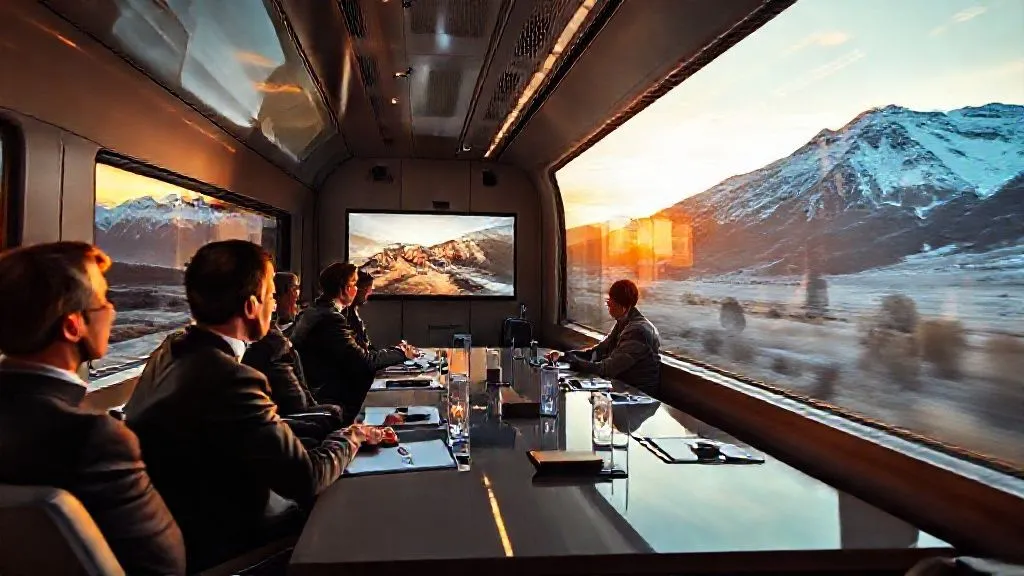
High-speed trains are designed with passenger comfort and connectivity in mind. Spacious seating, dedicated quiet zones, and often on-board meeting facilities mean that employees can collaborate, make calls, or simply focus without the distractions typical of air travel. The ability to move around, stretch, and access amenities further enhances the travel experience and reduces fatigue.
This comfort translates directly into improved employee morale and reduced stress. A well-rested and productive employee is a more effective employee, and the value of this cannot be overstated when considering the overall ROI of corporate travel.
| Factor | High-Speed Rail | Budget Flight |
|---|---|---|
| Wi-Fi Reliability | Generally excellent, consistent | Often unreliable, paid, or unavailable |
| Work Space & Comfort | Spacious, ergonomic seats, tables | Cramped, limited tray table |
| Power Outlets | Widely available at seats | Rarely available, often paid |
| Uninterrupted Work Time | Consistent from start to finish | Limited to cruising altitude |
| Meeting & Collaboration | Possible in quiet zones/at-seat | Highly restricted |
Strategic Time Savings: Door-to-Door Efficiency Analysis
When evaluating travel options, I always encourage clients to conduct a 'door-to-door' analysis, not just a 'take-off to landing' or 'station-to-station' comparison. This holistic view reveals where high-speed rail truly shines in terms of efficiency, especially for inter-city journeys of up to 4-5 hours.
Airport Hassles vs. City-Centre Convenience
Airports are typically located far from city centers, necessitating additional travel time and cost for transfers. Add to this the mandatory check-in times (often 1-2 hours before departure), security queues, and baggage reclaim upon arrival. These cumulative delays can easily add 3-4 hours to an air journey, even for a short flight.
High-speed rail, conversely, operates from centrally located stations. This means minimal commute time to the station, shorter (or non-existent) check-in procedures, and direct arrival into the heart of the destination city. The time saved on transfers and pre-departure processes is significant, allowing employees to spend more time on actual business activities.
Predictability and Punctuality
One of the most valuable, yet often overlooked, aspects of high-speed rail is its superior predictability and punctuality compared to air travel. Flights are highly susceptible to delays due to air traffic control, weather conditions, and operational issues. These delays cause missed connections, disrupted schedules, and immense frustration for business travelers.
High-speed rail networks, while not immune to all issues, generally offer far greater reliability. This predictability allows for tighter scheduling of meetings and appointments, reducing the risk of missed opportunities and the need for costly rescheduling. According to a European Commission report on rail transport, rail often outperforms air in terms of punctuality on many key routes.

Employee Well-being and Retention: An Untapped ROI Factor
As an industry specialist, I've seen firsthand that companies prioritizing employee well-being often experience higher retention rates, increased morale, and ultimately, greater productivity. High-speed rail travel offers distinct advantages in this regard, contributing to a healthier and happier workforce.
Reducing Travel Stress and Fatigue
The cumulative stress of frequent air travel – early mornings, security checks, cramped conditions, and the constant fear of delays – takes a toll on employees. This chronic stress can lead to burnout, decreased job satisfaction, and even health issues. High-speed rail, with its more relaxed environment, spacious seating, and direct city-center access, significantly mitigates these stressors.
Employees arriving at their destination feeling refreshed and less anxious are better prepared to perform their duties. This translates into more effective meetings, sharper presentations, and overall higher quality work, which is a clear ROI for any business.
Case Study: Zenith Innovations' Wellness-Driven Travel Shift
Zenith Innovations, a mid-sized consulting firm I advised, faced a growing problem with consultant burnout directly linked to their extensive short-haul air travel. Consultants often arrived at client sites exhausted, impacting their performance and leading to an alarming 25% attrition rate among their top talent. By implementing a policy prioritizing high-speed rail for all journeys under 4.5 hours, they saw remarkable results.
Within 18 months, consultant satisfaction with travel arrangements rose by 40%, and the attrition rate dropped to 10%. Consultants reported feeling more energized, productive during transit, and less stressed. This shift not only saved Zenith Innovations significant costs associated with recruitment and training new staff but also enhanced their reputation as an employer that genuinely cares for its team.
"Investing in employee well-being through smarter travel choices isn't an expense; it's a strategic investment in human capital that yields compounding returns in productivity, loyalty, and talent retention. The true cost of travel must always include the human element."
Sustainability and Corporate Responsibility: A Growing Imperative
In today's corporate landscape, Environmental, Social, and Governance (ESG) factors are no longer optional; they are critical components of a robust business strategy. High-speed rail presents a compelling advantage in helping companies meet their sustainability targets, enhancing their brand reputation, and attracting environmentally conscious talent.
Quantifying the Carbon Footprint Difference
The environmental impact of air travel, particularly short-haul flights, is significantly higher than that of high-speed rail. On average, trains produce considerably less CO2 emissions per passenger-kilometer than airplanes. For instance, the European Environment Agency consistently highlights rail as the most carbon-efficient mode of motorized passenger transport.
By choosing high-speed rail, companies can dramatically reduce their Scope 3 emissions (indirect emissions from their value chain, including business travel). This isn't just about ticking a box; it's about making a tangible difference and demonstrating a genuine commitment to combating climate change.
Aligning with ESG Goals
Adopting high-speed rail for corporate travel directly contributes to a company's ESG goals. It demonstrates social responsibility by prioritizing a cleaner mode of transport and governance by integrating sustainable practices into corporate policy. This alignment resonates positively with investors, customers, and employees who increasingly value ethical and environmentally conscious businesses.
In a competitive market, a strong ESG profile can be a differentiator, attracting top talent who seek employers whose values align with their own. It also builds brand loyalty among customers who are keen to support businesses that contribute positively to the planet.
Financial Justification: A Comprehensive Cost-Benefit Framework
Ultimately, to justify high-speed rail costs over budget flights for corporate travel, you need a robust financial framework. I always advise my clients to move beyond simplistic ticket price comparisons and develop a comprehensive cost-benefit analysis that quantifies both tangible and intangible factors. This approach provides a clear, data-driven argument for the strategic shift.
Actionable Steps for ROI Calculation
Here’s a step-by-step framework I use to help companies calculate the true ROI of high-speed rail:
- Map Key Corporate Travel Routes: Identify the most frequent inter-city routes your employees travel.
- Calculate True Door-to-Door Costs for Both Modes: For each route, meticulously tally all expenses: base fare, baggage fees, airport/station transfers, parking, in-flight/on-board purchases, and per diems for extended travel times.
- Quantify Productivity Gains: Estimate the average hourly wage of your travelers. Then, for each route, calculate the difference in productive work hours between HSR and air travel. Multiply this by the hourly wage to get a monetary value for reclaimed productivity.
- Assess Well-being Impact (Qualitative & Quantitative): While harder to monetize directly, factor in reduced sick days, improved employee retention (cost of hiring/training replacements), and increased job satisfaction. Conduct internal surveys to gather qualitative data.
- Factor in Sustainability Value: Assign a value (monetary or reputational) to reduced carbon emissions and improved ESG scores. This might include eligibility for green financing or improved brand perception.
- Negotiate Corporate Rates & Loyalty Programs: Engage with rail operators to secure corporate discounts, bulk purchase options, and loyalty benefits, which can significantly reduce per-ticket costs.
| Cost/Benefit Factor | Budget Flight (Avg) | High-Speed Rail (Avg) |
|---|---|---|
| Direct Ticket Cost | $150 | $200 |
| Baggage & Fees | $50 | $0 |
| Airport/Station Transfers (Time & Cost) | $75 + 2 hrs lost | $20 + 0.5 hrs lost |
| Lost Productivity (2 hrs @ $50/hr) | $100 | $25 |
| Meals/Refreshments (on-board) | $30 (often limited) | $20 (better options) |
| Employee Stress/Fatigue (qualitative impact) | High | Low |
| Carbon Footprint (relative) | High | Low |
| Total Estimated Cost/Impact Per Trip | $405 + significant intangibles | $265 + significant intangibles |
As this simplified table demonstrates, the 'budget' flight often ends up being more expensive when all factors are considered. This comprehensive view is essential for any C-suite executive looking to make informed travel policy decisions. For a deeper dive into optimizing business travel spend, I often recommend resources from reputable bodies like the Global Business Travel Association (GBTA).
Navigating the Transition: Implementing High-Speed Rail in Your Travel Policy
Making a shift in corporate travel policy, especially when it involves perceived higher costs, requires careful planning and strategic communication. My advice to clients is always to approach this transition with a phased, data-driven methodology, ensuring buy-in from all stakeholders.
Phased Adoption Strategies
Instead of an abrupt overhaul, consider a phased implementation. Start with specific routes where high-speed rail demonstrably offers superior door-to-door efficiency and cost-effectiveness. Conduct pilot programs with a select group of frequent travelers, gather their feedback, and use their positive experiences as internal case studies.
This gradual approach allows your organization to adapt, refine internal processes, and build confidence in the new policy. It also provides an opportunity to train employees on booking systems and highlight the benefits they will personally experience.
Negotiating Corporate Rates
Many national and international rail operators offer corporate accounts and preferential rates for businesses. These can include volume discounts, flexible ticketing options, and dedicated account management. Engaging with these operators can significantly reduce the per-ticket cost, bridging the gap with budget flight fares.
Furthermore, explore options for integrating rail bookings directly into your existing corporate travel management platforms. Streamlining the booking process is key to encouraging adoption and ensuring compliance with the new policy. As explored by experts at Harvard Business Review, strategic vendor negotiations are crucial for cost optimization.
The Future of Business Travel: A Paradigm Shift
The landscape of business travel is continually evolving, driven by technological advancements, environmental concerns, and a growing emphasis on employee well-being. High-speed rail is not just an alternative; it represents a paradigm shift towards a more efficient, sustainable, and humane way to conduct corporate travel.
Beyond Just Transport: An Experience
High-speed rail offers more than just transportation; it provides a valuable experience. It's an opportunity for deep work, focused preparation, or even collaborative sessions in a comfortable, inspiring environment. It allows business travelers to arrive at their destination refreshed and ready to engage, rather than depleted by the journey.
As companies increasingly recognize the value of their human capital and the importance of sustainability, high-speed rail will continue to gain prominence as the preferred mode of corporate travel for suitable routes. It's an investment that aligns with modern business values and delivers tangible returns.
Frequently Asked Questions (FAQ)
Question: Is high-speed rail always faster door-to-door than flying for corporate travel? No, not always. For very long distances (e.g., cross-continent) or routes lacking direct HSR connections, flying remains faster. However, for journeys typically between 200-800 km (125-500 miles), HSR often surpasses air travel in total door-to-door time due to city-center station access, minimal check-in, and fewer delays. Always conduct a specific route analysis.
Question: How can I convince my finance department that HSR is more cost-effective? Focus on the 'total cost of ownership' rather than just the ticket price. Present a detailed cost-benefit analysis that quantifies lost productivity, employee well-being benefits (reduced turnover, increased engagement), and the value of sustainability. Use the actionable steps and tables provided in this article to build a data-backed case.
Question: What about baggage limitations on high-speed trains? One of the significant advantages of HSR is the generous baggage allowance. Unlike airlines, most high-speed train services allow passengers to carry multiple pieces of luggage without extra fees, often storing them conveniently near their seats or in dedicated racks. This eliminates a common stressor and hidden cost associated with air travel.
Question: Does high-speed rail offer the same global reach as airlines? Currently, no. High-speed rail networks are primarily regional, with strong connectivity within continents (e.g., Europe, parts of Asia). While they offer excellent connectivity within their regions, they cannot replace intercontinental flights. The justification for HSR is for specific, often recurring, inter-city business routes where its advantages are most pronounced.
Question: Are there loyalty programs or corporate discounts for high-speed rail like there are for airlines? Yes, absolutely. Many major high-speed rail operators offer corporate accounts, volume discounts, and loyalty programs tailored for frequent business travelers. These programs can significantly reduce costs and offer additional benefits like flexible booking, dedicated lounges, and priority services, making HSR even more competitive.
Key Takeaways and Final Thoughts
- The 'budget flight' often presents an illusion of savings, with hidden costs in time, productivity, and employee well-being eroding any initial fare advantage.
- High-speed rail transforms transit time into productive work time, offering a stable, connected, and comfortable environment.
- Door-to-door efficiency, driven by city-center stations and superior punctuality, makes HSR a time-saver for many inter-city corporate routes.
- Investing in high-speed rail contributes significantly to employee well-being, reducing stress and fatigue, which in turn boosts morale and retention.
- Embracing HSR aligns with crucial ESG goals, demonstrating corporate responsibility and enhancing brand reputation through reduced carbon emissions.
- A comprehensive cost-benefit analysis, quantifying both tangible and intangible factors, is essential for a robust financial justification of high-speed rail.
As an industry veteran, I've seen countless companies transform their travel policies and reap significant benefits by strategically embracing high-speed rail. It's not merely about choosing a different mode of transport; it's about making a strategic investment in your company's efficiency, sustainability, and most importantly, your people. The future of corporate travel is faster, smarter, and more human-centric, and high-speed rail is at its very core. Don't just compare tickets; compare total value. Your business, and your employees, will thank you for it.
Recommended Reading
- Unlocking Authentic Cultural Festival Volunteer Roles: Your Ultimate Guide
- Unlock Impossible Access: 7 Steps to Ultra-Luxury Private Tours
- Mastering Self-Rescue: Your Ultimate Guide to Multi-Pitch Ice Climbs
- 7 Proven Ways to Sidestep Critical Delays on Independent Cruise Tours
- Arctic Survival: 7 Pro Strategies Guides Use to Prevent Hypothermia




Your email address will not be published. Required fields are marked *