

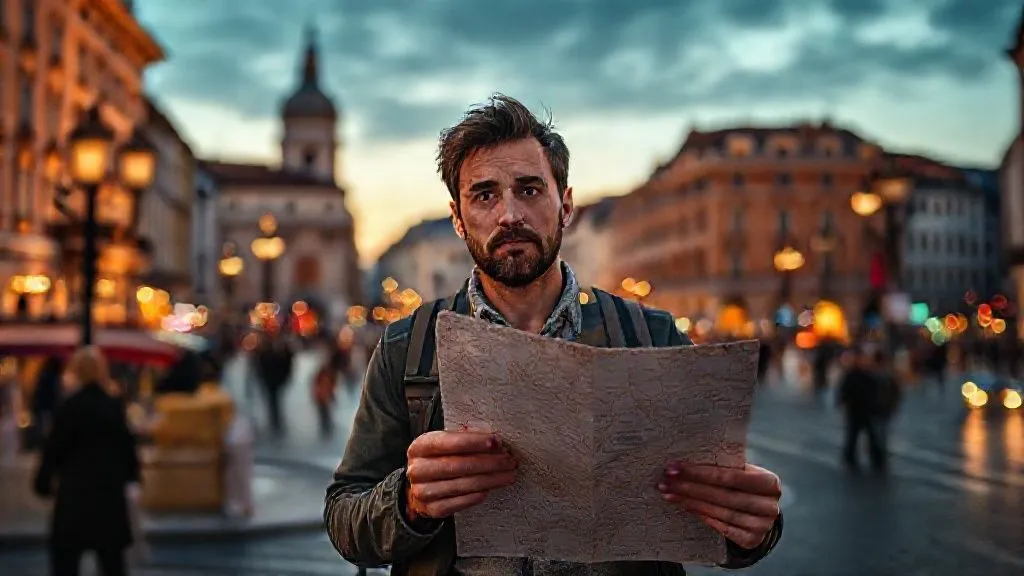
What to do if lost alone in a foreign city without internet?
For over 15 years, traversing the globe as a solo traveler and guiding countless others, I've seen firsthand how quickly a dream adventure can turn into a disorienting nightmare. There’s a particular vulnerability that sets in when you're navigating alone, and I distinctly remember a time in a labyrinthine Moroccan souk when my phone died, and my paper map felt like a foreign language. The initial surge of panic is a universal experience, and one I've personally wrestled with.
In our hyper-connected world, we've grown accustomed to the safety net of GPS, instant translation, and constant communication. But what happens when that net vanishes? When you're lost alone in a foreign city without internet, the reliance on technology becomes a stark reminder of its fragility. The sheer isolation, coupled with the inability to communicate or orient yourself, can trigger intense anxiety, making a challenging situation even more daunting.
This guide isn't just a list of tips; it's a comprehensive, actionable framework born from real-world experience and expert insights. My goal is to empower you with the resilience, practical tools, and mental fortitude needed to confidently answer the crucial question: What to do if lost alone in a foreign city without internet? We’ll move beyond mere survival, focusing on regaining control, ensuring your safety, and even transforming a potential crisis into a testament to your adaptability.
The Immediate Aftermath: Don't Panic, Orient Yourself
The first instinct when you realize you're lost and disconnected is often panic. Your heart races, thoughts blur, and your surroundings seem to close in. I've learned that this initial reaction, while natural, is your biggest adversary. The key is to interrupt that panic cycle immediately.
The "Stop, Breathe, Observe, Plan" (STOP) Method
This simple, yet profoundly effective method, is your immediate go-to:
- Stop: Physically halt your movement. Don't wander aimlessly, as this only exacerbates disorientation. Find a safe, unobtrusive spot – perhaps a bench, a cafe entrance, or a quiet corner.
- Breathe: Take several slow, deep breaths. Inhale through your nose, hold for a few seconds, and exhale slowly through your mouth. This calms your nervous system and helps clear your mind.
- Observe: Look around you. What do you see? Are there any recognizable landmarks? Street names? Public transport signs? People? Pay attention to sounds, smells, and the general atmosphere.
- Plan: With a calmer mind and fresh observations, start to formulate a simple, immediate plan. This might be as basic as 'walk to that church spire' or 'find the nearest cafe'.
Look for Clues: Landmarks, Street Signs, Public Transport Maps
Even without a digital map, your environment is rich with information. Look for prominent buildings, unique statues, large parks, or distinct architectural styles that could match a mental image or a pre-downloaded offline map (if you have one). Street signs, while potentially in a foreign language, often have numbers or symbols that can indicate main thoroughfares or districts. Public transport stops almost always have maps, which, even if you can't read the language, can show the layout of the city and help you pinpoint your general location relative to major routes.
"Panic is a cloud that obscures the sun of your judgment. Clear the cloud, and the path forward becomes visible." - An Experienced Solo Traveler

Pre-Trip Preparation: Your Unsung Hero
In my years of solo travel, I've learned that the best defense against getting lost and disconnected is robust pre-trip planning. It's not about being paranoid; it's about being prepared, which grants you immense freedom and peace of mind.
The Physical Toolkit: Maps, Phrasebooks, Emergency Contacts
Before you even step on the plane, assemble your analog safety net:
- Physical Map: Always carry a good quality, detailed paper map of your destination city. Mark your hotel, key landmarks, and important addresses.
- Local Phrasebook: Even a small one can be invaluable for basic communication, especially for asking for directions or help.
- Written Emergency Contacts: Have a small card with your hotel's address and phone number, your embassy's contact, and a trusted person back home. Don't rely solely on your phone.
- Emergency Cash: Keep a small amount of local currency separate from your main wallet. This can be crucial for a taxi, a bus ticket, or a quick meal.
Digital Backups (Accessed Offline)
While we're talking about being without internet, judicious use of offline digital tools is still paramount:
- Offline Maps Apps: Download city maps on apps like Google Maps or Maps.me before you leave. They use GPS, which doesn't require internet, to show your location.
- Screenshots: Take screenshots of directions, booking confirmations, emergency numbers, and important phrases.
- Cloud Storage: Keep digital copies of your passport, visa, and insurance documents in a cloud service you can access from any internet cafe if needed.
Local Knowledge & Cultural Nuances
Research goes a long way. Understand the local culture, common scams, and how locals typically help strangers. Knowing a few polite phrases in the local language can open doors. Also, identify safe areas and areas to avoid, even before you arrive.
"Preparation is not just about avoiding problems; it's about creating the capacity to enjoy the unexpected, knowing you have a fallback." - A seasoned global explorer
| Category | Item | Status |
|---|---|---|
| Navigation | Offline Maps App | Downloaded |
| Navigation | Physical Map | Packed |
| Communication | Phrasebook | Packed |
| Communication | Emergency Contacts (Written) | Packed |
| Documents | Passport Copies | Physical & Digital |
| Funds | Emergency Cash (Local Currency) | Stashed Separately |
| Safety | Local Emergency Numbers | Written Down |
Engaging with Locals: Seeking Trustworthy Assistance
When you're lost and without internet, locals become your most valuable resource. But knowing who to approach and how to do it safely is critical. My rule of thumb is to look for individuals or establishments that project an air of legitimacy and public service.
Identifying Safe Havens
Prioritize these locations when seeking help:
- Hotels: Even if not yours, hotels (especially larger ones) have English-speaking staff, public computers, and are accustomed to assisting travelers.
- Police Stations: The obvious choice for serious emergencies, but also for basic directions or advice.
- Banks: Often have security and staff who can offer assistance or point you to a reliable resource.
- Tourist Information Centers: Designed specifically to help travelers, they usually have maps, brochures, and multilingual staff.
- Established Shops/Cafes: A busy coffee shop or a reputable store is generally a safe bet. Ask to use their phone or Wi-Fi.
Overcoming Language Barriers
Even without a translation app, communication is possible. Use your phrasebook for key phrases like "Excuse me," "Can you help me?" "Where is...?" or "I am lost." Pointing to your map, drawing simple pictures, or even pantomiming can bridge the gap. Most people are willing to help if they understand you're in distress.
Approaching Strangers Safely
While most people are kind, always exercise caution. I generally look for:
- Families with children: Often perceived as less threatening and more empathetic.
- Uniformed personnel: Police, public transport staff, or postal workers.
- Shopkeepers: Especially in small, owner-operated stores.
- Other tourists: They might also be able to help or share their internet connection.
Always trust your gut feeling. If someone makes you uncomfortable, politely decline their help and move on. For more insights on safe travel, I often refer to resources like Lonely Planet's safety guides.
Navigating Without GPS: Embracing Analog Wisdom
Before smartphones, travelers relied on their wits and a good old-fashioned map. Reconnecting with these analog skills is empowering and essential when your digital tools fail. This is crucial when considering what to do if lost alone in a foreign city without internet.
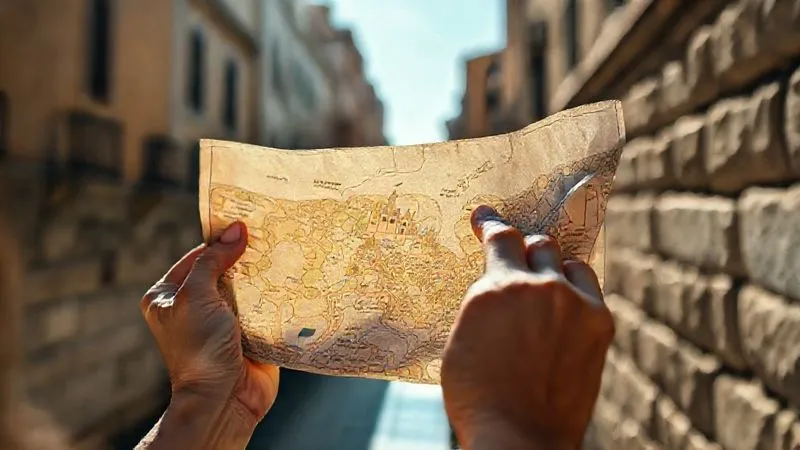
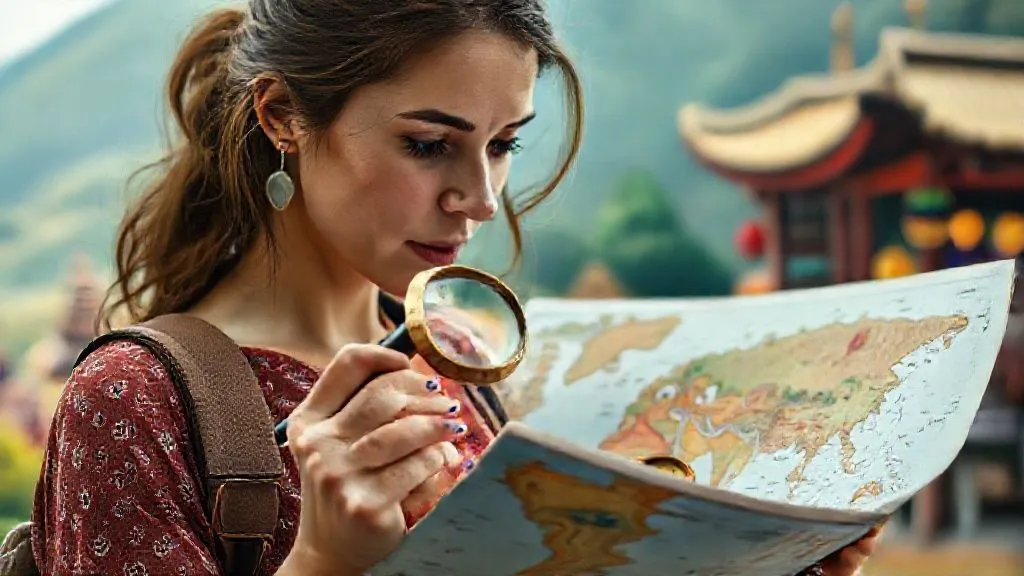
Mastering the Paper Map
Your physical map is your lifeline. Here’s how to use it effectively:
- Orient the Map: Hold the map so that the landmarks on the map align with the actual landmarks around you. If there's a compass, use it to orient North.
- Identify Key Landmarks: Find a major building, park, or river that you can see and locate it on your map. This helps you establish your general position.
- Trace Your Path (Backward): If you remember the last place you *knew* you were, try to mentally retrace your steps backward on the map to determine where you might have veered off course.
- Look for Major Arteries: Cities are often structured around main roads or rivers. Finding these can provide a backbone for your navigation.
Following the Sun and Stars (Basic Direction)
While not precise, understanding basic cardinal directions can be incredibly helpful. In the northern hemisphere, the sun rises in the east and sets in the west. At noon, it's roughly in the south. At night, if you can see the North Star (Polaris), you have a fixed point for North. Even a rough sense of direction can prevent you from walking further astray.
Public Transport as a Guide
Even without a network, public transport systems are designed to be navigable. Look for metro or bus station names, which are often in English or transliterated. The lines themselves often have distinct colors or numbers. If you can find a station and identify its name, you can often find it on a physical public transport map and deduce your location relative to the system.
"The most profound discoveries often happen when you're forced to look beyond the screen and engage with the world as it truly is." - A seasoned traveler's reflection
Safety First: Prioritizing Your Well-being
Being lost and disconnected amplifies any existing safety concerns. As a solo traveler, particularly for solo female travelers, maintaining personal security is paramount. My advice is always to err on the side of caution and prioritize your well-being above all else.
Personal Security Measures
When disoriented, it's easy to look like a target. Here’s how to minimize risk:
- Maintain a Confident Demeanor: Even if you're internally panicking, try to appear purposeful. Avoid looking constantly at your phone or map in a way that signals distress.
- Blend In: Dress modestly and appropriately for the local culture. Avoid flashy jewelry or expensive gadgets that draw attention.
- Be Aware of Your Surroundings: Constantly scan your environment. Notice who is around you, pay attention to exits, and avoid walking with headphones on.
- Protect Valuables: Keep your passport, money, and cards in a secure, hidden place, like a money belt or an inside jacket pocket. Only carry what you need for the day.
Avoiding Risky Situations
When you're lost, your judgment can be impaired. Be extra vigilant:
- Avoid Dark Alleys and Isolated Areas: Stick to well-lit, populated streets, especially after dark.
- Be Wary of Overly Friendly Strangers: While most people are genuinely helpful, some might have ulterior motives. Always trust your instincts.
- Limit Alcohol Consumption: Being inebriated makes you an easier target and further impairs your decision-making.
- Do Not Engage in Arguments: If approached by aggressive individuals, try to disengage calmly and move away.
Emergency Funds and Important Documents
Always have a separate, small stash of emergency cash in a different location from your main wallet. This could be a few hundred dollars/euros in a money belt or hidden pocket. Additionally, carry physical photocopies of your passport, visa, and travel insurance, along with digital copies stored in a secure cloud service. This ensures you still have vital information even if your primary documents are lost or stolen. The U.S. Department of State offers an excellent travel checklist that emphasizes document security.
Re-establishing Connection: Finding Your Digital Lifeline
Even if you start your journey offline, the ultimate goal is often to re-establish a digital connection to contact loved ones, access online maps, or arrange transport. Knowing where to look for Wi-Fi or local SIMs is a crucial step for what to do if lost alone in a foreign city without internet.
Free Wi-Fi Hotspots
Many places offer free Wi-Fi, often advertised with a sticker in the window:
- Cafes and Restaurants: Most establishments catering to tourists offer free Wi-Fi. It's often expected that you'll purchase something.
- Public Libraries: A reliable source of free internet access, usually with computers available for use.
- Tourist Information Centers: Often have free Wi-Fi and sometimes even public computers.
- Major Train Stations or Airports: Large transport hubs usually provide free, albeit sometimes limited, Wi-Fi.
- McDonald's or Starbucks: These global chains are almost universally reliable for free Wi-Fi.
Buying a Local SIM Card
If you have an unlocked phone, buying a local SIM card is a relatively inexpensive way to get data and local calls. Look for:
- Airport Kiosks: Convenient, but often more expensive.
- Mobile Carrier Stores: Major carriers (e.g., Vodafone, Orange, T-Mobile, etc.) will have stores in city centers. Bring your passport for registration.
- Convenience Stores/Supermarkets: In some countries, you can buy prepaid SIMs at these locations.
Ask for a 'prepaid SIM with data' and specify how much data you need. The staff can often help you install and activate it.
Using Public Phones or Internet Cafes
While less common now, public payphones still exist in many cities, often near post offices or train stations. Internet cafes, though dwindling, can also be found in larger cities and offer computer access for a small fee. These are excellent analog-digital bridges when you're truly stuck.
"In the age of instant connection, the ability to find a way back online becomes a powerful act of self-reliance and resourcefulness." - My own observation from years of travel
Case Study: Maria's Parisian Predicament
Let me share a fictional, yet highly realistic, scenario that illustrates the power of these strategies.
Maria's Parisian Predicament
Maria, a solo traveler from Canada, was exploring the charming, winding streets of Le Marais in Paris. Engrossed in the beautiful architecture, she took a wrong turn, and then another. Suddenly, her phone, which she relied on for navigation, flickered and died. She hadn't charged it fully, and her portable charger was back at the hostel. She was lost alone in a foreign city without internet, with a rapidly fading sense of direction.
Maria felt the familiar knot of panic, but remembering her pre-trip mental drills, she immediately initiated the STOP method. She found a small bench, took deep breaths, and looked around. She recognized the distinct architecture of a boulangerie she'd passed earlier, and a faint glimpse of the Eiffel Tower in the distance confirmed her general orientation.
She pulled out her physical map, which she had diligently marked with her hostel's location and the nearest metro station. Using the Eiffel Tower as a visual anchor, she oriented her map. She realized she was only a few blocks from a major boulevard she recognized from her map. She decided her first plan was to reach that boulevard.
As she walked, she spotted a busy cafe with a Wi-Fi sticker. She politely entered, used her small French phrasebook to ask for a coffee and if she could use their Wi-Fi. The kind barista, sensing her distress, helped her connect. Maria quickly sent a message to her family and looked up directions to her hostel. She then used the cafe's Wi-Fi to locate the nearest mobile carrier store and purchased a local SIM card, ensuring she wouldn't be caught offline again.
Maria's experience, while initially frightening, became a testament to her preparedness and resilience. She not only found her way back but also gained invaluable confidence in her ability to handle unexpected challenges. This experience aligns with the wisdom shared by travel experts like Rick Steves, who emphasizes self-reliance in solo travel.
"The true measure of a traveler isn't in avoiding challenges, but in how gracefully they navigate them." - Maria, reflecting on her experience
The Psychological Aspect: Managing Fear and Fatigue
Beyond the practical steps of finding your way, managing your mental and emotional state is crucial. Being lost, alone, and disconnected is mentally exhausting. I've personally found that controlling my internal dialogue is as important as reading a map.
Self-Talk and Positive Affirmations
When negative thoughts creep in, challenge them. Instead of "I'm hopelessly lost," try "I am resourceful, and I will find a solution." Remind yourself of past challenges you've overcome. This isn't about denial; it's about maintaining a proactive mindset.
Taking Mini-Breaks
If you're feeling overwhelmed, take a five-minute break. Sit down, close your eyes, and focus on your breathing. A small rest can clear your head and prevent mental fatigue from clouding your judgment further. Hydrate and, if you have any, snack on something light.
Trusting Your Instincts
Your gut feeling is a powerful, often overlooked, tool. If a path feels wrong, or a person seems untrustworthy, listen to that inner voice. It's often your subconscious processing cues you might not be consciously aware of.
"Resilience isn't the absence of fear, but the courage to act despite it." - A principle I live by on the road
| Contact Type | Details |
|---|---|
| Embassy/Consulate | Local Address & Phone |
| Travel Insurance | Policy Number & Hotline |
| Bank (for cards) | Lost Card Hotline |
| Family/Friend (Home) | Phone & Email |
Learning from the Experience: Post-Adventure Reflection
Every challenge, especially one like getting lost alone in a foreign city without internet, is an opportunity for profound learning. Once you're safely back on track, take some time to process what happened. This reflective practice is what truly builds expertise and resilience for future travels.
Debriefing Your Journey
Think back through the entire incident. What went wrong? What did you do right? What resources proved most valuable? Did your pre-trip preparation pay off, or were there gaps? This honest assessment is critical for refining your strategies.
Updating Your Emergency Plan
Based on your debrief, update your personal emergency plan. Perhaps you realize you need a more detailed paper map, or a better way to carry emergency cash. Maybe a small, charged power bank is now a non-negotiable item. Every experience allows you to iterate and improve your solo travel toolkit.
Sharing Your Story (Responsibly)
Consider sharing your experience with fellow travelers. Your story, particularly if it highlights how you navigated a difficult situation, can be incredibly empowering and educational for others. However, always prioritize your privacy and safety, and share only what you're comfortable with. Understanding the psychological impact of such events is also important, and resources like the WHO's guidance on mental health in emergencies can provide valuable context.
Frequently Asked Questions (FAQ)
How do I identify a safe person to ask for help? Look for individuals in official uniforms (police, public transport staff), families with children, or staff in established businesses (hotels, banks, reputable stores). Trust your intuition; if someone makes you uncomfortable, politely disengage.
What if I don't speak the local language at all? Carry a small phrasebook with essential phrases like "I am lost," "Can you help me?" and "Where is...?" Use gestures, point to locations on your paper map, or show a written address. Most people understand basic needs through context and body language.
Should I carry my passport with me, or leave it at the hotel? This is a common dilemma. I recommend carrying a high-quality photocopy or a digital copy (on your phone and in cloud storage) of your passport, and leaving the original in a secure hotel safe. However, some countries require you to carry your original ID. Research local laws beforehand. If you carry the original, keep it in a secure, hidden money belt.
What's the absolute minimum I should have prepared for an offline emergency? At a bare minimum, always have a fully charged phone (even if for offline maps/photos), a physical map of your immediate area, a small amount of local emergency cash, and a written list of crucial contacts (hotel, embassy, family) and addresses.
How do I prevent getting lost in the first place? Before leaving your accommodation, familiarize yourself with your route. Use offline maps to visualize the path. Pay attention to landmarks as you go. Take photos of street signs or unique buildings. Don't rely solely on your phone; actively engage with your surroundings and your paper map.
Key Takeaways and Final Thoughts
Navigating alone in a foreign city without internet might seem like a daunting prospect, but it doesn't have to be a disaster. My years on the road have taught me that preparedness, a calm mind, and a willingness to engage with the world around you are your most powerful tools. Remember these core principles:
- Prioritize Calm: Employ the STOP method to manage initial panic.
- Prepare Diligently: Your pre-trip planning, from physical maps to emergency contacts, is your foundation.
- Seek Safe Assistance: Know where and how to approach trustworthy locals for help.
- Embrace Analog Navigation: Master your paper map and observe your environment for clues.
- Stay Vigilant: Personal safety is paramount, especially when disoriented.
- Re-establish Connection Smartly: Know where to find Wi-Fi or local SIMs.
- Learn and Adapt: Every experience makes you a more resilient and resourceful traveler.
The beauty of solo travel lies in its capacity to push you beyond your comfort zone, revealing strengths you never knew you possessed. Should you ever find yourself lost alone in a foreign city without internet, remember that you are capable, resourceful, and equipped with the knowledge to regain control. Embrace the challenge, trust your instincts, and let your journey continue. The world awaits your next adventure, and you are ready for it.
Recommended Reading
- How to Secure Remote Work: Your 7-Step Blueprint for Professional Budget Travel
- 7 Steps: Ethically Sourcing Unique Coffee Beans from Your Travels
- 5 Crucial Rules: Master Wine Etiquette for Global Business Dinners?
- 5 Strategies: Engaging Skeptical Executives on Cultural Museum Tours?
- Safeguarding Your Career: 7 Steps for International Volunteer Success
Your email address will not be published. Required fields are marked *