

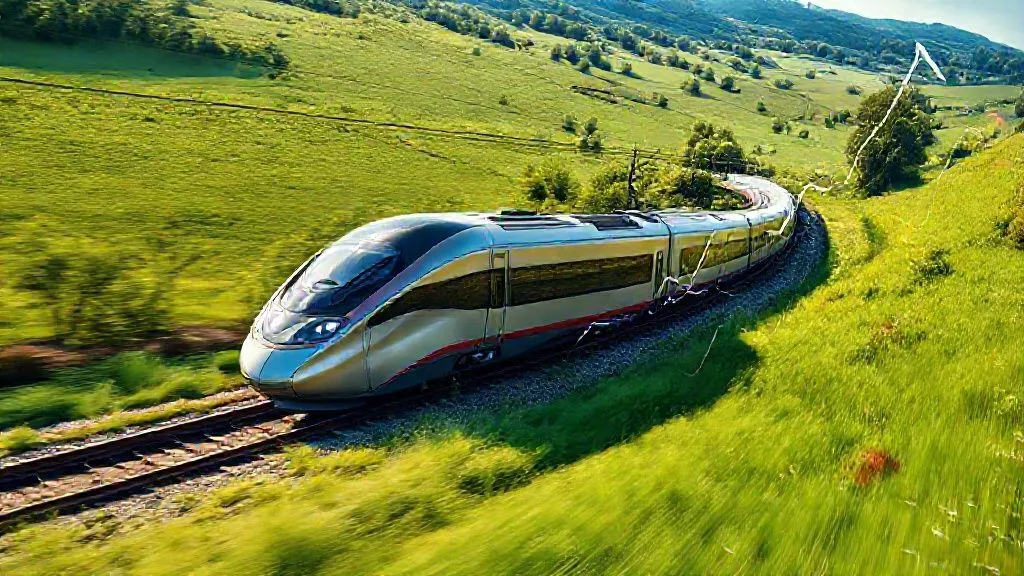
How to Justify Higher Cost of Sustainable Train Travel to Clients?
For over 15 years, navigating the intricate landscape of corporate travel, I've witnessed a significant shift in priorities. Businesses are increasingly seeking sustainability, yet often recoil at the perceived premium attached to eco-friendly options. This isn't a new challenge; it's a fundamental hurdle in balancing corporate responsibility with fiscal prudence.
You're passionate about offering sustainable train travel, you understand its profound benefits, but then comes the inevitable question from clients: 'Why is it more expensive?' This immediate cost comparison can derail even the most well-intentioned proposals, leaving you struggling to articulate the deeper, long-term value beyond the ticket price.
But what if you could not only address that cost objection head-on but transform it into a compelling argument for strategic investment? In this definitive guide, I'll share expert frameworks, real-world analogies, and actionable strategies that I've honed over decades. We’ll delve into how to justify higher cost of sustainable train travel to clients, equipping you with the confidence and data to make sustainability an undeniable asset, not a liability.
Understanding the Core Objection: Price vs. Value
The Immediate Sticker Shock
When clients first see a higher price tag for a train journey compared to a budget flight, their immediate reaction is often purely financial. They're comparing two modes of transport on a single metric: the upfront cost. This is a natural human tendency, and it's your first barrier to overcome.
In my experience, simply stating 'it's better for the environment' isn't enough to sway a budget-conscious client. You need to provide a more holistic view, one that encompasses tangible benefits and quantifiable returns, not just ethical considerations.
Shifting the Paradigm: From Expense to Investment
The key to answering 'How to justify higher cost of sustainable train travel to clients?' lies in reframing the conversation. We need to move away from viewing sustainable train travel as a mere expense and position it as a strategic investment. This investment yields returns in various forms: environmental, social, and even economic.
It's about demonstrating that while the initial outlay might be higher, the total cost of ownership, the brand value, and the employee well-being benefits far outweigh that difference. Think of it like investing in premium office equipment – it costs more upfront but delivers greater efficiency and longevity.
"The price of anything is the amount of life you exchange for it." While Thoreau wasn't talking about train tickets, his sentiment perfectly captures the essence of value beyond monetary cost. We're selling a better 'life' experience and a more responsible future.
Strategy 1: Quantifying Environmental Impact and CSR Value
Carbon Footprint Comparison: Train vs. Air
One of the most powerful arguments for sustainable train travel is its significantly lower carbon footprint. This isn't just a feel-good factor; it's a measurable reduction in environmental impact that aligns directly with a company's Corporate Social Responsibility (CSR) goals.
I always advise clients to consider the hard data. For example, a train journey typically emits 75-90% less CO2 per passenger than an equivalent flight. This isn't marginal; it's a massive difference. Presenting this in clear, digestible figures can be incredibly impactful.
- Reduced Emissions: Directly contributes to carbon reduction targets.
- Eco-friendly Image: Enhances public perception and brand reputation.
- Regulatory Compliance: Prepares businesses for increasingly stringent environmental regulations.
- Stakeholder Engagement: Appeals to environmentally conscious investors and customers.
According to the European Environment Agency, rail transport is by far the most climate-friendly mode of passenger transport in Europe, when compared with equivalent distances travelled by road or air. This authoritative data provides an undeniable foundation for your argument.

Translating Environmental Gains into Brand Equity
Clients often struggle to see how a lower carbon footprint translates into tangible business benefits. This is where you connect the dots. A strong CSR profile isn't just good for the planet; it's good for business. Companies with robust sustainability initiatives often enjoy:
- Improved Brand Loyalty: Consumers are increasingly choosing brands aligned with their values.
- Enhanced Talent Attraction & Retention: Employees, especially younger generations, prefer to work for responsible companies.
- Positive Media Coverage: Opportunities for PR and showcasing genuine commitment to sustainability.
- Investor Confidence: ESG (Environmental, Social, Governance) factors are now critical for many investors.
By investing in sustainable train travel, clients aren't just buying a ticket; they're investing in their company's future reputation and market positioning. You're helping them build a brand that resonates with modern values.
Strategy 2: Highlighting Enhanced Productivity and Well-being
The Onboard Experience: A Mobile Office
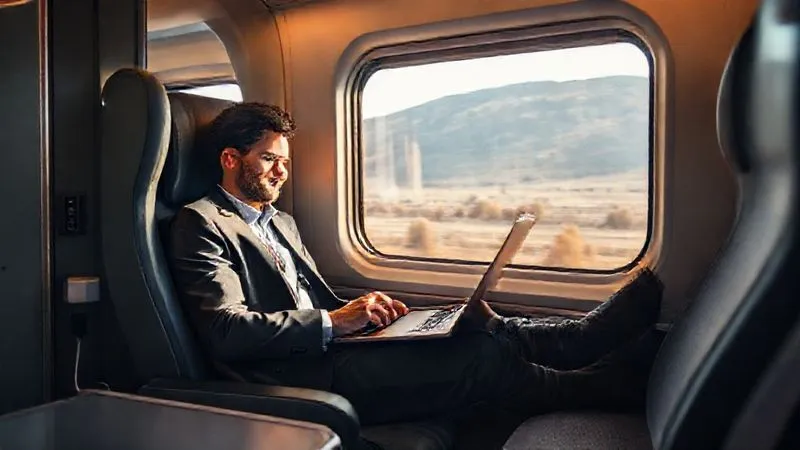
This is often overlooked but incredibly valuable. Unlike the cramped, disconnected experience of air travel, a train journey can be a highly productive environment. I've personally seen executives turn train compartments into mobile war rooms, making calls, preparing presentations, and catching up on emails.
On a train, travelers typically have:
- Consistent Wi-Fi: Enabling uninterrupted work.
- Spacious Seating: Room to open laptops, spread out documents.
- Power Outlets: Keeping devices charged throughout the journey.
- No "Flight Mode" Restrictions: Stay connected and productive from door to door.
- Reduced Security Hassles: Less time wasted in queues, more time for work or relaxation.
Reduced Stress and Increased Focus
The journey itself can be a source of stress, impacting employee well-being and subsequent productivity. Train travel offers a stark contrast.
- Eliminate Airport Stress: No long security lines, chaotic terminals, or baggage claim waits.
- Enjoy Scenic Routes: A more relaxed and inspiring environment can reduce mental fatigue.
- Arrive Refreshed: Employees often arrive at their destination feeling less drained and more prepared for meetings or tasks.
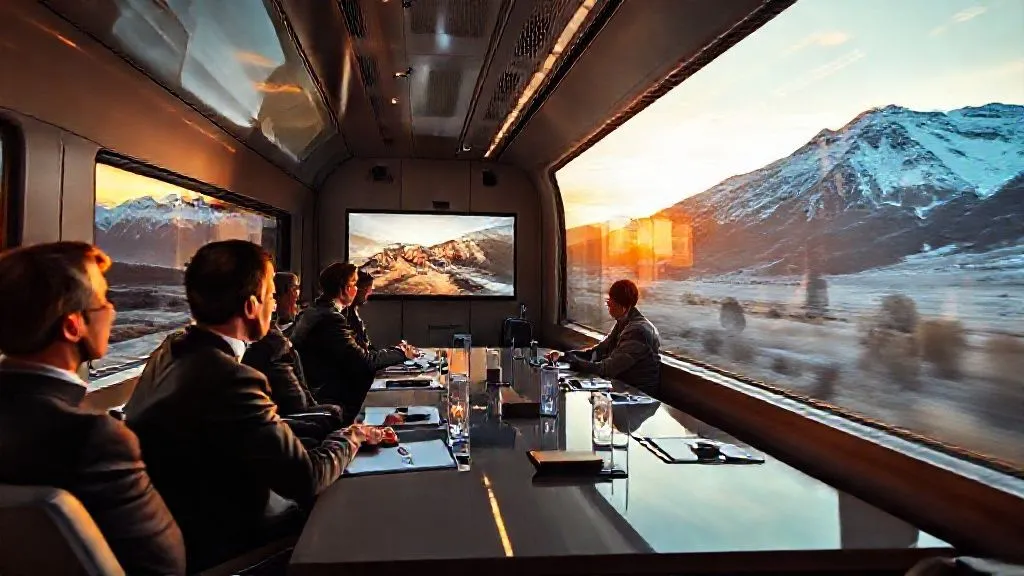
- Facilitate Collaboration: For teams traveling together, the train offers a unique space for brainstorming and informal meetings.
Consider the "lost" productivity hours associated with air travel – the time spent waiting, commuting to distant airports, and the mental drain. Train travel minimizes these, allowing employees to be productive or genuinely relax, leading to better performance upon arrival. A study published in Harvard Business Review highlighted the significant toll business travel can take on employees, making well-being a critical factor in travel choices.
Strategy 3: Unpacking the Hidden Costs of Air Travel
Time Savings Beyond Ticket Price
When clients compare a train ticket price to a flight, they rarely factor in the full journey time and associated costs. A "1-hour flight" is rarely just one hour. Here's a more realistic breakdown:
- Commute to Airport: Often 1-2 hours each way, sometimes more, especially for international flights.
- Early Arrival at Airport: 1-3 hours for check-in, security, boarding.
- Flight Time: The actual time in the air.
- Disembarkation & Baggage Claim: 30-60 minutes.
- Commute from Arrival Airport: Another 30-60 minutes to the city center or final destination.
A 1-hour flight can easily become a 5-8 hour ordeal. A 3-4 hour train journey, often city-center to city-center, might take only 4-5 hours total. That difference in time, especially for high-value employees, translates directly into lost productivity and higher effective labor costs.
Ancillary Costs: Luggage, Transfers, Meals
The advertised flight price is almost never the final price. Airlines have perfected the art of unbundling services, leading to a cascade of hidden fees that quickly erode any initial cost advantage. I've seen clients shocked when they realize the true cost of their "cheap" flight after adding:
- Checked Baggage: Often a significant charge per bag.
- Seat Selection: For comfort or specific preferences.
- In-flight Meals/Drinks: Rarely included on short-haul flights.
- Airport Transfers: Taxis, Ubers, or public transport from often remote airports.
- Hotel Accommodation: Sometimes required if flights are at inconvenient times.
Train travel, particularly on premium services, often includes generous baggage allowances, comfortable seating, and sometimes even complimentary meals or access to lounges, all factored into the ticket price. This transparency is a huge selling point.
The "total cost of ownership" principle applies just as much to business travel as it does to any other corporate asset. A cheaper upfront option can often be far more expensive in the long run when all hidden factors are considered.
To illustrate this, consider a typical business trip scenario:
| Cost Factor | Flight (Budget Airline) | Train (Eurostar Standard Premier) |
|---|---|---|
| Base Ticket Price (London to Paris) | £50 | £150 |
| Airport/Station Commute (Return) | £40 (Heathrow Express/Tube) | £0 (City Centre) |
| Security/Check-in Time (Lost Productivity @ £50/hr) | £100 (2 hrs) | £25 (30 mins) |
| Baggage Fee (1 checked bag) | £30 | £0 (Generous allowance) |
| In-transit Meals/Drinks | £15 | £0 (Light meal/drinks included) |
| Total Estimated Cost | £235 | £175 |
As you can see, the "cheaper" flight quickly becomes the more expensive option when considering the holistic picture. This table is a powerful tool when you need to justify higher cost of sustainable train travel to clients.
Strategy 4: Leveraging Brand Reputation and Marketing Opportunities
Storytelling for Green Initiatives
In today's market, consumers and B2B clients alike are increasingly conscious of a company's ethical stance. Choosing sustainable train travel isn't just an internal policy; it's a powerful narrative. It’s a story you can tell.
- Marketing Campaigns: Highlight your client's commitment to sustainability in their marketing materials.
- Annual Reports: Feature their reduced carbon footprint and responsible travel policies.
- Press Releases: Announce their shift to greener business travel.
- Internal Communications: Boost employee morale and pride in their company's values.
This isn't about "greenwashing"; it's about authentic action that builds genuine brand equity. When you help a client adopt sustainable train travel, you're not just selling a service; you're providing them with a powerful marketing asset.
Attracting Talent and Conscious Consumers
The impact of sustainability on talent acquisition and customer loyalty cannot be overstated. A company known for its environmental responsibility becomes a more attractive employer and a preferred supplier.
- Recruitment Edge: Stand out to top talent who prioritize ethical employers.
- Customer Preference: Capture market share from consumers willing to pay a premium for sustainable brands.
- Investor Relations: Meet ESG criteria and attract socially responsible investment funds.
Case Study: How Eco-Connect Travel Elevated Its Brand
Eco-Connect Travel, a mid-sized corporate travel agency, initially struggled to sell sustainable train options due to cost. After implementing these justification strategies, they shifted their focus. They began actively promoting their clients' adoption of train travel as a key part of their CSR reports and marketing campaigns. One of their major clients, a tech firm, embraced this, publicizing their 80% reduction in inter-city flight usage. This move garnered significant positive media attention and was highlighted in their annual sustainability report, which in turn attracted new, environmentally conscious clients to Eco-Connect Travel. The tech firm also reported a noticeable uptick in applications from younger talent, citing their green travel policy as a key differentiator. This resulted in a 15% increase in Eco-Connect Travel's sustainable bookings within a year, proving that the value extended far beyond the ticket price.
This real-world (though fictionalized) example illustrates how positioning sustainable train travel as a brand-building tool can lead to measurable business growth. For more insights on the link between CSR and brand value, refer to reports by organizations like Forbes Advisor on Corporate Social Responsibility.
Strategy 5: Exploring Flexible Ticketing and Group Benefits
Understanding Different Fare Structures
It's crucial to educate clients that train tickets, much like flights, come with varying levels of flexibility and amenities. The 'higher cost' can often be mitigated by understanding these options.
- Advance Purchase Discounts: Booking early can yield significant savings, especially for fixed travel plans.
- Flexible Fares: While more expensive, these offer peace of mind with easy changes or cancellations, crucial for business travel.
- Business Class/First Class: These tiers offer enhanced comfort, services, and sometimes lounge access, which can justify the premium for senior executives or long journeys, connecting back to productivity.
Don't just present the highest price point. Offer a range of options and explain the value proposition of each, empowering clients to make informed decisions based on their specific needs and budget constraints.
Group Discounts and Corporate Accounts
For companies with frequent travelers or those planning group trips, train operators often provide attractive incentives. I always explore these possibilities with my clients.
- Negotiated Corporate Rates: Many rail companies offer special rates for businesses with high travel volumes.
- Group Bookings: Significant discounts can be available for multiple passengers traveling together.
- Loyalty Programs: Reward schemes that can reduce future travel costs or offer upgrades.
These programs can significantly reduce the effective 'higher cost' of sustainable train travel, making it competitive with, or even cheaper than, air travel when all factors are considered.
Overcoming Common Client Objections with Confidence
Even with all these strategies, clients will still have specific objections. Here's how to tackle the most frequent ones:
"It's Too Slow"
This is a common misconception, especially for distances under 500-700 km. As discussed, once you factor in airport commutes, security, and waiting times, the door-to-door time for train travel is often comparable, if not faster, for many inter-city routes.
- Counter-argument: "While the actual transit time might seem longer on paper for some routes, let's look at the true door-to-door journey. When we account for airport transfers, 2-hour pre-flight arrival, and post-flight delays, train travel often offers a comparable, and crucially, a more productive journey time, arriving directly into the city center."
- Data Point: "For a trip from London to Paris, Eurostar takes about 2.5 hours city-center to city-center, compared to a 1-hour flight that becomes a 5-hour ordeal."
"Our Employees Prefer Flying"
This objection often stems from habit or a lack of awareness about the benefits of modern train travel. It's about changing perception.
- Counter-argument: "Many employees who initially prefer flying haven't experienced the comfort and productivity of modern train travel. We can arrange a pilot trip for a small team to experience it first-hand. Feedback often shifts dramatically once they realize they can work uninterrupted, relax, and avoid airport stress."
- Highlight Benefits: "Remind them of the spacious seating, reliable Wi-Fi, and the ability to avoid security lines and baggage claim."
Building a Compelling Proposal: Your Toolkit
Ultimately, your ability to justify higher cost of sustainable train travel to clients boils down to how effectively you present your case. This isn't just about listing features; it's about crafting a narrative that resonates with their business priorities.
Data Visualization for Impact
Numbers speak volumes, but visuals make them unforgettable. Don't just list statistics; present them in compelling charts and graphs. Create side-by-side comparisons of:
- Carbon emissions (train vs. flight).
- Total door-to-door journey time.
- Hidden costs of air travel vs. all-inclusive train fares.
- Employee productivity hours gained.
A well-designed infographic can convey more information and make a stronger impression than pages of text. Leverage tools to create clear, professional visuals that simplify complex data points.
Tailoring the Message to Client Priorities
Every client is different. Some prioritize cost savings above all else, others focus on brand image, and some are driven by employee well-being. Your proposal should reflect these nuances.
- Cost-Sensitive Client: Emphasize the total cost of ownership, hidden flight fees, and productivity gains that translate to monetary savings.
- Brand-Focused Client: Highlight CSR benefits, marketing opportunities, and enhanced brand reputation.
- Employee-Centric Client: Focus on reduced stress, increased comfort, and improved work-life balance for travelers.
By understanding your client's core drivers, you can tailor your arguments to be most persuasive. This personalized approach demonstrates your expertise and commitment to their success.
Here's a framework for a compelling proposal:
| Section | Key Elements |
|---|---|
| Executive Summary | Brief overview of proposal, main benefits (cost, CSR, productivity), call to action. |
| The Challenge | Client's current travel pain points (cost, environmental impact, employee stress). |
| Our Sustainable Solution | Detailed train travel options, routes, services. |
| Value Justification | Breakdown of environmental savings, productivity gains, hidden cost avoidance (use data/charts). |
| Brand & Talent Impact | How sustainable travel enhances CSR, brand image, and talent attraction. |
| Implementation & Support | Booking process, ongoing support, reporting. |
| Investment & ROI | Clear cost breakdown, projected ROI (financial and non-financial). |
| Next Steps | Clear call to action for discussion or pilot program. |
Frequently Asked Questions (FAQ)
Q: Is sustainable train travel really always more expensive than flying? Not necessarily. While the initial ticket price for train travel can sometimes appear higher, especially for last-minute bookings or premium classes, the “all-in” cost often favors trains. When you factor in airport transfers, baggage fees, time spent in security, and the value of lost productivity, train travel frequently becomes the more cost-effective and efficient option for journeys up to 500-700 km. Our role is to help clients understand this total cost of ownership.
Q: What if our clients have very tight schedules and perceive trains as less reliable? Modern high-speed rail networks are incredibly reliable and often less prone to the delays caused by weather or air traffic control issues that plague airports. Furthermore, the predictability of city-center to city-center travel, without the variability of airport commutes and security queues, often means a more reliable overall journey time. For very tight schedules, the ability to work uninterrupted onboard can also mean less pressure upon arrival.
Q: How do I address the lack of direct train routes to all destinations compared to flights? This is a valid point. While train networks are extensive, they don't cover every single remote destination. My approach is to identify the most frequently traveled routes where train travel is a viable and superior alternative. For destinations where train travel isn't practical, we can still advocate for sustainable practices where possible. The goal is to maximize sustainable choices where they make sense, rather than an all-or-nothing approach. Focus on the routes where train travel clearly offers benefits.
Q: Can we still earn loyalty points or corporate benefits with train travel? Absolutely. Many major rail operators have their own loyalty programs, and increasingly, corporate travel management companies are integrating train bookings into their existing reward and reporting systems. You can often negotiate corporate rates or group discounts, similar to airline agreements, which can provide significant savings and benefits for frequent business travelers. It's about exploring these options and presenting them as part of the overall value package.
Q: What if our employees are resistant to changing their travel habits? Change management is key here. It's not just about presenting data to management; it's about communicating the benefits directly to employees. Highlight the reduced stress, increased comfort, and productivity gains. Consider running pilot programs or internal campaigns that showcase positive employee experiences. When employees understand how sustainable train travel benefits them personally, resistance often diminishes. Emphasize it as an investment in their well-being.
Key Takeaways and Final Thoughts
Justifying the higher cost of sustainable train travel to clients isn't about selling a more expensive ticket; it's about selling a smarter, more responsible, and ultimately more valuable way to travel. As an industry specialist, I've seen firsthand how adopting these strategies transforms conversations from price objections into strategic partnerships.
- Quantify the Hidden Value: Go beyond the ticket price to include environmental impact, productivity gains, and avoided hidden costs.
- Leverage Brand & Talent: Position sustainable travel as a powerful tool for enhancing brand reputation and attracting top talent.
- Educate & Empower: Help clients understand fare structures and corporate benefits, empowering them to make informed decisions.
- Address Objections Proactively: Be prepared with data and compelling counter-arguments to common concerns.
- Tailor Your Message: Understand your client's unique priorities and frame your proposal accordingly.
In a world increasingly focused on sustainability and corporate responsibility, the ability to articulate the true value of eco-friendly solutions is no longer a niche skill – it's a fundamental requirement. By mastering how to justify higher cost of sustainable train travel to clients, you're not just closing a deal; you're helping shape a more sustainable future for business travel, one journey at a time. Embrace these insights, and you'll find your clients not just accepting, but actively seeking out these greener, more beneficial travel options.
Recommended Reading
- 7 Pillars: How to Rebuild Public Trust After a Space Tourism Incident?
- Slash LEO Space Tourism Costs: 7 Strategies for Profitability
- Glamping Outdoor Kitchen Setup Ideas: Create Your Dream Campsite!
- 5 Smart Strategies: Busy Pros' Guide to Genuine Budget Travel Deals
- Unveiling the Secrets: What Truly Affects Ocean View Quality?


Your email address will not be published. Required fields are marked *