


Navigating Urgent International Train Transfers During Disruptions?
For over two decades in the intricate world of international train travel, I've witnessed firsthand the sheer panic and frustration that sweeps across a station when a major disruption hits, especially when a tight international transfer hangs in the balance. I’ve seen seasoned travelers reduced to anxious wrecks, desperately trying to decipher foreign announcements or navigate unfamiliar rebooking processes. It’s a scenario no one wants to face, yet it’s an increasingly common reality in our interconnected, but sometimes unpredictable, rail networks.
The problem isn’t just a missed train; it’s a cascade of potential issues: delayed meetings, ruined holidays, lost reservations, and often significant financial penalties. The stress of Navigating urgent international international train transfers during disruptions? can overshadow the entire travel experience, transforming what should be a scenic journey into a logistical nightmare. It's a test of patience, quick thinking, and often, communication skills.
But what if you could approach these challenges not with dread, but with a clear, actionable strategy? In this definitive guide, I’ll share my seasoned expertise, offering a robust framework, practical tools, and real-world insights to empower you. We'll delve into proactive preparation, real-time response tactics, and the essential knowledge you need to turn potential chaos into a manageable detour, ensuring you reach your destination with minimal fuss and maximum confidence.
Understanding the Anatomy of a Train Disruption
Before we can effectively respond to disruptions, we must understand their root causes and potential impacts. In my experience, disruptions are rarely isolated incidents; they're often symptomatic of larger systemic issues or unforeseen external events. Knowing what you're up against helps you anticipate and react more effectively.
Common Causes of International Train Disruptions
- Technical Faults: Equipment failures, signal problems, or track issues are frequent culprits, often leading to cascading delays.
- Adverse Weather: Snow, ice, storms, or extreme heat can severely impact track conditions and train operations, especially across diverse European climates.
- Industrial Action: Strikes by railway staff, while often announced in advance, can paralyze entire networks, making international transfers impossible.
- Security Incidents: Unforeseen events like security alerts, track obstructions, or even medical emergencies onboard can bring services to a halt.
- Capacity Issues: During peak travel times or major events, networks can become overwhelmed, leading to delays and missed connections.
Each type of disruption requires a slightly different approach, but the core principles of resilience remain the same. The key is not to prevent disruptions – that's often beyond our control – but to minimize their impact on your journey.
"Anticipation is the traveler's best friend. Understanding potential disruption types allows for a more strategic, less reactive, response."
Pre-Departure Preparedness: Your First Line of Defense
When it comes to Navigating urgent international train transfers during disruptions?, proactive preparation is not just important; it's absolutely critical. I've always advocated for a 'plan for the worst, hope for the best' mentality. This doesn't mean being pessimistic, but rather being equipped.
Essential Pre-Trip Checklist:
- Book Smart: Whenever possible, allow generous buffer times between international connections. A 30-minute transfer might seem efficient on paper, but it’s a recipe for disaster if the first train is even slightly delayed. I recommend at least 90 minutes for complex international transfers, especially if you need to change stations or terminals.
- Digital & Physical Tickets: Always have both. Digital tickets on your phone are convenient, but a dead battery or app glitch can leave you stranded. A printed copy is a reliable backup.
- Emergency Contacts & Important Numbers: Store the customer service numbers for all your train operators, your travel insurance provider, and your accommodation in both your phone and a physical note.
- Travel Insurance: This is non-negotiable for international travel. Ensure your policy specifically covers train delays, missed connections, and alternative travel arrangements. According to Forbes Advisor, comprehensive travel insurance can be a lifesaver in these scenarios.
- Local SIM Card or Roaming Plan: Reliable internet access and phone service are paramount for real-time updates and communication. Don't rely solely on station Wi-Fi, which can be patchy or overloaded during disruptions.
- Download Relevant Apps: Install the apps for your train operators (e.g., Deutsche Bahn Navigator, SNCF Connect, SBB Mobile), and general travel apps like Rail Planner or Citymapper. These often provide the most up-to-date information.
- Pack Essentials in Carry-On: If you anticipate a long delay or an unexpected overnight stay, ensure you have essential medications, chargers, toiletries, and a change of clothes in your carry-on luggage.
By taking these steps, you're not just preparing for a disruption; you're building a robust shield against its most detrimental effects. This groundwork significantly reduces stress when challenges inevitably arise.

Real-Time Response: When Disruption Strikes Mid-Journey
Despite the best preparation, disruptions can and do happen. The moment you realize your journey is off schedule, your immediate actions are crucial. I've found that remaining calm and systematic is far more effective than panicking.
Your Immediate Action Plan:
- Stay Informed:
- Onboard Announcements: Listen carefully, even if in a foreign language. Many international trains provide announcements in multiple languages.
- Train Staff: Approach conductors or train managers. They are your primary source of official information and can often advise on immediate next steps.
- Mobile Apps: Check the official apps of your train operators. They typically update faster than station boards.
- Station Boards: If you're already at a station, monitor the departure and arrival boards for real-time updates.
- Assess the Impact:
- How long is the delay expected?
- Will you miss your connection?
- Is the disruption affecting only your train, or the entire line/network?
- Communicate Proactively: If you're going to miss a connection, inform the train staff as soon as possible. They might be able to radio ahead or provide guidance on rebooking. If you have accommodation booked, notify them of your delay.
- Document Everything: Keep a record of the disruption details: train numbers, original and revised arrival/departure times, reasons for delay (if provided), and any staff names you speak with. This is vital for potential compensation claims.
Remember, railway staff are often dealing with many frustrated passengers. A calm, polite approach will usually yield better results and more helpful assistance.
Mastering Rebooking and Alternative Route Planning
This is where many travelers falter. Navigating urgent international train transfers during disruptions? often boils down to effectively rebooking and finding alternative paths. Don't simply wait; take charge of your situation.
Steps for Rebooking and Re-routing:
- Consult Train Staff First: Onboard staff or station customer service desks are usually your best first point of contact for rebooking. They have direct access to internal systems and can often rebook you on the next available service or an alternative route without extra charge, especially if the disruption is the railway's fault.
- Utilize Operator Apps/Websites: Many major operators allow you to rebook directly through their apps or websites if your original ticket was purchased there. This can be quicker than waiting in line.
- Explore Alternative Routes:
- Same Operator: Check if there are later trains with the same operator that you could transfer to.
- Different Operator: If your original route is severely impacted, research if another train company offers a viable alternative, even if it means a slightly longer journey or a different connection point.
- Other Modes of Transport: In extreme cases (e.g., prolonged strikes), consider buses or even short-haul flights as a last resort. Factor in the cost and time implications.
- Understand Your Ticket Flexibility: If you have a flexible ticket, rebooking is usually straightforward. If you have a specific, non-flexible ticket, the railway's policy on disruptions will dictate your options. Generally, if the railway causes the disruption, they are obliged to re-route you.
- Get Confirmation in Writing: If you are rebooked, ensure you receive a new ticket or written confirmation of your new itinerary. This will be crucial for boarding and any subsequent claims.
Case Study: Anya's Trans-European Transfer Triumph
Anya, a business traveler, was scheduled to travel from Berlin to Paris with a tight connection in Frankfurt. Her first train from Berlin was delayed by two hours due to an unexpected signal failure, meaning she would miss her high-speed connection to Paris. Instead of panicking, Anya immediately informed the conductor, who, after checking his system, confirmed she would miss her connection but advised her to speak to the DB (Deutsche Bahn) information desk in Frankfurt.
While en route, Anya used the DB Navigator app to scout alternative trains from Frankfurt to Paris and also checked for direct connections from Cologne (an earlier stop) to Paris, just in case. Upon arrival in Frankfurt, she went straight to the information desk. Armed with her original ticket and a clear understanding of potential alternatives, she calmly explained her situation. The agent, seeing her preparedness, quickly rebooked her on the next available TGV service to Paris, departing an hour later, at no extra cost. Anya also remembered to get a 'delay certificate' from the agent for potential compensation later. This proactive and informed approach saved her from a night in Frankfurt and ensured she arrived in Paris only slightly later than planned.
Leveraging Passenger Rights and Compensation
One of the most overlooked aspects of Navigating urgent international train transfers during disruptions? is understanding your rights as a passenger. European regulations, in particular, are quite robust. I always advise travelers to familiarize themselves with these, as they provide a crucial safety net.
Know Your Rights: EU Passenger Rights (EC 1371/2007)
The European Union has comprehensive regulations protecting rail passengers. While specific national laws might vary slightly, the core principles are:
- Right to Information: You have the right to be informed about delays and cancellations as soon as information is available.
- Right to Assistance (for significant delays):
- If your train is delayed by more than 60 minutes, the railway company must offer you free meals and refreshments, proportionate to the waiting time.
- If an overnight stay becomes necessary, they must offer free accommodation and transport between the station and the accommodation.
- Right to Re-routing or Refund:
- If your train is delayed by more than 60 minutes at departure, you can choose between a full refund (and free return to your starting point if applicable) or re-routing to your final destination at the earliest opportunity or at a later date of your convenience.
- This includes alternative transport if the original route is severely disrupted.
- Right to Compensation:
- 25% of the ticket price for delays between 60 and 119 minutes.
- 50% of the ticket price for delays of 120 minutes or more.
The official 'Your Europe' portal provides detailed information on these rights. It's crucial to understand that these rights apply to international journeys and often even to domestic legs of international tickets.
Claiming Compensation:
- Obtain a Delay Certificate: Always ask train staff for proof of delay. This is often a printed form or a stamp on your ticket.
- Gather Documentation: Keep your original ticket, any new tickets issued, and receipts for any expenses incurred (food, accommodation) due to the delay.
- Submit Your Claim: Most railway companies have a dedicated online form or postal address for compensation claims. Do this as soon as possible after your journey.
- Be Persistent: If your initial claim is denied unfairly, don't hesitate to appeal. Consumer protection agencies can also offer assistance.
| Delay Duration | Compensation (EU Rights) | Assistance Offered | Re-routing/Refund Option |
|---|---|---|---|
| 60-119 minutes | 25% of ticket price | Meals/Refreshments | Yes |
| 120+ minutes | 50% of ticket price | Meals/Refreshments, Accommodation (if overnight) | Yes |
Understanding and asserting these rights can significantly mitigate the financial impact of disruptions and provide a sense of control during stressful situations.
The Art of Station Navigation During Chaos
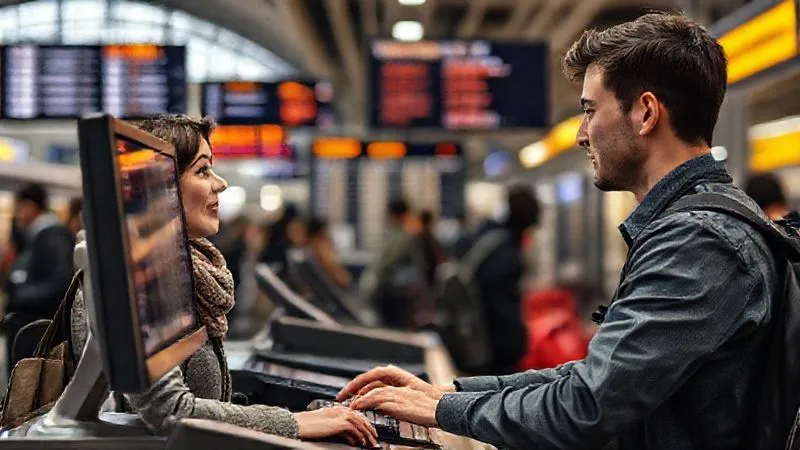
A bustling international train station can be intimidating at the best of times, but during a major disruption, it can feel like a labyrinth. I've spent countless hours in these environments, and I can tell you there's a definite 'art' to navigating them effectively when plans go awry.
Strategic Movement Through a Disrupted Station:
- Locate Information Points: Prioritize finding the main information desk or customer service center. These are usually clearly marked and often have multilingual staff.
- Identify Key Amenities: Know where restrooms, food vendors, and charging stations are. Basic needs become critical during extended waits.
- Observe and Adapt: Pay attention to the flow of people. If everyone is rushing towards a specific platform or information point, there’s likely a reason.
- Use Station Maps: Many large stations have digital or physical maps. Familiarize yourself with the layout, especially if you need to switch platforms or even move to a different station.
- Avoid Crowds (if possible): During severe disruptions, information desks can become overwhelmed. If you have internet access, try to get updates and rebook using your phone before joining a long queue.
"In a chaotic station, silence and observation often provide more valuable insights than frantic questioning."
Remember that station staff are your allies. While they may be stressed, they are there to help. A polite request for direction or assistance often goes a long way.
Communication is Key: Keeping Connected and Informed
Effective communication, both with railway operators and your contacts, is paramount when Navigating urgent international train transfers during disruptions?. Silence and isolation only exacerbate the stress.
Strategies for Optimal Communication:
- Charge Devices: Keep your phone, power bank, and any other communication devices fully charged. This is your lifeline.
- Multiple Communication Channels: Don't rely on just one method. If phone lines are jammed, try social media (many operators have active Twitter/X accounts for real-time updates), email, or in-app chat features.
- Inform Your Contacts: Let family, friends, and anyone expecting you know about your delay. Provide regular updates, even if brief. This prevents worry and allows them to adjust their plans.
- Language Barrier Solutions: If you're in a country where you don't speak the language, use translation apps (like Google Translate or DeepL). Pre-compose common phrases like "My train is delayed," "I need to rebook," or "Where is the information desk?"
- Listen Actively: When speaking with staff, listen carefully to their instructions. Ask for clarification if anything is unclear. Repeat back key information to confirm understanding.
I've seen travelers become incredibly frustrated simply because they couldn't understand an announcement or communicate their needs. A little preparation in this area goes a very long way.
| Communication Method | Pros | Cons |
|---|---|---|
| Official Train Apps | Real-time updates, rebooking options, often multilingual | Requires internet, can be slow during peak load |
| Train Staff (onboard/station) | Direct human interaction, official guidance, immediate rebooking | May be overwhelmed, language barrier, long queues |
| Social Media (e.g., Twitter/X) | Fast, public responses, community support | Information overload, unofficial sources, requires internet |
| Phone Customer Service | Direct support, detailed assistance | Long wait times, international call charges, language barrier |
Essential Tools and Resources for Disrupted Travel
Beyond the fundamental apps, there are several other tools and resources that I consider indispensable for Navigating urgent international train transfers during disruptions?.
My Go-To Tools:
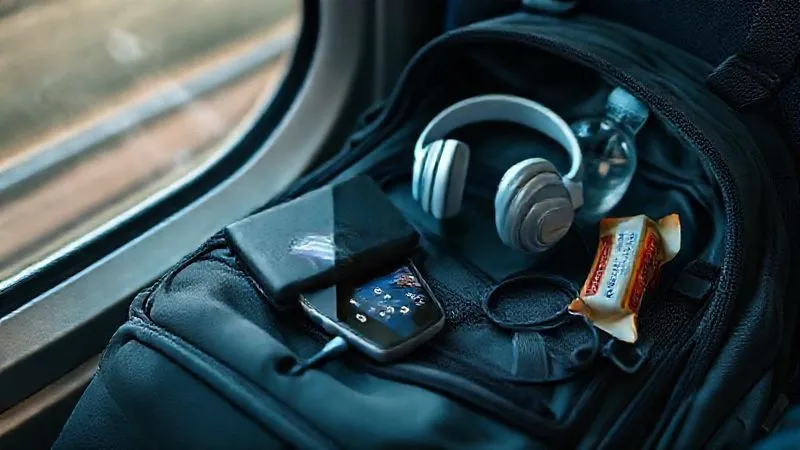
- Offline Maps: Download maps of your destination cities and train stations (if available) to your phone. Google Maps allows offline downloads, which is invaluable if you lose internet access.
- Currency Converter: If you're unexpectedly rerouted through a country with a different currency, having a converter at hand can prevent confusion.
- Power Bank: I cannot stress this enough. A high-capacity power bank is your best friend. Multiple device charges are a must.
- Earbuds/Headphones: For listening to announcements, making calls, or simply finding a moment of calm with music or a podcast amidst the chaos.
- Small Snack & Water Bottle: Delays often mean missed meal times. Having a non-perishable snack and a refillable water bottle can make a huge difference to your comfort.
As marketing guru Seth Godin often says, "The cost of being wrong is less than the cost of doing nothing." This applies perfectly to equipping yourself for travel disruptions. The small effort of carrying these items can save you significant discomfort and stress.
Frequently Asked Questions (FAQ)
Here are some common questions I encounter from travelers facing international train disruptions:
What if my connecting train is with a different operator? This is a common challenge. If the first train operator caused the delay, they are generally responsible for re-routing you, even if it's on a different operator's service. However, they might not have direct access to the other operator's booking systems. Your best bet is to get a delay certificate from the first operator and then approach the second operator's information desk with it. If you booked via a single platform like Rail Europe or Omio, they might be able to assist more comprehensively.
Can I claim compensation if I miss a non-disrupted connection due to a prior disruption? Yes, generally. If the initial delay on the first leg of your journey (which was the railway's fault) caused you to miss a subsequent connection, even if that connection was running on time, you are usually still entitled to compensation based on the total delay to your final destination. Ensure you have proof of delay for the first leg and all your tickets.
Is travel insurance always necessary for international train travel? In my professional opinion, absolutely. While EU passenger rights provide a baseline, travel insurance offers a much broader safety net. It can cover non-refundable accommodation, flights booked in conjunction with trains, medical emergencies, lost luggage, and often provides higher compensation limits or more flexible re-routing options than the railway itself. It's an investment in peace of mind.
How do I handle language barriers during a disruption? Preparation is key. Download offline translation apps. Have a few key phrases written down or pre-translated. Point to your ticket and the destination station name. Most major international stations will have staff who speak English, but don't rely solely on it. Be patient and use gestures if necessary. Remember, a smile and politeness can bridge many communication gaps.
What's the best way to track real-time updates across multiple countries? For integrated European travel, apps like "Rail Planner" (from Eurail/Interrail) can provide good cross-border information. However, for the most accurate, immediate updates, I always recommend checking the individual national railway operator apps (e.g., DB Navigator for Germany, SNCF Connect for France, SBB Mobile for Switzerland). These are the primary sources and usually update fastest. Cross-referencing these is the most reliable strategy.
Key Takeaways and Final Thoughts
Navigating urgent international train transfers during disruptions? is undoubtedly one of the more stressful aspects of modern travel. However, with the right mindset, preparation, and knowledge, you can transform a potentially disastrous situation into a manageable inconvenience. My goal throughout this guide has been to equip you with the insights I've gathered over years on the tracks, turning you from a passive passenger into an empowered traveler.
- Prioritize Preparation: Buffer times, insurance, and essential apps are your foundation.
- Stay Calm and Informed: Real-time updates and clear communication with staff are crucial.
- Know Your Rights: Leverage EU passenger rights for re-routing and compensation.
- Be Proactive: Don't wait to be told what to do; actively seek solutions.
- Embrace Flexibility: Sometimes, the best solution is an alternative route or mode of transport.
The beauty of train travel lies in its journey, not just the destination. While disruptions are an unwelcome part of that journey, they also offer an opportunity to exercise resilience and resourcefulness. Travel smart, stay informed, and remember that even the most complex disruptions can be overcome with a clear head and a solid plan. Your next international train adventure awaits – go forth with confidence!
Recommended Reading
- 7 Data-Backed Ways: How to Prove Responsible Wildlife Tourism Boosts Profits?
- International Family Adventure Derails? 7 Ways to Pivot & Still Thrive
- 5 Adventure Spiritual Journeys: Combat Professional Burnout Effectively?
- 5 Cold-Proof Strategies: What to Do When Camera Batteries Die Quickly in Sub-Zero Shoots?
- The Ultimate Guide: How Much Does a Night in a Space Hotel Cost?



Your email address will not be published. Required fields are marked *