

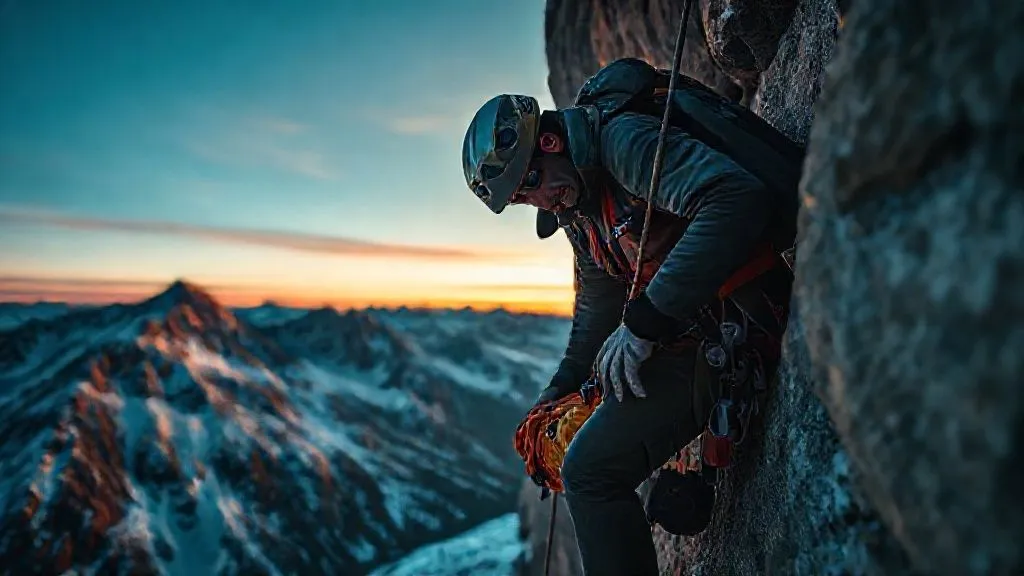
How to Rescue an Injured Client from Remote Multi-Pitch Rock Face?
For over two decades navigating the vertical world, guiding clients up some of the most spectacular, yet unforgiving, multi-pitch routes across continents, I've learned that the mountains demand respect and meticulous preparation. While we strive for perfection in our planning and execution, the inherent risks of adventure mean that emergencies, particularly client injuries in remote terrain, are an undeniable reality. It's not a matter of 'if' but 'when' you might face such a scenario.
The chilling reality of an injured client, dangling hundreds of feet up a granite wall, miles from the nearest road, with daylight fading, is a guide's ultimate test. The isolation amplifies every challenge: communication is spotty, rescue services are hours, if not days, away, and your client's life, and potentially your own, rests squarely on your shoulders. This isn't just about technical climbing skills; it's about leadership, improvisation, and unwavering mental fortitude.
In this definitive guide, I will share the distilled wisdom of countless hours on the rock, rigorous training, and real-world incidents. We'll delve into a comprehensive, actionable framework for how to rescue an injured client from remote multi-pitch rock face, covering everything from crucial pre-trip planning and immediate assessment to advanced lowering and hauling techniques, communication strategies, and the vital role of psychological resilience. My aim is to equip you not just with techniques, but with the confidence and systematic approach needed to turn a potential tragedy into a successful rescue.
The Gravity of the Situation: Why Preparedness Isn't Optional
I distinctly remember a climb in the Bugaboos many years ago. A client, usually solid, took an unexpected fall on a run-out pitch, resulting in a compound fracture of his lower leg. We were five pitches up, the weather was turning, and the nearest heli-pad was a day's hike away. In that moment, the years of mock rescues, the wilderness first aid certifications, and the endless hours practicing knot craft weren't just theoretical knowledge; they were the absolute bedrock of survival. The gravity of such a situation cannot be overstated; it demands every ounce of your focus, experience, and the right tools.
Remote multi-pitch environments present unique challenges that differentiate them significantly from single-pitch cragging or even wilderness trekking emergencies. The vertical dimension introduces complex rope management, anchor considerations, and the physical impossibility of simply carrying someone out. Time is often against you, especially with exposure, hypothermia risks, and potential for further injury. Moreover, the psychological toll on both the injured client and the rescuer is immense, requiring a calm, methodical approach.
Understanding these unique pressures is the first step towards effective preparedness. It's about building a robust mental model for emergencies, knowing your gear inside out, and having a systematic plan that can be adapted to myriad unforeseen circumstances. This isn't just about reacting; it's about proactive mastery of a high-stakes environment.
Pre-Trip Planning: Your First Line of Defense
Before you even tie into the rope, the rescue begins. Comprehensive pre-trip planning is the single most effective way to mitigate risks and streamline any potential rescue. This isn't just a checklist; it's a commitment to your client's safety and your own peace of mind.
- Client Assessment: Thoroughly understand your client's experience, fitness level, pre-existing medical conditions, and psychological resilience. A detailed medical questionnaire is non-negotiable.
- Route Research: Study the route topo meticulously. Identify potential bail-out points, escape routes, anchors, and any sections prone to rockfall or adverse weather. Understand the descent options – rappel vs. walk-off.
- Weather Monitoring: Obsessively check forecasts for the climb duration and potential extensions. Mountain weather can change rapidly and dramatically, turning a benign day into a hypothermia risk.
- Gear Selection: Beyond standard climbing gear, what rescue-specific items are you carrying?
- Extra cordelettes/slings for anchors and improvised systems.
- Prusik cords of various lengths.
- A micro-traxion or similar progress-capture device.
- Knife for cutting rope in an emergency.
- Emergency bivy sack or lightweight tarp for shelter.
- Comprehensive wilderness first aid kit (WFA or WFR level).
- Satellite communication device (inReach, Garmin Mini) with pre-programmed emergency contacts.
- Headlamps with spare batteries.
- Plenty of water and emergency food.
- Communication Plan: Inform a trusted contact about your exact route, planned return time, and what to do if you don't check in. Leave detailed instructions.
A significant part of preparedness also involves practicing these skills regularly. Muscle memory and familiarity with your rescue kit under stress are invaluable. Don't let the first time you set up a 3:1 hauling system be when a client is injured on the wall. The UIAA (International Climbing and Mountaineering Federation) safety standards emphasize the critical importance of pre-trip planning and carrying appropriate rescue gear for remote climbing.
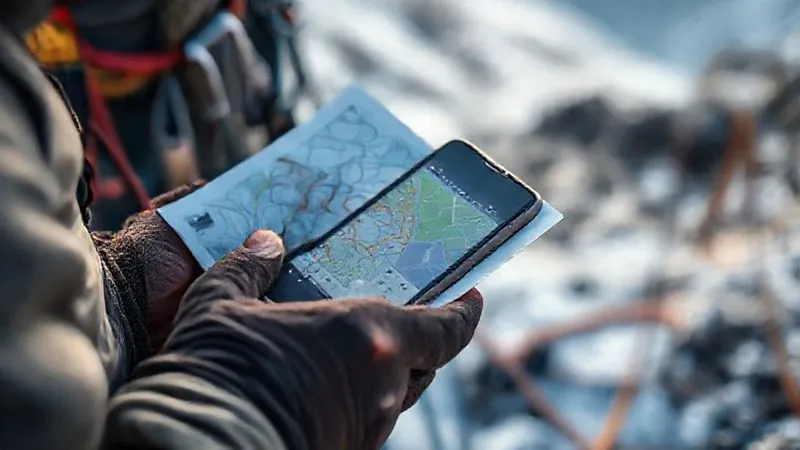
Consider this quick reference for essential rescue gear:
| Item | Purpose | Weight (approx.) |
|---|---|---|
| Satellite Communicator | Emergency calls, tracking | 150g |
| Micro-Traxion | Hauling, progress capture | 85g |
| Prusik Cords (x3) | Friction hitches, mechanical advantage | 50g each |
| Emergency Bivy Sack | Hypothermia prevention, shelter | 100g |
| Comprehensive First Aid Kit | Injury treatment | 500g+ |
| Extra Cordelettes/Slings (x2) | Anchors, improvised systems | 60g each |
Initial Assessment and Stabilisation on the Wall
The moment an accident occurs, your priority shifts from climbing to immediate client care and incident management. Panic is your worst enemy. Take a deep breath, secure yourself and your client, and systematically assess the situation. This is where your Wilderness First Responder (WFR) or similar training becomes paramount.
- Secure the Scene: Ensure both you and your client are safely anchored. Prevent further falls. If your client is dangling, get them to a ledge or into a secure position as quickly and safely as possible.
- Primary Assessment (ABCDE):
- Airway: Is it open? Clear any obstructions.
- Breathing: Are they breathing effectively? Check rate and quality.
- Circulation: Check for a pulse, control any severe bleeding.
- Disability: Assess level of consciousness, check for head/spinal injury.
- Environment: Protect them from further environmental harm (cold, sun, rockfall).
- Secondary Assessment: Once life threats are managed, conduct a head-to-toe assessment. Look for deformities, open wounds, tenderness, and swelling. Ask about pain. Identify all injuries.
- Stabilisation:
- Spinal Injury: If suspected, minimize movement. Improvise a cervical collar if necessary and feasible.
- Fractures: Immobilize any suspected fractures. Use climbing gear (slings, tape, even a piece of ice axe handle) to create a rigid splint.
- Wounds: Clean and dress wounds to prevent infection.
- Shock: Keep the client warm, elevate legs if no spinal injury, and monitor vitals.
- Pain Management: While you likely won't have strong painkillers, comfort measures like repositioning, warmth, and reassurance are critical.
"In a rescue scenario, your calm demeanor is as vital as your technical skill. It reassures your client, focuses your own mind, and prevents further mistakes." - Personal observation from years of guiding.
Always remember the principle of 'do no harm'. Every intervention should be weighed against the potential for exacerbating the injury or creating new problems. Your primary goal is to stabilize the client and prepare them for extraction.
Communication & Calling for Help (When Possible)
In remote multi-pitch terrain, communication is often the most significant hurdle. Cell service is rarely available, making satellite communication devices indispensable. This is not the place to skimp on gear.
- Activate Satellite Communicator: If you have a device like a Garmin inReach or SPOT, activate its tracking and, if necessary, the SOS function. Be prepared to send detailed messages.
- Information to Convey: When communicating with rescue services, be precise and concise:
- Your exact GPS coordinates (most devices provide this).
- Number of people in your party.
- Nature of the injury and severity.
- Client's condition (conscious, breathing, bleeding controlled).
- Current weather conditions and forecast.
- Your immediate plan (e.g., "preparing for lowering to nearest ledge").
- Contact details for your emergency contact person.
- Conserve Battery: Use your device sparingly. Send critical updates, but don't engage in lengthy conversations unless absolutely necessary.
- Improvised Signals: If no electronic communication is possible, consider visual or auditory signals. Three blasts of a whistle or three flashes of a headlamp are universal distress signals. Build a large 'X' on the ground with gear or rocks if a helicopter might be searching.
Even if you've activated an SOS, understand that a remote multi-pitch rescue is complex and time-consuming for professional teams. You must be prepared for self-rescue or extensive waiting periods, potentially overnight. Your planning should always assume you are on your own for at least the initial phase.
Improvised Lowering Systems: Getting Them Down Safely
Often, the most immediate and effective action you can take is to lower your client to a safer, more accessible location, or even all the way to the ground if the terrain allows. This requires robust anchors, careful rope management, and a controlled descent.
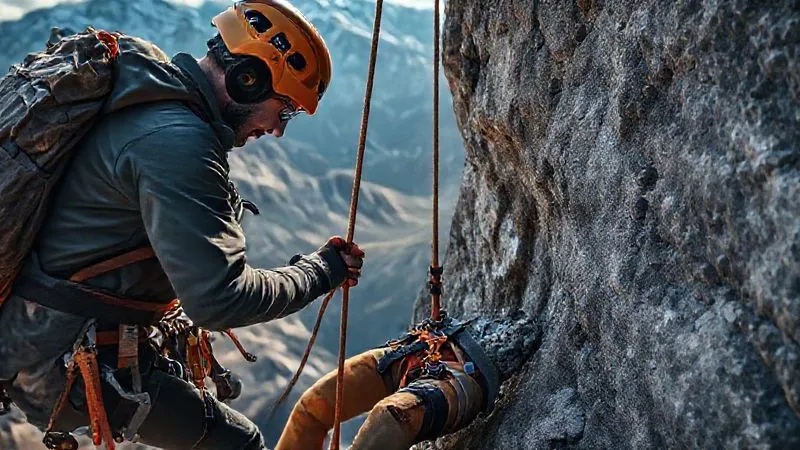
- Assess the Anchor: Your anchor must be bombproof. Use multiple strong points (at least two, preferably three or more) equalized with slings or cordelettes. Redundancy is key.
- Prepare the Client:
- If possible, get them into a full-body harness or improvise one using slings for comfort and stability, especially if there's a suspected spinal injury.
- Ensure their head is protected (helmet).
- Secure any loose clothing or gear.
- Provide warmth (bivy sack, extra layers).
- The Lowering System:
- Friction Device: Use your belay device (ATC Guide, Reverso) in guide mode or a Munter hitch on a locking carabiner. A Munter is versatile but can twist ropes.
- Controlling the Lower: Feed the rope through the friction device, ensuring you have a firm grip on the brake strand. Consider adding a fireman's belay (another person on the brake strand) if available, or a friction hitch (like a Prusik) on the brake strand as a backup.
- Rope Management: Flake out the rope carefully to prevent tangles. Ensure the rope runs smoothly and doesn't snag on the rock.
- Communication: Maintain clear communication with your client during the lower. "Lowering!", "Are you okay?", "Stop!"
- Edge Protection: Pad sharp edges with backpacks, rope bags, or clothing to protect the rope from abrasion.
- The "Tandem Rappel" or "Counter-Balance Lower": If you need to descend with your client, you can perform a tandem rappel (both on the same rappel device) or a counter-balance lower where you use your body weight to offset the client's weight, allowing for a more controlled descent. This requires advanced skills and careful practice.
Remember, a controlled lower is always preferable to an uncontrolled fall. Take your time, double-check everything, and prioritize smooth, steady progress over speed. The safety of your client depends entirely on your meticulous execution.
Advanced Techniques: Hauling Systems & Counter-Balance Rappels
While lowering is often the default, there are situations where hauling an injured client might be necessary – perhaps to get them over a lip, past an overhang, or up to a safer ledge. These systems are more complex and energy-intensive.
Case Study: How a 3:1 Haul Saved a Climber on El Capitan
During a big wall ascent of El Capitan, a guide and client were several days into their climb when the client sustained a severe ankle injury from a dropped rock. Lowering was not an option due to the overhanging nature of the pitches below and the massive amount of rope needed. The guide, drawing on extensive self-rescue training, meticulously rigged a 3:1 mechanical advantage hauling system using a micro-traxion, Prusiks, and their remaining climbing rope. Over a grueling six hours, they managed to haul the client up two pitches to a large, sheltered bivy ledge where they could await professional rescue. This incident, while fictionalized for privacy, highlights the critical role of understanding and practicing these advanced systems for remote, complex terrain. It underscores that sometimes, moving up is the only viable path.
Basic Hauling Systems:
- Z-Pulley (3:1 Mechanical Advantage): This is the most common improvised hauling system. It uses a progress-capture device (like a micro-traxion) and two Prusik hitches (or another progress-capture device) to effectively reduce the weight you need to pull by a factor of three.
- Setup:
- Client is on the main rope, secured.
- Attach a Prusik to the main rope above the client. Attach a carabiner to this Prusik.
- Attach a second Prusik to the main rope further up, near your anchor. This acts as a progress capture.
- Run a separate rope (or a long sling) from the second Prusik, through a carabiner on your anchor, down to the carabiner on the first Prusik (near the client), and back up to you.
- Attach your hauling device (e.g., a Micro-Traxion or another Prusik and carabiner setup) to the anchor, through which the hauling rope will pass to you.
- Operation: Pull on the hauling rope. The progress capture Prusik will hold the load when you release. Repeat until the client is at your level.
- Setup:
- 5:1 and 6:1 Systems: These can be created by compounding Z-pulleys or using additional components for even greater mechanical advantage, useful for very heavy loads or exhausted rescuers. They are more complex and require more rope.
Counter-Balance Rappel: This is a technique where the rescuer rappels down one strand of a double rope system, while the injured client is simultaneously lowered on the other strand, using the rescuer's body weight as a counter-balance. It's incredibly efficient for descent but demands absolute precision and comfort with advanced rope work. It's typically used by experienced guides with lightweight clients on relatively clean rappels. It effectively doubles the amount of rope you have for a lower. For more practical advice on these techniques, consult resources like REI Co-op's Climbing Rescue Skills.
According to the American Alpine Club's Alpine Rescue Manual, "Improvised mechanical advantage systems are the cornerstone of self-rescue in technical terrain. Proficiency in 3:1 and 5:1 hauling systems is essential for guides working in remote environments." This underscores the importance of not just knowing about these systems, but being able to execute them flawlessly under duress.
Post-Rescue Care and Evacuation Logistics
Once you've successfully lowered or hauled your client to a safer location, the immediate technical challenge might be over, but the emergency is far from concluded. Post-rescue care and arranging effective evacuation are critical next steps.
- Re-assess and Re-stabilise: Re-evaluate your client's condition. Are their injuries stable? Have new issues arisen (e.g., hypothermia from exposure during the rescue)? Provide further first aid as needed.
- Shelter and Warmth: Get your client into an emergency bivy sack, sleeping bag, or under a tarp. Hypothermia is a significant risk, even in mild weather, due to shock and inactivity. Offer warm drinks if possible.
- Nutrition and Hydration: Provide easily digestible food and water. Maintaining energy levels is crucial for recovery and morale.
- Psychological Support: The experience is traumatic for both of you. Offer reassurance, explain next steps clearly, and maintain a positive, professional demeanor. Your calm presence can significantly reduce their anxiety.
- Communicate with Rescuers: Provide regular updates on your location, the client's condition, and any changes in weather. Be prepared to guide rescuers to your location, describing landmarks or providing GPS coordinates.
- Prepare for Evacuation:
- If a helicopter rescue is anticipated, prepare a clear landing zone if possible (flat, free of loose debris). Be aware of rotor wash.
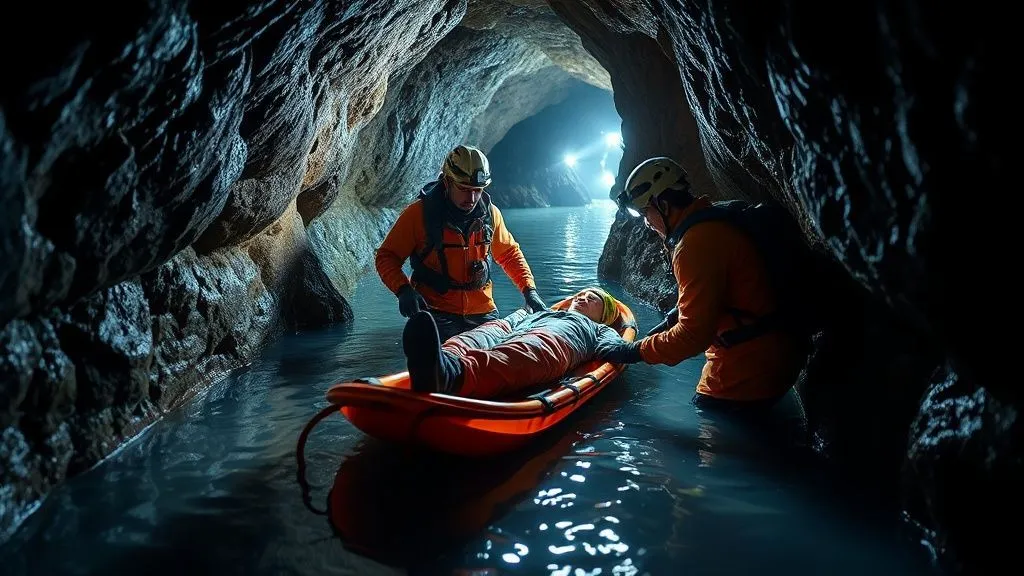
- If ground evacuation is necessary, consider how the client will be moved (stretcher, improvised litter, assisted walk). This may require additional personnel from a rescue team.
The transition from a vertical rescue to horizontal evacuation can be complex. You might need to improvise a litter using backpacks and trekking poles, or prepare for a long, slow carry-out. Your role as a guide extends to managing this entire logistical chain until professional medical help takes over. According to the Wilderness Medical Society (WMS), "Extended patient care in remote environments demands not only medical knowledge but also the ability to manage resources, improvise solutions, and maintain patient comfort and morale for prolonged periods."
| Phase | Actions | Key Gear |
|---|---|---|
| Immediate Post-Rescue | Re-assess injuries, provide warmth/shelter, psychological support | First Aid Kit, Bivy, Satellite Comm. |
| Evacuation Prep | Communicate with SAR, clear LZ, prepare for carry-out | Map/GPS, Headlamps, Improvised Litter supplies |
Mental Fortitude and Leadership Under Pressure
Beyond the ropes and medical protocols, the true test in a remote multi-pitch rescue lies in your mental and emotional resilience. As the guide, you are the leader, the decision-maker, and the primary source of hope for your client. This is where experience truly shines.
I've seen guides, technically brilliant, crumble under the immense pressure of a real emergency. Conversely, I've witnessed individuals with less raw talent rise to the occasion through sheer determination and a calm, methodical approach. It boils down to a few core principles:
- Stay Calm: Easier said than done, but critical. Take a moment to breathe. A panicked rescuer makes poor decisions.
- Think Systematically: Follow a logical sequence: Assess, Plan, Act, Re-assess. Don't jump ahead.
- Be Decisive: Once you've made a decision based on your assessment, commit to it. Hesitation can be deadly.
- Communicate Clearly: With your client, with any other members of your party, and with rescue services. Keep everyone informed and manage expectations.
- Conserve Energy: Both physical and mental. Rescue operations can be protracted. Pace yourself.
- Self-Care: Even in an emergency, remember to hydrate and eat when possible. You cannot help your client if you become incapacitated.
The ability to lead effectively in crisis is developed through rigorous training, simulation, and self-reflection. It's about knowing your limits, but also knowing how to push past them safely. Trust your training, trust your gear, and trust your instincts. The National Outdoor Leadership School (NOLS) emphasizes that "true wilderness leadership is demonstrated not just in ideal conditions, but in the crucible of unexpected challenges, where adaptability and resilience are paramount."
Frequently Asked Questions (FAQ)
What if my client is unconscious and I'm on a steep face? This is one of the most challenging scenarios. Your immediate priority is to secure their position to prevent further falls and perform a primary assessment (ABCDE) to address life threats. If they are unconscious and dangling, you'll need to rapidly get them to a secure stance or ledge. This might involve a "pick-off" rescue (where you descend to them, secure them to your harness, and then lower both of you), or if possible, a controlled lower to the nearest suitable anchor. Protecting their airway and preventing hypothermia are critical. This scenario heavily emphasizes the need for advanced self-rescue practice.
How do I manage a suspected spinal injury on a multi-pitch? Managing a suspected spinal injury in a vertical environment is extremely difficult. The primary goal is to minimize movement. If feasible, keep the client in the position of injury until professional help arrives. If movement is absolutely necessary (e.g., to prevent further immediate danger), move them as a single unit, avoiding twisting or bending the spine. Improvise a cervical collar with clothing or tape if you can, and use a full-body harness or an improvised chest harness for lowering to maintain stability. This is a situation where calling for professional SAR (Search and Rescue) via satellite device is paramount, as specialized equipment and training are often required for safe extraction.
What if I only have one rope and need to lower/rappel multiple pitches? This is a common dilemma. You'll need to perform a series of single-rope lowers or rappels. For lowering an injured client, you'll lower them to the next anchor, then rappel down to them, retrieve your rope, and repeat. This is incredibly time-consuming. If rappelling, you'll have to pull the rope after each rappel, which means the client will need to be capable of managing their own rappel device or be lowered by you on the single strand. This is why carrying a secondary, lighter rope (e.g., a tag line or a thin half rope) can be a game-changer for multi-pitch rescues.
How can I prevent hypothermia during a prolonged rescue on the wall? Hypothermia is a silent killer in mountain environments. Prevention is key. Immediately after stabilizing injuries, focus on warmth. Get the client into an emergency bivy sack or sleeping bag. Add all available layers of clothing. Insulate them from the rock with ropes, backpacks, or foam pads. Provide warm, sugary drinks and easily digestible food if they are conscious. Shield them from wind and precipitation as much as possible, potentially using a tarp or improvised shelter. Conserve their energy by minimizing unnecessary movement.
What if my belay device is lost or damaged during the rescue? Losing a belay device is a critical gear failure. Fortunately, you can improvise. The Munter hitch is your best friend in this scenario. It provides excellent friction for both belaying and rappelling using just a single locking carabiner. Practice using it before an emergency. Other options include using multiple carabiners as a friction device, or even a body rappel in extreme circumstances, though these are less ideal and require significant expertise. Always carry at least two belay devices or ensure your primary device can be used for both belaying and rappelling.
Key Takeaways and Final Thoughts
Navigating an injured client rescue on a remote multi-pitch rock face is perhaps the most demanding challenge a climbing guide can face. It's a crucible that tests not only your technical prowess but also your leadership, ingenuity, and mental resilience. While no guide ever wants to face such a situation, the commitment to safety means being prepared for the worst-case scenario.
- Prioritize Preparedness: Meticulous pre-trip planning, including client assessment, route research, and carrying a comprehensive rescue kit, is your first and best defense.
- Master First Aid: A strong foundation in wilderness first aid (WFR/WFA) is non-negotiable for initial assessment and stabilization.
- Practice Technical Skills: Regularly drill lowering, hauling (especially 3:1 Z-pulley), and anchor building until they are second nature.
- Embrace Communication: Utilize satellite devices effectively and clearly convey critical information to rescue services.
- Lead with Calm and Decisiveness: Your composure under pressure will be the most reassuring and stabilizing factor for your client.
Remember, the mountains are unforgiving, but with diligent preparation, continuous learning, and a deep well of experience, you can rise to the challenge. Trust your training, act decisively, and always prioritize the safety and well-being of your client. The successful rescue isn't just about saving a life; it's about honoring the trust placed in you as a guide and upholding the highest standards of adventure professionalism.
Recommended Reading
- 5 Critical Steps: Minimizing Personal Risk Networking Solo in New Cities
- 7 Critical Steps: Solving Urgent Guest Safety at Remote Glamping Sites
- Unlock City Landmarks: Maximize Your Work Trip Sightseeing in 5 Steps
- 5 Proven Strategies: Crystal Clear Water for Luxury Beach Clients Guaranteed?
- 7 Steps to Prove ROI for Luxury Holistic Healing Wellness Programs

Your email address will not be published. Required fields are marked *