


How to mitigate inflight medical crises on commercial spaceflights?
For over two decades, I've had the privilege of witnessing the incredible evolution of space travel, from government-led missions to the burgeoning era of commercial spaceflight. With this exciting frontier comes a critical responsibility: ensuring the safety and well-being of every space tourist and crew member. The stakes are, quite literally, out of this world.
The unique environment of space – microgravity, radiation exposure, confined spaces, and the sheer distance from Earth – amplifies the complexity of any medical event. Unlike a commercial airline, a quick diversion or a paramedic team isn't an option. This stark reality means that preparing for and mitigating inflight medical crises on commercial spaceflights isn't just a best practice; it's a non-negotiable imperative for the industry's long-term viability and public trust.
In this definitive guide, I'll share my insights and provide a comprehensive framework built on seven pillars to address this challenge head-on. We'll explore actionable strategies, cutting-edge technologies, and robust protocols that are essential for safeguarding health in the vacuum of space, offering you a clear roadmap to advanced medical preparedness in commercial space tourism.
Rigorous Pre-flight Medical Screening & Eligibility
The first, and arguably most critical, line of defense against inflight medical crises begins long before liftoff: the selection of passengers and crew. In my experience, a thorough and uncompromising pre-flight medical screening process is paramount. It’s not about exclusion, but about ensuring that every individual flying is medically fit to withstand the unique physiological stressors of spaceflight.
Comprehensive Medical Protocols
Commercial spaceflight operators must implement medical protocols that go far beyond standard aviation physicals. These should include detailed physiological assessments, evaluating cardiovascular health, pulmonary function, neurological stability, and skeletal integrity. Baseline data, including blood work, imaging, and specialized stress tests, are crucial to identify any pre-existing conditions that could be exacerbated by microgravity, G-forces during launch and re-entry, or radiation exposure. This baseline also serves as a critical reference point for any inflight health monitoring.
Psychological Assessments
Beyond physical health, the psychological resilience of individuals is equally vital. Spaceflight is an inherently stressful environment, characterized by confinement, isolation, and potential hazards. Comprehensive psychological evaluations should assess an individual's ability to cope with stress, their temperament in group settings, and their susceptibility to anxiety or panic. A mentally stable and adaptable crew and passenger manifest contribute significantly to overall mission safety and the ability to respond calmly during an emergency.
Expert Insight: "The most effective medical crisis mitigation begins with prevention. Rigorous pre-flight screening is not merely a checklist; it's an intricate process of risk assessment and proactive safeguarding, ensuring only the most resilient individuals embark on this extraordinary journey."
According to a report by the Federal Aviation Administration (FAA) Office of Commercial Space Transportation, understanding human factors and health is a key area of research for ensuring passenger safety. This underscores the regulatory and industry focus on robust pre-flight evaluations.
Advanced Onboard Medical Training for Crew
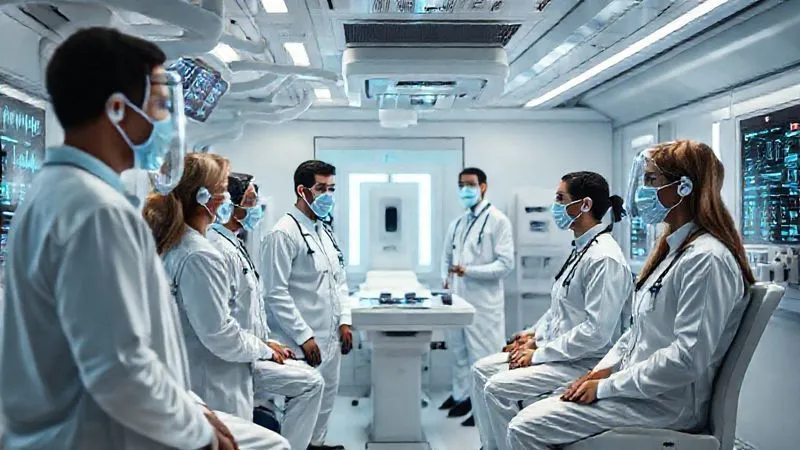
Even with the most stringent pre-flight screening, medical events can still occur. This is why the flight crew – and potentially even designated passengers – must possess medical training that far exceeds basic first aid. In the confines of a spacecraft, the crew becomes the immediate first responder, and their proficiency can be the difference between a minor incident and a catastrophic crisis.
Specialized Space Medicine Modules
Training for commercial spaceflight crews must incorporate specialized modules addressing the unique physiological effects of space. This includes understanding the onset and management of space adaptation syndrome, recognizing symptoms of radiation sickness, dealing with potential barotrauma during pressure changes, and administering medication effectively in microgravity. Practical skills, such as intravenous fluid administration, wound management, and even basic airway management, are crucial.
Emergency Simulation Drills
Theoretical knowledge is insufficient; practical application is key. Crews must regularly participate in realistic, high-fidelity simulation drills for various medical emergency scenarios. These simulations should mimic the constraints of the spacecraft environment, including limited space, communication delays with ground control, and the psychological pressure of a real crisis. Repetition builds muscle memory and confidence, ensuring a coordinated and efficient response when it matters most.
Case Study: How 'Orbital Ventures' Enhanced Crew Medical Preparedness
Orbital Ventures, a pioneering commercial space tourism company, faced early challenges with crew confidence in handling unexpected medical situations. Their initial training, while comprehensive, lacked real-world scenario immersion. By implementing a new program that involved **weekly simulated medical emergencies** within a full-scale spacecraft mock-up, complete with microgravity simulation techniques, they saw a dramatic improvement. Crew members were cross-trained in advanced life support, and their response times for critical interventions decreased by 40%. This proactive approach not only boosted crew morale but also significantly enhanced passenger safety ratings, becoming a benchmark for the industry.
This kind of rigorous, hands-on training is what separates preparedness from mere compliance. It builds a resilient and capable crew ready for any contingency.
State-of-the-Art Medical Kits & Diagnostic Tools
Space and weight constraints are inherent challenges in spacecraft design, but they must never compromise medical readiness. The onboard medical kit for commercial spaceflights needs to be a marvel of compact, multi-functional engineering, providing capabilities typically found in a small clinic.
Compact, Multi-functional Devices
Traditional medical equipment is often too bulky or heavy for spaceflight. The solution lies in advanced, miniaturized diagnostic and therapeutic tools. Think portable ultrasound devices capable of assessing internal injuries, compact blood analyzers that can provide rapid results for various biomarkers, and smart vital sign monitors that continuously stream data. These devices must be robust, user-friendly, and capable of operating reliably in microgravity.
Telemedicine Integration
Beyond the physical kit, the integration of telemedicine capabilities is revolutionary. High-bandwidth communication systems allow ground-based medical experts to guide the onboard crew in real-time. This can involve visual inspections via high-definition cameras, remote control of diagnostic tools, or even augmented reality overlays to assist with procedures. Telemedicine effectively brings the expertise of a hospital into orbit.
Expert Insight: "The space medical kit is more than just a collection of supplies; it's a meticulously curated extension of Earth-based medical capabilities, designed for extreme efficiency and enhanced by real-time remote expertise."
Here's a comparison of typical medical kit items versus what's needed for commercial spaceflight:
| Category | Traditional Kit | Spaceflight Kit |
|---|---|---|
| Diagnostics | Stethoscope, Thermometer | Portable Ultrasound, Blood Analyzer, Smart Vital Sign Monitor, Ophthalmoscope |
| Therapeutics | Bandages, Painkillers | IV Fluids & Delivery System, Advanced Wound Closure, Specialized Medications (e.g., antiemetics, corticosteroids), Epinephrine Auto-Injector |
| Emergency Tools | CPR Mask | Automated External Defibrillator (AED), Advanced Airway Management Kit, Minor Surgical Kit |
| Communication | None | Integrated Telemedicine Unit (HD camera, audio, data link) |
Robust Telemedicine and Ground Support Systems
While onboard capabilities are crucial, the true strength of medical crisis mitigation in space lies in the seamless integration with Earth-based ground support. This isn't just about calling for help; it's about a continuous, proactive medical lifeline that extends from launch to landing.
Real-time Data Transmission
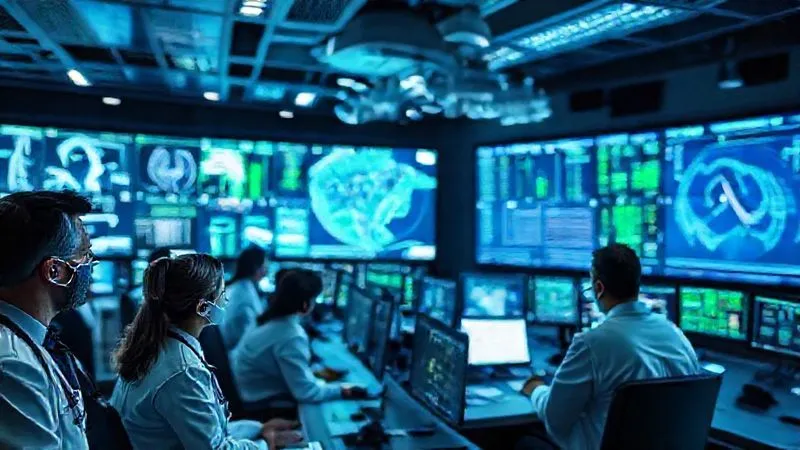
Modern spacecraft are equipped with sophisticated sensor arrays that continuously monitor the physiological parameters of both crew and passengers. This data – heart rate, blood pressure, oxygen saturation, skin temperature, and even ECG readings – is transmitted in real-time to a dedicated medical control center on Earth. This allows ground-based physicians to track health trends, identify subtle anomalies, and even predict potential issues before they become full-blown crises.
Dedicated Medical Control Centers
These centers are staffed 24/7 by highly specialized space medicine physicians, flight surgeons, and support personnel. They are equipped with advanced data visualization tools, communication systems, and access to comprehensive medical records of every individual in space. Their role is to provide expert consultation, guide onboard crew through complex medical procedures, and make critical decisions regarding patient care, including potential mission aborts or diversions. The expertise available on the ground far surpasses what can be carried into space.
According to research highlighted by the World Health Organization (WHO), telemedicine has proven effective in remote and challenging environments, making it an indispensable tool for space health. Its application in space pushes the boundaries of remote care.
Developing Clear Emergency Protocols and Contingency Plans
Even with the best preparation, unforeseen events can and will happen. The key to effective crisis mitigation is having clear, well-rehearsed protocols and robust contingency plans for every conceivable medical emergency. This structured approach removes ambiguity and enables rapid, coordinated action under pressure.
Decision Trees for Common Ailments
For common medical issues, from severe motion sickness to minor injuries, crew members should have access to clear, easy-to-follow decision trees. These guides outline symptoms, initial assessment steps, basic treatment options, and criteria for when to escalate to ground control. Such standardized procedures ensure consistency and reduce the cognitive load on the crew during stressful situations.
Evacuation and Diversion Strategies
For severe medical crises that cannot be managed effectively in space, operators must have pre-determined evacuation and diversion strategies. This includes protocols for an emergency return to Earth, identifying suitable landing sites, and coordinating with ground medical services for immediate post-landing care. These plans must be regularly reviewed, updated, and integrated into mission planning. Knowing when and how to abort a mission for medical reasons is a critical, albeit difficult, decision that needs a clear framework.
Expert Insight: "In the unforgiving environment of space, improvisation is a last resort. Meticulously crafted emergency protocols are the backbone of safety, transforming potential chaos into a manageable sequence of actions."
The development of these protocols draws heavily from lessons learned in high-risk environments like aviation and deep-sea exploration, adapted for the unique challenges of space. The NASA Human Research Program consistently provides data and insights that inform these critical safety guidelines for all space endeavors.
Research & Development in Space Medicine
The field of space medicine is continuously evolving, driven by ongoing research and technological innovation. Staying at the forefront of this R&D is vital for commercial operators to continually enhance their capabilities in mitigating inflight medical crises. What seems futuristic today could be standard practice tomorrow.
Biomedical Countermeasures
Research into biomedical countermeasures aims to develop new drugs, therapies, and preventative measures specifically tailored for the space environment. This includes medications to combat bone density loss and muscle atrophy in microgravity, improved radiation shielding, and novel treatments for space adaptation syndrome. Investing in and collaborating with research initiatives can provide access to these advancements, improving passenger health and safety.
AI-Powered Diagnostics
Artificial intelligence holds immense promise for inflight medical care. AI algorithms can analyze vast amounts of physiological data, detect subtle changes indicative of impending illness, and even suggest diagnoses or treatment pathways to the onboard crew. Predictive analytics, driven by AI, could alert ground control to potential issues hours or even days before symptoms manifest, allowing for proactive intervention. This is not about replacing human expertise but augmenting it significantly.
Expert Insight: "The future of space medical safety isn't just about reacting to crises; it's about predicting, preventing, and leveraging cutting-edge science to keep humans healthy in the most extreme environment imaginable."
Crew Resource Management (CRM) for Medical Events
Crew Resource Management (CRM), a concept borrowed from aviation, is indispensable for managing any inflight emergency, especially medical ones. It emphasizes effective utilization of all available resources – human, hardware, and information – to achieve optimal outcomes. In a medical crisis, this means orchestrating a cohesive and efficient response from everyone on board.
Effective Communication & Role Allocation
During a medical emergency, clear and concise communication is paramount. Crew members must be trained to communicate vital information accurately to each other and to ground control. Pre-assigned roles and responsibilities, along with clear protocols for who is in charge and how decisions are made, prevent confusion and ensure that every action is purposeful. This minimizes wasted time and maximizes efficiency in a high-stress situation.
Stress & Fatigue Management
The psychological toll of managing a medical crisis in space can be immense. CRM also addresses stress and fatigue management for the crew. Ensuring adequate rest periods, providing psychological support, and training in stress reduction techniques are crucial. A well-rested and mentally prepared crew is far more capable of making sound judgments and executing complex procedures under duress. This holistic approach ensures the human element remains a strength, not a vulnerability.
As outlined by the SKYbrary Aviation Safety, CRM principles are universally applicable to high-stakes environments, emphasizing communication, leadership, and teamwork as cornerstones of safety. Adapting these principles for spaceflight is essential.
Post-Flight Medical Debriefing and Continuous Improvement
The journey to impeccable medical safety doesn't end when the spacecraft touches down. Every mission, whether it involved a medical incident or not, presents an invaluable learning opportunity. A robust post-flight debriefing process is crucial for continuous improvement and refining future protocols.
Incident Reporting & Analysis
Any medical event, no matter how minor, must be meticulously documented and analyzed. This includes detailed incident reports, crew testimonies, physiological data logs, and communication transcripts. Expert panels should review these incidents to identify root causes, evaluate the effectiveness of interventions, and pinpoint areas where protocols, training, or equipment can be improved. This proactive analysis transforms potential weaknesses into strengths.
Updates to Protocols & Training
The insights gained from post-flight analysis must directly feed back into the operational framework. This means regularly updating medical protocols, revising training modules for crew, and refining the contents of onboard medical kits. The space tourism industry is nascent, and continuous adaptation based on real-world experience and emerging research is the only way to achieve the highest standards of safety and care. This iterative process ensures that each subsequent flight benefits from the lessons of its predecessors.
Frequently Asked Questions (FAQ)
What are the most common medical risks for commercial space tourists? The most common medical risks typically include Space Adaptation Syndrome (space sickness), which manifests as nausea, disorientation, and headaches. Other concerns include minor injuries due to microgravity environment, dehydration, and the exacerbation of pre-existing conditions if not adequately screened. Long-duration flights would add risks like bone density loss, muscle atrophy, and increased radiation exposure.
How are psychological crises managed during a commercial spaceflight? Psychological crises are managed through a multi-layered approach. Firstly, rigorous pre-flight psychological screening helps identify individuals at higher risk. Onboard, crew members are trained in basic psychological first aid and communication techniques. Telemedicine allows for real-time consultation with ground-based psychologists. Furthermore, the spacecraft environment is designed with features like personal space, communication access to family, and recreational options to mitigate stress and isolation.
What if a passenger needs emergency surgery in space? Currently, emergency surgery on commercial spaceflights is not feasible. The lack of surgical facilities, sterile environments, and specialized surgical teams makes it impossible. For severe medical emergencies requiring surgical intervention, the primary protocol would be an emergency return to Earth, often with a rapid descent profile to minimize transit time. This highlights the critical importance of prevention, robust pre-flight screening, and comprehensive inflight medical support to manage conditions without invasive procedures.
How does radiation exposure factor into inflight medical crises mitigation? Radiation exposure is a significant long-term health risk, but acute radiation sickness can also be a concern, particularly during solar particle events. Mitigation involves robust spacecraft shielding, real-time radiation monitoring, and sophisticated trajectory planning to avoid high-radiation zones. Crew are trained to recognize symptoms of acute radiation exposure, and pharmaceutical countermeasures are being researched. For commercial space tourism, which typically involves short-duration, low-Earth orbit flights, the acute risk is lower but still monitored.
What role does AI play in preventing and managing medical crises? AI plays an increasingly vital role. It can analyze continuous physiological data from passengers and crew to detect subtle anomalies that might precede a crisis, offering predictive warnings. AI-powered diagnostic tools can assist onboard crew in identifying conditions and suggesting treatment pathways. Furthermore, AI can optimize medical kit inventory, assist in emergency protocol navigation, and even help in training simulations by generating realistic scenarios and evaluating crew responses.
Key Takeaways and Final Thoughts
- Prevention is Paramount: Rigorous pre-flight medical and psychological screening forms the bedrock of inflight medical safety.
- Trained & Ready Crew: Advanced, specialized medical training for crew, including high-fidelity simulations, is non-negotiable.
- Smart Medical Kits: Onboard medical kits must be compact, multi-functional, and integrate cutting-edge diagnostic tools.
- Ground Support is a Lifeline: Robust telemedicine and 24/7 dedicated medical control centers are essential for real-time expert support.
- Clear Protocols & Contingencies: Well-defined emergency protocols and evacuation plans ensure a coordinated response under pressure.
- Embrace Innovation: Continuous R&D in space medicine, including AI, will drive future safety advancements.
- Learn and Adapt: Post-flight debriefings and continuous improvement cycles are vital for evolving safety standards.
The dawn of commercial spaceflight is an inspiring testament to human ingenuity and ambition. As we open the cosmos to more individuals, our commitment to their safety must be unwavering. By meticulously implementing these strategies and fostering a culture of continuous improvement, the industry can confidently mitigate inflight medical crises, ensuring that the incredible journey to space remains as safe as it is awe-inspiring. The future of space tourism depends on our collective dedication to medical preparedness, making every flight not just an adventure, but a testament to human resilience and foresight.
Recommended Reading
- 7 Proven Strategies: Profiting Sustainably in Biodiversity Hotspots?
- Urgent Burnout? How to Select a Short Yoga Retreat for Rapid Relief
- Unraveling India's Culinary Tapestry: How Regional Indian Curries Differ by State
- Your Essential Guide: How to Plan a Zero-Waste Trip to National Parks
- Suborbital Safety: 5 Pillars to Assure Ultra-Rich Clients' Trust





Your email address will not be published. Required fields are marked *