


How to Manage Extreme Client Panic During a Zip Line Descent?
For over two decades in the adventure travel industry, specifically in the exhilarating world of zip lining, I've witnessed the full spectrum of human emotion. From pure elation to quiet apprehension, and sometimes, to the very edge of extreme panic. There's a unique vulnerability that comes with being suspended hundreds of feet above the ground, and while most embrace the thrill, a significant few can find themselves overwhelmed by an unexpected surge of fear.
This isn't just about a client having a bad day; extreme panic during a zip line descent poses a serious challenge to both safety and operational flow. It can lead to clients freezing mid-line, refusing to continue, or even attempting irrational actions, putting themselves, other clients, and your staff at risk. Beyond the immediate danger, such incidents can severely damage your operation's reputation and create lasting trauma for the client.
In this definitive guide, I will draw upon my extensive experience and industry insights to provide you with a comprehensive framework. We'll explore the psychology behind panic, delve into proactive prevention, and equip you with actionable, real-time de-escalation techniques. My goal is to empower you and your team with the knowledge and confidence to effectively manage extreme client panic during a zip line descent, ensuring safety, preserving the adventure experience, and upholding your operation's integrity.
Understanding the Physiology of Panic: Why Clients Freeze
Before we can effectively manage panic, we must first understand its root. Panic is not a choice; it's a primal, physiological response to perceived danger. The human brain, designed for survival, has an intricate system that can override rational thought when confronted with what it interprets as a life-threatening situation, even if that 'threat' is a perfectly safe zip line.
The Amygdala Hijack and Its Effects
At the core of this response is the amygdala, a small almond-shaped region in the brain. When a client experiences intense fear, their amygdala can 'hijack' the prefrontal cortex, the part of the brain responsible for logical reasoning and decision-making. This phenomenon, often called an 'amygdala hijack,' floods the body with stress hormones like adrenaline and cortisol. The result is a cascade of physical symptoms: a racing heart, shallow breathing, tunnel vision, muscle tension, and sometimes, a complete inability to move or communicate effectively – the dreaded 'freeze' response.
The most critical insight for any adventure guide is this: a panicking client is not being difficult; they are in a deep, involuntary state of primal fear. Our role is to guide them back to a place of safety, both physically and psychologically, not to judge their reaction.
Understanding this physiological reality is the first step toward empathy and effective intervention. It shifts our perspective from annoyance to a problem-solving mindset. For further reading on the science of fear, I highly recommend exploring resources like this article from The American Psychological Association on Fear and Anxiety.

Pre-Descent Protocols: Proactive Panic Prevention
The best way to manage extreme client panic is to prevent it from escalating in the first place. This begins long before a client even clips into the line. Proactive measures build a foundation of trust and confidence that can significantly mitigate anxiety.
The Power of Clear, Confident Communication
Your pre-descent briefing is more than just a safety lecture; it's a critical psychological preparation session. It's where you establish your authority, competence, and empathy. I've found that a calm, clear, and confident tone of voice can be incredibly reassuring. Avoid technical jargon and instead use simple, direct language. Explain what to expect, what they will feel, and most importantly, what they should do if they feel overwhelmed.
- Be Transparent: Acknowledge that feeling nervous is normal. "It's natural to feel a little flutter in your stomach, that's part of the adventure!"
- Empower Them: Explain how they can control their own experience, such as how to brake (if applicable) or signal to guides.
- Reiterate Safety: Emphasize the rigorous safety checks, the strength of the equipment, and the training of the guides.
- Set Expectations: Describe the sensation of acceleration, the wind, and the views. This reduces surprises.
- Offer a 'Bail-Out' Option: Inform them that it's okay to decide not to go, even at the last minute, without judgment. This can paradoxically reduce pressure and increase commitment.
Remember, the goal is to create a sense of predictability and control in an inherently unpredictable and exhilarating environment.
Establishing Trust: The Foundation of Client Reassurance
Trust isn't built in a single moment; it's forged through consistent, authentic interactions. As a guide, you are the client's primary link to safety and professionalism. Your demeanor, actions, and communication style are constantly being evaluated, often subconsciously.
Non-Verbal Cues: Body Language and Eye Contact
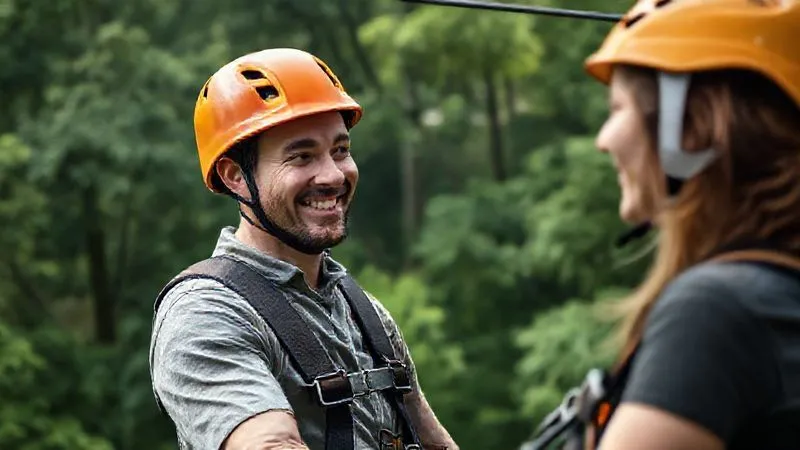
Before a word is even spoken, your body language communicates volumes. Stand tall and open, maintain eye contact, and offer a genuine smile. These non-verbal cues convey confidence, approachability, and competence. When a client is visibly nervous, a gentle touch on the shoulder (if appropriate and culturally sensitive), a reassuring nod, or simply maintaining a calm presence can be incredibly powerful. I always make sure to get down to eye level when speaking to a particularly anxious client, creating a more personal and less intimidating connection.
Building rapport also involves active listening. Ask open-ended questions: "How are you feeling about this first line?" or "Is there anything specific you're worried about?" Listen attentively to their answers, validate their feelings, and address their concerns directly. This personal connection reinforces their trust in you as an individual, not just an operator. This is crucial for building trust and empathy, which Forbes emphasizes as a critical skill.
Real-Time De-escalation Techniques During Descent
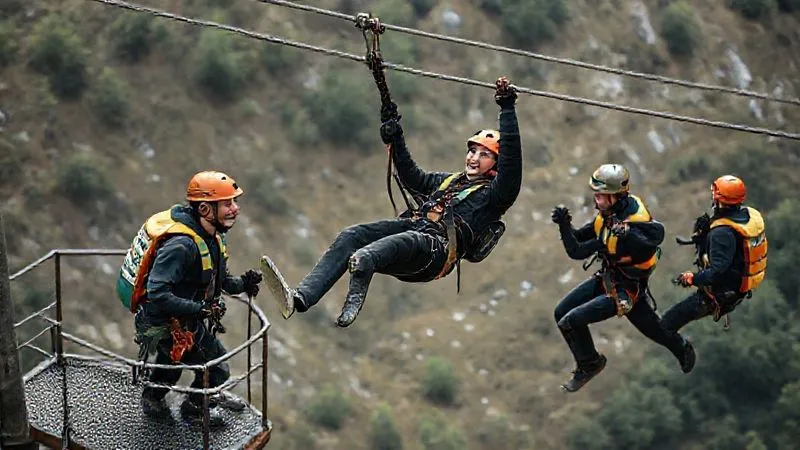
Despite all proactive measures, some clients may still experience extreme panic once they are mid-descent. This is where your real-time de-escalation skills become paramount. The key is to act swiftly, calmly, and methodically.
The 'STOP, BREATHE, LOOK, LISTEN' Method (SBLM)
I developed a simple, repeatable method for my teams to follow when a client shows signs of panic mid-line:
- STOP: If the client is still moving and you detect panic (e.g., screaming, flailing, freezing up), use your communication system to instruct them to stop if possible and safe to do so. This might involve a controlled brake or a guide at the landing platform activating a stopping mechanism. Halting their forward motion can break the panic cycle.
- BREATHE: Once stopped, or if they are already stationary, immediately guide them through deep breathing exercises. "Look at me. Breathe with me. Deep breath in through your nose, hold it, now slowly out through your mouth." Repeat this 3-5 times. Deep breathing helps to activate the parasympathetic nervous system, counteracting the fight-or-flight response.
- LOOK: Direct their attention away from their internal fear and towards something external. "Look at the trees. Look at the view. See that bird?" Engage their senses with the beauty around them, helping to ground them in the present, non-threatening reality.
- LISTEN: Speak in a calm, authoritative, yet empathetic voice. Provide clear, simple instructions. "You are completely safe. I am here with you. We will get you down slowly. Just listen to my voice." Reiterate safety and your presence.
When a client is panicking, less is more in terms of verbal input. Focus on short, clear commands, and repeat them if necessary. Your calm voice is their anchor in the storm.
It's vital that all guides are trained in this or a similar methodology, practicing it regularly through drills.
Physical Intervention Strategies: When Words Aren't Enough
In some extreme cases, verbal de-escalation may not be sufficient, or the client's panic may prevent them from following instructions. This is when trained physical intervention strategies become necessary, always prioritizing safety and adherence to established protocols.
Emergency Brake Protocols and Assisted Descent
Every zip line operation should have clear, practiced protocols for emergency stops and assisted descents. These are not 'rescue' operations in the traditional sense, but controlled procedures to bring a client safely to a platform or to the ground.
- Controlled Mid-Line Stop: If a client freezes or becomes unresponsive, guides at the launch or receiving end may have the ability to apply a controlled brake to their trolley. This prevents them from free-falling into a platform or getting stuck in an inaccessible spot.
- Guide-Assisted Retrieval: For clients stuck mid-line, a trained guide may need to traverse to their position. This is a highly specialized skill requiring specific equipment and extensive training. The guide would then secure the client, potentially attach them to their own harness, and perform a tandem descent or retrieval.
- Lowering Systems: Some systems are equipped with lowering mechanisms that allow guides to safely lower a client from the line to the ground, particularly useful over accessible terrain.
These procedures require constant training and certification. Organizations like the Association for Challenge Course Technology (ACCT) provide standards and certification for such operations, ensuring the highest level of safety and professionalism.
| Method | When to Use | Equipment Needed | Key Benefit |
|---|---|---|---|
| Controlled Mid-Line Stop | Client freezes or unresponsive, approaching platform | Braking system, communication radios | Prevents impact, buys time for verbal de-escalation |
| Guide-Assisted Retrieval | Client stuck mid-line, unresponsive to verbal cues | Rescue harness, specialized ropes, ascending/descending devices | Direct intervention, immediate physical support |
| Lowering System | Client requires ground evacuation from accessible area | Dedicated lowering device, rescue rope, anchor points | Safe, controlled descent to solid ground |
Case Study: Rescuing 'Sarah' from a Mid-Air Meltdown
Let me share a real-world scenario (names changed for privacy, of course) that illustrates these principles in action. Several years ago, during a busy afternoon, a client named Sarah, a woman in her late 40s, launched on our longest line. She had been nervous but determined during the briefing. About halfway across the 1,500-foot span, her screams began. They weren't screams of joy; they were raw, guttural screams of pure terror. She had frozen, her body rigid, and was swinging slightly in the wind.
Lessons Learned from Sarah's Experience
Our ground crew immediately initiated a controlled stop, bringing Sarah to a complete halt about 100 feet from the landing platform. My lead guide, Mark, a veteran with incredible composure, began the SBLM process. He used the radio to speak to her, his voice calm and steady. "Sarah, listen to my voice. You are safe. Breathe with me. Deep breath in... and out." He repeated this for what felt like an eternity, while another guide at the platform pointed out specific trees and clouds, trying to re-engage her senses.
After several minutes, Sarah's screams subsided to whimpers, and she started to follow Mark's breathing instructions. Slowly, carefully, Mark guided her attention to the landing platform, reassuring her that it was very close. Once she was calmer, he instructed the ground crew to slowly release the brake, allowing her to glide gently to the platform. Upon landing, she collapsed, weeping, but unharmed. This incident underscored the critical importance of a well-trained team, clear protocols, and the power of empathetic, persistent communication.
Post-Incident Care: Supporting Clients and Staff
The experience doesn't end when the client's feet touch the ground. The aftermath of an extreme panic incident requires careful management, both for the client and for your operational team.
Creating a Supportive Environment for Recovery
For the client, the priority is psychological first aid. Escort them to a quiet, private area. Offer water. Listen without judgment as they recount their experience. Validate their feelings: "That must have been incredibly frightening. You did great by getting through it." Avoid minimizing their experience. Provide options for further support if they seem genuinely traumatized. Sometimes, just having a calm, understanding presence is enough to help them process the event.
It's equally important to debrief with your staff. Incidents like Sarah's can be stressful for guides as well. Conduct a formal debriefing session to discuss what went well, what could be improved, and to allow guides to process their own reactions. This fosters a culture of continuous improvement and psychological safety within your team. Regular training in Psychological First Aid, as offered by organizations like the Red Cross, can be invaluable for your staff.

Training and Preparedness: Building a Resilient Team
The ability to effectively manage extreme client panic is not innate; it's a skill developed through rigorous training, consistent practice, and a commitment to continuous improvement. A resilient team is a prepared team.
Implementing a Comprehensive Panic Management Program
Your training program should go beyond basic safety. It needs to incorporate specific modules on panic physiology, communication techniques, and emergency response scenarios. I advocate for regular, scheduled drills that simulate various panic situations. This includes role-playing where guides take on the roles of panicking clients, allowing others to practice de-escalation and intervention.
- Scenario-Based Training: Create realistic scenarios, from a client freezing mid-line to a full-blown panic attack at the launch platform.
- Communication Drills: Practice radio communication, verbal commands, and empathetic language under pressure.
- Physical Intervention Practice: Regularly practice assisted retrieval and lowering systems with full gear.
- Psychological Resilience Training: Equip guides with tools to manage their own stress and maintain composure during high-pressure situations.
- Certification and Recertification: Ensure all guides are certified in first aid, CPR, and any specific rescue techniques relevant to your zip line operation, with regular recertification.
Investing in your team's training is not an expense; it's an investment in your operation's safety, reputation, and long-term success. A well-trained guide is not just a safety officer; they are a psychological first responder, an empathetic communicator, and a guardian of the adventure experience.
| Module | Key Topics | Frequency | Assessment |
|---|---|---|---|
| Panic Physiology & Psychology | Amygdala hijack, fight-or-flight, empathy, active listening | Annual | Written exam, role-play |
| Verbal De-escalation (SBLM) | Clear communication, breathing techniques, attention redirection | Bi-Annual | Scenario drills, peer review |
| Physical Intervention & Rescue | Controlled stops, assisted retrieval, lowering systems | Quarterly | Practical demonstration, timed drills |
| Post-Incident Care & Debriefing | Psychological first aid, staff support, incident reporting | Annual | Case study analysis, group discussion |
Frequently Asked Questions (FAQ)
What's the difference between fear and extreme panic during a zip line descent? Fear is a natural, often exhilarating part of adventure, characterized by heightened awareness and a sense of thrill. Extreme panic, however, is an overwhelming, involuntary physiological response where rational thought is overridden, often leading to a 'freeze' response, inability to communicate, or irrational actions. It's the difference between a roller coaster thrill and a genuine terror response.
Can I legally restrain a client who is panicking mid-line? Direct physical restraint of a conscious client, especially mid-air, is generally not advisable and can lead to further injury or legal complications. The focus should always be on controlled, procedural interventions like emergency stops, verbal de-escalation, and guide-assisted retrieval using specialized equipment. These are designed to secure the client safely without force, allowing them to regain composure. Always consult with legal counsel and industry standards for specific guidance.
How often should zip line guides be trained in panic management? Best practices suggest annual comprehensive training refreshers that include both theoretical knowledge (panic psychology) and practical drills (de-escalation, rescue scenarios). Additionally, bi-annual or quarterly shorter refreshers specifically on communication techniques and emergency protocols can maintain proficiency, especially for high-frequency or high-risk operations.
What if a client has a pre-existing medical condition that could exacerbate panic? It is crucial to have a thorough pre-activity screening process that includes questions about medical conditions, anxiety disorders, or phobias. If a client discloses such a condition, a guide should engage in a private, empathetic conversation to assess their comfort level and suitability for the activity. In some cases, it may be necessary to advise against participation for their safety, or to offer alternative, less intense experiences. Always prioritize client well-being over participation.
How do I handle a client who refuses to move or cooperate after being de-escalated? If a client remains uncooperative or refuses to move after de-escalation, the priority shifts to safe retrieval. This will typically involve a guide-assisted retrieval or a lowering system, depending on your setup and their position. Maintain calm, clear communication throughout the process, reassuring them that they are safe and you are there to help them get to solid ground, even if they cannot assist in their own movement. Patience and professionalism are key.
Key Takeaways and Final Thoughts
- Empathy is Your Foundation: Understand that panic is a physiological response, not a choice.
- Proactive Prevention is Key: Clear communication and trust-building before launch are crucial.
- Master De-escalation Techniques: Implement and practice methods like SBLM for real-time response.
- Train for Intervention: Ensure your team is expert in controlled stops and assisted retrievals.
- Prioritize Post-Incident Care: Support both clients and staff after a challenging event.
- Invest in Continuous Training: A well-trained team is your greatest asset in managing unforeseen challenges.
Managing extreme client panic during a zip line descent is undoubtedly one of the most challenging aspects of adventure guiding. However, with the right understanding, proactive strategies, and a highly trained, empathetic team, these situations can be managed safely and effectively. Remember, your role is not just to facilitate an adventure, but to safeguard the human experience within it. By embracing these principles, you not only enhance safety but also elevate the trust and reputation of your entire operation, ensuring that the thrill of the zip line remains a source of joy, not terror, for all your guests.
Recommended Reading
- How to Vet Truly Private Beaches for Luxury Travel Clients: 7 Expert Criteria
- 7 Steps to Truly Verify Accessibility for Senior Clients with Special Needs
- Unveiling the Journey: What to Expect from Your Spiritual Adventure Pilgrimage
- 7 Critical Steps: Solving Urgent Guest Safety at Remote Glamping Sites
- Boosting Bespoke Heritage Train Tours: 7 Profit Maximization Strategies




Your email address will not be published. Required fields are marked *