


What's the Expert Method for Finding Unique, Verified Roadside Stops?
For over two decades navigating the backroads and forgotten highways, I've seen countless road trippers make the same mistake: sticking to the well-trodden paths, the billboard-advertised 'attractions' that often disappoint. I remember one early trip through Kansas, rushing past what I later learned was a truly spectacular, sprawling art environment crafted by a local farmer, simply because I didn't know how to look beyond the obvious.
The pain point is real: you crave those authentic, quirky, and truly memorable stops that transform a drive into an adventure, but how do you cut through the noise? How do you verify that a rumored 'hidden gem' is actually worth the detour, safe to visit, and not just another tourist trap or, worse, a private property encroachment?
This isn't about aimless wandering; it's about strategic discovery. In this definitive guide, I'll share the precise, expert methods I've honed over years on the road – the frameworks, the tools, and the mindset – to consistently unearth unique, verified roadside stops that will elevate your road trips from mere travel to unforgettable exploration.
Beyond the Brochure: The Mindset of a Road Trip Explorer
Before we dive into specific techniques, let's talk about mindset. The 'expert method' begins not with an app, but with an attitude. For me, it's about cultivating a deep sense of curiosity and an openness to the unexpected. I've found that the best discoveries often come when you approach a region not as a tourist seeking a checklist, but as an explorer eager to understand its unique character.
This means embracing the idea that some of the most profound experiences won't be in a glossy brochure. They'll be tucked away, known only to locals, or perhaps exist as ephemeral art installations. It requires a willingness to slow down, to engage, and to look beyond the obvious. It’s about understanding that every town, no matter how small, has a story, and often, that story manifests in its quirky roadside attractions.
Expert Insight: The true art of finding unique roadside stops lies in shifting from a 'destination-driven' mentality to a 'journey-driven' one. The road itself becomes the primary attraction, and the stops are its compelling chapters.
I always tell aspiring road trippers: be present. Don't just drive; observe. Look for the unusual sign, the unexpected sculpture in a field, the locally owned diner buzzing with activity. These subtle cues are often the breadcrumbs leading to truly unique discoveries. This mindset sets the foundation for all the practical methods we're about to explore.
Leveraging Digital Goldmines: Advanced Research Techniques
While the mindset is crucial, modern technology offers an unparalleled advantage for pre-trip research. However, it's not just about a quick Google search; it's about knowing *where* to look and *how* to interpret the digital breadcrumbs.
Unearthing Gems with Niche Apps & Forums
Forget the generic travel apps. My go-to resources are hyper-focused platforms designed for the truly curious. Atlas Obscura, for instance, is a treasure trove of unusual places, from bizarre museums to natural oddities. It’s a community-driven site, so many entries include personal anecdotes and tips. Similarly, Roadside America is indispensable for classic Americana, quirky statues, and peculiar landmarks. These platforms provide not just locations, but often the stories behind them, which is key to their 'uniqueness'.
Beyond dedicated apps, I delve into regional travel forums and subreddits (e.g., r/roadtrips, state-specific subreddits like r/Texas or r/Oregon). Here, locals and seasoned travelers share insider tips that you'll never find on mainstream sites. Look for threads discussing 'hidden gems,' 'quirky local spots,' or 'things only locals know about.' Pay attention to recurring recommendations and the enthusiasm in the comments.
The Power of Geo-Specific Social Media Searches
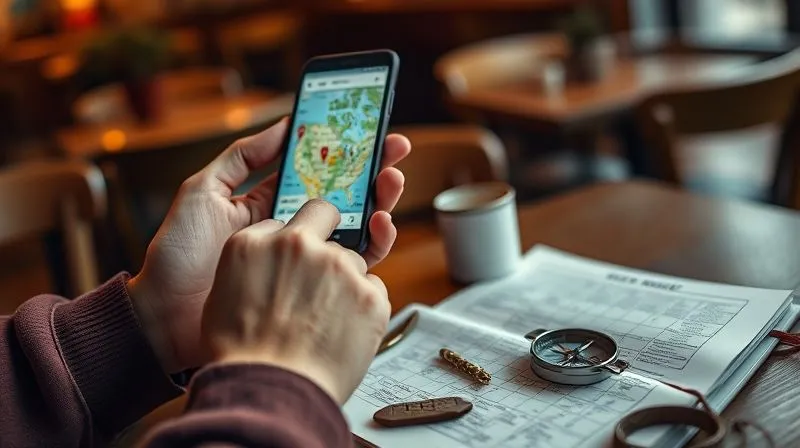
Social media isn't just for sharing; it's a powerful discovery tool if used correctly. I often use Instagram's location tags and specific, granular hashtags. Instead of #roadtrip, try #YourStateRoadside or #SmallTownArt (e.g., #NebraskaRoadsideArt, #MarfaLights). Look at posts from local businesses, artists, and community pages. Often, people unknowingly post about incredible local attractions that aren't officially listed anywhere.
TikTok has also emerged as a surprisingly effective tool. Search for 'things to do in [small town name]' or '[state] hidden gems.' The video format often gives you a much better visual sense of a place than photos alone, helping you quickly vet if it aligns with your definition of 'unique' and 'worthwhile.' Remember to cross-reference anything you find with other sources for verification.
The Art of Local Immersion: Connecting with the Source
No algorithm can fully replace human connection. For truly unique and verified stops, I've found that the best intelligence often comes from the people who live and breathe the local culture. This is where your interpersonal skills become as valuable as your GPS.
Engaging with Locals: Your Best Unofficial Tour Guides
This is perhaps my most cherished method. When I pull into a small town, my first stops are often local diners, independent coffee shops, or gas stations. I strike up conversations. I ask questions like, 'What's something truly unique about this area that most tourists miss?' or 'If you had one afternoon, where would you take a visitor to show them the real [town name]?'
People are often proud of their local quirks and eager to share. I've discovered everything from a roadside chapel made entirely of car parts to a hidden cave filled with folk art, simply by asking a friendly waitress or a gas station attendant. Be genuine, respectful, and listen more than you talk. Their insights are gold, often leading to places not found online.
Consulting Regional Tourism Offices (The *Right* Way)
While I advised against generic brochures, local and regional tourism offices can be invaluable *if* you approach them correctly. Don't just grab a pamphlet. Engage with the staff. Explain that you're looking for something offbeat, something that tells the true story of the region, not just the main attractions. Often, these offices have staff who are locals themselves and can point you to lesser-known historical markers, local art installations, or community projects that are genuinely unique.
Case Study: How Sarah Discovered 'The Whispering Woods' Art Installation
Sarah, a fellow road trip enthusiast, was planning a trip through rural Vermont. She had searched online for unique stops but kept seeing the same covered bridges and cheese farms. Applying my local immersion method, she stopped at a small-town general store. After buying a local soda, she chatted with the owner, mentioning her interest in local art or quirky history. The owner hesitated, then pointed her towards 'The Whispering Woods,' an unofficial, ever-evolving outdoor sculpture park deep within a private forest. It was created by a reclusive local artist and was only accessible via a handwritten sign on a dirt road, known almost exclusively to locals. Sarah followed the directions, respected the property, and discovered an ethereal, truly unique experience that became the highlight of her trip, all thanks to a five-minute conversation.
Verification & Vetting: Separating Myth from Must-See
Finding a potential 'unique' stop is only half the battle; verifying its existence, accessibility, and current status is paramount. This step is critical for avoiding disappointment, wasted time, or even unsafe situations. As an expert, I never recommend a stop without a thorough vetting process.
Cross-Referencing: The Multi-Source Validation Method
Once I have a potential lead, I employ a multi-source validation strategy. First, I use Google Street View. This is an invaluable tool for a quick visual check. Does the place still exist? Does it look like the photos? Is it publicly accessible or clearly on private property? Are there clear 'No Trespassing' signs?
Next, I search for recent reviews on platforms like Google Maps, Yelp, or TripAdvisor – but with a critical eye. I look for reviews within the last 6-12 months. What are people saying about its current condition, accessibility, and overall experience? I also perform a quick news search for the location, looking for any reports of closure, change of ownership, or local controversies that might impact a visit. According to a Forbes Tech Council article on data verification, relying on multiple, diverse sources is key to accuracy.
Understanding 'Unique': Authenticity vs. Novelty
Part of verification is also assessing its 'uniqueness' against my own criteria. Is it authentically local, a reflection of the region's culture or history? Or is it simply a novelty designed purely for tourists? I look for signs of genuine passion from its creators or community involvement. A giant ball of twine might seem 'novel,' but if it has a rich local history and community pride, it becomes genuinely unique. As marketing guru Seth Godin often says, "The opposite of remarkable is 'very good.'" We're aiming for remarkable.
| Verification Step | Purpose | Outcome |
|---|---|---|
| Google Street View | Visual confirmation, public access check | Existence, property status, current appearance |
| Recent Online Reviews (Google Maps, Yelp) | Current condition, visitor experience, accessibility | Visitor sentiment, operational status, potential issues |
| Local News/Blogs Search | Community context, controversies, closures | Historical changes, local perception, safety concerns |
| Direct Contact (if applicable) | Operating hours, specific directions, permission | Latest information, personal interaction, respect |
Mapping Your Masterpiece: Integrating Unique Stops into Your Route
Once you've identified and verified your unique stops, the next step is integrating them seamlessly into your road trip itinerary. This requires a blend of meticulous planning and a healthy dose of flexibility. It's about optimizing your route without sacrificing the spirit of discovery.
Strategic Detours: When to Veer Off the Beaten Path
Not every unique stop will be directly on your main highway. This is where strategic detours come in. I use mapping tools (like Google Maps or Waze) to plot potential detours and assess their impact on my overall travel time. A 30-minute detour for a truly exceptional experience is often worth it; a two-hour detour for a questionable one is not. I factor in fuel stops, potential food breaks, and even overnight accommodations around these detours. The goal is to make the detour feel like a natural part of the journey, not a burdensome interruption. A National Geographic article on road trip planning emphasizes the importance of balancing spontaneity with a well-researched route.
Flexibility is Key: Embracing Spontaneity with a Plan
Even with the most detailed planning, the road trip experience demands flexibility. I always build in 'buffer time' into my daily schedule. This allows for unexpected discoveries – like that charming antique shop you spot, or the local festival you stumble upon. It also accounts for longer-than-expected visits at a unique attraction. The 'expert method' isn't about rigid adherence to a schedule; it's about having a strong framework that allows for organic exploration. I often mark a few 'optional' stops that I can visit if time and energy permit, reducing the pressure to hit every single planned location.
Documenting Your Discoveries: Building Your Personal Road Trip Atlas
The journey doesn't end when you drive away from a unique stop. Documenting your discoveries is a crucial part of the expert method, enriching your own travel memories and providing valuable insights for future trips or for sharing with others. It's about creating your own personalized 'Atlas Obscura.'
Digital Tools for Curating Your Finds
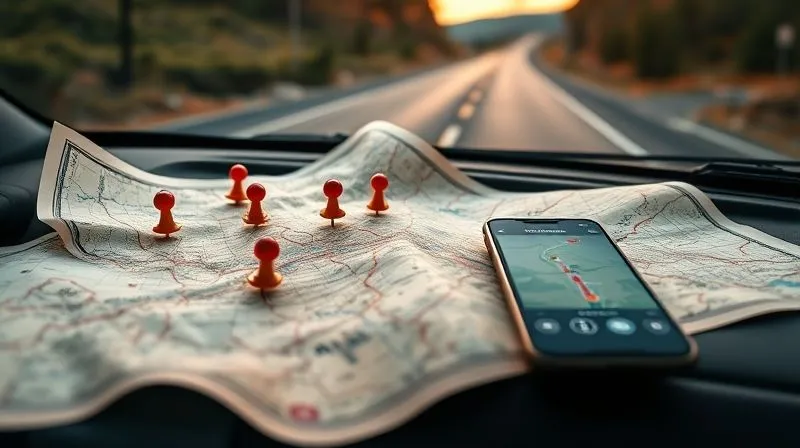
I rely heavily on digital tools to keep track of my finds. Google My Maps is an excellent, free resource. I create custom maps for each road trip, pinning every unique stop I find, along with notes, photos, and verification details. This allows me to visualize my route, share it easily, and revisit places virtually. For more detailed notes, I use apps like Evernote or Notion, creating dedicated pages for each attraction. I include the story behind the stop, my personal impressions, any tips for future visitors, and even the contact information of locals who provided recommendations.
The Value of Personal Photography and Notes
Beyond digital tools, good old-fashioned personal photography and notes are invaluable. I make it a point to capture not just the attraction itself, but also the surrounding context, the small details, and any unique signage. These photos, coupled with immediate notes about my experience – what I loved, what was surprising, who I met – form a rich tapestry of memories. This personal documentation also serves as another layer of 'verification' for me; it's proof of my experience and an authentic record of the stop, far more trustworthy than a generic online photo. It’s a practice that builds a personal repository of unique places, transforming each trip into a learning and archival expedition.
Safety & Ethics: Responsible Roadside Exploration
As an experienced road tripper, I cannot stress enough the importance of responsible exploration. Finding unique stops often means venturing into less-trafficked areas, and with that comes a heightened responsibility for safety and ethical conduct. Your actions reflect on all road travelers.
Respecting Private Property and Local Customs
Many truly unique roadside attractions are on private land, sometimes visible from the road, sometimes requiring a specific invitation. Always, *always* respect 'No Trespassing' signs. If a place is on private property and you wish to visit, seek explicit permission from the owner. A knock on the door, a polite inquiry – these small gestures can open doors to incredible experiences. I've found that owners of unique properties are often delighted to share their creations with respectful visitors. Equally important is respecting local customs and cultural norms, especially in small, tight-knit communities. Be mindful of noise, litter, and personal space.
Leaving No Trace: Preserving the Beauty for Others
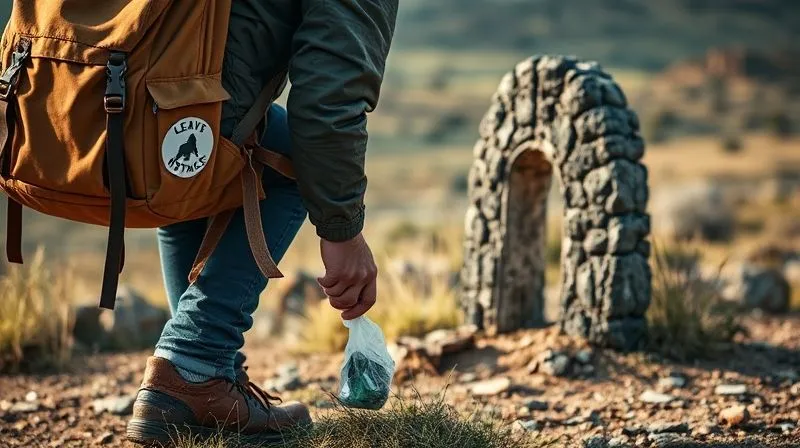
The principle of 'Leave No Trace' extends beyond wilderness areas to every roadside stop. This means packing out everything you pack in, and ideally, leaving the site cleaner than you found it. Avoid disturbing natural features, historical markers, or art installations. Do not carve your initials, pick flowers, or move objects unless specifically invited to do so. The goal is to preserve the authenticity and beauty of these unique places for future generations of explorers. As articulated by the Leave No Trace Center for Outdoor Ethics, these principles are vital for sustainable enjoyment of all environments, urban or wild.
Common Pitfalls and How to Avoid Them
Even with the best intentions and expert methods, certain traps can derail your quest for unique roadside stops. I’ve fallen into some of these myself early in my career, and learning from them has been crucial to refining my approach.
Over-reliance on Single Sources
A common mistake is finding a promising stop on one platform (e.g., a single blog post or an obscure forum thread) and assuming its veracity. As I've stressed, cross-referencing is non-negotiable. A blog post from five years ago might describe a vibrant attraction that has since closed, moved, or fallen into disrepair. Always seek at least two, preferably three, independent and recent sources to verify information. This builds trust not just in the stop, but in your own planning process.
Ignoring Local Sentiment
Sometimes, a place might appear unique online, but local sentiment tells a different story. Perhaps it's become a nuisance to residents, or its historical context is problematic. While your goal is discovery, ignoring local feelings can lead to awkward encounters or even inadvertently supporting something harmful. Pay attention to local news, community forums, and, most importantly, the subtle cues you get when interacting with residents. A unique stop should ideally enrich, not detract from, the local community.
The 'Too Much Too Soon' Syndrome
It's tempting to try and cram every single unique find into one trip. However, this often leads to burnout, rushed visits, and a diminished overall experience. Prioritize. Select a handful of truly compelling stops that genuinely excite you and fit logically into your route. Remember, the journey is as important as the destination. Leave some room for organic discovery and the joy of simply being on the road. As I often remind myself, "You can't see everything, but you can see *something* deeply."
Frequently Asked Questions (FAQ)
How do I balance unique finds with my overall travel schedule? The key is strategic planning and flexibility. Identify your absolute must-see unique stops and integrate them as primary waypoints. For other interesting finds, mark them as 'optional detours' on your map. Build in buffer time each day – an extra hour or two – to allow for spontaneous exploration without derailing your entire schedule. Don't try to see everything; focus on quality over quantity.
Are these 'verified' stops always safe or accessible? Verification significantly increases the likelihood of safety and accessibility, but it's not a guarantee. 'Verified' means it exists, is generally open to the public (or permission can be obtained), and recent reviews indicate a positive experience. However, conditions can change. Always exercise common sense: travel during daylight hours, be aware of your surroundings, and if a place feels unsafe or inaccessible upon arrival, trust your instincts and move on. Some unique spots may have uneven terrain or lack amenities.
What if I find a promising stop, but it's not well-documented online? This is often where the most unique gems hide! If online information is scarce, that's your cue to lean heavily on local immersion. Speak to residents, ask at local businesses, and if possible, try to contact the property owner directly (if it's a private display). Use Google Street View for a visual check. If you decide to visit, approach with caution and respect, and be prepared for it to be a true 'discovery' with minimal amenities or information. Document it well for others!
How can I contribute my own unique discoveries responsibly? If you find a truly unique, publicly accessible spot, consider sharing it on platforms like Atlas Obscura or Roadside America, or even on your own travel blog. When sharing, be detailed: provide accurate location data, recent photos, information on accessibility, and any historical context you learned. Crucially, emphasize responsible tourism: remind others to respect private property, leave no trace, and support local businesses if applicable. Your sharing helps build a better, more curated resource for everyone.
Is it worth the extra effort to find these hidden gems? Absolutely, unequivocally yes. In my experience, the unique, verified roadside stops are often the moments that define a road trip. They provide unexpected delight, fascinating stories, and a deeper connection to the places you visit. They transform a simple drive into a rich tapestry of discovery. While it requires more effort than simply following a pre-packaged itinerary, the rewards – unforgettable memories and truly unique experiences – are immeasurable.
Key Takeaways and Final Thoughts
- Cultivate a Curious Mindset: Approach road trips as an explorer, not just a tourist.
- Leverage Niche Digital Tools: Utilize platforms like Atlas Obscura and geo-specific social media searches.
- Embrace Local Immersion: Talk to locals; they are your best source for true hidden gems.
- Prioritize Verification: Cross-reference information using Street View, recent reviews, and local news.
- Plan Strategically, Stay Flexible: Integrate detours thoughtfully but leave room for spontaneity.
- Document Your Discoveries: Use digital maps and personal notes to create your own travel atlas.
- Practice Responsible Exploration: Respect property, local customs, and leave no trace.
The road less traveled isn't always easy to find, but it's almost always the most rewarding. By adopting these expert methods, you're not just planning a trip; you're crafting an adventure filled with authentic discoveries and unforgettable stories. Go forth, explore with intention, and may your next road trip be brimming with unique, verified roadside stops that truly capture the spirit of the open road. Happy travels!
Recommended Reading
- 7 Steps to Quiet Your Professional Mind for Mindful Solo Travel
- Unlock Sustainable Adventures: How to Choose Ethical Community Based Eco Tours?
- Mastering Luxury: How to Differentiate 5-Star Resorts for Discerning Clients
- Unlock Winter Fun: Your Guide to Non-Skiing Destinations
- 7 Steps to Ethical Medical Volunteering: Avoid Harmful Voluntourism

Your email address will not be published. Required fields are marked *