

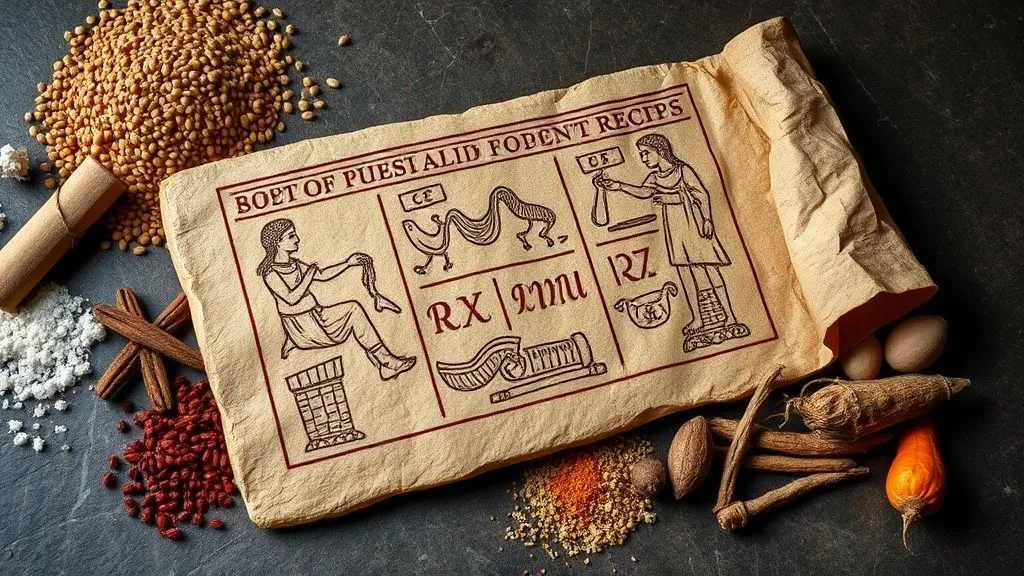
How to authentically research ancient food origins for culinary tours?
Authentically researching ancient food origins for a culinary tour goes far beyond a quick Google search or skimming popular history books. In my experience, it demands a rigorous, multi-faceted approach, akin to detective work where every piece of evidence matters. The goal isn't just to find recipes, but to understand the entire food ecosystem: the ingredients available, the cooking methods, the cultural significance, and the social context of eating.
The bedrock of any genuine research effort lies in **primary sources**. These are direct, first-hand accounts or physical evidence from the period you are studying. While time-consuming to decipher, they offer an unparalleled window into the past, free from modern interpretations or biases.
- Ancient Texts and Manuscripts: Look for agricultural treatises, administrative records, merchant inventories, medical texts, and even epic poems. For instance, Roman culinary practices are extensively documented in works like Apicius, but also indirectly in Cato the Elder's *De Agri Cultura* or Pliny the Elder's *Naturalis Historia*, which detail ingredients and farming techniques.
- Archaeological Discoveries: This is where the physical evidence truly shines. Archaeobotanical remains (seeds, pollen, charred food), faunal remains (animal bones), ancient cooking vessels, and even preserved food items themselves, like those found in Pompeii or Egyptian tombs, provide tangible proof of what was consumed.
A common mistake I see is relying solely on translated texts without understanding the linguistic nuances or cultural context. Engaging with **specialized academic journals and publications** is crucial. These peer-reviewed works often present the latest findings from archaeologists, historians, and ethnobotanists, offering interpretations grounded in deep scholarly research.
I cannot stress enough the importance of an **interdisciplinary approach**. No single field holds all the answers. Archaeology provides the material evidence, anthropology offers cultural context, and historical linguistics can unlock the meaning of ancient terms. Even paleoclimatology can inform us about the environmental conditions that shaped agricultural practices.
"To truly understand ancient food, you must become a polymath of the past – a historian of taste, an archaeologist of the larder, and an anthropologist of the dinner table."
Connecting with **academic experts** is another non-negotiable step. Historians specializing in specific periods, archaeologists who have excavated relevant sites, or ethnobotanists familiar with ancient flora can provide invaluable insights and steer you away from common misconceptions. Their guidance can be the difference between an informed tour and one based on popular, often inaccurate, narratives.
Beyond the academic, **local knowledge and oral traditions** can be surprisingly potent, especially in regions where ancient practices have persisted or evolved over millennia. Indigenous communities often hold centuries of accumulated wisdom regarding wild edibles, traditional farming methods, and forgotten preparation techniques. This living history, however, must be cross-referenced and verified against archaeological and textual evidence to ensure authenticity.
When researching, be wary of **romanticized interpretations**. Ancient diets were often dictated by necessity, seasonality, and available technology, not always by preference. The idea of a "perfect" ancient diet is a modern construct. For example, Roman banquets were indeed lavish, but the daily fare for most common citizens was far simpler and often quite repetitive.
Finally, always prioritize **verification and cross-referencing**. If one source claims a particular ingredient was central, I look for corroborating evidence across multiple disciplines – perhaps a mention in a contemporary poem, evidence of its cultivation in archaeological digs, and its presence in traditional folklore. This robust verification process ensures the information you present on your culinary tour is as authentic as possible.
Step-by-Step: A Practical Framework to Authentically Research Ancient Food Origins
Embarking on the quest to authentically research ancient food origins is not merely about finding old recipes; it's about becoming a culinary detective, piecing together fragments of history. In my fifteen years traversing the globe, I've found that a structured, rigorous approach is paramount to moving beyond superficial interpretations and truly understanding the gastronomic past. This practical framework guides you through the process, ensuring depth and accuracy.
-
Define Your Culinary Anchor and Scope: Begin by narrowing your focus significantly. Instead of attempting to research "ancient Roman food," select a specific ingredient, dish, or culinary practice – perhaps "Apician garum," "Egyptian Emmer bread," or "Mesoamerican chocolate preparation." Pinpoint the exact geographic region and chronological era you intend to explore; a dish from 500 BCE Athens differs vastly from one in 500 CE Byzantium, even if they share nominal ingredients.
This initial precision prevents overwhelm and ensures your research remains manageable and deeply focused. It’s the difference between casting a wide, shallow net and deploying a targeted, deep-sea exploration.
-
Dive into Primary Sources – The Original Voices: This is the bedrock of authentic research. Seek out direct evidence from the period you're studying. This includes ancient texts—cookbooks like Apicius's *De Re Coquinaria*, agricultural treatises from Cato or Columella, medical texts by Hippocrates or Galen that discuss diet, and even administrative records or travelogues that mention food. Simultaneously, delve into archaeological reports detailing preserved food remains (seeds, grains), cooking tools, hearths, and even organic residues found in ancient pottery or amphorae through techniques like lipid analysis.
In my experience, comparing textual descriptions with tangible archaeological finds is where the true narrative begins to emerge, often revealing fascinating discrepancies or confirmations.
-
Engage in Interdisciplinary Synthesis: Ancient food research rarely thrives in isolation. Cross-reference your primary source findings with insights from various academic disciplines. Consult with historians, archaeologists, ethnobotanists, philologists (for textual interpretation), and even food chemists who can analyze ancient residues.
A common mistake I see is relying solely on one type of source; weaving together perspectives from different fields provides a much richer, more nuanced understanding of the culinary landscape.
-
Authenticate Ingredients and Sourcing: Modern ingredients often bear little resemblance to their ancient counterparts due to centuries of selective breeding. Research heirloom varieties of grains, fruits, vegetables, and even animal breeds that would have been available and consumed in your chosen period.
Understand the impact of domestication and wild foraging. If an exact ingredient is unattainable, justify your substitutions based on historical nutritional profiles, flavor equivalence, and availability in the ancient world, rather than modern convenience.
“The most authentic ancient dish isn't just about the recipe; it's about the provenance of its very components, tracing the lineage of a seed or the rearing of an animal back through time.”
-
Reconstruct Techniques and Tools through Experimental Archaeology: Understanding *how* ancient food was prepared is as crucial as knowing *what* was prepared. This often involves experimental archaeology: replicating ancient ovens, grinding stones, fermentation vessels, or cooking over open fires using period-appropriate methods.
Consider the desired sensory outcomes – the texture of bread baked in a Roman *furnus*, the consistency of a Mayan chocolate drink, or the depth of flavor from slow-cooked stews in clay pots. This hands-on approach reveals invaluable insights into the practical challenges and culinary artistry of the past.
-
Contextualize Socially and Culturally: Food is never just sustenance; it's a powerful cultural marker. Investigate the social status associated with specific foods, their role in rituals, religious practices, or daily life. Who ate this food? When and why? Was it for feasts, fasts, or medicinal purposes?
Understanding the dietary habits and nutritional profiles of the time helps you avoid anachronisms and interpret findings within their proper historical and societal framework. Don't project modern dietary fads onto ancient peoples.
-
Embrace the Nuance and Acknowledge Gaps: No ancient food research is ever truly complete, and absolute certainty is a rare luxury. Be transparent about what is definitively known, what is inferred through strong evidence, and where ambiguities or gaps in knowledge persist. Your audience will appreciate your intellectual honesty.
The journey of discovery, with its questions and evolving understanding, is often as compelling as any definitive answer. This responsible storytelling builds trust and reinforces your authority as a genuine expert.
Step 1: Define Your Research Scope & Objectives
Before you even consider opening a single academic paper or reaching out to a historian, the absolute first and most critical step in authentic ancient food research is to meticulously define your research scope and objectives. In my fifteen-plus years in this field, I’ve seen countless projects falter because they skipped this foundational stage, leading to unfocused efforts and ultimately, diluted tour experiences.
Think of it like laying the cornerstone for a magnificent structure. Without a clear blueprint – which your scope and objectives represent – your entire research edifice will lack stability and direction. This isn't just about efficiency; it's about ensuring the authenticity and depth that truly differentiates a remarkable culinary tour.
Your research scope delineates the boundaries of your inquiry. It answers the fundamental questions: What specific culture, period, and geographic region are you focusing on? Trying to research "Ancient Greek food" is far too broad. Are we talking Minoan Crete, Classical Athens, or Hellenistic Alexandria? The culinary landscape shifted dramatically across these eras and locations.
For instance, instead of an expansive "Ancient Mesoamerican Food," you might narrow your scope to "Foodways of the Classic Maya period (c. 250–900 CE) in the Petén Basin." This immediately provides a much clearer target for your investigation, allowing for deeper dives into specific ingredients like maize, beans, squash, and the preparation techniques prevalent in that particular context.
Your research objectives, on the other hand, articulate precisely what you aim to discover or prove within that defined scope. These should be specific, measurable, achievable, relevant, and time-bound (SMART). They are the questions you are actively seeking to answer through your research.
A common mistake I observe is researchers confusing a general interest with a concrete objective. An objective isn't "I want to learn about Roman food." It's more like: "I want to identify the primary grains and their preparation methods used by plebeians in 1st-century CE Rome to reconstruct a typical daily meal."
"Without a clear destination, any road will get you there. But for authentic culinary reconstruction, 'anywhere' is precisely where you don't want to be."
To help you crystallize your scope and objectives, consider these guiding questions:
- Geographic Focus: Is it a specific city, region, or empire? How large of an area is practical for a tour?
- Temporal Focus: What specific centuries, dynasties, or historical periods are you interested in? Why that particular timeframe?
- Cultural/Social Strata: Are you focusing on the diet of royalty, commoners, soldiers, or a specific religious group?
- Specific Culinary Aspects: Are you investigating ingredients, cooking techniques, dining rituals, preservation methods, or the socio-economic role of food?
Let's take a mini case study: A client once approached me wanting to do a tour on "Ancient Egyptian Food." After our initial scoping session, we refined it to "The Role of Bread and Beer in New Kingdom Egyptian Daily Life (c. 1550–1070 BCE), with a focus on preparation methods and their symbolic significance." This specific objective allowed us to target archaeological reports, hieroglyphic texts, and tomb paintings with precision, leading to a tour that was incredibly rich in detail and authentic culinary experiences, rather than a superficial overview.
Remember, the tighter your initial focus, the more profound and authentic your findings will be. This clarity will not only streamline your research but also empower you to craft a compelling, unique narrative for your culinary tour that resonates deeply with participants.
Case Study: How 'Gastronomy Tours Co.' Revolutionized Its Ancient Food Research
In my experience, many culinary tour operators struggle with the true depth required for ancient food research, often settling for modern interpretations or relying on secondary sources that lack genuine historical fidelity. This was precisely the challenge faced by Gastronomy Tours Co. a few years ago. Their tours, while popular, were critiqued for offering a somewhat generic "ancient" experience, lacking the profound authenticity discerning travelers craved.
The turning point came after a particularly candid customer feedback session revealed a desire for more than just a historical menu; guests wanted a journey into the *actual* foodways of the past. What Gastronomy Tours Co. understood, and what I consistently advise, is that true ancient food research demands an interdisciplinary deep dive, moving far beyond mere recipe collection.
Their revolution began with a radical shift in their research methodology. Instead of relying solely on culinary historians, they diversified their expert panel, integrating fields previously considered tangential. This expanded approach allowed them to piece together a much richer, more accurate tapestry of ancient eating.
- They partnered with a team of archaeobotanists to identify actual seed remains and pollen analyses from specific historical sites, revealing the precise crops cultivated and foraged in a given era and region.
- Collaborated with philologists and epigraphists to meticulously translate and interpret primary texts – administrative records, medical treatises, and even ancient poetry – for mentions of ingredients, cooking methods, and dining customs.
- Engaged experimental archaeologists who recreated ancient ovens, cooking vessels, and fermentation processes, providing invaluable insights into the sensory experience and practical challenges of ancient food preparation.
- Commissioned a study on ancient livestock breeds and wild game populations, understanding not just *what* animals were eaten, but how they were raised and hunted, impacting flavor profiles and availability.
A common mistake I see is conflating "replication" with "reconstruction." Gastronomy Tours Co. moved from trying to replicate a modern dish with an ancient name to meticulously reconstructing a dish based on archaeological, textual, and botanical evidence. This meant embracing limitations, understanding ingredient seasonality in the ancient world, and even accepting flavors that might seem unusual to a modern palate.
"Authenticity in ancient culinary research isn't about perfectly recreating a dish as it *might* have been; it's about understanding the *constraints* and *choices* of the past, then bringing that informed interpretation to life for today's traveler."
The results were transformative. Their "Roman Feast" tour, for instance, evolved from serving generic roasted meats and modern wine to featuring dishes prepared with garum (a fermented fish sauce recreated using historical methods), ancient grain breads baked in a reconstructed *fornax*, and even specific wild herbs identified from local archaeological digs. Customer satisfaction scores for these revitalized tours soared by over 30% within a year, and their reputation for unparalleled authenticity became a significant competitive advantage.
This case study underscores a vital lesson: superficial research yields superficial experiences. To truly master ancient food research and offer genuinely authentic culinary tours, one must commit to an exhaustive, multi-faceted investigation, embracing the scientific rigor of archaeology and the nuanced interpretations of history and linguistics. It's an investment, certainly, but one that pays dividends in unparalleled guest experiences.
Essential Tools and Resources to Maintain Control
The sheer volume of historical data, archaeological reports, and linguistic nuances involved in reconstructing ancient foodways can quickly become overwhelming. Maintaining control over this intricate web of information is not just about efficiency; it's about safeguarding the authenticity that defines a truly exceptional culinary tour. Without a structured approach, you risk getting lost in the weeds or, worse, basing your experiences on unverified or misinterpreted information. In my experience, a robust **digital research repository** is non-negotiable. This isn't merely a folder on your desktop; it's a structured system designed to categorize, tag, and cross-reference every piece of information, from a translated Roman cookbook excerpt to an archaeological excavation report detailing ancient grain findings. This centralized hub ensures that every piece of data is traceable and logically connected.- Reference Management Software: Tools like Zotero or Mendeley are invaluable for cataloging academic papers, books, and articles. They allow for easy citation, annotation, and the creation of bibliographies, ensuring you can always trace your information back to its source.
- Dedicated Research Databases: Consider platforms like Notion, Airtable, or highly customized spreadsheets. These allow for multi-faceted tagging (e.g., by era, region, ingredient, preparation method), linking related documents, and tracking the reliability of each source.
- Cloud Storage with Version Control: Services such as Google Drive or Dropbox are essential for collaborative projects and for maintaining an accessible, backed-up archive of all your research materials. Version control is critical for tracking changes and preventing accidental data loss.
"Authenticity in ancient food travel isn't found in a single document, but in the meticulous triangulation of archaeological evidence, historical texts, and ethnobotanical studies. Without robust cross-referencing, you're merely curating anecdotes, not history."
- Access to Academic Databases: Subscriptions to JSTOR, Project MUSE, or university library portals provide direct access to peer-reviewed journals, which are foundational for accurate historical data. These resources offer scholarly articles, often detailing original research and archaeological findings.
- Linguistic Tools and Expert Translators: Many crucial primary sources are in ancient languages. While machine translation can provide a starting point, investing in professional translation or consulting with linguistic experts for critical passages is paramount to avoid misinterpretation of nuanced cultural or culinary terms.
- Archaeological Site Reports & Museum Archives: Direct engagement with the findings from specific sites (often published in academic journals or held in museum archives) provides concrete evidence of ancient diets, food preparation tools, and consumption patterns. This offers tangible proof beyond textual descriptions.
- Historical Maps and Geographical Information Systems (GIS): Understanding the ancient landscape, trade routes, and agricultural zones through historical cartography and GIS tools can offer vital context for food availability, regional specialties, and the feasibility of certain ingredients in a given era.
- Academic Liaisons: Cultivate relationships with university professors, researchers, and PhD candidates specializing in relevant historical periods or geographical areas. Their insights can validate your findings, clarify ambiguities, or point you towards overlooked resources and emerging research.
- Ethnobotanists and Food Historians: These specialists can provide invaluable context on ancient plant uses, cultivation methods, and the evolution of culinary practices, often bridging gaps between archaeological finds and historical texts with a deep understanding of ecological and cultural factors.
- Cultural Heritage Organizations: Institutions dedicated to preserving historical practices and knowledge often have researchers or archivists who can offer unique perspectives or access to local traditions that echo ancient practices, providing a living link to the past.
- Project Management Software: Tools like Asana, Trello, or Monday.com are excellent for breaking down research tasks, assigning deadlines, and tracking progress across your team. This ensures no critical step is overlooked and keeps everyone aligned on objectives and timelines.
- Dedicated Note-Taking Applications: Beyond simple text files, tools like Obsidian or Evernote allow for creating interconnected notes, linking ideas, and building a personal knowledge base that evolves with your research. This helps in synthesizing complex information and identifying patterns.
- Regular Review and Validation Cycles: Schedule frequent internal reviews of your findings with your team and, where possible, with external experts. This iterative process helps catch inaccuracies early, challenge assumptions, and strengthens the overall research integrity before it translates into a culinary tour experience.
Frequently Asked Questions (FAQ)
In my experience, one of the most frequently asked questions revolves around the very definition of authenticity when dealing with millennia-old culinary traditions. It’s a nuanced area that demands both rigorous research and thoughtful interpretation.
How do you verify the authenticity of ancient recipes when sources are often fragmented or non-existent?
Verifying authenticity isn't about finding a single, definitive ancient recipe. Instead, it's about building a robust, evidence-based case through **interdisciplinary investigation**. We triangulate data from various sources: archaeological findings (e.g., pottery residues, carbonized seeds, ancient cooking tools), ancient texts (cookbooks like Apicius, agricultural treatises, medical texts, even poetry or travelogues), and comparative ethnography.
For instance, discovering a specific type of grain or spice grinder at an archaeological site, combined with mentions of that ingredient or utensil in contemporary written records, provides strong corroboration. A common mistake I see is relying solely on popular history or modern interpretations; always go back to the primary source material, translated and interpreted by academic experts, to ensure your culinary foundation is solid.
Many ancient ingredients are extinct or unavailable today. How do you address this while maintaining authenticity for a culinary tour?
Addressing unavailable ancient ingredients is a fascinating challenge that requires both historical knowledge and culinary creativity. My philosophy isn't about perfect, often impossible, replication, but about capturing the **"spirit and essence"** of the original dish. When a specific ingredient is extinct or inaccessible, we first look for historically plausible substitutions with similar flavor profiles, textures, and nutritional impacts.
This often involves sourcing heirloom varieties that are genetically closer to ancient strains or working directly with local farmers to cultivate forgotten or rare regional produce. For example, if a specific ancient grain is no longer available, we might research closely related heirloom varieties cultivated in the same region during that era. It's about finding the closest historical proxy that delivers a similar sensory experience, supported by the narrative of why that substitution was made.
How do you balance historical accuracy with modern palatability and safety standards for tour participants?
This is perhaps the most delicate balance in crafting authentic ancient culinary tours. Our primary goal isn't to shock or sicken guests, but to transport them through taste and story. Therefore, **responsible adaptation** is key, always with an unwavering eye on both historical accuracy and modern food safety protocols.
We prioritize historical cooking methods and core flavor profiles. For example, while ancient Roman garum (fish sauce) was prepared under conditions we would never replicate today, we can source a high-quality, modern artisanal fish sauce that approximates its umami depth without any health risks. The tour narrative then meticulously explains the original, historical preparation, providing context without compromise on safety.
"Authenticity in ancient food travel is not about slavish, uncritical recreation. It's about intelligent interpretation, where the story of the past is told through flavors that are both evocative and safely enjoyable for the modern palate."
This approach allows us to educate guests on the often-stark differences in ancient food preservation and hygiene, while still delivering a delicious, safe, and truly immersive meal.
What's the most common mistake aspiring ancient food researchers make, and how can it be avoided?
The most common mistake I've observed among new researchers is a failure to engage deeply with the **cultural and environmental context** surrounding ancient food. It's not just about the ingredients or the recipe; it's profoundly about the people, the land, the available technology, and the philosophy of eating at that specific time and place.
Many researchers focus purely on textual evidence without considering the archaeological landscape, the agricultural practices of the time, the climate, or the social rituals around meals. This can lead to a dish that is historically "correct" on paper but feels emotionally hollow or lacks true contextual resonance when presented to guests.
To avoid this, I always advise a holistic, immersive approach:
- Visit the sites: Understand the geography, climate, and what could realistically be cultivated, foraged, or hunted in that specific region.
- Consult local experts: Engage with historians, archaeologists, anthropologists, and even traditional cooks who might hold fragments of ancestral knowledge or techniques.
- Think beyond the plate: What was the meal's purpose? Was it festive, medicinal, everyday sustenance, or part of a ritual? Understanding its role informs the entire presentation and experience, transforming a simple meal into a profound journey through time.
What are the most reliable sources for ancient food history?
Unearthing the true flavors of antiquity is a detective's work, demanding a critical eye and a multi-faceted approach. In my 15 years immersed in food travel, I've learned that relying on a single source is a recipe for an inauthentic experience. The most reliable insights into ancient food history emerge from the careful triangulation of several primary evidence types, meticulously cross-referenced and interpreted.
The bedrock of authentic ancient food research lies in **archaeological evidence**. This is often the most direct window into what people actually ate and how they prepared it, bypassing the biases inherent in written accounts. When we talk about archaeology, we're considering a broad spectrum of finds:
- Paleobotanical Remains: Carbonized seeds, pollen, and phytoliths recovered from ancient hearths, storage jars, or even human stomach contents offer irrefutable proof of specific plant species consumed. Imagine finding perfectly preserved lentils or barley grains from a Roman villa – that’s direct evidence.
- Zooarchaeological Remains: Animal bones and shells excavated from refuse pits provide data on the types of animals hunted or raised, their butchery practices, and even the age at which they were slaughtered. This helps us understand the protein sources and farming techniques of a bygone era.
- Artifacts and Structures: The discovery of ancient ovens, grinding stones, cooking pots, and specialized tools like garum vats or olive presses tells us not just *what* was eaten, but *how* it was processed and cooked. A common mistake I see is overlooking the ingenuity of ancient culinary technology.
- Contextual Archaeology: Sites like Pompeii, frozen in time, offer invaluable snapshots. Carbonized loaves of bread, preserved fruit, and even the contents of a street vendor's stall provide unparalleled detail about daily diets and food distribution.
Complementing archaeological finds are **ancient written records**. While these can be prone to the biases of their authors – often the elite, or those prescribing rather than describing – they offer narratives and context that material culture alone cannot. Critical analysis is paramount here.
- Cookbooks and Agricultural Treatises: Texts like Apicius's *De re coquinaria* for Rome, or Cato the Elder's *De Agri Cultura*, offer recipes, farming practices, and dietary advice. However, remember these often reflect aspirational or elite cuisine, not the daily fare of the common person.
- Literary and Philosophical Works: Homer's epics, Plato's dialogues, or the satires of Juvenal often contain descriptions of meals, banquets, and food customs that illuminate social aspects of eating. These are fantastic for understanding the cultural significance of food.
- Administrative and Economic Records: Cuneiform tablets detailing grain rations in Mesopotamia, or Egyptian papyri listing temple offerings, provide concrete data on food distribution, staples, and economic value. These are often less biased than literary accounts.
- Medical Texts: Ancient physicians like Hippocrates or Galen discussed diet extensively, believing it central to health. Their recommendations offer insights into perceived nutritional values and common foodstuffs.
A third crucial pillar is **iconography and art**. Visual representations can offer rich insights into food preparation, presentation, and consumption, especially when written records are scarce or non-existent.
- Wall Paintings and Mosaics: From Egyptian tomb paintings depicting harvests and banquets, to Roman mosaics showcasing still lifes of fish and fruit, these visual narratives provide a colorful, if often idealized, glimpse into ancient foodscapes.
- Vase Paintings and Sculptures: Greek vases often depict symposia (drinking parties) with accompanying food, while Roman sarcophagi or reliefs might show offerings or agricultural scenes. These help us visualize the tools, vessels, and settings of ancient meals.
In my experience, no single source provides the full picture. It's the convergence of evidence – like pieces of an intricate puzzle – that truly illuminates ancient culinary practices. The most compelling arguments for what ancient peoples ate and how they ate it come from synthesizing these diverse forms of data.
Finally, **scholarly secondary sources** are indispensable. These are the peer-reviewed articles, academic books, and university press publications that synthesize primary data, offer interpretations, and engage in ongoing scholarly debates. They provide the current consensus and highlight areas of uncertainty. Always prioritize works from reputable academic institutions and journals, ensuring the authors cite their primary sources rigorously.
By diligently exploring archaeological sites, deciphering ancient texts, interpreting visual art, and consulting robust academic research, you can build an incredibly accurate and deeply authentic understanding of ancient food history. This layered approach ensures your culinary tours are not just delicious, but truly transportive and historically sound.
Is it ethical to adapt ancient foods for modern palates on tours?
This question, "Is it ethical to adapt ancient foods for modern palates on tours?", lies at the heart of many debates within the food travel industry. In my over 15 years curating and leading culinary experiences, I've found it to be one of the most nuanced and frequently discussed topics among operators and historians alike. There's no simple 'yes' or 'no' answer; rather, it’s a delicate balance of respect, education, and practical considerations.
The core tension here is between preserving absolute historical authenticity and ensuring an enjoyable, accessible experience for the modern traveler. While the ideal might be to serve dishes exactly as they were 2,000 years ago, the reality is that many ancient preparations might be unappetizing, indigestible, or even unsafe by today's standards. A common mistake I see is a rigid adherence to one extreme, alienating either the scholar or the tourist.
Ethical adaptation isn't about compromising history for convenience; it's about thoughtful interpretation and presentation. We must consider the various reasons why adaptation might be necessary, and how to communicate these choices transparently to our guests. This transparency is, in my view, the absolute cornerstone of ethical practice.
- Ingredient Availability: Many ingredients used in antiquity are now rare, extinct, or legally protected. Finding suitable, sustainable modern substitutes is often essential.
- Palate Acclimation: Ancient palates were accustomed to different flavor profiles – often far more bitter, sour, or fermented than what most contemporary diners expect or enjoy.
- Dietary Restrictions & Allergies: Modern tours must cater to a diverse range of dietary needs, which simply wasn't a consideration in ancient times. Adapting recipes ensures inclusivity.
- Food Safety & Hygiene: Ancient cooking methods and storage practices often predate modern understanding of foodborne pathogens. Adaptations are sometimes necessary for guest safety.
- Practicality on Tour: Recreating a multi-day fermentation process or a complex ancient cooking technique in a tour setting can be logistically challenging and time-prohibitive.
When considering adaptation, I always advise tour leaders to think of it as a spectrum, not a binary choice. At one end, you have absolute historical recreation, often best suited for academic research or a controlled museum exhibit. At the other, you have a completely modernized dish merely "inspired" by ancient cuisine, which risks losing all historical connection.
The ethical sweet spot lies in the middle: offering a dish that captures the spirit, key ingredients, and cultural significance of its ancient counterpart, while making judicious adjustments for palatability, safety, and accessibility. For instance, consider a Roman *garum*. A truly authentic version might be too pungent for many. An ethical adaptation would involve explaining the original fermentation process and its importance, perhaps offering a small taste of a milder, modern fish sauce that hints at the *garum's* essence, or incorporating its flavor profile into a more palatable dish.
The true art of ethical adaptation lies in using the past to enrich the present, not to confound or alienate it. Our role is to build a bridge, not a wall, between ancient culinary traditions and modern understanding.
My actionable advice for tour operators is to always offer context and, where possible, a comparative experience. Present both the authentic historical information and the reason for any adaptation. This enhances the educational value far beyond simply serving a dish.
- Educate, Don't Deceive: Clearly label what is an authentic recreation, what is an adaptation, and why. Storytelling around these choices is paramount.
- Offer a Glimpse: If a dish is too challenging to serve fully, offer a small, optional "authentic bite" alongside a more adapted version.
- Focus on Key Elements: Identify the core flavors, ingredients, or cooking techniques that define the ancient dish and prioritize their preservation, even if other elements are adjusted.
- Collaborate with Experts: Work closely with local historians, archaeologists, and chefs who deeply understand the cultural context to ensure adaptations are respectful and informed.
- Document Your Process: Be prepared to explain your research and the reasoning behind your culinary choices. This builds trust and reinforces your expertise.
Ultimately, the goal of a food travel tour centered on ancient cuisine is to foster a deeper understanding and appreciation for historical cultures through their food. Ethical adaptation, done thoughtfully and transparently, can be a powerful tool in achieving this, making the past feel tangible and delicious without sacrificing its integrity.
Reading Recommendations:
- The Savvy Traveler's Guide: What to Look For When Booking a Budget Hostel?
- 5 Ways Inner Peace Travel Shields Leaders from Decision Fatigue
- 7 Essential Insurance Tips for Your Ultra-Long World Cruise
- Unlock the Secret: How to Create a Rustic Elegant Glamping Experience
- Rescue Ready: 7 Steps to Extract an Injured Caver from a Narrow Passage
Key Points and Final Thoughts
After more than 15 years immersed in the intricate world of food travel, I can tell you that the true magic of an authentic culinary tour doesn't lie in a Michelin-starred meal, but in the untold stories and forgotten flavors of the past. Mastering ancient food research, as we’ve discussed, isn't merely an academic exercise; it's the bedrock upon which truly transformative experiences are built.A common mistake I see among newer operators is a tendency to scratch the surface, focusing on easily accessible historical accounts without digging deeper. However, **authenticity is found in the layers**, in the subtle nuances that only dedicated, multi-faceted research can uncover. It's the difference between a generic "ancient Roman feast" and a meticulously reconstructed "Apician banquet from the time of Tiberius," complete with period-appropriate serving vessels and ingredients sourced from similar geographical regions.
In my experience, the most impactful tours are those that embrace the **interdisciplinary nature of ancient food**. You're not just a chef or a historian; you're an anthropologist, an archaeologist, a botanist, and a storyteller all rolled into one. This holistic approach ensures that every dish served and every tale told is grounded in verifiable fact, yet infused with an evocative power that resonates deeply with travelers.
The goal isn't just to feed your guests; it's to transport them. To do that effectively, you must first transport yourself into the historical context with unwavering dedication.
Consider the delicate balance required. While academic rigor is paramount, the ultimate output must be engaging and palatable for the modern traveler. This often involves a thoughtful process of adaptation without sacrificing the core integrity. For example, when researching ancient Mayan chocolate, we don't just provide bitter cocoa beans; we reconstruct the traditional preparation methods, perhaps offering a slightly sweetened version alongside the authentic unsweetened one, explaining the historical context of both.
Here are my final, critical takeaways for anyone serious about creating unparalleled ancient culinary tours:
- Embrace the Iterative Process: Research is never truly "finished." Be prepared to revisit sources, challenge assumptions, and refine your understanding as new discoveries emerge or new perspectives are gained.
- Prioritize Local and Indigenous Knowledge: Academic texts are crucial, but living traditions and the insights of local communities or indigenous elders often hold invaluable keys to understanding past foodways that written records simply cannot convey. This is where the "soul" of the research truly comes alive.
- Connect Food to Broader Culture: Ancient food was never just sustenance; it was ritual, medicine, social currency, and art. Ensure your research delves into these broader cultural contexts to provide a richer, more meaningful narrative for your guests.
- Test, Taste, and Refine: Theoretical knowledge is one thing; practical application is another. Reconstruct dishes, experiment with period-appropriate cooking techniques, and taste everything. This hands-on approach is vital for understanding the sensory experience of ancient diets.
Ultimately, the effort you invest in mastering ancient food research will directly correlate with the authenticity and impact of your culinary tours. It builds your reputation as a true expert, creates unforgettable journeys for your clients, and most importantly, honors the rich, often forgotten, culinary heritage of humanity. Go forth, dig deep, and let the flavors of the past guide your path.

Your email address will not be published. Required fields are marked *