


What training is essential for cave rescue personnel?
When it comes to cave rescue, it's not just about brute strength or a willingness to help; it's about a meticulously cultivated skill set. In my 15 years navigating complex subterranean environments and assisting in numerous rescues, I've seen firsthand that the difference between a successful extraction and a prolonged ordeal often boils down to the depth and consistency of training.The foundation, naturally, begins with **advanced caving proficiency**. This isn't just about knowing how to get in and out; it's about efficient movement through varied terrain, understanding cave geology, and mastering single rope technique (SRT) to an almost intuitive level. A rescue situation often demands moving quickly and safely in spaces where every inch counts.
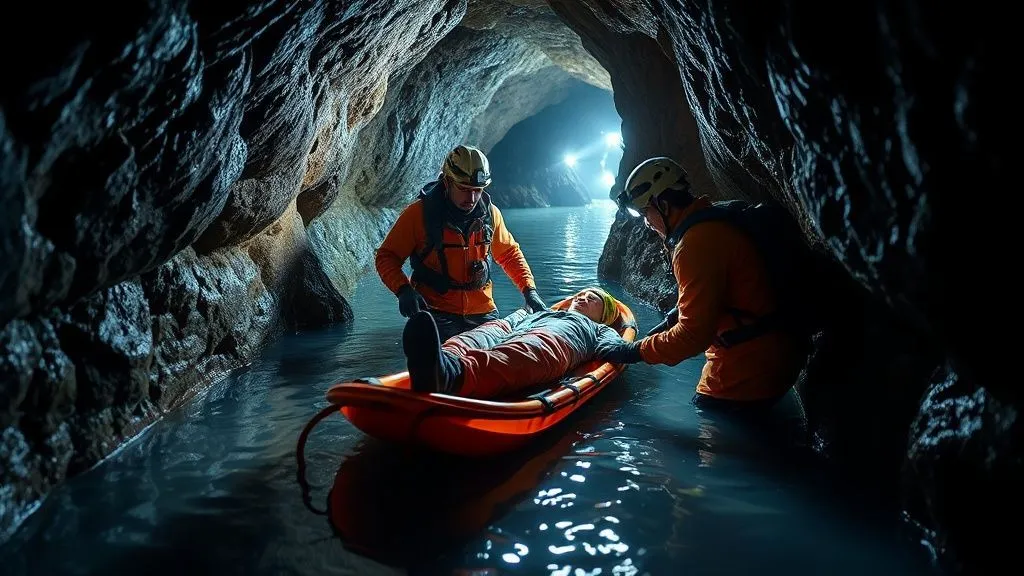
Beyond basic caving, specialized **technical rescue skills** are paramount. This encompasses everything from setting up complex hauling and lowering systems in constricted environments to patient packaging that protects the injured party while allowing for maximum maneuverability. A common mistake I see is underestimating the physics involved when you're trying to move a human body, often on a rigid litter, through impossibly tight squeezes.
- Rigging Mastery: Understanding anchor systems, mechanical advantage, knot theory, and the safe deployment of ropes and hardware. This isn't just about knowing *how* to tie a knot, but *why* a particular knot is suited for a specific load or situation.
- Patient Packaging & Movement: Expertise in securing an injured person onto a stretcher (like a Sked or a standard litter) and then moving that package through vertical and horizontal obstacles without exacerbating injuries.
- Confined Space Operations: Adapting industrial confined space rescue techniques to the dynamic, often unstable, environment of a cave. This requires a deep understanding of limited access and egress.
Equally critical is **wilderness medical training**, specifically tailored to the unique challenges of a cave environment. While a Wilderness First Responder (WFR) certification is a baseline, true expertise involves understanding hypothermia management in a constant 50-degree F (10-degree C) environment, crush injury syndrome, and the psychological impact of prolonged entrapment.
"In a cave, time is not just a dimension; it's a critical resource that drains with every minute. Effective medical intervention, delivered swiftly and expertly in a hostile environment, can mean the difference between life and death."
Furthermore, **communication and team dynamics** cannot be overstated. Underground, traditional communication methods are often unreliable. Rescue personnel must be adept at non-verbal cues, relaying information efficiently through a chain, and maintaining morale under immense pressure. I’ve been on rescues where a single miscommunication led to hours of delay.
Finally, there's the relentless need for **realistic scenario training and continuous practice**. You can read all the manuals in the world, but until you've spent 12 hours simulating a patient extraction in a muddy, cold passage that's barely larger than you are, you haven't truly tested your skills. These drills build muscle memory, refine decision-making under stress, and forge the unbreakable bonds of trust essential for any successful cave rescue team.
Reading Recommendations:
- Unraveling India's Culinary Tapestry: How Regional Indian Curries Differ by State
- Unlock Your Potential: Overcoming Fear of Solo Travel for Personal Growth
- Unlock the Secrets: How to Plan a Safe Solo Long-Distance Hiking Trip
- Unlock the Slopes: Your Ultimate Guide to a Budget-Friendly Winter Sports Trip
- 7 Proven Strategies: Beat City Break Overwhelm for Maximum Productivity
Key Points and Final Thoughts
Having navigated countless tight squeezes and challenging extractions in my career, I can tell you that while the seven steps provide an invaluable framework, the true mastery of cave rescue lies in understanding the nuances beyond the technical.
It's not just about ropes and pulleys; it's about the psychological resilience of your team and the injured party, and the ability to make critical decisions under immense pressure.
In my experience, the single biggest variable in a successful extraction is often the mental fortitude of the team leader and the ability to maintain calm amidst chaos. Panic spreads faster than any floodwater, and it can critically impair judgment.
"The cave doesn't care about your plan; it cares about your adaptability. Stay calm, think clearly, and lead with unwavering resolve."
Remember, the injured caver is likely experiencing extreme pain, fear, and claustrophobia, often in complete darkness. Your calm, reassuring presence, even through the most difficult moments, is as vital as any piece of rescue gear and can significantly impact their cooperation and overall outcome.
A common mistake I see is teams practicing only the 'easy' parts of a rescue. Real-world scenarios are never clean or predictable. You must regularly engage in realistic, full-scale drills, ideally in varied and challenging cave environments that mimic actual narrow passages.
This includes simulating common complications like communication failures, equipment malfunctions, and even secondary injuries. Muscle memory and critical thinking under duress are earned, not given, through rigorous and repetitive practice.
- Regular Gear Checks: Every component, from ropes to carabiners, must be meticulously inspected before and after every trip, not just before a rescue.
- Cross-Training: Ensure multiple team members are proficient in critical roles, from rigging to medical assessment, to avoid single points of failure.
- Scenario Planning: Beyond drills, regularly discuss 'what-if' scenarios for specific sections of known caves, fostering a proactive problem-solving mindset.
No two narrow passages are identical, and no two injuries present the exact same challenges. The seven steps are a guide, not a rigid script. Be prepared to improvise safely and effectively, always prioritizing the casualty's well-being and the team's safety.
I once assisted in an extraction where an unexpected rock fall compromised our primary anchor point. Our ability to quickly re-evaluate the physics and adapt our rigging using lesser-known, yet secure, natural anchor techniques saved critical time and prevented further complications.
Ultimately, the best rescue is the one that never has to happen. Emphasize meticulous trip planning and comprehensive risk assessment before every expedition. Understanding the limits of your team, your gear, and the cave itself is paramount.
Sometimes, the bravest and most expert decision is to turn back, or to avoid a known high-risk passage entirely, rather than pushing limits that could lead to a catastrophic event.
The responsibility we hold for our fellow cavers is immense. Mastering these rescue principles is not just about technique; it's about upholding the unwritten code of the underground community – a commitment to mutual safety and support.
Invest in your training, trust your team, and always remember why you venture into the dark: for the shared experience, the discovery, and the unwavering bond forged in the depths. Be ready, always.



Your email address will not be published. Required fields are marked *