

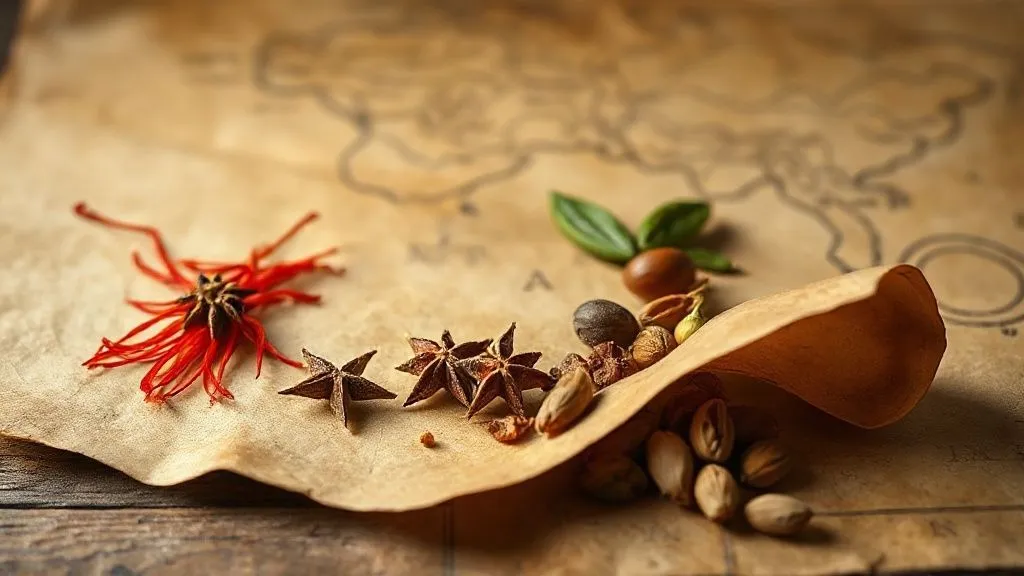
How to Authentically Revive Lost Spice Route Recipes?
For over two decades in the realm of food travel and culinary exploration, I've been captivated by the ghosts of flavors past, particularly those whispered along the ancient spice routes. I've witnessed countless enthusiasts and even professional chefs struggle to move beyond mere imitation, yearning for a deeper, more genuine connection to historical gastronomy. It's a journey I've personally undertaken, fraught with challenges but immensely rewarding.
The problem is profound: many of these venerable recipes are not merely 'lost' in terms of documentation but also in context. Ingredients have changed, techniques have been forgotten, and the very palates of ancient cultures are a mystery. Without a rigorous, respectful approach, we risk creating culinary fan-fiction rather than authentic revival, losing the true essence of what made these dishes extraordinary.
This article isn't just a collection of tips; it's a comprehensive framework. Drawing from my experience as a culinary historian and food ethnographer, I will guide you through actionable strategies, meticulous research methodologies, and hands-on experimental cookery to genuinely revive, rather than merely reinterpret, the lost spice route recipes. Prepare to unlock a world of flavor that has lain dormant for centuries.
The Untapped Potential: Why Revive These Culinary Treasures?
The allure of the spice routes isn't just about trade; it's about the profound cultural exchange that shaped global cuisines. Reviving these recipes is more than a culinary exercise; it's an act of cultural preservation, a direct connection to our shared human history. I've seen how a single, authentically recreated dish can transport diners, sparking conversations about history, geography, and the intricate dance of human civilization.
There are numerous benefits to embarking on this challenging yet fulfilling quest:
- Cultural Preservation: Safeguarding culinary heritage for future generations.
- Unique Flavor Profiles: Discovering tastes and ingredient combinations largely forgotten today.
- Historical Insight: Gaining a tangible understanding of ancient economies, societies, and daily life.
- Educational Value: Offering unparalleled learning opportunities for chefs, historians, and food enthusiasts.
- Inspiration for Innovation: Providing a rich wellspring for contemporary culinary creativity.
Phase 1: Deep Dive into Historical Research and Ethnography
Authenticity begins long before you even touch a spice. It starts with rigorous, almost archaeological, research. In my experience, this is where most attempts falter, mistaking a simple old recipe for the complete historical context.
Unearthing Primary Sources: Manuscripts and Oral Traditions
To truly understand a lost recipe, you must go to the source. This means delving into historical texts, travelogues, merchant records, and even ancient medical treatises. Often, culinary instructions were embedded within broader cultural documents. For instance, the renowned scholar Charles Perry's work on medieval Arabic cuisine demonstrates how much can be gleaned from seemingly non-culinary manuscripts.
"The true flavor of history isn't just in the ingredients, but in the stories they carry and the hands that prepared them. Listen to the elders, read between the lines of ancient scripts, and you'll find the soul of the dish."
Here are actionable steps for identifying primary sources:
- Target Specific Regions & Time Periods: Focus your search on a particular segment of the spice route (e.g., Silk Road, Maritime Spice Route) and a defined historical era.
- Consult Academic Databases: Utilize university libraries, archives, and digital repositories like the British Library or the Bibliothèque Nationale de France for digitized manuscripts.
- Seek Out Translated Texts: Look for scholarly translations of ancient cookbooks (e.g., Kitab al-Tabikh for Abbasid cuisine) or travelogues (e.g., Ibn Battuta).
- Engage with Local Communities: In regions where these routes once flourished, oral traditions often hold forgotten knowledge. Connect with local historians, elders, and culinary practitioners.
- Learn Basic Language Phrases: Even a rudimentary understanding of historical dialects can help you spot key terms in untranslated documents.
Decoding Ancient Ingredients and Their Provenance
The spices and other ingredients of antiquity were often vastly different from their modern counterparts. A 'pepper' in a 14th-century Venetian recipe might refer to long pepper, not the black peppercorns we use today. Similarly, the genetic diversity of fruits, vegetables, and even livestock was much greater. Understanding provenance is key.
I always advise researchers to consider the botanical and geographical context. Where was the ingredient cultivated? What were the agricultural practices of the time? This level of detail is crucial for authentic ingredient selection. For example, the saffron of ancient Persia might have had a different crocin content than modern Spanish saffron, subtly altering the final dish's color and aroma. Researching historical botanical records and seed banks can provide invaluable clues.
Phase 2: Bridging the Gap – Ingredient Sourcing and Sensory Analysis
Once you've identified the 'what' and 'where' of your historical ingredients, the next challenge is procuring them and understanding their sensory impact. This is where the detective work truly meets the culinary art.
Authentic Sourcing: Beyond the Supermarket Shelf
Modern commercial agriculture prioritizes yield and shelf-life over historical flavor profiles. To authentically revive a recipe, you must seek out heirloom varieties, wild-foraged ingredients, or those cultivated using traditional methods. This often means going directly to specialist growers or international markets.
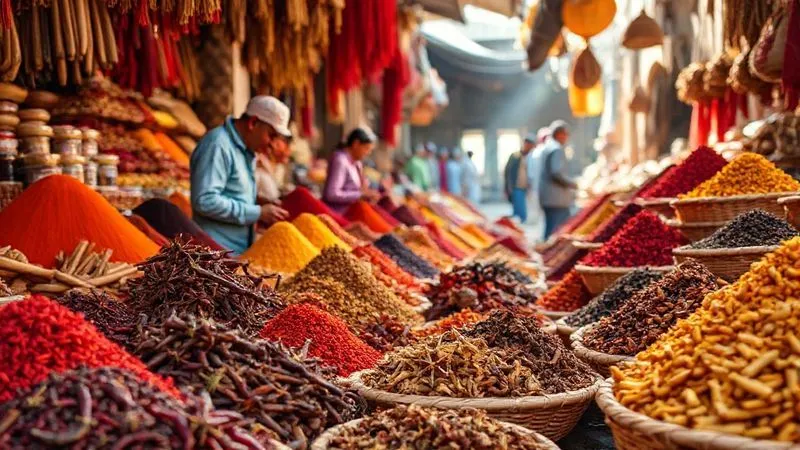
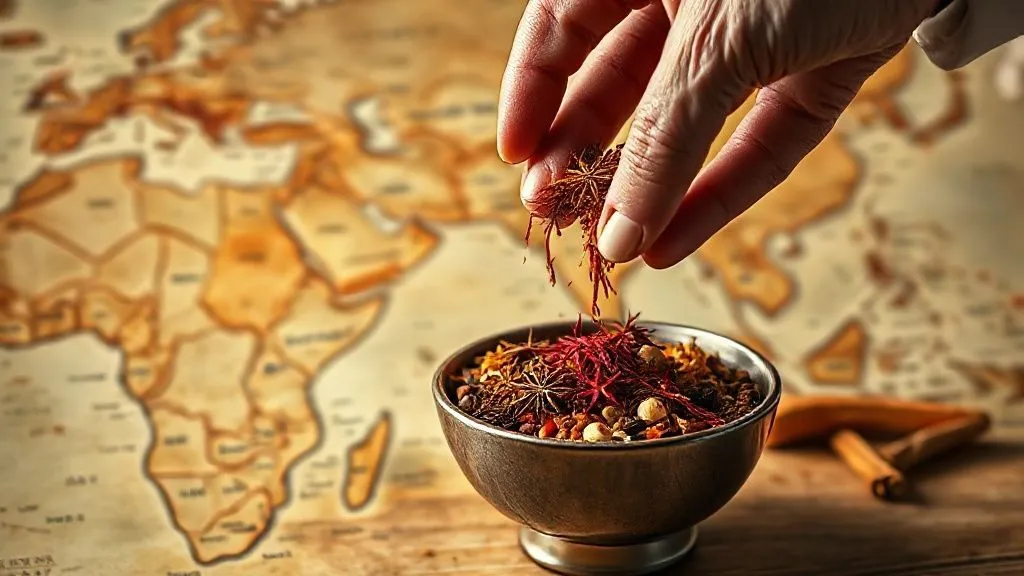
For spices, look for whole, unground versions, as their volatile oils degrade quickly. Engage with ethical spice traders who can trace their products to specific regions and even farms. Sometimes, cultivating your own heirloom herbs or vegetables from heritage seeds is the only way to achieve true authenticity. This commitment to sourcing is a cornerstone of genuine revival.
Reconstructing Flavor Profiles: A Sensory Journey
This is arguably the most challenging and subjective part of the process. How do you know what a 12th-century Persian palate preferred? We rely on textual clues (e.g., descriptions of 'sharp,' 'sweet,' 'aromatic'), comparative ethnography, and careful sensory analysis of our sourced ingredients.
I recommend conducting blind sensory panels with small batches of individual spices from different origins. Document your findings meticulously. Understand that ancient palates might have been accustomed to stronger, more unrefined flavors, or combinations that seem unusual to us today. The goal isn't to make it palatable for modern tastes, but to reconstruct the original sensory experience.
| Spice | Characteristics |
|---|---|
| Black Pepper (Historical) | More varied pungency, earthy, less standardized heat. |
| Black Pepper (Modern) | Consistent sharp heat, often less complex aroma, standardized. |
| Cinnamon (Historical) | Likely wild-harvested Cinnamomum verum, nuanced sweetness, woody notes. |
| Cinnamon (Modern) | Often Cinnamomum cassia, bolder, sweeter, sometimes less complex. |
| Saffron (Historical) | Potentially stronger color and aroma due to different processing/varietals. |
| Saffron (Modern) | Standardized color and aroma, often cultivated for yield. |
| Cardamom (Historical) | Wilder, more intense, possibly smoked notes depending on region. |
| Cardamom (Modern) | Cultivated, more uniform, bright citrusy and floral notes. |
Phase 3: Methodological Reconstruction and Experimental Cookery
With ingredients in hand and historical context understood, it's time to enter the kitchen. This phase is about controlled experimentation, treating each recipe not as a fixed instruction but as a hypothesis to be tested.
Deconstructing Ancient Techniques: Tools and Temperatures
Modern kitchens are a far cry from ancient ones. We have precise temperature controls, standardized measurements, and a plethora of specialized tools. Ancient cooking relied on open fires, clay ovens, stone mortars, and intuitive measurements. These differences profoundly impact flavor and texture.
Consider the impact of cooking in a tagine over embers versus a stainless steel pot on an induction hob. The slow, even heat and steam circulation of the former create a completely different result. Research historical cooking vessels and methods. For instance, the Food Timeline website offers excellent insights into historical cooking practices and tools.
Where possible, use replicas of ancient cooking tools or adapt modern equipment to mimic ancient conditions. For example, slow-roasting in a Dutch oven within a conventional oven can approximate an ancient clay pot cooked in embers.
The Art of Iteration: From Hypothesis to Harmony
Expect to fail, and learn from every attempt. Revival is rarely a single, perfect execution. It's an iterative process of testing, tasting, adjusting, and re-testing. Start with small batches to conserve rare ingredients.
- Initial Interpretation: Based on your research, make your best guess at the recipe, noting ambiguities.
- First Cook: Prepare the dish, strictly adhering to your interpretation.
- Sensory Evaluation: Document every aspect – aroma, texture, taste, visual appeal. Compare it to your historical expectations.
- Identify Discrepancies: Where does it differ? Is it too sweet, not aromatic enough, wrong texture?
- Hypothesize Adjustments: Based on historical context, propose changes (e.g., different spice ratio, longer cooking time, different fat).
- Second Cook & Repeat: Implement changes and repeat the process until you achieve a flavor profile that resonates with your historical understanding.
Case Study: The Saffron-Infused Persian Pilaf of Isfahan
Case Study: Reviving a 17th-Century Isfahani Pilaf
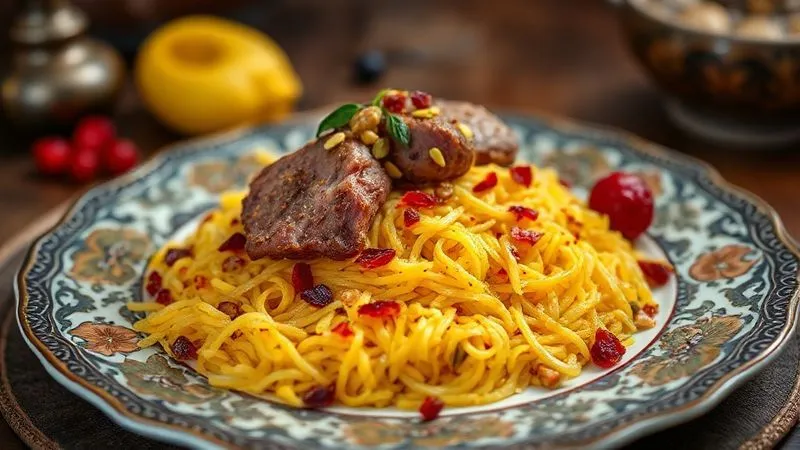
A few years ago, I embarked on a project to revive a specific saffron-infused pilaf from 17th-century Isfahan, mentioned in a fragmented Safavid-era manuscript. The text described a dish of rice, lamb, pistachios, and a generous amount of saffron and barberries, cooked 'slowly until the rice sings.' The challenge was immense.
My initial research revealed that the 'saffron' of that era was likely from Khorasan, with a distinct aroma profile. The 'lamb' was a specific fat-tailed breed, and the cooking vessel was almost certainly a large copper pot over a charcoal brazier. Modern Basmati rice, while good, didn't quite match the textual descriptions of the grain's texture.
"Patience is not just a virtue in the kitchen; it's the crucible in which historical flavors are truly forged. Rushing the process is a disservice to the past."
I sourced heritage Iranian rice, contacted a specialist saffron importer, and even experimented with slow-cooking lamb in a replica copper pot. My first few attempts resulted in a pilaf that was either too dry, too mushy, or lacked the deep, earthy saffron notes I expected. The 'singing rice' texture was elusive.
Through iterative cooking, adjusting the water-to-rice ratio based on the specific heritage grain, experimenting with different soaking times for the saffron, and crucially, learning to control the heat of charcoal embers, I finally achieved a breakthrough. The resulting pilaf had individual, glistening grains of rice, a profound saffron aroma that permeated every bite, tender lamb, and the tart burst of barberries. It wasn't just a recipe; it was a tangible link to a bygone era.
Overcoming Obstacles: Adaptation vs. Authenticity
The journey of revival is rarely straightforward. You will inevitably encounter obstacles: unavailable ingredients, ambiguous instructions, or even cultural sensitivities. This is where the distinction between strict authenticity and thoughtful adaptation becomes critical.
While the primary goal is authenticity, sometimes a direct recreation is impossible. In such cases, informed adaptation, clearly documented, is acceptable. For example, if a specific animal fat is no longer available, a historically plausible substitute (e.g., clarified butter for suet) can be used, with a note explaining the substitution and its rationale. It's an ethical tightrope walk, as discussed by experts in culinary ethics and food history journals.
The Role of Local Communities in Preservation
Never underestimate the power of local knowledge. In many regions along the spice routes, culinary traditions, even if altered, have deep roots. Engaging with local cooks, farmers, and artisans can provide invaluable insights into ingredient usage, cooking techniques, and flavor preferences that no book can fully capture. Their living heritage is a bridge to the past.
Foster collaborative relationships. Share your findings, learn from their practices, and respect their interpretations. This not only enriches your understanding but also helps empower and preserve the very communities that are the custodians of these culinary legacies.
Documenting Your Journey: Preserving and Sharing the Revival
Your work doesn't end when the dish is perfected. Documentation is a crucial, often overlooked, aspect of authentic revival. Without it, your hard-won knowledge risks becoming 'lost' again, perpetuating the very problem you set out to solve.

Maintain detailed records of every step: your research sources, ingredient provenance, experimental cooking logs, sensory evaluations, and even photographs of your attempts. This creates an invaluable resource for yourself and future researchers. Consider publishing your findings in academic journals, culinary magazines, or even a dedicated blog or cookbook. Sharing your journey contributes to the collective knowledge base and inspires others.
- Detailed Research Log: Keep track of all primary and secondary sources, including page numbers, archives, and oral history interview dates.
- Ingredient Sourcing Records: Document supplier names, origin, botanical names, and any unique characteristics of your ingredients.
- Experimental Cookery Journal: Log every attempt, including ingredient quantities, cooking times, temperatures, and sensory notes.
- Visual Documentation: High-quality photographs of ingredients, cooking processes, and final dishes are essential.
- Ethical Considerations: Document any adaptations made, and the rationale behind them.
Frequently Asked Questions (FAQ)
How do I verify the authenticity of an ancient recipe? Verification involves cross-referencing multiple primary sources from the same region and era. Look for corroborating evidence in travelogues, merchant records, and even archaeological findings related to diet. Sensory analysis of historically sourced ingredients and experimental cooking in period-appropriate conditions also play a crucial role in validating your interpretation against historical context.
What if a key ingredient is no longer available? This is a common challenge. First, rigorously research potential historical synonyms or closely related species. If truly unavailable, seek the closest modern equivalent based on botanical properties and flavor profile, always documenting the substitution and your reasoning. Sometimes, omitting an ingredient entirely or using a symbolic representation might be the only ethical option, with clear disclosure.
How do I get past language barriers in historical texts? For significant projects, collaborating with a historical linguist or a scholar fluent in the original language is invaluable. For smaller endeavors, utilizing online translation tools for key terms, coupled with a good historical dictionary, can help. Always be aware of potential nuances and multiple meanings of words across different historical periods.
Can I adapt these recipes for modern tastes without losing authenticity? The goal of 'authentic revival' typically prioritizes historical accuracy over modern palatability. If adaptation for contemporary tastes is necessary (e.g., for commercial purposes), it should be clearly labeled as an 'interpretation' or 'modern adaptation,' not a 'revival.' Transparency is key to maintaining integrity and respecting the original culinary heritage.
What's the biggest mistake people make when trying to revive lost recipes? The most significant mistake I've observed is insufficient research and an over-reliance on modern culinary assumptions. Many jump straight into cooking with modern ingredients and techniques, failing to grasp the historical context, ingredient nuances, and traditional methods. This often leads to dishes that bear little resemblance to their ancient counterparts, sacrificing authenticity for convenience.
Key Takeaways and Final Thoughts
Embarking on the journey to authentically revive lost spice route recipes is a profound act of culinary archaeology. It demands patience, meticulous research, and a deep respect for history and culture. It's a testament to the enduring power of food as a link across centuries.
- Begin with exhaustive historical and ethnographic research, seeking primary sources.
- Prioritize authentic ingredient sourcing, understanding their historical provenance and sensory characteristics.
- Master ancient cooking techniques and tools through iterative, experimental cookery.
- Document every step of your journey meticulously to preserve and share your findings.
- Engage with local communities for invaluable insights and collaborative knowledge sharing.
The flavors of the past are not merely echoes; with dedication and a rigorous approach, they can sing again. I encourage you to embrace this challenge, for in reviving these lost recipes, you don't just cook a dish; you resurrect a piece of humanity's rich, flavorful story. Happy culinary adventuring!
Recommended Reading
- Elevate Luxury: 7 Ways to Integrate Railway Museums into High-End Train Tours
- 7 Proven Ways to Sidestep Critical Delays on Independent Cruise Tours
- Rome on a Budget: Best Free Attractions for First-Time Visitors!
- 5 Smart Strategies: Busy Pros' Guide to Genuine Budget Travel Deals
- Unlock Your Inner Self: How to Plan a Solo Trip for Deep Introspection

Your email address will not be published. Required fields are marked *