

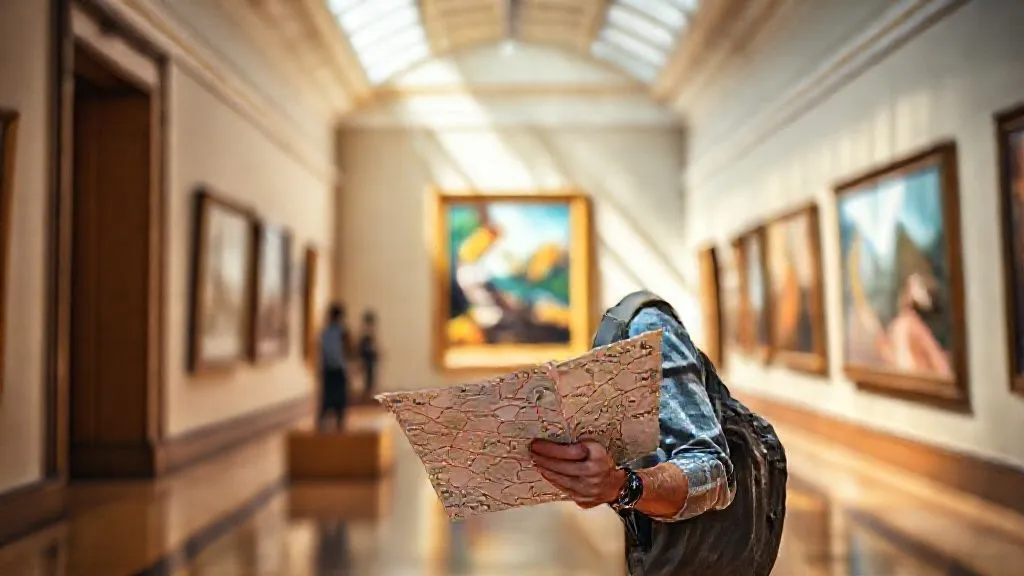
How to efficiently visit top art galleries on a 48-hour city break?
For over 15 years, I've had the immense privilege of guiding countless travelers through the intricate dance of cultural exploration, particularly when time is a precious commodity. I've witnessed the sheer joy of discovering a masterpiece, but also the frustration of hurried, unfocused gallery visits that leave one feeling more exhausted than enriched. The allure of a city break, packed with world-class art, is undeniable, yet the challenge of truly experiencing it within a mere 48 hours is a puzzle many struggle to solve.
The common pain point? Overwhelm. You land in a vibrant city, brimming with artistic treasures, and the clock immediately starts ticking. Without a strategic approach, you risk succumbing to 'museum fatigue,' rushing through halls, and ultimately missing the profound connections art offers. It’s not just about seeing art; it’s about experiencing it, absorbing its narrative, and letting it resonate, even when time is short.
This guide isn't just a list of tips; it's a comprehensive framework, born from years of hands-on experience and extensive research, designed to transform your 48-hour art gallery city break from a frantic dash into a deeply rewarding journey. I'll share actionable strategies, real-world analogies, and expert insights to ensure you efficiently visit top art galleries, maximizing every precious moment and leaving with lasting memories, not just tired feet.
1. Strategic Pre-Planning: Your Digital Art Concierge
In my experience, the success of any short city break, especially one focused on art, hinges almost entirely on what happens before you even board your flight. Think of your pre-trip planning as setting the stage for an unforgettable performance. Without a meticulously crafted itinerary, you're essentially improvising, and while spontaneity has its place, it’s rarely a virtue when trying to efficiently visit top art galleries on a 48-hour city break.
The digital age has gifted us with tools that act as our personal art concierges, making this initial phase more powerful than ever. Leveraging these resources correctly can save you hours on the ground, allowing for more time immersed in art.
Researching Galleries & Exhibitions
Before you even think about booking, dive deep into the city's art scene. Every major city has its iconic institutions, but also smaller, equally compelling galleries that might align more with your specific interests. Don't just list them; understand their current offerings.
- Identify Key Institutions: Start with the big names – the Louvre, MoMA, Tate Modern. These are often non-negotiable for first-time visitors.
- Check Special Exhibitions: Permanent collections are always there, but temporary exhibitions often draw the biggest crowds and can be time-sensitive. Prioritize these if they align with your taste.
- Review Opening Hours & Days: This seems obvious, but many travelers overlook it. Public holidays, specific weekday closures, and late-night openings can drastically alter your plan.
- Assess Collection Focus: Do you prefer Renaissance, Impressionism, Contemporary, or something niche? Tailor your choices to what truly excites you to avoid 'art fatigue' from seeing too much of what doesn't resonate.
- Consider Location Clustering: Group galleries that are geographically close. This is a fundamental principle for efficient time management.
Optimizing Your Route with Digital Tools
Once you have a shortlist, it's time to map it out. This is where your digital art concierge truly shines. I've seen countless itineraries fall apart because travelers underestimated transit times or ignored logical flow.
Use mapping applications like Google Maps or Citymapper to plot your chosen galleries. Don't just look at point A to point B; consider the most efficient sequence. Factor in public transport availability, walking distances, and even potential queues. A well-optimized route means less time spent traveling and more time appreciating art.
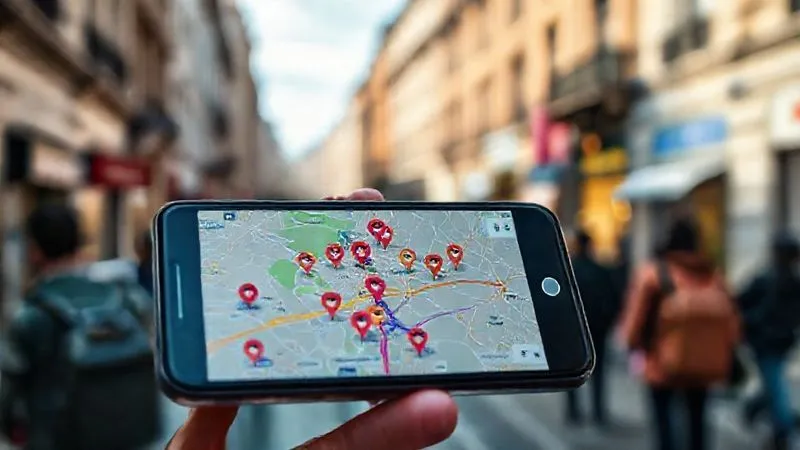
- Real-time Transit Information: Many apps provide live updates on bus, train, or subway schedules, helping you adjust on the fly.
- Walking vs. Public Transport: For short distances, walking offers a chance to see the city's architecture and street art. For longer hauls, public transport is key.
- Time Estimates: Pay attention to the estimated travel times, and always add a buffer for unexpected delays or delightful detours.
- Offline Access: Download maps for offline use, especially if you're concerned about data roaming or spotty Wi-Fi.
According to a Lonely Planet guide on city break planning, prioritizing proximity and pre-booking are among the top strategies for maximizing short trips. This expert advice aligns perfectly with the need to efficiently visit top art galleries.
2. Mastering the Art of Timed Entry & Passes
One of the biggest time sinks in any popular art destination is the queue. I've personally witnessed hours wasted in lines that snake around city blocks, especially for blockbuster exhibitions. For a 48-hour city break, every minute counts. Mastering timed entry and understanding city passes isn't just a convenience; it's a critical component of an efficient art itinerary.
The shift towards online booking and timed entry has been a game-changer, largely eliminating the need for long waits. Embrace it fully.
The Power of Advance Booking
This is non-negotiable. For any major gallery or popular exhibition, book your tickets online, well in advance. Not only does this guarantee your entry, but it also allows you to select specific time slots that fit perfectly into your optimized itinerary.
- Check Official Websites: Always book directly through the gallery's official website to avoid third-party markups and ensure validity.
- Print or Digital Tickets: Have your tickets ready, either printed or easily accessible on your phone.
- Arrival Time: Aim to arrive 10-15 minutes before your timed slot. This gives you a buffer for unforeseen delays and allows for a relaxed entry.
- Flexibility: Understand the cancellation or rescheduling policies, just in case your plans need a minor tweak.
City Art Passes: Are They Worth It?
Many major cities offer comprehensive city passes that include free or discounted entry to numerous museums and galleries, alongside public transport benefits. While these can be incredibly valuable, they require careful consideration for a short 48-hour trip.
The key is to do the math. List the specific galleries you plan to visit and their individual entry fees. Compare this total to the cost of the city pass. Factor in any public transport savings. For instance, the Paris Museum Pass can be fantastic, but only if you plan to visit enough included attractions to make it financially viable within your timeframe.
| Pass Type | Pros | Cons |
|---|---|---|
| City Art Pass | Cost savings for multiple entries, queue skipping, public transport benefits | Fixed duration, limited selection sometimes, may not be cost-effective for fewer visits |
| Individual Timed Tickets | Flexibility, specific gallery focus, no commitment to specific number of attractions | Higher individual cost, potential for sold-out slots, no public transport benefits |
In my experience, for a highly focused 48-hour art sprint, individual timed tickets might offer more flexibility if your chosen galleries are few and specific. However, if your itinerary is packed with 3-4 major institutions and you plan to use public transport extensively, a pass can be a clear winner for both time and money.
3. Curating Your Experience: Quality Over Quantity
This is perhaps the most crucial mindset shift for anyone looking to efficiently visit top art galleries on a 48-hour city break. The temptation to 'see it all' is strong, but it's a trap. A superficial glance at dozens of artworks leaves you with fleeting impressions and exhaustion. My philosophy is simple: choose deeply, engage fully.
True appreciation comes from connection, not mere observation counts. Think of yourself as a curator of your own experience.
Identifying Your Must-Sees
Before you even step foot in a gallery, know what you want to see. Most major museums have online floor plans and highlights. Prioritize 3-5 absolute 'must-see' pieces or specific sections within each chosen institution. These are the artworks that truly speak to you, the ones you've dreamt of seeing, or those that represent a pivotal moment in art history relevant to your interests.
Don't be afraid to bypass entire wings or galleries that don't align with your immediate focus. You're not disrespecting the art; you're honoring your limited time and ensuring a richer, more focused engagement with what truly matters to you. As art historian and critic Jerry Saltz often advises, find what resonates and spend time with it.
Case Study: Sarah's Parisian Art Sprint
Case Study: Sarah's Parisian Art Sprint
Sarah, a client of mine, had just 48 hours in Paris and a burning desire to experience its art. Her initial plan was ambitious: Louvre, Musée d'Orsay, Centre Pompidou, and a handful of smaller galleries. I gently guided her to refine her approach. Instead of trying to 'do' the Louvre, we focused on its three absolute must-sees: the Mona Lisa, Venus de Milo, and Winged Victory of Samothrace, planning a direct route to each.
For Musée d'Orsay, her passion lay in Impressionism, so we concentrated solely on that floor. She skipped the contemporary art at Pompidou entirely, opting instead for a focused visit to the Rodin Museum, which was geographically close to one of her other chosen spots.
The result? Sarah left Paris feeling incredibly fulfilled, not rushed. She spent quality time with each artwork she chose, taking photos, reading plaques, and even sketching. She didn't see 'everything,' but she saw what mattered most to her, deeply and meaningfully. This approach transformed her trip from a checklist exercise into a truly memorable cultural immersion.
"In a 48-hour window, less is often more. Focus on depth of engagement with a few masterpieces rather than a superficial glance at many."
4. Navigating Galleries Like a Pro: Efficiency & Immersion
Once inside a gallery, the sheer scale can be daunting. Even with a pre-planned itinerary, it’s easy to get lost or distracted. Navigating like a pro means moving with purpose, but also allowing for moments of profound immersion. It’s a delicate balance, but achievable.
Remember, the goal is not just to traverse the space but to connect with the art. This requires both strategic movement and conscious engagement.
Beyond the Main Collection: Hidden Gems
While your 'must-sees' are paramount, don't completely discount the possibility of stumbling upon a hidden gem. Sometimes, the most memorable encounters are with unexpected pieces in quieter corners. My advice? After you've seen your priorities, if you have a few spare minutes, allow yourself to wander briefly into an adjacent room. These serendipitous discoveries often add a unique flavor to your trip.
However, this is a controlled wander, not a aimless stroll. Stick to areas adjacent to your planned route to minimize backtracking and wasted time. Many galleries also have smaller, often overlooked collections that can be delightful for a quick, focused visit.
Audio Guides & Apps: Enhancing Your Visit
Most major galleries offer audio guides, either as physical devices or through dedicated smartphone apps. These are invaluable tools for enhancing your visit and providing contextual information without needing to read every single wall text.
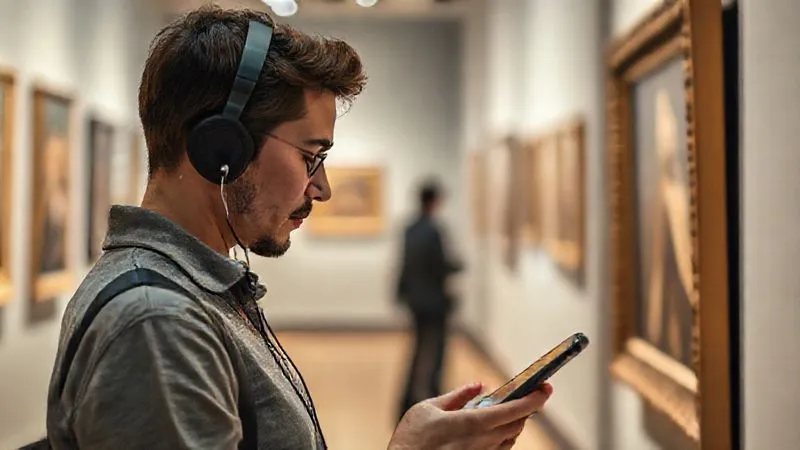
- Focused Commentary: Audio guides often highlight key pieces, providing concise, insightful commentary that enriches your understanding.
- Time-Saving: Listening while you walk between pieces can save time compared to stopping to read lengthy descriptions.
- Deeper Immersion: The narration can draw you deeper into the artwork's history, symbolism, and artist's intent.
- Language Options: Many offer guides in multiple languages, making art accessible to a wider audience.
Before your visit, check if the gallery has a free app you can download in advance. This saves time at the entrance and often provides additional features like interactive maps or virtual tours. For example, the Metropolitan Museum of Art's app is a fantastic resource for planning and navigating.
5. Fueling Your Art Marathon: Sustenance & Breaks
An art gallery city break is, in essence, an intellectual and physical marathon. You're on your feet, your brain is actively processing visual information, and your emotions are engaged. Neglecting your physical needs is a surefire way to invite museum fatigue and diminish your overall experience. I've learned that strategic fueling is just as important as strategic planning.
Don't let hunger or thirst derail your carefully constructed itinerary. Integrate breaks proactively.
Strategic Snack & Coffee Breaks
Large museums often have cafes or restaurants, but these can be expensive and time-consuming. For a 48-hour sprint, I recommend packing a few non-perishable snacks (granola bars, nuts) and a reusable water bottle. Hydration is key! Schedule a brief coffee break between galleries or during a natural transition point within a large museum.
These aren't just for sustenance; they're micro-breaks for your mind. Step outside for some fresh air, find a quiet bench, and let your brain reset before diving back into the next artistic encounter. This prevents the sensory overload that leads to art appreciation diminishing returns.
Minimizing Travel Time Between Venues
Beyond mapping your route, consider the logistics of actually moving between places. Is it faster to walk, take a quick subway ride, or hail a ride-share? Your pre-planning should have identified the most efficient transport methods, but stay flexible.
If two galleries are very close, a brisk walk might be faster than waiting for public transport. If they are further apart, a subway or metro system is often the quickest option in a dense city. Forbes Advisor highlights various travel apps that offer real-time transit information, which can be invaluable for these quick decisions.
6. Avoiding Museum Fatigue: Pace Yourself
Museum fatigue is a very real phenomenon, characterized by mental exhaustion, decreased attention span, and physical tiredness after prolonged exposure to art and museum environments. It can severely impact your ability to efficiently visit top art galleries and truly appreciate what you're seeing. Over my career, I've observed this countless times, and learned that prevention is far better than cure.
The key to combating museum fatigue is conscious pacing and mindful engagement.
The 90-Minute Rule
This is a rule of thumb I often share with clients: aim for focused viewing sessions of no more than 90 minutes. After 90 minutes, your brain's capacity for absorbing new information, especially complex visual data, starts to wane significantly. Even an expert's attention span has limits.
After this period, take a break. This could be a coffee break, a walk in the museum garden, or simply sitting down in a quiet area away from the main exhibits. Use this time to reflect on what you've seen, rather than immediately moving on to the next piece. This allows for better retention and deeper appreciation. A study by Dr. Anna T. P. Williams on cognitive load reinforces the idea that sustained attention is a finite resource.
Mindful Viewing Techniques
Instead of just scanning, practice mindful viewing. Choose a few pieces and truly engage with them. Ask yourself:
- What emotions does this evoke?
- What colors, shapes, and textures do I notice?
- What story does this artwork tell?
- How does it make me feel to stand before it?
This deep engagement with fewer pieces is far more rewarding than a superficial sweep of many. It transforms passive observation into an active, personal dialogue with the art, turning your 48-hour art gallery city break into a profound experience.
7. Post-Visit Reflection & Digital Archiving
The experience of art doesn't end when you exit the gallery doors. In fact, some of its deepest impact can be felt in the hours and days that follow. For a truly enriching 48-hour art gallery city break, integrate post-visit reflection and digital archiving into your plan. This ensures that your memories are vivid and accessible, allowing the art to continue to inspire long after you've returned home.
This final step solidifies your learning and provides a tangible record of your journey.
Documenting Your Discoveries
While photography is often permitted (check gallery rules!), don't just snap and forget. Take a moment to jot down notes in a small travel journal or on your phone about specific pieces that moved you. What was the title? Who was the artist? What was your immediate reaction or a particular detail that caught your eye?

These brief personal reflections, alongside your photos, create a much richer archive than just a camera roll. They capture the 'why' behind your interest and the emotional resonance of the art. Later, you can revisit these notes and photos, deepening your understanding and rekindling the joy of discovery.
Sharing Your Experience
Consider sharing your favorite discoveries or key takeaways with friends, family, or on social media. Art is meant to be discussed and shared. Art guru Seth Godin often talks about the power of sharing to amplify impact. Articulating what you saw and felt not only reinforces your own memories but also allows you to inspire others. This can be a simple conversation, a blog post, or a curated selection of photos on Instagram.
This final act of communication and reflection ensures that your efficient visit to top art galleries on a 48-hour city break isn't just a fleeting moment, but a lasting part of your cultural journey. It transforms raw experience into meaningful memory and shared inspiration.
Frequently Asked Questions (FAQ)
Q: Is it really possible to appreciate art in such a short time, or will I just feel rushed? A: Absolutely, it's possible! The key is shifting your mindset from 'seeing everything' to 'deeply experiencing a curated selection.' By pre-planning, prioritizing your must-sees, and allowing for mindful breaks, you can have a profoundly enriching experience without feeling rushed. It's about quality engagement over sheer quantity, ensuring your 48-hour art gallery city break is meaningful.
Q: What if I arrive and find out a major exhibition I wanted to see is sold out? A: This is precisely why advance booking is paramount. If, despite your best efforts, a specific exhibition is sold out, don't despair. Have a backup plan: identify a secondary exhibition at the same gallery or explore a smaller, perhaps lesser-known, gallery nearby that offers something equally compelling. Sometimes, these unplanned discoveries are the most rewarding. Always check for last-minute ticket releases too.
Q: How do I choose which city is best for an art-focused 48-hour trip? A: Focus on cities with high concentrations of world-class galleries that are also geographically compact, making navigation easier. Cities like Amsterdam (Rijksmuseum, Van Gogh Museum), Florence (Uffizi, Accademia), or even smaller art hubs like Bilbao (Guggenheim) are excellent choices. Research their public transport systems and gallery opening hours to ensure they align with your efficient travel style.
Q: Should I try to visit multiple countries for art if my break is 48 hours? A: No, absolutely not. For a 48-hour city break, focus on one city, and ideally, one or two major art institutions within that city, supplemented by perhaps one smaller, niche gallery. Attempting to visit multiple countries or even distant cities within such a short timeframe will lead to excessive travel time, stress, and minimal actual art appreciation. Efficiency means deep focus on a contained area.
Q: Are there any specific apps or tools you recommend for on-the-go planning during the trip? A: Beyond standard mapping apps like Google Maps or Citymapper for navigation, I highly recommend downloading the official apps for the specific museums you plan to visit, as they often include interactive maps, audio guides, and exhibition information. For general city exploration and finding nearby cafes or transport, TripIt (for itinerary organization) and local public transport apps are invaluable.
Key Takeaways and Final Thoughts
- Pre-plan meticulously: Research galleries, exhibitions, and optimize your route using digital tools to save precious time.
- Master timed entry: Book all tickets online in advance to bypass queues and guarantee access to your chosen art experiences.
- Prioritize quality over quantity: Curate your visit by identifying a few 'must-see' pieces or sections, allowing for deeper engagement.
- Navigate smartly: Utilize audio guides and gallery maps to enhance your understanding and move efficiently through spaces.
- Stay fueled and rested: Integrate strategic breaks, snacks, and hydration to combat museum fatigue and maintain energy levels.
- Embrace mindful viewing: Pace yourself with the 90-minute rule and engage deeply with the art to foster genuine appreciation.
- Document and reflect: Capture your experiences through notes and photos, and share your discoveries to solidify memories.
An art gallery city break within a tight 48-hour window doesn't have to be a frantic dash. With the right strategies, a focused mindset, and a willingness to prioritize depth over breadth, you can transform it into a profoundly enriching and memorable cultural adventure. Trust your planning, listen to your intuition, and allow the art to speak to you. Go forth, explore, and let the masterpieces inspire your next journey.
Recommended Reading
- Surf & Zoom: 7 Global Spots Offering Reliable Remote Work Connectivity
- 7 Strategies: Sustain Fitness Gains in Your High-Stress Job Post-Retreat
- 7 Steps: Reliably Assessing True Accessible Hotel Features for Diverse Clients
- 7 Steps: How to Exploit Airline Pricing Errors for Cheap International Travel
- Master 7 Strategies: How to Avoid Post-Carnival Productivity Slump at Work



Your email address will not be published. Required fields are marked *