

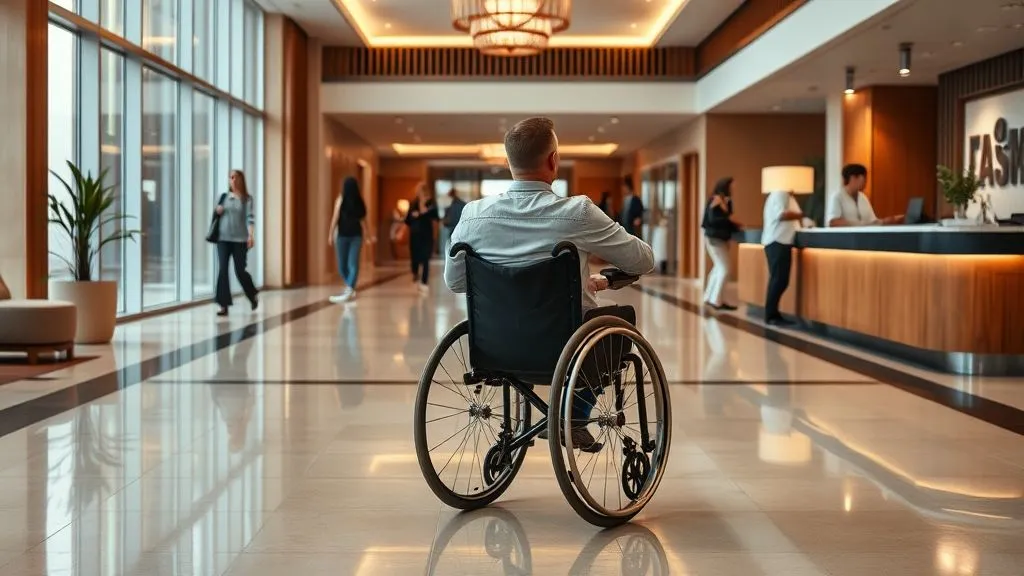
How to reliably assess true accessible hotel features for diverse clients?
For over 15 years, navigating the intricate world of accessible travel, I've seen countless families, individuals, and travel professionals face the same heartbreaking dilemma: arriving at a hotel only to find its 'accessible' features fall drastically short of expectations. It's more than just an inconvenience; it's a barrier to independence, dignity, and the simple joy of travel that everyone deserves.
The problem is pervasive. Hotel websites often present a rosy, sometimes misleading, picture of their accessibility. Standard compliance often doesn't equate to genuine usability for the diverse spectrum of disabilities. From mobility challenges to sensory sensitivities, cognitive differences, and chronic health conditions, 'accessible' is not a monolithic term, and vague descriptions leave travelers vulnerable.
This article isn't just about identifying problems; it's about empowering you with a robust, multi-faceted framework. I will share my expert insights, actionable steps, and real-world strategies on how to reliably assess true accessible hotel features for diverse clients. My goal is to equip you to cut through the marketing fluff and secure truly inclusive accommodations, transforming potential disappointment into guaranteed peace of mind.
Beyond Compliance: Understanding the Spectrum of Accessible Needs
Before we even begin to assess a hotel, we must first broaden our understanding of what 'accessible' truly means. In my experience, relying solely on basic compliance standards like the ADA (Americans with Disabilities Act) is a common oversight. While crucial, these are often minimum benchmarks, not comprehensive solutions for every traveler.
The Myth of 'One-Size-Fits-All' Accessibility
True accessibility is a nuanced tapestry, woven from the individual needs of diverse clients. A ramp is great for a wheelchair user, but what about someone with a cognitive disability who needs clear wayfinding signage? Or a visually impaired traveler who relies on tactile indicators and audio cues? The spectrum is vast, and our assessment must reflect this.
- Mobility Impairments: Beyond wheelchairs, consider walkers, scooters, and individuals with limited stamina. Think about bed height, bathroom grab bars, shower chairs, and clear floor space.
- Sensory Impairments: For the visually impaired, consider braille, tactile maps, good lighting, and audio announcements. For the hearing impaired, think about visual fire alarms, TTY phones, and sign language-trained staff.
- Cognitive & Developmental Disabilities: Clear, simple signage, consistent routines, quiet spaces, and staff trained in supportive communication can be vital.
- Chronic Health Conditions: Access to refrigeration for medication, hypoallergenic environments, and close proximity to medical facilities might be paramount.
- Temporary Disabilities: Even a broken leg requires specific accommodations for a short period.
Expert Insight: "The most effective accessible design isn't just about meeting codes; it's about anticipating human diversity and designing with empathy at its core. It's about 'inclusive design' rather than just 'disability design.'" - My personal philosophy developed over years in the field.
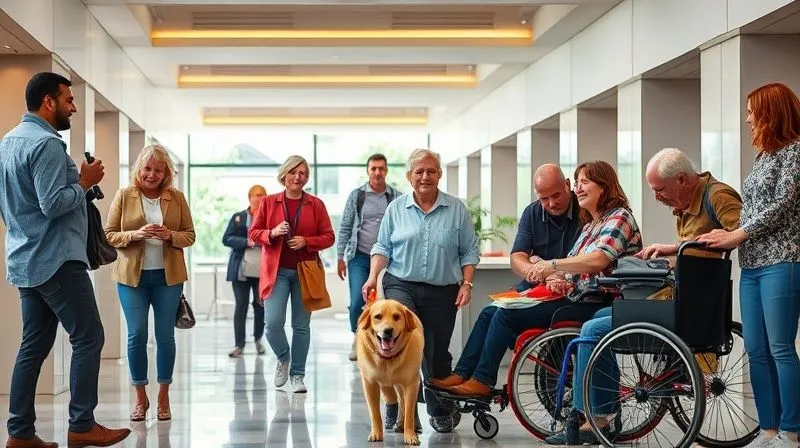
The Digital Deep Dive: Scrutinizing Hotel Websites and Reviews
Your first line of defense in assessing hotel accessibility is a thorough digital investigation. Don't just glance at the 'accessibility' tab; dig deep. I've found that hotels often hide crucial details, or lack them entirely, in plain sight.
Decoding Accessibility Statements
Look for specific details, not just generic claims. Does the website state "wheelchair accessible rooms available" or does it detail the clear door width, bathroom grab bar placement, roll-in shower dimensions, and bed height? Specificity is the hallmark of genuine understanding.
Leveraging User-Generated Content
Online reviews, forums, and disability-specific travel blogs are invaluable. Platforms like TripAdvisor, Google Reviews, and specialized sites often contain firsthand accounts. Filter reviews by keywords like "accessible," "wheelchair," "mobility," "sensory," or "disability." Pay attention to photos uploaded by guests, which can reveal truths the official gallery omits. Websites like Sage Traveling or Wheelchair Travel often provide detailed, user-submitted accessibility reviews.
Actionable Steps for Digital Assessment:
- Examine the Hotel's Official Accessibility Page: Look for detailed measurements, photos of specific accessible features (not just generic room shots), and descriptions of services for various disabilities (e.g., TTY, braille menus).
- Check Room Descriptions Meticulously: Does it specify "roll-in shower with grab bars and bench" or just "accessible bathroom"? Is the bed height mentioned?
- Scour Guest Reviews: Use search functions within review sites to find comments related to accessibility. Look for consistency in positive or negative feedback.
- Utilize Photo Galleries: Often, guests upload unedited photos that give a more realistic view of room layouts, bathroom sizes, and common area accessibility.
- Verify Public Area Accessibility: Can you discern if the lobby, restaurant, pool, and meeting rooms are genuinely accessible from photos and descriptions?
| Feature | Website Claim | Review Verification | Action |
|---|---|---|---|
| Roll-in Shower | Yes | Photos show step-in, no bench | Inquire for specifics |
| Bed Height | Standard | Too high for transfers | Inquire for exact height/hoist |
| Door Width (Bathroom) | Accessible | Narrow, difficult for chair | Inquire for exact width |
| Service Animal Relief Area | Yes | Not clearly marked/far away | Inquire for location/details |
| Visual Fire Alarms | Available | Not in accessible rooms | Confirm room specific features |
Mastering Direct Communication: Asking Targeted Questions
Once you've exhausted your digital resources, the next crucial step is direct communication. This isn't just about making a phone call; it's about asking the *right* questions, delivered by the *right* person, to get actionable, reliable answers. I've found that generic inquiries yield generic responses.
Crafting Your Inquiry Checklist
Prepare a detailed list of questions tailored to your specific needs or those of your clients. Don't be afraid to be overly specific. Remember, you're assessing their understanding and their facilities.
- "What is the clear doorway width to the accessible room and bathroom?" (Give exact measurement range, e.g., "I need at least 32 inches.")
- "Can you confirm the height of the bed from the floor to the top of the mattress?"
- "Are there grab bars around the toilet and in the shower? Are they fixed or movable?"
- "Is there a roll-in shower with a shower bench? Is it fixed or portable?"
- "Are accessible rooms equipped with visual fire alarms and doorbells for the hearing impaired?"
- "Do you have staff trained in communication with guests with cognitive disabilities, or specific quiet zones?"
- "Where is the closest accessible parking spot to the entrance? Is there a designated service animal relief area?"
- "Do you have an accessible shuttle service, and what are its dimensions/weight limits?"
Expert Insight: "Always speak to someone at the hotel directly, ideally the General Manager or a Guest Services Manager, not just a central reservations agent. They are more likely to have detailed knowledge or direct access to someone who does."
Case Study: How a Family Secured True Accessible Accommodation
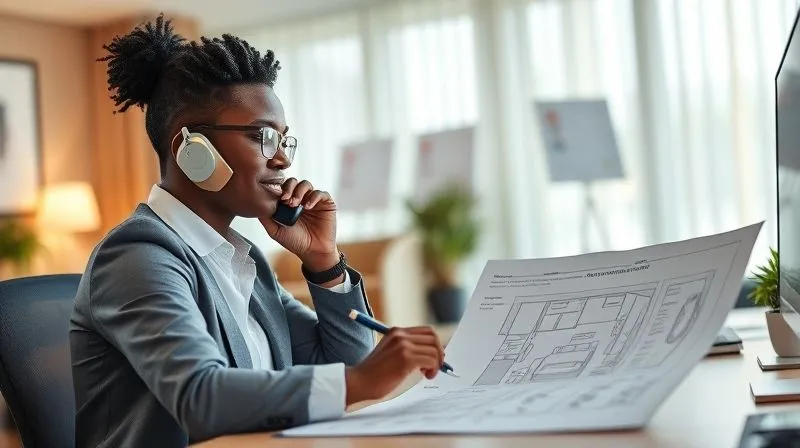
The Miller family, traveling with their son who uses a power wheelchair and has specific sensory sensitivities, struggled to find reliable information for their upcoming trip to Orlando. Hotel websites were vague. Following my advice, Mrs. Miller crafted a detailed email with 15 specific questions, including precise measurements for their son's chair, requests for quiet room locations away from elevators, and confirmation of visual fire alarms. She then followed up with a call, asking to speak directly to the Assistant Manager. The manager, initially unprepared, took the time to physically go to the accessible room, measure doorframes, bed height, and even check the proximity to the ice machine (a source of noise). This diligence not only confirmed the room met their needs but also highlighted the hotel's willingness to go the extra mile, securing their booking with confidence and peace of mind.
Visual Verification: The Power of Photos, Videos, and Virtual Tours
In our digital age, visuals are paramount. If a hotel cannot provide clear, unedited, and specific visuals of their accessible features, that's a red flag. I always recommend asking for additional photos or even a short video clip if their website gallery is insufficient.
What to Look For in Visuals
Don't just look *at* the photos; learn to *read* them. Pay attention to details that might not be immediately obvious.
- Doorways: Can you see the width? Is there a lip or threshold?
- Bathrooms: Is there enough maneuvering space for a wheelchair? Are the grab bars positioned correctly and securely? Is the shower truly roll-in, or does it have a curb? Can you spot a shower bench?
- Bed Area: Is there clear space on both sides of the bed? What does the bed frame look like (potential for hoist access)? Is the desk accessible from a seated position?
- Common Areas: Are pathways clear and wide? Are there ramps or elevators for all level changes? Are counters (reception, bar) at an accessible height?
- Lighting: Is it adjustable? Can it be dimmed for sensory-sensitive individuals?
Many hotels now offer virtual tours. While impressive, remember these are often highly curated. Look for the ability to 'move' through the accessible room or areas yourself, rather than just a pre-recorded walkthrough. For detailed accessibility standards, refer to resources like the ADA National Network's guidelines.
On-Site Assessment: For the Dedicated Advocate or Agent
While not always feasible for individual travelers, for travel agents, disability advocates, or organizations booking for groups, an on-site visit is the gold standard for reliably assessing true accessible hotel features. I've conducted dozens of these, and they uncover realities no photo or phone call ever could.
Key Architectural and Service Elements
During an on-site visit, you're looking beyond the brochure. You're experiencing the space as a person with diverse needs would. This builds immense **trust** with your clients.
On-Site Accessibility Checklist:
- Approach & Entrance: Is the path from parking to the entrance clear, level, and wide? Are automatic doors functioning and wide enough?
- Lobby & Check-in: Is the reception desk at an accessible height? Are there comfortable, accessible seating areas?
- Elevators: Are call buttons and interior controls at an accessible height? Is there enough maneuvering space inside? Are floor announcements clear (audio/visual)?
- Accessible Room:
- Door: Measure clear width, check handle type (lever vs. knob), and peep-hole height.
- Layout: Ensure 30x48 inch clear space next to all furniture. Can a 360-degree turn be made in the room?
- Bed: Verify height for transfers, check for space under the bed for hoist.
- Bathroom: Roll-in shower with no curb, grab bars for toilet and shower, shower bench (fixed or portable), accessible sink (clearance underneath), mirror height, emergency call button.
- Controls: Light switches, thermostat, and curtain controls at accessible height.
- Common Facilities: Check accessibility of restaurants, bars, gym, pool (lift/ramp), business center, and meeting rooms.
- Emergency Procedures: Inquire about specific plans for evacuating guests with disabilities.
- Staff Training: Observe staff interactions. Are they knowledgeable, patient, and proactive in offering assistance?
| Area | Observation | Action |
|---|---|---|
| Entrance | Ramp available, but steep | Verify gradient with measuring app |
| Accessible Room Bathroom | Roll-in shower has small lip | Measure lip height, confirm suitability |
| Restaurant | Tables too low for power chair | Inquire about adjustable tables or specific seating |
| Pool | No pool lift visible | Ask for demonstration or photo of pool lift |
| Emergency Exit | Stairwell only, no ramp/elevator access | Confirm emergency evacuation plan for disabled guests |
Harnessing Community Wisdom and Expert Networks
You don't have to navigate the complexities of accessible travel alone. The disability community is incredibly supportive, and there are dedicated experts whose entire business revolves around ensuring inclusive travel experiences. Tapping into these resources provides an unparalleled layer of **trust** and **authority** to your assessment process.
Online Forums and Disability-Specific Travel Blogs
Join Facebook groups, Reddit communities, or dedicated online forums focused on accessible travel. Post your questions, share your concerns, and learn from the collective experiences of thousands of travelers. Many bloggers with disabilities share incredibly detailed reviews, often including photos and videos that reveal the true accessibility of a destination or hotel. For example, communities like those found on Disability Travel & Recreation Resources can be immensely helpful.
Partnering with Accessible Travel Specialists
For complex needs or group bookings, consider engaging an accessible travel agent or consultant. These professionals have established networks, often conduct their own on-site assessments, and understand the nuances of various disabilities. They can save you countless hours of research and provide a level of assurance that's hard to achieve independently. They act as an invaluable layer of expertise, ensuring your clients' needs are met precisely.
Beyond the Stay: Feedback, Advocacy, and Continuous Improvement
Your journey doesn't end when a client checks out. Providing constructive feedback, whether positive or negative, is a critical step in advocating for better accessible travel for everyone. Your experience, good or bad, contributes to a larger pool of knowledge.
Providing Constructive Feedback
If a hotel exceeded expectations, praise them specifically. Highlight what they did well. If they fell short, provide detailed, objective feedback. Avoid emotional language; focus on facts and specific instances where accessibility was compromised. Suggest concrete improvements they can make.
- Benefits of Feedback:
- Empowers other travelers by adding to the body of reliable information.
- Encourages hotels to improve their facilities and services.
- Can lead to policy changes and better training for hotel staff.
- Contributes to a more inclusive travel industry overall.

Frequently Asked Questions (FAQ)
What's the difference between ADA compliant and truly accessible? ADA compliance sets minimum legal standards, but these don't always translate to practical usability or comfort for all diverse needs. Truly accessible goes beyond the legal minimum, incorporating universal design principles and considering a wider spectrum of disabilities for a genuinely inclusive experience. For instance, an ADA-compliant bathroom might have grab bars, but a truly accessible one would also have ample maneuvering space, an adjustable shower head, and an emergency pull cord.
How can I verify accessible pool features like a pool lift? Always ask for specific photos or a video of the pool lift in operation. Inquire about its weight capacity, how it's operated, and if staff are trained to assist. Some hotels claim a lift but it's often broken, stored away, or requires advance notice to set up, which can be inconvenient or unusable if not confirmed.
What if a hotel's website has no accessibility information at all? This is a major red flag. It either means they have no accessible features, or they haven't prioritized detailing them, which suggests a lack of understanding or commitment. Proceed with extreme caution and be prepared to conduct a very thorough direct inquiry, asking for specific measurements and details, or consider alternative accommodations.
Are there any apps or online tools that can help with accessibility assessments? Yes, several apps and websites are emerging. Apps like AccessNow allow users to rate and review locations based on accessibility. Google Maps also allows users to contribute accessibility information. While useful, always cross-reference this crowd-sourced data with direct hotel communication for critical features.
How far in advance should I start assessing hotel accessibility? Begin your assessment as soon as your travel dates are firm, ideally several months in advance for complex needs or peak season travel. This allows ample time for detailed communication with hotels, receiving photos, and exploring alternative options if the first choice doesn't meet requirements. Last-minute bookings severely limit your ability to reliably verify features.
Key Takeaways and Final Thoughts
Reliably assessing true accessible hotel features for diverse clients demands diligence, expertise, and a commitment to proactive investigation. It's a process that moves far beyond a simple checkbox, requiring a deep understanding of diverse needs, meticulous digital scrutiny, and targeted direct communication. As an experienced industry specialist, I've seen the profound impact that a truly accessible accommodation can have on a traveler's experience.
- Understand Diversity: Recognize that accessibility is not monolithic; cater to a wide range of needs.
- Digital Scrutiny: Go beyond surface-level website claims; deep dive into details and user reviews.
- Ask Specific Questions: Don't be vague; provide measurements and ask for precise confirmations.
- Demand Visuals: Request specific photos or videos if website galleries are insufficient.
- Leverage Networks: Tap into disability travel communities and expert travel agents.
- Provide Feedback: Your experiences contribute to a better, more inclusive travel industry.
By implementing this comprehensive framework, you're not just booking a room; you're securing a truly inclusive experience. You're building trust, fostering independence, and ensuring that the joy of travel is genuinely accessible to everyone. Your dedication to this process makes a tangible difference in the lives of diverse travelers.
Recommended Reading
- Unlock Your Weightless Dream: The Ultimate Guide to Zero Gravity Flight Preparation
- Volunteer for Sea Turtles: Your Ultimate Guide to Conservation
- 8 Strategies: Prevent No-Show Losses at Your Music Festival?
- Unlock the Magic: Discover the Best Times to Visit Art Galleries on Your City Break
- 7 Proven Strategies: Profiting Sustainably in Biodiversity Hotspots?



Your email address will not be published. Required fields are marked *