

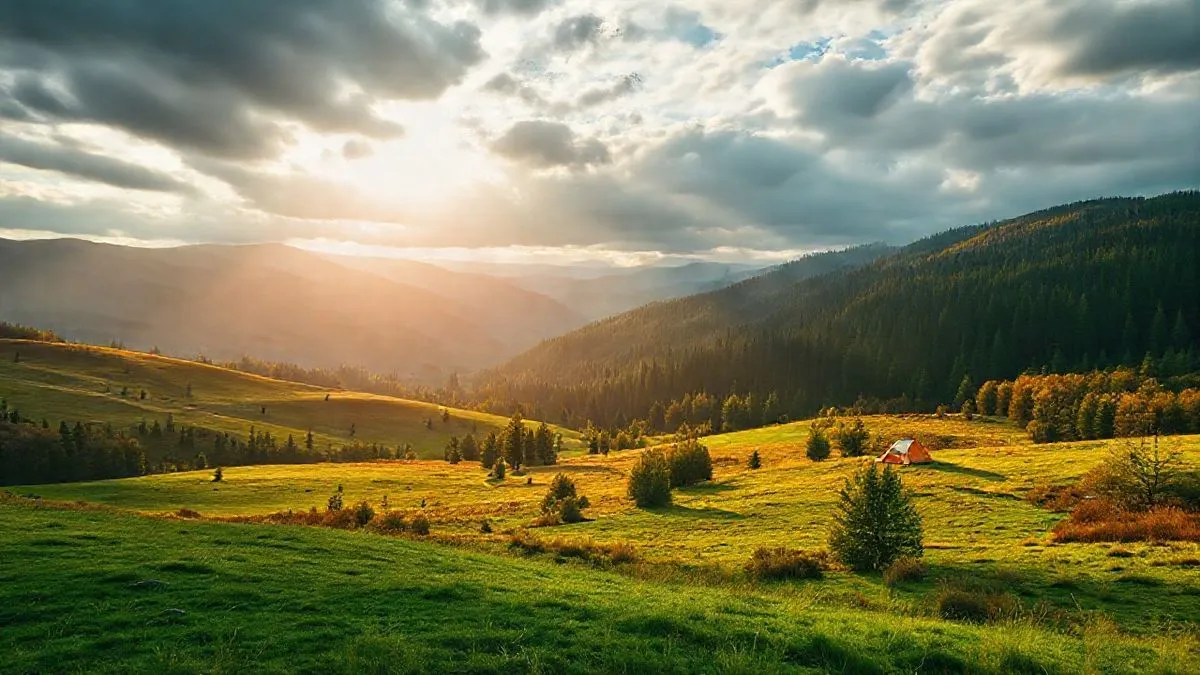
How to find legal wild camping spots in Europe on a budget?
Finding legal wild camping spots in Europe on a budget is less about discovering pre-approved locations and more about understanding the intricate patchwork of national and regional legislation. In my 15 years of navigating Europe's wilderness, I’ve learned that the term "legal wild camping" itself is often a nuanced concept, frequently referring to specific exceptions rather than broad permissions.
The foundational principle here is thorough research tailored to your specific destination. A common mistake I see is assuming that what's permissible in one country, say Scotland, will apply in another, like Germany. This simply isn't the case; each nation, and often its individual regions or even municipalities, has distinct rules.
- Country-Specific Legislation: Your first port of call should always be the official tourism board or government websites for the country you plan to visit. Look for explicit laws regarding "Allemansrätten" (Right to Roam) in Scandinavia, or the more restrictive rules found in Central and Southern Europe. Understanding the legal framework is non-negotiable.
- Regional and Local Bylaws: Beyond national laws, specific regions, national parks, or even private land associations can have their own bylaws. A general "no wild camping" rule might have exceptions for high-altitude bivouacking or specific designated zones within a protected area.
- Specialized Forums and Communities: While not official, experienced local hikers and budget travelers often share invaluable, up-to-date insights on dedicated online forums. Cross-reference this information with official sources, but these communities can highlight grey areas or local tolerances.
- Topographic and Satellite Maps: Use tools like OpenStreetMap, Gaia GPS, or Google Earth to identify remote areas, public land boundaries (where available), and potential discreet spots away from habitations or protected ecological zones. Look for features like dense forests, high moors, or areas with natural cover.
A critical distinction to grasp in many European countries is between "wild camping" and "bivouacking." While wild camping (pitching a tent for multiple nights) is broadly restricted or illegal in many places, bivouacking is often tolerated or explicitly permitted under certain conditions. Bivouacking typically implies a minimalist, temporary overnight stay, often at high altitudes or in emergency situations, without a full tent setup.
In my experience, understanding the subtle difference between a "tent" and a "bivy bag" can be the difference between a peaceful night and an unwelcome interaction with authorities. It's about intent and impact: a shelter of necessity versus a recreational setup.
Beyond legal frameworks, the power of local interaction cannot be overstated. In countries where wild camping is generally prohibited, seeking permission from landowners, especially farmers, can often yield a legal and safe spot. My approach has always been one of respect and genuine inquiry.
- Approach Respectfully: Always ask permission politely, ideally in the local language or with a translation app. Explain your intention to be discreet, leave no trace, and depart early.
- Offer a Small Exchange: Sometimes, a small token of appreciation, like offering to buy local produce or simply a heartfelt thank you, can go a long way. This isn't always about money; it's about showing respect for their property.
- Be Prepared for "No": Not every landowner will agree, and that's perfectly fine. Have a backup plan and move on without argument. The goal is to build goodwill, not create conflict.
Finally, leverage digital tools not just for finding "spots," but for information and pre-scouting terrain. Apps like Park4Night or iOverlander can be useful for identifying potential overnight parking for campervans, but don't blindly trust them for true wild camping spots, as many listed locations might be tolerated rather than strictly legal, or are simply parking areas. Use them as a starting point for further investigation.
- Satellite Imagery for Discreetness: Before you even arrive, use Google Earth to virtually "walk" the terrain. Look for natural clearings, tree lines that offer cover, or remote access points that are unlikely to disturb local residents or wildlife.
- Offline Maps and GPS: Download detailed topographic maps for your planned routes. These are invaluable for navigating off-the-beaten-path, identifying water sources, and ensuring you don't inadvertently stray into private land or restricted zones.
- Cross-Referencing: If an app suggests a "wild camping" spot, always cross-reference it with official land use maps or local regulations. Many community-sourced spots might be on private land or within environmentally sensitive areas where camping is discouraged or illegal.
Ultimately, finding legal wild camping in Europe on a budget is an exercise in becoming an informed, responsible, and respectful traveler. It's about understanding the spirit of the law, the nuances of local culture, and always adhering to the Leave No Trace principles to preserve these precious wild spaces for everyone.
Reading Recommendations:
- Recharge in 48 Hours: How to Maximize a City Break for Complete Mental Reset
- 7 Ways Spiritual Retreats Sharpen Executive Decision Clarity
- Train Delays & Tight Connections: Your 6-Step Guide for Unknown Stations
- How to Impress Key Clients at a Global Light Festival on a Tight Schedule: 6 Pro Tips
- The Ultimate Guide: Stress-Free Travel Tips for Non-Verbal Autistic Teens




Your email address will not be published. Required fields are marked *