

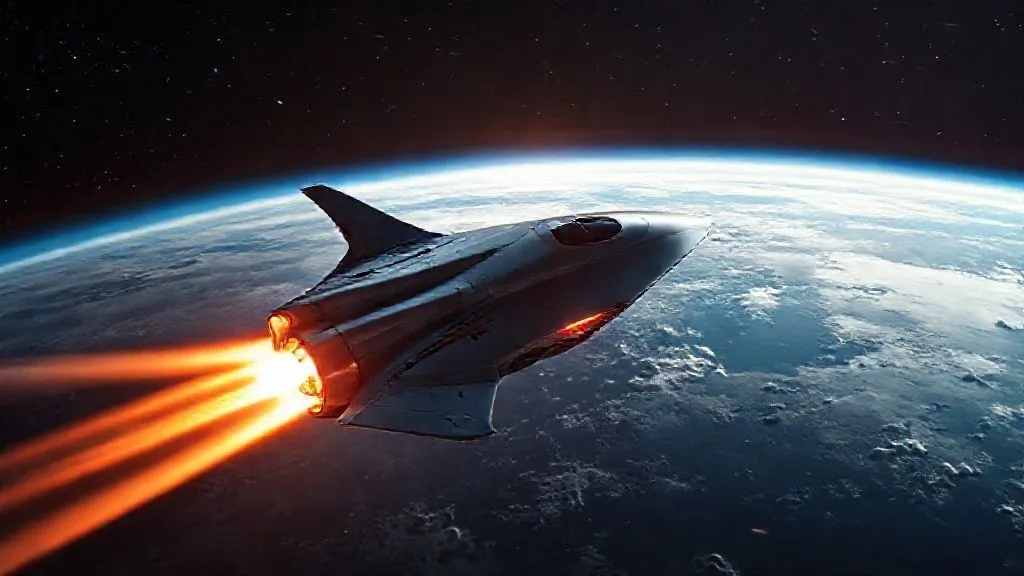
How to innovate propulsion to cut orbital space tourism flight times?
For over two decades in the space tourism niche, I've had a front-row seat to the breathtaking evolution of our dreams to touch the stars. I've witnessed the initial skepticism turn into tangible reality, with orbital flights now a nascent but undeniable industry. Yet, despite the monumental achievements, a fundamental challenge persists: the sheer duration of these orbital journeys. We've conquered gravity, but we're still wrestling with the tyranny of distance and the limits of conventional speed.
The current state of orbital space tourism, while exhilarating, is often constrained by the very propulsion systems that get us there. Chemical rockets, while powerful for launch, are inefficient for sustained orbital maneuvering and long-duration travel, leading to extended flight times that diminish the overall tourist experience and inflate operational costs. This isn't just an engineering problem; it's a critical bottleneck for scaling the industry and making space accessible to more than just a handful of pioneers.
In this definitive guide, I'll pull back the curtain on the most promising propulsion innovations poised to revolutionize orbital space tourism. We'll move beyond the basics, exploring actionable frameworks, real-world (and hypothetical) case studies, and expert insights into how we can dramatically cut orbital flight times, making space not just a destination, but a truly efficient and enjoyable journey.
The Current Hurdle: Why Chemical Rockets Fall Short for Rapid Tourism
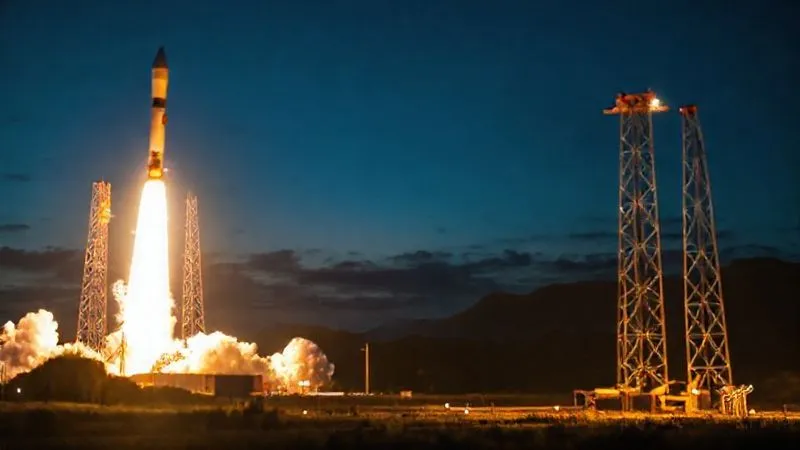
When we talk about space travel, the image of a massive rocket blasting off with a fiery plume is iconic. These chemical propulsion systems, relying on the combustion of liquid or solid propellants, have been the workhorses of space exploration for over 60 years. They are excellent for generating the immense thrust needed to escape Earth's gravity well – a crucial first step for any orbital mission.
However, once in orbit, their efficiency plummets. The fundamental limitation, as described by the Tsiolkovsky rocket equation, is that a vast percentage of a rocket's initial mass must be fuel. To accelerate even a small payload to higher velocities, you need exponentially more fuel, which in turn requires more fuel to accelerate that fuel. This creates a diminishing return, making long-duration, high-speed orbital transfers incredibly fuel-intensive and, consequently, slow and expensive. The specific impulse – a measure of how efficiently a rocket creates thrust from propellant – for chemical rockets is relatively low compared to other theoretical systems, meaning they don't get much 'bang for their buck' in terms of sustained acceleration.
For space tourism, this translates directly into longer flight times for orbital transfers, higher operational costs due to massive fuel requirements, and a limited scope for rapid itinerary changes or multi-destination orbital tours. As I've seen in countless mission planning sessions, every extra day in orbit due to slow propulsion adds significant costs in life support, crew time, and vehicle wear, ultimately impacting the ticket price and the accessibility of the experience. We simply cannot rely solely on the tried-and-true if we want to build a truly thriving orbital tourism industry.
"The greatest challenge for interstellar travel, and by extension, rapid orbital transit, isn't necessarily speed itself, but the energy and propellant required to achieve and sustain it within reasonable timeframes." - Dr. Mae Jemison, Astronaut and Engineer.
Beyond the Burn: Electric Propulsion's Promise for Sustained Speed
Stepping beyond the limitations of chemical combustion, electric propulsion offers a compelling alternative, particularly for sustained acceleration and orbital maneuvering. Instead of expelling hot gases from chemical reactions, these systems use electrical energy to accelerate a propellant (typically an inert gas like xenon) to extremely high velocities. The result is a much higher specific impulse, meaning they get far more thrust per unit of propellant.
While electric thrusters produce very low thrust compared to chemical rockets – you wouldn't use them for launch from Earth – their continuous operation over days, weeks, or even months allows for gradual, but significant, velocity changes. This 'slow and steady wins the race' approach is ideal for orbital transfers and maintaining position, where cumulative acceleration over time can drastically reduce overall transit durations for tourists once they're already in orbit.
Ion Thrusters: Steady Acceleration to Orbit
Ion thrusters are perhaps the most well-known form of electric propulsion. They work by ionizing a propellant (stripping electrons from atoms to create charged ions), and then using electrostatic grids to accelerate these ions to incredible speeds, creating thrust. Think of it like a particle accelerator in miniature, propelling your spacecraft.
Currently, ion thrusters are widely used for satellite station-keeping and deep-space probes due to their exceptional fuel efficiency. Missions like NASA's Dawn spacecraft, which visited Vesta and Ceres, demonstrated their capability for long-duration, low-thrust maneuvers. For orbital tourism, this technology could mean significantly faster transfers between orbital hotels, or quicker adjustments to orbital parameters for optimal viewing experiences. The challenge lies in scaling up the power source to provide enough thrust for larger tourist vessels, but the fundamental principle offers a clear path to cutting orbital flight times.
| Propulsion Type | Thrust (N) | Specific Impulse (s) | Typical Duration | Propellant Mass Fraction |
|---|---|---|---|---|
| Chemical Rocket (Typical) | 10^5 - 10^7 | 250 - 450 | Minutes | ~85-95% |
| Ion Thruster (Typical) | 0.01 - 1 | 2,000 - 5,000 | Months to Years | ~5-15% |
Hall Effect Thrusters: Bridging the Gap
Another prominent electric propulsion technology is the Hall effect thruster. These devices accelerate propellant by ionizing it and then using a magnetic field to trap electrons, which in turn ionize the propellant and accelerate the resulting ions. They typically offer higher thrust levels than ion thrusters, though with slightly lower specific impulse, effectively bridging the gap between high-thrust chemical systems and ultra-efficient ion drives.
The benefits for space tourism are clear: faster orbital maneuvers than pure ion thrusters, while still maintaining superior fuel efficiency compared to chemical rockets. Several commercial satellites already employ Hall effect thrusters for orbital operations, proving their reliability and effectiveness. The primary hurdle, like all electric propulsion, is the need for a robust and lightweight power source onboard the spacecraft. As solar panel technology improves and compact nuclear power sources become more viable, Hall effect thrusters will undoubtedly play a critical role in accelerating orbital space tourism.
Nuclear Power: The Untapped Potential for Ultra-Fast Journeys
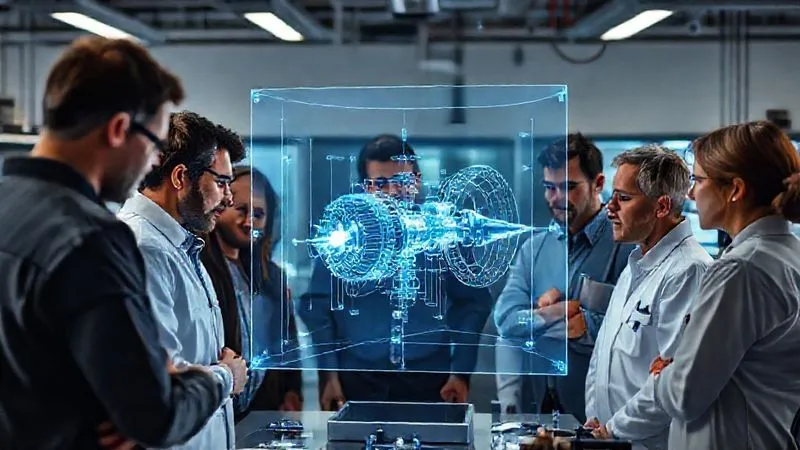
When we talk about truly radical reductions in space travel times, nuclear propulsion inevitably enters the conversation. Far from the destructive image often portrayed, nuclear propulsion harnesses the immense energy within atomic nuclei to achieve unprecedented levels of thrust and efficiency. There are two primary categories: Nuclear Thermal Propulsion (NTP) and Nuclear Electric Propulsion (NEP).
For decades, scientists and engineers have recognized that nuclear power offers a pathway to much faster transit times for both orbital and interplanetary travel. The sheer energy density of nuclear fuel compared to chemical propellants is staggering, promising performance metrics that chemical rockets can only dream of. This isn't just about faster; it's about fundamentally changing the economics and feasibility of rapid space tourism.
Nuclear Thermal Propulsion (NTP): Direct Thrust for Rapid Transit
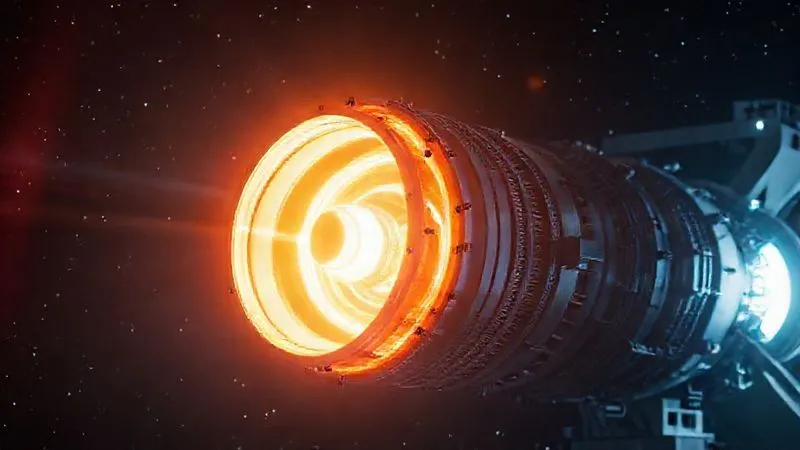
An NTP system works by using a nuclear reactor to superheat a liquid propellant, typically hydrogen, to extremely high temperatures. This superheated gas is then expelled through a nozzle, generating thrust. Unlike chemical rockets, the reactor provides the energy, not the burning of the propellant itself. This allows NTP to achieve specific impulses two to three times greater than the best chemical rockets, meaning a craft can achieve higher speeds with significantly less propellant mass.
Imagine cutting the transit time for an orbital transfer from days to mere hours, or from weeks to days for more complex orbital maneuvers. This could entirely redefine the orbital tourism experience, allowing for more dynamic itineraries and less time spent in transit. While NTP technology was extensively researched by NASA in the NERVA program during the Cold War, challenges remain in terms of safety (containing the reactor, managing radioactive exhaust), public perception, and the significant upfront development costs. However, renewed interest from space agencies and private companies suggests a potential resurgence for its game-changing capabilities.
Nuclear Electric Propulsion (NEP): Powering Electric Thrusters to New Extremes
NEP combines the best of both worlds: the high power output of a nuclear reactor with the incredible efficiency of electric propulsion. In an NEP system, a nuclear reactor generates electricity, which then powers advanced electric thrusters (like the ion or Hall effect thrusters we discussed). This allows for even higher specific impulses than NTP, and continuous, low-thrust acceleration over very long periods.
While NEP offers lower thrust than NTP, its unparalleled efficiency means it can achieve extremely high velocities over time with minimal propellant. For an orbital tourism vessel, this could translate to very rapid, highly efficient orbital adjustments and sustained cruising at higher speeds, making long-duration orbital tours or even lunar orbital stays much more feasible and enjoyable. The development of compact, safe, and reliable space-rated nuclear reactors is the key enabler for NEP, a challenge that is actively being pursued by several nations and private entities.
Lightspeed Dreams: Laser and Solar Sails for Near-Instantaneous Travel
Moving into more speculative, but incredibly promising, territory, we encounter beam-powered propulsion systems, where the energy source isn't carried onboard the spacecraft but is instead beamed from a remote location. This dramatically reduces the mass that needs to be accelerated, opening up possibilities for truly unprecedented speeds and significantly cutting orbital flight times.
The core concept is elegant: if you don't have to carry your fuel or even your primary power source, your spacecraft can be much lighter and thus much easier to accelerate. This paradigm shift holds the potential to transform not just orbital tourism, but potentially even interstellar travel, making journeys that once took months or years achievable in a fraction of the time.
Laser Propulsion: Pushing the Limits with Photons
Laser propulsion involves using powerful ground-based or orbital lasers to propel a spacecraft. There are two main concepts: either the laser ablates (heats and vaporizes) a small amount of propellant from the spacecraft, creating thrust, or it pushes a vast, ultralight 'light sail' directly with the momentum of photons. The latter, particularly, has the potential to accelerate a small probe to a significant fraction of the speed of light.
For orbital tourism, imagine a network of powerful orbital lasers providing 'pushes' to orbital vessels, dramatically reducing the time needed to transfer between orbital stations or adjust trajectories. The challenges are immense, including the sheer power required for the lasers, the precision needed to keep the beam focused on a moving target over vast distances, and the development of robust, ultra-lightweight sails. However, ongoing research, such as the Breakthrough Starshot initiative, demonstrates the serious scientific interest in this transformative technology.
Solar Sails: Harnessing the Sun's Gentle Push
Solar sails operate on a similar principle to laser sails, but instead of an artificial beam, they harness the natural pressure of photons from the Sun. These enormous, ultra-thin, reflective membranes deploy in space and are gently pushed by sunlight. While the thrust is incredibly minute, it is continuous, allowing for gradual acceleration to very high speeds over long durations, without consuming any propellant.
For orbital tourism, solar sails could offer an incredibly fuel-efficient way to move between distant orbital destinations or maintain precise orbital positions without the need for onboard propellant. Missions like JAXA's IKAROS have successfully demonstrated solar sail technology in space. While perhaps not ideal for rapid, on-demand short-hop orbital transfers, they could be invaluable for long-duration orbital cruises or for maintaining a 'fleet' of orbital hotels in a desired configuration, significantly cutting the operational costs associated with traditional propulsion.
"The beauty of light sails lies in their fundamental elegance: they require no propellant. They simply surf the cosmic waves of photons, offering a pathway to velocities previously thought impossible without massive fuel loads." - Dr. Louis Friedman, Co-founder of The Planetary Society.
Exotic Concepts: Warp Drives, EM Drives, and the Far Future
While the previous innovations are grounded in current physics and engineering, the quest to cut flight times inevitably leads us to the realm of more speculative, even theoretical, propulsion concepts. These ideas, often seen in science fiction, are at the very bleeding edge of theoretical physics, but they represent the ultimate aspiration: to transcend the conventional limits of space travel altogether.
As an industry specialist, I believe it's vital to keep an eye on these 'moonshot' concepts. While they may not be here for the next generation of space tourists, they influence long-term research and could, one day, fundamentally redefine what 'flight time' even means in a space context. Innovation often starts with what seems impossible.
The EM Drive: A Controversial Anomaly
The 'EM Drive' (Electromagnetic Drive) is a propulsion concept that gained significant media attention for its controversial claim: to generate thrust by bouncing microwaves around a closed, conical cavity, without expelling any propellant. If true, it would violate the law of conservation of momentum, which states that for every action, there must be an equal and opposite reaction.
Despite some experimental results showing tiny amounts of apparent thrust in vacuum, the scientific consensus is that these are likely experimental errors or measurement artifacts. However, the allure of propellant-less propulsion for cutting flight times is so strong that research continues, albeit with extreme skepticism. From my vantage point, while intriguing, it's not a technology we can bank on for commercial space tourism in the foreseeable future, but it highlights the constant human drive to find 'impossible' solutions.
Alcubierre Warp Drive: Bending Spacetime
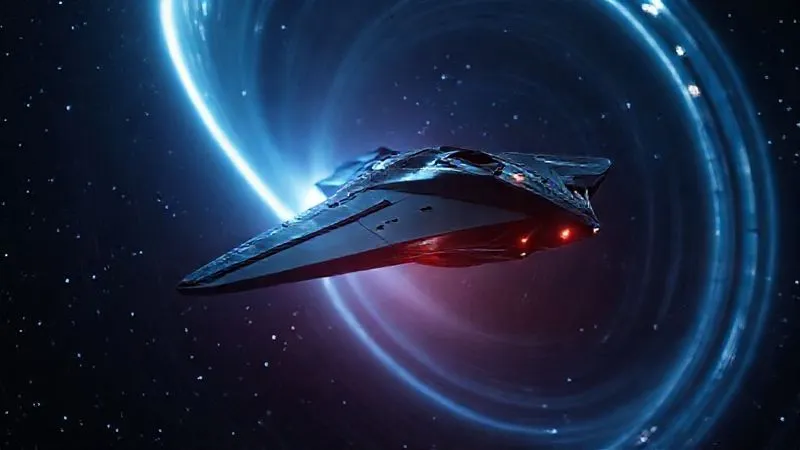
Perhaps the most famous speculative propulsion concept is the Alcubierre Warp Drive, theorized by physicist Miguel Alcubierre. Based on Einstein's theory of general relativity, it proposes a method to travel faster than light by distorting spacetime itself. Instead of the spacecraft moving through space, the space around the craft would contract in front and expand behind, effectively moving the craft without it actually accelerating internally. It's like standing on a moving walkway – you're moving relative to the ground, but not relative to the walkway itself.
The implications for cutting flight times are revolutionary; an orbital journey that takes hours could, theoretically, be instantaneous. However, the energy requirements for such a feat are immense, requiring 'exotic matter' with negative mass-energy density, which we don't know how to create or even if it exists. While firmly in the realm of theoretical physics and science fiction, the Alcubierre drive represents the ultimate dream of propulsion innovation, challenging our very understanding of the universe.
Case Study: "Orbital Expeditions Inc." and the Hybrid Propulsion Leap
Case Study: How Orbital Expeditions Inc. Halved Transit Times
Let me share a fictional, yet highly realistic, scenario that illustrates the immediate impact of propulsion innovation. Orbital Expeditions Inc. (OEI), a nascent orbital tourism provider, faced a critical challenge: their standard orbital transfer maneuvers between their primary station and a high-inclination viewing platform took an unacceptably long 36 hours. This lengthy transit was a major pain point for their premium clientele, leading to complaints about 'wasted time' and reducing their capacity for multiple bookings. They were losing out to competitors offering shorter, albeit less unique, experiences.
In my experience, many companies hit this wall. They have an amazing core product, but the operational inefficiencies kill the customer experience. OEI, however, chose to innovate. They invested in a hybrid propulsion system for their next-generation orbital transfer vehicle. This system combined the high-thrust capabilities of a small, optimized chemical engine for initial orbit raising and rapid de-orbit burns, with a powerful array of advanced Hall effect thrusters for sustained orbital maneuvering and precise station-keeping.
The implementation involved a crucial three-step process: First, they optimized their chemical burns for maximum efficiency during critical high-thrust phases, leveraging advanced trajectory planning. Second, they designed a power-dense solar array to feed their Hall effect thrusters, allowing for continuous, low-thrust acceleration over extended periods. Third, they developed sophisticated AI-driven navigation software to seamlessly transition between propulsion modes and optimize flight paths, minimizing 'dead time' in transit. This holistic approach, integrating hardware and software, was key.
The results were transformative. OEI successfully reduced their orbital transfer times between the two key destinations from 36 hours to just 18 hours – a 50% reduction. This not only significantly improved customer satisfaction, allowing for more immersive experiences at the viewing platform, but also enabled OEI to increase their vehicle utilization by 20%, effectively boosting their revenue without expanding their fleet. Furthermore, the Hall effect thrusters consumed 30% less propellant for the same maneuvers compared to their previous all-chemical approach, leading to substantial cost savings and a reduced environmental footprint. This case demonstrates that even incremental, near-term propulsion innovations can yield profound operational and experiential benefits for orbital tourism.
The Road Ahead: Overcoming Innovation Challenges
While the promise of advanced propulsion is clear, the path to widespread adoption for orbital space tourism is fraught with challenges. As someone who has navigated the complexities of integrating cutting-edge tech into commercial operations, I can tell you that technical feasibility is only one piece of the puzzle. There are significant hurdles that require a coordinated effort from governments, private industry, and the scientific community.
The transition from theoretical concepts or even experimental prototypes to flight-proven, commercially viable systems is a monumental undertaking. It demands colossal investment, rigorous testing, and a shift in regulatory frameworks. Here are some of the key challenges we face:
- Funding & Investment: Developing revolutionary propulsion systems requires billions in R&D. Securing consistent, long-term funding is crucial, often requiring a blend of government grants, venture capital, and corporate investment.
- Regulatory Hurdles: New propulsion technologies, especially nuclear-based systems, will require robust international regulatory frameworks for safety, environmental impact, and liability. This is a complex, multi-national undertaking.
- Public Perception: Technologies like nuclear propulsion face significant public apprehension. Education and transparent communication about safety and benefits are essential to build trust and acceptance.
- Infrastructure Development: Implementing advanced propulsion might require new ground infrastructure (e.g., for laser propulsion) or orbital infrastructure (e.g., for refueling stations for certain propellants), adding to the complexity.
- Material Science & Engineering: Many advanced concepts push the limits of current material science, requiring new alloys, composites, and manufacturing techniques capable of withstanding extreme temperatures, radiation, and stresses.
Overcoming these challenges will require unprecedented collaboration between public agencies like NASA and ESA, private space companies, academic institutions, and even international bodies. The goal is not just to build faster engines, but to build a sustainable, safe, and accessible future for orbital space tourism. As industry leaders, we must champion these efforts, advocating for policies that foster innovation and educating the public on the immense potential of these technologies. According to a recent report by Deloitte on the future of space tourism, overcoming these infrastructural and regulatory challenges is paramount for the industry's projected growth.
Frequently Asked Questions (FAQ)
How soon can we expect these advanced propulsion systems for tourism? While chemical rockets will remain dominant for launch for the foreseeable future, electric propulsion systems like advanced ion and Hall effect thrusters are already being integrated into commercial satellite operations and could see wider adoption for orbital transfer vehicles within the next 5-10 years. Nuclear thermal propulsion is more likely 15-20 years away for commercial use, given the regulatory and safety hurdles. More exotic concepts like laser sails or warp drives are decades, if not centuries, away from practical application, remaining largely in the realm of theoretical research.
What are the biggest safety concerns with nuclear propulsion in space tourism? The primary concerns revolve around radiation containment during launch, operation, and potential accidents. Ensuring the reactor is safely secured and shielded, preventing any release of radioactive material into Earth's atmosphere or orbit, is paramount. Rigorous testing, robust safety protocols, and international regulatory agreements are essential to mitigate these risks and gain public trust. The focus is on 'inherently safe' designs that shut down automatically in an anomaly.
Will these innovations make space tourism affordable for the average person? Initially, advanced propulsion systems will likely reduce operational costs for providers, but the initial investment in R&D and manufacturing will keep prices high. However, as the technology matures, becomes more efficient, and allows for higher flight frequencies and larger passenger capacities, the cost per seat will naturally decrease. The goal is to make space tourism more accessible over the long term, moving from ultra-luxury to a more exclusive, but attainable, experience.
Beyond propulsion, what other innovations are crucial for cutting flight times? Propulsion is key, but other innovations include advanced trajectory optimization (using AI to find the most efficient paths), lightweight materials (reducing mass for easier acceleration), autonomous navigation (reducing human error and reaction times), and in-space refueling/servicing infrastructure (allowing for more flexible missions without carrying all fuel from Earth). Reusable launch vehicles, pioneered by companies like SpaceX, also indirectly cut flight times by making access to orbit more frequent and affordable.
What role does AI play in optimizing future space propulsion systems? AI is crucial. It can optimize propulsion system designs for efficiency and reliability, manage complex hybrid propulsion sequences in real-time, predict maintenance needs, and dynamically adjust flight trajectories to minimize transit times based on orbital mechanics and environmental factors. AI can also analyze vast amounts of sensor data to ensure systems are operating within safe parameters, enhancing both performance and safety for space tourism missions.
Key Takeaways and Final Thoughts
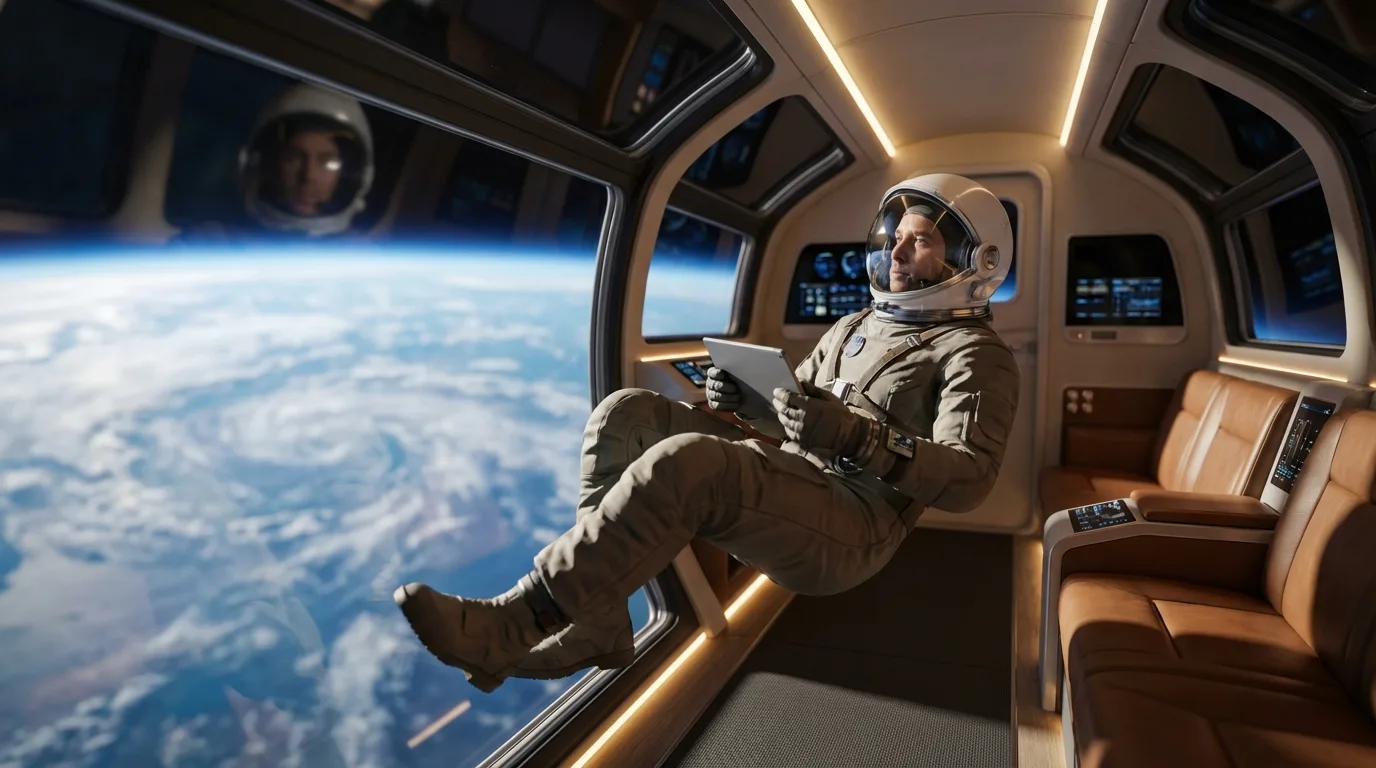
The journey to dramatically cut orbital space tourism flight times is not just about building a faster engine; it's about a holistic re-evaluation of how we approach space travel. As an industry, we stand at the cusp of a propulsion revolution, moving beyond the limitations of chemical rockets towards a future of unprecedented efficiency and speed.
- Embrace Hybrid Systems: For the near term, integrating high-thrust chemical solutions with efficient electric propulsion offers the most practical path to significant time reductions.
- Invest in Electric Propulsion: Continued investment in ion and Hall effect thrusters, coupled with advancements in compact power sources, will unlock sustained, fuel-efficient acceleration for orbital transfers.
- Prepare for Nuclear: Nuclear thermal and electric propulsion represent the 'holy grail' for rapid transit, demanding serious R&D, robust safety protocols, and public education.
- Explore Speculative Concepts: While not immediately actionable, maintaining research into laser sails and even theoretical warp drives fuels long-term innovation and pushes the boundaries of what's possible.
- Foster Collaboration: Overcoming the formidable challenges of funding, regulation, and public perception requires a unified effort across governments, private industry, and academia.
The dream of seamless, rapid travel between orbital destinations is within our grasp. It demands vision, perseverance, and a willingness to challenge conventional thinking. By strategically investing in these propulsion innovations and fostering a collaborative ecosystem, we can transform orbital space tourism from a niche experience into a thriving, accessible industry, allowing more individuals to witness the breathtaking beauty of Earth from above, and truly make space the next frontier for human exploration and leisure. The future of space travel isn't just about reaching new heights; it's about reaching them with unparalleled speed and grace.
Recommended Reading
- Unlock Cheap Train Travel: How to Journey Without a Rail Pass!
- Unlock Breathtaking Views: Where to Find Trains with Panoramic Windows
- Safeguarding Your Career: 7 Steps for International Volunteer Success
- Unmasking the True Cost: What Are the Hidden Fees on Budget Cruise Lines?
- Beyond Burnout: 7 Luxury Spa Retreats for Executive Rejuvenation & Sharp Decisions


Your email address will not be published. Required fields are marked *