

How to Measure Cruise Entertainment ROI to Justify Budget?
For over two decades in the dynamic world of cruise travel, I've witnessed firsthand the incredible power of entertainment to transform a voyage from merely a trip into an unforgettable journey. Yet, I've also seen countless times how entertainment budgets become the first target when cost-cutting measures loom, often because the value, while palpable to guests, remains elusive to the finance department.
The problem is clear: entertainment, by its very nature, often feels intangible. It's about emotion, experience, and memory. How do you quantify a standing ovation? How do you put a price tag on a child's wonder during a magic show, or the joy of a couple dancing under the stars? This perceived subjectivity creates a critical disconnect, leaving entertainment directors struggling to articulate the profound financial impact of their programs.
But what if I told you that the 'intangible' can indeed be measured? What if you could present a compelling, data-driven case that not only justifies your entertainment budget but positions it as a vital driver of revenue, guest loyalty, and brand reputation? In this definitive guide, I'll share the frameworks, actionable metrics, and real-world strategies I've honed over years, empowering you to effectively measure cruise entertainment ROI and confidently justify every dollar spent.
Shifting from Anecdote to Analytics: The ROI Imperative
In my early days, justifying entertainment spend often felt like a passionate plea rather than a strategic presentation. We'd talk about guest smiles, positive comments, and the 'vibe' onboard. While these are crucial, they don't speak the language of the boardroom. The imperative today is to translate that qualitative success into quantitative impact. This is not about diminishing the art of entertainment; it's about elevating its strategic importance.
The modern cruise industry operates on razor-thin margins and intense competition. Every department must demonstrate its contribution to the bottom line. Entertainment, far from being a cost center, is a powerful differentiator. It drives booking decisions, influences onboard spending, and, most critically, fosters loyalty. Without a robust ROI measurement strategy, you're leaving significant value on the table and risking budget cuts that could cripple your unique guest experience.
The shift from anecdote to analytics means moving beyond 'we think guests love it' to 'we know guests love it, and here's how it impacts our revenue and repeat bookings.' It requires a systematic approach to defining objectives, identifying key performance indicators (KPIs), collecting data, and attributing outcomes. This isn't just about protecting your budget; it's about optimizing your entertainment offering to deliver maximum value to both your guests and your shareholders.
Defining Your Entertainment Objectives: Beyond 'Guest Satisfaction'
Before you can measure anything, you must clearly define what 'success' looks like. Simply aiming for 'guest satisfaction' is too broad. While important, it's an outcome, not a measurable objective for ROI. In my experience, the most successful entertainment programs are those with laser-focused objectives that directly tie into broader business goals.
Examples of Specific, Measurable Entertainment Objectives:
- Increase Onboard Revenue:
Objective: To drive incremental spending at bars, specialty restaurants, retail, and casino by X% during/after specific entertainment events. - Enhance Guest Loyalty & Repeat Bookings:
Objective: To increase the Net Promoter Score (NPS) specifically related to entertainment by X points, leading to a Y% increase in repeat guest rates. - Attract New Demographics:
Objective: To appeal to a younger demographic (e.g., Millennials/Gen Z) by introducing new, trending entertainment options, resulting in a Z% increase in bookings from this segment. - Reduce Guest Complaints/Negative Feedback:
Objective: To decrease entertainment-related negative comments in post-cruise surveys by X%. - Increase Ancillary Sales of Entertainment-Related Products:
Objective: To boost sales of show merchandise, artist meet-and-greet packages, or themed event tickets by X%.
Each of these objectives is specific, measurable, achievable, relevant, and time-bound (SMART). Once you have these defined, measuring ROI becomes a process of tracking how well your entertainment programs contribute to these tangible goals.

Key Performance Indicators (KPIs) for Cruise Entertainment ROI
Once your objectives are clear, the next step is to identify the KPIs that will tell you if you're hitting your targets. These aren't just vanity metrics; they are the quantifiable signals of success. Here are some of the most critical KPIs I recommend tracking:
Direct Guest Feedback & Sentiment:
- Net Promoter Score (NPS) - Entertainment Specific: Ask guests, 'How likely are you to recommend our cruise based on the entertainment?' This provides a clear benchmark for advocacy.
- Guest Satisfaction Scores (GSS) - Entertainment Categories: Break down surveys to rate specific shows, venues, performers, and activities.
- Social Media Mentions & Sentiment: Monitor what guests are saying about your entertainment on platforms like Instagram, Facebook, and Twitter. Tools for sentiment analysis are invaluable here.
- Onboard Survey Participation & Comments: Track not just scores, but the volume and nature of qualitative feedback.
Onboard Revenue Impact:
- Per-Passenger Spend (PPS) - Event Correlation: Analyze PPS in bars, restaurants, retail, and casino before, during, and after specific entertainment events or in entertainment-heavy zones.
- Ancillary Sales: Track sales of premium entertainment tickets, VIP packages, merchandise, or specific drink specials tied to shows.
- Casino Play Time/Spend: Certain types of entertainment (e.g., late-night comedy, live music in casino lounges) can directly influence casino engagement.
Operational & Efficiency Metrics:
- Audience Attendance & Occupancy Rates: For each show and venue, track how many seats are filled. This helps optimize scheduling and venue allocation.
- Cost Per Guest Engagement: Calculate the total cost of an entertainment program divided by the number of unique guests who engaged with it.
- Crew Morale & Retention (indirect): While not direct ROI, a vibrant entertainment program can boost crew morale, impacting service quality and retention, which has a significant indirect financial benefit.
Long-Term & Brand Impact:
- Repeat Guest Rate: Correlate entertainment satisfaction with the likelihood of guests booking another cruise.
- Brand Mentions & Media Coverage: High-profile entertainment can generate valuable PR and brand awareness.
- Booking Conversion Rates: If entertainment is a key selling point, track how often it's mentioned during the booking process and its correlation with conversion.
| KPI Category | Example KPI | Measurement Method | Impact on ROI |
|---|---|---|---|
| Guest Feedback | NPS (Entertainment Specific) | Post-cruise surveys, in-app polls | Loyalty, Word-of-Mouth, Repeat Bookings |
| Revenue Impact | Per-Passenger Spend (PPS) | POS data, guest spend analytics | Direct Revenue Generation |
| Operational | Audience Attendance Rate | Door counts, digital tracking | Resource Optimization, Cost Efficiency |
| Brand & Loyalty | Repeat Guest Rate | CRM data, booking history | Long-term Value, Brand Equity |
Data Collection Strategies: From Surveys to Sentiment Analysis
Having identified your KPIs, the next hurdle is effective data collection. This isn't a 'set it and forget it' task; it requires a multi-pronged, integrated approach. In my experience, combining traditional methods with cutting-edge technology yields the most comprehensive insights.
1. Onboard & Post-Cruise Surveys:
These remain foundational. But move beyond generic questions. Segment your surveys to ask specific questions about different entertainment categories (e.g., 'Rate the main theater shows,' 'How much did you enjoy the live music in the lounges?'). Use scales (1-5, 1-10) and open-ended questions for qualitative insights. Implement these via in-cabin tablets, cruise apps, or email post-cruise.
2. Point-of-Sale (POS) System Integration:
Your POS data is a goldmine. By tagging transactions with specific entertainment events or venues, you can directly correlate spending patterns. For example, if a guest attends a comedy show, does their bar spend increase significantly in the hour following the show compared to guests who didn't attend? Advanced analytics can track this by guest ID.
3. Guest Wearables & RFID Technology:
Many modern cruise lines use wristbands or keycards with RFID. This technology can passively track guest movement and dwell times in different venues. While privacy is paramount, aggregated, anonymized data can reveal peak usage times for entertainment venues, helping to optimize staffing and scheduling.
4. Social Media Listening & Sentiment Analysis:
Guests are constantly sharing their experiences. Tools like Brandwatch, Meltwater, or even simpler social listening dashboards can monitor mentions of your cruise line and specific entertainment. Analyze sentiment (positive, neutral, negative) to gauge overall perception and identify specific areas for improvement or celebration. As Forbes highlights, social listening provides unfiltered, real-time feedback.
5. Focus Groups & Guest Interviews:
For deeper qualitative insights, periodically conduct small focus groups or one-on-one interviews with a diverse set of guests. Ask about their emotional responses, what they loved, what they missed, and how entertainment influenced their overall cruise experience. This adds rich context to your quantitative data.
6. Booking Data & CRM Integration:
Your Customer Relationship Management (CRM) system holds valuable data on repeat bookings. Link guest entertainment satisfaction scores with their re-booking patterns. Are guests who rated entertainment highly more likely to book again within 12 months? This is a direct measure of loyalty impact.
Expert Insight: "The key to effective data collection isn't just gathering more data, but gathering the RIGHT data and ensuring it's integrated across systems. Siloed data is useless data. Invest in platforms that allow for holistic guest journey mapping."
Attribution Modeling: Connecting Entertainment to Revenue
This is where the rubber meets the road. It's not enough to show that guests are happy; you need to demonstrate how that happiness translates into financial outcomes. Attribution modeling helps connect specific entertainment touchpoints to measurable revenue or loyalty impacts. This can be complex, but even basic models provide powerful insights.
Approaches to Attribution:
- Time-Based Correlation:
Analyze spending patterns. Did bar sales spike during the themed deck party? Did specialty restaurant bookings increase on nights featuring a high-demand show? Use time-series data to identify correlations. - Guest Segmentation & A/B Testing:
Segment guests based on their engagement with entertainment. Compare the average onboard spend of guests who attended X number of shows versus those who attended fewer. For specific new programs, consider A/B testing on different sailings (e.g., one sailing gets the new show, another gets the old, compare metrics). - Survey-Based Attribution:
Include questions in post-cruise surveys like, 'Did the entertainment influence your decision to purchase X onboard?' or 'How much did the entertainment influence your likelihood to re-book?' While subjective, aggregated responses can reveal trends. - Advanced Econometric Modeling:
For larger cruise lines with robust data infrastructure, consider econometric models that account for multiple variables (weather, itinerary, pricing, entertainment, etc.) to isolate the impact of entertainment on overall revenue. Harvard Business Review emphasizes the importance of sophisticated measurement in marketing, which applies directly to entertainment's role in the guest experience.
Case Study: How 'Oasis Cruises' Boosted Repeat Bookings
Oasis Cruises, a mid-sized luxury cruise line, faced stagnant repeat booking rates despite high overall guest satisfaction. Their entertainment budget was significant, but its direct impact on loyalty was unproven. I advised them to implement a more granular data collection and attribution strategy.
The Strategy:
- They enhanced their post-cruise survey to include a detailed section on entertainment, asking guests to rate specific shows, performers, and activities, and crucially, 'How much did the entertainment influence your desire to cruise with us again?'
- They integrated this survey data with their CRM, linking entertainment satisfaction scores to individual guest profiles and their booking history.
- For six months, they tracked two segments: 'High Entertainment Satisfiers' (guests rating entertainment 9/10 or higher) and 'Average Satisfiers' (7-8/10).
The data revealed that High Entertainment Satisfiers had a 28% higher repeat booking rate within 18 months compared to Average Satisfiers. Furthermore, their average onboard spend was 15% higher. Armed with this concrete data, Oasis Cruises not only justified their entertainment budget but strategically invested more in their top-rated, loyalty-driving programs, resulting in a 12% overall increase in repeat bookings year-over-year and a significant boost in lifetime guest value.
Crafting a Compelling Business Case: Presenting Your ROI
Once you have your data, the final step is to package it into a compelling business case that resonates with stakeholders. This is where your expertise as an industry specialist truly shines. Don't just dump spreadsheets; tell a story with your data.
Key Elements of a Strong Business Case:
- Executive Summary:
Start with a concise overview of your findings, highlighting the key ROI figures and recommendations. This should be able to stand alone. - Clearly Stated Objectives:
Reiterate the specific entertainment objectives you set out to achieve. - Methodology:
Briefly explain how you collected and analyzed the data. This builds trust and credibility. - Key Findings & Data Visualizations:
Present your KPIs with clear charts, graphs, and tables. Show trends over time. Compare performance against benchmarks. Use visuals to make complex data easily digestible. Highlight the direct financial contributions (e.g., 'Entertainment contributed $X million in ancillary revenue'). - Qualitative Evidence:
Include powerful guest quotes or brief anecdotes that illustrate the emotional impact, reinforcing the quantitative data. - Strategic Recommendations:
Based on your findings, propose clear, actionable recommendations. This might include optimizing current programs, investing in new ones, or reallocating resources. - Future Outlook & Continuous Improvement:
Demonstrate your commitment to ongoing measurement and optimization.
Expert Insight: "Your business case isn't just about what you've done; it's about what you CAN do. Frame your findings as opportunities for growth and competitive advantage, not just justifications for past spending."
Remember, the goal is not just to defend your budget but to position entertainment as a strategic asset that contributes directly to the cruise line's overall success. Present your case with confidence, backed by irrefutable data.
Optimization and Iteration: The Continuous Improvement Loop
Measuring ROI isn't a one-time project; it's an ongoing process. The cruise industry is constantly evolving, as are guest preferences. Your entertainment programs, and their measurement strategies, must evolve with it. This forms a continuous improvement loop:
- Measure: Collect data on your defined KPIs.
- Analyze: Interpret the data to identify successes, areas for improvement, and emerging trends.
- Optimize: Make data-driven adjustments to your entertainment offerings, scheduling, and budget allocation.
- Implement: Roll out the changes.
- Repeat: Go back to step one and measure the impact of your optimizations.
This iterative process allows you to fine-tune your entertainment portfolio, ensuring it consistently delivers maximum value. For example, if data shows that certain late-night shows have consistently low attendance and negative feedback, you might reallocate those resources to a more popular daytime activity or a different evening offering. Conversely, if a new themed party is driving significant bar revenue and high guest satisfaction, you might expand its frequency or replicate its success on other ships.
Embracing this loop demonstrates proactive management and a commitment to data-driven decision-making, further strengthening your position when justifying future budgets. McKinsey & Company consistently advocates for continuous improvement models across industries for sustained success.
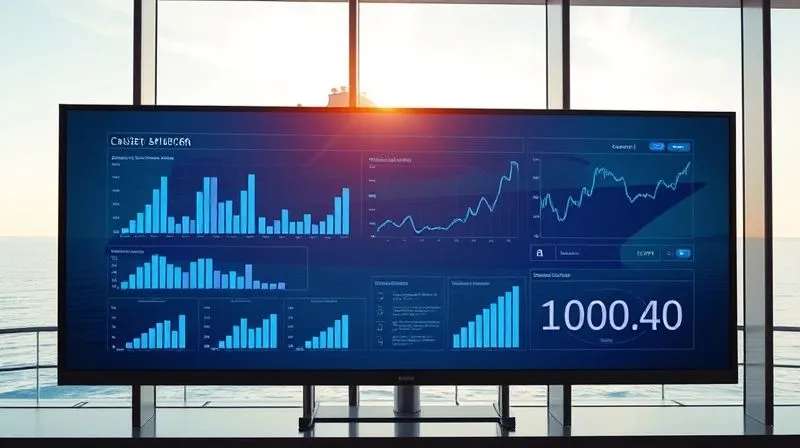
| Metric | Q1 Baseline | Q2 Result | Target for Q3 |
|---|---|---|---|
| Guest Satisfaction (Entertainment) | 7.8/10 | 8.2/10 | 8.5/10 |
| Ancillary Revenue (Entertainment-driven) | $1.2M | $1.35M | $1.5M |
| Repeat Guest Rate (Entertainment-influenced) | 28% | 30% | 32% |
| Cost Per Guest Engagement | $15 | $14 | $13 |
Frequently Asked Questions (FAQ)
Question: How do I measure the ROI of 'soft' entertainment, like ambiance music or enrichment lectures, which don't directly generate revenue?
Answer: While direct revenue attribution is harder, you can measure indirect ROI. For ambiance music, focus on its impact on venue dwell time, bar/restaurant sales in that area, and guest satisfaction scores related to 'atmosphere.' For enrichment lectures, track attendance, post-lecture survey feedback on 'educational value' or 'engagement,' and how these programs differentiate your brand. High satisfaction in these areas contributes to overall guest experience, which in turn influences repeat bookings and positive reviews – both of which have significant long-term financial value. Think of it as contributing to the overall 'value proposition' that justifies the cruise fare.
Question: My cruise line has a limited budget for data analytics tools. What are the most cost-effective ways to start measuring ROI?
Answer: Start with what you have. Leverage your existing POS system for spending correlations. Enhance your basic onboard and post-cruise surveys with more specific entertainment questions. Utilize free or low-cost social media monitoring tools (like Hootsuite's free tier or simply manual searches) to gauge sentiment. Manual attendance counts are better than none. Focus groups are inexpensive. The key is to be consistent and methodical with the data you CAN collect, even if it's not fully automated initially. Building a strong initial case can then help justify investment in more sophisticated tools.
Question: How do I account for external factors (e.g., weather, itinerary changes) when attributing ROI to entertainment?
Answer: This is a valid challenge. For basic analysis, you can compare similar sailings (same itinerary, similar guest demographics, comparable weather) to isolate the impact of entertainment variations. For more advanced analysis, statistical modeling (as mentioned in attribution modeling) can help control for these variables. Keep detailed records of external factors so you can reference them when presenting data, acknowledging their potential influence. Transparency about these variables builds trust in your analysis.
Question: Should I include the cost of talent, staging, and production in my ROI calculation?
Answer: Absolutely. A true ROI calculation must include all direct costs associated with delivering the entertainment. This includes talent fees, production costs (staging, lighting, sound), costumes, rehearsals, venue setup, and any marketing specific to the entertainment. Only by comparing the full cost against the measurable benefits can you determine the true return on your investment. Ignoring costs leads to an inflated and inaccurate ROI picture.
Question: What's a 'good' ROI for cruise entertainment?
Answer: There's no universal 'good' number, as it varies significantly by cruise line, segment, and specific objective. For direct revenue-generating entertainment (e.g., ticketed shows, casino entertainment), you'd aim for a clear positive ROI. For experience-enhancing entertainment (e.g., main shows, ambient music), the ROI might be indirect, reflected in higher repeat booking rates, increased overall onboard spend, and stronger brand loyalty. The 'good' ROI is one that demonstrates a clear, measurable contribution to your cruise line's strategic objectives and is justifiable against alternative uses of those funds. The goal is continuous improvement and demonstrating incremental value.
Key Takeaways and Final Thoughts
The days of treating cruise entertainment as an unquantifiable 'nice-to-have' are over. In a competitive market, entertainment is a strategic asset, a powerful differentiator, and a significant driver of guest satisfaction, loyalty, and revenue. My years in this industry have taught me that passion for performance must be matched with a rigorous, data-driven approach to measurement.
- Define Clear Objectives: Move beyond vague 'satisfaction' to SMART goals tied to business outcomes.
- Identify Relevant KPIs: Track direct feedback, revenue impact, operational efficiency, and long-term brand metrics.
- Implement Robust Data Collection: Utilize surveys, POS, social listening, and CRM data.
- Master Attribution: Connect entertainment engagement to tangible financial results.
- Craft a Compelling Business Case: Use data visualization and storytelling to present your findings persuasively.
- Embrace Continuous Improvement: Regularly measure, analyze, and optimize your programs.
By systematically addressing how to measure cruise entertainment ROI to justify budget, you're not just protecting your programs; you're elevating their strategic importance and ensuring that the magic of cruise entertainment continues to thrive, delighting guests and driving significant value for your cruise line. Embrace the data, tell your story, and watch your entertainment budget transform from an expense into a powerful investment.
Recommended Reading
- Unlock Your Weightless Dream: The Ultimate Guide to Zero Gravity Flight Preparation
- The Ultimate Guide: How to Find Authentic Foodie Destinations Abroad
- Justify Northern Lights Executive Incentives: 7 ROI Strategies
- Deep Dive Abroad: How Busy Professionals Master Cultural Immersion
- 7 Steps: Measure Eco-Tourism's Direct Conservation Impact Accurately




Your email address will not be published. Required fields are marked *