

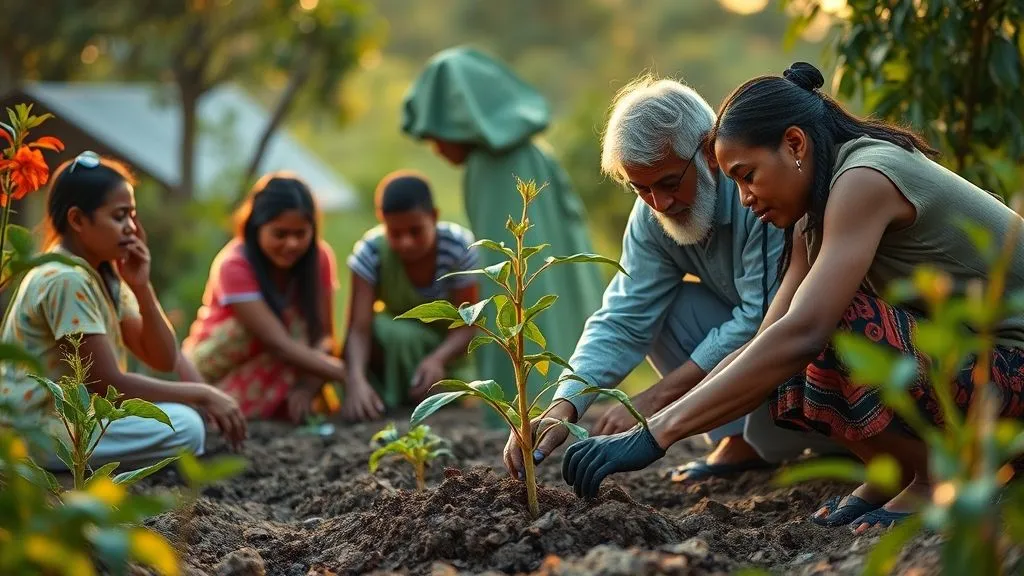
How to prevent volunteer travel's local harm?
For over 15 years in the travel and sustainable development sector, I've witnessed the incredible power of volunteer travel to transform lives – both for the volunteers and the communities they engage with. Yet, I've also seen firsthand how even the most well-intentioned efforts can inadvertently cause more harm than good, a paradox that keeps many aspiring volunteers awake at night.
The core problem lies in a fundamental misunderstanding of complex local dynamics. Volunteers, eager to make a difference, often arrive without adequate preparation, leading to projects that foster dependency, erode cultural integrity, or even displace local labor. This isn't a failure of heart, but often a failure of foresight and ethical frameworks, creating a ripple effect of negative consequences in the very communities they seek to uplift.
In this definitive guide, I will share my expert insights and actionable strategies to navigate the intricate landscape of volunteer travel responsibly. You'll learn how to identify ethical programs, foster genuine community ownership, and ensure your efforts contribute to truly sustainable development, leaving a positive, lasting legacy.
Beyond Good Intentions: Understanding the Core Risks
The journey into volunteer travel often begins with a powerful desire to help, to contribute, to be part of a solution. However, as an industry specialist, I've observed that good intentions alone are insufficient. Without a deep understanding of potential pitfalls, volunteers can unwittingly contribute to systemic issues that hinder, rather than help, local development.
The Dependency Trap
One of the most insidious risks is the creation of dependency. When external aid, even in the form of volunteer labor, becomes a continuous expectation, local initiatives can stagnate. Communities may delay or abandon their own solutions, waiting for the next group of volunteers to arrive, which undermines self-sufficiency and long-term resilience.
Cultural Erosion and Commodification
Volunteer travel can also, unintentionally, lead to cultural erosion. When local traditions, ceremonies, or ways of life are treated as spectacles for visitors, they risk becoming commodified. This can distort authentic cultural expression and create an artificial dynamic where locals feel pressured to perform for tourists, rather than live their lives genuinely.
Economic Displacement
Another significant concern is economic displacement. If volunteers perform tasks that could or should be done by paid local labor – such as construction, teaching, or administrative work – they inadvertently take jobs away from community members. This undermines the local economy and can breed resentment, negating the positive impact intended.
“True sustainable development isn't about doing for others; it's about empowering others to do for themselves, respecting their agency and their unique cultural context.”
To truly prevent volunteer travel's local harm, we must acknowledge and actively mitigate these risks. It requires a shift from a 'helping' mindset to one of 'collaborating' and 'empowering.'

The Power of Pre-Departure Education and Ethical Screening
In my experience, the foundation of responsible volunteer travel is laid long before a volunteer ever sets foot in a new country. Comprehensive pre-departure education and rigorous ethical screening are non-negotiable for preventing local harm and maximizing positive impact.
Comprehensive Orientation Programs
Ethical volunteer organizations invest heavily in educating their participants. This isn't just about logistics; it's about cultural immersion from a distance. An effective orientation should cover:
- Cultural Norms and Etiquette: Understanding local customs, dress codes, communication styles, and social hierarchies.
- Historical and Political Context: Providing a basic understanding of the region's history, current affairs, and socio-economic challenges.
- Project Goals and Limitations: Clearly outlining what the project aims to achieve, the volunteer's specific role, and what not to expect or attempt.
- Safety and Security Protocols: Essential information for personal well-being and respecting local laws.
- Ethical Volunteering Principles: Discussing issues like dependency, cultural sensitivity, and appropriate interactions.
Volunteer Skill-Matching & Realistic Expectations
A critical step that often gets overlooked is matching volunteer skills to genuine community needs. I've seen countless instances where enthusiastic but unskilled volunteers are placed in roles where they are ineffective or, worse, hinder progress. Responsible organizations:
- Require clear documentation of skills, experience, and qualifications.
- Are transparent about the types of skills genuinely needed for their projects (e.g., medical professionals, certified teachers, engineers).
- Set realistic expectations about the impact a short-term volunteer can make, emphasizing that the role is often supplementary, not primary.
“Self-awareness of one's own biases, privileges, and limitations is as crucial as any technical skill when volunteering abroad.”
According to a study published in the Journal of Sustainable Tourism, volunteers who receive extensive pre-departure training on cultural sensitivity and ethical considerations report higher satisfaction and perceived impact, while also demonstrating more responsible behaviors on the ground.
Prioritizing Community Ownership: From Needs Assessment to Project Design
The most profound way to prevent volunteer travel's local harm is to ensure that the community itself is at the helm. True sustainable development is bottom-up, not top-down. As an expert, I advocate for an approach where external assistance, including volunteers, serves to amplify local voices and capacities, rather than overshadow them.
Authentic Needs Assessment: Listening to Local Voices
Before any project is conceived or volunteer is placed, a thorough, community-led needs assessment is paramount. This isn't about an organization deciding what a community needs; it's about the community identifying its own priorities and challenges. Effective methods include:
- Local Advisory Boards: Establishing committees composed of community leaders, elders, and diverse residents to guide project development.
- Participatory Rural Appraisal (PRA): Utilizing techniques like community mapping, seasonal calendars, and wealth ranking, facilitated by locals, to understand their realities.
- Regular Community Meetings: Hosting open forums where residents can voice concerns, suggest solutions, and provide feedback on ongoing initiatives.
Collaborative Project Design and Implementation
Once needs are identified, project design must be a collaborative effort. Volunteers and organizations should act as facilitators, providing resources and expertise, but always deferring to local knowledge and decision-making. Here's how:
- Joint Goal Setting: Define project objectives and outcomes together, ensuring they align with community-articulated goals.
- Resource Allocation: Decide collaboratively how funds, materials, and volunteer labor will be utilized, prioritizing local procurement.
- Skill Transfer: Design projects that actively build local capacity and transfer skills, ensuring sustainability beyond the volunteer's stay.
- Local Leadership: Empower community members to lead project implementation, with volunteers supporting their efforts.
This participatory approach fosters genuine community ownership, ensuring projects are relevant, culturally appropriate, and sustainable. It fundamentally shifts the dynamic from 'us helping them' to 'us working with them.'
| Attribute | Top-Down Approach | Community-Led Approach |
|---|---|---|
| Decision-Making | External organization dictates | Community members lead with external support |
| Needs Identification | External assessment | Community self-assessment |
| Resource Allocation | External control | Joint planning, local procurement |
| Sustainability | High risk of dependency | High potential for self-sufficiency |
Ensuring Financial Transparency and Local Economic Integration
The financial aspect of volunteer travel is often a murky area, yet it's absolutely crucial for preventing local harm. As someone deeply involved in sustainable development, I stress the importance of understanding where your money goes and ensuring it actively supports, rather than detracts from, the local economy.
Where Does Your Money Go? Understanding Program Fees
Volunteer program fees can be substantial, and it's essential to understand their breakdown. Ethical organizations are transparent about:
- Administrative Costs: The overhead for running the organization, including staff salaries, marketing, and office expenses.
- In-Country Support: Costs for local staff, volunteer accommodation, food, transportation, and emergency support.
- Project Funding: The portion of your fee that directly funds the project you're working on, including materials, local labor, and community initiatives.
- Local Economic Contribution: How much is spent directly in the local community on goods and services.
Always ask for a detailed financial breakdown. If an organization is hesitant or vague, it's a significant red flag.
Supporting Local Economies, Not Undermining Them
Beyond fees, responsible volunteer travel actively seeks to inject money into the local economy. This means:
- Local Procurement: Purchasing materials, food, and services from local vendors and businesses.
- Fair Wages: Ensuring any local staff employed by the organization (e.g., cooks, drivers, project coordinators) are paid fair, living wages.
- Avoiding Competition: Not offering free services (e.g., teaching English) in communities where local professionals rely on charging for those services.
Case Study: The "Green Village" Initiative
The "Green Village" Initiative in rural Cambodia provides a compelling example. Faced with high unemployment, the local community, in partnership with an ethical NGO, developed a sustainable tourism model. Instead of bringing in foreign construction workers, the NGO trained local villagers in eco-lodge construction techniques, paying fair wages. Volunteers were then invited to assist with skill-sharing in areas like organic farming and English language for hospitality, always alongside local teachers. All food and supplies were sourced from local farmers and markets. This approach not only created jobs and built local capacity but also ensured that almost 80% of volunteer fees flowed directly into the community, leading to a 25% increase in average household income within two years. This demonstrates how thoughtful financial practices can profoundly prevent volunteer travel's local harm and foster economic growth.
As Forbes often highlights, ethical spending is a powerful tool for positive change, and this applies directly to volunteer travel.
Fostering Cultural Sensitivity and Long-Term Relationships
Cultural sensitivity isn't just about avoiding offense; it's about building bridges of understanding and respect, which are essential for long-term, positive relationships between volunteers and host communities. My years in this field have taught me that genuine connection is the bedrock of impactful work.
Respecting Local Customs and Traditions
Every culture has its nuances, and understanding them is a sign of respect. Volunteers should be educated on:
- Dress Codes: Modest attire is often expected, especially in religious sites or rural areas.
- Greetings and Gestures: Learning appropriate ways to greet people, body language to avoid, and respectful forms of address.
- Religious Practices: Understanding local faiths and their associated customs, especially regarding food, holidays, and social interactions.
- Photography Etiquette: Always asking for permission before taking photos, particularly of children or in sensitive situations.
It's important to remember that you are a guest in someone else's home, and humility is your best guide.
Language Learning and Communication Bridges
While not always feasible to become fluent, making an effort to learn a few basic phrases in the local language can make a tremendous difference. Simple greetings, thank yous, and polite requests demonstrate genuine interest and respect. This also helps break down barriers and facilitate more meaningful interactions, moving beyond superficial exchanges to deeper connections.
Building Genuine Connections, Not Superficial Encounters
The goal isn't just to complete a task; it's to build relationships. Spend time listening, sharing stories, and participating in daily life activities where appropriate. Avoid the 'tourist gaze' that treats locals as objects of observation. Instead, engage with curiosity and an open heart.
“Humility is the most powerful tool a volunteer can carry. It opens doors to understanding, respect, and genuine collaboration.”
By fostering deep cultural sensitivity, volunteers contribute to a global community built on mutual respect, preventing the cultural harm that can arise from thoughtless interactions. I've personally seen the transformative power of a shared meal or a simple laugh across language barriers, cementing bonds that last far beyond the project's completion.

Measuring Impact: Beyond Anecdotes to Data-Driven Sustainability
To truly prevent volunteer travel's local harm and ensure genuine sustainable development, we must move beyond feel-good anecdotes and embrace rigorous impact measurement. As an expert in this field, I emphasize that what gets measured, gets managed – and improved.
Establishing Clear, Measurable Goals
Before any volunteer project begins, clear, specific, measurable, achievable, relevant, and time-bound (SMART) goals must be established. These goals should be co-created with the community. For example, instead of "help build a school," a SMART goal would be:
- Baseline Data: "Increase access to education for 50 children in X village, where current enrollment is 30% below national average."
- Specific Objective: "Construct two new classrooms with locally sourced materials, providing space for 50 additional students within 6 months, utilizing 80% local labor."
- Measurable Outcome: "Increase school enrollment by 20% and improve student-teacher ratio by 1:5 within one year of project completion."
These goals allow for objective assessment of progress.
Regular Monitoring and Evaluation Cycles
Impact measurement isn't a one-time event; it's an ongoing process. Ethical organizations implement:
- Baseline Data Collection: Gathering information about the community's situation *before* the project begins to establish a starting point.
- Mid-Project Reviews: Regular check-ins with the community and volunteers to assess progress, identify challenges, and make necessary adjustments.
- Post-Project Evaluation: A comprehensive assessment after the project concludes, measuring outcomes against initial goals and identifying lessons learned.
- Long-Term Follow-up: Crucially, checking in months or even years later to gauge the sustained impact and address any unintended consequences.
Long-Term Legacy Planning
A truly responsible volunteer project integrates a plan for its long-term legacy from the outset. This includes strategies for maintenance, continued funding (if necessary), and skill transfer to ensure the community can sustain the benefits independently. The goal is to leave a legacy of empowerment, not dependency.
| Metric Category | Before Project (Baseline) | After Project (Target) |
|---|---|---|
| Education | Enrollment: 60%, Classrooms: 2, Teachers: 3 | Enrollment: 80%, Classrooms: 4, Teachers: 5 |
| Health | Access to clean water: 40%, Incidence of waterborne disease: High | Access to clean water: 90%, Incidence of waterborne disease: Moderate |
| Economic | Local employment in project: 0%, Local procurement: 10% | Local employment in project: 70%, Local procurement: 80% |
By focusing on tangible, measurable outcomes aligned with the UN Sustainable Development Goals (SDGs), we can ensure volunteer efforts contribute to genuine, lasting change and effectively prevent volunteer travel's local harm.
The Role of Responsible Volunteer Organizations and Tour Operators
The choice of your volunteer organization is perhaps the single most critical decision in preventing volunteer travel's local harm. As an industry veteran, I cannot overstate the importance of thorough vetting. A responsible organization acts as a crucial intermediary, safeguarding both the volunteer and the host community.
Vetting Your Partner: Key Questions to Ask
Before committing to any program, I urge volunteers to ask these crucial questions:
- Who owns and runs the projects? Is it a local NGO, a community group, or an international organization with strong local partnerships?
- How are community needs identified? Can they provide evidence of community consultation and ownership in project design?
- What is their financial transparency policy? Can they provide a detailed breakdown of how your fees are used?
- What is their long-term vision for the projects? How do they ensure sustainability beyond volunteer involvement?
- What are their volunteer screening and training processes? Do they match skills to needs and provide comprehensive cultural orientation?
- What is their stance on child protection? Do they adhere to strict guidelines, especially regarding orphanages or working with vulnerable children? (Many experts now advise against orphanage volunteering).
Accreditation and Ethical Standards
Look for organizations that adhere to recognized ethical standards or have third-party accreditations. While not universal, certifications from bodies like B Corp for social enterprises, or adherence to specific responsible tourism guidelines, can indicate a commitment to ethical practices. Always research their reputation, read reviews, and seek out independent assessments.
“A truly responsible volunteer organization acts as a guardian, protecting the integrity of the host community and ensuring volunteers are part of a genuine solution.”
Your due diligence in choosing an organization is a powerful act of responsible volunteering itself. It ensures that your time and money are channeled into initiatives that genuinely uplift communities, rather than inadvertently causing harm. This is a crucial step in preventing volunteer travel's local harm. In my career, I've seen how dedicated, ethical organizations can transform good intentions into tangible, sustainable progress.

Cultivating a Mindset of Humility and Continuous Learning
Even with all the right preparations and the most ethical organization, the ultimate responsibility for preventing volunteer travel's local harm rests with the individual volunteer. It requires cultivating a specific mindset – one of humility, respect, and a commitment to continuous learning. This is a journey, not a destination.
Challenging the 'White Savior' Narrative
One of the most critical mindset shifts is to actively challenge the 'white savior' narrative. This harmful trope suggests that people from developed countries are inherently superior and needed to 'save' those in developing nations. In reality, communities often have immense resilience, knowledge, and capacity for self-determination. Volunteers are there to support, facilitate, and learn, not to 'fix' or 'rescue.'
Embracing Reciprocity and Mutual Exchange
Approach your experience as a mutual exchange. You bring skills, resources, and a different perspective, but you also receive invaluable lessons in resilience, culture, community, and alternative ways of living. Be open to learning from your host community as much as you intend to contribute. This reciprocal relationship ensures that the exchange is enriching for everyone involved.
Post-Trip Reflection and Advocacy
The learning doesn't end when you return home. Take time to reflect critically on your experience. What went well? What could have been done better? How did your actions impact the local community? Use your experience to become an advocate for ethical and responsible travel, sharing your insights with others and promoting best practices. Your voice can help shape a more conscious voluntourism industry.
As The Guardian and other publications have often highlighted, critical self-reflection is essential to avoid perpetuating harmful narratives.
By adopting this mindset, you move beyond simply avoiding harm to actively promoting positive, respectful, and genuinely sustainable development. This personal transformation is arguably the most profound impact volunteer travel can have.

Frequently Asked Questions (FAQ)
How can I tell if a volunteer program is truly ethical before I go? Look for transparency in finances (ask for a breakdown of fees), evidence of community ownership (how are projects designed?), clear communication about local impact, and rigorous pre-departure training. Red flags include programs that focus heavily on orphanages, promise quick fixes, or don't require specific skills for technical roles.
What if I don't have specialized skills? Can I still volunteer responsibly? Absolutely. While specialized skills are valuable, many ethical projects need general support, provided it's genuinely needed and doesn't displace local labor. Roles like data entry, administrative support, or assisting skilled local workers can be impactful. The key is finding a program that aligns your abilities with authentic community needs and provides clear guidance on your role.
Is it better to donate money or volunteer my time? This isn't an either/or question. Both are vital. For many communities, financial contributions allow them to hire local professionals, purchase necessary supplies, and implement projects on their own terms, which often has a greater local economic impact. Your time, when ethically placed, offers skill transfer, cross-cultural exchange, and direct support. Evaluate the specific needs of the project and your own capacity. Sometimes, a financial donation to a highly ethical, local NGO is the most responsible choice.
How can I avoid contributing to dependency in the community? Focus on projects that build local capacity and transfer skills, rather than doing tasks for the community. Support initiatives that are community-led and have a clear exit strategy for external support. Avoid short-term 'aid' that doesn't empower local solutions, and prioritize sustainable development that fosters self-sufficiency.
What are red flags to look out for when choosing a volunteer organization? Be wary of organizations that: lack transparency about finances, don't involve the community in decision-making, promise an 'easy' or 'glamorous' experience, focus heavily on orphanage volunteering, don't provide comprehensive pre-departure training, or allow unskilled volunteers to perform professional tasks (e.g., medical procedures, teaching without qualifications).
Key Takeaways and Final Thoughts
Navigating the complex world of volunteer travel requires more than just good intentions; it demands informed choices, critical thinking, and a commitment to ethical engagement. By prioritizing community ownership, ensuring financial transparency, fostering cultural sensitivity, and rigorously measuring impact, we can transform volunteer travel into a powerful force for truly sustainable and positive change.
- Educate yourself thoroughly before you go, understanding risks like dependency and cultural harm.
- Prioritize community ownership in project design and implementation.
- Demand financial transparency from organizations and support local economies.
- Cultivate deep cultural sensitivity and build genuine, reciprocal relationships.
- Choose responsible organizations through diligent vetting and questioning.
- Measure impact rigorously, moving beyond anecdotes to data-driven sustainability.
- Embrace a mindset of humility, continuous learning, and challenge harmful narratives.
Your desire to make a difference is commendable, and with these actionable strategies, you can ensure your volunteer travel journey leaves a legacy of empowerment, respect, and genuine sustainable development. Be the change you wish to see, but do so with wisdom, empathy, and unwavering commitment to doing no harm.
Recommended Reading
- Mastering Space Law: A 5-Step Framework for Commercial Lunar Landers
- Eco-Friendly Travel: How It Impacts Local Communities Positively
- Beat Burnout: 7 Steps to Your Executive Resort Island Escape
- 5 Ways Inner Peace Travel Shields Leaders from Decision Fatigue
- 7 Expert Strategies: Unlocking Private Luxury Beach Island Retreats




Your email address will not be published. Required fields are marked *