


Navigating International Space Law for Commercial Lunar Landers? Your Expert Guide
For over two decades, I've had the privilege of witnessing the extraordinary evolution of humanity's lunar ambitions, from government-led expeditions to a burgeoning private sector poised to unlock the Moon's vast potential. In this rapidly accelerating race back to our celestial neighbor, I've seen countless innovative companies grapple with a fundamental challenge: the intricate, often ambiguous, web of international space law. It's a landscape as complex as the lunar surface itself, yet one that demands meticulous navigation.
The dream of commercial lunar operations – whether for tourism, resource extraction, or scientific research – is now within reach. However, the regulatory environment for these pioneering ventures remains largely uncharted territory. Companies are faced with a patchwork of treaties, emerging accords, and diverse national legislations, creating a significant hurdle for mission planning, investment, and long-term sustainability. The absence of a universally accepted, comprehensive legal framework for commercial lunar activities introduces risks that can jeopardize even the most promising endeavors.
As an industry veteran, my goal today is to demystify this critical domain. I'll provide you with a definitive, expert-level guide, complete with actionable frameworks, real-world analogies, and the insights I've gathered from years at the forefront of space policy and commercial development. By the end of this deep dive, you'll possess a clearer understanding of the legal landscape and a strategic approach to ensuring your commercial lunar lander mission is not just technically brilliant, but also legally sound and compliant.
The Evolving Landscape of Lunar Ambition and Legal Ambiguity
The Moon is no longer solely the domain of superpowers; it's becoming a bustling frontier for private enterprise. We're seeing a renaissance of lunar interest, driven by technological advancements, decreasing launch costs, and a growing appetite for space resources. Companies like Astrobotic, Intuitive Machines, and ispace are leading the charge, developing landers capable of delivering payloads, exploring the surface, and ultimately laying the groundwork for permanent human presence.
However, this exciting commercial surge has outpaced the development of robust, universally accepted legal frameworks. The existing international space law, primarily crafted during the Cold War era, struggles to fully address the nuances of private commercial operations, especially concerning resource utilization and permanent infrastructure. This creates what I often refer to as a 'legal gray area,' where innovation can thrive, but also where significant regulatory and liability risks lie dormant.
In my experience, the biggest mistake new entrants make is underestimating the legal complexities. Ignoring international space law isn't just risky; it's a mission-killer. Proactive engagement with legal frameworks isn't a burden; it's a strategic imperative for unlocking the lunar economy.
The urgency for clearer legal guidance is palpable. As we move beyond flags and footprints to sustained commercial operations, questions of property rights, environmental protection, and safety zones become paramount. The industry needs clarity to attract investment, foster innovation, and ensure peaceful coexistence on the Moon. This is precisely why understanding the foundational treaties and emerging norms is non-negotiable for any commercial lunar venture.
Understanding the Bedrock: The Outer Space Treaty (OST) and Its Limitations
At the heart of all international space law lies the 1967 Treaty on Principles Governing the Activities of States in the Exploration and Use of Outer Space, including the Moon and Other Celestial Bodies, more commonly known as the Outer Space Treaty (OST). This foundational document, ratified by over 110 nations, established the core principles that have guided space activities for over half a century. From my perspective, it's both a blessing and a curse for commercial entities.
Key principles of the OST include:
- Non-Appropriation: Article II states that outer space, including the Moon, is not subject to national appropriation by claim of sovereignty, by means of use or occupation, or by any other means. This is a critical point of contention for commercial resource extraction.
- Common Heritage of Mankind: While not explicitly stated in the OST, the concept of outer space as the 'province of all mankind' (Article I) implies a shared interest and benefit.
- State Responsibility: Article VI makes states internationally responsible for national activities in outer space, whether carried out by governmental or non-governmental entities. This means your home country is ultimately accountable for your lunar lander's actions.
- Peaceful Use: Article IV prohibits placing nuclear weapons or weapons of mass destruction in orbit or on celestial bodies.
While the OST provides a crucial framework for state behavior, its limitations for commercial entities are glaring. It was written before the advent of private space travel, before the concept of lunar resource mining was a commercial reality. It doesn't explicitly define property rights for extracted resources, nor does it provide a clear mechanism for commercial dispute resolution on the Moon. Many interpretations exist, leading to significant legal uncertainty for private ventures.
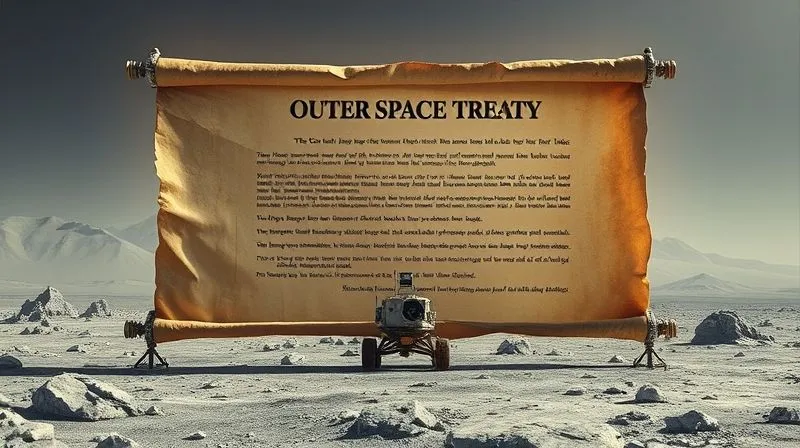
One of the most profound implications of the OST for commercial lunar landers is the concept of 'launching state' responsibility. Your mission's legality is intrinsically tied to the domestic laws of the nation from which your lander is launched, or whose registry it belongs to. This means that even if you're a private company, your government's legal framework and international obligations directly impact your operations. Understanding this symbiotic relationship is paramount for compliance.
The Artemis Accords: A New Paradigm for Lunar Governance?
Recognizing the limitations of the OST in the modern commercial space era, especially concerning lunar exploration and resource utilization, the United States, through NASA, initiated the Artemis Accords in 2020. These are not a treaty in the traditional sense, but rather a set of non-binding bilateral agreements between signatory nations and the US, aiming to establish a common set of principles for peaceful and sustainable lunar exploration. As someone deeply involved in space policy discussions, I've observed these Accords as a significant, albeit controversial, attempt to shape future lunar governance.
The Accords build upon the OST but seek to clarify and expand upon its principles, particularly regarding commercial activities. Key principles include:
- Transparency: Open sharing of scientific data and mission plans.
- Interoperability: Designing systems that can work together, fostering collaboration.
- Emergency Assistance: Providing aid to personnel in distress.
- Registration of Space Objects: Maintaining a publicly accessible record of space objects.
- Release of Scientific Data: Open dissemination of scientific information.
- Protection of Heritage Sites: Preserving historical landing sites and artifacts.
- Space Resources: Articulating that resource extraction, conducted in accordance with the OST, is permissible and doesn't constitute national appropriation. This is a crucial distinction for commercial entities.
- Deconfliction of Activities: Establishing 'safety zones' around operational areas to prevent harmful interference, a concept that has sparked considerable debate.
The Artemis Accords represent a significant shift in thinking, particularly with their stance on resource utilization and safety zones. For commercial lunar lander operators, understanding whether your host nation is a signatory, and how the Accords' principles might influence your mission design and operational protocols, is crucial. While not universally adopted, the growing list of signatories suggests they are becoming an influential framework for nations actively engaged in lunar exploration.
You can find the full text and list of signatories on NASA's official Artemis Accords page. My advice is to review these principles meticulously, as they offer a glimpse into the operational norms that are likely to shape future lunar activities.
National Space Legislation: The Crucial Domestic Layer
While international treaties like the OST and emerging frameworks like the Artemis Accords set the overarching principles, it's the national space legislation of individual countries that provides the practical, enforceable legal framework for your commercial lunar lander mission. This is where the rubber meets the road, so to speak. As an expert, I can tell you that neglecting this domestic layer is a common, and often fatal, oversight for new space ventures.
Every nation that engages in space activities, or has companies wishing to do so, is obligated under OST Article VI to authorize and continuously supervise the activities of its non-governmental entities. This translates into national laws and regulations covering:
- Licensing and Permitting: Before your lander can even launch, you'll need a license from your national authority. This process typically involves rigorous technical, safety, financial, and environmental reviews.
- Liability Regimes: National laws often define the extent of a company's liability for damages caused during launch, in orbit, or on the lunar surface, often requiring significant insurance coverage.
- Reporting Requirements: Ongoing reporting of mission status, orbital parameters, and any significant incidents.
- Technology Transfer Controls: Regulations governing the export of sensitive space technology.
Consider the United States, for example, with its Commercial Space Launch Act, overseen by the Federal Aviation Administration (FAA) for launch and re-entry, and other agencies like NOAA and FCC for remote sensing and communications. The UK has its Space Industry Act, while Luxembourg has been a pioneer in creating a legal framework specifically for space resource utilization. Each country has its own unique approach, reflecting its national interests and legal traditions.
Here's a simplified comparison of how different national approaches can impact commercial lunar landers:
| Country | Key Regulatory Body | Focus Areas | Impact on Landers |
|---|---|---|---|
| United States | FAA, FCC, NOAA | Launch/Re-entry, Communications, Remote Sensing, Space Resources (SPACE Act) | Comprehensive licensing, liability requirements, resource ownership framework. |
| Luxembourg | Ministry of Economy | Space Resources (pioneering law) | Clear legal right to own extracted space resources, attracting resource mining companies. |
| United Kingdom | UK Space Agency, CAA | Launch, Orbital Operations, Safety, Liability | Strong emphasis on safety and liability, detailed licensing process. |
| Japan | Cabinet Office (National Space Policy Secretariat) | Space Activities Act (2018), Safety, Launch, Remote Sensing | Emerging framework, careful regulatory oversight, state-supervised activities. |
It's vital for any commercial lunar lander operator to thoroughly research and engage with the national space law of their launching state, as well as any other jurisdiction their operations might touch. This often involves working with specialized legal counsel who can expertly navigate these complex domestic requirements.
Liability, Jurisdiction, and Dispute Resolution in Lunar Operations
The vastness of space doesn't equate to a legal vacuum. Even on the Moon, the principles of liability and jurisdiction, though challenging to apply, are fundamentally important. As an expert, I've always emphasized that foresight in these areas can prevent catastrophic operational and financial setbacks.
The Convention on International Liability for Damage Caused by Space Objects (Liability Convention), another cornerstone of international space law, dictates that a launching state is absolutely liable for damage caused by its space object on the surface of the Earth or to aircraft in flight. In outer space, including the Moon, liability is based on fault. This means if your lunar lander causes damage to another nation's or company's property on the Moon, proving fault becomes critical. Imagine the complexities of assessing damage and assigning blame miles away on an airless body.
Jurisdiction on the Moon is another thorny issue. While no nation can claim sovereignty over any part of the Moon, the spacecraft and facilities deployed there remain under the jurisdiction and control of the state on whose registry they are carried (OST Article VIII). This means a lunar habitat belonging to a US company would still be considered US territory for legal purposes, even if it's on the Moon. However, what happens when a dispute arises between two different national entities on the lunar surface? The OST and Liability Convention provide high-level principles, but lack granular mechanisms for commercial dispute resolution.
Case Study: The "Lunar Dust-up" Incident
Imagine "AstroCorp," a private US company, operates a sophisticated lunar lander near a scientific outpost established by "LunaPlex," a European consortium. During a routine robotic traverse, AstroCorp's lander inadvertently kicks up a plume of lunar dust that coats LunaPlex's solar panels, significantly reducing their power generation and damaging sensitive optical instruments. LunaPlex claims millions in damages and lost research time.
Under the Liability Convention, the US (as AstroCorp's launching state) could be liable if fault is proven. But how do you prove fault on the Moon? Was AstroCorp negligent in its navigation? Was LunaPlex's outpost inadequately protected? The lack of clear evidentiary procedures, on-site investigators, and established lunar courts makes this incredibly challenging. In such a scenario, the parties would likely resort to diplomatic channels, international arbitration, or potentially a specially convened ad-hoc tribunal, relying heavily on the principles of good faith and established international legal norms. The outcome would hinge on meticulous data collection from both sides and expert testimony, emphasizing the need for robust pre-mission agreements and operational transparency.
To mitigate these risks, commercial lunar operators must proactively engage in risk management planning, including comprehensive insurance, detailed operational protocols to prevent harmful interference, and, critically, bilateral or multilateral agreements with other lunar actors. These 'rules of the road' are often more effective than relying solely on abstract international law.
Resource Utilization (ISRU) and Property Rights: The Frontier of Legal Debate
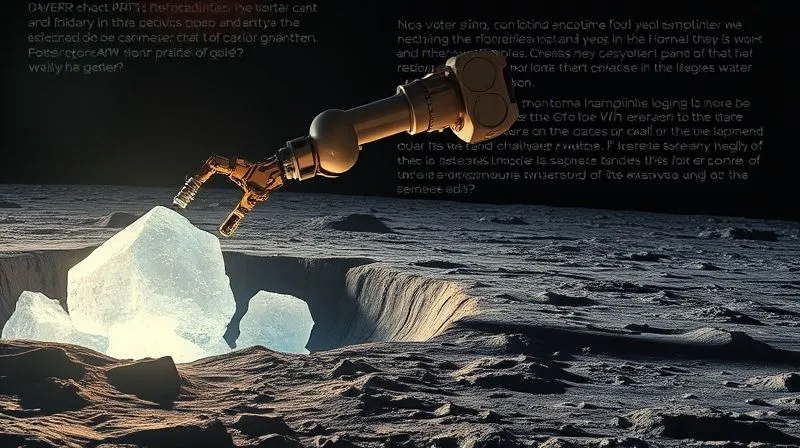
Perhaps no aspect of lunar commercialization is as legally contentious or economically significant as In-Situ Resource Utilization (ISRU) and the question of property rights. The Moon is rich in resources like water ice, helium-3, and rare earth elements – materials vital for sustaining long-term human presence and potentially fueling a vibrant space economy. However, the OST's non-appropriation clause (Article II) casts a long shadow over commercial extraction efforts.
Article II states that the Moon is 'not subject to national appropriation by claim of sovereignty, by means of use or occupation, or by any other means.' Critics argue this prohibits any form of property rights, including for extracted resources. Proponents of ISRU, myself included, contend that while sovereign claims are forbidden, the act of extracting and utilizing resources does not equate to 'appropriation' of territory. They argue that once a resource is extracted, it becomes the property of the entity that extracted it, similar to fishing in international waters.
The United States attempted to clarify its stance with the US Commercial Space Launch Competitiveness Act of 2015 (SPACE Act), which explicitly grants US citizens the right to engage in commercial exploration and recovery of space resources and to own those resources. Luxembourg and the UAE have followed suit with similar national laws. These national laws aim to provide legal certainty for private companies, but their legitimacy under international law remains a subject of ongoing debate. Other nations, particularly Russia and China, view such unilateral declarations with skepticism, advocating for a new, comprehensive international treaty on space resource governance.
The absence of a globally harmonized legal framework for space resource utilization is the single greatest impediment to unlocking the full economic potential of the Moon. International consensus, not unilateral declarations, will ultimately provide the long-term stability the industry craves.
For your commercial lunar lander mission focused on ISRU, navigating this legal frontier requires extreme caution. You must:
- Understand the specific laws of your launching state regarding space resources.
- Be aware of the positions of other major spacefaring nations.
- Consider operating under the umbrella of frameworks like the Artemis Accords, which offer some clarity on resource utilization.
- Engage in proactive diplomacy and industry advocacy to push for clearer international norms.
Crafting a Robust Legal Compliance Strategy for Your Lunar Lander Mission
Given the complexities we've discussed, a haphazard approach to space law is simply not an option. For any commercial lunar lander mission, a proactive, multi-layered legal compliance strategy is essential. Here's a 5-step framework I recommend to all my clients:
-
Assess Mission Profile & Jurisdiction:
Before anything else, define your mission's scope: what will your lander do? Where on the Moon will it operate? What resources, if any, will it utilize? This initial assessment will dictate which national laws (your 'launching state' and potentially others) and international agreements are most relevant. For example, a tourism mission has different legal considerations than a mining operation.
-
Identify Applicable Treaties & Accords:
Thoroughly review the Outer Space Treaty, Liability Convention, and Registration Convention. Determine if your nation is a signatory to the Artemis Accords and understand their implications for your operations. If your mission involves international partners, ensure all parties are aligned on these foundational legal instruments.
-
Navigate National Licensing & Permitting:
This is arguably the most critical and time-consuming step. Engage with the relevant national authorities in your launching state early in your planning process. Understand their specific requirements for:
- Mission authorization and supervision.
- Safety and environmental reviews.
- Radio frequency allocations (FCC in the US, for instance).
- Export control regulations for technology.
- Financial responsibility and insurance requirements.
This often requires specialized legal counsel with expertise in national space law.
-
Develop a Comprehensive Liability & Risk Management Plan:
Don't wait for an incident to think about liability. Proactively:
- Secure adequate insurance coverage for launch, transit, and lunar operations.
- Establish clear operational protocols to prevent harmful interference with other lunar actors.
- Draft detailed agreements with any partners, clients, or other entities operating nearby, outlining responsibilities and dispute resolution mechanisms.
- Plan for potential environmental impacts (e.g., lunar dust contamination) and how they will be mitigated or remediated.
-
Engage with International Stakeholders & Stay Abreast of Evolving Norms:
Space law is dynamic. Participate in industry groups, attend international conferences, and monitor developments at the UN Committee on the Peaceful Uses of Outer Space (COPUOS). Engage in diplomatic efforts to shape future norms, especially concerning space resources and lunar governance. Building relationships and understanding diverse perspectives can be invaluable for long-term success.
This systematic approach, though demanding, provides the necessary legal scaffolding for your ambitious lunar endeavors. It transforms legal challenges from insurmountable barriers into manageable, strategic considerations.
The Role of International Collaboration and Public-Private Partnerships
In my years, I've seen that the grandest challenges in space are often best tackled through collaboration. International collaboration and Public-Private Partnerships (PPPs) are not just buzzwords; they are essential tools for navigating the complex legal and operational environment of lunar commercialization. No single nation or company has all the answers, resources, or legal leverage.
International collaboration, through agencies like the European Space Agency (ESA), Japan Aerospace Exploration Agency (JAXA), and the Canadian Space Agency (CSA), allows for shared resources, pooled expertise, and the development of common standards. These collaborations can also provide a diplomatic avenue for harmonizing legal interpretations and developing new norms. For a commercial lunar lander, partnering with an international consortium can offer legal protection and access to regulatory expertise in multiple jurisdictions.
PPPs, on the other hand, leverage the agility and innovation of the private sector with the stability and legal backing of government agencies. NASA's Commercial Lunar Payload Services (CLPS) program is a prime example, where private companies are contracted to deliver scientific and technological payloads to the lunar surface. This model significantly de-risks commercial ventures by providing government funding and often, a clearer regulatory path through the governmental agency's existing legal frameworks.
The legal considerations for PPPs are unique:
| Legal Consideration | Description |
|---|---|
| Contractual Frameworks | Detailed agreements outlining roles, responsibilities, intellectual property, and liability sharing between public and private entities. |
| Regulatory Oversight | Clarity on which government agency will provide oversight and licensing, often streamlining the process for private partners. |
| Dispute Resolution | Pre-defined mechanisms for resolving conflicts, typically through arbitration or specific court systems. |
| Data Sharing & IP | Agreements on the ownership and dissemination of data and intellectual property generated during the mission. |
| International Alignment | Ensuring the PPP complies with the international obligations of all participating nations. |
My advice is to actively seek out these collaborative opportunities. They not only provide financial and technical advantages but also offer a more secure legal footing, especially in areas where international law is still developing. Engaging with established agencies and international bodies can provide an invaluable layer of legitimacy and support for your commercial lunar ambitions. Further insights into the evolving landscape of space governance can be found in academic analyses, such as those published by the Journal of Space Law.
Frequently Asked Questions (FAQ)
Question: Can a company truly own a piece of the Moon, or the resources it extracts? No, a company cannot own a 'piece' of the Moon in the sense of claiming sovereign territory, as per the Outer Space Treaty (OST). However, the legal right to 'own' resources extracted from the Moon is a highly debated topic. National laws in the US, Luxembourg, and UAE explicitly grant their citizens the right to own extracted space resources. While these national laws aim to provide legal certainty, the international community has not yet reached a universal consensus on this interpretation of the OST's non-appropriation clause. Many argue that while claiming territory is forbidden, owning extracted resources is permissible, similar to fishing in international waters.
Question: What happens if my lunar lander damages another entity's property on the Moon? If your lunar lander causes damage to another entity's property on the Moon, the Convention on International Liability for Damage Caused by Space Objects (Liability Convention) applies. In outer space, liability is based on fault. This means the launching state of your lander (and by extension, your company) would be liable if it can be proven that the damage was due to your fault. Proving fault on the Moon is incredibly complex due to the environment and lack of established legal enforcement mechanisms. Pre-mission agreements, robust operational protocols, and comprehensive insurance are crucial for mitigating this risk.
Question: Are there specific zones on the Moon where commercial operations are prohibited? While there are no officially designated 'no-go' zones dictated by international law, the Outer Space Treaty calls for avoiding harmful contamination of celestial bodies and protecting areas of scientific interest. The Artemis Accords introduce the concept of 'safety zones' around operational areas to prevent harmful interference, which could implicitly restrict other entities from operating too closely without coordination. Furthermore, specific national laws or bilateral agreements between lunar actors might establish de facto restricted areas. It's imperative to coordinate with other lunar operators and respect historical landing sites or areas of scientific significance.
Question: How do the Artemis Accords affect non-signatory nations' lunar plans? The Artemis Accords are non-binding bilateral agreements, meaning they directly apply only to signatory nations and their private entities. However, their growing influence and the participation of major spacefaring nations mean that the principles articulated in the Accords are increasingly shaping the norms of lunar exploration. Non-signatory nations might find themselves operating under different legal interpretations or facing different expectations regarding transparency, interoperability, and resource utilization. While not legally bound, ignoring the Accords could lead to operational friction or isolate a nation/company from future collaborative opportunities.
Question: What's the biggest legal challenge facing lunar tourism? For lunar tourism, the biggest legal challenge is arguably the lack of specific, comprehensive regulations regarding passenger safety, liability for commercial spaceflight, and the rights and responsibilities of private citizens in outer space. While existing aviation and maritime laws offer some analogies, the unique environment of space requires bespoke legal frameworks. Questions around medical emergencies, rescue operations, and the exact scope of liability for a private space tourism provider remain largely unanswered by current international treaties, necessitating robust national regulations and clear contractual agreements between operators and passengers. For a deeper dive into the regulatory landscape of space tourism, consider exploring resources from the International Academy of Astronautics.
Key Takeaways and Final Thoughts
Navigating the complex legal terrain for commercial lunar landers is undoubtedly one of the most significant challenges facing the burgeoning space economy. However, it's a challenge that, with the right strategic approach and expert guidance, is entirely surmountable. As I've always maintained, legal compliance isn't a roadblock; it's the very foundation upon which sustainable and prosperous lunar ventures will be built.
- The Outer Space Treaty (OST) provides the foundational, albeit limited, framework for all space activities, emphasizing state responsibility and non-appropriation.
- The Artemis Accords represent a crucial, evolving effort to clarify norms for lunar exploration and resource utilization, though their universal acceptance is still pending.
- National space legislation is your immediate, actionable legal layer, dictating licensing, liability, and operational oversight. Thorough engagement here is non-negotiable.
- Proactive liability and risk management planning, coupled with clear agreements with other lunar actors, are vital for operational security.
- The debate around space resource utilization and property rights remains at the frontier of legal development, demanding careful consideration of national and international stances.
- Embrace international collaboration and Public-Private Partnerships; they offer not just technical and financial advantages, but also a more secure legal footing.
The Moon awaits your innovation, your ambition, and your landers. By approaching the legal landscape with the same rigor and foresight you apply to your engineering and business models, you will not only secure your mission but also contribute to the responsible and sustainable expansion of humanity into the cosmos. The future of lunar commerce is bright, but its path is paved with careful legal planning. Go forth, explore, and build – but do so with a clear understanding of the rules of this new frontier.
Recommended Reading
- Solo Women & Humanitarian Aid: Unveiling the Truth About Safety
- Universal Design Hotels: Booking Tips for Wheelchair Users
- RV Business Travel & Taxes: 7 Critical Implications You Can't Ignore
- 7 Proven Strategies for Battling Burnout on Cross-Country Road Trips
- 7 Strategic Ways Busy Parents Boost Educational Family Trip Impact





Your email address will not be published. Required fields are marked *