

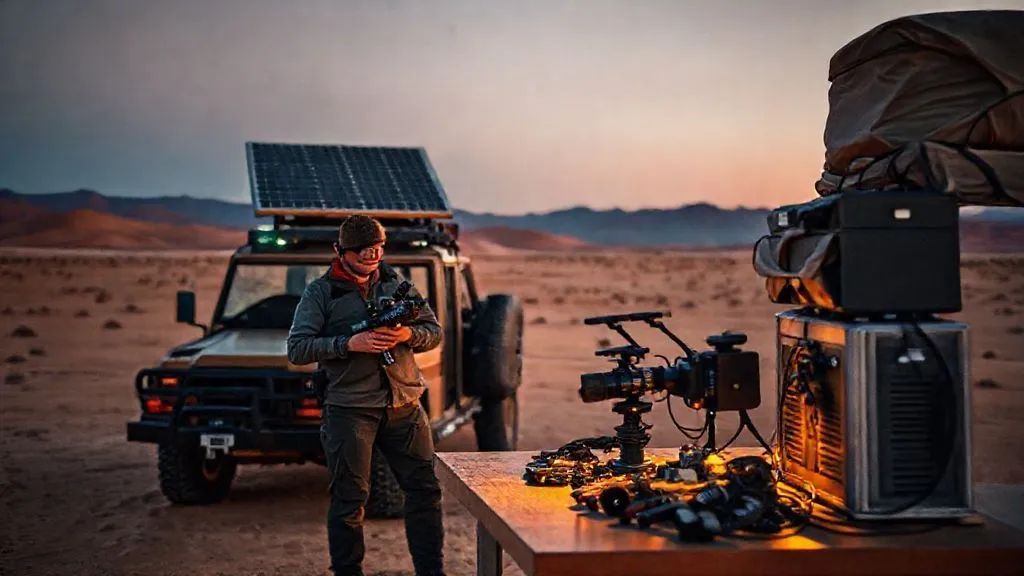
How to Reliably Power Professional Gear on Remote Road Trips?
For over 15 years, traversing the most challenging and awe-inspiring landscapes to capture that perfect shot or document an unfolding story, I've faced the ultimate test of preparedness: a dead battery in the middle of nowhere. I've witnessed countless aspiring professionals, and even seasoned veterans, see their projects grind to a halt because they underestimated the brutal demands of powering high-end equipment far from the grid. It’s a gut-wrenching feeling, knowing your creativity, your client's trust, and your livelihood are all held hostage by a depleted power source.
The problem isn't just about having a power bank; it's about building a robust, redundant, and intelligently managed power ecosystem designed for the unpredictable nature of remote road trips. We're talking about powering cinema cameras, high-performance laptops, drone chargers, multiple lighting setups, and satellite communication devices – often simultaneously, for days on end, without access to a wall outlet. The stakes are high: missed deadlines, lost footage, and ultimately, a damaged professional reputation.
In this definitive guide, I'll draw upon my extensive field experience to provide you with actionable frameworks and expert insights. You'll learn not just about specific gadgets, but how to design an integrated power strategy that ensures your professional gear remains reliably charged, no matter how remote your road trip takes you. We'll cover everything from vehicle-integrated systems to portable powerhouses and smart energy management, giving you the confidence to focus on your craft, not your battery levels.
Understanding Your Power Needs: The Foundation of Reliability
Before you invest a single dollar in power solutions, you must have a crystal-clear understanding of your specific power requirements. This isn't a 'one-size-fits-all' scenario; a travel blogger's needs differ vastly from a documentary filmmaker's.
Calculating Watt-Hours and Wattage
The first step is to list every piece of professional gear you intend to power. For each item, find its wattage (W) and, if possible, its watt-hour (Wh) capacity if it has an internal battery. If only voltage (V) and amperage (A) are listed, multiply them (V x A = W). For devices you'll be charging, estimate how many hours per day you'll need to charge them and how many times. Then, multiply the device's wattage by the number of hours it will run or charge, giving you its Wh consumption. Sum these up for your total daily Wh requirement. Always add a 20-30% buffer for efficiency losses and unexpected usage.
Identifying Critical vs. Non-Critical Gear
Categorize your equipment. Your primary camera, laptop for editing, and satellite communicator are likely critical. Drone battery chargers, secondary lighting, or a coffee maker might be non-critical. This prioritization helps you allocate power efficiently and ensures your most vital tools are always operational, even if you have to temporarily conserve power for less essential items.
Expert Insight: "Many professionals make the mistake of either drastically underestimating their power needs, leading to constant anxiety, or wildly overestimating, resulting in unnecessary bulk and expense. Precision in planning is your greatest asset here."
The Backbone: Vehicle-Integrated Power Systems
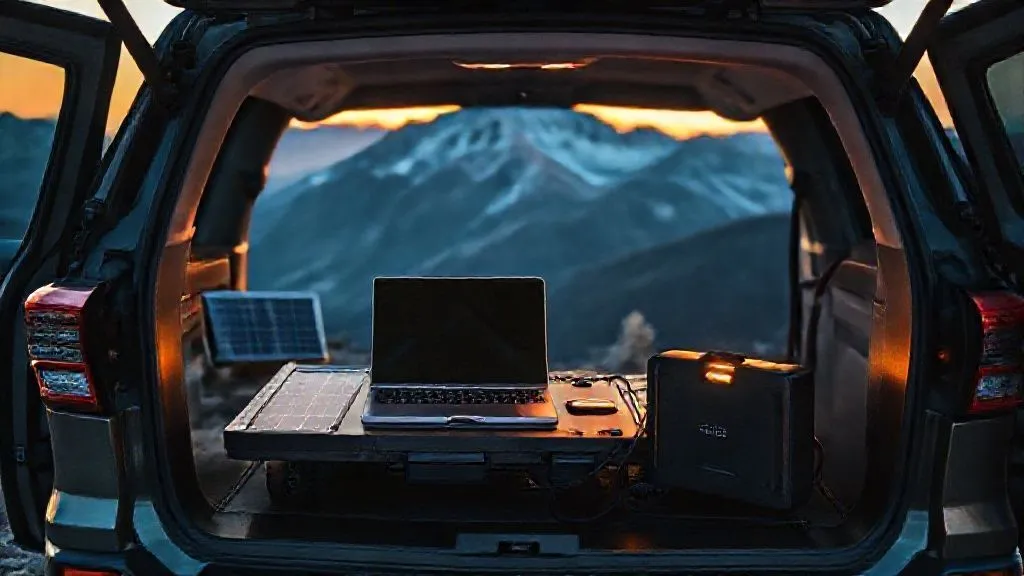
For serious, extended remote work, relying solely on portable power banks won't cut it. Your vehicle itself can become a powerful, mobile charging station. This is where truly reliable power for professional gear on remote road trips begins.
Dual Battery Setups and DC-DC Chargers
A dual battery system is foundational for consistent power. This involves installing a secondary 'house' or 'auxiliary' battery, isolated from your vehicle's starter battery. This setup ensures your vehicle will always start, even if you drain the auxiliary battery powering your gear. A DC-DC charger is crucial here. Unlike a simple isolator, a DC-DC charger intelligently manages the charging of your auxiliary battery from your alternator, often providing a multi-stage charge for optimal battery health and faster charging, especially for modern lithium batteries. It's an investment that pays dividends in reliability.
- Enhanced Reliability: Guarantees your starter battery is never drained.
- Optimized Charging: Provides proper charging profiles for auxiliary batteries (e.g., LiFePO4).
- Increased Capacity: Significantly boosts your available power reserves.
- Safety: Protects vehicle electronics from power fluctuations from auxiliary loads.
For more technical details on advanced charging systems, I highly recommend exploring resources from reputable manufacturers like Redarc: Redarc DC-DC Battery Chargers.
High-Output Alternators and Inverters
If your power demands are exceptionally high, consider upgrading your vehicle's alternator. A standard alternator might struggle to keep up with both vehicle demands and a large auxiliary battery bank, especially if you're frequently idling or driving at low RPMs. A high-output alternator ensures your entire system charges more efficiently. Paired with a pure sine wave inverter, you can convert your vehicle's 12V DC power into stable 120V AC, identical to household current, which is essential for sensitive professional electronics. Avoid modified sine wave inverters; they can damage delicate gear.
- Assess Alternator Capacity: Determine if your stock alternator can handle the combined load.
- Choose Pure Sine Wave: Select an inverter that matches your peak wattage needs with a generous buffer.
- Professional Installation: Wiring a high-power inverter incorrectly is dangerous. Consult a qualified auto electrician.
- Cable Gauging: Use appropriately thick cables to prevent voltage drop and overheating.
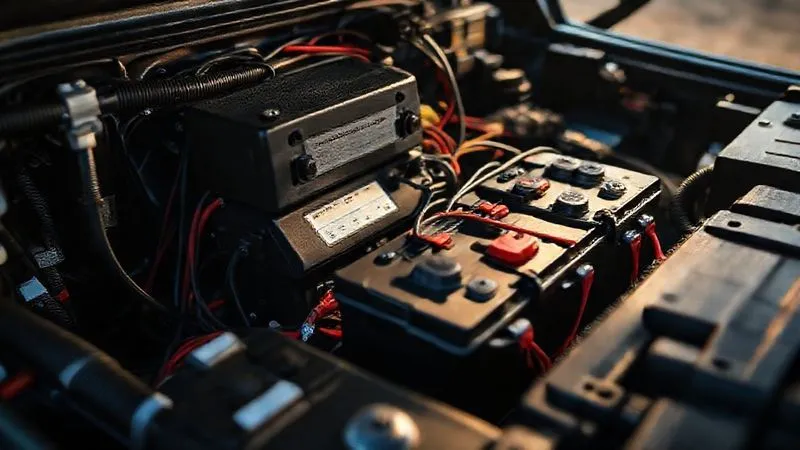
Portable Powerhouses: Battery Banks and Power Stations
While vehicle-integrated systems are the backbone, portable power solutions offer flexibility and additional capacity, especially when you're away from the vehicle. These are crucial for keeping professional gear reliably powered on remote road trips when you're hiking or at a remote shoot location.
Portable Power Stations (PPS) vs. DIY Battery Boxes
Portable Power Stations (PPS) are all-in-one units typically featuring a large LiFePO4 or Lithium-ion battery, an inverter, charge controller, and various output ports (AC, DC, USB). They are convenient, plug-and-play, and increasingly powerful. DIY Battery Boxes involve assembling individual components (battery, inverter, charge controller, fuses) into a rugged case. While they offer customization and often a lower cost per Wh, they require technical know-how and careful assembly to be safe and efficient.
Consider the following comparison:
| Feature | Portable Power Station (PPS) | DIY Battery Box |
|---|---|---|
| Ease of Use | Plug-and-play, user-friendly | Requires assembly, technical knowledge |
| Cost | Higher upfront cost | Potentially lower cost per Wh, but hidden costs |
| Customization | Limited customization | Highly customizable components |
| Safety | Integrated safety features, certified | Dependent on builder's expertise and component quality |
| Portability | Designed for easy transport | Varies based on build, can be bulky |
Choosing the Right Capacity and Output
Refer back to your calculated daily Wh needs. Your PPS capacity should ideally be 1.5 to 2 times your daily requirement to provide a buffer for cloudy days (if using solar) or extended usage. For output, ensure the inverter in the PPS can handle the peak wattage of your most demanding device (e.g., a high-performance laptop charger or a lighting unit). Look for models with pure sine wave output and a variety of ports. Reputable brands like Goal Zero, EcoFlow, and Jackery offer excellent options; research their latest models and compare specifications carefully. For detailed reviews and comparisons, check out independent tech review sites like RTINGS Power Station Reviews.
Harnessing the Sun: Solar Power Integration
Solar power is the ultimate sustainable solution for extending your power independence on remote road trips. It allows you to replenish your batteries passively, reducing reliance on your vehicle's alternator or a generator.
Flexible vs. Foldable Solar Panels
Flexible solar panels are lightweight and can be permanently mounted to your vehicle's roof, often conforming to its shape. They are aerodynamic but can be less efficient in very hot conditions. Foldable solar panels are portable, allowing you to angle them directly at the sun for maximum efficiency and move them as the sun shifts. They are great for supplementing a fixed system or as a primary source for smaller setups. The choice depends on your vehicle setup, aesthetic preferences, and how much time you're willing to spend deploying them.
Charge Controllers and MPPT Technology
A solar charge controller is essential to convert the variable output from your solar panels into a stable, safe charge for your batteries. Always opt for a Maximum Power Point Tracking (MPPT) controller over a Pulse Width Modulation (PWM) controller. MPPT controllers are significantly more efficient, especially in varying light conditions, extracting up to 30% more power from your panels. This efficiency gain is critical when every watt-hour counts in remote environments.
Expert Insight: "Solar is a fantastic, silent power source, but it's not magic. Its output is highly dependent on sunlight, panel angle, and temperature. Always treat it as a primary charging method for sustained trips, but have a backup plan for cloudy days or shaded locations."
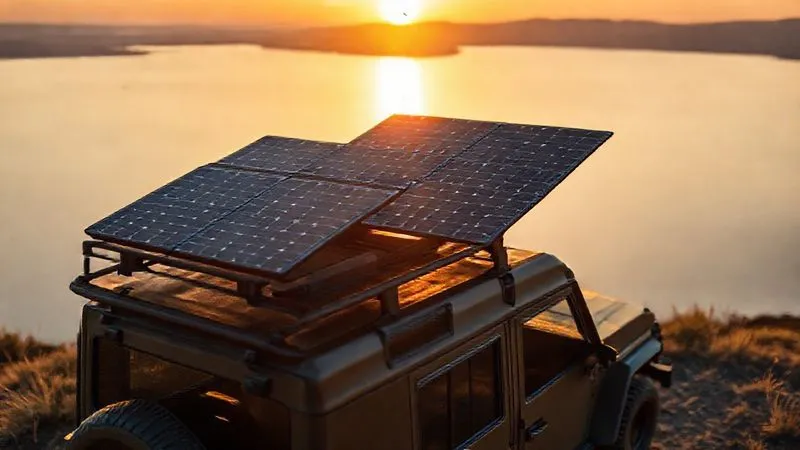
Backup and Redundancy: The Professional's Safety Net
Even the best-planned power system can encounter unexpected issues. True reliability for professional gear on remote road trips means having robust backup and redundancy strategies.
Generator Considerations (Fuel, Noise, Portability)
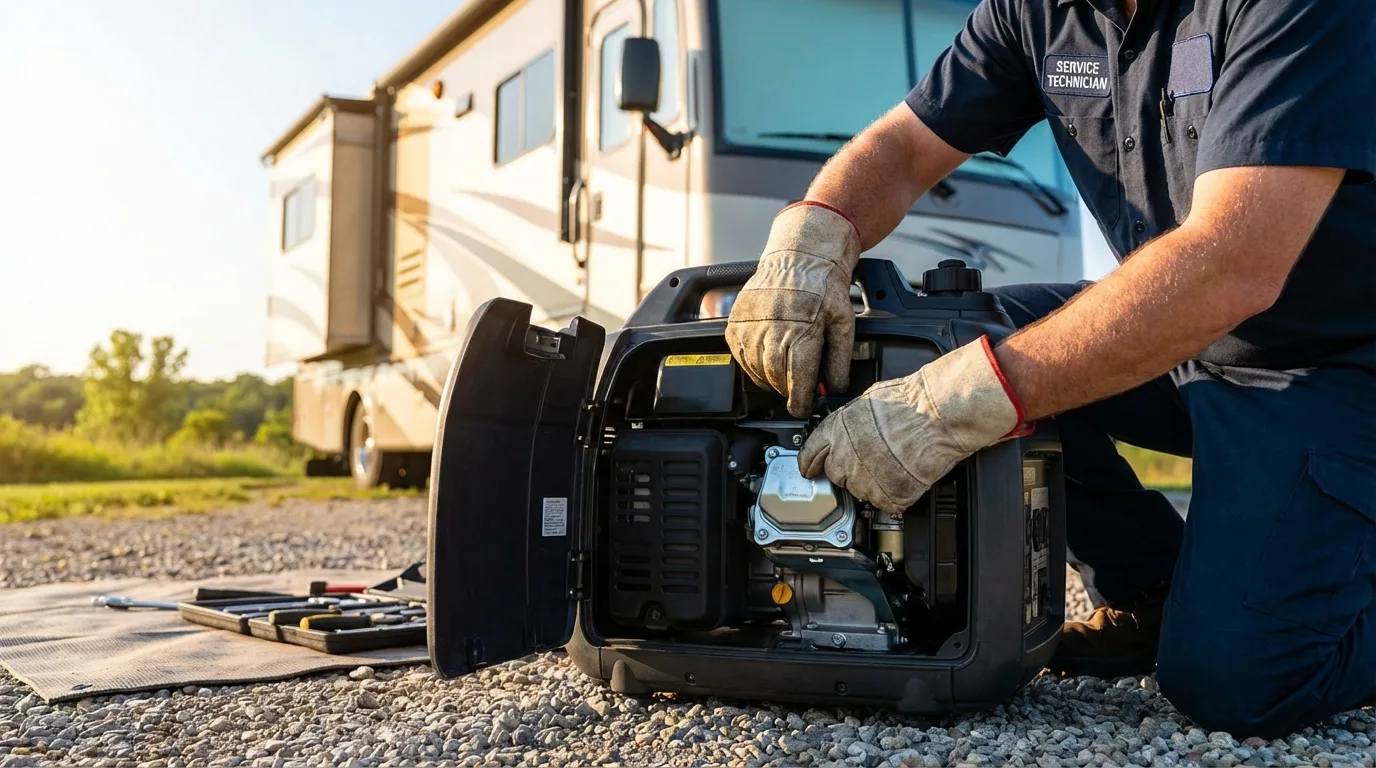
For heavy power users or as an emergency backup, a small, quiet inverter generator can be invaluable. Modern inverter generators are surprisingly fuel-efficient and significantly quieter than traditional generators. Consider fuel type (gasoline, propane), noise levels (measured in dB), and portability. Remember that generators require fuel, produce exhaust, and can be noisy, making them less ideal for sensitive natural environments or stealth camping. Always operate them safely and away from living spaces.
Smart Charging Strategies (Opportunistic Charging)
Beyond hardware, smart charging practices are crucial. Practice opportunistic charging: whenever you're driving, plug in your most critical devices or charge your main power banks. If you stop for groceries or a meal in a town, find a café with outlets and top up. Use fast chargers where available. Don't wait until your batteries are critically low. This proactive approach minimizes downtime and keeps your power reserves healthy.
Case Study: How 'Wanderlust Media' Saved Their Documentary
Wanderlust Media, a small team filming a wildlife documentary deep in Patagonia, relied on a robust dual-battery system and an array of flexible solar panels. However, an unexpected week of persistent, heavy rain severely limited their solar input, and a critical component in their DC-DC charger failed. Faced with rapidly dwindling power for their cinema camera and editing laptop, they activated their backup plan: a compact 2000W inverter generator, stored with an extra 5 gallons of fuel. For two hours each morning, they ran the generator, topping up their main power station and directly charging their camera batteries. This strategic, temporary use of their backup allowed them to continue filming and meet their tight production schedule, preventing a costly reshoot. It underscored the importance of not just having a backup, but having a clear plan for its deployment.
Optimizing Gear for Power Efficiency
The best power system in the world can still be overwhelmed by inefficient gear. Optimizing your professional equipment for power efficiency is a critical, often overlooked, aspect of reliable power on remote road trips.
Low-Power Modes and Efficient Accessories
Many professional devices have low-power or 'eco' modes. Utilize them when peak performance isn't required. For example, lower screen brightness on laptops, disable Wi-Fi/Bluetooth if not in use, and use external monitors only when necessary. Choose accessories wisely: LED lighting is far more efficient than incandescent. Use efficient USB-C PD (Power Delivery) chargers for laptops and phones, as they are designed for faster and more efficient charging. Avoid using your vehicle's cigarette lighter outlets for high-draw devices directly, as they often provide inconsistent power and can blow fuses.
Battery Care and Longevity in Extreme Conditions
Your equipment's internal batteries are also part of your power ecosystem. Avoid fully draining and fully charging lithium-ion batteries repeatedly; aim to keep them between 20% and 80% charge for optimal longevity. Extreme temperatures (both hot and cold) degrade battery performance and lifespan. Store batteries in insulated containers, out of direct sunlight, and bring them inside the vehicle or a sleeping bag in freezing conditions. Proper battery care extends the life of your gear and reduces your overall power dependency. For more on optimal battery care, see this guide from a leading battery research institution: Battery University - How to Prolong Lithium-based Batteries.
Real-World Application: Building Your Custom Power Ecosystem
Bringing all these components together into a cohesive system requires thoughtful planning and execution. This is where you transform theory into practical, reliable power for professional gear on remote road trips.
Step-by-Step System Design
- Audit Your Gear: Create a detailed list of all devices and their power requirements (W, Wh).
- Calculate Total Daily Consumption: Sum up your Wh needs, adding a buffer.
- Determine Primary Power Source: Will it be vehicle-based, a large PPS, or a hybrid?
- Size Your Battery Bank: Choose a total auxiliary battery capacity (Wh) that exceeds your daily needs by 1.5x-2x.
- Select Charging Methods: Decide on DC-DC charging, solar, shore power (if applicable), and generator backup.
- Choose Inverter(s): Match output wattage to your highest-draw AC devices.
- Map Out Wiring: Plan cable runs, fuse locations, and outlets. Consider professional installation for complex systems.
- Test Thoroughly: Before your trip, test your entire system under realistic load conditions.
Here’s a sample breakdown for a typical content creator's professional gear:
| Device | Watt-Hours (Wh) per charge | Charging Frequency | Total Daily Wh |
|---|---|---|---|
| Mirrorless Camera (5 batteries) | 15 Wh x 5 = 75 Wh | Daily | 75 Wh |
| High-Performance Laptop | 90 Wh x 2 (charges) = 180 Wh | Daily | 180 Wh |
| Drone (3 batteries) | 60 Wh x 3 = 180 Wh | Every other day | 90 Wh |
| LED Panel Light | 50 Wh x 2 (hrs) = 100 Wh | Daily | 100 Wh |
| Satellite Communicator | 10 Wh | Every 3 days | 3 Wh |
| Total Estimated Daily Wh | 448 Wh |
This example demonstrates a need for approximately 450 Wh per day. With a 1.5x buffer, you'd want a system capable of delivering around 675 Wh per day sustainably. For further inspiration and real-world setups, explore overland community forums like Expedition Portal's Power & Electrical forum.
Troubleshooting Common Power Issues on the Road
Even with the most meticulously planned system, issues can arise. Knowing how to diagnose and address common problems is key to maintaining reliable power for professional gear on remote road trips.
Diagnosing Charging Problems
If your devices aren't charging, systematically check each component. Is the inverter on? Is the DC-DC charger indicating a fault? Are solar panels producing power (check the charge controller display)? Often, the simplest solution is the culprit: a loose connection, a blown fuse, or a tripped circuit breaker. Carry a multimeter to test voltage at various points in your system, from battery terminals to outlets, to pinpoint where the power flow stops.
Fuses, Connections, and System Monitoring
Always carry spare fuses for every circuit in your vehicle and power system. Regularly inspect all connections for corrosion or looseness, especially after driving on rough terrain. Invest in a good battery monitor (e.g., a Victron BMV-712 or similar) that provides real-time data on voltage, current draw, and state of charge. This allows you to proactively manage your power, identify unusual drains, and avoid critical power failures. Preventative maintenance, like checking cable integrity and tightening terminals, is far easier than emergency repairs in the wilderness.
Expert Insight: "A well-built system should have clear indicators and easy access to fuses. If you're struggling to find the source of a power issue, start from the power source (battery) and work your way to the load (device), testing at each junction."
Frequently Asked Questions (FAQ)
Q: Can I just use a cheap car inverter plugged into my cigarette lighter? A: For light-duty charging of a phone or small tablet, perhaps. However, for professional gear like laptops or camera chargers, a cigarette lighter outlet typically provides insufficient wattage (usually 120W-180W max) and can be unreliable. More importantly, cheap inverters are often 'modified sine wave,' which can damage sensitive electronics and are highly inefficient. Always use a pure sine wave inverter, ideally hardwired into your vehicle's electrical system or integrated into a portable power station.
Q: How much solar power do I really need for a multi-day remote trip? A: This depends entirely on your daily watt-hour consumption. A good rule of thumb is to aim for solar panels that can generate at least 1.5 to 2 times your daily Wh needs in ideal sunlight conditions. This buffer accounts for cloudy days, less-than-optimal panel angles, and reduced daylight hours. For example, if you need 500 Wh/day, aim for a 200W-300W solar array, assuming 5-6 hours of peak sun. Always pair with an MPPT charge controller for maximum efficiency.
Q: What's the best battery chemistry for remote road trip power systems? A: For auxiliary power systems, Lithium Iron Phosphate (LiFePO4 or LFP) batteries are overwhelmingly the best choice. They offer a much longer cycle life (2000-5000 cycles vs. 300-500 for lead-acid), can be discharged deeper without damage, are lighter, and maintain a more consistent voltage output. While the upfront cost is higher, their longevity and performance make them far more economical and reliable in the long run for professional applications.
Q: How do extreme temperatures affect my power system and gear batteries? A: Both extreme heat and extreme cold can significantly impact battery performance and lifespan. Heat accelerates chemical degradation, reducing overall capacity and cycle life. Cold temperatures reduce usable capacity and can prevent charging of LiFePO4 batteries without specific low-temperature charging protection. Store batteries in insulated compartments, out of direct sun, and protect them from freezing. Many quality LiFePO4 batteries have built-in low-temp cutoff features.
Q: Is a generator always necessary, or can I rely solely on solar and vehicle charging? A: While many can manage with just solar and vehicle charging, a generator provides the ultimate redundancy and can be a lifesaver in prolonged bad weather, unexpected high power draws, or system failures. For professionals with tight deadlines and high power demands, a small, quiet inverter generator can be a crucial safety net. It's not always 'necessary' for everyone, but for mission-critical work on remote road trips, it's a highly recommended component of a truly reliable power strategy.
Key Takeaways and Final Thoughts
- Plan Meticulously: Accurately calculate your power needs (Wh) and prioritize critical gear.
- Build a Layered System: Combine vehicle-integrated power (dual battery, DC-DC charger, inverter) with portable power stations and solar.
- Embrace Redundancy: Always have a backup charging method or power source, like a generator, for emergencies.
- Optimize for Efficiency: Utilize low-power modes and choose energy-efficient accessories.
- Practice Smart Battery Care: Protect batteries from extreme temperatures and manage charge cycles for longevity.
- Monitor and Maintain: Regularly check connections, fuses, and use a battery monitor for proactive management.
The ability to reliably power professional gear on remote road trips isn't just about owning the right gadgets; it's about engineering a resilient ecosystem that empowers you to create without compromise, no matter how far off the beaten path you venture. By following these expert strategies and building a robust power solution tailored to your specific needs, you'll gain the ultimate freedom to focus on your craft, knowing your essential equipment will always be ready when inspiration strikes. Go forth, explore, and create without limits.
Recommended Reading
- 7 Proven Ways: Find City Walking Tours for Local Business Insights
- 5 Smart Moves When Your Cruise Port Time is Unexpectedly Cut?
- Best Age for Disney World with Toddlers: Maximize the Magic!
- Beyond the Crowd: 7 Ways to Guarantee Exclusive Peak Festival Access
- 7 Steps: Ensure Truly Wheelchair Accessible Corporate Events Globally


Your email address will not be published. Required fields are marked *