

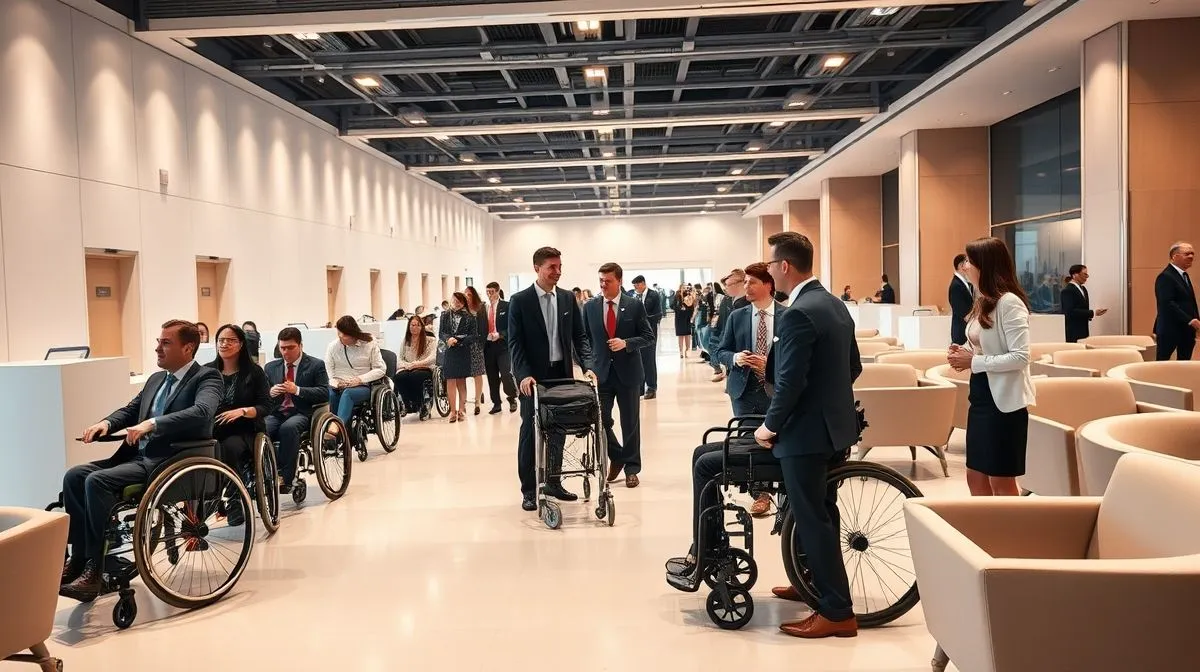
How to Ensure Truly Wheelchair Accessible Corporate Events Globally?
For over 15 years in the global events and accessibility consulting space, I've witnessed firsthand the transformative power of truly inclusive events. I've also seen the heartbreaking reality of exclusion – where well-intentioned but ill-informed planning leaves individuals with mobility challenges feeling isolated, frustrated, and unwelcome. It’s a missed opportunity, not just for the attendee, but for the host organization that loses out on valuable perspectives and a chance to truly embody its values.
The problem is often not a lack of desire, but a lack of understanding. Organizations grapple with the complexities of diverse international regulations, the nuances of different mobility needs, and the sheer logistical challenge of ensuring every aspect of an event, from pre-registration to post-event follow-up, is genuinely accessible. They fear the unknown costs, the potential legal pitfalls, and the daunting task of auditing every detail, often leading to a 'checkbox' approach rather than a holistic one.
This article isn't just a guide; it's a roadmap forged from years of practical experience, designed to help you navigate the intricate landscape of global event accessibility. You'll learn not just what to do, but why it's essential, how to implement it effectively, and how to cultivate a culture of genuine inclusion that extends far beyond a single event. We'll cover actionable frameworks, real-world scenarios, and expert insights that will empower you to ensure truly wheelchair accessible corporate events globally, setting a new standard for your organization.
Beyond Ramps: A Holistic View of Accessibility
When we talk about accessibility, many immediately picture ramps and elevators. While crucial, these are just the tip of the iceberg. True accessibility, especially for wheelchair users, is about creating an environment where every individual can participate fully, independently, and with dignity. It’s about anticipating needs, removing barriers, and designing experiences that are inherently welcoming.
Understanding Universal Design Principles
At the heart of genuinely accessible events is the concept of Universal Design. As articulated by the Center for Universal Design at NC State University, these principles guide the design of products and environments to be usable by all people, to the greatest extent possible, without the need for adaptation or specialized design. For events, this means considering wheelchair accessibility from the very first concept meeting, not as an afterthought. It's about ensuring clear pathways, appropriate counter heights, accessible restrooms, and even how information is presented. Learn more about the Principles of Universal Design here.
The Legal and Ethical Imperative
Globally, the legal landscape varies significantly, but the ethical imperative for inclusion remains constant. In the United States, the Americans with Disabilities Act (ADA) sets a high bar for accessibility, influencing standards worldwide. Many other nations, like those signatory to the UN Convention on the Rights of Persons with Disabilities, also have robust legislation. Ignoring these not only risks legal repercussions but, more importantly, damages your brand reputation and alienates a significant segment of the population. According to the World Health Organization, over one billion people, or about 15% of the world's population, experience some form of disability. This demographic represents immense potential.
The true measure of an inclusive event isn't how many ramps you installed, but how many people felt genuinely welcome and able to participate without hindrance. It's about dignity, not just compliance.
Pre-Event Planning: The Foundation of Inclusion
The success of your wheelchair accessible corporate events begins long before attendees arrive. Meticulous planning is paramount.
Venue Selection & Site Surveys
This is arguably the most critical step. I always advise my clients to conduct a thorough, in-person site survey with accessibility in mind, ideally with an accessibility consultant or someone with lived experience. Don't just rely on venue brochures.
- Entry and Exits: Are all main entrances accessible? Are emergency exits clear, wide enough (minimum 32 inches clear opening), and accessible?
- Interior Pathways: Are corridors wide, clear of obstructions, and free of sudden level changes? What about carpet thickness, which can impede wheelchair movement?
- Elevators/Lifts: Are they operational, large enough, and easily accessible from all levels? Are buttons at an accessible height and clearly marked (tactile/Braille)?
- Restrooms: Are there designated accessible stalls that meet international standards (e.g., grab bars, sufficient turning radius, accessible sinks and hand dryers)?
- Meeting Rooms & Breakout Spaces: Are doorways wide enough? Is there ample space for wheelchairs at tables and in seating arrangements? Are stages accessible via ramps or lifts?
- Floor Surfaces: Avoid thick carpets or loose gravel. Smooth, firm, slip-resistant surfaces are ideal.
- Lighting: Consistent and glare-free lighting is important for all, especially those with visual impairments who may also use wheelchairs.
Transportation & Logistics
Consider how attendees will get to and from the venue. If providing shuttle services, ensure accessible vehicles are available and clearly communicated. For international events, research local accessible transport options and provide this information to attendees. This foresight in logistics for your truly wheelchair accessible corporate events goes a long way.
Accessible Registration & Communication
From the outset, your communication should signal your commitment to inclusion. Your event website and registration form must be accessible (WCAG 2.1 AA compliant). Crucially, include clear fields for attendees to indicate any accessibility requirements, including mobility aids, dietary needs, or need for sign language interpreters. Follow up personally to confirm how their needs will be met. This proactive approach sets the tone.
Event Execution: Ensuring Seamless Experience On-Site
Even with perfect planning, execution is where the rubber meets the road. On-site vigilance is key to ensuring your wheelchair accessible corporate events run smoothly.
Staff Training & Awareness
Train all event staff – from security and registration to catering and AV teams – on accessibility best practices. They should know where accessible restrooms are, how to direct someone to an elevator, and how to offer assistance without being patronizing. Emphasize empathy and respect. A staff member who understands how to properly interact with and assist a person using a wheelchair can make all the difference.
Dynamic Signage & Navigation
Clear, large-print, and high-contrast signage is essential. Consider digital signage that can be easily updated. Ensure accessible routes are clearly marked, and that these routes are genuinely clear of obstacles like display stands, registration queues, or stray chairs. Think about the flow of traffic and potential bottlenecks.
Accessible Seating & Viewing Options
Don't relegate wheelchair users to the back or side. Integrate accessible seating throughout the event space, offering a variety of viewing angles and proximity to the stage or main action. Ensure companion seating is available next to accessible spots. Tables in dining areas should accommodate wheelchairs comfortably underneath, not just at the ends.
Inclusive Catering & Break Areas
Food and beverage stations should be at an accessible height. Ensure clear pathways to these areas. Consider offering assistance for carrying trays if needed. Break areas should have a mix of seating types, including spaces that can easily accommodate wheelchairs without feeling isolated.
Case Study: How Innovate-Tech Transformed Their Annual Summit
Innovate-Tech, a leading software firm, traditionally held its annual summit in a historic downtown hotel. While charming, the venue posed significant accessibility challenges: narrow corridors, a single, slow elevator, and limited accessible restrooms. Their previous events received feedback about exclusion. For their next summit, I consulted with them to implement a new strategy. First, we conducted a rigorous site selection process, prioritizing venues with modern accessibility features. Second, we partnered with a local disability advocacy group to conduct a 'mock attendee' walkthrough, identifying subtle barriers like heavy doors or confusing signage. Third, we invested in comprehensive staff training, including a segment led by a wheelchair user. The result? A 25% increase in attendees who identified as having a disability, overwhelmingly positive feedback on inclusivity, and a significant boost to Innovate-Tech's reputation as a leader in corporate social responsibility. This shift demonstrated that prioritizing accessibility isn't just compliance; it's a strategic advantage for your wheelchair accessible corporate events.
Technology as an Enabler: Digital Accessibility
In our increasingly digital world, technology plays a pivotal role in creating truly wheelchair accessible corporate events, bridging gaps and enhancing participation.
Accessible Event Apps & Websites
Your event app and website are crucial touchpoints. They must adhere to Web Content Accessibility Guidelines (WCAG) 2.1 AA standards. This includes considerations for screen readers, keyboard navigation, clear navigation, and appropriate color contrast. Ensure all video content has captions and transcripts.
Live Captioning & ASL Interpretation
For presentations and keynotes, provide live captioning. This benefits not only those with hearing impairments but also non-native English speakers and those in noisy environments. For highly interactive sessions or for deaf attendees, consider professional ASL (American Sign Language) or other relevant sign language interpreters. Ensure interpreters are clearly visible.
Assistive Listening Devices
Offer assistive listening devices (ALDs) for attendees with hearing impairments. These can significantly enhance their ability to engage with speakers and presentations. Make sure the pick-up and drop-off points are easily accessible.
Post-Event Evaluation: Learning and Improving
The journey to truly wheelchair accessible corporate events doesn't end when the last attendee leaves. It's a continuous process of learning and refinement.
Feedback Mechanisms for Accessibility
Include specific questions about accessibility in your post-event surveys. Create a dedicated feedback channel, perhaps an anonymous email address or a direct contact, for attendees to share their experiences related to accessibility. Pay particular attention to feedback from individuals with disabilities, as their insights are invaluable.
Continuous Improvement Loop
Analyze the feedback meticulously. Identify recurring issues or areas for improvement. Use this data to inform your planning for future events. Document lessons learned and integrate them into your event planning checklists and training modules. This commitment to an iterative process ensures that each subsequent event is more inclusive than the last.
Navigating Global Nuances: International Considerations
Planning wheelchair accessible corporate events globally adds layers of complexity, requiring a deep understanding of local contexts.
Understanding Local Regulations & Cultural Sensitivities
While the ADA sets a high standard, local regulations vary significantly. Research the specific disability laws and building codes in the host country and city. Beyond legalities, consider cultural attitudes towards disability, which can influence everything from public perception to the availability of accessible services. Partnering with local experts is crucial here.
Partnering with Local Accessibility Experts
I cannot stress this enough: engage local accessibility consultants or disability organizations in the host country. They possess invaluable knowledge of local infrastructure, cultural norms, and reliable accessible service providers (e.g., accessible transportation, equipment rentals). They can help you navigate the nuances and ensure your plans are genuinely effective on the ground. For instance, while a ramp might meet a generic spec, a local expert can tell you if its slope is practical for local conditions or if there are specific local mobility aids to consider.
Global event accessibility isn't about imposing a single standard, but about understanding and respecting local differences while upholding universal principles of inclusion. It's a blend of global vision and local execution.
Budgeting for True Accessibility
One common misconception is that making an event truly accessible is prohibitively expensive. While there are costs, many accessible features can be integrated cost-effectively if planned from the outset. Retrofitting is always more expensive than designing with inclusion in mind from day one.
Justifying the Investment
Frame accessibility not as an expense, but as an investment. It expands your potential audience, enhances your brand reputation as an inclusive employer and partner, and can even lead to innovation. Consider the significant buying power and influence of the disability community and their allies. An accessible event demonstrates corporate social responsibility and a commitment to Diversity, Equity, and Inclusion (DEI), which resonates deeply with employees, customers, and stakeholders alike. Understanding the long-term benefits of ADA compliance, for example, extends far beyond avoiding legal issues.Creative Cost-Saving Strategies
- Early Planning: Integrate accessibility requirements into your initial venue RFPs. Venues that are already highly accessible will save you retrofitting costs.
- Negotiate: Include accessibility features as part of your overall venue contract.
- Leverage Technology: Some digital accessibility tools can be more cost-effective than extensive physical modifications, especially for smaller events.
- Community Partnerships: Local disability organizations might offer training or consulting services at reduced rates or connect you with volunteers.
- Multi-purpose Design: Design elements that benefit everyone. Wider aisles, clear signage, and good lighting aren't just for wheelchair users; they enhance the experience for all attendees.
Frequently Asked Questions (FAQ)
Question? How do I find truly accessible venues internationally, especially in less developed regions?
Detailed answer: This is challenging but manageable. Start by prioritizing international hotel chains that often adhere to higher global standards. Beyond that, engage local event planners or destination management companies (DMCs) with a proven track record in accessibility. Crucially, conduct virtual site inspections with detailed photos and videos focusing on accessibility features (door widths, restroom layouts, ramp slopes), and if possible, arrange for a trusted local contact or an accessibility consultant to conduct an in-person audit. Don't rely solely on venue self-declarations.
Question? What's the most common oversight in accessible event planning for wheelchair users?
Detailed answer: In my experience, the most common oversight is neglecting the 'path of travel' comprehensively. Planners often focus on the main event space but forget the journey from arrival (e.g., accessible parking/drop-off) through registration, to restrooms, food stations, and even emergency exits. Clear, obstruction-free, and consistently accessible pathways throughout the entire attendee journey are frequently overlooked, creating frustrating bottlenecks and barriers.
Question? Is it always more expensive to plan an accessible event?
Detailed answer: Not necessarily. While some features, like professional sign language interpreters or specialized accessible transport, incur additional costs, many accessibility features are either standard in modern venues or can be integrated cost-effectively with early planning. The most significant cost arises from retrofitting a non-accessible venue or making last-minute changes. Investing upfront in a truly accessible venue and inclusive design principles can often be more economical in the long run than managing complaints or legal challenges from an inaccessible event.
Question? How can I educate my team about accessibility beyond a quick training session?
Detailed answer: Foster a culture of continuous learning. Beyond initial training, integrate accessibility discussions into regular team meetings, share relevant articles or case studies, and encourage staff to attend webinars or workshops. Consider inviting speakers with disabilities to share their lived experiences. Encourage empathy by asking staff to consider how a task would be done if they relied on a wheelchair or had a visual impairment. Ongoing reinforcement and lived experience are far more effective than a one-off session.
Question? What about hidden disabilities? How does that relate to wheelchair accessible events?
Detailed answer: While our focus here is on wheelchair accessibility, it's vital to remember that true inclusion encompasses all disabilities, visible and hidden. Many accommodations that benefit wheelchair users, such as clear pathways, good lighting, and accessible restrooms, also benefit individuals with hidden disabilities (e.g., chronic fatigue, anxiety, autism). Additionally, providing quiet spaces, clear communication, and understanding staff are crucial for attendees with hidden disabilities, creating an environment where everyone feels comfortable and supported, regardless of their specific needs.
Recommended Reading
- Unlock Your Dream: How to Get Free Volunteer Teaching Placements
- Villa Concierge: Which Services Are Actually Worth Paying For?
- Unlock Budget Travel: Master Meal Prep for International Adventures!
- The Ultimate Guide: How to Determine If a Frozen Lake is Safe?
- Unlock Peace of Mind: Your Guide to Preventing Child Abduction During Family Travel
Key Takeaways and Final Thoughts
- Start Early, Think Holistically: Accessibility is not an add-on; it's a foundational element of successful event planning.
- Go Beyond Compliance: Aim for genuine inclusion, not just checking boxes. Dignity and full participation are the goals.
- Leverage Expert Partnerships: Collaborate with accessibility consultants and local disability organizations, especially for global events.
- Train Your Team: Well-trained, empathetic staff are your front line in ensuring a positive experience for all attendees.
- Embrace Technology: Digital accessibility tools can significantly enhance the attendee experience.
- Learn and Adapt: Use feedback to continuously improve your accessibility practices for future events.
Ensuring truly wheelchair accessible corporate events globally is more than just a logistical challenge; it's an opportunity to demonstrate your organization's commitment to diversity, equity, and inclusion. By adopting a proactive, empathetic, and detail-oriented approach, you can create memorable, impactful experiences for all your attendees. The investment of time and resources will yield dividends in reputation, engagement, and a more equitable world. Let's work together to make every corporate event a beacon of true accessibility.




Your email address will not be published. Required fields are marked *