

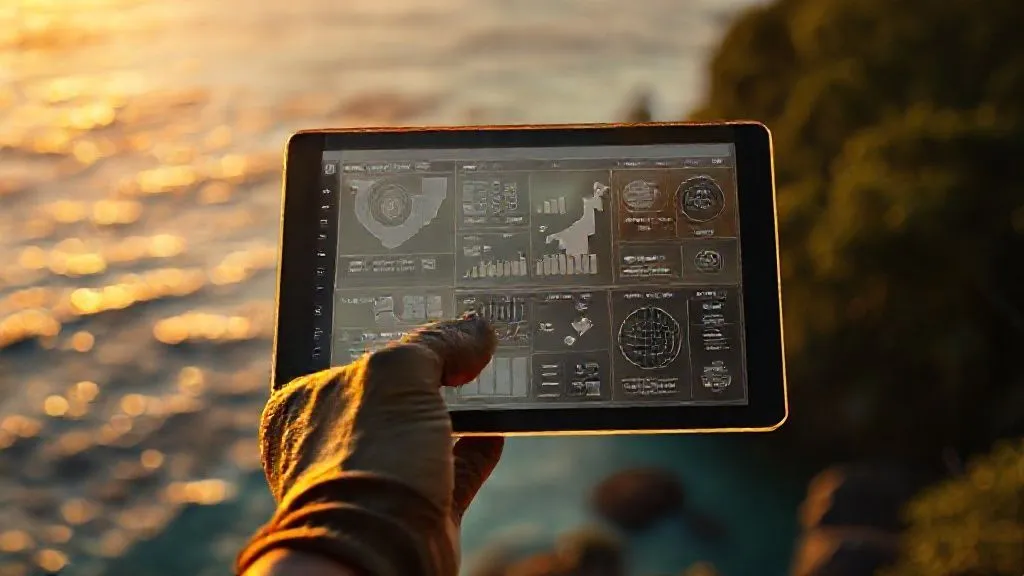
Measuring True Carbon Footprint of Eco-Tours to Natural Wonders?
For over 15 years in the eco-tourism sector, I've witnessed a profound transformation in how we approach sustainable travel. What started as a commendable effort to minimize environmental impact has, at times, devolved into a complex maze of claims, counter-claims, and often, superficial metrics. The challenge of truly measuring true carbon footprint of eco-tours to natural wonders isn't just a technical hurdle; it's a fundamental question of integrity and genuine commitment to conservation.
Many tour operators, with the best intentions, often focus solely on the most visible aspects of their operations, like reducing plastic or using fuel-efficient vehicles. While these efforts are crucial, they often scratch only the surface of an eco-tour's overall environmental impact. The real pain point lies in the intricate, often invisible web of emissions and resource consumption that extends far beyond the direct activities of a single tour.
This article isn't about shaming; it's about empowering. I'm here to share the actionable frameworks, cutting-edge methodologies, and expert insights I've gathered to help you move beyond guesswork. By the end of this definitive guide, you'll have a robust understanding of how to accurately measure, report, and ultimately reduce the true carbon footprint of your eco-tours, ensuring your commitment to natural wonders is quantifiable and trustworthy.
Why Traditional Carbon Footprint Models Fall Short for Eco-Tourism
The standard corporate carbon footprint models, while foundational, often struggle to capture the unique nuances and complexities inherent in the eco-tourism sector, especially when dealing with tours to pristine natural wonders. My experience has shown that simply applying a general calculation can lead to significant underestimations of true environmental impact.
The 'Direct Emissions' Myopia
Most initial assessments tend to focus on what we call Scope 1 and Scope 2 emissions – those directly produced by the tour operator's owned or controlled sources (like company vehicles) and indirect emissions from purchased electricity or heating. This is the low-hanging fruit, but it represents only a fraction of the total picture. For an eco-tour, the journey often involves multiple modes of transport, various accommodations, and a complex array of activities, many of which are outside the operator's direct control.
The Hidden Supply Chain: From Lodging to Local Food
The real challenge lies in Scope 3 emissions, which encompass all other indirect emissions that occur in a company's value chain. Think about the impact of the food served (its origin, transport, processing), the materials used to build and maintain eco-lodges, the waste generated by visitors and staff, and even the manufacturing of the gear supplied for activities. Each of these elements carries its own embedded carbon cost, often overlooked in simplistic calculations.
The 'Visitor Behavior' Variable
Another critical, yet often neglected, aspect is the impact of visitor behavior. How do guests travel to the tour's starting point? What are their consumption habits during their personal travel days before and after the tour? While a tour operator might promote sustainable practices during the tour, the emissions generated by international flights to reach the destination can dwarf all other operational emissions combined. This variable makes measuring true carbon footprint of eco-tours to natural wonders a multi-faceted challenge, demanding a holistic perspective.
Deconstructing the Eco-Tour Lifecycle: A Holistic Approach
To truly grasp the environmental footprint of an eco-tour, we must analyze its entire lifecycle, from the moment a traveler considers booking to their return home. This comprehensive view ensures no significant emission source is left unaddressed, providing a more accurate baseline for sustainability efforts.
Pre-Tour: Marketing, Booking, and Traveler Education
The lifecycle begins even before the tour itself. Consider the digital footprint of online marketing campaigns, server energy consumption for booking platforms, and the materials used for brochures (if any). Crucially, this stage also includes the often-significant emissions from international and domestic flights travelers take to reach the tour's starting point. Proactive traveler education on responsible travel choices, even before arrival, plays a vital role in mitigating this initial impact.
During Tour: Transportation, Accommodation, Activities
This is the most visible phase, encompassing all operational aspects. Transportation within the tour (vehicles, boats, internal flights), energy consumption at accommodations (lodges, campsites), waste generation (food waste, packaging, greywater), and the direct impact of activities (e.g., fuel for safaris, equipment use for diving) all contribute. Each element needs meticulous tracking, considering factors like fuel efficiency, renewable energy sourcing, and waste management protocols.
Post-Tour: Waste Management, Local Economic Impact, Conservation Contributions
The tour's impact doesn't end when the guests leave. Responsible waste disposal, including recycling and composting, continues to be a factor. The local economic impact, both positive and negative, should be considered, as well as the long-term effects of any conservation or community development projects supported by the tour. A truly sustainable tour aims for a positive legacy, not just minimal harm.
| Phase | Key Emission Sources | Mitigation Strategies |
|---|---|---|
| Pre-Tour | International/Domestic Flights, Digital Marketing, Booking Infrastructure | Offsetting partnerships, digital optimization, traveler education |
| During Tour | Local Transportation, Accommodation Energy, Food & Water, Waste, Activity Equipment | Fleet electrification, renewable energy, local sourcing, waste reduction, efficient gear |
| Post-Tour | Waste Processing, Indirect Economic Impact | Robust recycling programs, community investment, long-term conservation funding |
Step-by-Step: Building Your Robust Carbon Accounting Framework
Building a robust framework for measuring true carbon footprint of eco-tours to natural wonders requires a methodical approach. From my experience, skipping steps or making assumptions can severely compromise the accuracy and credibility of your sustainability claims. Here's how to build a framework that stands up to scrutiny.
Step 1: Define Your Scope (Scopes 1, 2, & 3 for Tourism)
This is the foundational step. You must clearly delineate what emissions you are accountable for. As outlined by the Greenhouse Gas (GHG) Protocol, this involves:
- Scope 1: Direct Emissions from sources owned or controlled by your company (e.g., fuel burned in your safari vehicles, generators at your lodge).
- Scope 2: Indirect Emissions from the generation of purchased energy (e.g., electricity for your office or lodge that you buy from a utility company).
- Scope 3: Other Indirect Emissions from activities not owned or controlled by your company but that occur in its value chain (e.g., guest flights, food supply chain, waste disposal, accommodation not owned by you, outsourced services). For eco-tourism, Scope 3 is often the largest and most complex category, requiring diligent data collection.
Step 2: Data Collection & Measurement Protocols
Once your scope is defined, the next challenge is accurate data collection. This isn't just about collecting numbers; it's about establishing consistent and reliable protocols. I recommend creating a detailed data inventory list:
- Fuel Consumption: Track liters/gallons of diesel, petrol, LPG for all vehicles, boats, and generators.
- Electricity Usage: Monitor kWh from grid electricity and any self-generated power (e.g., diesel generators).
- Water Consumption: Measure cubic meters of water used (important for embedded energy in water treatment).
- Waste Generation: Quantify waste by type (landfill, recycling, compost) in kg or cubic meters.
- Food & Beverage: Track procurement by type (meat, dairy, vegetables, local vs. imported) and quantity.
- Purchased Goods & Services: Keep records of significant purchases, from office supplies to tour equipment.
- Staff & Guest Travel: Collect data on mileage or flight segments for staff commutes, business travel, and critically, guest travel to and from the tour start/end points.
- Accommodation (Third-Party): If using external lodges, request their energy and water consumption data where possible.
Consistency and detail are paramount here. Implement digital logging systems where possible to reduce manual errors.
Step 3: Calculating Emissions & Conversion Factors
With your data collected, the next step is to convert activity data (e.g., liters of fuel) into CO2 equivalents (CO2e). This requires using appropriate emission factors. These factors are numerical values that relate the amount of a greenhouse gas released to a unit of activity.
"The precision of your carbon footprint measurement hinges entirely on the accuracy and relevance of your chosen emission factors. Generic factors can lead to significant miscalculations; always prioritize country-specific, sector-specific, and up-to-date data."
Reliable sources for emission factors include government environmental agencies (like the EPA in the US), international bodies, and specialized carbon accounting databases. Ensure you use factors that account for all relevant GHGs, not just CO2, to get a true CO2e figure.
Step 4: Incorporating Indirect & Induced Impacts
This is where the 'true' in true carbon footprint becomes evident. Beyond direct operational emissions, consider the broader impacts:
- Supply Chain Emissions: The embedded carbon in all the products and services you purchase – from the manufacturing of your uniforms to the production of the coffee you serve.
- Visitor Purchases: The emissions associated with souvenirs, gifts, and additional services guests purchase from local businesses as a result of your tour.
- Infrastructure Development: If your operations lead to new infrastructure (roads, buildings), the emissions from construction should be considered in a long-term view.
While quantifying every single Scope 3 emission can be daunting, focus on the most material categories first, using recognized methodologies for estimation.
Step 5: Verifying & Reporting Your Footprint
Transparency and credibility are crucial. Once you've calculated your carbon footprint, it's essential to report it accurately and, ideally, have it verified by an independent third party. This builds trust with your customers, partners, and stakeholders. Consider reporting frameworks like the Global Reporting Initiative (GRI) or aligning with certifications such as those offered by the Global Sustainable Tourism Council (GSTC).
Your report should clearly state your methodology, scope, data sources, and any limitations. This isn't just a compliance exercise; it's a powerful tool for communicating your commitment to sustainability and identifying areas for further reduction.
Beyond Carbon: Integrating Biodiversity & Community Impact
While carbon footprint measurement is vital, true eco-tourism extends beyond greenhouse gases. My experience underscores that a holistic sustainability strategy must also account for biodiversity conservation and genuine community benefit. These elements are inextricably linked to the health of the natural wonders we aim to protect.
The Interconnectedness of Environmental Factors
A tour's carbon footprint is often a proxy for its broader environmental impact. For instance, deforestation for agriculture in a tour's food supply chain not only releases carbon but also destroys critical habitat and reduces biodiversity. Similarly, improper waste management can pollute water sources, harming aquatic ecosystems, even if the direct carbon emissions from the waste itself are minimal. Understanding these interdependencies allows for more effective, integrated conservation strategies.
Social Metrics: Ensuring Local Benefit, Not Just Minimizing Harm
Eco-tourism, at its best, should be a vehicle for positive social impact. This means actively measuring and ensuring that local communities benefit from the tours. Metrics can include the percentage of local staff employed, investment in local businesses, fair wages, cultural preservation initiatives, and contributions to community development projects. It's not enough to simply avoid harm; the goal should be to uplift and empower the communities that are stewards of these natural wonders.
Case Study: "Wilderness Pathways" – A Journey to True Transparency
Let me share a fictional, yet highly realistic, case study to illustrate the power of this comprehensive framework. "Wilderness Pathways" is a mid-sized eco-tour operator specializing in trekking and wildlife safaris in a remote, biodiverse region.
The Initial Challenge
Initially, Wilderness Pathways prided itself on its 'green' credentials: using solar panels at its base camp, employing local guides, and providing reusable water bottles. Their reported carbon footprint was low, focusing primarily on their owned vehicles and base camp electricity (Scopes 1 & 2). However, a consultant (myself, in this analogy) challenged them to look deeper. Their biggest oversight was guest travel and their extensive, often imported, food supply chain.
Implementing the Framework
Following the steps outlined above, Wilderness Pathways embarked on a journey to truly measure true carbon footprint of eco-tours to natural wonders. They:
- Expanded Scope: Included guest international flights, food sourcing emissions, and waste disposal (Scope 3).
- Enhanced Data Collection: Implemented a digital system to track fuel for every vehicle, electricity at partner lodges, and detailed food procurement data (origin, type, quantity). They also surveyed guests for their flight details.
- Utilized Specific Emission Factors: Partnered with a local environmental agency to access region-specific factors for energy, waste, and agricultural products.
- Analyzed Indirect Impacts: Traced the supply chain of their trekking gear and identified key areas for local procurement.
The Revelations and Transformations
The new assessment revealed that guest flights accounted for nearly 70% of their total carbon footprint, a figure previously unacknowledged. Their imported food, while high quality, added another significant chunk. This data was a wake-up call.
Wilderness Pathways responded by:
- Implementing a Carbon Offset Program: Partnering with a verified local reforestation project, offering guests the option to offset their flights directly through the booking process.
- Localizing Supply Chains: Shifting 80% of their food procurement to local, sustainable farms, significantly reducing transport emissions and supporting the community.
- Optimizing Logistics: Rerouting itineraries to minimize internal flights and promoting longer stays to reduce per-day emissions.
- Transparent Reporting: Publicly disclosing their full Scope 1, 2, and 3 footprint, along with their reduction targets and progress.
This commitment to true transparency not only enhanced their environmental impact but also strengthened their brand reputation, attracting more discerning eco-conscious travelers and fostering deeper trust with local communities. Their journey from superficial green claims to genuine, verifiable sustainability became a powerful differentiator.
Leveraging Technology for Precision and Transparency
In our modern era, the sheer volume and complexity of data required for accurate carbon accounting can be overwhelming. Fortunately, technology offers powerful solutions to streamline this process, enhance precision, and bolster transparency in measuring true carbon footprint of eco-tours to natural wonders.
Software Solutions for Carbon Tracking
Gone are the days of cumbersome spreadsheets for complex calculations. A plethora of dedicated carbon accounting software platforms are now available. These tools can automate data input, apply relevant emission factors, calculate footprints across all scopes, and generate comprehensive reports. Many are tailored to specific industries, offering features relevant to travel and tourism, such as tracking fuel for diverse fleets or energy consumption for varied accommodation types. Investing in such a platform can significantly reduce human error and free up resources for more strategic sustainability initiatives.
Blockchain for Supply Chain Traceability
One of the most challenging aspects of Scope 3 emissions is tracking the provenance and impact of every item in your supply chain. Blockchain technology offers a revolutionary solution here. By creating an immutable, transparent ledger of transactions, blockchain can trace the journey of products from raw material to final consumption. Imagine knowing the exact carbon footprint of the coffee served on your tour, from the farm it was grown on to its arrival at your lodge. This level of granular detail allows for unparalleled accuracy in supply chain emissions and helps identify specific areas for intervention.
AI & Satellite Imagery for Impact Monitoring
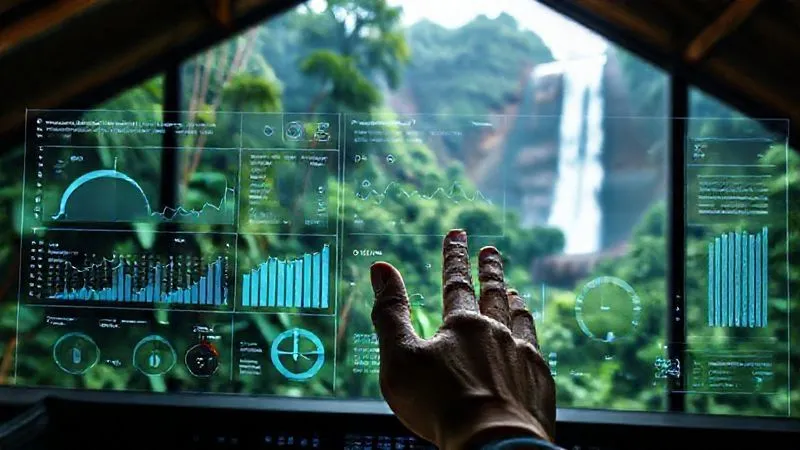
Artificial Intelligence (AI) and satellite imagery are becoming invaluable tools for monitoring environmental impact, particularly in remote natural wonder destinations. AI algorithms can analyze vast datasets from satellite images to detect changes in land use, deforestation, water quality, and even wildlife populations. This provides real-time, objective data on the ecological health of the areas where tours operate, allowing operators to assess not just their carbon footprint, but their broader impact on biodiversity and ecosystem integrity. This proactive monitoring enables operators to adapt tours and conservation efforts based on verifiable environmental changes.
The Future of Eco-Tourism: Net Positive and Regenerative Models
The conversation around measuring true carbon footprint of eco-tours to natural wonders is rapidly evolving. It's no longer enough to simply minimize harm or aim for 'net-zero.' The vanguard of eco-tourism is now striving for 'net-positive' and 'regenerative' models, actively restoring and enhancing the environments and communities they touch.
Moving Beyond 'Less Bad' to 'Actively Good'
For too long, sustainability efforts have focused on reducing negative impacts – using less fuel, generating less waste, consuming less energy. While essential, this 'less bad' approach often falls short of what's truly needed for planetary health. The future of eco-tourism lies in actively contributing to ecological restoration and community upliftment. This means designing tours that, for example, involve guests in reforestation projects, support wildlife rehabilitation, or fund the establishment of protected areas. It's about leaving a place better than you found it, not just minimally impacted.
Investing in Restoration and Local Empowerment
Regenerative tourism prioritizes the long-term health and vitality of destinations. This involves direct investment in ecosystem restoration (e.g., coral reef regeneration, wetland creation), supporting indigenous conservation practices, and empowering local communities to be primary beneficiaries and decision-makers in tourism development. It's a shift from extraction to contribution, from consumption to regeneration. This approach recognizes that the natural wonders we cherish are not just backdrops for tourism but living systems that require active stewardship and investment.
| Strategy Type | Focus | Example Actions |
|---|---|---|
| Minimizing Harm (Traditional) | Reduce emissions, minimize waste, avoid negative impacts | Fuel-efficient vehicles, reusable bottles, basic recycling |
| Net-Positive/Regenerative (Future) | Actively restore ecosystems, empower communities, create positive impacts | Guest participation in reforestation, funding wildlife sanctuaries, local ownership of tourism assets |
"The ultimate goal of eco-tourism should be to not just visit natural wonders, but to become an integral part of their regeneration, transforming travelers from passive observers into active participants in planetary healing."
Frequently Asked Questions (FAQ)
Q: Is it possible to truly measure *all* emissions from an eco-tour? A: While achieving 100% precision is incredibly challenging due to the complexities of global supply chains and individual traveler choices, it is absolutely possible to measure the vast majority of significant emissions. By diligently applying the Scope 1, 2, and 3 framework, focusing on material emission sources, and using reliable data and emission factors, operators can achieve a highly accurate and defensible carbon footprint assessment that covers over 90-95% of their true impact. The goal is robust estimation and continuous improvement, not unattainable perfection.
Q: How do small operators implement such complex frameworks without dedicated resources? A: For small operators, the key is to start incrementally. Begin with Scope 1 and 2, which are generally easier to track. Then, identify the most significant Scope 3 categories (often guest travel and major purchases) and use simplified estimation methods or industry averages initially. Leverage free or low-cost online tools for carbon calculation, and consider collaborating with local universities or NGOs for expertise. The Global Sustainable Tourism Council (GSTC) criteria also provide an excellent roadmap for smaller businesses. Progress over perfection is the mantra here.
Q: What role does carbon offsetting play, and is it effective? A: Carbon offsetting can be a valuable tool, but it's not a substitute for reduction. It should be seen as a last resort for unavoidable emissions. Effectiveness depends entirely on the quality and integrity of the offset projects. Look for projects that are verified by reputable standards (e.g., Gold Standard, Verified Carbon Standard), demonstrate additionality (wouldn't happen without the offset funding), and provide clear co-benefits (e.g., biodiversity protection, community development). Transparency about your offsetting strategy is crucial to avoid accusations of greenwashing.
Q: How can travelers verify a tour operator's claims about their carbon footprint? A: Travelers should look for transparency and third-party verification. Reputable operators will publicly disclose their carbon footprint reports, methodologies, and any certifications (e.g., GSTC, B Corp). They should be able to answer specific questions about their data collection and reduction strategies. Be wary of vague claims or those without supporting evidence. Look for operators that communicate their challenges and ongoing efforts, not just their successes.
Q: What are the biggest challenges in standardizing carbon measurement globally for eco-tourism? A: The biggest challenges include a lack of consistent data collection methodologies across diverse regions and tour types, varying availability and quality of localized emission factors, the difficulty in accurately tracking complex Scope 3 supply chains, and the absence of a universally adopted, mandatory reporting standard for tourism. Political will, industry collaboration, and technological advancements are all critical to overcoming these hurdles and moving towards a more unified approach.
Key Takeaways and Final Thoughts
- Holistic View is Non-Negotiable: True carbon footprint measurement extends far beyond direct operations, encompassing the entire eco-tour lifecycle, especially Scope 3 emissions from guest travel and supply chains.
- Methodology Matters: Adopting a structured framework, like the GHG Protocol, and meticulously collecting data with relevant emission factors, is crucial for accuracy and credibility.
- Beyond Carbon: Integrate biodiversity conservation and positive community impact metrics for a genuinely sustainable and regenerative approach to eco-tourism.
- Technology is an Enabler: Leverage carbon accounting software, blockchain for traceability, and AI/satellite imagery for precision and transparency.
- Transparency Builds Trust: Publicly report your findings and seek third-party verification to demonstrate genuine commitment and avoid greenwashing.
The journey to truly measuring true carbon footprint of eco-tours to natural wonders is an ongoing one, demanding continuous learning, adaptation, and unwavering commitment. As an experienced industry specialist, I can assure you that this investment in precision and transparency will not only protect the breathtaking natural wonders that draw us all but will also build a more resilient, trustworthy, and ultimately, more successful eco-tourism sector. Let's move forward, together, with integrity and purpose.
Recommended Reading
- 5 Elite Wellness Resorts: Your Executive Burnout Breakthrough?
- Mastering Family Group Travel: 7 Steps to Harmonize Diverse Expectations
- Stop Scams: Your Ultimate Guide to Preventing Eco Volunteer Travel Scams
- Rail Pass or Not? Europe Backpacking: Are Rail Passes Worth It?
- International Family Adventure Derails? 7 Ways to Pivot & Still Thrive





Your email address will not be published. Required fields are marked *