

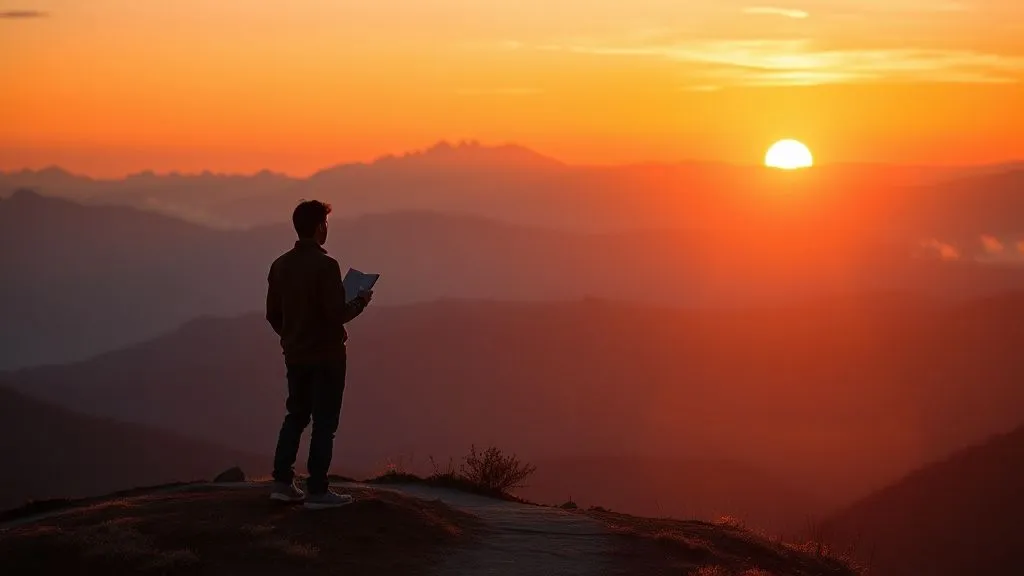
Professional Burnout: How a Solo Self-Discovery Trip Redefines Your Career Path?
For over two decades, guiding individuals through transformative travel experiences, I've witnessed a silent epidemic sweeping across the professional landscape: profound burnout. It's more than just feeling tired; it’s a deep, soul-sapping exhaustion that leaves even the most ambitious among us questioning every decision, every late night, every sacrifice made in the name of career progression.
This isn't merely about needing a vacation; it's about a fundamental misalignment between your inner values and your daily grind. The symptoms are familiar: chronic fatigue, cynicism, reduced efficacy, and a pervasive sense of dread when faced with another workday. The conventional advice often falls short, offering temporary fixes instead of the deep-seated change required.
But what if the answer wasn't another corporate workshop or a new productivity hack, but a journey inward, facilitated by a journey outward? In this definitive guide, I will share actionable frameworks, real-world insights, and expert advice on how a solo self-discovery trip can become the most powerful catalyst for redefining your career path, leading you from burnout to a renewed sense of purpose and direction.
Understanding the Burnout Epidemic: More Than Just Stress
Many people mistakenly equate burnout with stress. While stress is a component, burnout is a distinct syndrome, first identified by psychologist Herbert Freudenberger. It’s a state of emotional, physical, and mental exhaustion caused by prolonged or excessive stress. Unlike typical stress, burnout leaves you feeling utterly depleted, cynical, and ineffective, often leading to a complete loss of motivation and a sense of detachment from your work and even your personal life.
The Silent Erosion of Passion
I’ve seen countless professionals, once vibrant and passionate, slowly succumb to this insidious erosion. They start by pushing harder, believing more effort will turn the tide, only to find themselves sinking deeper into the quicksand of exhaustion. The passion that once fueled their ambition slowly fades, replaced by apathy and resentment. This isn't a personal failing; it's often a systemic issue, a byproduct of relentless demands, unclear boundaries, and a culture that often glorifies overwork.
"Burnout isn't about working too hard; it's about working too long on things that don't align with your true self or provide a sense of meaning."
According to a Gallup study, 76% of employees experience burnout on the job at least sometimes, with 28% reporting it "very often" or "always." These figures are alarming and underscore the urgency of finding effective, sustainable solutions beyond simply taking a weekend off. It requires a deeper dive into what truly drives you, what brings you joy, and what kind of impact you genuinely want to make.

Why Solo Travel is the Ultimate Catalyst for Self-Discovery
When you're caught in the cycle of burnout, your perspective becomes narrowed. Your environment, your routines, and the expectations of others often dictate your thoughts and actions. This is precisely why a solo self-discovery trip isn't just a vacation; it's a strategic intervention for mental and emotional recalibration.
Breaking Free from External Influences
Traveling alone strips away the layers of external influence that often cloud our judgment. There's no partner to compromise with, no friends to entertain, no family obligations to juggle. Every decision, from where to eat to what to see, rests solely on your shoulders. This forced autonomy is incredibly powerful:
- Uninterrupted self-reflection: The quiet moments, whether on a long train ride or during a solitary hike, become fertile ground for introspection.
- Forced decision-making: Navigating unfamiliar territories builds confidence and teaches you to trust your instincts, skills often eroded by burnout.
- New perspectives: Immersing yourself in different cultures and ways of life broadens your understanding of what's possible, both personally and professionally.
The Power of Discomfort and Novelty
Comfort zones are often where burnout thrives. Solo travel, by its very nature, pushes you out of these zones. The discomfort of the unfamiliar, the necessity to adapt, and the constant novelty of new experiences stimulate parts of your brain that have been dormant under the weight of routine and stress. This isn't about seeking danger, but about embracing manageable challenges that foster growth.
This unique blend of solitude, autonomy, and novelty creates a powerful psychological container for deep self-inquiry. It allows you to peel back the layers of who you think you should be and reconnect with who you truly are, independent of your job title or professional achievements. This reconnection is the first, crucial step in redefining your career path.
Phase 1: Preparing for Your Transformative Journey
A successful self-discovery trip isn't about aimless wandering; it's about intentional preparation. Just as you'd plan a complex project at work, approaching this journey with a clear, albeit flexible, intention will maximize its impact. This isn't to say every moment needs to be scheduled, but rather that your underlying purpose should be well-defined.
Defining Your 'Why': Beyond Escapism
Before you book a flight, ask yourself: Why this trip, and why now? Are you seeking clarity on a career pivot? Are you looking to reconnect with forgotten passions? Or do you simply need to decompress and gain perspective? Your 'why' will inform your destination, duration, and activities. This solo self-discovery trip is an investment in your future, not just an escape from your present.
- Identify Core Discontents: What specific aspects of your current career drain your energy, stifle your creativity, or conflict with your values? List them out, no matter how small.
- Envision Your Ideal Self: Without the constraints of your current reality, what does a truly fulfilling career look like? What kind of work would ignite your passion? What impact would you make?
- Choose Your Destination Wisely: Do you crave quiet reflection in nature (mountains, forests)? Cultural immersion in a bustling city? Or perhaps a volunteer experience that connects you with a cause? Align your environment with your discovery goals.
Practicalities: Budgeting, Time, and Setting Expectations
Once your 'why' is clear, the practicalities fall into place. Budgeting for a solo trip involves not just flights and accommodation but also a buffer for unexpected experiences. Consider how much time you can realistically take off – even a shorter, intensely focused trip can be highly effective. Discuss your plans with your employer (if applicable) and loved ones to manage expectations and minimize stress before you leave.
Crucially, set realistic expectations for the outcome. You might not return with a fully formed business plan, but you will almost certainly return with greater clarity, renewed energy, and a deeper understanding of yourself. The goal is transformation, not instant answers.
Phase 2: On the Road – Embracing the Journey of Self-Reflection
Once you’ve embarked on your solo journey, the real work of self-discovery begins. This phase is about active engagement with your environment and, more importantly, with your inner landscape. It's about being present, observing without judgment, and allowing insights to emerge organically.
Mindful Exploration: Beyond Sightseeing
While visiting iconic landmarks can be enjoyable, true self-discovery on a solo trip often happens in the quieter moments. It's the unexpected conversation with a local, the challenge of navigating a foreign city, or the profound peace found in a remote natural setting. Engage your senses, observe the pace of life around you, and notice how different environments make you feel.
"The real voyage of discovery consists not in seeking new landscapes, but in having new eyes." - Marcel Proust
I always advise my clients to spend at least one full day entirely unplugged – no phone, no internet, just pure presence. Walk, observe, listen. This allows your mind to quiet the external noise and amplify your inner voice, which is often drowned out by the demands of daily life and professional pressures. This isn't about avoiding connection but about intentionally creating space for introspection.
Tools for Introspection: Journaling and Meditation
These are your two most powerful allies on a solo self-discovery trip. Journaling provides a tangible record of your thoughts, observations, and emotional shifts. It's a safe space to explore difficult questions without judgment. Meditate for even 10-15 minutes each day to cultivate mindfulness and emotional regulation. This practice helps you stay grounded amidst new experiences and process the influx of information and feelings.
Case Study: Liam's Amazon Adventure
Liam, a 38-year-old senior marketing manager from London, felt completely adrift despite his impressive title and salary. He described his professional burnout as a constant, dull ache. He decided on a solo trek through the Peruvian Amazon. Far from his usual urban environment, the sheer scale of nature and the simplicity of life forced him to confront his dependence on external validation and the relentless pursuit of material success.
During a week-long silent retreat within the jungle, he journaled extensively about his values. He realized his true passion lay in environmental conservation, not selling products. He returned to London with a clear, albeit challenging, vision: to transition his skills towards sustainable tourism. This meant a significant pay cut initially, but his renewed connection to purpose made the decision feel right, redefining his entire professional trajectory.
Phase 3: The Return – Integrating Insights into Your Career Path
The journey doesn't end when you step off the plane. In fact, the most critical phase is the integration of your newfound insights into your daily life and, specifically, your career path. Many people make the mistake of immediately diving back into their old routines, quickly losing the clarity they gained.
Processing Your Discoveries: Don't Rush Back to Normal
Give yourself a buffer. Ideally, don't jump straight back into work. Allow a few days or even a week to process everything. This is where your journal becomes invaluable. Review your entries, looking for recurring themes, surprising revelations, and shifts in perspective.
- Review Your Journal: What patterns emerged? Did you consistently feel more alive doing certain activities? What values were highlighted as most important?
- Synthesize Key Learnings: How do these insights directly relate to your career? Did you realize you crave more autonomy, creativity, impact, or work-life balance?
Crafting a New Career Blueprint
This isn't about quitting your job tomorrow, but about strategically planning your next steps. Use your newfound clarity to create a blueprint for your future career. This might involve small adjustments, like setting firmer boundaries, or larger shifts, like exploring a new industry or starting your own venture. The solo self-discovery trip provides the data; now it’s time to analyze and act on it.
| Insight from Trip | Career Implication | Action Step |
|---|---|---|
| Valued autonomy over hierarchy | Seek roles with greater independence, consider freelancing | Update LinkedIn, network with independent professionals |
| Found joy in helping others directly | Explore non-profit, coaching, or community-focused roles | Volunteer, research relevant certifications |
| Felt most alive in nature | Consider environmental, outdoor, or remote work opportunities | Research eco-tourism, remote job boards |
| Realized constant pressure led to poor decisions | Prioritize work-life balance, evaluate company culture carefully | Practice saying 'no' to non-essential tasks, research companies known for healthy cultures |
Redefining Success: Beyond the Traditional Metrics
One of the most profound shifts that can occur after a solo self-discovery trip is a complete re-evaluation of what 'success' truly means to you. For many, success has been dictated by external factors: salary, job title, company size, or perceived prestige. Burnout often occurs when these external metrics are pursued at the expense of internal fulfillment.
Values-Driven Career Decisions
Your journey will likely illuminate your core values with startling clarity. Perhaps you realized that impact, creativity, freedom, or connection are far more important to you than climbing the corporate ladder. When you make career decisions aligned with these intrinsic values, you're building a foundation for sustainable satisfaction, rather than chasing fleeting external rewards.
As Harvard Business Review often highlights, career longevity and satisfaction are increasingly linked to alignment with personal values and a sense of purpose. This isn't a soft skill; it's a strategic imperative for long-term career health.
The Courage to Pivot: Small Steps, Big Changes
Redefining your career path doesn't always mean a dramatic, immediate pivot. Sometimes, it's about making incremental, values-aligned changes. It could be negotiating for more flexible hours, seeking out projects that align with your rediscovered passions, or quietly networking in a new field while still employed. The courage comes from understanding your worth and your true desires, and then taking deliberate steps to honor them.

Sustaining Your Newfound Clarity: Post-Trip Strategies
The clarity gained from a solo self-discovery trip is a powerful gift, but it's not a permanent state. Life has a way of pulling us back into old patterns if we're not intentional about maintaining our new perspective. Think of it as cultivating a garden; it requires ongoing attention and care.
Building a Support Network
You don't have to navigate your career reinvention alone. Seek out mentors, coaches, or a community of like-minded individuals who understand and support your new direction. Share your experiences and insights from your trip; articulate your redefined career path. Their encouragement and advice can be invaluable, especially when self-doubt inevitably creeps in.
Continuous Self-Reflection Practices
The tools you used on your trip – journaling, meditation, mindful walks – shouldn't be abandoned upon your return. Integrate them into your daily life. Even 15-20 minutes a day can make a significant difference in maintaining your emotional equilibrium and clarity. These practices become your anchors, helping you stay connected to your true self amidst professional pressures.
- Daily journaling: Even a few sentences can help process thoughts and feelings.
- Regular nature walks: Reconnect with the calming influence of the natural world.
- Scheduled 'digital detox' days: Intentionally disconnect from screens to foster presence.
Embracing Lifelong Learning and Adaptability
The professional landscape is constantly evolving, and so should your skills and perspective. Remain curious, open to new knowledge, and willing to adapt. Your solo self-discovery trip taught you the power of stepping into the unknown; carry that adventurous spirit forward into your career development. View challenges as opportunities for growth, rather than insurmountable obstacles.
Overcoming Obstacles: Fear, Doubt, and External Pressures
The path to redefining your career after professional burnout, even with the clarity gained from a solo self-discovery trip, is rarely linear. You will undoubtedly encounter obstacles, both internal and external. It's crucial to anticipate these and develop strategies to navigate them.
Addressing the 'What Ifs'
Fear of the unknown, financial insecurity, and the "what ifs" can be paralyzing. What if the new path doesn't work out? What if I regret leaving my old job? These are valid concerns. Address them by breaking down your goals into smaller, manageable steps. Conduct thorough research, build a financial buffer, and create contingency plans. Remember, the biggest risk might be staying in a career that is actively diminishing your well-being.
Setting Boundaries and Communicating Your New Path
You may face skepticism or even resistance from friends, family, or former colleagues who are comfortable with the 'old you' or the traditional definition of success. It's essential to set clear boundaries and communicate your new vision with confidence and conviction. You don't need anyone's permission to live a life aligned with your true self. Articulate your reasons, share your insights from your trip, and stand firm in your redefined values.
"Your career path is not a straight line; it's a living, breathing entity that evolves with you. Embrace the detours and trust the journey of self-discovery."
The clarity and resilience you cultivated during your solo trip will serve as your inner compass. Trust that you have the internal resources to face these challenges. Remember the feeling of liberation and purpose you experienced, and let that be your guiding light. Your solo self-discovery trip has already redefined your relationship with yourself; now, let that powerful shift redefine your career path, leading you to a more fulfilling and authentic professional life.
Frequently Asked Questions (FAQ)
How long should a solo self-discovery trip be to be effective? While the ideal duration varies, I've found that a minimum of 2-3 weeks allows for sufficient time to decompress, engage in deep self-reflection, and experience enough novelty to shift perspective. Shorter trips (1 week) can offer a powerful reset, but longer trips (1-3 months) provide the deepest opportunity for profound transformation and sustained clarity.
What if I can't afford a long trip? Self-discovery doesn't always require a round-the-world ticket. Consider a 'staycation' where you intentionally unplug and explore your local area as a tourist, or a shorter, more budget-friendly trip to a nearby natural park or a small town. The key is solitude, intentionality, and breaking from routine, not necessarily exotic locales. Many resources like Lonely Planet offer budget travel tips.
Is it safe to travel alone, especially for career introspection? Safety is paramount. Research your destination thoroughly, share your itinerary with a trusted person, and always trust your instincts. Many destinations are incredibly safe for solo female and male travelers. Focusing on introspection doesn't mean being oblivious; it means being mindful and present while taking reasonable precautions. Resources like the U.S. Department of State's travel advisories can be helpful.
How do I explain a career break for a solo trip to future employers? Frame it positively as a period of intentional personal and professional development. Highlight the skills you gained: resilience, adaptability, problem-solving, cultural intelligence, and self-awareness. Emphasize that it led to a clearer understanding of your career goals and a renewed sense of purpose, making you a more focused and engaged candidate. This demonstrates maturity and proactive self-management.
What if I come back and still don't know what to do? It's okay! The goal isn't always to find a single, definitive answer, but to gain clarity and direction. If you still feel uncertain, you've likely narrowed down what you *don't* want and discovered new areas of interest. Use this as a starting point for further exploration, perhaps through informational interviews, volunteering, or short courses. The journey of self-discovery is ongoing.
Key Takeaways and Final Thoughts
- Professional burnout is a serious signal that your current career path may be misaligned with your core values and well-being.
- A solo self-discovery trip offers a unique and powerful container for introspection, free from external influences, fostering profound personal and professional clarity.
- Intentional preparation, mindful exploration, and diligent integration of insights are crucial for maximizing the transformative potential of your journey.
- Redefining success on your own terms, based on intrinsic values rather than external metrics, is a cornerstone of a fulfilling and sustainable career path.
- Sustaining your newfound clarity requires ongoing self-reflection, building a supportive network, and embracing adaptability in a constantly evolving world.
The courage to step away, to embrace the unknown, and to embark on a solo self-discovery trip is an act of profound self-love and strategic career management. It’s an investment that can pay dividends far beyond any financial return, leading you to a career that not only sustains you but truly fulfills you. Don't let professional burnout define your future; let a solo journey redefine your path and reignite your purpose.
Recommended Reading
- How Do Ski Resorts Adapt to Declining Snowfall? 7 Innovative Strategies
- Designing Profitable Light Festival Tours for Luxury Clients: My 6-Step Blueprint
- Tube Smart: Essential Safety Rules for Snow Tubing Hills You MUST Know
- Unlock the Secrets: Your Ultimate Guide to Sustainable Volunteer Trips
- Recharge in 48 Hours: How to Maximize a City Break for Complete Mental Reset





Your email address will not be published. Required fields are marked *