


Solving Last-Minute Interrail Seat Reservation Conflicts?
After two decades navigating Europe's intricate railway networks, I've encountered almost every conceivable hiccup a traveler can face, but few are as frustrating and common as the dreaded last-minute seat reservation conflict. It's a scenario that can turn a dream Interrail journey into a logistical nightmare, leaving even the most seasoned travelers feeling stranded or scrambling for solutions.
You've meticulously planned your route, perhaps even secured an Interrail pass with visions of seamless travel across picturesque landscapes, only to find that the crucial train you need is either fully booked, or your hard-won reservation simply isn't recognized. This isn't just an inconvenience; it can derail your entire schedule, incur unexpected costs, and inject a significant dose of stress into what should be a liberating and unforgettable adventure.
But fear not. In this comprehensive guide, drawing from my extensive experience and countless hours spent at European train stations, I'm going to equip you with proven strategies and insider tips for Solving last-minute Interrail seat reservation conflicts? We'll explore proactive measures, emergency on-the-spot solutions, and alternative approaches that ensure your European train journey remains smooth, even when faced with unexpected hurdles. My goal is to transform your potential reservation woes into mere bumps in the road, empowering you to travel with confidence and flexibility.
Understanding the Interrail Reservation Landscape: Why Conflicts Arise
To effectively tackle last-minute Interrail seat reservation conflicts, we must first understand their root causes. The European railway system is a beautiful mosaic of national operators, each with its own reservation policies, quotas, and booking systems. This inherent complexity is often the primary culprit behind reservation headaches.
Why Reservations Become a Headache
The core issue stems from the fact that while an Interrail pass grants you access to the train network, it doesn't automatically guarantee a seat on every train. High-speed trains, international routes, and overnight services almost always require a separate seat reservation, often for a small fee. These reservations are subject to availability, and popular routes, especially during peak season or holidays, can sell out weeks or even months in advance.
Furthermore, different train operators allocate varying numbers of seats for Interrail pass holders. Some, like France's SNCF or Italy's Trenitalia, have limited quotas on specific trains, meaning even if standard tickets are available, pass holder reservations might be exhausted. This creates a frustrating bottleneck for travelers who assume their pass covers everything. I've seen countless travelers caught off guard by these quotas, arriving at the station only to find their desired train fully booked for pass holders.
The Myth of 'Unlimited' Interrail Travel
Many first-time Interrailers fall prey to the misconception that their pass offers 'unlimited' travel in the truest sense. While the freedom to hop on and off trains is a major draw, the reality is that many of Europe's most desirable routes and fastest connections come with mandatory reservation requirements. Ignoring this crucial detail is a common precursor to last-minute conflicts.
The official Interrail website, particularly its reservation guide, provides essential information on which trains require reservations and how to book them. However, even with this guidance, the sheer volume of information and the varying rules across countries can be overwhelming. Understanding these nuances is your first step towards proactive prevention.
Proactive Planning: Your First Line of Defense Against Conflicts
In my two decades of train travel, I've learned that the best way to handle a last-minute Interrail seat reservation conflict is to prevent it from happening in the first place. Proactive planning is not just advisable; it's essential for a stress-free journey.
Key Proactive Steps for Reservation Success
- Book Reservations as Early as Possible: This is perhaps the most crucial piece of advice. For popular routes, high-speed trains (like TGVs, ICEs, Frecciarossas), and overnight services, reservations can open up to 3-6 months in advance. Booking immediately after your plans are firm drastically reduces the chance of conflicts.
- Understand Peak Times and Seasons: European summers (June-August), public holidays, and major festivals see a massive surge in train travel. If your journey falls within these periods, consider them 'red zones' for last-minute bookings. Adjust your itinerary if possible, or prioritize early reservations even more diligently.
- Utilize the Rail Planner App and Online Tools: The official Rail Planner app is invaluable. It allows you to check train schedules and often indicates whether a reservation is required. However, for actual booking, it's often best to go directly to the train operator's website or the Interrail reservation service.
- Research Country-Specific Reservation Rules: Each country has its quirks. For example, France and Italy are notorious for limited pass holder quotas, while Germany and the Benelux countries have more reservation-free options. A quick search for 'Interrail reservations [country name]' can save you immense trouble.
- Consider a 'Buffer Day' or Flexible Itinerary: If your schedule is exceptionally tight, build in a buffer day between critical connections. This flexibility can be a lifesaver if a reservation conflict forces you to take a later train or an alternative route.
"In my experience, the biggest mistake Interrailers make is underestimating the importance of reservations. It's not just about getting on the train; it's about securing your peace of mind. Early planning isn't just a suggestion; it's the bedrock of a successful Interrail adventure."
While online booking through the Interrail reservation service is convenient, sometimes alternative methods offer more flexibility or access to different quotas. Here's a quick comparison:
| Method | Pros | Cons |
|---|---|---|
| Interrail Reservation Service (Online) | Convenient, centralized, can book multiple countries | Booking fee, sometimes limited availability, not all trains available |
| Direct Train Operator Website | Often wider availability, sometimes cheaper reservation fees, instant confirmation | Requires booking each country separately, can be complex to navigate different sites |
| Train Station Ticket Office | Personalized advice, access to local quotas, immediate resolution of issues | Time-consuming, language barrier possible, only available upon arrival |
| Phone (Train Operator Call Center) | Can be done from home, direct interaction | Long wait times, international call charges, language barrier possible |
Emergency Tactics for On-the-Spot Conflicts
Despite the best proactive planning, last-minute Interrail seat reservation conflicts can still arise. Perhaps a train was unexpectedly cancelled, your connection was delayed, or a system glitch occurred. When you're standing on a platform facing a booked-out train, quick thinking and specific strategies are paramount.
The Station Master's Secret Weapon
Do not underestimate the power of the human element. The staff at the train station ticket office or information desk are often your best allies in an emergency. They have access to real-time information, can check alternative routes that online systems might not display, and sometimes even have the authority to allocate emergency seats or make calls to other stations.
- Approach the Ticket Office: Explain your situation calmly and clearly. Have your Interrail pass, passport, and any existing reservation details ready. Ask for alternative trains, even if they're slower or involve more changes.
- Be Polite and Patient: These staff members deal with countless issues daily. A friendly, understanding demeanor can go a long way in getting their full assistance.
- Ask About Local Trains: Often, they can suggest regional or local trains that don't require reservations and can get you to your destination, albeit slower. Sometimes, breaking a long journey into smaller, reservation-free segments is the only viable solution.
Leveraging Digital Tools and Apps in Real-Time
While the station staff are invaluable, your smartphone can also be a powerful tool for immediate problem-solving. Beyond the Rail Planner app, consider having other apps ready.
- Train Operator Apps: Download the official apps for major train operators in the countries you're visiting (e.g., DB Navigator for Germany, SNCF Connect for France, Trenitalia for Italy). These often show real-time availability for standard tickets, which can indicate if a train is truly packed or if there's still a chance for a last-minute pass holder reservation.
- Google Maps / Other Navigation Apps: Use these to quickly identify alternative routes, especially if you're considering bus connections or local trains that might not appear in standard rail apps.
- Online Forums/Communities: Websites like Reddit's r/Interrail or other travel forums can sometimes offer real-time advice from fellow travelers who might have just faced a similar issue.

Alternative Routes & Flexibility: The Savvy Traveler's Playbook
When direct reservations fail, the experienced Interrailer knows that flexibility is their greatest asset. Embracing alternative routes and modes of transport can often be the definitive answer to **Solving last-minute Interrail seat reservation conflicts?**.
Embracing Slower, Reservation-Free Trains
Many Interrail passes offer the incredible benefit of access to local and regional trains that do not require reservations. While these trains might be slower and make more stops, they can often get you to your destination, or at least to a major hub from which you can continue your journey.
- Regional Trains (RE, RB, TER, Regio): These are your best friends when high-speed options are booked. They connect smaller towns and often run frequently. For example, instead of a TGV from Paris to Lyon, you might take a series of regional trains, enjoying the local scenery along the way.
- Cross-Border Regional Trains: Some regional lines cross national borders without needing reservations, offering an excellent workaround for popular international routes. Always check the Rail Planner app for these options.
- Breaking Up Journeys: If your direct route is full, try to break it into two or three smaller segments. For instance, if Paris to Barcelona is booked, consider Paris to a city near the Spanish border (like Latour de Carol or Perpignan) via regional trains, and then a local connection into Spain.
Case Study: Maria's Parisian Predicament
How Maria Solved Her Last-Minute Reservation Conflict
Maria, a young traveler on her first Interrail trip, found herself in Paris with a pre-booked reservation for a high-speed TGV to Nice, only to discover the train was cancelled due to an unexpected strike. All subsequent TGVs were fully booked. Panic began to set in as her plans for the French Riviera seemed to crumble.
Instead of giving up, Maria remembered advice about flexibility. She approached the SNCF information desk, where a helpful agent, though unable to find a TGV reservation, suggested a multi-leg journey using regional trains. It involved taking a TER train from Paris to Dijon, then another regional train to Lyon, and finally a series of local trains along the coast to Nice. This route took an extra 5 hours compared to the TGV, but it required no reservations and was fully covered by her Interrail pass. Maria embraced the slower pace, enjoyed the unexpected views from the regional lines, and even discovered a charming small town during a longer layover. This resulted in her reaching Nice, albeit later, and with a unique story of resilience.
Maria's experience highlights the value of knowing your options and being willing to adapt. The journey itself became an adventure, not just a means to an end. Remember, the goal is to reach your destination, and sometimes the most scenic or interesting path isn't the fastest.
For more detailed information on specific reservation-free routes, I highly recommend consulting dedicated Interrail community forums or unofficial guides like The Man in Seat 61's Interrail Reservation page, which offers invaluable insights for various countries.
Mastering the Art of Seat-Hunting: Onboard Strategies
Sometimes, the conflict arises not from a lack of reservation, but from a confusion once you're on the train. You might have a reservation but find your seat occupied, or you might be on a reservation-free train struggling to find an available spot. This is where onboard strategies come into play.
The 'Reserved' Sticker Game
On many European trains, especially in countries like Germany (DB) or Austria (ÖBB), seats might have small electronic displays or paper slips indicating if they are reserved for a particular segment of the journey. However, these are not always accurate or up-to-date. I've often seen 'reserved' signs for a segment that has already passed, or for a segment that never materialized.
- Check the Display Closely: If a seat shows 'reserved from [City A] to [City B]', and you are boarding at or after City B, the seat is likely free.
- Look for Unreserved Sections: Many trains, even those that require reservations for some seats, will have entire carriages or sections designated as 'unreserved'. Look for signage indicating this.
- Don't Be Afraid to Ask: If a seat is marked reserved but appears empty, politely ask anyone nearby if they know if it's truly taken. Sometimes, passengers move, or the reservation holder simply missed the train.
Befriending the Conductor: Your Onboard Oracle
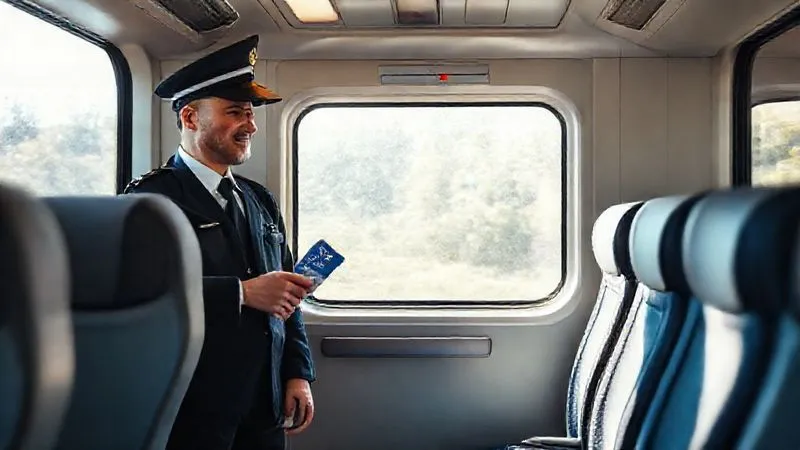
The train conductor is arguably the most powerful person on the train when it comes to seat allocation and resolving conflicts. They have the definitive information on which seats are truly reserved, which are free, and where you might find an unassigned spot.
- Locate the Conductor: As soon as you board, if you're struggling to find a seat or have a reservation issue, try to find the conductor. They usually make their rounds shortly after departure.
- Explain Your Situation: Clearly and concisely explain your reservation conflict. Show your Interrail pass and any problematic reservation.
- Ask for Assistance: Politely ask if they can help you find an available seat, even if it's not the one you originally reserved. In my experience, conductors are usually very helpful and want passengers to be comfortable. They might even direct you to a less crowded carriage or an empty first-class seat if space allows (though this is rare and not guaranteed with a standard pass).
Refunds, Replacements, and What to Do When All Else Fails
Even with the most meticulous planning and clever on-the-spot tactics, there are rare instances where a last-minute Interrail seat reservation conflict simply cannot be resolved. In such cases, understanding your rights and knowing when to consider alternative solutions is crucial.
Understanding Your Rights as an Interrail Pass Holder
While an Interrail pass is incredibly flexible, it's important to know the limitations regarding refunds and compensation for reservation-related issues. Generally, if a specific reservation is mandatory for a train and you cannot obtain one, or if your reserved train is significantly delayed or cancelled, you may be entitled to a refund for the reservation fee, or in some cases, even compensation for the delay.
- Reservation Fee Refunds: If you paid for a reservation and, due to a train cancellation or significant delay, you couldn't use it, you should be able to claim a refund for that specific reservation fee. Keep all tickets and proof of purchase.
- Passenger Rights (EU Regulation 1371/2007): This regulation covers train passenger rights in the EU. If your train is delayed by more than 60 minutes, you are generally entitled to compensation (a percentage of the ticket price, which in the case of a pass, is typically calculated based on the daily value of your pass). This usually applies to the pass itself, not just the reservation fee. More details can be found on official EU transport sites, like the Your Europe website.
- Documentation is Key: Always get proof of delay or cancellation from train staff. A stamp on your pass or a written confirmation is invaluable for any claims.
When to Consider a Separate Ticket
This is always the last resort, but sometimes, buying a separate, full-fare ticket for a specific train is the only way to avoid being completely stranded or missing a critical connection (e.g., an international flight). This decision should be made carefully, weighing the cost against the urgency of your travel.
- Assess the Urgency: Is missing this train going to cause a cascading series of problems (missed flight, non-refundable accommodation, important appointment)? If so, a separate ticket might be a necessary evil.
- Check Prices Immediately: Use train operator apps or websites to check the cost of a standard ticket for the next available train. Sometimes, last-minute full-fare tickets can be surprisingly expensive.
- Consider Buses or Flights: In extreme cases, if train options are exhausted and you're facing a significant delay, investigate bus services (like FlixBus or Eurolines) or even budget flights as emergency alternatives.
The Future of Interrail Reservations: What's Next?
As an industry veteran, I'm always looking ahead. The challenges of **Solving last-minute Interrail seat reservation conflicts?** are well-known within the railway community, and there's continuous effort to improve the traveler experience. The future promises exciting developments, but also ongoing advocacy for clearer policies.
Technological Advancements and Unified Booking Systems
The fragmented nature of European rail reservations is a significant pain point. I believe we will see continued advancements towards more unified, user-friendly booking platforms. Initiatives are underway to integrate reservation systems across different national operators, making it easier for Interrail pass holders to book all their required seats from a single portal, well in advance.
- Improved App Functionality: Expect the Rail Planner app and other third-party aggregators to offer more comprehensive real-time reservation capabilities, potentially allowing for direct booking and payment within the app itself for a wider range of trains.
- Dynamic Pricing & Quotas: As AI and data analytics advance, we might see more dynamic pricing for reservations and more flexible allocation of pass holder quotas, adapting to demand rather than rigid fixed limits.
- Blockchain for Tickets: While futuristic, some discussions involve blockchain technology for secure, verifiable, and easily transferable tickets and reservations, reducing fraud and simplifying changes.
Policy Changes and Traveler Advocacy
The voice of the traveler is powerful. As more people choose sustainable train travel, there's growing pressure on railway companies and European institutions to standardize rules, increase pass holder quotas, and improve transparency. Organizations like the European Passengers' Federation are continuously advocating for stronger passenger rights and more seamless cross-border travel.
My hope is that future Interrail passes will offer even greater flexibility, with fewer mandatory reservations on key routes, or at least a guarantee of available pass holder seats up to a certain point before departure. This would truly embody the spirit of spontaneous, unlimited European exploration that Interrail promises.
Frequently Asked Questions (FAQ)
Q: Can I travel without a reservation if I have an Interrail pass? A: Yes, absolutely! Many regional and local trains across Europe do not require reservations. You can simply hop on with your valid Interrail pass. However, high-speed, international, and night trains almost always require a separate reservation. Always check the Rail Planner app or country-specific rules for each leg of your journey.
Q: What's the best time to book Interrail reservations? A: As early as possible! For popular routes and high-speed trains, reservations can open 3-6 months in advance and tend to sell out quickly, especially during peak travel seasons (summer, holidays). Booking at least 2-3 months ahead is generally recommended to secure your desired seats and avoid last-minute conflicts.
Q: What if my reserved train is cancelled or significantly delayed? A: If your reserved train is cancelled or delayed by more than 60 minutes, your reservation becomes invalid for that specific train. You should speak to station staff immediately. They can often re-book you on the next available train (if space allows for pass holders) or advise on alternative routes. You are typically entitled to a refund of the reservation fee and, under EU regulations, potentially compensation for the delay itself. Always get proof of the delay/cancellation.
Q: Are there any trains that never require reservations? A: Yes, generally, most regional and local trains in countries like Germany, Switzerland, Austria, Belgium, Netherlands, and Luxembourg are reservation-free. These are excellent options for flexible travel. However, even in these countries, specific high-speed or international connections might still require a reservation. Always double-check using the Rail Planner app.
Q: How do I know if a specific train requires a reservation? A: The easiest way is to use the official Interrail Rail Planner app. When you search for a journey, it will clearly indicate if a reservation is 'Required', 'Recommended', or 'Optional'. You can also check the official website of the specific train operator for the route you intend to take, as they often have the most up-to-date information on reservation policies for their trains.
Key Takeaways and Final Thoughts
Navigating the complexities of Interrail seat reservations can seem daunting, but with the right knowledge and strategies, you can minimize stress and maximize your travel enjoyment. My two decades in this niche have taught me that preparedness and flexibility are your greatest allies.
- Plan Proactively: Book your mandatory reservations as early as possible, especially for popular routes and peak seasons.
- Understand the System: Be aware of country-specific rules, reservation quotas, and the difference between pass validity and seat guarantees.
- Be Flexible: Embrace alternative routes using reservation-free regional trains, and be open to breaking up your journey.
- Leverage Resources: Utilize the Rail Planner app, train operator websites, and don't hesitate to engage with station staff or conductors for assistance.
- Know Your Rights: Understand what to do if a reservation goes wrong, including seeking refunds or compensation.
Remember, Interrail is an adventure, and sometimes the unexpected detours become the most memorable parts of the journey. Don't let the fear of a reservation conflict deter you from exploring Europe by train. Equip yourself with these expert strategies, and you'll be well-prepared for Solving last-minute Interrail seat reservation conflicts?, ensuring your travels are as smooth and enjoyable as they are enriching. Happy travels, and may your trains always run on time!
For further inspiration and community support, consider joining online groups like the r/interrail subreddit where fellow travelers share tips and experiences.
Recommended Reading
- Conquer Your Fears: Solo Dining Tips for Shy Travelers Revealed
- Unearthing Ancient Flavors: How to Authentically Revive Lost Spice Route Recipes?
- 7 Legal Safeguards: Advanced Holistic Journeys Risk Mitigation
- Unlock Your City Break: Maximize Sightseeing & See More!
- Unlock the Secret: Secure Very Cheap Accommodation for a Month!



Your email address will not be published. Required fields are marked *