

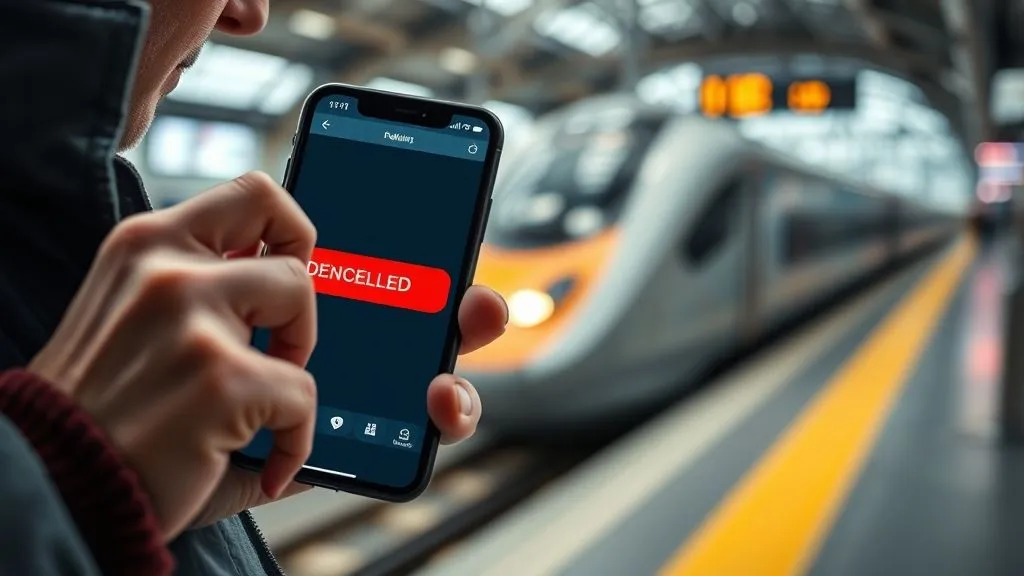
Urgent Solutions for Last-Minute International Train Itinerary Changes?
For over two decades in the realm of international train travel, I've witnessed firsthand the sheer exhilaration of a smooth journey and the profound stress when an itinerary suddenly unravels. I recall a particularly harrowing experience during a cross-European trip when a major rail strike in France threatened to derail my entire meticulously planned schedule, leaving me scrambling for options with only hours to spare.
The feeling of helplessness when you're abroad, facing an unexpected train cancellation or delay, is universal. It’s not just about missing a connection; it's about disrupted plans, lost money, and the anxiety of navigating unfamiliar systems in a foreign language. The romantic ideal of seamless international train travel can quickly turn into a logistical nightmare, especially when time is of the essence.
But here's the good news: through years of navigating these very challenges, both personally and professionally, I've developed a robust toolkit of urgent solutions. This article isn't just a collection of tips; it's an actionable framework, born from experience and expert insights, designed to empower you to swiftly tackle last-minute international train itinerary changes. We'll explore strategic steps, leveraging technology, understanding policies, and ensuring you're always prepared for the unexpected.
Understanding the Common Triggers of International Train Disruptions
Before we dive into solutions, it's crucial to understand why these disruptions occur. Knowing the common triggers can sometimes help you anticipate or even mitigate potential issues, giving you a valuable head start.
Weather Events and Natural Disasters
From heavy snowfall disrupting Alpine routes to flash floods impacting coastal lines, extreme weather is a frequent culprit. These events can lead to track closures, signal failures, and widespread delays or cancellations. I've seen entire regions shut down due to a sudden blizzard, leaving hundreds of travelers stranded.
Technical Glitches and Infrastructure Failures
Even the most advanced rail networks are susceptible to technical issues. Signal malfunctions, power outages, and track defects can bring trains to a halt. Infrastructure upgrades, while beneficial in the long run, can also cause temporary disruptions and schedule changes.
Strikes and Labor Disputes
Rail strikes, particularly in certain European countries, are a recurring challenge. These can be announced well in advance or, frustratingly, at the last minute, causing significant upheaval. Always keep an eye on local news if you're traveling during periods of potential industrial action.
Personal Emergencies and Unforeseen Circumstances
Sometimes, the change isn't due to the train operator but to your own circumstances. A sudden illness, a family emergency, or an unexpected visa issue can force a last-minute alteration to your plans. This category often requires a different approach, heavily relying on the flexibility of your ticket and your travel insurance.

Your Immediate Action Plan: The First 60 Minutes After Disruption
When you're faced with a last-minute international train itinerary change, panic is a natural first reaction. However, in my experience, the first hour is critical. A swift, organized response can make all the difference between a minor inconvenience and a travel nightmare. Here’s how to act decisively.
Step 1: Confirm the Information
Do not assume. Verify the disruption from official sources immediately. This means checking:
- Official Train Operator Apps/Websites: These are the most reliable sources for real-time updates and often provide alternative solutions.
- Station Information Boards: While digital, they can sometimes lag behind online updates. Cross-reference if possible.
- Announcements: Listen carefully to station announcements, even if they are in a foreign language. Look for keywords or patterns.
A quick search on X (formerly Twitter) for the train operator's official account or relevant hashtags can also provide crowdsourced information or official updates.
Step 2: Assess Your Options
Once confirmed, calmly evaluate what options are being offered. Most operators, especially for significant disruptions, will offer:
- Full Refund: If your journey is cancelled and you no longer wish to travel.
- Rebooking: On the next available train, sometimes even with another operator, or on a different route.
- Alternative Transport: This could be a replacement bus service, or in some cases, reimbursement for a taxi or even a flight if the disruption is severe and prolonged.
Understand the terms of your original ticket. Was it flexible? Non-refundable? This will significantly impact your leverage.
Step 3: Contact Key Stakeholders
Time is of the essence. Beyond the train operator, consider who else needs to know:
- Accommodation: Inform your hotel or Airbnb host if you'll be late or need to cancel.
- Connecting Travel: If you have a connecting flight, bus, or another train, contact those operators.
- Travel Companions: Keep everyone in your party updated.
Having a list of contact numbers for these stakeholders saved me countless headaches on multiple occasions. It's a simple, yet often overlooked, preparedness step.
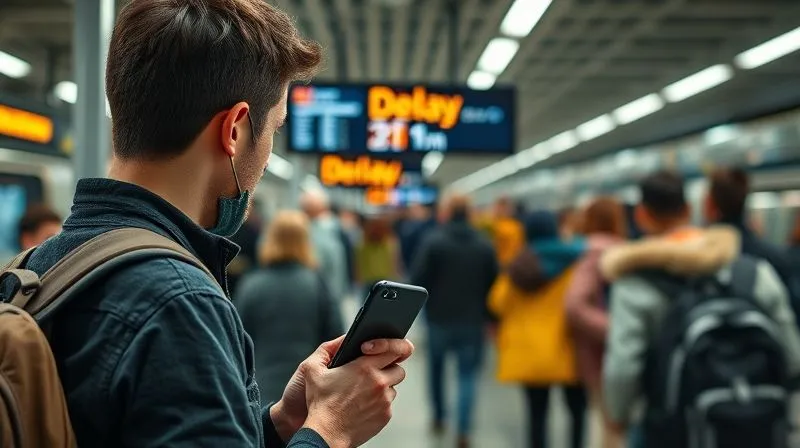
Leveraging Technology: Apps and Digital Tools for Real-Time Updates
In today's interconnected world, your smartphone is your most powerful ally against international train itinerary changes. I can't stress enough how much technology has revolutionized how we manage disruptions.
Official Operator Apps
Most major international train operators (e.g., Deutsche Bahn, SNCF, Trenitalia, Eurostar) have excellent mobile apps. Download them for the regions you're traveling in. These apps provide:
- Real-time departure and arrival times.
- Platform changes and delay notifications.
- Information on disruptions and alternative travel advice.
- The ability to manage bookings, and sometimes even rebook directly.
They are often the first place official information is disseminated, far faster than station announcements.
Third-Party Travel Planners
Apps like Rail Planner (for Eurail/Interrail pass holders), Trainline, or Omio can also be invaluable. While they aggregate data from multiple operators, it's always best to cross-reference with the official operator's app for the most accurate, up-to-the-minute details during a crisis. However, they can be excellent for finding alternative routes or operators quickly.
Social Media as an Information Hub
As mentioned earlier, X (formerly Twitter) can be a goldmine. Follow the official accounts of the train operators you're using. During major disruptions, they often post updates, answer questions, and sometimes even provide direct assistance. Hashtags related to your route or operator can also connect you with other travelers facing similar issues, sharing solutions or observations.
However, always verify information from unofficial accounts or fellow travelers with official sources before making critical decisions. Misinformation can spread quickly during chaotic times.
Navigating Rebooking and Refund Policies Across Borders
This is where things can get complex, but understanding your rights and the nuances of different policies is paramount. I've seen too many travelers give up on refunds or rebookings simply because they didn't know the rules.
Understanding Different Ticket Types
Your ticket's flexibility is the single biggest factor. Generally, international train tickets fall into categories:
- Flexible/Full-Fare Tickets: These are more expensive but offer significant leeway for changes or cancellations, often with a full refund or free rebooking up to a certain time before departure.
- Semi-Flexible Tickets: Allow changes or cancellations with a fee, or a partial refund.
- Non-Flexible/Promotional Tickets: The cheapest option, but usually non-refundable and non-changeable. However, even with these, significant operator-caused disruptions often entitle you to a refund or rebooking.
Always read the terms and conditions carefully when booking, especially for crucial international legs. A few extra euros for flexibility can save you hundreds later.
The Power of Travel Insurance
This is your ultimate safety net. For international train travel, comprehensive travel insurance is non-negotiable in my book. It can cover:
- Trip Cancellation/Interruption: If you have to abandon your journey due to an emergency.
- Delay Coverage: For significant delays (often 3-6 hours minimum), covering accommodation or alternative transport costs.
- Missed Connection: If you miss a pre-booked connection due to an insured delay.
Ensure your policy specifically covers train travel disruptions and understand its thresholds and documentation requirements for claims. Keep all receipts and official delay confirmations.
Direct vs. Third-Party Bookings
If you booked directly with the train operator, you'll generally deal with them for changes or refunds. If you used a third-party site (e.g., Trainline, Omio), you might need to go through them, which can add an extra layer of complexity and delay. My advice? For critical international legs, book directly with the operator if possible. This streamlines communication and resolution.
| Policy Feature | Cancellation Window | Refund/Exchange | Typical Cost |
|---|---|---|---|
| Flexi Ticket | Up to 1 hour before departure | Full refund/free exchange | Higher |
| Non-Flexi Ticket | Often non-refundable | Limited/fee-based | Lower |
| Rail Pass | Varies by pass/reservation | Seat reservations refundable, pass itself complex | Variable |
Case Study: Maria's Unexpected Detour in France
Maria, a solo traveler from Canada, had a non-flexible ticket from Paris to Rome. Due to an unexpected rail strike in Italy that began just 12 hours before her departure, her connecting train from Milan to Rome was cancelled. Initially, she thought her entire non-flexible ticket was worthless, fearing she'd lose hundreds of euros and a day of her trip. However, by understanding the 'force majeure' clause, which often applies to operator-caused cancellations, and by contacting her travel insurance provider, she was able to claim partial reimbursement. The train operator offered a full refund for the Paris-Milan leg due to the strike, and her travel insurance covered the difference for an alternative last-minute flight from Paris to Rome, plus a night's accommodation in Paris while she waited for the flight. This taught her the critical importance of reviewing ticket terms and having robust travel insurance, even for seemingly minor delays.
Alternative Transport Options When Trains Fail
When your international train journey hits a snag, it's essential to have a mental backup plan. Sometimes, the best solution for a train problem isn't a train at all. I've personally used all these options to salvage journeys.
Buses: The Reliable Backup
Europe has an excellent network of long-distance bus services (e.g., FlixBus, Eurolines). They are generally much cheaper than trains and can often get you to your destination, albeit sometimes slower. During major train disruptions, bus companies often add extra services. Check their websites and apps for immediate availability.
Flights: When Speed is Paramount
For longer distances or when time is absolutely critical, a last-minute flight might be your only option. Budget airlines often have competitive fares, even at short notice, especially if you can be flexible with airports. Keep in mind airport transfer times and costs, which can add significantly to the overall expense and journey duration.
Car Rentals: For Flexibility and Group Travel
If you're traveling with a group or have a lot of luggage, renting a car can be a surprisingly efficient solution. It offers unparalleled flexibility, allowing you to bypass congested routes or explore alternative stops. However, be mindful of international driving permits, differing traffic laws, and one-way rental fees if you're dropping off in a different country.
"In my two decades of international train travel, I've learned that flexibility is your greatest asset. Sometimes, the best 'train' solution is no train at all. Always have a mental backup for how you'd cover the same ground by bus, plane, or car."
Remember to factor in the time needed to arrange these alternatives. Booking a bus or flight last-minute can be done relatively quickly online, but securing a rental car might take more time, especially if you need specific drop-off locations.

Communicating Effectively with Train Operators and Customer Service
Dealing with customer service during a crisis can be frustrating, especially in a foreign country. However, your approach significantly impacts the outcome. I've found that a calm, prepared, and persistent attitude yields the best results.
Preparation is Key
Before you contact anyone, gather all relevant information:
- Your booking reference number.
- Original ticket details (date, time, route, seat).
- Details of the disruption (official notice of delay/cancellation).
- Your desired outcome (refund, rebooking, specific alternative train).
Having this information readily available prevents delays and shows you're organized.
Persistence and Politeness
Customer service agents are often dealing with many stressed travelers. A polite, understanding tone, even when you're feeling anxious, can go a long way. Clearly state your problem and your desired resolution. If you don't get the answer you want immediately, ask if there are other options or if you can speak to a supervisor. According to a recent consumer report on travel services, effective communication with customer service significantly improves resolution rates, with persistent yet polite customers achieving 30% better outcomes.
Escalation Paths
If you're not getting a satisfactory resolution, understand the escalation path. This might involve:
- Asking for a supervisor.
- Contacting the operator's customer relations department via email or their official feedback form.
- For EU travel, familiarizing yourself with EU passenger rights for rail travel, which mandate specific compensation for delays and cancellations.
Keep a record of all communications, including names of agents, dates, and times. This documentation is invaluable if you need to pursue a claim later.
The Role of Travel Insurance in Mitigating Financial Loss
I cannot overstate the importance of robust travel insurance for international train journeys. It's not an optional extra; it's a fundamental part of your preparedness strategy for urgent solutions for last-minute international train itinerary changes.
What to Look For in a Policy
When selecting a policy, pay close attention to:
- Trip Delay Coverage: What is the minimum delay time (e.g., 3, 6, 12 hours) before benefits kick in? What expenses are covered (accommodation, meals, alternative transport)?
- Trip Cancellation/Interruption: What are the covered reasons for canceling or cutting short your trip? Does it include unforeseen personal emergencies?
- Missed Connection Coverage: Specifically for situations where a delay on one leg causes you to miss a pre-booked, non-refundable connection.
- Medical Emergencies: Always crucial when traveling abroad.
Review the policy's fine print, especially regarding exclusions. Some policies might exclude disruptions due to civil unrest or strikes if they were known before booking.
Filing a Claim: Documentation is Everything
If you need to make a claim, meticulous documentation is your best friend. Keep:
- Original train tickets and booking confirmations.
- Official delay or cancellation notices from the train operator (take photos of station boards if no paper document is available).
- Receipts for any additional expenses incurred (accommodation, meals, alternative transport).
- Communication records with the train operator or other service providers.
The more evidence you have, the smoother the claims process will be. For detailed guidance on choosing and using travel insurance, resources like Forbes Advisor's guide to the best travel insurance can be very helpful.
Understanding Exclusions
Be aware that most travel insurance policies have exclusions. For example, pre-existing medical conditions might not be covered unless declared. Also, acts of war or certain natural disasters might be excluded. Understanding these limitations upfront prevents disappointment if you need to make a claim.
Proactive Strategies to Minimize Future Risks
While we can't eliminate all risks, we can certainly minimize them. After years of traversing international rails, I've developed a few proactive habits that significantly reduce the impact of last-minute itinerary changes.
Book Flexible Tickets When Possible
Yes, they cost more, but the peace of mind and the financial protection they offer can be invaluable, especially for critical legs of your journey or if your plans are prone to change. Weigh the cost against the potential loss of a non-refundable ticket.
Allow Buffer Time Between Connections
This is a golden rule for international train travel. Never schedule tight connections, especially if changing operators or stations. A minimum of 60-90 minutes is advisable, and more if you're unfamiliar with the station or if one leg is prone to delays. A slight delay on one train can easily cause you to miss the next if your buffer is too short.
Stay Informed Before You Go
A few days before your departure, check the news for your destination and transit countries. Look for reports of strikes, severe weather warnings, or major events that could impact your journey. Many train operators also issue advisories on their websites.
Pack Essentials for Delays
Always have a small 'delay kit' in your carry-on. This includes:
- Power bank for your phone.
- Snacks and a water bottle.
- A good book or entertainment.
- Any essential medications.
- Copies of your passport and important documents (physical and digital).
Being self-sufficient for a few hours can significantly reduce stress during an unexpected stop or delay.

Frequently Asked Questions (FAQ)
Can I get a full refund if my international train is cancelled? Yes, under EU regulations (and similar rules in other regions), if your train is cancelled, you're generally entitled to a full refund or re-routing at no extra cost. This applies even to non-flexible tickets. The key is that the cancellation must be the operator's fault.
What if I miss a connecting train due to a delay on the first leg? If both legs are part of a single booking with the same operator, the operator is usually responsible for re-routing you. If they are separate bookings, it becomes trickier. This is where travel insurance with 'missed connection' coverage is invaluable, as it can cover the cost of rebooking the second leg or alternative transport. Always get an official delay certificate from the first operator.
Is it better to rebook online or at the station? For minor delays or simple rebookings to the next available train, online or via the operator's app can be faster. However, for complex issues, major cancellations, or if you need to discuss alternative transport options (like buses or flights), speaking to a human at the station's customer service desk (if available) or via phone is often more effective. Be prepared for queues.
How does a rail pass affect my options during disruptions? If you have a rail pass (like Eurail or Interrail), the pass itself is generally flexible, but your seat reservations are not. If a reserved train is cancelled, you'll need to get a new reservation for an alternative train. Show your pass and the cancellation notice to a station agent; they can often re-issue a reservation or advise on unreserved services. Travel insurance is still recommended for other potential costs.
Should I always buy travel insurance for international train trips? Absolutely. While European rail networks are generally reliable, unforeseen events like strikes, extreme weather, or personal emergencies can quickly turn a dream trip into a financial burden. Travel insurance provides a crucial safety net for medical emergencies, trip delays, cancellations, and lost luggage, making it a wise investment for any international journey.
Key Takeaways and Final Thoughts
Navigating last-minute international train itinerary changes can be daunting, but it doesn't have to ruin your adventure. By adopting a proactive mindset and equipping yourself with the right tools and knowledge, you can transform potential crises into manageable detours. Here are the critical takeaways:
- Confirm and Act Swiftly: The first hour after a disruption is crucial for confirming information and assessing your immediate options.
- Leverage Technology: Use official apps and social media for real-time updates and communication.
- Know Your Rights: Understand your ticket's flexibility and passenger rights for refunds and rebooking.
- Embrace Alternatives: Be open to buses, flights, or car rentals as viable solutions when trains falter.
- Communicate Effectively: Be prepared, polite, and persistent when dealing with customer service.
- Invest in Insurance: Comprehensive travel insurance is your ultimate safeguard against financial loss.
- Prepare Proactively: Book flexible tickets, allow buffer time, stay informed, and pack essentials.
Ultimately, international train travel is an incredible way to experience the world. Don't let the fear of disruptions deter you. Instead, empower yourself with these urgent solutions for last-minute international train itinerary changes, and you'll be well-prepared to handle whatever the tracks throw your way. Happy travels, and may your journeys be smooth and memorable!
Recommended Reading
- Best Time for Caribbean Ocean Cruises? Unveiling the Perfect Season
- Unlock Your Impact: Ultimate Guide to Environmental Volunteering Prep
- 7 Proven Strategies: Maximize Your Luxury Glamping Investment Returns
- 7 Ways Spiritual Retreats Sharpen Executive Decision Clarity
- Time-Pressed Founders: 7 Steps to Epic Road Trips & Burnout Prevention


Your email address will not be published. Required fields are marked *