

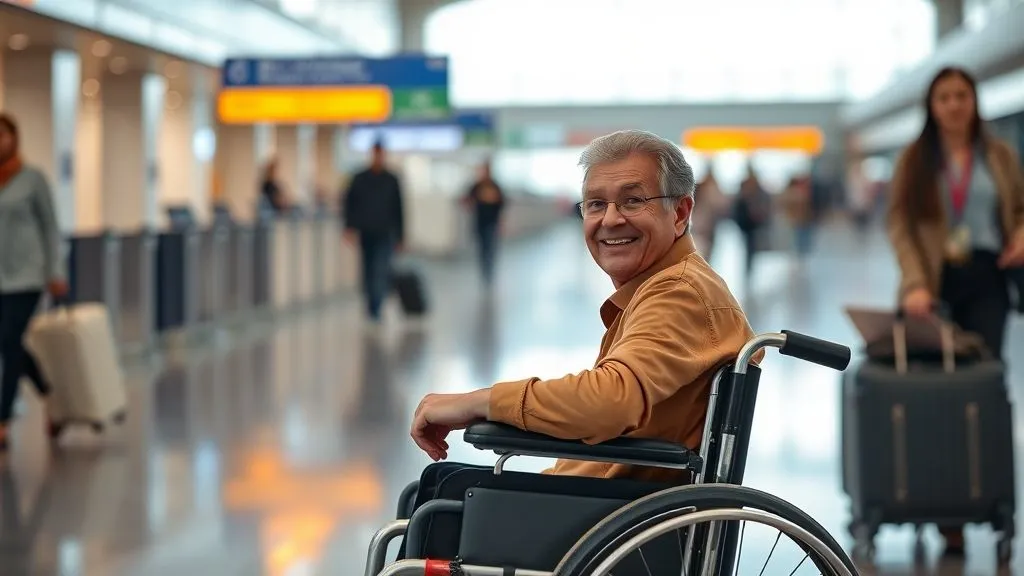
What to do when airport wheelchair assistance fails for clients?
For over 15 years in the accessible travel sector, I've personally witnessed and heard countless stories of airport wheelchair assistance failing. It's a deeply frustrating, often dehumanizing experience that can turn the excitement of travel into a nightmare for clients who rely on this vital support. I recall one incident where a client, a seasoned traveler with Parkinson's, was left stranded at a gate for over two hours after his connecting flight, despite pre-arranged assistance. His anxiety escalated, and his condition worsened due to the stress and lack of mobility.
This isn't just an inconvenience; it's a significant breach of trust and a direct barrier to independent travel. The problem isn't always malicious; often, it's a systemic breakdown – understaffing, miscommunication, or inadequate training. Regardless of the cause, the client is left vulnerable, potentially missing flights, enduring discomfort, or even facing health risks. It’s a recurring pain point that undermines the very principle of accessible travel.
In this definitive guide, I will equip you, as an advocate or a traveler, with a robust framework of actionable steps, expert insights, and legal knowledge to effectively respond when airport wheelchair assistance fails. We'll move beyond mere frustration to proactive solutions, empowering you to navigate these challenging situations with confidence and ensure your clients' journeys remain as smooth and dignified as possible. You'll learn not just what to do, but how to do it strategically, leveraging your rights and available resources.
Immediate Actions When Airport Wheelchair Assistance Fails
When you or your client find yourselves in a situation where pre-arranged wheelchair assistance is absent, the initial moments are critical. Panic can set in, but a calm, methodical approach is paramount. My first piece of advice is always to take a deep breath and quickly assess your immediate surroundings.
1. Reconfirm Your Assistance Request
Firstly, double-check your boarding pass or travel itinerary. Ensure that the Special Service Request (SSR) code for wheelchair assistance (typically WCHR for ramp, WCHS for stairs, WCHC for cabin seat) is clearly printed. Sometimes, a booking error or system glitch might mean the request wasn't properly transmitted. If you have a confirmation email or document specifically mentioning the assistance, have it ready.
2. Locate the Nearest Airline or Airport Staff
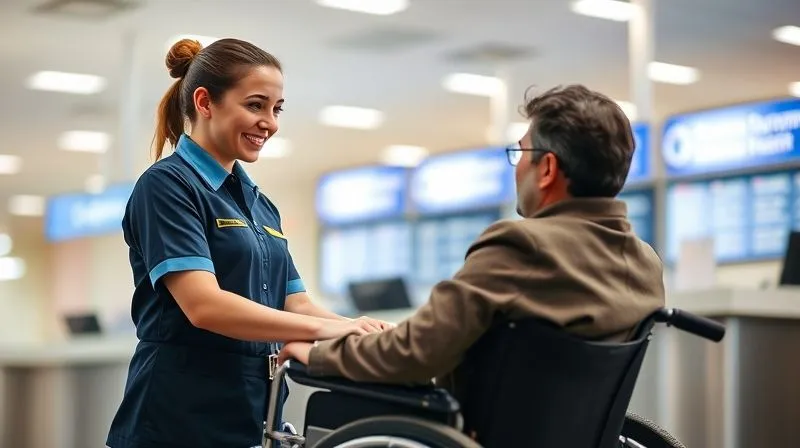
Your immediate goal is to find *any* uniformed airline or airport employee. Look for gate agents, customer service desks, or even baggage handlers. Approach them calmly but firmly. Clearly state your situation: “I have pre-arranged wheelchair assistance for [client’s name/my name] for flight [flight number] to [destination], and it has not arrived.” Be prepared to show your documentation.
3. Utilize Airport Information Desks and Assistance Points
Many larger airports have dedicated information desks or special assistance points. These can be excellent resources. They often have direct lines to airline operations or airport services responsible for mobility assistance. Don't hesitate to use these, as they are specifically designed to help with such issues.
4. Call the Airline's Special Assistance Line
If face-to-face contact proves difficult or unhelpful, use your mobile phone to call the airline's special assistance or disability services line. This is often more effective than the general customer service line as these teams are specifically trained for these scenarios. Explain the urgency of your situation, including your gate number and flight details. Document the time of your call and the name of the representative.
Expert Insight: Always have the airline's special assistance phone number saved in your phone before you travel. This saves precious time when every minute counts, especially during tight connections.

Understanding Your Rights: ADA, ACAA, and International Regulations
Knowing your rights is your most powerful tool when navigating airport assistance failures. It shifts the dynamic from pleading for help to asserting your entitlements. As an industry specialist, I’ve seen this knowledge empower countless travelers.
The Air Carrier Access Act (ACAA) in the U.S.
For travel within, to, or from the United States, the Air Carrier Access Act (ACAA) is your primary legal protection. It prohibits discrimination against passengers with disabilities in air travel. Key provisions include:
- Right to Assistance: Airlines must provide wheelchair assistance for boarding, deplaning, and connecting flights, free of charge.
- Right to Your Own Equipment: Airlines must permit passengers to bring their wheelchairs and other mobility aids into the cabin if they can be stowed. If not, they must be transported in the cargo hold without charge and given priority.
- Resolution Officials (CROs): Every airline operating in the U.S. must have a Complaint Resolution Official (CRO) available, either in person or by phone, during all hours of operation. A CRO is specifically trained to resolve disputes involving passengers with disabilities. Request to speak to a CRO immediately if your issue is not being resolved by front-line staff.
International Regulations and Conventions
Internationally, the landscape is similar, though specific laws vary. The Montreal Convention (and its predecessor, the Warsaw Convention) governs international air travel and liability, though it doesn't specifically detail disability rights. However, many regions have their own robust laws:
- EU Regulation 1107/2006: This regulation ensures that persons with disabilities and persons with reduced mobility (PRM) receive assistance when traveling by air within the EU, departing from an EU airport, or arriving at an EU airport from a non-EU country on an EU airline. It mandates airports to provide assistance, not the airlines directly, though airlines are responsible for notifying the airport.
- Canadian Transportation Agency (CTA) Regulations: Canada has comprehensive accessibility regulations under the Accessible Transportation for Persons with Disabilities Regulations (ATPDR), ensuring a high standard of accessibility in air travel.
Understanding these regulations allows you to frame your requests not as favors, but as enforceable rights. This can significantly change the response you receive from airline personnel.
Proactive Planning: The Best Defense Against Airport Failures
While we can't control every variable, meticulous pre-travel planning is the single most effective way to mitigate the impact of assistance failures. In my experience, the clients who fare best are those who have prepared for contingencies.
1. Confirm Assistance Multiple Times
Do not rely on a single confirmation. I advise a multi-layered approach:
- At Booking: Ensure the wheelchair assistance request is added to your reservation.
- 72 Hours Before Flight: Call the airline's special assistance line to reconfirm your request for all legs of your journey, including connections. Get a confirmation number or the name of the representative.
- 24 Hours Before Flight: Check-in online and look for confirmation of your special assistance request. If not visible, call again.
- At the Airport Check-in: Verbally confirm with the check-in agent that your assistance has been noted and requested.
2. Create a Detailed Emergency Contact Card
Prepare a laminated card with essential information:
- Your name and client's name.
- Flight numbers and times.
- Airline's special assistance phone number.
- Emergency contact persons (with phone numbers).
- Any critical medical information (allergies, conditions, medications).
- A brief statement of your needs (e.g., “Requires full wheelchair assistance from check-in to gate and gate to baggage claim”).
This card can be quickly handed to staff, reducing the need to verbally explain everything under stress.
3. Pack Essentials in Your Carry-On
Assume delays. Your carry-on should always contain:
- Medications (with prescriptions).
- Snacks and drinks.
- Charging cables for phones/devices.
- Any small, personal comfort items.
- A copy of your travel documents and confirmation of assistance.
4. Research Airport Layouts and Services
Before you even leave home, familiarize yourself with the airports you'll be transiting through. Many airport websites have detailed accessibility information, including locations of assistance points, accessible restrooms, and even maps indicating distances between gates. This knowledge helps you estimate time and identify potential alternative routes.
| Pre-Travel Step | Action | Notes |
|---|---|---|
| Reconfirm Assistance (72 hrs out) | Call airline special assistance, get confirmation # | Crucial for complex itineraries |
| Emergency Contact Card | Laminate and carry with ID | Includes medical, airline contact |
| Carry-On Essentials | Medications, chargers, docs | Prepare for 4+ hour delay |
| Airport Layout Research | Check airport website for accessibility maps | Identify assistance points, accessible restrooms |
Effective Communication Strategies On The Ground
How you communicate in a crisis can significantly impact the outcome. It's a skill I've honed over years, and it's invaluable. My approach is always firm, clear, and focused on solutions, not blame.
1. Be Clear, Concise, and Specific
When approaching staff, avoid emotional language. State the facts:
- “My name is [name], and I am scheduled on flight [number] to [destination] departing at [time] from gate [gate number]. I have pre-arranged wheelchair assistance, which has not arrived.”
- “I need assistance to get from here to my gate/connecting flight/baggage claim immediately. What is your plan to provide this assistance?”
2. Request a Complaint Resolution Official (CRO) or Supervisor
If front-line staff are unable or unwilling to help, immediately request to speak with a CRO (for U.S. flights) or a supervisor. Explain that you need someone with the authority to resolve the issue. Don't be afraid to escalate. This is your right.
3. Document Everything
From the moment you realize assistance has failed, start documenting:
- Time and location of the incident.
- Names and titles of any staff you speak with.
- Specific details of what was said or promised.
- Take photos or videos (discreetly if necessary) of the situation, especially if it highlights a problem (e.g., empty assistance desk, long lines without help).
This documentation is vital if you need to file a formal complaint later.
4. Leverage the Power of Politeness (Initially)
While being firm, start with politeness. A calm, respectful demeanor can sometimes elicit a more helpful response. If that fails, then you can escalate with more assertive language, but always remain professional. Remember, you're seeking a solution, not an argument.
Leveraging Technology and Personal Networks
In today's interconnected world, technology and your personal network can be powerful allies when airport assistance falters. Don't underestimate their potential.
1. Use Airline Mobile Apps for Real-time Support
Many airlines have robust mobile apps that allow you to chat with customer service, track flight status, and sometimes even request assistance. While not always immediate, it can be an alternative channel for communication if phone lines are busy or staff are scarce. Some apps even allow you to rebook flights or get real-time updates on delays.
2. Social Media as an Escalation Tool
While not my first recommendation for immediate resolution, public social media channels (like X/Twitter, Facebook) can sometimes spur action. A polite but firm public message to the airline's official account, stating your issue and flight details, can sometimes prompt a quicker response from their social media customer service team, who are often empowered to help. Use this judiciously and professionally.
3. Contact Your Travel Agent or Accessible Travel Specialist
If you booked through a travel agent or an accessible travel specialist (like myself), reach out to them immediately. They have direct contacts with airlines and often have more leverage to advocate on your behalf. They can reconfirm assistance, rebook flights, or even contact airport management. This is where the value of a good agent truly shines.
4. Reach Out to Family or Friends
If you're traveling alone and assistance fails, don't hesitate to call a trusted friend or family member. They can help research solutions, call the airline on your behalf, or even provide moral support. Sometimes, having another person on the phone, even remotely, can help you stay calm and focused.
Documenting Incidents and Seeking Redress
The immediate crisis may pass, but the need for accountability and preventing future failures remains. Thorough documentation is crucial for seeking redress and advocating for systemic change.
1. File a Formal Complaint with the Airline
As soon as possible after the incident (ideally within 24-48 hours), file a formal written complaint directly with the airline. Be factual, detailed, and include all your documented evidence: names, times, flight numbers, photos, and any financial losses (e.g., missed connection, unplanned hotel stay). Clearly state what resolution you are seeking (e.g., apology, refund, compensation, commitment to improved service).
2. Contact the Department of Transportation (DOT) or Regulatory Body
For U.S. flights, if the airline's response is unsatisfactory, or if you believe they violated ACAA regulations, file a complaint with the U.S. Department of Transportation (DOT). The DOT takes these complaints seriously and investigates patterns of non-compliance. Similarly, for EU flights, you can contact the national enforcement body in the country where the incident occurred. This is a critical step for systemic change.
3. Engage Disability Advocacy Groups
Consider sharing your experience with disability advocacy groups. Organizations like the United Spinal Association or local accessible travel advocacy groups often collect such data and can use it to lobby for stronger regulations and better enforcement. Your individual experience contributes to a larger narrative for change.
Case Study: Sarah's Stand at O'Hare
Sarah, a client who uses a powered wheelchair, was flying from London to Denver with a connection in Chicago O'Hare. Despite multiple confirmations, upon deplaning in O'Hare, no assistance was present. Her connecting flight was boarding in 45 minutes, and her gate was across the terminal. Instead of panicking, Sarah calmly approached a gate agent, showed her pre-confirmation emails, and immediately requested a CRO. When the agent hesitated, Sarah firmly stated her ACAA rights. She simultaneously called her accessible travel specialist, who contacted the airline's special assistance desk directly. Within 15 minutes, a CRO arrived, personally escorted Sarah, and arranged for a golf cart to expedite her to the connecting gate. Though stressed, she made her flight. Post-trip, her travel specialist helped her file a detailed complaint with the airline and the DOT, emphasizing the lack of initial response. The airline later offered a voucher and committed to re-training staff at O'Hare, demonstrating the power of knowing your rights and effective communication.
Empowering Your Travel Companions and Advocates
Traveling with a companion or an advocate significantly strengthens your position. They are an extra pair of eyes, ears, and a voice, which can be invaluable when assistance fails.
1. Brief Your Companion Thoroughly
Ensure your travel companion is fully aware of your needs, your itinerary, and what to do if assistance fails. Provide them with a copy of your emergency contact card and discuss the communication strategies outlined earlier. They should know:
- Who to approach (airline staff, CRO).
- What information to provide (flight number, assistance request).
- Your rights under ACAA or other regulations.
- Where to find your essential documents.
2. Divide and Conquer
In a crisis, a companion can divide tasks. While one person is speaking to airline staff, the other can be calling the special assistance line, looking for alternative staff, or documenting the situation. This coordinated effort can save critical time.
3. Advocate for You
Your companion can act as your advocate, especially if you are feeling overwhelmed or are unable to communicate effectively due to stress or your condition. They can speak on your behalf, ensuring your needs and rights are clearly articulated. This external voice can often be heard more clearly by staff who might be dismissive of a solo traveler.
4. Provide Emotional Support
Beyond practical assistance, a companion offers crucial emotional support. Traveling can be stressful, and an assistance failure can amplify that. Having a familiar, supportive presence can help maintain calm and focus.
The Role of Travel Agents and Accessible Travel Specialists
As an accessible travel specialist, I can attest that our role extends far beyond booking tickets. We are your proactive problem-solvers and your advocates, especially when things go wrong.
1. Pre-emptive Problem Solving
A good accessible travel specialist will:
- Know which airlines and airports have better track records for assistance.
- Understand the nuances of different airline policies and international regulations.
- Advise on optimal connection times and airport layouts for accessible travel.
- Ensure all special assistance requests are correctly documented and reconfirmed multiple times.
2. Direct Communication Channels
We often have direct contacts within airlines and airport services, allowing us to bypass general customer service lines during a crisis. This can significantly expedite problem resolution.
3. Advocacy and Follow-Up
If an incident occurs, we act as your advocate. We can:
- Contact the airline on your behalf while you are still at the airport.
- Assist with filing formal complaints.
- Negotiate for compensation or service recovery.
- Provide ongoing support and advice throughout the process.
Investing in an experienced accessible travel specialist is not just about convenience; it's about investing in peace of mind and having a powerful ally when unexpected challenges arise. According to a recent survey by the American Society of Travel Advisors (ASTA), travelers who used an agent reported higher satisfaction rates and felt more supported during travel disruptions.
Frequently Asked Questions (FAQ)
Question: What if the airline staff refuse to provide a CRO or supervisor? Detailed answer: This is a serious violation of regulations, particularly under the ACAA. If staff refuse, calmly state that you will be documenting their refusal, their name, and the time, and will be filing a formal complaint with the Department of Transportation (DOT). Sometimes, this warning alone can prompt them to comply. If not, proceed with documenting and filing the complaint as soon as possible, mentioning the refusal to provide a CRO specifically.
Question: Can I demand compensation if airport wheelchair assistance fails and causes significant disruption? Detailed answer: Yes, you can. While compensation is not guaranteed, airlines are generally expected to provide the services they confirm. If the failure leads to missed flights, unexpected overnight stays, or significant discomfort and delay, you can request compensation for these damages. Be sure to keep all receipts for unexpected expenses. File a formal complaint with the airline detailing the financial and emotional impact, backed by your thorough documentation. If unsatisfied, escalate to the relevant regulatory body (e.g., DOT).
Question: What's the best way to ensure my personal wheelchair is handled safely? Detailed answer: Always arrive early to check-in your wheelchair. Remove any detachable parts (cushions, joysticks, footrests) and carry them with you. Label all parts with your name and contact info. Take photos of your wheelchair before checking it. Use a detailed wheelchair pre-flight checklist. Clearly communicate any specific handling instructions to the staff. If your wheelchair is damaged, report it immediately at the airport before leaving the baggage claim area and file a Property Irregularity Report (PIR).
Question: I'm traveling with a service animal. How does this affect assistance? Detailed answer: Service animals are generally permitted to accompany their handlers in the cabin, provided they meet airline and regulatory requirements. While the service animal provides assistance, you are still entitled to wheelchair assistance for mobility through the airport if needed. Ensure your service animal's documentation is in order and clearly communicate that you require both types of assistance (wheelchair and service animal accommodation). The presence of a service animal does not negate your right to human assistance for mobility.
Question: What if I'm not fluent in the local language at an international airport? Detailed answer: This adds another layer of complexity. Before traveling, learn a few key phrases related to your needs (e.g., "wheelchair assistance," "my flight to..."). Have your emergency contact card translated into the local language if possible. Utilize translation apps on your phone. If you have a travel companion, they can assist. In extreme cases, ask for a CRO or supervisor, as they are more likely to speak English or have access to translation services.
Key Takeaways and Final Thoughts
Navigating air travel as a wheelchair user, or assisting a client who does, requires not just careful planning but also a robust strategy for when things inevitably go awry. Airport wheelchair assistance failures, while deeply frustrating, do not have to derail an entire journey. By empowering yourself with knowledge and a proactive mindset, you can transform a potential crisis into a manageable challenge.
- Prioritize Proactive Planning: Confirm assistance multiple times, carry an emergency card, and understand airport layouts.
- Know Your Rights: Leverage the ACAA, EU regulations, or local laws to assert your entitlement to assistance.
- Communicate Effectively: Be clear, concise, and don't hesitate to escalate to CROs or supervisors.
- Document Everything: Maintain a detailed record for immediate problem-solving and potential redress.
- Utilize Your Network: Engage travel agents, companions, and technology for support.
Remember, accessible travel is a right, not a privilege. While the industry still has strides to make, your informed advocacy plays a crucial role in driving that change. By applying these expert strategies, you can ensure not only your own dignity and smooth passage but also contribute to a more inclusive and reliable travel experience for everyone.
Recommended Reading
- The Ultimate Guide: How to Choose Ethical Nature Reserve Eco Tours Responsibly
- Unlock True Impact: What's the Difference Between Volunteer & Social Travel?
- Solo Female Foodie? Best Street Food Cities Await Your Taste Buds!
- 4-Hour Port Power-Up: Unlock Unique Cruise Experiences Now
- Your Wheelchair Damaged? What To Do If Airline Damages Wheelchair!




Your email address will not be published. Required fields are marked *