

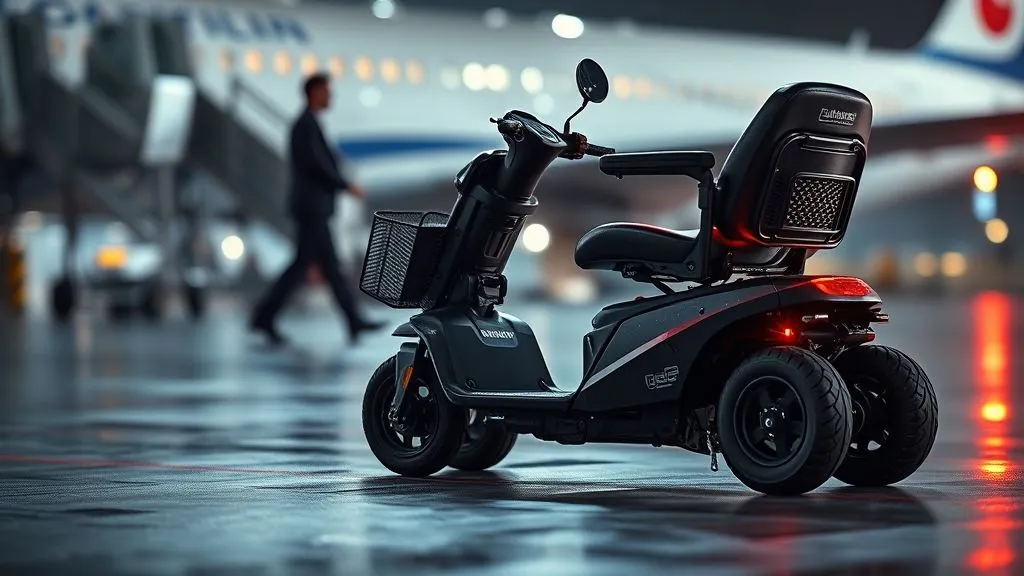
What to Do When an Airline Damages a Client's Custom Mobility Scooter?
For over two decades in the accessible travel industry, I've witnessed the profound impact a damaged mobility scooter can have. It’s not just a piece of equipment; for many, it's an extension of their body, their freedom, their very independence. I've seen the heartbreak, the frustration, and the sheer panic when a carefully chosen, often custom-built, mobility aid arrives broken after a flight.
The scenario is unfortunately all too common: you arrive at your destination, eager for your trip, only to find your custom mobility scooter—a device meticulously fitted to your unique needs—damaged, perhaps even rendered unusable, by airline handling. This isn't just an inconvenience; it's a catastrophic disruption to your travel plans, your comfort, and your ability to navigate the world. The complexity of custom equipment, its value, and its essential role make this problem uniquely distressing.
But here's the crucial insight I want to share: you are not powerless in this situation. In this definitive guide, I will walk you through the precise, actionable steps you must take immediately and in the days that follow. We'll cover everything from on-the-spot documentation to navigating the claims process, understanding your rights, and ensuring your custom mobility scooter is repaired or replaced without undue burden. My goal is to equip you with the knowledge and confidence to transform a moment of crisis into a successful resolution.
Immediate Action at the Baggage Claim: Your First Critical Steps
The moment you see your custom mobility scooter emerge from baggage claim, or perhaps not emerge at all in its intended condition, a wave of shock, anger, and anxiety is entirely natural. I’ve observed this reaction countless times, and my primary advice is always the same: take a deep breath, and then act swiftly and methodically. Your immediate response at the airport is absolutely critical to the success of any subsequent claim.
First and foremost, do not leave the airport baggage claim area without reporting the damage. This is a non-negotiable step. Once you leave, it becomes significantly harder to prove that the damage occurred while in the airline's custody. Look for airline personnel—ideally, someone from baggage services or a supervisor. Explain the situation clearly and calmly.
Here’s a step-by-step guide to your initial actions:
- Assess the Damage Immediately: As soon as your scooter is presented, carefully inspect it. Look for obvious breaks, bends, scratches, or missing parts. Test basic functions if possible and safe to do so. Note anything that seems out of place or non-functional.
- Locate Airline Personnel: Find the nearest airline representative, ideally at the baggage service desk. Inform them that your custom mobility scooter has been damaged during transit. Be prepared to provide your flight details, baggage tags, and a brief description of the damage.
- Request a Damage Report: The airline must complete a Property Irregularity Report (PIR) or a similar damage report form. Insist on receiving a copy of this report, which should include a reference number. This document is your official record that the damage was reported at the airport.
- Document Everything Visually: Before any airline staff move or attempt to "fix" anything, use your smartphone or camera to take extensive photos and videos of the damage. Capture wide shots showing the scooter in the airport setting, as well as close-ups of every single point of damage. Don't forget to photograph your baggage tag and any identifying serial numbers on the scooter.
- Inquire About Temporary Mobility: If your scooter is unusable, immediately ask the airline about their policy for providing a temporary replacement or alternative accessible transportation. Airlines often have obligations under the Air Carrier Access Act (ACAA) to assist passengers with disabilities, including providing temporary mobility aids or transportation to a repair facility or accommodation.
I cannot stress enough the importance of these initial moments. They lay the groundwork for everything that follows. Remember, you are advocating for your essential mobility, and the airline has a responsibility to facilitate your travel safely and respectfully.
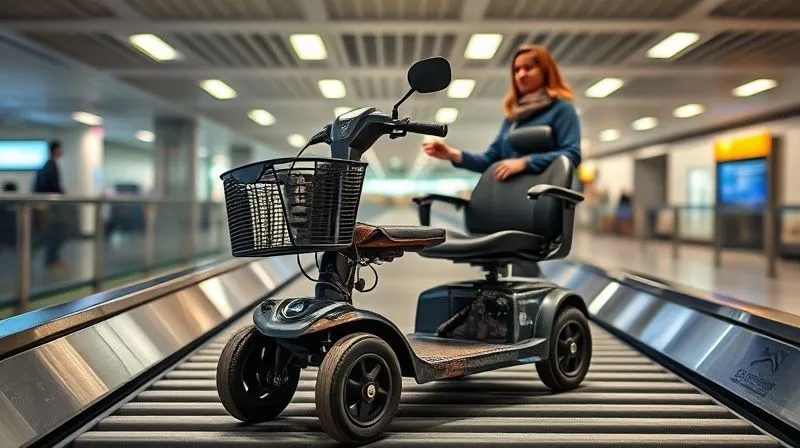
"Leaving the airport without an official damage report is like trying to build a house without a foundation. It jeopardizes your entire claim and makes proving airline responsibility exponentially harder."
Comprehensive Documentation: Building Your Irrefutable Case
Once you’ve completed the immediate reporting at the airport, your next crucial step is to meticulously gather and organize all possible documentation. In my experience, the strength of your claim hinges almost entirely on the quality and completeness of your evidence. Airlines, like any large corporation, often require irrefutable proof to process claims efficiently. Think of yourself as building a bulletproof case.
What to Document Beyond the Initial Photos:
- Pre-Flight Condition Evidence: Did you take photos or videos of your custom mobility scooter before you checked it in? If not, this is a lesson for future travel. If you did, these are invaluable. They serve as a baseline, proving the scooter was in perfect working order before the airline took custody. Include shots of any unique features, custom modifications, and overall pristine condition.
- Detailed Post-Damage Visuals: Go beyond the initial airport photos. Once you're in a more stable environment, take even more detailed pictures and videos.
- Photograph every angle of the scooter.
- Take close-ups of every crack, dent, scratch, bend, and loose component.
- Use a measuring tape or a common object (like a coin) in photos to provide scale for specific damages.
- Video the scooter attempting to function, or demonstrating its lack of function, if applicable. Narrate what you are observing.
- Capture serial numbers, model numbers, and any unique identifiers on the scooter itself.
- Written Statement: Draft a detailed, chronological account of the incident. Include:
- Date and time of flight, airline, flight numbers.
- Specifics of when and where the damage was discovered.
- A precise description of the damage.
- Names of any airline personnel you interacted with, along with their titles or badge numbers.
- Any immediate impacts, such as inability to move or needing temporary assistance.
- Repair Estimates: Contact a reputable mobility scooter repair shop that specializes in custom equipment. Obtain a formal written estimate for the repair costs. If the scooter is deemed irreparable, get a written statement to that effect, along with an estimate for a replacement. For custom scooters, this often means specific parts or skilled technicians, so ensure the estimate reflects this complexity.
- Purchase Receipts and Customization Records: Provide proof of purchase for your scooter, including its original cost. If you have documentation for custom modifications (receipts, service records, design plans), these are crucial to demonstrating the full value of your unique device.
- Communication Records: Keep a meticulous log of all communications with the airline – dates, times, names of representatives, summaries of conversations, and copies of all emails or letters sent and received.
I once worked with a client whose custom scooter, valued at over $15,000, was rendered inoperable. Their claim was initially denied because they lacked detailed pre-flight photos. We spent weeks gathering old photos from their personal albums to establish its prior condition. This underscores why proactive documentation is so vital. Don't rely on memory; rely on concrete evidence.
| Document Type | Purpose | Status |
|---|---|---|
| Airline Damage Report (PIR) | Official airline acknowledgment of damage | Acquired at airport |
| Pre-Flight Photos/Video | Proof of prior condition & functionality | Collected (if available) |
| Post-Damage Photos/Video | Detailed visual evidence of damage | Collected |
| Written Incident Statement | Chronological account of events | Drafted |
| Repair Estimates/Quotes | Cost assessment for repair/replacement | Pending/Received |
| Purchase Receipts/Customization Docs | Proof of ownership & value | Collected |
| Communication Log | Record of all airline interactions | Ongoing |
This comprehensive approach ensures that when you formally submit your claim, the airline has all the necessary information to process it fairly and efficiently, leaving little room for dispute.
Understanding Your Rights: The Air Carrier Access Act (ACAA) and Beyond
Navigating airline claims can feel daunting, but understanding the legal framework protecting passengers with disabilities is empowering. In the United States, the primary legislation governing accessible air travel is the Air Carrier Access Act (ACAA). This act prohibits discrimination on the basis of disability in air travel and mandates specific responsibilities for airlines regarding mobility aids.
Under the ACAA, airlines are explicitly required to transport mobility aids, including custom mobility scooters, free of charge and as priority baggage. More importantly, they are responsible for any damage or loss that occurs while the mobility aid is in their custody. This is a critical point that many passengers are unaware of or struggle to enforce.
Key Protections Under ACAA and DOT Regulations:
- Liability Limits: For domestic flights within the U.S., the Department of Transportation (DOT) typically holds airlines liable for the original purchase price of the mobility aid, regardless of standard baggage liability limits. This is a significant distinction, especially for expensive custom scooters. For international flights, the Montreal Convention often applies, which has its own liability limits (currently around $1,700 USD per passenger for baggage damage, but there are nuances for mobility aids). It’s crucial to understand which applies to your specific flight.
- Prompt Return: Airlines must return your mobility aid to you at the earliest possible opportunity. If it's delayed, they should make reasonable efforts to provide a temporary replacement.
- Repair or Replacement: If your mobility aid is damaged, the airline must either repair it to its original condition, replace it with a comparable device (including custom features), or provide compensation for its full value. For custom scooters, this means they can't just offer a generic replacement; it must meet your specific needs.
- Assistance: Airlines must provide assistance with boarding, deplaning, and making connections, and handle your mobility aid with care.
As the U.S. Department of Transportation (DOT) states, "Airlines cannot refuse to transport a passenger with a disability on the basis of their disability." This extends to the safe and respectful handling of their essential equipment.
Case Study: Sarah's Custom Scooter Saga
Sarah, a frequent traveler with a unique neurological condition, relied on a highly customized power wheelchair, specifically designed for her posture and pressure relief. It cost her nearly $25,000. On a domestic flight, the airline severely bent the frame and damaged the specialized seating system. Initially, the airline offered a standard repair or a generic replacement, citing their general baggage liability limits.
However, Sarah, having been advised on her ACAA rights, firmly but politely pushed back. She provided detailed documentation of her scooter's custom features, the repair estimate from a specialist mobility technician (which included replacing custom parts), and highlighted the DOT's stance on mobility aid liability. She also referenced the Airline Passengers with Disabilities Bill of Rights. After several weeks of persistent communication, the airline eventually agreed to cover the full cost of the specialized repair, acknowledging their responsibility under ACAA to restore her custom device to its original, functional state.
This case exemplifies why knowing your rights and advocating for them is paramount. Don't let an airline dismiss the true value and necessity of your custom equipment. Be prepared to educate them on their own responsibilities under federal law.
Initiating the Formal Claim Process: Precision is Paramount
With your immediate actions taken and your comprehensive documentation in hand, the next critical phase is to formally submit your claim to the airline. This isn't just a casual conversation; it's a formal legal and administrative process that demands precision and attention to detail. Many airlines have specific procedures and deadlines for filing damage claims, and missing these can jeopardize your case.
In my experience, airlines prefer claims submitted in writing. While you might have reported the damage verbally at the airport, a formal written claim ensures there's a clear, documented record of your submission. This also allows you to present all your evidence in an organized manner.
Steps to Filing Your Formal Claim:
- Locate the Airline's Official Claims Portal or Address: Most major airlines have a dedicated section on their website for baggage claims, or a specific mailing address for written correspondence. Avoid generic customer service lines for this specific issue, as it needs to be routed correctly.
- Complete All Required Forms: Fill out any airline-specific claim forms thoroughly and accurately. Do not leave any fields blank if they are relevant. If a field doesn't apply, write "N/A."
- Attach All Supporting Documentation: This is where your meticulous documentation pays off. Include:
- A copy of your flight itinerary and boarding pass.
- A copy of the Property Irregularity Report (PIR) or damage report from the airport.
- All pre-flight and post-damage photos and videos (clearly labeled or organized).
- Your detailed written statement of the incident.
- The repair estimate(s) or statement of irreparable damage.
- Proof of purchase and customization records for your mobility scooter.
- Any receipts for temporary mobility rentals or transportation necessitated by the damage.
- Clearly State Your Desired Resolution: Be explicit about what you are seeking: full repair, replacement of a comparable custom scooter, or monetary compensation for the full value. For custom equipment, emphasize that "comparable" means functionally identical, not just a basic model.
- Adhere to Deadlines: Pay very close attention to the airline’s stated deadlines for filing claims. These can vary, but generally range from 7 to 30 days for damaged baggage after the flight. Missing these deadlines, even by a day, can result in your claim being denied.
- Keep Copies of Everything: Before you send anything, make a complete copy of your entire claim package for your records. If mailing, consider sending it via certified mail with a return receipt requested, so you have proof of delivery.
- Follow Up Systematically: Don't submit and forget. Note down the claim number and the date of submission. If you don't hear back within the airline's stated processing time (e.g., 2-4 weeks), follow up with a polite but firm inquiry, referencing your claim number. Keep a log of all follow-up communications.

I often advise clients to create a dedicated folder, physical or digital, for all claim-related documents. This organized approach minimizes stress and ensures you can quickly access any information the airline might request during their investigation.
"A well-organized claim package doesn't just make the airline's job easier; it projects professionalism and reinforces the validity of your request, often leading to a swifter and more favorable resolution."
Navigating Repair, Replacement, and Reimbursement for Custom Aids
Once your claim is formally submitted, the airline will begin its assessment. This is often where the unique challenges of a damaged custom mobility scooter truly come into play. Unlike standard luggage or even off-the-shelf mobility devices, custom aids represent a significant investment in both cost and personalized engineering. My experience tells me that airlines may initially try to offer a repair that doesn't fully restore custom functionality or a generic replacement that simply won't meet your specific needs.
Repair vs. Replacement for Custom Equipment:
- The "Original Condition" Standard: Under the ACAA, the airline is generally obligated to return your mobility aid to its original condition. For custom scooters, this means repairing it using original or equivalent specialized parts and ensuring all custom modifications are fully functional. If certain custom components are no longer available or cannot be adequately repaired, then replacement becomes the more appropriate path.
- Assessing Irreparability: If a qualified mobility technician determines your custom scooter is beyond repair, or if the cost of repair approaches or exceeds the cost of a new, comparable custom unit, then you should push for replacement. Obtain a written statement from the technician confirming the scooter's irreparable status.
- The Challenge of "Comparable": This is often the trickiest negotiation point. A basic, off-the-shelf scooter is rarely "comparable" to a custom-built one designed for specific medical or physical requirements. You must articulate precisely what makes your scooter custom: specialized seating, unique control systems, specific weight capacity, custom programming, pressure relief features, etc. Provide documentation of these customizations.
I’ve seen airlines attempt to offer a fraction of the custom scooter's value based on standard depreciation schedules, or propose a replacement that is fundamentally inadequate. This is where your pre-flight documentation of the scooter's value and customization becomes invaluable. Be prepared to educate the airline on why a generic solution is unacceptable for an essential medical device.
Reimbursement and Interim Costs:
Beyond the scooter itself, remember to claim for any reasonable, verifiable out-of-pocket expenses incurred due to the damage. This might include:
- Temporary Mobility Aid Rentals: If you had to rent a scooter or wheelchair while yours was being repaired or replaced.
- Accessible Transportation: Costs for taxis, accessible vans, or other transportation if your scooter's damage prevented you from using public transport or your planned accessible vehicle.
- Medical Appointments: If the damage exacerbated a condition or prevented you from attending a critical appointment.
- Lost Trip Value: While harder to quantify, if the damage significantly impaired your ability to participate in planned activities, this can be part of the negotiation, though airlines are often resistant to this.
Keep every single receipt for these interim expenses. Present them clearly as part of your overall claim. Airlines are generally more willing to reimburse direct, provable costs associated with mitigating the impact of the damage.
"For custom mobility aids, 'comparable' is not just about price; it's about restoring functionality, independence, and the specific adaptations that make the device uniquely yours. Do not settle for anything less."
Be persistent, but always professional. Your goal is a fair resolution that restores your mobility and quality of life, not just a quick payout that leaves you with an inadequate solution.
Leveraging External Advocacy and Regulatory Bodies
Despite your best efforts and meticulous documentation, there might be instances where an airline is uncooperative, denies your claim unfairly, or offers an unsatisfactory resolution. When this happens, it's crucial to understand that you have avenues for escalation and external support. In my long career, I’ve often seen airlines become much more responsive once a regulatory body or an advocacy group gets involved.
Filing a Complaint with the U.S. Department of Transportation (DOT):
If your flight involved a U.S. airline or originated/terminated in the U.S., the U.S. Department of Transportation (DOT) is your primary recourse. The DOT's Aviation Consumer Protection Division investigates complaints against airlines, especially those related to disability discrimination and damaged mobility aids. Here’s how to proceed:
- Gather All Previous Correspondence: Before filing, compile all your communications with the airline, including your initial claim, their responses, and your follow-ups.
- Visit the DOT Website: Navigate to the DOT's consumer complaint page. There’s usually a specific section for disability-related complaints.
- Provide Detailed Information: Fill out the online complaint form thoroughly. Include your flight details, the nature of the damage, the airline's response (or lack thereof), and attach all relevant documentation. Explain why the airline's offer (if any) is inadequate, particularly for your custom mobility scooter.
- The DOT's Role: The DOT doesn't directly resolve individual claims or award compensation, but they do act as a mediator. They will forward your complaint to the airline, requiring them to respond to you and the DOT within a specified timeframe (typically 30 days). This often prompts airlines to re-evaluate their stance, knowing a federal agency is monitoring the situation. Furthermore, consistent complaints about an airline can lead to investigations and penalties for the carrier.
Engaging Disability Rights Organizations:
Several non-profit organizations are dedicated to advocating for the rights of people with disabilities. Groups like the Disability Rights Education & Defense Fund (DREDF) or local independent living centers can offer advice, resources, and sometimes even direct advocacy support. They understand the nuances of disability law and can provide guidance on strengthening your case or connecting you with legal aid if necessary.
While I cannot provide legal advice, I can tell you that in rare, extreme cases where significant damage occurred, the airline remains unresponsive, and the value of the custom scooter is very high, consulting with an attorney specializing in disability law or consumer rights might be a viable option. They can assess the strength of your case and advise on potential legal action.
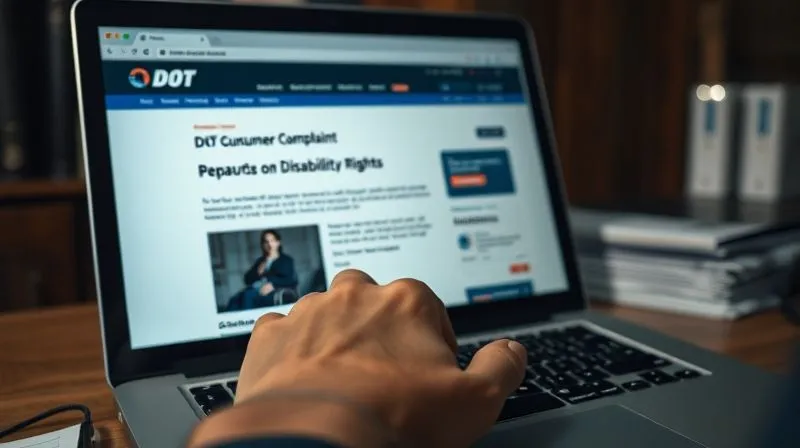
Remember, the goal is to resolve the issue as efficiently as possible. Escalating to external bodies should be seen as a necessary step when internal airline processes fail to deliver a fair outcome for your essential custom mobility equipment.
Proactive Measures: Minimizing Future Risks
While no process can entirely eliminate the risk of damage to your mobility scooter during air travel, my years in accessible travel have taught me that taking proactive steps can significantly reduce the likelihood and mitigate the impact. Preparing diligently before you even leave for the airport is your best defense against future incidents.
Pre-Flight Preparation for Your Custom Mobility Scooter:
- Pre-Flight Documentation is Key: As discussed, photograph and video your scooter from all angles, highlighting its condition and any custom features. Date-stamp these visuals. This is your "before" evidence.
- Communicate with the Airline in Advance: Notify the airline at least 48-72 hours before your flight that you will be traveling with a custom mobility scooter. Provide its dimensions, weight, battery type (if electric), and any specific handling instructions. This allows them to prepare and ensures they are aware of its special nature.
- Prepare Your Scooter for Travel:
- Remove Detachable Parts: If safe and easy, remove any fragile or easily detachable components like armrests, footrests, joysticks, cushions, or headrests. Carry these with you in the cabin as carry-on items.
- Secure Loose Items: Ensure all remaining parts are securely fastened. Use bungee cords or straps if necessary to prevent components from flapping or becoming dislodged.
- Battery Safety: For electric scooters, understand and comply with DOT regulations regarding battery types (lithium-ion, gel cell, wet cell). Often, batteries must be disconnected and terminals insulated. Some lithium-ion batteries may need to be carried in the cabin. Always confirm with your specific airline.
- Protective Packaging: Consider investing in a durable travel case or heavy-duty padding for your scooter, especially for highly customized or delicate models. While not always feasible for larger scooters, even industrial shrink wrap or blankets can offer some protection.
- Clear Instructions: Print out clear, laminated instructions for airline ground staff on how to properly handle your specific scooter, including any lifting points, braking mechanisms, and battery disconnection. Attach these prominently to the scooter.
- Consider Travel Insurance: While airlines are liable, travel insurance (especially policies specifically designed for accessible travel or those with high coverage limits for medical equipment) can offer an additional layer of protection, particularly for international travel or for covering temporary expenses not fully reimbursed by the airline. Review policies carefully to understand their coverage limits and exclusions for mobility aids.
- Arrive Early: Give yourself ample time at the airport. Rushing can lead to mistakes or insufficient communication with airline staff about your scooter.
| Action | Benefit | Priority |
|---|---|---|
| Pre-flight Photos/Video | Irrefutable proof of prior condition | High |
| Advance Airline Notification | Ensures airline preparation & awareness | High |
| Remove Detachable Parts | Protects fragile components from damage | Medium |
| Secure Loose Items | Prevents accidental dislodgement | Medium |
| Battery Safety Compliance | Essential for flight safety & avoiding issues | Critical |
| Protective Packaging | Adds physical barrier against impacts | Medium |
| Clear Handling Instructions | Guides ground staff on proper care | High |
| Travel Insurance Review | Additional financial protection & coverage | High |
By integrating these proactive strategies into your travel routine, you not only minimize the risk of damage but also significantly strengthen your position should an unfortunate incident occur.
Frequently Asked Questions (FAQ)
Q: What if the damage isn't discovered until I get home? A: This is a challenging situation, as airlines typically require damage to be reported before leaving the airport. However, you should still file a claim immediately upon discovery, providing all possible documentation (photos, video, pre-flight evidence). Be prepared for a more difficult process, as the airline may argue the damage occurred post-flight. This underscores the importance of airport inspection.
Q: Can I claim for emotional distress or lost trip enjoyment? A: While the emotional impact of a damaged custom mobility scooter is immense, airlines are generally not liable for emotional distress or "lost enjoyment" of a trip under current U.S. and international aviation laws. Their liability typically extends to the repair or replacement value of the item and direct, verifiable out-of-pocket expenses. Quantifying emotional distress in such claims is exceptionally difficult.
Q: What if the airline offers a depreciated value for my scooter? A: For domestic U.S. flights, the Department of Transportation's stance is that airlines are liable for the original purchase price of mobility aids, effectively waiving standard depreciation for essential equipment. For international flights under the Montreal Convention, liability limits apply, but you should still advocate for full replacement value, especially for custom equipment, and be prepared to negotiate or escalate if they insist on depreciation.
Q: How long does the claims process typically take? A: The timeline can vary significantly. Simple claims with clear damage and documentation might be resolved in a few weeks. Complex cases involving custom equipment, extensive damage, or uncooperative airlines can take months, especially if escalation to the DOT or legal counsel is required. Patience and persistent follow-up are essential.
Q: Should I get my custom scooter repaired before the airline approves it? A: Generally, no. Always wait for the airline's approval or at least a clear directive before proceeding with repairs. If you repair it without their consent, they might refuse to reimburse you. Obtain repair estimates, submit them to the airline, and await their instructions. In urgent situations where you absolutely cannot wait, document everything meticulously, get multiple estimates, and inform the airline of your intent to proceed due to necessity, but be aware this carries some risk.
Key Takeaways and Final Thoughts
Experiencing damage to your custom mobility scooter by an airline is a deeply distressing event, but it is not a battle you have to face unprepared. By understanding your rights and following a methodical approach, you can significantly improve your chances of a successful resolution. Here are the most critical takeaways:
- Act Immediately: Report damage at the airport before leaving, and get an official damage report.
- Document Everything: Your claim's strength relies on comprehensive photos, videos, written statements, and repair estimates, ideally including pre-flight evidence.
- Know Your Rights: Leverage the Air Carrier Access Act (ACAA) and DOT regulations, which stipulate airlines are liable for the full value of damaged mobility aids on domestic flights.
- Be Meticulous in Your Claim: Submit a formal, detailed claim with all supporting documents, adhering to airline deadlines.
- Advocate for "Comparable": For custom scooters, ensure any repair or replacement truly matches your unique needs and specifications, not just a generic alternative.
- Don't Hesitate to Escalate: If the airline is uncooperative, file a complaint with the U.S. Department of Transportation or seek assistance from disability rights organizations.
- Prepare Proactively: Future travel should include advance notification, careful packing, battery safety, and thorough pre-flight documentation.
My hope is that this guide empowers you to navigate what can be a challenging situation with confidence and clarity. Remember, your custom mobility scooter is more than just baggage; it is your gateway to independence. By being informed, persistent, and organized, you can hold airlines accountable and ensure your right to accessible travel is upheld. Travel smart, stay informed, and never underestimate the power of your own advocacy.
Recommended Reading
- LEO Space Tourists: 7 Critical Steps to Prevent Medical Incidents
- Mastering Cruise ROI: 7 Steps to Measure Themed Campaign Success
- 7 Steps to Prove ROI for Luxury Holistic Healing Wellness Programs
- 7 Pillars: Sustainable Returns from Biodiversity Eco-Tourism?
- Train Delays & Tight Connections: Your 6-Step Guide for Unknown Stations




Your email address will not be published. Required fields are marked *