

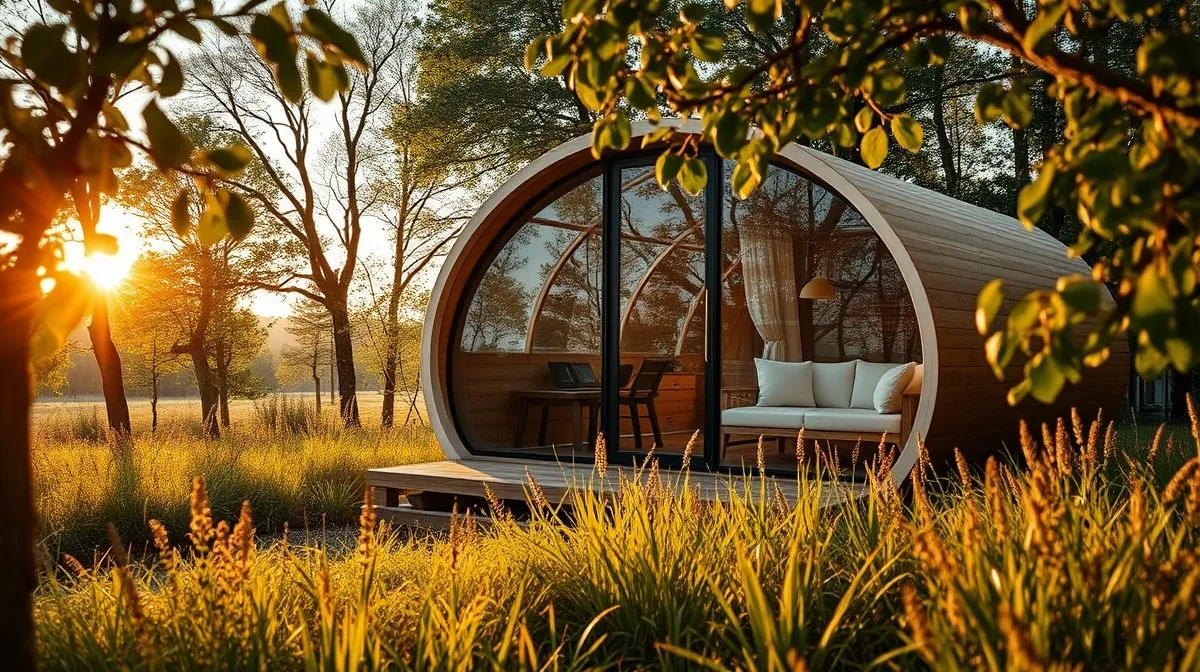
Are Glamping Eco Pods Truly Environmentally Friendly?
Imagine waking up to the gentle chirping of birds, sunlight filtering through a canopy of ancient trees, and the crisp scent of pine filling the air. You’re not roughing it in a tent; instead, you’re nestled within a beautifully designed pod, complete with a comfortable bed and perhaps even a private en-suite. This is the allure of glamping, a fusion of glamour and camping, offering a luxurious escape into nature. But as the popularity of these unique accommodations soars, a crucial question emerges: can luxury truly coexist with genuine environmental responsibility?
The promise of “eco pods” often conjures images of minimal impact and harmony with the environment. However, the term “eco-friendly” can be a broad and sometimes misleading label, especially in the booming tourism sector. Many travelers are increasingly conscious of their carbon footprint and seek experiences that align with their values. This desire for sustainable travel puts the onus on providers to deliver on their green claims, raising concerns about greenwashing and the true environmental cost of even seemingly benign structures.
This comprehensive guide will peel back the layers of marketing hype to explore the genuine sustainability of glamping eco pods. We will delve into their design, construction, operational practices, and the broader impact they have on ecosystems and local communities. By the end of this reading, you will possess the knowledge to discern truly green glamping options from those that merely wear an “eco” badge, empowering you to make informed and responsible travel choices.
Understanding the "Eco" in Eco Pods
The term “eco pod” implies a deep commitment to environmental stewardship, but what does this truly entail in the context of a glamping structure? It’s far more than just aesthetics; it’s about a holistic approach to design, construction, and operation that minimizes ecological impact.
What Defines an Eco Pod?
An eco pod, at its core, is designed with sustainability as a primary consideration from conception to decommissioning. This means prioritizing factors such as:
- Minimal Footprint: Structures are often elevated or designed to have the least possible disturbance on the land.
- Sustainable Materials: Use of recycled, reclaimed, locally sourced, and rapidly renewable materials.
- Energy Efficiency: Optimized for passive heating and cooling, and often powered by renewable energy sources.
- Water Conservation: Systems for rainwater harvesting, greywater recycling, and low-flow fixtures.
- Waste Management: Strategies for reducing, reusing, and recycling waste, including composting solutions.
- Integration with Nature: Designed to blend seamlessly into the natural landscape rather than disrupt it.
These elements collectively aim to create an accommodation that offers comfort without compromising the delicate balance of its surrounding environment.
The Philosophy of Sustainable Glamping
Sustainable glamping is not just about the physical structure; it’s about fostering a deeper connection between guests and nature while preserving the natural world for future generations. This philosophy extends to operational practices and guest education.
- Respect for Ecosystems: Operators commit to protecting local flora and fauna, often contributing to conservation efforts.
- Community Engagement: Supporting local economies through employment, sourcing local produce, and respecting cultural heritage.
- Educational Opportunities: Informing guests about local ecology, sustainable practices, and responsible tourism.
It's about creating an experience where luxury is redefined by authenticity, tranquility, and a profound respect for the planet.
Material Matters: Building Blocks of Sustainability
The materials used in constructing glamping eco pods are fundamental to their environmental credentials. A truly sustainable pod considers the entire lifecycle of its components, from extraction to disposal.
Sustainable Sourcing and Manufacturing
The origin and production of materials have a significant impact. Ideal eco pods prioritize:
- Recycled Content: Utilizing materials like recycled steel, plastic, or reclaimed timber reduces demand for virgin resources and diverts waste from landfills.
- Rapidly Renewable Resources: Materials such as bamboo, cork, or straw bales grow quickly and can be harvested without depleting natural ecosystems.
- Locally Sourced Materials: Minimizing transportation distances reduces the carbon footprint associated with material delivery. This also supports local economies.
- Low VOC (Volatile Organic Compound) Finishes: Paints, sealants, and adhesives that emit fewer harmful chemicals, improving indoor air quality and reducing environmental pollution.
For instance, a pod built with sustainably harvested timber from FSC-certified forests, combined with recycled insulation and low-impact finishes, demonstrates a strong commitment to responsible material sourcing.
Durability and Lifecycle Assessment
A well-built eco pod is designed for longevity. The longer a structure lasts, the less frequently it needs to be replaced, thereby reducing the demand for new materials and the energy associated with construction.
- Robust Construction: Materials and building techniques chosen for durability in various weather conditions.
- Ease of Maintenance: Designing for simple repairs and upkeep extends the life of the pod.
- End-of-Life Planning: Consideration for how the pod can be disassembled, recycled, or repurposed at the end of its functional life. This minimizes waste and promotes a circular economy approach.
A comprehensive lifecycle assessment (LCA) evaluates the environmental impacts of a product from raw material extraction through manufacturing, use, and disposal. True eco pods often have LCAs conducted to ensure their footprint is genuinely low.
Energy Efficiency and Renewable Power
Energy consumption is one of the largest contributors to a structure’s environmental footprint. Eco pods are designed to drastically reduce energy demand and, ideally, meet remaining needs from renewable sources.
Harnessing Solar, Wind, and Geothermal
Many eco pods operate off-grid or significantly reduce their reliance on conventional power grids by integrating renewable energy technologies:
- Solar Photovoltaic (PV) Panels: The most common solution, providing electricity for lighting, charging, and small appliances.
- Small Wind Turbines: Suitable for locations with consistent wind, supplementing solar power.
- Geothermal Systems: Utilizing the stable temperature of the earth for heating and cooling, though less common for individual pods due to complexity.
Beyond generation, efficient energy storage, typically via battery banks, ensures a consistent power supply, even when renewable sources are intermittent.
Insulation and Passive Design Principles
The first step to energy efficiency is reducing the need for heating and cooling. Passive design leverages natural elements to maintain comfortable indoor temperatures:
- High-Performance Insulation: Walls, roofs, and floors are heavily insulated to prevent heat loss in winter and heat gain in summer. Materials like sheep's wool, recycled denim, or cellulose are often preferred for their low embodied energy.
- Strategic Window Placement: Large windows facing south (in the Northern Hemisphere) maximize passive solar gain in winter, while shading elements (overhangs, deciduous trees) prevent overheating in summer.
- Natural Ventilation: Cross-ventilation and stack effect ventilation (where warm air rises and escapes through high vents) minimize the need for air conditioning.
- Thermal Mass: Using materials like concrete or stone within the pod to absorb and slowly release heat, stabilizing indoor temperatures.
By prioritizing these design principles, eco pods can often maintain comfortable temperatures with minimal, if any, reliance on active heating or cooling systems, dramatically reducing their energy footprint.
Water Management and Waste Reduction
Water is a precious resource, and waste generation is a significant environmental challenge. True eco pods implement sophisticated systems to conserve water and manage waste responsibly.
Greywater Recycling and Rainwater Harvesting
Minimizing fresh water consumption is critical:
- Rainwater Harvesting: Collecting rainwater from the roof and storing it in tanks for non-potable uses like flushing toilets, irrigation, or even showering after filtration.
- Greywater Recycling: Water from sinks and showers (greywater) is filtered and treated, then reused for toilet flushing or garden irrigation, significantly reducing demand on fresh water supplies.
- Low-Flow Fixtures: Toilets, showerheads, and faucets are chosen for their efficiency, using significantly less water per use without compromising performance.
These systems not only conserve water but also reduce the strain on local water infrastructure and wastewater treatment plants.
Composting Toilets and Waste Minimization Strategies
Waste management in remote or sensitive areas requires innovative solutions:
- Composting Toilets: These systems convert human waste into nutrient-rich compost, eliminating the need for flushing water and septic systems, and preventing pollution of local water sources.
- Waste Segregation and Recycling: Comprehensive systems for guests to separate recyclables (plastic, glass, paper) and organic waste for composting.
- Reduced Single-Use Items: Operators actively minimize or eliminate single-use plastics and packaging, encouraging guests to bring reusable items.
- Local Sourcing: By sourcing food and supplies locally, packaging waste and transportation emissions are reduced.
The aim is to move towards a zero-waste operation, where resources are kept in circulation for as long as possible.
Location, Land Use, and Biodiversity Impact
The choice of location and how the eco pod integrates with its surroundings are paramount to its ecological integrity. A truly green pod doesn't just sit in nature; it respects and enhances it.
Minimizing Ecological Footprint During Installation
The construction phase itself can be highly disruptive. Eco pods are designed for minimal site impact:
- Pre-fabrication: Many pods are built off-site and transported to the location, reducing on-site construction waste and disturbance.
- Non-Invasive Foundations: Techniques like screw piles or raised platforms minimize excavation and allow the ground beneath to remain largely undisturbed, protecting soil health and root systems.
- Avoiding Sensitive Areas: Responsible operators avoid building in critical habitats, wetlands, or areas prone to erosion.
- Restoration Efforts: Any disturbed areas during installation are carefully restored with native vegetation.
The goal is to leave the site as close to its original state as possible, ensuring the local ecosystem can continue to thrive.
Promoting Local Conservation Efforts
Beyond minimizing harm, many truly eco-friendly glamping sites actively contribute to conservation:
- Habitat Restoration: Engaging in projects to restore degraded habitats or reintroduce native species.
- Wildlife Protection: Implementing measures to protect local wildlife, such as dark sky policies to minimize light pollution, or educational programs about local fauna.
- Financial Contributions: A portion of profits may be dedicated to local conservation organizations or land trusts.
According to the UN World Tourism Organization (UNWTO), sustainable tourism should make optimal use of environmental resources, help conserve natural heritage and biodiversity, and respect socio-cultural authenticity. This aligns perfectly with the principles of responsible eco pod placement and operation.
The Human Element: Operator and Guest Responsibility
Even the most technologically advanced eco pod relies on the people involved – the operators who manage the site and the guests who stay there – to fulfill its environmental promise.
Ethical Operations and Community Engagement
Responsible operators go beyond just the physical structure:
- Fair Employment Practices: Providing fair wages, safe working conditions, and opportunities for local community members.
- Support for Local Businesses: Sourcing food, goods, and services from local suppliers, strengthening the regional economy.
- Cultural Sensitivity: Respecting local customs, traditions, and land rights, and ensuring that tourism benefits, rather than harms, indigenous communities.
- Transparency: Being open about their sustainability efforts and challenges, fostering trust with guests and stakeholders.
A truly eco-friendly glamping experience is one that not only protects the environment but also empowers and benefits the people living in and around the destination.
Educating Guests for Sustainable Practices
Guests play a crucial role in the sustainability equation. Eco glamping sites often provide clear guidelines and opportunities for guests to participate in responsible practices:
- Information on Local Ecology: Providing guides or interpretive trails that highlight local flora, fauna, and conservation efforts.
- Waste Segregation Instructions: Clear bins and instructions for recycling and composting.
- Water and Energy Conservation Tips: Gentle reminders to conserve water and turn off lights/appliances.
- Leave No Trace Principles: Encouraging guests to respect the environment by packing out what they pack in, staying on marked trails, and minimizing noise.
By empowering guests to be part of the solution, eco pod operators extend their sustainability mission beyond the physical boundaries of their structures.
Challenges and Criticisms: The Full Picture
While the concept of eco pods is compelling, it's essential to acknowledge the challenges and criticisms that exist. No form of tourism is entirely impact-free, and some claims can be misleading.
Greenwashing Concerns and Certification
The term “eco-friendly” is unregulated, leading to widespread greenwashing – where companies deceptively market products or services as environmentally friendly. This makes it difficult for consumers to distinguish genuine efforts from superficial ones.
- Lack of Standardized Certification: While some reputable certifications exist (e.g., Green Globe, LEED, various national eco-labels), there isn't one universal standard for glamping eco pods.
- Self-Proclaimed "Eco": Many operators simply label themselves as eco without verifiable evidence or third-party audits.
Consumers should look for certifications from credible, independent organizations and scrutinize the specific practices highlighted by the operator rather than relying solely on broad claims.
The Paradox of Travel: Even "Eco" Travel Has an Impact
Even if an eco pod itself is perfectly sustainable, the act of traveling to it carries an environmental cost, particularly if long-distance air travel is involved. This is often referred to as the paradox of sustainable tourism.
- Transportation Emissions: The carbon footprint of reaching a remote glamping site can negate many of the on-site sustainability efforts.
- Resource Consumption: Even with efficient systems, guests still consume resources (food, water, electricity) and generate waste.
- Carrying Capacity: Even low-impact tourism can, if unchecked, exceed the carrying capacity of sensitive ecosystems, leading to degradation.
A study published in the journal Tourism Management often highlights that while destination-level sustainability is crucial, the largest portion of a tourist's carbon footprint frequently comes from transportation to and from the destination. Therefore, choosing closer destinations or more sustainable modes of transport is also vital.
Frequently Asked Questions (FAQ)
Are all glamping pods considered eco-friendly? No, not all glamping pods are eco-friendly. The term 'eco pod' should ideally signify a commitment to sustainable design, construction, and operation, but many standard glamping pods may not adhere to these principles. It's crucial to research specific site practices.
What certifications should I look for in an eco pod? Look for certifications from reputable third-party organizations like Green Globe, EarthCheck, LEED (for buildings), or national/regional eco-labels such as the EU Ecolabel or Green Tourism in the UK. These indicate an independent assessment of environmental performance.
How can I ensure my glamping trip is sustainable? Beyond choosing an eco-certified pod, you can contribute by minimizing your travel emissions (e.g., choosing direct flights, driving less), conserving water and energy during your stay, respecting local wildlife and communities, and properly disposing of your waste.
Do eco pods truly reduce carbon footprint? Yes, well-designed and operated eco pods significantly reduce their operational carbon footprint through energy efficiency, renewable energy use, and waste management. However, the overall carbon footprint of your trip also depends heavily on your transportation to the site.
What are the key differences between a standard glamping pod and an eco pod? The primary differences lie in the intentional design choices for sustainability: materials (recycled, local, low VOC), energy systems (renewable sources, passive design), water management (rainwater harvesting, greywater recycling), and waste strategies (composting toilets, robust recycling). Standard pods may offer comfort without these specific eco considerations.
Recommended Reading
- Unlock the Secrets: How to Stay Safe During River Crossings on Adventure Treks
- Unlocking Unique Family Adventures: How to Find Child-Friendly Gems Abroad
- Solo Female Foodie? Best Street Food Cities Await Your Taste Buds!
- Unlock Winter Fun: Your Guide to Non-Skiing Destinations
- Modern Marvels: Your Guide to the Best Architecture City Breaks Europe
Conclusion
The question, "Are glamping eco pods truly environmentally friendly?" doesn't have a simple yes or no answer. While the concept holds immense promise for sustainable tourism, their true environmental impact hinges on a multitude of factors: from the integrity of their design and the sustainability of their materials to the operational ethics of the site and the responsible behavior of guests. A truly eco-friendly glamping pod is a testament to thoughtful engineering and a deep respect for nature, employing renewable energy, efficient water systems, and a minimal footprint. By understanding the nuances of what makes an eco pod genuinely green and seeking out certified or transparently operated sites, travelers can enjoy luxurious escapes into nature while actively contributing to its preservation. Embrace the power of informed choice and let your adventures leave nothing but footprints of positive impact.


Your email address will not be published. Required fields are marked *