

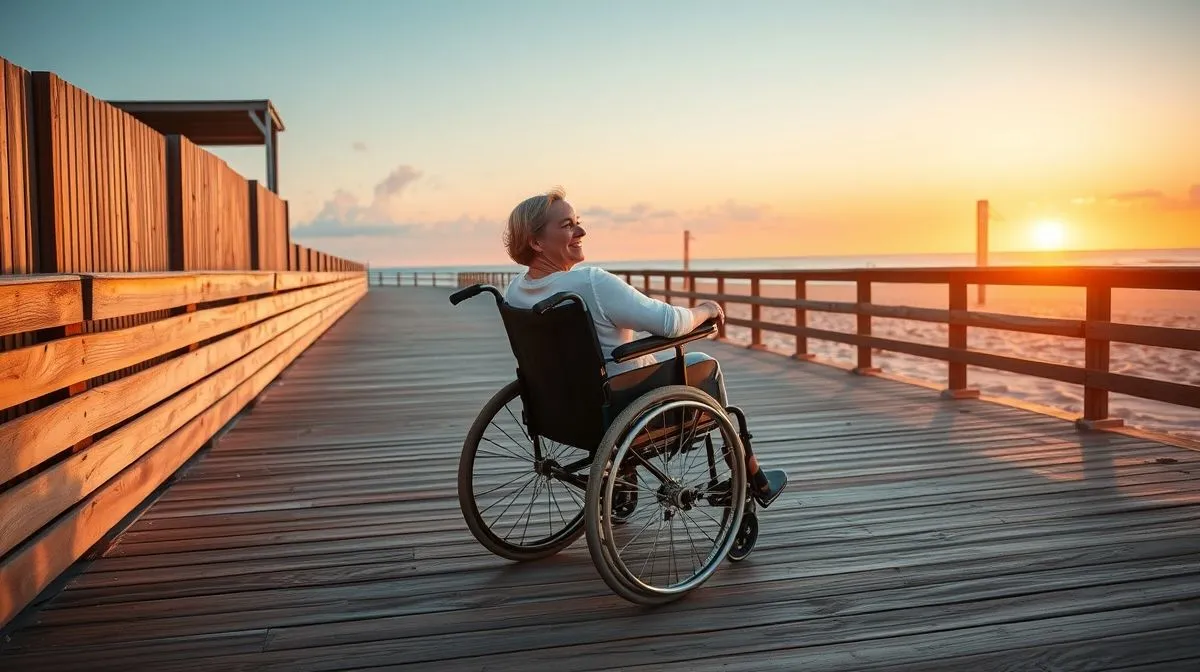
Navigating the World: Your Essential Guide to Finding Disability-Friendly Destinations
Imagine the excitement of exploring a new city, the tranquility of a sun-drenched beach, or the wonder of an ancient ruin. For many, these dreams are often overshadowed by a common question: will it be accessible? The aspiration to travel is universal, yet the practicalities of accessibility can present significant hurdles, turning potential joy into pre-trip anxiety. This challenge is not just about physical barriers; it’s about information gaps, societal perceptions, and the sheer effort required to ensure a seamless, enjoyable journey.
The problem is clear: finding genuinely disability-friendly destinations often feels like searching for a needle in a haystack. Standard travel guides rarely delve into the nuances of accessible infrastructure, leaving travelers with disabilities to piece together crucial information from disparate, often unreliable sources. This lack of comprehensive, centralized data can deter individuals from exploring the world, limiting their horizons and denying them the enriching experiences that travel offers.
This comprehensive guide to finding disability friendly destinations aims to dismantle those barriers. By the end of this reading, you will possess the knowledge, tools, and confidence to research, plan, and execute truly accessible adventures. We will explore what 'disability-friendly' truly entails, equip you with practical strategies for vetting destinations, highlight key factors to consider, and empower you to become an advocate for a more inclusive travel landscape. Your next accessible journey starts here.
Understanding True Accessibility: Beyond the Ramp
When we talk about 'disability-friendly' travel, it's easy to immediately picture a wheelchair ramp. While ramps are undoubtedly a vital component of accessibility, true inclusivity extends far beyond a single architectural feature. It encompasses a holistic approach to design, service, and information that anticipates and accommodates the diverse needs of all travelers, regardless of their physical, sensory, or cognitive abilities.
What Does "Disability-Friendly" Truly Mean?
At its core, a disability-friendly destination is one where individuals with disabilities can navigate, experience, and enjoy all aspects of their trip with dignity, independence, and ease. This means more than just compliance with minimum legal standards; it signifies a proactive commitment to universal design and thoughtful service. It's about ensuring that transportation, accommodation, attractions, public spaces, and even local attitudes contribute to a welcoming and barrier-free environment.
For instance, an accessible hotel isn't just one with a ramp at the entrance. It includes rooms with roll-in showers, grab bars, lowered light switches, and clear pathways. An accessible museum might offer audio descriptions for visually impaired visitors, sign language interpreters, or sensory-friendly quiet hours. True accessibility is about anticipating the full spectrum of needs, from mobility challenges to sensory sensitivities and cognitive differences, ensuring that everyone can participate fully.
The Spectrum of Accessibility Needs
It's crucial to remember that 'disability' is a broad term encompassing a vast array of conditions, each with unique requirements. What is accessible for someone using a wheelchair might not be for someone with a visual impairment, or a person with autism. Therefore, a truly disability-friendly destination strives for multi-faceted accessibility.
- Mobility Impairments: Focus on ramps, elevators, wide doorways, accessible restrooms, flat terrain, and reliable accessible transportation.
- Visual Impairments: Emphasis on tactile paving, audio cues, braille signage, well-lit areas, and descriptive tours.
- Hearing Impairments: Availability of visual alarms, sign language interpreters, captioned media, and induction loops.
- Cognitive/Developmental Disabilities: Clear signage, predictable environments, quiet spaces, trained staff, and simplified information.
- Invisible Disabilities: Understanding and accommodation for conditions like chronic pain, fatigue, or anxiety, often through flexible services or quiet areas.
Understanding this spectrum is the first step in effectively evaluating a destination. You need to identify what specific accessibility features you require and then diligently seek out destinations that meet those specific needs, rather than relying on generic 'accessible' labels.
Researching Your Destination: Tools and Techniques
The digital age has revolutionized how we research travel, but for accessible travel, it introduces both opportunities and complexities. Effective research is paramount to a successful trip, and it requires a multi-pronged approach, leveraging technology, direct communication, and community insights.
Leveraging Online Resources and Communities
The internet is a treasure trove of information, but discernment is key. Start with dedicated accessible travel websites and blogs. Many platforms are curated by individuals with disabilities or organizations specializing in inclusive tourism, offering firsthand accounts and verified information. Look for sites that provide detailed reviews of hotels, attractions, and transportation options specifically from an accessibility perspective.
- Specialized Travel Agencies: Some agencies focus exclusively on accessible travel, offering pre-vetted packages and expert advice.
- Online Forums and Social Media Groups: Communities like Facebook groups or forums dedicated to accessible travel are invaluable. Here, you can ask specific questions, get recommendations, and learn from the experiences of others. This peer-to-peer knowledge often reveals nuances not found in official guides.
- Official Tourism Boards: Check the official tourism websites of your desired destination. Increasingly, cities and countries are recognizing the value of accessible tourism and are providing dedicated sections on their sites detailing accessible attractions, transportation, and services.
- Accessibility Apps: Explore mobile applications designed to map accessible routes, identify accessible restrooms, or review venue accessibility. These can be incredibly useful on the ground.
Remember, however, that information can become outdated quickly. Always cross-reference information from multiple sources and prioritize recent reviews.
Direct Communication with Providers
One of the most reliable ways to verify accessibility is direct communication. Never assume that a website's 'accessible' icon tells the whole story. Call hotels, airlines, tour operators, and even specific attractions directly.
Prepare a list of specific questions tailored to your needs. Don't be vague. Instead of asking 'Is your hotel accessible?', ask: 'Do you have roll-in showers with grab bars?', 'Are your elevators wide enough for a power wheelchair?', 'Is there a step-free path from the entrance to the accessible room?', or 'Do you offer a T-coil hearing loop system in your event spaces?' Document who you spoke with, when, and what was promised. This can be crucial if issues arise upon arrival. According to the World Health Organization, over a billion people experience significant disability, highlighting the global need for accurate accessibility information.
The Power of User Reviews and Testimonials
Beyond official statements, user-generated content offers authentic insights. Websites like TripAdvisor or Google Maps reviews often contain mentions of accessibility, sometimes with photos. Filter reviews by keywords like 'wheelchair', 'accessible', 'ramp', or 'elevator'. Pay close attention to reviews written by other travelers with disabilities, as their perspectives will be most relevant to your needs.
Look for detailed descriptions rather than simple 'yes/no' answers. A review that states, 'The ramp was quite steep, and I needed assistance' is far more useful than one that just says 'It has a ramp.' Photos uploaded by users can also provide invaluable visual evidence of a venue's actual accessibility features.
Key Factors to Evaluate in a Destination
When planning your trip, a systematic evaluation of various infrastructural and service aspects is critical. A truly disability-friendly destination excels in multiple areas, ensuring a seamless experience from arrival to departure.
Transportation Accessibility
This is often the first and most significant hurdle. Consider how you will arrive at your destination and how you will move around once there.
- Air Travel: Research airline policies on mobility aids, assistance services, and accessible seating. Understand your rights as a passenger with a disability. The U.S. Department of Transportation provides comprehensive guidelines on air travel accessibility.
- Ground Transportation: Are accessible taxis, buses, or trains readily available? Are metro stations equipped with elevators? Do public transport systems have audio announcements or visual displays?
- Rental Vehicles: If you plan to rent a car, can you find accessible vehicle rentals with hand controls or wheelchair lifts?
Verify that the entire journey chain, from airport transfer to local transit, is accessible. A city with accessible attractions is of little use if you cannot reach them.
Accommodation Standards
Your hotel or lodging is your home away from home. Its accessibility is paramount for comfort and independence.
- Room Features: Confirm the presence of roll-in showers, grab bars, toilet height, room dimensions for mobility device maneuverability, lowered sinks, and emergency call buttons.
- Common Areas: Are lobbies, restaurants, pools, and fitness centers accessible? Are there accessible routes to all facilities?
- Staff Training: Are staff trained to assist guests with disabilities respectfully and effectively?
- Evacuation Procedures: Understand the hotel's emergency evacuation plan for guests with disabilities.
Remember that 'accessible rooms' can vary widely. Always request specific details and photos if possible.
Attraction and Activity Inclusivity
The purpose of travel is to experience new things. Ensure your chosen attractions are genuinely inclusive.
- Museums and Galleries: Are all exhibits accessible via ramps or elevators? Do they offer audio guides, tactile exhibits, or sign language tours?
- Historical Sites: Many older sites present challenges. Research specific accessible routes or designated viewing areas.
- Natural Parks and Beaches: Look for accessible trails, boardwalks, beach wheelchairs, and accessible restrooms.
- Restaurants and Shops: Check for step-free entrances, accessible restrooms, and ample space for maneuvering.
It's not enough for an attraction to simply have a ramp at the entrance; the entire experience within the attraction should be accessible.
Public Infrastructure and Services
The overall urban or rural environment plays a huge role in your travel experience.
- Sidewalks and Pathways: Are they wide, smooth, and free of obstacles? Are curb cuts prevalent and well-maintained?
- Public Restrooms: Are accessible restrooms widely available and clean?
- Emergency Services: Is the local emergency response system equipped to assist individuals with various disabilities?
- Information Accessibility: Is public information (maps, signs) available in accessible formats?
A destination committed to accessibility will have invested in these fundamental public infrastructures, making independent exploration much easier.
Planning Your Accessible Itinerary: A Step-by-Step Approach
Once you've identified a promising destination, meticulous planning transforms potential into reality. An accessible itinerary isn't just about what you'll do, but how you'll do it, ensuring every step is considered.
Pre-Trip Preparations and Checklists
A well-organized pre-trip checklist can alleviate much stress. Start months in advance for international or complex trips.
- Define Your Needs: Clearly list all your specific accessibility requirements (e.g., specific medical equipment, assistance needs, communication preferences).
- Research and Verify: Use the tools discussed previously to confirm the accessibility of all elements: flights, accommodations, transportation, and attractions. Get written confirmations where possible.
- Medical Preparation: Consult your doctor. Ensure you have enough medication, copies of prescriptions, and a letter explaining your medical condition and equipment. Research healthcare facilities at your destination.
- Equipment Check: Service and test all mobility aids, medical devices, and adaptive equipment. Pack spare parts or repair kits if necessary.
- Insurance: Purchase comprehensive travel insurance that covers pre-existing conditions, medical emergencies, and equipment damage or loss.
This proactive approach significantly reduces the likelihood of unwelcome surprises during your journey.
Essential Questions to Ask
Beyond the general 'is it accessible?', delve deeper with targeted inquiries:
- "What are the exact dimensions of the accessible room/bathroom?"
- "Is there a step or lip at the entrance of the building or room?"
- "Can I reserve an accessible taxi in advance, and what is the cost?"
- "Are there any specific times when the attraction is less crowded or offers special accommodations for sensory sensitivities?"
- "What is your policy regarding service animals?"
- "Do you have staff trained in basic sign language or accessible communication?"
These detailed questions help paint a clearer picture and prevent misunderstandings that could impact your trip.
Contingency Planning for Unexpected Challenges
Even the most meticulously planned trip can encounter unforeseen issues. Having a backup plan is crucial for peace of mind.
- Emergency Contacts: Carry a list of emergency contacts, including family, doctors, and your embassy/consulate.
- Local Support: Research local disability organizations or support groups at your destination. They can be invaluable resources if you need assistance or advice.
- Backup Equipment: If possible, have a plan for equipment failure. Know where to find medical supply stores or repair shops.
- Financial Backup: Have access to emergency funds for unexpected costs.
- Flexibility: Be prepared to adjust your itinerary. Sometimes, an attraction might not be as accessible as advertised, and you'll need to pivot to an alternative.
A prepared traveler is a resilient traveler, ready to adapt and overcome minor setbacks.
Common Pitfalls to Avoid When Planning Accessible Travel
Despite careful planning, certain mistakes are common. Being aware of these can help you sidestep potential frustrations and ensure a smoother journey.
Assuming Accessibility
The biggest pitfall is assuming that a destination or service labeled 'accessible' will meet your specific needs. As discussed, accessibility is not a one-size-fits-all concept. A ramp that works for a manual wheelchair might be too steep for a power chair. An 'accessible restroom' might still have a tight turning radius. Always verify details specific to your requirements, even if a general 'accessible' label is present. This proactive verification is key to finding truly disability-friendly destinations.
Overlooking Hidden Costs
Accessible travel can sometimes incur additional expenses. Specialized transportation, larger accessible rooms, or the need for personal assistants can add up. Factor these into your budget from the outset. Don't forget potential costs for medical supplies, travel insurance premiums for pre-existing conditions, or fees for bringing medical equipment on flights. Transparency about these costs upfront prevents financial surprises during your trip.
Neglecting Medical and Personal Needs
Travel can be tiring, and disrupting routines can impact health. Ensure you pack all necessary medications in your carry-on, along with copies of prescriptions. Consider the climate and how it might affect your condition. Plan for rest days and sufficient downtime. Don't push yourself too hard. Forgetting to account for personal care needs, such as finding accessible restrooms frequently or managing dietary restrictions, can significantly impact your comfort and enjoyment.
Empowering Your Journey: Advocacy and Awareness
Traveling with a disability is not just a personal endeavor; it's an act of advocacy. Every accessible trip you successfully complete, every positive review you leave, and every challenge you overcome contributes to a broader movement for global inclusivity.
The Role of Advocacy Groups
Numerous organizations worldwide are dedicated to promoting accessible travel. Supporting these groups, whether through donations, volunteering, or simply utilizing their resources, strengthens the collective voice. They often lobby for better legislation, conduct research, and provide invaluable resources for travelers. Groups like the Open Doors Organization actively work to collect data and advocate for improved accessibility in the travel industry, making it easier for others to find disability-friendly destinations.
Contributing to a More Accessible Future
Your experiences matter. After your trip, take the time to share your feedback. Leave detailed reviews on travel sites, hotel booking platforms, and attraction pages. Highlight what worked well and what could be improved, specifically from an accessibility perspective. Contact businesses directly with constructive criticism. Your insights help future travelers and encourage businesses to invest in better accessibility. By sharing your journey and knowledge, you become a vital part of the solution, paving the way for more inclusive travel experiences for everyone.
Real-World Examples of Disability-Friendly Destinations
While no destination is perfectly accessible for every individual, some cities and regions have made significant strides in prioritizing inclusivity. These examples can serve as inspiration and starting points for your own research.
Cities Leading the Way
Several major cities have invested heavily in accessible infrastructure and services, often driven by progressive policies and a strong tourism focus:
- Barcelona, Spain: Renowned for its accessible public transport (nearly all metro stations are accessible), widespread curb cuts, and many accessible attractions including Gaudí's Sagrada Familia and Park Güell.
- London, UK: While its Underground can be challenging, London boasts numerous accessible buses, black cabs, and a growing number of accessible Tube stations. Its major museums and attractions are typically very accessible.
- Sydney, Australia: Offers accessible ferries, trains, and buses. The Sydney Opera House and many major parks are designed with accessibility in mind.
- Copenhagen, Denmark: Known for its flat terrain, excellent public transport, and a strong emphasis on universal design in public spaces and attractions.
These cities often have dedicated accessible tourism guides available through their official tourism boards.
Accessible Natural Parks and Attractions
Beyond urban centers, many natural wonders are becoming more accessible, allowing travelers with disabilities to connect with nature:
- U.S. National Parks: Many parks, such as Yosemite, Yellowstone, and Grand Canyon, offer accessible trails, viewpoints, restrooms, and lodging options. They often provide accessible shuttle services within the park.
- The Camino de Santiago, Spain: While the full pilgrimage is challenging, specific sections and routes have been adapted to be wheelchair-friendly, offering a unique spiritual and physical journey.
- Accessible Beaches: Destinations worldwide are introducing accessible beach access points, boardwalks, and even beach wheelchairs, transforming coastal experiences. Examples include Bondi Beach in Australia and many beaches in Florida, USA.
These examples demonstrate that accessible travel is not confined to specific types of destinations but is an evolving landscape offering diverse experiences.
Frequently Asked Questions (FAQ)
What's the best way to verify a hotel's accessibility? The best way is to call the hotel directly and speak with a manager or accessibility coordinator. Be very specific with your questions about room dimensions, bathroom features (roll-in shower, grab bars, toilet height), and common area accessibility. Request photos or videos if possible.
Are all "accessible" rooms truly accessible? Unfortunately, no. The term "accessible" can vary widely in interpretation and compliance with local regulations. Always verify the specific features you require, as a room might meet basic standards but still lack features essential for your personal needs.
How can I find accessible transportation at my destination? Research accessible public transport options (buses, trains, metro) on the city's official transit website. Look for accessible taxi services or private transfer companies that specialize in accessible vehicles. Booking in advance is often crucial for these services.
What should I do if a destination isn't as accessible as advertised? First, document the issues with photos or videos. Speak calmly with management or the service provider to see if a resolution can be found. If not, consider contacting local disability advocacy groups or filing a formal complaint with relevant tourism authorities or consumer protection agencies upon your return.
Recommended Reading
- Altitude Sickness: Prevent it With This Essential Guide!
- Ultimate Guide: Best Winter Sports Photography Settings
- Maldives Celebrity Hotspots: Where Do Stars Escape?
- Epic Family Friendly National Park Road Trips USA: Your Ultimate Guide
- Unlock True Impact: What's the Difference Between Volunteer & Social Travel?
Conclusion
Embarking on a journey as a traveler with a disability requires meticulous planning, informed decision-making, and a proactive mindset. This guide to finding disability friendly destinations has aimed to equip you with the essential knowledge and strategies to transform your travel aspirations into achievable realities. From understanding the nuances of true accessibility to leveraging online communities and engaging in direct communication, every step in the planning process is an opportunity to ensure a smoother, more enjoyable experience. Remember that your journey is not just about reaching a destination; it's about the freedom of movement, the joy of discovery, and the profound sense of independence that travel offers. By applying these principles and advocating for better accessibility, you not only empower your own adventures but also contribute to a world where travel is truly for everyone. Go forth, explore, and let your accessible journey begin!



Your email address will not be published. Required fields are marked *