

How can a professional minimize unexpected charges on a luxury cruise?
For over 15 years in the luxury cruise travel industry, I've seen countless professionals—executives, entrepreneurs, and specialists—invest significant time and money into what they anticipate will be a flawless, all-inclusive escape. Yet, time and again, they return with stories of unexpected charges, turning their dream voyage into a budgeting nightmare. It’s a common pitfall, even for the most financially astute.
The allure of a luxury cruise is undeniable: exquisite dining, unparalleled service, exotic destinations, and the promise of effortless indulgence. However, beneath the surface of 'all-inclusive' marketing often lie layers of hidden costs—from specialty dining and premium drinks to Wi-Fi, shore excursions, and even gratuities—that can inflate your final bill by hundreds, if not thousands, of dollars.
This article isn't just a guide; it's your definitive blueprint, forged from years of industry experience, to empower you. I'll provide you with actionable strategies, expert insights, and a clear framework to proactively identify, manage, and ultimately minimize unexpected charges on a luxury cruise, ensuring your next professional escape is as financially seamless as it is luxurious.
Unmasking the Common Culprits: Where Hidden Costs Lurk
Before we can strategize, we must first understand the battlefield. In my experience, the biggest budget busters on a luxury cruise are often the least obvious. They hide in plain sight, disguised as optional upgrades or essential conveniences.
The Allure of "All-Inclusive" vs. Reality
Many luxury cruise lines market themselves as 'all-inclusive,' which is a powerful draw. However, the definition of 'all' varies wildly. What one line includes—say, premium beverages and specialty dining—another might offer only as an add-on. It's crucial not to assume; always verify.
- What's often NOT included: Top-shelf liquor, exclusive wines, certain specialty restaurants, spa treatments, high-speed internet, premium shore excursions, personal training, and sometimes even gratuities.
- My advice: Read the fine print of your specific cruise package meticulously.
Navigating Onboard Expenses: Drinks, Dining, and Entertainment
This category is a prime area for unexpected spending. While basic drinks and main dining rooms are usually covered, the temptation of a gourmet coffee, a rare vintage wine, or a unique mixology experience can quickly add up. Specialty restaurants, though often sublime, typically carry an additional per-person charge or à la carte pricing.
Similarly, while most entertainment is included, some lines offer exclusive shows, workshops, or casino play that come with a fee. It's about being aware of what you're indulging in.
Shore Excursions and Port Adventures: Value vs. Impulse
Exploring new destinations is a highlight of any cruise. Cruise lines offer a wide array of shore excursions, from cultural tours to adventurous activities. While convenient, these ship-organized tours are often significantly more expensive than independent arrangements or tours booked through local providers. The convenience factor often comes with a hefty premium.
Connectivity and Communication: The Digital Drain
In today's connected world, staying in touch is often a necessity, even on vacation. However, shipboard Wi-Fi is notoriously expensive and often slow. International roaming charges can also be astronomical if you rely on your cell phone in port without a local SIM card or an international plan. This is an area where a professional can easily rack up hundreds in charges.
Gratuities, Spa, and Specialty Services: The Premium Upsell
Gratuities are almost universally expected but are often added to your onboard account daily. While some luxury lines include them, many do not. Spa treatments, salon services, and personal fitness sessions are premium offerings with premium price tags. Even shopping at onboard boutiques, while enticing, can lead to impulse purchases that weren't in the budget.
"The key to a financially smooth luxury cruise isn't austerity, but rather informed indulgence. Understand where your money is going before it leaves your wallet."
Phase 1: Pre-Departure Mastery – Your Financial Fortress
The most effective strategies for minimizing unexpected charges on a luxury cruise begin long before you step aboard. This phase is about meticulous research, proactive planning, and strategic pre-payment.
Choosing the Right Cruise Line and Package: A Strategic Move
Not all luxury cruises are created equal. Research different luxury cruise lines (e.g., Regent Seven Seas, Silversea, Seabourn, Azamara) and their specific 'all-inclusive' offerings. Some truly include almost everything, while others require more careful package selection.
Actionable Step: Compare several lines side-by-side. Look at what's included in their base fare versus their premium packages. Often, upgrading to a higher-tier package upfront, if it includes items you know you'll use (like unlimited specialty dining or comprehensive shore excursions), can be more cost-effective than paying à la carte onboard. For instance, a study by Travel Weekly often highlights how bundled packages can offer significant savings compared to individual purchases.
Deep Dive into Inclusions and Exclusions: The Fine Print is Your Friend
I cannot stress this enough: read the terms and conditions, the detailed itinerary, and the 'what's included' section with a magnifying glass. If it's not explicitly listed as included, assume it's an extra. Pay particular attention to:
- Beverage policies (alcohol, specialty coffees, bottled water).
- Dining options (which restaurants are included, are there limits?).
- Wi-Fi access (speed, data limits, number of devices).
- Shore excursions (are any complimentary, or are all extra?).
- Gratuities (are they included in the fare or added daily?).
The Power of Pre-Paid: Gratuities, Drink Packages, and Wi-Fi
Many cruise lines allow you to pre-pay for certain services before your sailing. This is often an excellent strategy for budgeting and can even save you money compared to onboard pricing. Pre-paying locks in the cost at today's rate and removes the daily decision fatigue.
- Gratuities: If not included, pre-pay them. It's one less thing to worry about and ensures the hardworking crew is appreciated without impacting your onboard budget.
- Drink Packages: If you anticipate consuming a fair amount of alcoholic or specialty non-alcoholic beverages, a pre-paid drink package can be a significant saver. Do the math based on your expected consumption.
- Wi-Fi: Purchase your internet package in advance. Some lines offer discounts for pre-purchasing, and it prevents the shock of high hourly rates.
- Specialty Dining: If you know you want to experience specific gourmet restaurants, book and pay for them before you board.
Case Study: Sarah's Smart Pre-Payment Saves Thousands
Sarah, a marketing executive, planned a 10-day luxury Caribbean cruise. In her first luxury cruise experience, she found herself with an unexpected $2,500 bill at disembarkation, primarily from premium drinks, specialty dining, and Wi-Fi. For her next voyage, she consulted with an experienced travel advisor (like myself).
Instead of the base fare, Sarah opted for a slightly higher-tier package that included unlimited premium drinks, two specialty dining experiences, and a mid-tier Wi-Fi package. She also pre-paid her gratuities. While the upfront cost of the package was $800 more than the base, her onboard spending was minimal. By proactively choosing a comprehensive package and pre-paying, Sarah estimated she saved over $1,500 compared to what she would have spent à la carte. She enjoyed her trip without the constant worry of tracking every micro-transaction.
Phase 2: Onboard Vigilance – Smart Spending at Sea
Once you're onboard, the focus shifts from proactive planning to mindful management. This phase is about staying informed and making conscious choices.
Tracking Your Onboard Account: Daily Audits Are Key
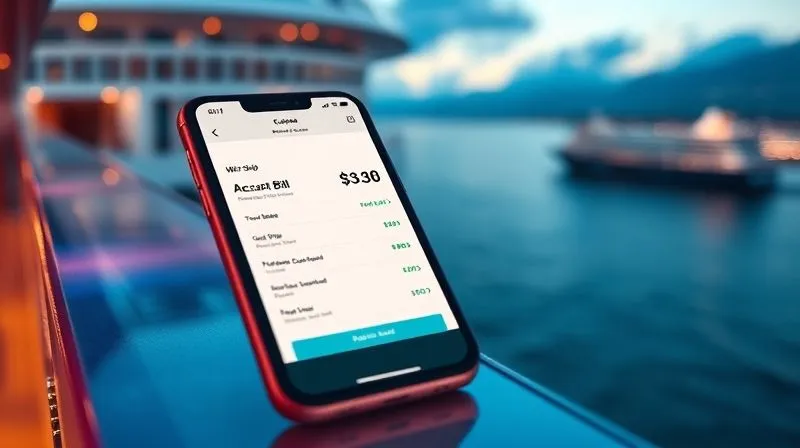
Every luxury cruise ship provides a way to track your onboard spending, usually via an interactive TV system, a mobile app, or a printout delivered to your stateroom. I strongly recommend checking your account balance daily.
This practice serves multiple purposes:
- Identify errors: Mistakes happen. Catching an incorrect charge early is far easier than disputing it at disembarkation.
- Monitor spending: It keeps you acutely aware of your expenditure, allowing you to adjust habits if you're exceeding your self-imposed limits.
- Avoid surprises: No one wants a massive bill shock at the end of a relaxing vacation.

Leveraging Loyalty Programs and Promotions
If you're a repeat cruiser with a particular line, ensure your loyalty number is attached to your booking. Loyalty programs often come with perks like onboard credit, discounts on specialty services, complimentary Wi-Fi upgrades, or even free drinks. These benefits can significantly offset potential extra costs.
Also, keep an eye out for onboard promotions. Sometimes, specialty restaurants offer lunch specials or spa services have port-day discounts. Use these strategically if they align with your budget and desires.
Strategic Dining: Specialty Restaurants vs. Main Dining
Luxury cruise main dining rooms are typically excellent, offering diverse menus and impeccable service. Don't feel pressured to constantly dine at specialty restaurants just because they're an option. If you have a drink package, be mindful of any premium wines or spirits that might still be excluded.
"Mindful consumption is the hallmark of a truly relaxed professional. Enjoy the best, but know its cost."
Mindful Souvenir Shopping and Boutique Browsing
Onboard boutiques offer everything from high-end jewelry to cruise-branded merchandise. While tempting, these items are often priced at a premium. If you desire souvenirs, consider purchasing them in port from local artisans or shops, where prices are often more competitive and the items more authentic. Set a small budget for impulse buys, if any.
Phase 3: Shore Excursion Savvy – Maximizing Value, Minimizing Cost
Shore excursions are a major area where professionals often overspend. With a little planning, you can experience the best of each port without breaking the bank.
Independent Exploration vs. Ship-Organized Tours
Cruise line excursions offer convenience and peace of mind (they guarantee you'll return to the ship on time). However, they come with a significant mark-up. For many ports, especially those in well-developed areas, independent exploration is perfectly safe and often more enriching.
- Independent options: Taxis, local buses, ride-sharing apps, or walking tours.
- Consider: Your comfort level with local languages, navigation, and time management.
Researching Local Options: Beyond the Cruise Line's Brochure
Before your cruise, research each port of call. Look for highly-rated local tour operators on sites like TripAdvisor or Viator. These often offer smaller group sizes, more authentic experiences, and better prices than ship-sponsored tours. Don't be afraid to ask your travel advisor for recommendations.
For example, in many European ports, you can book a private guide for a day for a fraction of the cost of multiple ship excursions, offering a truly personalized experience. The New York Times Travel section frequently publishes guides on independent exploration in popular cruise destinations.
Budgeting for Local Transport, Meals, and Entry Fees
If you opt for independent exploration, remember to factor in the costs of:
- Transportation: Taxis, local buses, or even renting a car for a day.
- Meals: Enjoying local cuisine in port is often a highlight and can be very affordable compared to onboard specialty dining.
- Entry Fees: Museums, historical sites, or attractions.
Always carry some local currency for small purchases, and inform your bank of your travel dates to avoid card issues.
Leveraging Technology: Apps, Alerts, and Digital Wallets
In the digital age, technology can be a powerful ally in managing your cruise budget.
Cruise Line Apps for Expense Tracking
Most modern luxury cruise lines offer dedicated mobile apps. Beyond checking daily schedules and making reservations, these apps often feature a real-time account statement. Download the app before you sail and familiarize yourself with its expense-tracking capabilities. It’s an invaluable tool for staying on budget.
International Roaming vs. Ship Wi-Fi: A Cost Comparison
For urgent communication, compare the cost of your mobile provider's international roaming plan with the ship's Wi-Fi packages. Often, a limited international roaming package for essential texts and calls in port can be more cost-effective than an expensive ship Wi-Fi plan, especially if you only need occasional connectivity.
Alternatively, consider purchasing a local SIM card in port for data, though this requires an unlocked phone and some research. For business professionals, this comparison can save hundreds. Forbes Advisor frequently publishes articles on international phone plans and travel tech.
Using Travel Credit Cards Wisely: Rewards and No Foreign Transaction Fees
Choose a credit card for your onboard account that offers strong travel rewards and, crucially, no foreign transaction fees. While onboard purchases are typically in USD, some incidental charges might not be. More importantly, using such a card for purchases in port (if you're not using cash) ensures you're not hit with extra fees.
| Category | Strategy | Potential Savings |
|---|---|---|
| Pre-Cruise Planning | Research package inclusions | 10-20% of total cruise cost |
| Pre-Cruise Planning | Pre-pay gratuities/packages | 5-15% of onboard spending |
| Onboard Management | Daily account review | Catching errors, preventing overspending |
| Onboard Management | Leverage loyalty points | Varies, can be significant |
| Shore Excursions | Independent port exploration | 30-50% on excursion costs |
| Technology Use | Compare Wi-Fi/roaming costs | $50-$300+ |
The Psychology of Spending: Resisting the Upsell
Luxury cruise lines are masters of the upsell. From the moment you step onboard, you'll be subtly encouraged to upgrade, indulge, and spend. Understanding these tactics is your first line of defense.
Understanding Sales Tactics Onboard
Sales tactics can range from attractive promotions for spa services to invitations to exclusive wine tastings or art auctions. It's not malicious; it's business. Be aware that every 'special offer' or 'limited-time deal' is designed to encourage spending. Your awareness empowers you to make a conscious decision, rather than an impulsive one.
Setting Personal Spending Limits
Before you even pack your bags, decide on a realistic daily or total onboard spending limit for 'extras.' This isn't about deprivation, but about control. Communicate this limit to your travel companions if applicable. For example, you might allocate $100 per day for drinks, specialty coffees, and a small souvenir.
The Value of Saying "No": Prioritizing Experiences
True luxury isn't about spending the most; it's about experiencing the most value. Don't feel obliged to say 'yes' to every upsell. Prioritize experiences that genuinely enhance your trip. Is that second specialty restaurant worth it, or would you prefer to save that money for a unique shore excursion? Your cruise, your budget, your choices.
"Luxury is not defined by how much you spend, but by the quality of the experience you gain. Be discerning, not restrictive."
Building Your Bespoke Luxury Cruise Budget Blueprint
To truly master your cruise budget, you need a personalized framework. Here's a step-by-step guide to creating your own blueprint:
- Estimate Base Costs: Start with your cruise fare, flights, and pre/post-cruise hotels. These are your fixed costs.
- Itemize Known Inclusions: List everything explicitly covered by your cruise fare (e.g., specific drinks, dining, Wi-Fi duration).
- Identify Potential Exclusions: Make a list of all potential extras you might encounter (e.g., premium drinks, specialty dining, specific shore excursions, spa, gratuities).
- Research Your 'Must-Haves': For each exclusion, determine if it's a 'must-have' for your trip. If so, research its cost and whether pre-paying is an option.
- Allocate Spending for 'Wants': For items you 'want' but aren't 'must-haves,' set a realistic daily or total discretionary budget. This is your buffer for impulse buys or unexpected delights.
- Factor in Port Spending: Create a separate budget for each port of call, covering transportation, meals, entry fees, and any local shopping.
- Build in a Contingency: Always add a 10-15% buffer for unforeseen circumstances or delightful surprises.
- Review and Adjust: Before departure, review your entire budget. Is it realistic? Does it align with your desired experience? Adjust as needed.
Post-Cruise Review: Learning from Your Experience
Upon returning, take a moment to review your final onboard statement against your budget. What went well? Where did you overspend? This reflective practice is invaluable for refining your strategy for future luxury cruises, turning every voyage into a learning experience for smarter budgeting.
Frequently Asked Questions (FAQ)
Question: Is it always better to pre-pay for everything, even if I'm not sure I'll use it all? Answer: Not necessarily. While pre-paying can save money and simplify budgeting, it's about smart assessment. If you rarely drink alcohol, a full drink package might be wasteful. If you prefer independent exploration, a comprehensive shore excursion package might be unnecessary. Focus on pre-paying for services you are highly likely to use and where pre-paid options offer a clear discount or convenience. It's about informed decision-making, not blanket pre-payment.
Question: How can I avoid high Wi-Fi costs if I need to stay connected for work? Answer: For professionals, this is a critical concern. Your best bet is a multi-pronged approach. First, purchase the best available pre-paid Wi-Fi package from the cruise line, understanding its limitations. Second, research international eSIMs or local SIM cards for each port you'll visit; these often provide much faster and cheaper data. Third, utilize 'Wi-Fi free' zones in ports (cafes, libraries) for lighter tasks. Finally, manage expectations: plan to do truly critical work during pre/post-cruise hotel stays or during limited, strategic onboard Wi-Fi sessions.
Question: Are gratuities always mandatory, and can I adjust them? Answer: Gratuities are a standard practice in the cruise industry and are generally expected. While often added automatically to your onboard account daily, most cruise lines allow you to adjust the amount up or down by visiting the Guest Services desk. However, I strongly advise against reducing them unless there's a genuine service issue. The crew's wages often rely heavily on these gratuities. Pre-paying them is the simplest approach.
Question: What's the best way to handle currency in port to avoid fees? Answer: Always inform your bank and credit card companies of your travel dates to prevent fraud alerts. For small purchases, carry a small amount of local currency, obtained from your bank before travel or an ATM in port (check for ATM fees). For larger purchases, use a travel-friendly credit card with no foreign transaction fees. Avoid currency exchange kiosks at ports, as their rates are often unfavorable.
Question: How do luxury cruise loyalty programs actually save me money? Answer: Loyalty programs reward repeat cruisers with various benefits that can directly or indirectly reduce costs. These can include onboard credit (which acts like cash), discounts on future cruises, complimentary laundry services, free internet minutes, priority embarkation/disembarkation, and even free specialty dining or drink packages at higher tiers. Always ensure your loyalty number is linked to your booking to accrue and redeem these valuable perks.
Key Takeaways and Final Thoughts
Navigating the financial landscape of a luxury cruise doesn't have to be a journey filled with unexpected costs. As a seasoned industry specialist, I've seen firsthand how a proactive, informed approach can transform a good cruise into an absolutely exceptional, worry-free experience. The secret isn't to abstain from indulgence, but to indulge intelligently.
- Proactive Planning is Paramount: Begin your budgeting long before you pack, meticulously researching inclusions and exclusions.
- Leverage Pre-Payment: Lock in costs for gratuities, drinks, and Wi-Fi to avoid onboard sticker shock.
- Stay Vigilant Onboard: Check your account daily and consciously manage your discretionary spending.
- Be Smart About Shore Excursions: Explore independent options to maximize value and authenticity in port.
- Harness Technology: Use cruise apps, compare connectivity costs, and choose travel-friendly credit cards.
- Master the Psychology of Spending: Understand upsell tactics and set personal spending limits.
Your next luxury cruise should be an experience of unparalleled relaxation and discovery, not a test of your budgeting prowess at checkout. By adopting these expert strategies, you'll not only minimize unexpected charges but also enhance the overall enjoyment and value of your professional escape. Sail smart, sail luxuriously, and return refreshed, knowing you've truly mastered the art of the sophisticated cruise budget.
Recommended Reading
- 7 Pillars: Sustainable Returns from Biodiversity Eco-Tourism?
- 7 Proven Strategies: Mitigating Extreme Risks in Remote Wilderness Tours
- Unraveling the Truth: Are Space Tourism Safety Regulations Ready for Blast-Off?
- How to Integrate Real-Time Data for Flexible Road Trips: Your 5-Step Guide
- Elevate Client Relations: 5 Unique Craft Beer Tour Ideas That Impress





Your email address will not be published. Required fields are marked *