


Navigating the Cosmos: Understanding Safety Regulations for Space Tourism Passengers?
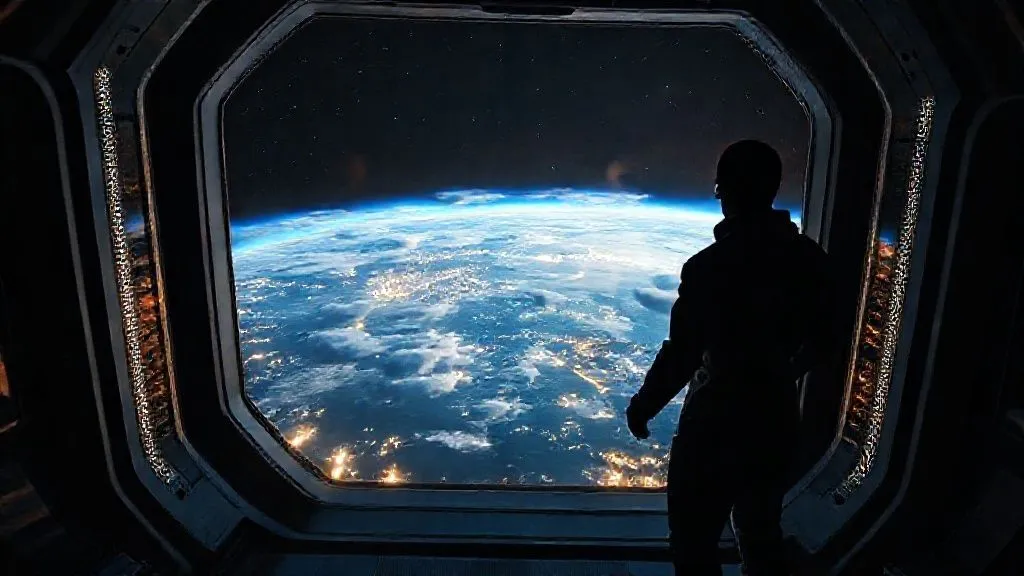
Imagine gazing down at Earth, a vibrant blue marble against the inky blackness of space. For decades, this privilege was reserved for a select few, the highly trained astronauts of national space agencies. But what if that dream is no longer confined to the realm of science fiction? What if, in the not-so-distant future, you could book a ticket to the stars?
As commercial space tourism rapidly transitions from concept to reality, a critical question emerges: how will we ensure the safety of these pioneering civilian space travelers? The transition from government-led missions to private ventures introduces a complex web of challenges, particularly concerning the robust regulatory frameworks needed to protect passengers.
This comprehensive guide will delve deep into the evolving landscape of safety regulations for space tourism passengers. We will explore the existing legal frameworks, identify the gaps that need addressing, and examine the collaborative efforts underway to build a secure future for commercial spaceflight, providing you with a definitive understanding of this burgeoning frontier.
The Dawn of Commercial Spaceflight: A New Regulatory Frontier
The history of space exploration began with government-funded programs, driven by geopolitical ambitions and scientific discovery. Projects like NASA's Apollo missions and Russia's Soyuz program operated under strict, internal governmental oversight, with safety protocols developed over decades of specialized experience. Astronauts were military test pilots, subjected to years of intense training and rigorous physical and psychological evaluations.
However, the early 21st century ushered in a new era: the privatization of space. Visionary companies like SpaceX, Blue Origin, and Virgin Galactic began developing reusable rockets and spacecraft, aiming to make space access more affordable and, eventually, open to the general public. This shift fundamentally altered the regulatory landscape, as existing aviation laws were largely ill-equipped to govern orbital and suborbital human spaceflight.
The challenge became clear: how do you foster innovation and growth in a nascent industry while simultaneously ensuring the paramount safety of its participants? This delicate balancing act forms the core of the current debate and development surrounding commercial spaceflight regulations.
Understanding Current Safety Regulations for Space Tourism Passengers
Unlike traditional commercial aviation, which is governed by extensive international treaties and national laws (like those enforced by the FAA in the United States or EASA in Europe), space tourism operates in a relatively nascent regulatory environment. The existing framework is largely a patchwork, with significant reliance on industry standards and a 'learning period' approach.
In the United States, the primary authority overseeing commercial space launches and re-entries is the Federal Aviation Administration (FAA), specifically its Office of Commercial Space Transportation (AST). The Commercial Space Launch Act (CSLA) of 1984, and its subsequent amendments, form the backbone of their regulatory power. Initially, this act focused on regulating the launch vehicle itself, ensuring public safety on the ground and in the air during launch and landing operations.
The Role of the FAA in Commercial Space Operations
The FAA's approach to commercial human spaceflight has been deliberately cautious, characterized by a 'light-touch' regulatory philosophy during the early stages. This was intended to avoid stifling innovation in a rapidly developing sector. Key aspects of their current oversight include:
- Vehicle Certification: The FAA licenses launch and re-entry vehicles, focusing on their design and operational reliability to prevent harm to the uninvolved public.
- Launch Site Safety: Regulations ensure the safety of launch facilities and surrounding areas, including airspace closure and hazard zones.
- Informed Consent: Crucially, current U.S. law mandates that space tourism passengers must provide informed consent, acknowledging the inherent risks of spaceflight. They must be explicitly informed that the FAA has not certified the vehicle as safe for human flight. This provision is set to expire in 2025, potentially paving the way for more prescriptive safety regulations.
- Crew Qualifications: While specific passenger qualifications are minimal beyond informed consent, the FAA does regulate the training and qualifications of the professional flight crew.
It's important to note that this regulatory philosophy is a subject of ongoing debate. Critics argue that a more robust, prescriptive approach, similar to commercial aviation, is necessary to ensure the highest level of passenger safety as the industry scales. Proponents, however, emphasize the need for flexibility to allow technological advancements.
Passenger Qualification and Training Requirements
For aspiring space tourists, the requirements are vastly different from those for career astronauts. While space agencies demand peak physical and mental conditioning, commercial operators have more lenient criteria, focusing primarily on the ability to withstand the physiological stresses of launch and re-entry.
Typical passenger qualification steps might include:
- Medical Evaluation: A comprehensive medical check to ensure no underlying conditions would be exacerbated by G-forces or microgravity.
- Basic Training: Short, intensive training programs covering emergency procedures, spacecraft ingress/egress, and basic operations in microgravity. This is often just a few days.
- Fitness Assessment: While not as rigorous as astronaut training, passengers must demonstrate a reasonable level of physical fitness.
- Psychological Preparedness: An understanding of the unique environment of space and the ability to remain calm under pressure.
The level of training varies significantly between suborbital flights (like those offered by Virgin Galactic or Blue Origin) and potential orbital flights. Suborbital flights are typically shorter, less demanding, and involve less time in microgravity, thus requiring less extensive preparation. Orbital flights, being longer and more complex, would necessitate more rigorous training, akin to a 'payload specialist' rather than a fully trained astronaut.
Beyond the Launchpad: In-Flight and Re-Entry Safety Protocols
Ensuring safety extends far beyond the initial launch. Once a spacecraft is in flight, a complex array of protocols and systems are in place to monitor its performance, the health of its occupants, and respond to any anomalies. These protocols are often proprietary to the individual space companies but are subject to FAA oversight for their adherence to safety standards for the public.
Key areas of in-flight and re-entry safety include:
- Real-time Monitoring: Ground control teams continuously monitor telemetry from the spacecraft, tracking vital signs of the vehicle and its passengers.
- Emergency Abort Systems: Modern spacecraft are designed with abort capabilities, allowing the crew and passengers to safely separate from the launch vehicle in case of a critical failure during ascent.
- Life Support Systems: Robust environmental control and life support systems (ECLSS) are critical for maintaining breathable air, stable temperatures, and managing waste in the closed environment of the spacecraft.
- Re-entry Procedures: The re-entry phase is one of the most hazardous, involving extreme heat and G-forces. Precise navigation, thermal protection systems, and controlled descent are paramount.
- Landing and Recovery: Whether it's a runway landing, splashdown, or vertical landing, the recovery operations must be meticulously planned and executed to ensure the safety of passengers upon return.
Each mission profile, whether suborbital or orbital, has its own unique set of risks and corresponding mitigation strategies. The industry is constantly innovating, leveraging advancements in materials science, automation, and propulsion to enhance safety margins.
The Challenges of Regulating an Emerging Industry
The path to comprehensive safety regulations for space tourism passengers is fraught with unique challenges. Unlike aviation, which has over a century of accident data and established international norms, commercial spaceflight is still in its infancy. This lack of historical data makes it difficult to predict all potential failure modes and to develop prescriptive rules.
One significant hurdle is the international dimension. Space is a global commons, but there is no single international body with the authority to regulate all aspects of commercial spaceflight. While the United Nations Office for Outer Space Affairs (UNOOSA) oversees international space law treaties, these are primarily focused on state activities and liability, not commercial passenger safety.
The Balancing Act: Innovation vs. Regulation
Regulators face a delicate balancing act: imposing too many stringent rules too early could stifle innovation and economic growth, potentially preventing the industry from reaching its full potential. Conversely, too little regulation could lead to preventable accidents, eroding public trust and setting back the entire sector.
The current 'learning period' in the U.S., where informed consent largely substitutes for prescriptive safety standards for passengers, reflects this tension. It allows companies to experiment and iterate on designs and procedures without being immediately constrained by a rigid rulebook. However, as more people fly to space, the pressure for a more robust, internationally harmonized regulatory framework will undoubtedly grow.
The Future of Space Tourism Safety: Towards a Global Standard
The trajectory for space tourism safety points towards increasing standardization and international cooperation. As more nations develop their own commercial space capabilities, the need for interoperability and shared safety protocols becomes paramount. Organizations like the International Astronautical Federation (IAF) and various industry groups are actively working to develop best practices and voluntary standards.
Future regulations are likely to focus on:
- Performance-Based Standards: Moving away from prescriptive rules (e.g., 'must use X material') towards performance-based standards (e.g., 'material must withstand Y temperature for Z duration'), allowing for technological flexibility.
- Harmonization: Efforts to align national regulations to create a more consistent global framework, easing international operations and promoting safety across borders.
- Data Collection and Analysis: Establishing robust systems for collecting and analyzing safety data from all commercial spaceflights to inform future regulatory updates.
- Certification of Human Spaceflight Vehicles: A transition from simply licensing launch activities to certifying the safety of the spacecraft design for human occupancy, similar to how airliners are certified.
- Emergency Response and Rescue: Developing global capabilities and agreements for search and rescue operations for space vehicles, regardless of their landing location.
The development of these standards will be a collaborative effort involving government agencies, industry leaders, academic institutions, and international bodies. The goal is to create an environment where space tourism is not only exhilarating but also demonstrably safe and accessible.
Ensuring Trust: Transparency and Accountability in Space Tourism
Public trust is the bedrock upon which the entire space tourism industry must be built. A single major incident could severely damage public confidence and set back progress by years, if not decades. Therefore, transparency and accountability are not just ethical imperatives but also commercial necessities.
Companies involved in space tourism must commit to:
- Open Communication: Clearly communicating risks to passengers and the public, avoiding sensationalism while being forthright about the challenges.
- Incident Reporting: Establishing clear protocols for reporting and investigating anomalies, close calls, and accidents, with lessons learned openly shared (where proprietary information allows) to benefit the entire industry.
- Independent Oversight: Welcoming and cooperating with independent regulatory bodies and auditors to ensure compliance with safety standards.
- Ethical Marketing: Ensuring that marketing materials accurately represent the experience and inherent risks, avoiding misleading claims about absolute safety.
The journey to making space tourism a routine, safe activity is long and complex. It requires not only technological prowess but also a profound commitment to human safety, ethical conduct, and a robust, evolving regulatory framework. The success of this new frontier hinges on our collective ability to establish and uphold the highest standards of safety and trustworthiness.
Frequently Asked Questions (FAQ)
What is the main difference between space tourism regulations and airline regulations? Airline regulations are highly prescriptive, based on decades of operational data and international consensus, certifying aircraft as safe for public transport. Space tourism regulations, particularly in the U.S., are currently less prescriptive, focusing on informed consent and public safety during launch/re-entry, with a 'learning period' for passenger safety.
Who is responsible for regulating space tourism globally? There is no single global regulator for space tourism. National agencies like the FAA in the U.S. regulate their own commercial space activities. International space law provides a broad framework, but specific passenger safety regulations are still under development at national and industry levels.
Do space tourists need special training? Yes, but the extent varies. Suborbital flights typically require a few days of basic training covering emergency procedures and adapting to microgravity. Potential orbital flights would require more extensive training, though less than professional astronauts.
What happens if there's an emergency during a space tourism flight? Commercial spacecraft are designed with various emergency abort systems and redundant safety features. Companies have detailed emergency response plans, and ground control continuously monitors flights. Specific procedures vary by vehicle and mission profile.
Will space tourism ever be as safe as commercial air travel? The goal is to achieve an extremely high level of safety, but due to the inherent risks and complexity of spaceflight, it may never be 'as safe' as commercial air travel in the exact same sense. However, continuous innovation and robust regulation aim to make it incredibly safe and reliable for passengers.
Recommended Reading
- Space Tourism for All? The Future of Affordable Space Travel
- Unlock Your Wanderlust: How to Overcome Fear of Solo Exploration Abroad
- The Ethical Safari Secret: How to Choose a Wildlife Adventure That Protects Animals
- Unlock Your Dream: How to Get Free Volunteer Teaching Placements
- Mastering Your First Art Festival: Essential Tips for Attendees
Conclusion
The advent of commercial space tourism marks a thrilling new chapter in human exploration, promising to open the cosmos to a broader audience. Yet, this ambition is inextricably linked to the establishment of comprehensive and evolving safety regulations for space tourism passengers. From the initial informed consent model to the future of global, harmonized standards, the journey to space is as much about robust oversight as it is about technological marvel. By fostering a culture of safety, transparency, and continuous improvement, the industry can build the trust necessary to ensure that humanity's reach for the stars is not only aspirational but also remarkably secure.




Your email address will not be published. Required fields are marked *