

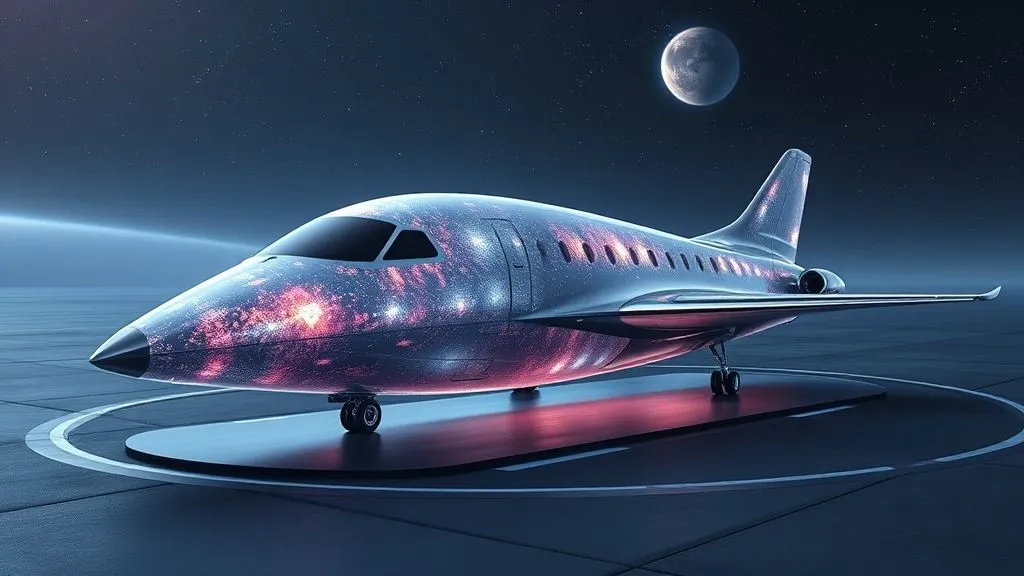
How can advanced materials enhance space tourism vehicle reusability?
In my experience, the quest for truly reusable space vehicles, particularly for burgeoning space tourism, hinges almost entirely on breakthroughs in **advanced materials science**. Gone are the days of single-use rockets; for commercial viability and safety, we need vehicles that can withstand repeated journeys through the harshest environments imaginable. This isn't merely about making things stronger; it's about making them smarter, more resilient, and ultimately, more economical to operate.
One of the most critical challenges for reusability is enduring the immense thermal and mechanical stresses of atmospheric re-entry. A common mistake I see is underestimating the sheer brutality of these forces. This is where **Ceramic Matrix Composites (CMCs)** and advanced ablative materials like **Phenolic Impregnated Carbon Ablator (PICA)** become indispensable.
-
Thermal Resilience: CMCs, for instance, can withstand temperatures exceeding 2,000°C without significant deformation or degradation. Unlike traditional metals, their low thermal expansion prevents critical stress fractures during rapid heating and cooling cycles.
-
Ablative Protection: PICA, famously used on the Orion capsule and elements of SpaceX's heat shields, works by sacrificing its outer layers. As it heats, it slowly burns away, carrying heat with it and protecting the underlying structure – a controlled, sacrificial defense that allows multiple uses with refurbishment.
The structural integrity required for repeated launch and landing cycles also demands materials far superior to conventional aerospace alloys. From my perspective, this is where the lessons learned from decades in high-performance aviation truly inform space vehicle design. We're talking about mitigating **fatigue, creep, and corrosion** over hundreds of flight hours.
Advanced High-Strength Alloys, such as specific nickel-based superalloys and specialized titanium alloys, offer exceptional strength-to-weight ratios and maintain their properties at elevated temperatures. These materials are crucial for engine components and structural elements exposed to extreme forces and heat. Their superior fatigue resistance means fewer stress cracks and longer operational lifespans between inspections.
Furthermore, **Carbon Fiber Reinforced Polymers (CFRPs)** are transforming vehicle structures. Their unparalleled strength-to-weight ratio directly translates to reduced fuel consumption and increased payload capacity, both vital for profitable space tourism. The ability to tailor their properties for specific stress points within a structure offers unprecedented design flexibility, enhancing durability.
The true genius of advanced materials isn't just their individual properties, but how they work in concert to create a vehicle that defies the physics of wear and tear, turning a one-shot mission into a routine commute.
Maintenance reduction is another area where advanced materials are making profound impacts. The cost and downtime associated with inspection, repair, and replacement of parts are major hurdles to reusability. Here, **self-healing materials** and **advanced coatings** represent the next frontier.
-
Self-Healing Composites: Imagine a micro-crack forming in a composite structure during flight. Self-healing materials incorporate encapsulated agents that, when released by the crack, repair the damage autonomously. This extends component life and reduces the need for costly manual inspections and repairs.
-
Protective Coatings: Specialized ceramic and metallic coatings can dramatically enhance resistance to erosion from atmospheric particles, micrometeoroid impacts, and even atomic oxygen in low Earth orbit. These thin layers act as sacrificial shields, protecting the primary structure and significantly extending its operational life.
Ultimately, enhancing reusability through advanced materials is about more than just incremental improvements; it’s about a fundamental paradigm shift. It's the difference between building a bridge that lasts a decade versus one that stands for centuries, enabling space tourism to become as routine and reliable as commercial air travel.
Reading Recommendations:
- The Ultimate Guide: How to Plan Your Multi-Park National Park Road Trip
- Unlock 7 Secrets: How to Increase Bookings for Luxury Romantic Glamping Retreats?
- Mastering Corporate Culinary Journeys: 7 Pitfall Avoidance Strategies
- The Ultimate Guide: How to Rent Accessible Vans for Disabled Travel
- Unveiling the Hidden Health Effects of Private Space Travel: Are You Ready?




Your email address will not be published. Required fields are marked *