

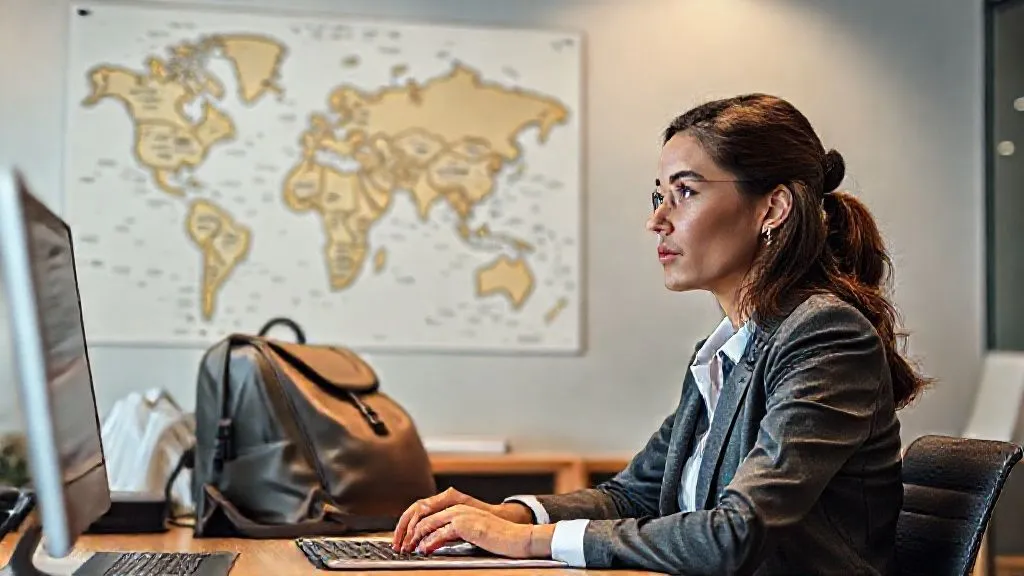
How do busy professionals plan safe solo backpacking trips efficiently?
For over 15 years, I've immersed myself in the world of solo travel, witnessing firsthand the transformative power of venturing out alone. I've also observed a common struggle: the highly driven professional, brimming with wanderlust, often believes that solo backpacking is an indulgence they simply cannot afford – not because of money, but because of time and the perceived complexity of planning.
The idea of escaping the daily grind, embracing spontaneity, and discovering oneself amidst new cultures is incredibly appealing. Yet, the reality of demanding careers, tight schedules, and the sheer volume of information needed for a safe solo trip often feels like an insurmountable barrier. You’re left wondering: how can I possibly fit meticulous research, itinerary building, and safety protocols into an already packed calendar?
In this definitive guide, I'll share my proven, time-tested framework designed specifically for busy professionals. You'll discover how to leverage efficient planning strategies, smart technology, and expert safety protocols to transform your solo backpacking dreams into a reality, all while maintaining your professional commitments. This isn't about cutting corners; it's about smart, strategic preparation that empowers you to explore the world with confidence and peace of mind.
The Professional's Predicament: Why Solo Backpacking Feels Out of Reach
I've had countless conversations with ambitious individuals who yearn for the open road but feel trapped by their responsibilities. They see others posting idyllic travel photos and think, "How do they do it?" The truth is, the hurdles are real, but they are not insurmountable. The primary challenge isn't a lack of desire; it's a perceived lack of the one resource professionals guard most fiercely: time.
Time Scarcity vs. Wanderlust
The modern professional's schedule is a meticulously crafted mosaic of meetings, deadlines, and deliverables. Allocating hours to research obscure visa requirements, compare flight prices, or delve into destination safety reports feels like a luxury. This scarcity often leads to procrastination, or worse, the abandonment of the solo travel dream altogether.
Moreover, the sheer volume of information available online can be overwhelming. Instead of simplifying, it often paralyzes. Deciding on the 'best' backpack, the 'safest' hostel, or the 'must-see' hidden gem can consume days, turning what should be an exciting planning phase into a stressful secondary job.
Perceived Safety Risks and Solo Travel
Beyond time, safety is a paramount concern, especially for solo travelers. Family, friends, and even internal anxieties often raise questions about the risks involved. Is it safe to eat street food? What if I get lost? How do I handle emergencies alone? These valid concerns, when coupled with a lack of dedicated planning time, can amplify apprehension and deter even the most adventurous spirits.
"Efficient planning isn't about doing more in less time; it's about doing the *right* things in the *available* time. For solo backpacking, this means strategic focus on high-impact tasks and delegating the rest to smart tools and trusted resources."

Phase 1: The "Micro-Planning" Mindset – From Dream to Draft
The secret to efficient solo trip planning for busy professionals isn't to find more time; it's to optimize the time you already have. I advocate for a "micro-planning" approach, breaking down the overwhelming task into manageable, bite-sized chunks that can be tackled in short bursts – during a lunch break, a commute, or even 15 minutes before bed.
Step 1: Define Your "Why" and "What" (The 15-Minute Brainstorm)
Before diving into logistics, take 15 minutes to clearly articulate your trip's core purpose and parameters. This clarity will be your compass. Ask yourself:
- What is my primary motivation? Is it cultural immersion, adventure, relaxation, or personal growth? Knowing your "why" helps narrow down destinations.
- Where do I want to go (broadly)? Focus on a region or a few potential countries. Don't get bogged down in specific cities yet.
- How long can I realistically be away? Be honest with your work commitments. Is it a long weekend, a week, or two weeks?
- What's my approximate budget range? A ballpark figure helps filter destinations and accommodation styles.
- What kind of solo experience am I seeking? Fast-paced exploration, slow travel, nature immersion, or urban adventure?
This initial brainstorm, done with a pen and paper or a quick digital note, prevents analysis paralysis later on. It sets the foundation without demanding extensive research.
Step 2: Time-Blocking for Trip Research (The "Pomodoro" Approach)
Once you have your core parameters, dedicate specific, short blocks of time to research. The Pomodoro Technique, typically 25 minutes of focused work followed by a 5-minute break, is incredibly effective here. Instead of feeling like you need an entire weekend, you commit to just one or two "pomodoros" a day.
- Focus on one task per block: One session for flights, another for accommodation, one for visa requirements, etc.
- Use reliable sources first: Start with official government travel advisories, reputable travel blogs (like mine!), and well-known booking sites. Avoid getting lost in endless forum threads initially.
- Create a digital notebook: Use tools like Google Keep, Evernote, or OneNote to quickly jot down links, notes, and ideas. This centralizes information and prevents losing valuable research.

Case Study: Sarah's South American Sprint
Sarah, a marketing director at a fast-paced tech company, craved a solo adventure but felt perpetually short on time. Her initial thought was, "I need two weeks to plan this." After adopting the micro-planning mindset, she allocated 30 minutes each evening for a week.
On Monday, she spent 15 minutes defining her "why" (cultural immersion in a vibrant city) and "what" (7 days in Bogotá, Colombia, mid-range budget). Tuesday was dedicated to flight research using Google Flights' "explore" feature, quickly identifying optimal dates and prices. Wednesday, she focused on pre-vetted hostels and boutique hotels via Booking.com, cross-referencing reviews for solo female travelers. Thursday was for identifying key cultural experiences and a local walking tour. By Friday, she had a rough itinerary, booked her flights and first two nights of accommodation, and felt confident enough to proceed. This focused, incremental approach allowed her to plan a significant portion of her trip without disrupting her demanding work schedule, transforming a daunting task into an exciting, achievable project.
Phase 2: Leveraging Technology & Tools for Expedited Logistics
In my years of solo travel, I've seen technology evolve from a mere convenience to an indispensable planning partner. For busy professionals, smart tools aren't just helpful; they're essential for streamlining the complex logistics of a solo backpacking trip. The goal here is automation and centralization, minimizing manual effort and maximizing efficiency.
Smart Itinerary Builders & AI Assistants
Gone are the days of sprawling spreadsheets and handwritten notes. Modern travel apps and AI tools can compile itineraries, suggest activities, and even manage bookings. Tools like TripIt, Wanderlog, or even a robust Google Docs template can centralize all your flight, accommodation, and activity details into one accessible place. Some AI tools can even generate initial itineraries based on your interests and available time, saving hours of initial research.
Consider apps that allow you to:
- Forward booking confirmations: Many apps automatically create itinerary entries from forwarded emails.
- Offline access: Crucial for when you're without Wi-Fi in a foreign country.
- Share with trusted contacts: Easily share your itinerary with family or friends for peace of mind.
| Feature | Benefit for Busy Pros | Example Tool |
|---|---|---|
| Automated Itinerary Building | Instantly compiles bookings, saves manual entry time. | TripIt Pro |
| AI-Powered Suggestions | Generates activity ideas based on preferences, reduces research. | ChatGPT / Bard (with specific prompts) |
| Offline Access | Ensures access to vital info without data/Wi-Fi, enhances safety. | Wanderlog |
| Document Cloud Storage | Securely stores copies of passport, visas, insurance. | Google Drive / Dropbox |
Accommodation & Transport: Streamlined Booking
Booking platforms have become incredibly sophisticated. For accommodation, I recommend using aggregators like Booking.com or Hostelworld (with strong filter options for 'solo female traveler,' 'high ratings,' 'private rooms,' etc.) that allow you to compare prices and read reviews efficiently. For flights, Google Flights and Skyscanner offer powerful search filters and price alerts that can save you significant time and money.
- Set price alerts: Let the tools do the monitoring for you.
- Leverage flexible dates: If your schedule allows even a day or two of flexibility, you can often find significantly cheaper options.
- Book direct for complex routes: Sometimes, booking multi-city flights directly with airlines can offer better flexibility and support than third-party sites.
Digital Document Management: Your Paperless Passport
One of the biggest time-savers and safety enhancers is digitizing all your essential documents. Scan your passport, visa, travel insurance, flight confirmations, hotel bookings, and credit cards (front and back, with the CVV obscured). Store these securely in a cloud service (like Google Drive or Dropbox) and also email them to yourself and a trusted emergency contact.
Additionally, consider a separate, encrypted folder on your phone for quick access. This not only saves you from carrying stacks of paper but also provides a crucial backup in case of loss or theft. Always have a physical copy of your passport and a few key documents, but rely on digital backups for the rest.
"Your smartphone isn't just for calls; it's your personal travel assistant, security guard, and information hub. Master its travel potential, and you'll dramatically cut down on planning time and in-trip stress."
Phase 3: Prioritizing Safety Without Paranoia – Smart & Strategic
Safety is non-negotiable for solo travelers, especially for busy professionals who might have less margin for error or unexpected complications. My philosophy is to be prepared, not scared. This means employing strategic safety measures that are efficient to implement and effective in practice, allowing you to enjoy your trip with confidence rather than constant anxiety.
Researching Destination Safety: Beyond the Headlines
Initial safety research can be done quickly. Start with official government travel advisories for your home country and the destination country. For example, the U.S. Department of State Travel Advisories provide crucial, up-to-date information on political stability, crime rates, and health concerns. Supplement this with reputable travel blogs and forums specifically for solo travelers, which often offer nuanced, ground-level insights. Look for information on:
- Common scams: Knowing typical tricks helps you avoid them.
- Safe neighborhoods: Identify areas to stay and areas to avoid, especially at night.
- Transportation safety: Are taxis regulated? Is public transport safe?
- Local customs and dress codes: Respecting local norms can enhance your safety and experience.
Remember, context is key. A high-level warning might not apply to the specific tourist areas you plan to visit. Focus on practical, actionable information.
Communication & Emergency Protocols
Before you leave, establish a clear communication plan. Share your detailed itinerary (from Phase 2) with at least two trusted contacts at home. Agree on a check-in frequency – perhaps a quick message every 24-48 hours. This simple step provides immense peace of mind for both you and your loved ones.
Equally important is having an emergency plan:
- Emergency contacts: Program local emergency numbers (police, ambulance) into your phone, along with your embassy/consulate information.
- Travel insurance: This is non-negotiable. Ensure your policy covers medical emergencies, trip interruption, and theft. Research providers like World Nomads or Allianz Travel Insurance. Keep policy details and emergency numbers easily accessible.
- Local SIM card/eSIM: Upon arrival, acquire a local SIM or activate an eSIM for reliable data and calls. This is far more practical than relying solely on Wi-Fi.
Personal Security Essentials: Gear & Awareness
While you don't need to travel like a secret agent, a few smart gear choices and a strong sense of situational awareness go a long way.
- Anti-theft backpack/daypack: Brands like Pacsafe offer bags with slash-resistant mesh, lockable zippers, and RFID-blocking pockets.
- Personal alarm: A small, loud device can deter potential threats.
- Door stop alarm: Simple, portable, and effective for added security in hostel dorms or hotel rooms.
- Situational awareness: This is your most powerful tool. Be aware of your surroundings, trust your gut instincts, and avoid walking alone at night in unfamiliar areas. Don't flaunt expensive valuables.

Phase 4: The Art of Packing Light & Smart for the Busy Professional
For the busy professional, packing isn't just about fitting everything; it's about optimizing efficiency and minimizing decision fatigue on the road. A heavy, disorganized bag is a burden that wastes time and energy. My approach focuses on minimalism, versatility, and strategic gear choices.
The Capsule Wardrobe Approach
Think of your travel wardrobe like a professional capsule collection: interchangeable pieces that can be mixed and matched to create multiple outfits for different occasions. Stick to a color palette (neutrals work best) and choose fabrics that are:
- Wrinkle-resistant: Saves time on ironing.
- Quick-drying: Essential for hand-washing on the go.
- Layerable: Allows you to adapt to varying temperatures without packing bulky items.
Limit yourself to 3-5 tops, 2-3 bottoms, 1-2 outer layers, and 2 pairs of shoes (one for walking, one versatile pair). Embrace the idea of re-wearing items and utilizing laundry services or hand-washing.
Multi-functional Gear: Every Item Earns Its Space
Every item in your backpack should ideally serve multiple purposes. This is where smart choices make a significant difference:
- Sarong/Scarf: Can be a towel, blanket, head covering, beach cover-up, or even a makeshift bag.
- Travel adapter with multiple USB ports: Charges all your devices from one outlet.
- Collapsible water bottle: Eco-friendly and saves space when empty.
- Solid toiletries: Shampoo bars, solid toothpaste – lighter, leak-proof, and often last longer.
| Category | Essential Items |
|---|---|
| Clothing | 3-5 tops, 2-3 bottoms, 1 light jacket, 1 versatile dress/shirt, 2 pairs shoes, 5 socks/underwear |
| Toiletries | Solid shampoo/conditioner, small toothpaste, sunscreen, insect repellent, basic first-aid kit |
| Tech | Smartphone, power bank, universal adapter, eSIM/local SIM, headphones |
| Documents/Money | Passport, credit/debit cards, small amount local currency, digital backups |
| Safety/Misc | Personal alarm, door stop, padlock, collapsible water bottle, small daypack |
Tech Essentials: Power & Connectivity
While the goal is to disconnect, for a busy professional, staying connected for emergencies or brief work check-ins is often a necessity. Prioritize:
- Portable power bank: A high-capacity power bank is crucial for keeping your phone charged, especially on long travel days or when outlets are scarce.
- Universal travel adapter: One adapter with multiple USB ports simplifies charging multiple devices.
- eSIM compatibility: If your phone supports eSIM, services like Airalo or Holafly allow you to purchase data plans for specific countries digitally, avoiding physical SIM card hassles.
Remember, the less you carry, the more agile you are. This directly translates to less stress and more enjoyment on your solo adventure.
Phase 5: Seamless Transition – Work-Life Balance on the Go
The biggest fear for many busy professionals contemplating solo backpacking is how their absence will impact their work. The key is not to ignore work entirely but to manage it proactively and strategically, ensuring a smooth transition before, during, and after your trip. This phase is about setting boundaries and leveraging your professional skills for personal gain.
Pre-Trip Work Delegation & Automation
Weeks before your departure, begin identifying tasks that can be delegated, automated, or postponed. This is where your project management skills shine:
- Create a handover document: Detail ongoing projects, key contacts, and critical deadlines for colleagues covering for you.
- Set up out-of-office replies: Clearly communicate your absence and who to contact for urgent matters.
- Automate routine tasks: Schedule emails, social media posts, or reports that can run while you're away.
- Complete critical tasks early: Push to finish high-priority items well before your departure date to avoid last-minute stress.
As highlighted by a Harvard Business Review article on work-life balance, effective delegation is a cornerstone of leadership and crucial for sustainable productivity, both for you and your team.
Setting Boundaries & Expectations
Crucially, communicate your availability (or lack thereof) to your team and clients well in advance. Be firm but polite about your boundaries. Will you check emails once a day? Only for emergencies? Will you be completely offline? Setting these expectations prevents misunderstandings and allows you to truly disconnect.
I've personally found that designating a specific "work window" (e.g., 60 minutes every other morning) allows me to address urgent matters without it consuming my entire day. The rest of the time, my focus is entirely on the travel experience.
Staying Connected (When Necessary)
While disconnecting is ideal, sometimes a brief check-in is unavoidable. Ensure you have reliable internet access when you plan to work. Coffee shops with good Wi-Fi, co-working spaces in larger cities, or reliable hotel connections are your best friends. Avoid trying to work from unreliable connections or in uncomfortable environments; this defeats the purpose of efficiency.
Remember, this is your solo adventure. While your professional life is important, this trip is an investment in your well-being and personal growth. Treat it with the same priority you would a critical business project, and you'll reap immense rewards.

Frequently Asked Questions (FAQ)
Q: Is solo backpacking truly safe for busy professionals, especially women? A: Absolutely. While no travel is without risk, solo backpacking can be incredibly safe when approached with smart planning and awareness. My framework emphasizes proactive research, reliable communication plans, and essential personal security measures. Many destinations globally are very welcoming to solo travelers, and with the right preparation, you can mitigate most common risks. Focus on well-regarded accommodations, inform trusted contacts of your itinerary, and always trust your intuition.
Q: How can I convince my employer to grant me time off for a solo backpacking trip? A: Frame your request professionally. Highlight how a period of focused disconnection and personal growth can lead to increased productivity, creativity, and reduced burnout upon your return. Present a clear plan for your absence, including delegation strategies and how you'll ensure continuity of work. Emphasize that you've meticulously planned to minimize disruption. Many progressive companies recognize the value of employee well-being and will be receptive to a well-thought-out proposal.
Q: What if I get lonely or overwhelmed while traveling alone? A: It's a common concern! Loneliness is a natural part of solo travel for some, but it's often fleeting. Actively seek out social opportunities: stay in hostels with common areas, join walking tours, take a cooking class, or use apps like Meetup.com or Couchsurfing to connect with locals and other travelers. Being overwhelmed is also normal; allow yourself slow days, take breaks, and remember that it's okay to adjust your plans. The beauty of solo travel is the freedom to change your mind.
Q: How much extra budget should I allocate for unexpected costs during a solo trip? A: As an experienced traveler, I always recommend allocating an additional 15-20% of your total estimated budget for contingencies. This 'buffer' covers unexpected expenses like medical needs, emergency transport, last-minute accommodation changes, or simply indulging in an unplanned experience. Having this cushion significantly reduces stress and allows for flexibility, which is invaluable when traveling solo.
Q: Can I really plan a significant solo backpacking trip in short bursts of time? A: Yes, absolutely! This is the core principle of my "micro-planning" mindset. Instead of marathon planning sessions, you break down tasks into 15-30 minute segments. Research flights during your lunch break, book a hostel while waiting for a meeting, or review safety tips before bed. Consistency over intensity is key. By leveraging technology and focusing on high-impact tasks, you'll find that a comprehensive plan can emerge from these small, focused efforts. It’s about being smart with your time, not finding more of it.
Key Takeaways and Final Thoughts
Planning a safe and efficient solo backpacking trip as a busy professional is not just a pipe dream; it's an achievable goal with the right strategies. By embracing a disciplined, strategic approach, you can unlock incredible personal growth and adventure without derailing your career. Here are the critical takeaways:
- Adopt a Micro-Planning Mindset: Break down planning into small, manageable time blocks. Consistency trumps long, infrequent sessions.
- Leverage Technology Ruthlessly: Use apps and AI for itinerary building, booking, and document management to automate and centralize information.
- Prioritize Smart Safety: Conduct focused research, establish clear communication protocols, and equip yourself with essential personal security items. Travel insurance is non-negotiable.
- Master the Art of Light Packing: A minimalist, versatile wardrobe and multi-functional gear reduce physical and mental burden.
- Proactively Manage Work Transitions: Delegate, automate, and set clear boundaries with colleagues and clients before and during your trip.
Your demanding professional life provides you with the very skills needed to excel at solo travel planning: organization, strategic thinking, and efficiency. Don't let the perceived challenges deter you. Instead, apply these expert-level frameworks, and you'll not only plan an incredible journey but also return reinvigorated, with fresh perspectives that will undoubtedly benefit both your personal and professional life. The world is waiting, and you're more than capable of exploring it safely and efficiently, one purposeful step at a time.
Recommended Reading
- Mastering Multi-Stop Family Adventures: 7 Steps to Prevent Logistical Chaos
- Unveiling the True Cost: What's Included in Your Commercial Spaceflight Ticket?
- 7 Proven Cruise Activities to Combat Executive Burnout Effectively
- The Ultimate Guide: How to Choose Ethical Nature Reserve Eco Tours Responsibly
- Urgent Burnout? How to Select a Short Yoga Retreat for Rapid Relief




Your email address will not be published. Required fields are marked *