

How Geodomes Conquer Extreme Weather for Glamping?
Imagine settling into a cozy, luxurious glamping tent, a warm cup of cocoa in hand, while outside, a fierce blizzard rages or a desert storm whips up sand. Sounds impossible, doesn't it? For traditional tents, it often is. But for the remarkable geodesic dome, this scenario isn't just a fantasy; it's a testament to their inherent resilience and innovative design.
The allure of glamping lies in its promise of connecting with nature without sacrificing comfort. However, nature is unpredictable. From torrential downpours and gale-force winds to heavy snowfalls and scorching heat, extreme weather conditions pose significant challenges to any outdoor dwelling. This leads to a critical question for aspiring glampers and operators: how do geodomes handle extreme weather for glamping, ensuring safety and an unparalleled experience?
This comprehensive guide will delve deep into the engineering marvels and material science behind geodesic domes, revealing precisely how these structures stand defiant against nature's most formidable elements. By the end of this reading, you'll understand why geodomes are not just a trend but a superior choice for year-round, all-weather glamping, offering peace of mind and unforgettable adventures.
The Unrivaled Structural Integrity of Geodomes
At the heart of a geodome's strength lies its unique geometric design. Unlike conventional box-like structures, domes distribute external forces incredibly efficiently, making them inherently robust.
The Power of Triangles: A Fundamental Principle
Geodesic domes are composed of a network of triangles, the strongest and most stable geometric shape. When pressure is applied to a triangle, the force is distributed evenly along its three sides, preventing deformation. In a dome, thousands of these interconnected triangles form a self-supporting, spherical shell.
- Load Distribution: Any external force, be it wind, snow, or seismic activity, is dissipated across the entire structure.
- No Weak Points: Unlike flat surfaces or corners found in traditional buildings, the continuous curvature of a dome eliminates stress concentration points.
- Efficiency: This design uses minimal material to enclose maximum space, leading to a lightweight yet incredibly strong structure.
Stress Distribution and Resilient Frameworks
The spherical shape of a geodesic dome means that forces are not concentrated on specific walls or a roof. Instead, they are distributed spherically, making the structure remarkably resistant to external pressures. This principle, known as tensegrity, allows domes to absorb and redistribute stress effectively.
The framework, typically made of galvanized steel, aluminum, or high-strength timber, is designed to withstand significant compressive and tensile forces. Each strut and hub connection is precisely engineered to contribute to the overall rigidity and resilience of the dome.
Foundation and Anchoring: The Unsung Heroes
Even the strongest dome needs a solid connection to the ground. Geodomes for glamping are typically anchored to a sturdy foundation, which can range from concrete slabs to wooden decks or even specialized ground anchors designed for minimal environmental impact. This anchoring prevents uplift in high winds and provides stability on uneven terrain.
- Ground Screws: Ideal for temporary or semi-permanent installations, offering strong anchorage with minimal ground disturbance.
- Concrete Piers/Slabs: Provide maximum stability for long-term setups, distributing weight over a larger area.
- Decking Platforms: Elevate the dome, protecting it from ground moisture and providing a level, secure base.
Advanced Materials: The Shield Against the Elements
Beyond their structural design, the materials used in geodome construction are paramount to their extreme weather performance. Modern geodomes leverage cutting-edge fabrics and insulation technologies.
Robust Outer Shells: PVC, ETFE, and Beyond
The primary protective layer of a geodome is its outer membrane. High-quality glamping domes typically use:
- PVC (Polyvinyl Chloride) Coated Fabric: This is the most common material, known for its excellent waterproofing, UV resistance, and tear strength. It can withstand extreme temperatures and is easy to clean.
- ETFE (Ethylene Tetrafluoroethylene): A more advanced, highly transparent polymer that is incredibly durable, lightweight, and self-cleaning. It offers superior light transmission and insulation properties, often used in architectural marvels.
- Specialized Composites: Some manufacturers use multi-layered technical fabrics that combine different properties for enhanced performance, such as fire retardancy and superior thermal insulation.
Insulation and Thermal Regulation: Battling Temperature Extremes
Maintaining a comfortable internal temperature is crucial for glamping in diverse climates. Geodomes achieve this through various insulation strategies:
- Multi-Layered Fabrics: Many domes feature an inner liner, creating an air gap between the outer shell and the interior. This air pocket acts as an insulator, similar to double-pane windows.
- Thermal Liners: Specialized insulated liners can be added, often made from materials like quilted polyester or fleece, significantly boosting the dome's R-value (a measure of thermal resistance).
- Reflective Barriers: In hot climates, reflective layers can be incorporated to bounce solar radiation away, preventing heat buildup inside the dome.
UV Resistance and Longevity: Built to Last
Constant exposure to sunlight can degrade materials over time. High-quality geodome fabrics are treated with UV inhibitors to prevent brittleness, fading, and material breakdown. This ensures the dome maintains its structural integrity and aesthetic appeal for many years, even under intense sun exposure.
Battling the Big Three: Wind, Snow, and Rain
Let's examine how the combined forces of design and materials allow geodomes to excel against the most common extreme weather challenges.
Wind Resistance: Aerodynamics in Action
The spherical, aerodynamic shape of a geodome offers minimal resistance to wind. Unlike flat-sided buildings that create turbulent eddies and high-pressure zones, wind flows smoothly over a dome, distributing pressure evenly across its surface. This inherent aerodynamic efficiency makes them incredibly stable in high winds, often rated to withstand hurricane-force gusts.
Snow Load Capacity: Defying Gravity
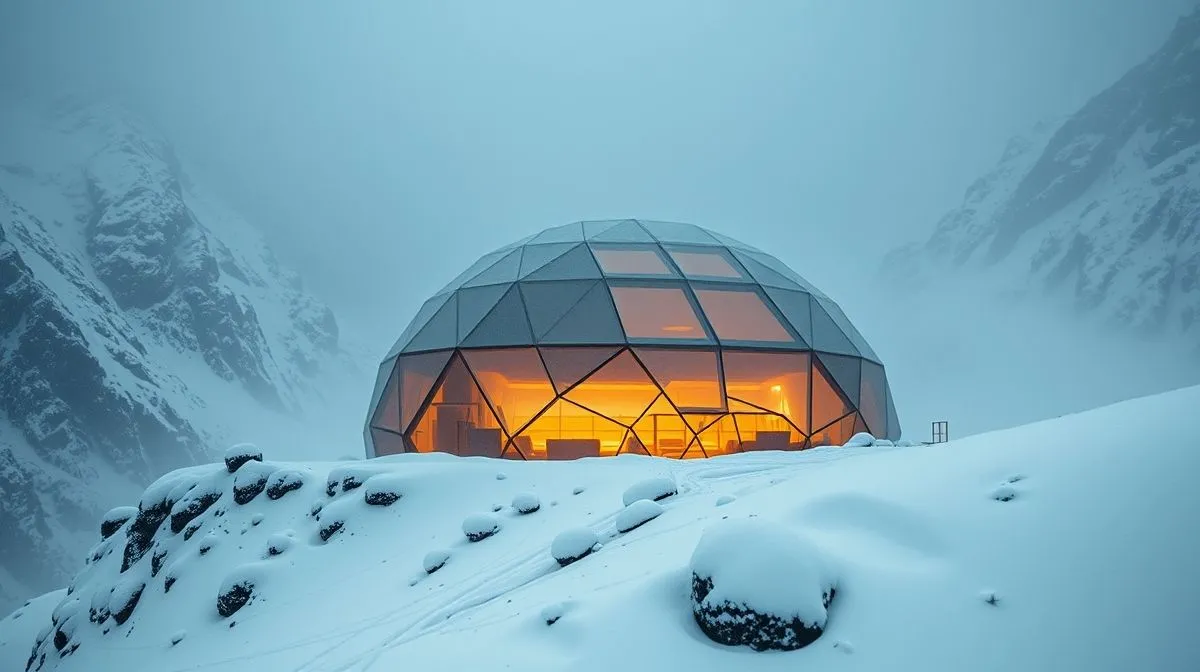
Heavy snowfall can be catastrophic for flat-roofed structures. Geodomes, however, are designed to shed snow naturally due to their curved surfaces. The snow simply slides off, preventing dangerous accumulation. Furthermore, the robust triangular framework is engineered to bear significant snow loads, far exceeding what typical tents or even some conventional buildings can handle. This is a key factor in how do geodomes handle extreme weather for glamping in winter regions.
Waterproofing and Drainage: Staying Dry Inside
Rainwater management is critical. Geodome outer shells are inherently waterproof, with sealed seams preventing any ingress of moisture. The curved surface also ensures efficient runoff, preventing water from pooling. Integrated gutter systems or simple ground-level drainage solutions can be implemented around the base to manage water flow away from the dome, keeping the interior dry and comfortable, even during torrential downpours.
Internal Climate Control: Comfort in Any Condition
Beyond structural resilience, a true all-weather glamping experience requires precise internal climate management. Geodomes are highly adaptable to various heating and cooling solutions.
Heating and Cooling Solutions for Geodomes
- Wood-Burning Stoves: A popular choice for their rustic appeal and efficient heating in cold climates. Proper ventilation and heat shielding are essential.
- Propane Heaters: Portable and effective, offering quick warmth. Requires good ventilation to prevent carbon monoxide buildup.
- Mini-Split AC Units: For hot climates, these provide efficient cooling and can also offer heating.
- Passive Ventilation: Strategically placed windows, vents, and doors create cross-ventilation, allowing hot air to escape and cooler air to enter.
Moisture Management and Condensation Prevention
In humid or cold environments, condensation can be an issue. Geodomes combat this through:
- Ventilation Systems: Adequate airflow prevents moist air from lingering and condensing on cooler surfaces.
- Vapor Barriers: Some domes incorporate a vapor barrier layer within their insulation to prevent moisture from migrating through the fabric.
- Dehumidifiers: In extremely humid conditions, a small dehumidifier can effectively manage indoor moisture levels.
Air Quality and Ventilation: A Breath of Fresh Air
Good air quality is vital for comfort and health. Geodomes are designed with multiple points of entry and ventilation options, allowing for fresh air circulation while keeping insects and external elements out. This ensures a comfortable and healthy internal environment, regardless of the outside conditions.
Safety Features and Emergency Preparedness
Safety is paramount, especially when facing extreme weather. Geodomes are designed with several features to ensure the well-being of their occupants.
Fire Safety Measures in Geodomes
Many geodome fabrics are treated with fire-retardant chemicals, meeting international safety standards. Additionally, proper placement of heating appliances, fire extinguishers, and clear emergency exits are crucial for fire safety.
Emergency Exits and Accessibility
Geodomes typically feature multiple entry/exit points, often including a main door and one or more emergency windows or zippered exits. These are designed for quick and easy egress in an emergency, even in challenging weather conditions.
Securing the Dome: Protection from External Threats
Beyond weather, security can be a concern. Geodomes can be outfitted with robust locking mechanisms for doors and windows. In more remote or vulnerable locations, advanced anchoring systems and even security cameras can be integrated to protect both the structure and its occupants.
Choosing the Right Geodome for Your Extreme Weather Glamping Adventure
Selecting the ideal geodome depends on your specific needs and the climate you'll be operating in. Consider these factors carefully.
Factors to Consider: Climate, Size, and Features
- Climate Zone: Are you in a high-wind area, a heavy snow zone, or a place with extreme heat? This will dictate the required material thickness, frame strength, and insulation type.
- Dome Size: Larger domes offer more space but may require more robust foundations and heating/cooling solutions. Consider the number of occupants and desired amenities.
- Features: Look for options like panoramic windows, skylights, multiple vents, and integrated utility connections (electricity, water).
Customization for Specific Weather Challenges
Many manufacturers offer customization. For instance, if you're in a high-UV area, you might opt for a fabric with superior UV resistance. For cold climates, extra insulation layers and reinforced frames for snow loads are vital. Discuss your specific environmental challenges with suppliers.
According to a report by the U.S. Energy Information Administration (EIA), effective insulation and smart design can reduce energy consumption by up to 30% in climate-controlled structures, highlighting the importance of tailored solutions for geodomes.
Common Mistakes to Avoid When Selecting a Geodome
- Underestimating Weather: Don't choose a dome not rated for the most extreme conditions you might encounter. Always err on the side of caution.
- Ignoring Foundation: A weak foundation undermines even the strongest dome. Invest in proper anchoring.
- Neglecting Ventilation: Poor ventilation leads to condensation, mold, and discomfort, especially in humid or cold environments.
- Buying Cheap: While tempting, lower-cost domes often use inferior materials and construction, compromising safety and longevity.
Real-World Applications: Geodomes Thriving in Harsh Environments
The theoretical resilience of geodomes is proven repeatedly in some of the world's most challenging environments. From the icy expanses of the Arctic to the scorching deserts and the wind-swept coastlines, geodomes are not just surviving, but thriving, offering luxurious retreats where traditional structures would struggle.
Examples from Arctic to Desert Glamping
In places like Iceland or the Canadian Rockies, geodomes provide cozy havens against sub-zero temperatures and heavy snow. Their ability to shed snow and withstand high winds makes them ideal. In contrast, in the arid landscapes of the Sahara or the Australian Outback, their reflective properties and efficient ventilation systems ensure a cool escape from intense heat and blowing sand. These real-world applications underscore precisely how do geodomes handle extreme weather for glamping across the globe.
One notable example is the use of geodesic structures by scientific research stations in Antarctica, demonstrating their capability to withstand some of the planet's most brutal conditions. This concept is beautifully scaled down and adapted for glamping, offering a similar level of protection and comfort. More on the history and applications of geodesic domes can be found on Wikipedia's Geodesic Dome page.
Testimonials or Anecdotes
"We set up our geodome in Patagonia, known for its unpredictable, fierce winds," recounts Sarah L., a glamping site owner. "We've weathered storms that ripped apart conventional structures nearby, but our dome stood firm, a testament to its incredible design. Our guests always comment on how safe and warm they feel, even when the elements are raging outside." This sentiment is echoed by countless others who have experienced the unparalleled security and comfort of geodomes in challenging climates.
Maintenance and Longevity: Keeping Your Geodome Resilient
While geodomes are incredibly durable, proper maintenance is key to ensuring their long-term performance and ability to withstand extreme weather year after year.
Regular Inspections and Cleaning
Periodically inspect the dome's outer shell for any signs of wear, tears, or damage. Check seams, zippers, and connection points for integrity. Regular cleaning with mild soap and water will prevent mildew and maintain the fabric's protective properties, especially against UV degradation and dirt buildup that can compromise its aesthetic and functional qualities.
Repairing Minor Damage and Preventing Major Issues
Small punctures or tears in the fabric can often be repaired with specialized patch kits. Addressing these minor issues promptly prevents them from escalating into larger problems that could compromise the dome's weather resistance. Keep an eye on the frame for any loose bolts or signs of corrosion, tightening or treating them as needed.
Seasonal Preparations for Extreme Weather
Before anticipated extreme weather seasons (e.g., winter for snow, hurricane season for wind), conduct thorough checks. Ensure all anchors are secure, and any removable panels or vents are properly sealed or secured. For heavy snow areas, consider a heating strategy that helps melt snow off the dome's surface, reducing static load. For high winds, ensure all openings are tightly secured to prevent internal pressure buildup.
Frequently Asked Questions (FAQ)
Are geodomes safe in lightning storms? While the metal frame could conduct lightning, modern geodomes can be equipped with lightning protection systems, similar to those used in traditional buildings, to safely channel electrical charges to the ground.
How long do glamping geodomes typically last? With proper maintenance and high-quality materials, a well-constructed glamping geodome can last anywhere from 10 to 20 years or even longer, depending on the specific materials and climate conditions.
Can geodomes withstand earthquakes? Due to their lightweight, flexible, and inherently strong triangular framework, geodesic domes are highly resistant to seismic activity. The distributed load and interconnected nature allow them to flex and absorb ground movement better than rigid, conventional structures.
Do geodomes get too hot in summer? Not necessarily. With proper ventilation, reflective outer layers, and the option for air conditioning units, geodomes can be kept cool and comfortable even in very hot climates.
Are geodomes difficult to assemble and disassemble? While initial assembly requires careful planning and multiple hands, many glamping geodomes are designed for relatively straightforward setup and takedown, often taking a few days with a small team, depending on size and complexity.
Recommended Reading
- Wellness Travel for Stress: Your Ultimate Unwinding Guide
- Master Your First White Water Rafting Trip: Essential Prep Guide
- All Aboard! The Best Railway Museums for Kids in the UK Revealed
- Wheelchair Friendly Museums Near Me? Your Ultimate Accessibility Guide
- Rome on a Budget: Best Free Attractions for First-Time Visitors!
Conclusion
The question of how do geodomes handle extreme weather for glamping is answered definitively by their unparalleled combination of structural integrity, advanced material science, and intelligent design. These spherical marvels are not just aesthetically pleasing; they are engineering triumphs, capable of providing safe, comfortable, and luxurious accommodations in environments ranging from blizzards to scorching deserts. By understanding their unique advantages and investing in quality construction and proper maintenance, glamping enthusiasts and operators can unlock year-round adventures, proving that with a geodome, the wild outdoors is always within reach, no matter the weather. Embrace the resilience, and let your glamping dreams soar, unhindered by the elements.

Your email address will not be published. Required fields are marked *