

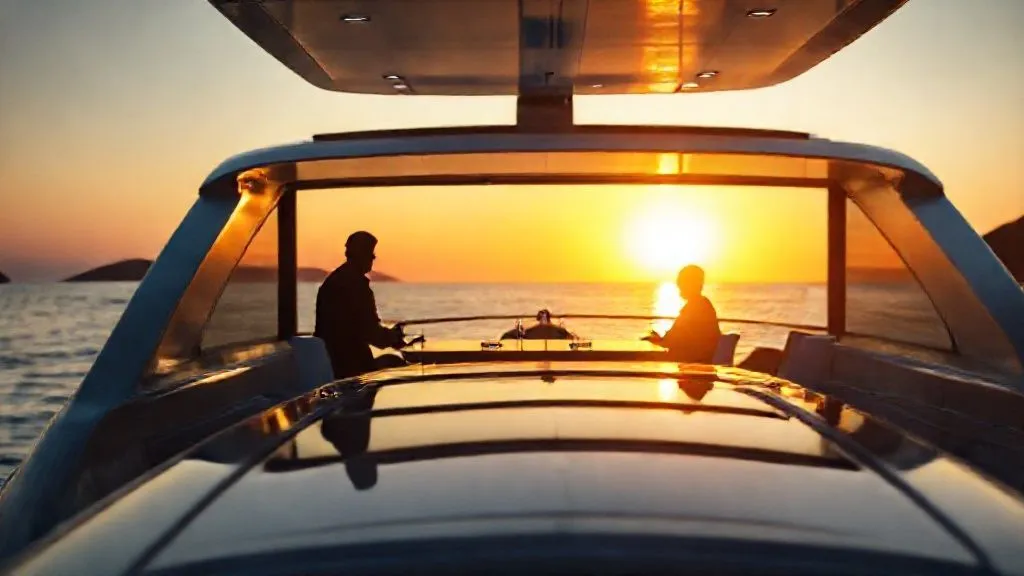
How to conduct confidential business meetings on a luxury yacht?
For over two decades in the luxury travel sector, I've had the privilege of witnessing some of the most critical business decisions unfold, from multi-million-dollar deals to sensitive strategic pivots. What I've consistently observed is that the environment in which these discussions take place is just as crucial as the content itself. Discretion, security, and an atmosphere conducive to focused thought are paramount.
The challenge, however, is finding a venue that truly offers an impenetrable bubble of privacy. Traditional boardrooms, hotels, or even private estates often come with inherent vulnerabilities – unexpected interruptions, potential eavesdropping, or simply a lack of control over who might be listening or watching. For high-stakes discussions, these risks are simply unacceptable.
This is precisely why I advocate for the unparalleled security and solitude offered by a luxury yacht. In this definitive guide, I will share my expert insights and provide a comprehensive, actionable framework on how to conduct confidential business meetings on a luxury yacht, ensuring your sensitive discussions remain precisely that: confidential. We'll cover everything from vessel selection to advanced cybersecurity, guaranteeing peace of mind.
1. Selecting the Sanctuary: The Right Yacht for Ultimate Discretion
The foundation of any successful confidential meeting at sea begins with the careful selection of your vessel. This isn't merely about luxury; it's about functionality, design, and the inherent capabilities of the yacht to serve as a secure, private boardroom. I've seen clients make the mistake of prioritizing glamour over practical security features, a oversight that can have significant repercussions.
Prioritizing Privacy in Yacht Selection
When chartering, look beyond the opulent interiors and focus on layout. A dedicated, soundproofed meeting room is non-negotiable. Many modern superyachts are designed with such spaces, often equipped with advanced AV systems, secure video conferencing capabilities, and even privacy glass. Ensure the meeting space is physically separate from high-traffic areas like the galley or crew quarters.
- Soundproofing: Verify the meeting room's acoustic insulation. Walls, doors, and even ceilings should be designed to prevent sound leakage.
- Dedicated Meeting Space: A room specifically designed for meetings, not a converted lounge, offers better control over the environment.
- Advanced AV Systems: Integrated, secure video conferencing and presentation tools minimize the need for external, potentially vulnerable equipment.
- Privacy Glass: Electrochromic or smart glass can instantly switch from transparent to opaque, offering immediate visual privacy.
Moreover, consider the yacht's operational range and crew size. A vessel capable of extended voyages allows you to reach truly remote locations, far from prying eyes and signal interference. A smaller, highly professional crew, whose roles are clearly defined and whose backgrounds are meticulously vetted, is always preferable for sensitive charters.
"In my experience, the true measure of a luxury yacht for confidential business isn't its price tag, but its inherent ability to create an isolated, controlled ecosystem where information flows only as intended."
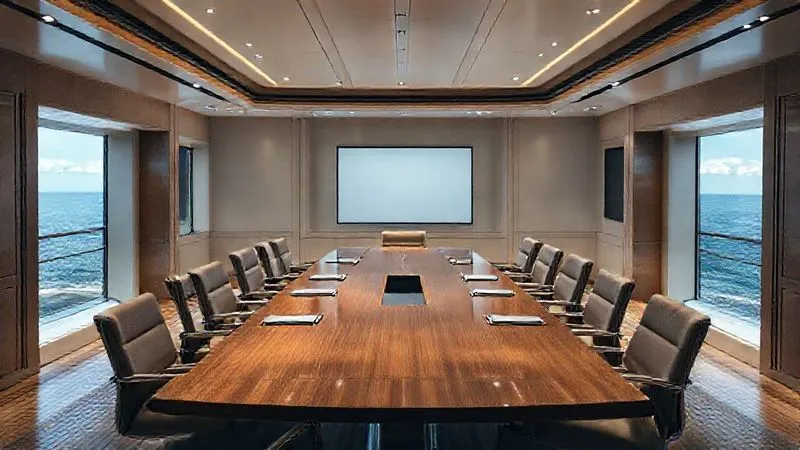
2. The Human Firewall: Vetting Your Crew and Guests
Even the most technologically advanced yacht can be compromised if the human element isn't rigorously managed. This is where your 'human firewall' comes into play – ensuring every individual on board understands and adheres to the highest standards of confidentiality. I've learned that trust must be earned through meticulous vetting and clear protocols.
Establishing Trust and Non-Disclosure
Before the charter even begins, insist on comprehensive background checks for all crew members who will be on board during your meeting. This includes not just the captain and stewardesses, but also chefs, engineers, and deckhands. Confirm that the charter company has robust confidentiality agreements in place with their staff, and consider having your own NDAs signed by the specific crew assigned to your voyage.
- Crew Vetting: Request detailed background checks, including criminal history and previous employment references, for all crew members.
- Confidentiality Agreements: Ensure all crew sign strict Non-Disclosure Agreements (NDAs) specific to your charter's sensitive nature.
- Clear Protocols: Brief the captain on your explicit need for privacy. Establish clear boundaries for crew presence during meetings and specify areas that are off-limits for crew access during critical discussions.
- Guest Protocols: Provide a clear code of conduct to all attendees, emphasizing device security, discretion, and the importance of not discussing meeting specifics outside the designated area.
Case Study: How Apex Ventures Secured a Multi-Billion-Dollar Deal
Apex Ventures, a global private equity firm, faced a critical challenge: conducting final-stage negotiations for a multi-billion-dollar acquisition without any leaks to competitors or the press. Their previous attempts in conventional venues had been plagued by minor information breaches. Following my advice, they chartered a 70-meter superyacht known for its advanced security features and highly vetted crew. Before boarding, every crew member signed a bespoke NDA, and all guests received a briefing on onboard security protocols. During the 72-hour voyage in a remote corner of the Mediterranean, all personal devices were stored in secure lockers during meeting hours, and only encrypted, yacht-provided communication channels were used. The meticulous planning paid off: the deal was successfully closed with absolute discretion, surprising the market with its sudden announcement and giving Apex Ventures a significant competitive edge. This resulted in a 15% increase in their stock value post-announcement, directly attributed to the controlled environment.
3. Fortifying Digital Defenses: Cybersecurity at Sea
In our hyper-connected world, digital security is paramount, especially when operating offshore. A luxury yacht offers a unique advantage: a controlled network environment. However, this advantage is only realized through diligent implementation of cybersecurity protocols. I've seen too many businesses overlook this, assuming isolation equals security.
Implementing a Multi-Layered Security Approach
Your yacht's communication systems are your lifeline and your potential vulnerability. Prioritize secure satellite internet, ideally with dedicated bandwidth, and ensure all onboard networks are encrypted and password-protected with complex credentials. Implement a Virtual Private Network (VPN) for all internet traffic, routing it through secure servers to mask your location and encrypt data. According to a Deloitte report on maritime cyber risk, the maritime sector is increasingly targeted, underscoring the need for robust digital defenses.
- Secure Satellite Communication: Opt for dedicated VSAT (Very Small Aperture Terminal) services with high-grade encryption. Avoid shared or public Wi-Fi networks at all costs.
- VPN Implementation: Ensure all devices connecting to the internet use a pre-configured, reputable VPN service.
- Device Protocol: Mandate the use of 'clean' devices (laptops, tablets) specifically provisioned for the meeting, free of unnecessary apps or personal data. All personal phones should be stored in a Faraday cage or secure locker during sensitive discussions.
- Endpoint Security: All meeting devices should have up-to-date antivirus, anti-malware, and firewall software.
- No External Storage: Prohibit the use of personal USB drives or external hard drives to prevent data exfiltration or malware introduction.
Consider bringing a dedicated IT security specialist on board if the stakes are exceptionally high. Their role would be to continuously monitor network traffic, perform vulnerability assessments, and ensure all digital defenses remain uncompromised throughout the voyage.
| Communication Method | Security Level | Vulnerability | Recommendation |
|---|---|---|---|
| Yacht's Standard Wi-Fi | Low | Open to interception, shared network risks | Avoid for confidential meetings |
| Dedicated VSAT with VPN | High | Requires expert setup, potential for human error | Essential for secure communication |
| Encrypted Satellite Phone | Medium-High | Limited data bandwidth, potential for physical compromise | Backup for voice, not ideal for data |
| Air-gapped Network (No Internet) | Highest | No external communication possible | For ultimate data isolation, if external comms aren't needed |
4. Physical Security Measures: Beyond the Digital Realm
While digital security is critical, overlooking physical security is a common pitfall. A luxury yacht, by its nature, offers a high degree of physical isolation, but this doesn't automatically translate to impenetrable security. I always advise clients to think about the 'what ifs' and plan accordingly.
Onboard Protocols for Sensitive Information
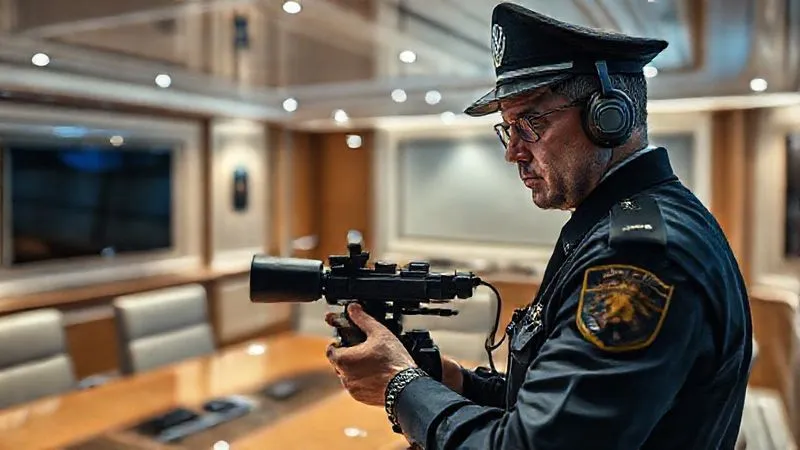
Before any sensitive discussions begin, conduct a thorough sweep of the meeting area for any unauthorized listening devices. This should be done by a professional security team. Ensure that all windows and portholes in the meeting room are secured or equipped with privacy film. Access to the meeting room itself should be strictly controlled, perhaps with temporary keycard access for authorized personnel only.
- Bug Sweeps: Engage a professional security firm to conduct electronic counter-surveillance measures (TSCM) before and during the meeting.
- Access Control: Implement strict access protocols for the meeting room. Consider temporary biometric or keycard access for authorized attendees only.
- Document Handling: All sensitive physical documents should be stored in a secure, fireproof safe when not in use. Implement a 'clear desk' policy.
- Visual Barriers: Ensure blinds or curtains are drawn during meetings to prevent visual interception from passing vessels or drones, especially when at anchor.
- Secure Waste Disposal: All paper waste containing sensitive information should be shredded immediately using a cross-cut shredder, not simply discarded.
Remember, physical security extends to your own devices. Laptops and tablets should never be left unattended, even within the designated meeting room. When not in use, they should be stored in a secure, locked cabinet. As Forbes often highlights, physical security is often the forgotten pillar of overall security.
5. Logistics of Discretion: Arrival, Departure, and Shore Excursions
The journey to and from the yacht, and any potential shore excursions, present critical vulnerability points. Maintaining discretion starts long before the anchor is dropped and continues until everyone has safely departed. I've learned that seamless, unobtrusive logistics are key to preserving confidentiality.
Minimizing Footprints and Unwanted Attention
Plan for staggered arrivals and departures for attendees, utilizing private aviation and discreet transfers to the yacht. Avoid public marinas where your yacht's presence might draw undue attention. Instead, opt for private docks or anchor in secluded bays, using the yacht's tenders for transfers. As often highlighted by security experts at Stratfor, minimizing visible footprints is a fundamental principle of operational security.
- Staggered Arrivals/Departures: Coordinate individual travel plans to avoid all attendees arriving or departing at the same time or from the same public points.
- Private Transfers: Utilize private cars, helicopters, or the yacht's tenders for all transfers to and from the yacht, bypassing public scrutiny.
- Secluded Anchoring: Instruct the captain to choose remote, private anchorages away from main shipping lanes, tourist routes, or other vessels.
- Controlled Shore Excursions: If shore excursions are necessary, plan them meticulously. Use private transport and pre-booked venues, ensuring minimal interaction with the public.
- Operational Silence: Limit external communications about the yacht's itinerary or the attendees. The less information available externally, the better.
Even the yacht's flag state and registration can play a role in discretion. Some jurisdictions offer more privacy than others regarding vessel ownership and movements. Discuss these options with your charter broker to ensure every aspect of your voyage supports your need for confidentiality.
6. Crafting the Confidential Agenda: Structure and Flow
Once onboard and secure, the effectiveness of your meeting hinges on careful agenda planning. The unique environment of a yacht allows for intense focus, but it also demands a structured approach to maximize productivity while safeguarding sensitive topics. I've found that a well-designed agenda can significantly enhance both efficiency and security.
Maximizing Productivity in a Private Setting
Design your agenda with confidentiality in mind. Schedule the most sensitive discussions for times when the yacht is at sea, far from any land-based surveillance. Utilize the dedicated meeting room for these critical sessions, reserving more relaxed areas for breaks or less sensitive discussions. Ensure sufficient breaks are built in, allowing attendees to refresh without feeling the need to leave the secure environment.
- Time-Blocking Sensitive Topics: Allocate specific, uninterrupted blocks for critical discussions, ideally when the yacht is in its most isolated position.
- Controlled Breaks: Plan breaks within secure areas of the yacht, discouraging individuals from using personal devices or having informal conversations in potentially exposed areas.
- Meeting Etiquette: Reiterate guidelines for discussion – no recording devices, no external calls, and strict adherence to the 'need-to-know' principle.
- Documentation Protocols: Decide in advance how meeting minutes, action items, and other documentation will be handled, stored, and distributed – always using secure, encrypted methods.
- Facilitation: Consider bringing a neutral, professional facilitator who is also bound by NDA. This ensures discussions remain on track and productive, mitigating potential conflicts.
The confined, yet luxurious, environment of a yacht can foster deeper collaboration and focus. Leverage this by creating an agenda that encourages intensive, yet well-paced, work sessions. The absence of external distractions is a powerful tool for productivity.
7. Emergency Protocols and Post-Meeting Security
No matter how meticulously you plan, unforeseen circumstances can arise. Having robust emergency protocols in place is not just about safety; it's about maintaining confidentiality even under duress. Furthermore, ensuring data and information security extends beyond the meeting itself, requiring diligent post-meeting actions. This comprehensive approach is what truly defines how to conduct confidential business meetings on a luxury yacht effectively.
Preparing for the Unforeseen
Work with the yacht captain and your security team to develop a clear emergency response plan. This includes medical emergencies, technical failures, or even potential security breaches. Knowing who to contact, what steps to take, and how to maintain communication securely in a crisis is paramount. A well-rehearsed plan minimizes panic and preserves discretion.
- Communication Matrix: Establish a secure communication tree for emergencies, identifying key contacts and encrypted channels.
- Medical Contingency: Ensure the yacht has comprehensive medical supplies, a qualified medical officer, and a plan for rapid medical evacuation if required, using discreet transport.
- Technical Failure Protocol: Understand the yacht's backup systems for power, navigation, and communication.
- Security Breach Plan: Have a clear, actionable plan for responding to any perceived security threat, including immediate data lockdown and secure communication with external support.
Ensuring Long-Term Confidentiality
The meeting doesn't truly end until all sensitive data has been securely managed post-voyage. This involves a rigorous process of data destruction and follow-up to ensure no loose ends compromise your confidentiality.
- Secure Data Wipe: All 'clean' devices used for the meeting must undergo a forensic-level data wipe upon conclusion of the meeting, ensuring no residual data can be recovered.
- Physical Document Destruction: All physical printouts, notes, and sensitive documents must be shredded onboard using a cross-cut shredder and then securely disposed of, ideally incinerated or returned to a secure facility.
- Server Purge: Any temporary servers or cloud storage used for the meeting should be purged of all sensitive data, with verification of deletion.
- Debriefing: Conduct a post-meeting debrief with your security team and the yacht captain to review protocols, identify any potential vulnerabilities, and refine future strategies.
- Crew Follow-up: Remind crew members of their ongoing NDA obligations.
This diligent, post-meeting phase is often overlooked but is crucial for long-term security. A single discarded note or an improperly wiped device can unravel weeks of careful planning.

Frequently Asked Questions (FAQ)
Is a yacht truly more secure than a private villa or remote estate for confidential meetings? In my professional opinion, yes, a yacht offers a superior level of security and control. Unlike a land-based property, a yacht is a self-contained, mobile environment. You control its location, its movements, and who is onboard. You can move to international waters, making certain land-based surveillance methods irrelevant. Furthermore, the limited access points and the ability to maintain distance from shore significantly reduce the risk of physical intrusion or electronic eavesdropping that can plague even the most private villas.
How do I ensure crew members don't overhear sensitive discussions? This is a critical concern addressed through multiple layers. Firstly, select a yacht with truly soundproofed meeting rooms. Secondly, implement strict crew protocols: designate specific 'no-go' zones during meeting hours and ensure crew are briefed to respect privacy, perhaps even having them remain in their quarters or in a designated crew area. Thirdly, utilize white noise generators in the meeting room, a simple yet effective tool for masking conversations. Lastly, the comprehensive vetting and NDA process for all crew members is your ultimate safeguard.
What about internet connectivity reliability and security when at sea? Reliability and security are paramount. Standard yacht Wi-Fi can be unreliable and insecure. For confidential meetings, you must insist on a dedicated VSAT (Very Small Aperture Terminal) satellite internet connection with guaranteed bandwidth and high-level encryption. This provides a stable, private connection. Layering this with a robust VPN (Virtual Private Network) for all traffic further encrypts your data and masks your location, making it extremely difficult to intercept or trace. Discuss these specific requirements in detail with your charter broker and the yacht's captain.
Can I bring my own security team onboard the yacht? Absolutely, and I highly recommend it for high-stakes meetings. Bringing your own trusted security detail, including cybersecurity experts and physical security personnel, adds an invaluable layer of protection. They can oversee all security protocols, conduct sweeps, monitor communications, and manage access control, working in conjunction with the yacht's captain and crew. Ensure their roles are clearly defined with the yacht charter company beforehand to avoid any misunderstandings or conflicts.
What's the typical cost overhead for these enhanced security measures? While the base cost of a luxury yacht charter is already significant, the enhanced security measures do add to the overall budget. This overhead can range from 10% to 30% or more of the charter fee, depending on the level of security required. This includes costs for professional security sweeps, dedicated VSAT and VPN services, potentially bringing in external security personnel, specialized secure devices, and rigorous crew vetting. However, for genuinely confidential, high-value discussions, this investment pales in comparison to the potential cost of a security breach. It's an investment in peace of mind and strategic advantage.
Key Takeaways and Final Thoughts
Successfully conducting confidential business meetings on a luxury yacht is an art form, blending unparalleled luxury with meticulous planning and uncompromising security. It's an investment in an environment where your most sensitive discussions can unfold without external interference, fostering focus and safeguarding critical information.
- Strategic Yacht Selection: Choose a vessel designed for privacy, with soundproofed meeting spaces and a professional, discreet crew.
- Human Element as Firewall: Rigorously vet all personnel, implementing NDAs and clear communication protocols.
- Multi-Layered Security: Fortify digital defenses with secure satellite communication, VPNs, and 'clean' devices, complemented by physical sweeps and strict access control.
- Discreet Logistics: Plan every transfer and movement to maintain a low profile and avoid unwanted attention.
- Proactive Planning: Develop comprehensive emergency protocols and meticulous post-meeting data destruction plans.
By adhering to these principles, you're not just chartering a yacht; you're creating an impregnable fortress for your intellectual capital. In an era where information is currency and privacy is a luxury, mastering the art of the confidential yacht meeting provides an invaluable strategic advantage. Embrace this unique opportunity to conduct your most important business in an environment of absolute discretion and unparalleled serenity.
Recommended Reading
- Executive Burnout Recovery: 5 Steps to Selecting Your Ideal Yoga Retreat
- 7 Essential Metrics: How to Measure Environmental Impact of Volunteer Trips?
- Unlock the Magic: Discover the Best Times to Visit Art Galleries on Your City Break
- Unlock Elite Journeys: Is Personalized Luxury Travel Planning Truly Worth It?
- Optimizing Visitor Flow: 7 Strategies to Protect Fragile Ancient Ruins




Your email address will not be published. Required fields are marked *