

How to Ethically Negotiate Access for Filming Sacred Rituals?
For over two decades in the cultural travel and documentary space, I've witnessed firsthand the profound beauty and immense fragility of traditional ceremonies. I've also seen countless well-intentioned filmmakers and content creators stumble, causing irreparable harm to communities and undermining the very trust essential for authentic storytelling.
The challenge isn't merely about getting a shot; it's about navigating a delicate tapestry of spiritual belief, community sovereignty, and historical context. The pain point for many is a genuine desire to document and share, coupled with a lack of understanding of the deep-seated protocols and ethical considerations involved when sacred spaces and practices are concerned. It’s a tightrope walk where a single misstep can erode decades of community trust and lead to accusations of exploitation or cultural appropriation.
In this definitive guide, I will share the actionable frameworks, real-world insights, and expert strategies I've honed over years of working respectfully with indigenous and traditional communities worldwide. You'll learn not just how to ethically negotiate access for filming sacred rituals, but how to build lasting relationships, foster genuine collaboration, and ensure your work honors the profound significance of the stories you seek to tell.
Understanding the Sacred: Beyond the Visual Spectacle
Before you even consider picking up a camera, you must understand that sacred rituals are not performances for external consumption. They are living, breathing expressions of a community's identity, cosmology, and spiritual connection. My experience has taught me that approaching these ceremonies solely as 'content' is the fastest route to disrespect and rejection.
The first step in any ethical negotiation is internal: cultivating a profound sense of humility and respect. This means recognizing that you are a guest, and your presence, let alone your camera, is a privilege, not a right. It's about shifting your mindset from 'what can I get?' to 'how can I respectfully contribute and learn?'
"True ethical engagement begins with a deep intellectual and emotional understanding that the stories and images belong to the community, not to the filmmaker."
This foundational understanding informs every subsequent interaction and decision. Without it, even the most meticulously planned negotiation can fall flat.
Step 1: Extensive Pre-Engagement Research and Relationship Building
Long before you arrive in a community, your work begins. This isn't just about reading books; it's about understanding history, current socio-political contexts, and documented community protocols. My advice is to immerse yourself in academic papers, local history, and any publicly available information about the community's relationship with media and outsiders.
Identify key community leaders, cultural custodians, and gatekeepers. This often involves reaching out to academic institutions, NGOs, or cultural preservation organizations that already have established, trusted relationships. Avoid cold calls or unannounced visits; these are often seen as intrusive and disrespectful.
Case Study: The 'Silent Witness' Project
A few years ago, a team I advised wanted to document a rare healing ceremony in a remote Amazonian village. Instead of flying in directly, they spent a year engaging with a local anthropology department and a trusted indigenous advocacy group. They participated in community-led workshops, offered their skills in digital archiving for non-sacred stories, and only after months of building trust, were they even introduced to the elders. When they finally requested access to the sacred ritual, the community knew their intentions were pure, and their commitment was genuine, leading to a successful, respectful collaboration where filming was ultimately permitted under strict guidelines.

Step 2: Identifying the Right Point of Contact and Cultural Brokers
Once you've done your background research, the next critical step is to identify the legitimate and respected point of contact within the community. This is rarely the first person you meet. It might be an elder, a council member, a spiritual leader, or a designated cultural liaison. Approaching the wrong person can be perceived as bypassing authority or disrespecting traditional governance structures.
Often, the most effective way to initiate contact is through a trusted cultural broker or intermediary. This individual, who ideally has ties to both your world and the community's, can bridge cultural gaps, translate nuances, and advocate on your behalf. They are invaluable in explaining your intentions and helping you understand the community's concerns and expectations. According to a report by the UN Permanent Forum on Indigenous Issues, respecting self-determination and traditional governance structures is paramount in all engagements.
| Role | Key Benefit | Risk if Absent |
|---|---|---|
| Cultural Broker | Bridging communication gaps | Misunderstandings, offense |
| Community Elder | Legitimate authority, spiritual guidance | Lack of proper consent, spiritual breach |
| Youth/Liaison | Modern context, logistical support | Outdated information, inefficient planning |
Step 3: Articulating Your Intentions with Transparency and Humility
When you finally have the opportunity to speak with community representatives, your presentation must be meticulously clear, honest, and humble. This is where you articulate your 'why' – your motivations for wanting to document the ritual. Be prepared to explain:
- Your Purpose: Is it for educational purposes, cultural preservation, raising awareness, or a personal project?
- Your Process: How do you intend to film? What equipment will you use? How long will you be present?
- Your Deliverables: What will be the final output? A documentary, a short film, an archival piece?
- Your Distribution Plan: Where will it be shown? Online, film festivals, television? Who will have access?
- Your Exit Strategy: What happens after filming? How will you maintain the relationship?
Crucially, be ready to listen far more than you speak. Ask about their concerns, their fears, and their expectations. This is a dialogue, not a sales pitch. As renowned ethnographer Wade Davis often emphasizes, understanding and respect are built on genuine listening.
Step 4: Negotiating Consent: Beyond a Signature
Free, Prior, and Informed Consent (FPIC) is the bedrock of ethical engagement, especially when discussing how to ethically negotiate access for filming sacred rituals. This is far more than just getting someone to sign a release form. It's a continuous process that involves:
- Providing Full Information: Ensure all details of your project are understood, including potential risks and benefits, in a language and format accessible to the community.
- Ensuring Voluntariness: There must be no coercion, intimidation, or manipulation. The community must feel genuinely free to say 'yes' or 'no' without repercussions.
- Allowing Sufficient Time: Don't rush the decision-making process. Community decisions, especially on sacred matters, often require extensive deliberation among elders and councils.
- Respecting the Right to Withdraw: The community must understand they can withdraw consent at any stage, even after filming has begun or been completed.
- Defining Terms of Access: This includes specific rituals that can or cannot be filmed, specific angles, times, or participants, and even restrictions on sound recording or specific equipment.
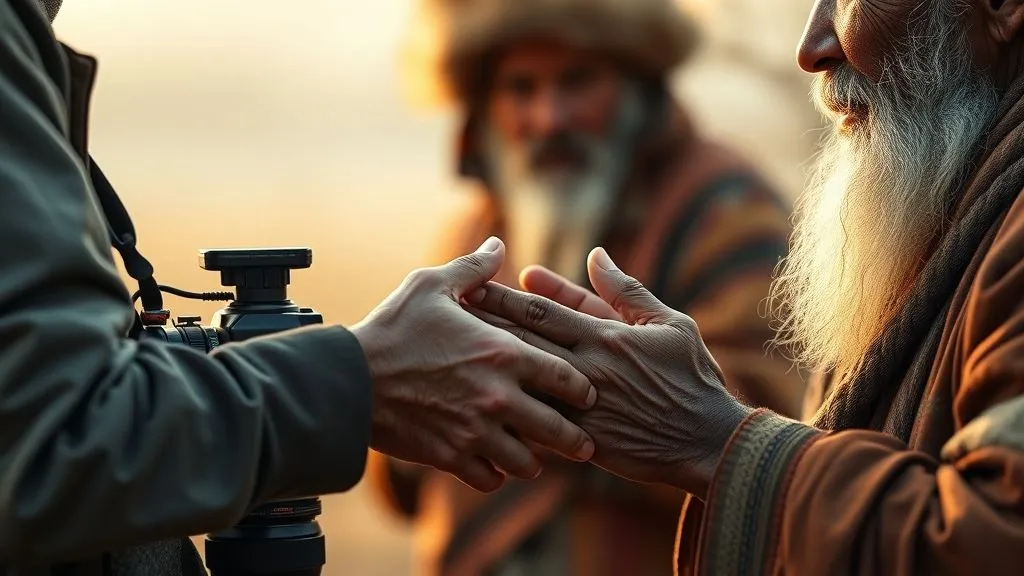
I always advise having these discussions in person, with a trusted translator if necessary. Document the consent process thoroughly, but remember that the spirit of the agreement often outweighs the letter of the law in traditional contexts. A formal written agreement is important, but a handshake based on mutual understanding is even more so.

Step 5: Establishing Strict Protocols and Guidelines for Filming
If consent is granted, this is where the detailed protocols come into play. This phase is crucial for ensuring that the act of filming itself is respectful and non-disruptive. I've found that communities often have very specific guidelines, and your job is to adhere to them without question.
- No-Go Zones: Identify areas or moments that are absolutely off-limits for filming or even presence.
- Participant Consent: Beyond community consent, secure individual consent from anyone who will be identifiably filmed. Children require specific parental or guardian consent.
- Clothing and Demeanor: Dress appropriately and maintain a respectful, understated demeanor. Be as unobtrusive as possible.
- Equipment Limitations: Some communities may request minimal equipment, no flash photography, or specific lens types.
- Post-Production Review: Offer the community the right to review footage before final editing and distribution. This is a powerful demonstration of trust and ensures accurate representation.
- Intellectual Property: Discuss ownership of the footage and any intellectual property rights related to the ceremonies. Often, communities will retain these rights. For more on indigenous IP rights, refer to organizations like WIPO (World Intellectual Property Organization).
These guidelines are not suggestions; they are sacred agreements. Violating them not only jeopardizes your project but can inflict lasting damage on the community's willingness to engage with outsiders.
Step 6: Giving Back and Ensuring Reciprocity
Ethical engagement is a two-way street. Your project should offer tangible benefits or reciprocity to the community. This isn't about 'payment' for access to sacred knowledge, which can be exploitative. Instead, consider:
- Archival Copies: Provide high-quality copies of the footage for the community's own archives.
- Skill Transfer: Offer workshops or training in filmmaking, editing, or media production to community members.
- Fair Compensation: For any community members who act as guides, translators, or consultants, ensure fair and transparent compensation.
- Community Projects: Contribute to a community-identified project, such as building a school, supporting a cultural center, or funding a health initiative, if appropriate and agreed upon.
- Cultural Preservation: Assist in efforts to preserve their language, traditional arts, or historical records, if that aligns with their needs.
The form of reciprocity should always be determined by the community, not imposed by you. As I've learned from working with various groups, the most valuable contribution is often what they genuinely need, not what we assume they want. It builds long-term relationships and reinforces the idea that your presence is a partnership.
Step 7: Post-Production Collaboration and Long-Term Engagement
Your ethical responsibility doesn't end when the camera stops rolling. Post-production is a critical phase for maintaining trust and ensuring accurate, respectful representation. This often involves:
- Community Review: Allowing community leaders or designated representatives to review rough cuts or specific segments of the film. This is where you can address any misinterpretations or sensitivities before final release.
- Credit and Acknowledgement: Properly crediting all individuals and the community for their contributions, often in a way that respects their cultural protocols regarding names and titles.
- Ongoing Dialogue: Maintain communication even after the project is complete. Share updates on distribution, screenings, and any impact the film is having.
- Addressing Feedback: Be prepared to address any feedback or concerns that arise, even after publication. Your long-term reputation and the community's trust depend on it.
This continuous engagement reinforces the idea that your relationship is not transactional, but a genuine partnership. It's about building bridges that last, fostering mutual respect, and ensuring that the stories shared are done so with integrity and honor.
Frequently Asked Questions (FAQ)
What if the community says no to filming sacred rituals? If a community denies access, respect that decision absolutely and without question. Their 'no' is a complete answer. It is unethical and deeply disrespectful to try and find alternative ways to film or pressure them further. Focus on building trust for future engagements, or pivot your project to non-sacred aspects they are willing to share.
How do I ensure my project doesn't inadvertently lead to cultural appropriation? Cultural appropriation occurs when elements of a culture are taken without understanding, respect, or permission, often by a dominant culture. To avoid this, ensure genuine collaboration, give authorship and voice to the community, provide reciprocity, and always seek to elevate their perspectives rather than merely taking from them. Review your work through their eyes, ideally with their direct input. The Cultural Survival organization offers valuable resources on this topic.
Is it ever acceptable to pay for access to sacred rituals? Paying for access to sacred rituals is generally considered highly unethical and can commodify spiritual practices, leading to exploitation. Instead, focus on genuine reciprocity (as discussed in Step 6), offering assistance or resources that benefit the community as a whole, rather than a direct exchange for spiritual access. Compensation should be for services rendered (e.g., guiding, translating, consulting), not for the ritual itself.
What if I'm a tourist and want to take photos of a ceremony? As a tourist, the same ethical principles apply, perhaps even more stringently. Always ask for explicit permission before taking any photos or videos, especially during ceremonies. Be prepared for a 'no'. If permitted, be discreet, use minimal equipment (often just a phone), and never disrupt the ceremony. Remember, your personal memory and respect are often more valuable than a photograph.
How do I handle sensitive information or images that the community later wants removed? This is why the right to withdraw consent and post-production review are crucial. If the community requests removal of certain images or information, you are ethically obligated to comply, even if it means re-editing or pulling your project from distribution. Your agreement should explicitly cover this possibility.
Key Takeaways and Final Thoughts
Navigating the complex terrain of documenting sacred rituals requires more than just technical skill; it demands profound ethical grounding, immense patience, and genuine humility. My journey has taught me that the most impactful and enduring stories are those born from deep respect and collaborative trust.
- Prioritize Relationships: Building trust is paramount and takes time.
- Seek True Consent: Go beyond a signature; ensure it's Free, Prior, and Informed.
- Respect Protocols: Adhere to all community-defined guidelines without exception.
- Ensure Reciprocity: Give back in ways that genuinely benefit the community.
- Maintain Dialogue: Ethical engagement is an ongoing process, not a one-time event.
Remember, your camera is a powerful tool, capable of both illumination and exploitation. By diligently following these steps on how to ethically negotiate access for filming sacred rituals, you not only protect vulnerable cultural heritage but also elevate your own work to a level of integrity and authenticity that truly resonates. Approach with an open heart and a listening ear, and the stories you are privileged to share will be all the more profound.
Recommended Reading
- Ultimate Guide: Best Luxury Hotel Amenities for Total Relaxation
- Uncover the Secret: How to Plan Travel for International Food Festivals Like a Pro
- Protecting Profits: How to Stop Coral Reef Decline From Hurting Beach Tourism
- Unlocking Safe Routes: Your Ultimate Guide to Assessing Avalanche Terrain for Backcountry Skiing
- Uncover the Best Cooking Classes Abroad for Foodies


Your email address will not be published. Required fields are marked *