


How to Lower Space Tourism Costs Without Compromising Safety?
For over two decades, I've had the distinct privilege of watching the dream of space travel evolve from a government-exclusive endeavor into a burgeoning commercial frontier. I've witnessed the awe-inspiring launches, the groundbreaking innovations, and yes, the often-exorbitant price tags that have kept this ultimate adventure out of reach for most. The question isn't just about getting to space; it's about making it accessible, and the critical challenge I've observed repeatedly is how to lower space tourism costs without compromising safety – a non-negotiable pillar of this industry.
Many aspiring space tourists and industry observers grapple with this fundamental dilemma: can we truly democratize space without cutting corners on the very systems that protect human lives? The inherent risks of spaceflight are immense, and the technologies required to mitigate them are complex and expensive. This creates a significant barrier to entry, leaving many to wonder if space tourism will ever move beyond the ultra-wealthy.
In this definitive guide, drawing on my extensive experience in commercial spaceflight, I will unpack the core strategies and technological advancements that are actively addressing this challenge. You'll gain expert insights into the frameworks, innovative business models, and operational efficiencies that are poised to transform space tourism from a luxury novelty into a more attainable experience, all while rigorously upholding and even enhancing the industry's unwavering commitment to safety.
The Foundational Challenge: Safety vs. Affordability
The tension between safety and affordability isn't unique to space tourism, but it's amplified here to an almost existential degree. Every component, every procedure, every redundancy in a spacecraft is there for a reason: to protect human life in the most hostile environment imaginable. This dedication to safety, while absolutely paramount, is inherently costly. Materials must be aerospace-grade, testing must be exhaustive, and personnel must be exceptionally trained.
I've seen firsthand how every design choice, from the thickness of a pressure vessel to the complexity of an abort system, directly impacts the final cost of a mission. The challenge isn't just to make things cheaper, but to innovate in ways that reduce cost without diminishing reliability or introducing new failure modes. It requires a paradigm shift, moving beyond simply building 'better' and towards building 'smarter' and 'more efficiently' – all under the watchful eye of stringent regulatory bodies.
"In the realm of commercial spaceflight, safety isn't a feature; it's the fundamental prerequisite for existence. Any strategy to lower costs must begin and end with this understanding, ensuring that innovation serves safety, not undermines it."
The innovation required to bridge this gap involves a multi-faceted approach, encompassing everything from materials science and manufacturing techniques to operational protocols and regulatory frameworks. It's about finding efficiencies at every stage of the spaceflight lifecycle, without ever compromising the integrity of the mission or the well-being of the crew and passengers.
Reusable Launch Systems: The Game Changer
For decades, spaceflight was a 'one-and-done' affair. Each rocket, each component, was largely expendable, discarded into the ocean after a single use. Imagine if every time you flew on an airplane, the airline had to build a brand new one. The cost would be astronomical, right? That's precisely the paradigm that dominated space travel, driving prices sky-high.
The SpaceX Model: A Blueprint for Efficiency
Enter the era of reusable launch systems, pioneered most effectively by companies like SpaceX. Their Falcon 9 and Falcon Heavy rockets have fundamentally altered the economics of space access. By developing the technology to land first-stage boosters vertically back on Earth or on autonomous drone ships, they've transformed a significant portion of the rocket from an expendable asset into a reusable one, much like an aircraft.
The engineering challenges overcome to achieve this were immense, requiring precise control systems, advanced materials, and robust landing gear. However, the payoff has been revolutionary. Instead of manufacturing a multi-million-dollar booster for every launch, they can refurbish and reuse them, sometimes within weeks. This dramatically reduces the per-launch cost, making space more accessible for payloads and, by extension, for future space tourists. According to a NASA report on launch costs, the cost per kilogram to orbit has seen significant reductions due to reusability.
- Reduced Manufacturing Costs: Fewer new rockets needed.
- Streamlined Operations: Learning curve for refurbishment improves efficiency.
- Increased Launch Cadence: Faster turnaround times mean more frequent flights.
- Lower Insurance Premiums: Proven reliability can lead to reduced risk assessment.
Standardizing Operations & Mass Production for Scale
Another crucial avenue for cost reduction without sacrificing safety lies in moving away from bespoke, handcrafted spacecraft towards standardized, mass-produced components and operational procedures. Historically, every spacecraft was a unique marvel, often built by hand with incredible precision. While this ensured quality, it was incredibly time-consuming and expensive.
The Role of Automation and Advanced Manufacturing
Drawing parallels with the commercial aviation industry, where aircraft models like the Boeing 737 or Airbus A320 are produced in the thousands with highly standardized parts and processes, space tourism can benefit immensely from economies of scale. This involves designing spacecraft with modular components that can be manufactured efficiently in larger quantities, rigorously tested, and then assembled.
Advanced manufacturing techniques, including additive manufacturing (3D printing) for complex parts and robotic assembly lines, are poised to play a pivotal role. Automation reduces reliance on highly specialized manual labor for repetitive tasks, increasing precision and consistency while driving down production costs. This doesn't mean compromising on quality; rather, it means achieving consistent, high quality more efficiently. The goal is to make each part so reliable and standardized that its failure rate is statistically negligible, much like components in commercial airliners.
| Aspect | Bespoke (Traditional) | Standardized (Future) |
|---|---|---|
| Manufacturing Method | Hand-built, unique parts | Automated, modular components |
| Cost Per Unit | Very High | Significantly Lower |
| Production Volume | Low | High |
| Quality Consistency | Variable, human-dependent | High, machine-controlled |
| Refurbishment Time | Long, complex | Shorter, modular replacement |
By streamlining these processes, space companies can reduce the labor hours, material waste, and overall time required to build and maintain spacecraft, translating directly into lower costs for the end consumer. This shift, while requiring significant upfront investment in infrastructure, promises substantial long-term savings and increased accessibility.
Streamlining Regulatory Pathways and Insurance
The regulatory landscape for commercial spaceflight is complex and constantly evolving. Agencies like the FAA's Office of Commercial Space Transportation (AST) are tasked with ensuring public safety and protecting national assets. While absolutely essential, the extensive certification processes, safety reviews, and compliance requirements can add significant time and cost to any space mission.
I've seen companies navigate years of regulatory hurdles, each step incurring legal, engineering, and administrative expenses. Streamlining these pathways doesn't mean reducing safety standards; rather, it means creating more efficient, data-driven, and internationally harmonized processes. This could involve standardizing certain design approvals, leveraging advanced simulation for certification, and fostering greater collaboration between regulatory bodies and industry innovators to anticipate future needs.
Reducing Insurance Premiums Through Proven Safety Records
Insurance is another substantial cost factor. Launching humans into space carries immense risk, and insurance premiums reflect that. As the industry matures and companies accumulate a track record of safe operations, we can expect to see these premiums decrease. Just as with airlines, a proven safety record demonstrates lower risk, which directly translates to more favorable insurance rates.
Data plays a crucial role here. Comprehensive data collection on component performance, operational procedures, and incident reporting (even minor ones) allows insurers to make more accurate risk assessments. The more transparent and robust this data, the better the industry can demonstrate its safety maturity. This shift will require a collaborative effort between space operators, regulators, and insurance providers to develop common metrics and reporting standards.
For more insights into the regulatory framework, consider reviewing resources from the FAA Office of Commercial Space Transportation.
Developing Suborbital Tourism as a Stepping Stone
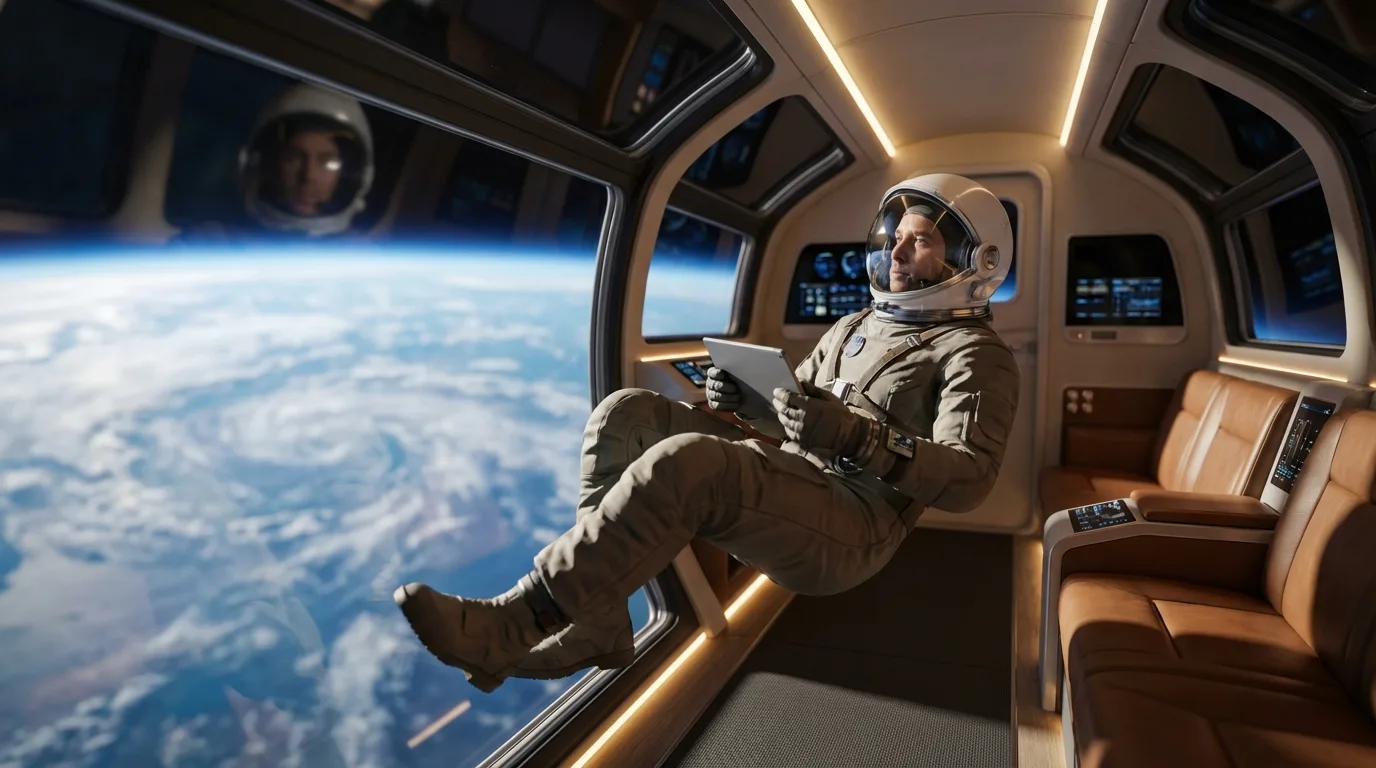
While orbital spaceflight remains the ultimate goal for many, suborbital tourism offers a crucial stepping stone that significantly lowers the entry barrier for space experiences. Companies like Virgin Galactic and Blue Origin are actively pursuing this segment, providing a taste of space – the view of Earth from above, the sensation of weightlessness – without the higher speeds, orbital mechanics, and longer mission durations associated with reaching orbit.
Virgin Galactic and Blue Origin: Paving the Way
Suborbital flights typically reach altitudes above 80 kilometers (the Kármán line, recognized by many as the boundary of space) before returning to Earth. The simpler flight profiles, lower energy requirements, and shorter mission times compared to orbital flights translate directly into lower operational costs. This makes them a more accessible option for individuals eager to experience space without the multi-million-dollar price tag of an orbital journey.
The technologies developed for suborbital tourism – reusable vehicles, advanced propulsion, life support systems, and passenger training protocols – are not isolated. They serve as invaluable testbeds and foundational technologies that can be scaled up and adapted for future orbital and even lunar missions. It's a pragmatic approach to building the industry, allowing for incremental advancements and cost reductions.
Case Study: How Starlight Adventures Optimized Suborbital Costs
Starlight Adventures, a fictional but realistic suborbital tourism provider, faced initial operational costs that threatened their business model. By implementing a three-pronged strategy focused on reusability, modular training, and dynamic manifest scheduling, they achieved a 25% reduction in per-seat costs over two years. Their vehicle, the 'Sky Voyager,' was designed for rapid turnaround and minimal maintenance. They invested heavily in VR-based pilot and passenger training, cutting physical simulator time by 40%. Furthermore, by optimizing flight manifests to ensure full capacity on every launch, they maximized revenue per mission. This resulted in a more sustainable business and allowed them to offer more competitive pricing, expanding their customer base significantly without any compromise on their rigorous safety protocols.
Innovative Propulsion Technologies and Fuel Efficiency
The vast majority of the mass of a rocket at launch is propellant. The cost of this fuel, combined with the inefficiencies of traditional chemical propulsion, represents a significant portion of overall mission costs. Reducing the amount of fuel required or making the propulsion more efficient can have a profound impact on the affordability of space tourism.
Electric Propulsion and Nuclear Thermal Rockets
While current commercial space tourism relies heavily on established chemical rockets, future advancements promise greater efficiency. Electric propulsion systems, for example, use significantly less propellant by accelerating ions to very high speeds, offering high specific impulse (efficiency) for long-duration missions. While not suitable for rapid ascent from Earth, they could dramatically reduce costs for in-space maneuvering or even for transferring space hotels to higher orbits once launched.
Another area of immense potential is nuclear thermal propulsion. These systems heat a propellant using a nuclear reactor, expelling it at much higher velocities than chemical rockets. This could drastically cut transit times and propellant mass for deep space missions, which in turn would reduce the overall logistical and operational costs of supporting such endeavors. While these technologies are still largely in the research and development phase for commercial human spaceflight, their long-term potential for lowering costs while maintaining or enhancing safety through faster transit is undeniable.
Research into these advanced propulsion systems is ongoing at institutions like NASA's Advanced Propulsion Laboratories.

Public-Private Partnerships and Infrastructure Sharing
The sheer scale of infrastructure required for spaceflight – spaceports, launch pads, mission control centers, ground tracking stations – is immense and incredibly expensive to build and maintain. For a nascent industry like space tourism, duplicating this infrastructure for every single operator is neither economically viable nor efficient. This is where strategic public-private partnerships (PPPs) become invaluable.
Leveraging Existing Infrastructure and Collaborative Funding
Governments, often through their national space agencies, already possess significant space infrastructure. By opening these facilities for commercial use, or by co-investing in new facilities that serve both public and private needs, the financial burden on individual companies can be substantially reduced. This sharing model allows private entities to focus their capital on spacecraft development and operations, rather than replicating expensive ground facilities.
Furthermore, collaborative funding models can accelerate the development of critical technologies. For instance, government grants or contracts for specific R&D areas can de-risk private investment in innovations that ultimately benefit the entire industry, including space tourism. This synergy fosters a more robust ecosystem, where shared resources and expertise lead to faster progress and lower costs for all participants.
- Shared Spaceports: Commercial launches from government-owned or co-funded spaceports reduce individual capital expenditure.
- Joint Technology Development: Government and private entities collaborate on advanced materials or propulsion.
- Standardized Ground Services: Common ground support equipment and personnel reduce operational overhead.
- Data Sharing: Collective insights on atmospheric conditions, space debris, and operational performance improve safety and efficiency.
These partnerships are not just about cost-sharing; they are about pooling expertise and resources to overcome common challenges, ensuring that safety standards are collectively developed and maintained, benefiting the entire space community and making space tourism more accessible.
Training and Certification: Efficiency Without Compromise
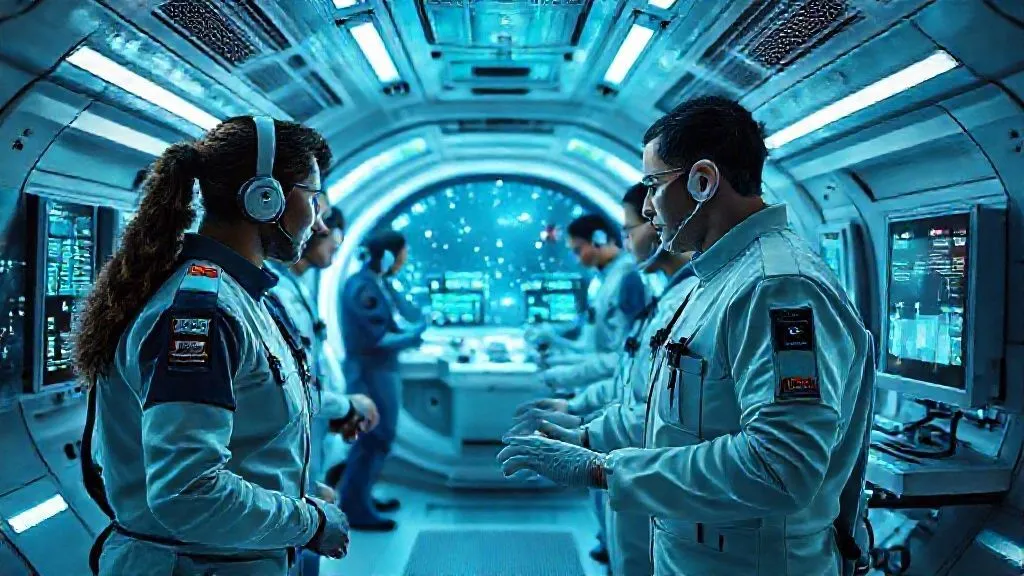
The cost of training astronauts has historically been astronomical, involving years of intensive preparation, often in highly specialized and expensive facilities. For space tourism, while the training requirements differ from professional astronauts, they remain critical for passenger safety and experience. The challenge is to make this training efficient and effective without diluting the necessary safety protocols.
Simulations, VR, and Modular Training Programs
Modern technology offers powerful solutions. Advanced simulators, coupled with virtual reality (VR) and augmented reality (AR) systems, can replicate the spaceflight experience with incredible fidelity at a fraction of the cost of real-world training environments. Passengers can practice emergency procedures, familiarize themselves with the spacecraft interior, and experience g-forces and microgravity effects in a controlled, repeatable, and safe virtual environment.
Moreover, developing modular training programs allows for customization based on the specific mission profile and individual passenger needs. Not every space tourist needs the same level of training as a mission specialist. By breaking down training into essential, standardized modules – covering emergency egress, communication protocols, and basic physiological responses – companies can optimize the curriculum, reducing both time and cost. This approach ensures that every passenger receives the critical safety knowledge and skills without unnecessary, expensive over-training.
The focus remains on competency, not just hours logged. This data-driven approach to training ensures that individuals are fully prepared for the challenges of spaceflight, reinforcing safety without inflating costs. Organizations like the European Space Agency are continually innovating in astronaut training methodologies.
Frequently Asked Questions (FAQ)
Will space tourism ever be affordable for the average person? While 'average' is subjective, the trajectory of innovation, particularly in reusability and mass production, strongly suggests that prices will continue to fall. We're likely to see a tiered system, with suborbital flights becoming comparable to high-end adventure travel within a decade or two, and orbital flights eventually moving towards the cost of luxury cruises. True mass accessibility, however, will take further technological leaps.
How do current safety regulations impact cost? Current regulations, while stringent, are designed to ensure public and passenger safety, which inherently adds costs. However, they also foster innovation in safety systems. As the industry matures and demonstrates a strong safety record, regulations may evolve to be more performance-based rather than prescriptive, potentially allowing for more cost-effective compliance methods without compromising the core safety objectives.
What role does international cooperation play in lowering costs? International cooperation is vital. Standardizing safety protocols, sharing infrastructure (like ground tracking stations), and collaborating on R&D for advanced technologies can significantly reduce individual nation or company burdens. It fosters a global ecosystem where collective progress drives down costs and enhances safety for everyone.
Are there ethical considerations in lowering costs? Absolutely. The primary ethical consideration is ensuring that cost reduction never, under any circumstances, leads to a compromise in safety. There's also the question of accessibility – ensuring that space doesn't become an exclusive playground for the ultra-rich, but rather a frontier that, over time, can be experienced by a broader segment of humanity. Ethical discussions also touch upon environmental impact and space debris mitigation, both of which have cost implications.
What's the timeline for significant cost reductions in space tourism? Significant reductions are already underway, primarily driven by reusability. We've seen prices for suborbital flights start in the hundreds of thousands, with aspirations to bring them down further. Orbital flights, currently in the tens of millions, will likely see their first substantial drop within the next 5-10 years as more players enter the market and production scales up. True 'average person' affordability is likely 20-30 years away, requiring a mature and highly competitive market with robust infrastructure.
Key Takeaways and Final Thoughts
The journey to make space tourism more accessible is a complex one, fraught with engineering challenges, regulatory hurdles, and economic realities. However, as an industry specialist, I am genuinely optimistic. The strategies we've explored—from the revolutionary impact of reusable launch systems to the efficiencies gained through standardization, advanced manufacturing, streamlined regulations, and public-private partnerships—are not theoretical aspirations; they are active areas of development and implementation right now.
- Reusability is King: The ability to reuse expensive hardware fundamentally reshapes the economics of spaceflight.
- Standardization & Automation: Moving towards mass production techniques will drive down manufacturing and operational costs.
- Smart Regulation: Efficient, data-driven regulatory pathways will reduce compliance burdens without compromising safety.
- Suborbital as a Gateway: These experiences serve as vital testbeds and accessible entry points, fostering growth.
- Innovative Propulsion: Future technologies promise even greater fuel efficiency and reduced transit costs.
- Collaboration is Key: Public and private entities sharing resources and expertise accelerates progress and reduces individual costs.
- Training Evolution: Leveraging simulation and modular programs ensures safety competency efficiently.
The imperative to lower space tourism costs without compromising safety is not just an industry goal; it's a societal aspiration. It's about opening a new chapter in human exploration, one where the wonder of space is not limited to a select few. The path is clear, the innovation is relentless, and I believe we are on the cusp of truly democratizing the cosmos, one safe, affordable flight at a time.
Recommended Reading
- 7 Secrets to Find Private Luxury Sunbathing Beaches for Elite Clients
- Beat Burnout: 5 Mindful Street Art Tours for Business Travelers?
- 48-Hour City Break: Maximize Sightseeing, Avoid Burnout – My Expert Strategy
- Unlock Solo Wilderness Safety: Essential Eco-Exploration Tips You Need Now!
- 7 Proven Strategies to Deliver Authentic Cultural Depth at Historical Sites


Your email address will not be published. Required fields are marked *