


How to Deliver Authentic Cultural Depth at Historical Sites?
For over two decades in the cultural travel sector, I've observed a pervasive challenge: many historical sites, despite their immense potential, often fall short of truly engaging visitors on a profound, culturally authentic level. We've all been there – walking through ancient ruins or grand palaces, armed with guidebooks, yet feeling a disconnect, a sense that we're merely observing relics rather than experiencing the echoes of human lives.
The problem isn't a lack of history; it's often a failure to interpret that history in a way that resonates, that transcends mere facts and dates to touch the visitor's soul. We risk presenting history as a static exhibit, rather than a living narrative woven into the fabric of human experience. This superficial engagement leaves both the site and the visitor unfulfilled, missing the opportunity for genuine understanding and appreciation.
This article isn't just about sharing information; it's about providing a framework, borne from years of practical experience and countless consultations, on how to fundamentally transform the visitor experience. You will learn actionable strategies, supported by real-world examples and expert insights, to infuse your historical sites with the authentic cultural depth they deserve, fostering meaningful connections that last long after the visit.
The Core Challenge: Beyond Dates and Names
The primary hurdle I've consistently encountered is the default approach to historical interpretation: a heavy reliance on archaeological facts, chronological timelines, and the recounting of major events. While vital, this 'what and when' often overshadows the 'who and why.' Visitors leave knowing *that* something happened, but rarely understanding *how* it felt to live through it, or *what* it meant culturally to the people involved.
Authentic cultural depth isn't just about accuracy; it's about empathy and connection. It requires moving beyond the purely academic to embrace the human stories, the daily rituals, the beliefs, and the struggles that shaped a civilization. Without this human-centric approach, historical sites risk becoming dusty archives rather than vibrant portals to the past.
"History is not a burden on the memory but an illumination of the soul." - Lord Acton. This quote perfectly encapsulates the transformation we aim for: moving from rote memorization to profound enlightenment.
Rethinking Interpretation: From Information to Immersion
To truly deliver authentic cultural depth, we must shift our interpretive paradigm from simply informing to actively immersing. This means designing experiences that engage multiple senses and emotional intelligence, not just intellect. It's about creating an environment where visitors can feel, imagine, and connect on a personal level with the past.
Harnessing Local Voices and Indigenous Knowledge
One of the most powerful yet often overlooked resources for authentic interpretation lies within the local communities and, where applicable, indigenous populations connected to the site. Their oral histories, traditions, and perspectives offer invaluable insights that no archaeological dig alone can unearth. I've seen this approach revolutionize visitor engagement.
- Identify and Engage Community Elders/Knowledge Keepers: Proactively seek out individuals who hold traditional knowledge, stories, and practices related to the site. Establish trust and build genuine relationships.
- Co-create Interpretive Content: Work collaboratively with these community members to develop narratives, signage, audio guides, and even performances. Their voices should be central, not peripheral.
- Integrate Living Traditions: Where appropriate and respectful, incorporate demonstrations of traditional crafts, music, dance, or culinary practices. This brings the past to life in a tangible, sensory way.
- Ensure Equitable Compensation and Recognition: Always ensure that community members are fairly compensated for their contributions and that their intellectual property and cultural heritage are respectfully acknowledged.
Case Study: Revitalizing the Whispering Walls Museum
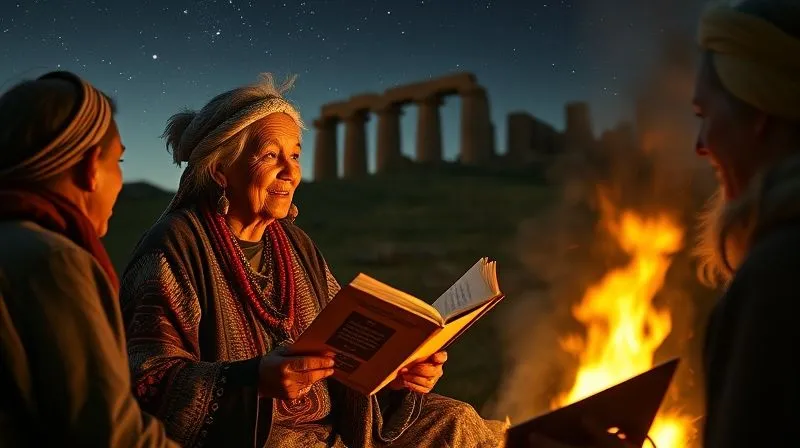
The 'Whispering Walls Museum,' a fictional but realistic example, faced declining visitor numbers and feedback indicating a lack of engagement with its pre-Columbian artifacts. Their traditional approach focused on artifact classification and scientific data. By implementing a strategy of co-creation with local descendants of the original culture, they transformed their exhibits. They introduced audio guides narrated by elders sharing ancestral myths and daily life stories connected to the artifacts. They also hosted weekly workshops where community members demonstrated ancient weaving and pottery techniques, allowing visitors to try hands-on activities. Within two years, visitor satisfaction increased by 40%, and school program participation doubled, proving the power of authentic voice.
Crafting Experiential Narratives
Authentic cultural depth isn't just about *what* you say, but *how* you say it. Moving beyond dry academic prose to compelling storytelling is paramount. We need to frame historical sites as stages where human dramas unfolded.
- Focus on Micro-Narratives: Instead of grand historical sweeps, highlight individual stories, everyday lives, and specific events that humanize the past. Who lived here? What were their hopes, fears, and daily routines?
- Use Sensory Details: Encourage visitors to imagine the sounds, smells, and textures of the past. "Picture the aroma of freshly baked bread from the ancient oven..." or "Feel the cool, smooth stone worn by centuries of hands..."
- Employ Theatricality and Performance: Guided tours can become theatrical experiences. Consider hiring historical re-enactors or local storytellers who can embody figures from the past, bringing their narratives to life with passion and authenticity.
- Create Interactive Touchpoints: Design elements where visitors can physically engage, such as trying on replica clothing, grinding grains with ancient tools, or participating in a mock ritual (with due cultural sensitivity).
| Narrative Style | Impact on Visitor | Focus |
|---|---|---|
| Traditional (Academic) | Informative, but often detached | Facts, dates, grand events |
| Experiential (Storytelling) | Immersive, emotional, memorable | Human stories, daily life, sensory details |
| Co-created (Community-led) | Authentic, respectful, deeply personal | Indigenous knowledge, oral traditions, living culture |
Embracing Digital Innovation Responsibly
While authenticity often evokes images of the tangible past, digital tools, when used thoughtfully, can significantly enhance cultural depth. The key is to use technology to augment, not replace, the physical experience and human connection.
- Augmented Reality (AR) Overlays: Imagine holding up a tablet and seeing a ruined temple façade digitally restored to its former glory, or watching ancient market scenes unfold in a bustling square. This makes the invisible visible.
- Interactive Digital Maps: Provide context and narrative depth, allowing visitors to explore different periods, see social structures, or follow the journey of historical figures.
- Oral History Archives: Offer QR codes at specific points that link to audio recordings of local elders, historians, or descendants sharing personal anecdotes and cultural interpretations related to that very spot. This directly integrates local voices.
- Virtual Reality (VR) for Pre-Visit Context: While not ideal *at* the site due to potential distraction, VR can offer a powerful pre-visit experience, transporting visitors to the site's peak period to build anticipation and understanding.
It's crucial to ensure that any digital integration is seamless, intuitive, and genuinely enhances the cultural narrative, rather than becoming a technological gimmick. The technology should serve the story, not the other way around. According to a Smithsonian Magazine article, the most effective uses of technology in cultural institutions are those that deepen engagement, not just entertain.
Fostering Community Engagement and Co-creation
Beyond integrating local voices into interpretation, true cultural depth comes from broader community engagement. Historical sites are not isolated entities; they are part of a living community. In my experience, the most vibrant sites are those that actively involve their neighbors.
- Establish Community Advisory Boards: Create formal channels for local residents, cultural groups, and indigenous representatives to provide input on site management, programming, and interpretive strategies.
- Host Regular Community Dialogues: Organize open forums to discuss the site's role, challenges, and opportunities. This builds a sense of shared ownership and ensures the site remains relevant to the local populace.
- Develop Local Partnership Programs: Collaborate with local schools, businesses, and cultural organizations to create joint programs, events, and economic opportunities. This could include training local guides or sourcing local crafts for gift shops.
- Offer Free/Discounted Local Access: Encourage local residents to visit and connect with their heritage. Their pride and advocacy can be the most powerful form of promotion.
As marketing guru Seth Godin often says, "People do not buy goods and services. They buy relations, stories, and magic." For historical sites, this translates to selling not just tickets, but connection, narrative, and the magic of shared heritage. Community co-creation is the ultimate expression of this principle.
The Ethics of Authenticity: Navigating Representation
Delivering authentic cultural depth is also an ethical responsibility. It requires careful consideration of whose stories are told, how they are told, and who benefits from that telling. This is particularly critical for sites connected to colonial histories or indigenous cultures.
- Prioritize Respect and Accuracy: Ensure that all interpretations are historically accurate and culturally respectful. Avoid stereotypes, sensationalism, or romanticized portrayals that flatten complex histories.
- Acknowledge Multiple Perspectives: History is rarely monolithic. Present diverse viewpoints, including those of marginalized groups, to offer a more complete and nuanced understanding of the past.
- Transparency in Interpretation: Be open about the interpretive choices made, the sources used, and any gaps in knowledge. Acknowledge that interpretation is an ongoing process, not a final decree.
- Consult, Don't Exploit: When engaging with descendant communities, ensure their involvement is voluntary, informed, and truly collaborative, not merely extractive. The International Council on Monuments and Sites (ICOMOS) provides excellent ethical guidelines for heritage professionals.
The quest for authenticity must always be grounded in ethical practice. Without it, we risk perpetuating harm and undermining the very cultural depth we seek to achieve. This requires ongoing self-reflection and a willingness to challenge established narratives.
Measuring Impact: Beyond Visitor Numbers
How do we know if we're truly delivering authentic cultural depth? It's not just about ticket sales. We need to measure the quality of engagement and the depth of understanding. This involves more qualitative and nuanced metrics.
- Visitor Feedback and Surveys: Move beyond 'did you enjoy your visit?' to 'what did you learn that surprised you?' or 'how did this site connect you to the past?' Use open-ended questions.
- Observation of Engagement: Observe how long visitors linger at certain exhibits, their interactions with guides, and their conversations with fellow visitors. Are they asking deeper questions?
- Social Media Sentiment Analysis: Monitor online discussions about the site. Are people sharing personal reflections, unique insights, or expressing a profound connection?
- Educational Program Outcomes: For school groups, assess not just knowledge retention, but also changes in attitudes towards history or cultural appreciation.
| Metric Type | Example Metrics | Insight Provided |
|---|---|---|
| Quantitative (Traditional) | Visitor count, dwell time, gift shop sales | Operational efficiency, basic popularity |
| Qualitative (Authenticity-focused) | Visitor testimonials, depth of survey responses, observed engagement | Emotional connection, cultural understanding, meaningful impact |
Investing in Staff Training and Passion
Ultimately, the human element is irreplaceable in delivering authentic cultural depth. Your staff – from ticket counter to tour guide – are the frontline ambassadors of your site's story. Their passion, knowledge, and interpretive skills are paramount.
- Comprehensive Training Programs: Go beyond basic facts. Train staff in storytelling techniques, cultural sensitivity, active listening, and how to facilitate dialogue rather than just lecture.
- Empowerment and Autonomy: Give guides the flexibility to adapt their narratives to different visitor groups, encouraging them to share personal insights and passion.
- Continuous Learning Opportunities: Support staff in attending workshops, conferences, and engaging with academic research or community events related to the site's history and culture.
- Foster a Culture of Curiosity: Encourage staff to continually learn, question, and explore new ways of interpreting the site. Their enthusiasm is contagious.
A well-trained and passionate guide can transform a mere collection of stones into a vibrant tapestry of human experience. Their ability to connect, empathize, and share stories is the final, crucial link in delivering truly authentic cultural depth. As a National Geographic article highlights, personal interaction is key to cultural understanding.
Frequently Asked Questions (FAQ)
Question? How can smaller historical sites with limited budgets still achieve authentic cultural depth?
Answer: Even with limited resources, focusing on the human element is key. Prioritize engaging local volunteers, community elders, and storytellers who can share oral histories. Leverage existing local talent for small-scale performances or craft demonstrations. Utilize free digital tools like social media to share stories and photos, and consider creating simple, print-at-home interpretive guides that emphasize personal narratives. The most authentic experiences often come from genuine human connection, not expensive technology.
Question? What are the biggest pitfalls to avoid when trying to represent historical cultures authentically?
Answer: The biggest pitfalls include cultural appropriation, perpetuating stereotypes, presenting a monolithic view of history, and failing to acknowledge difficult or controversial aspects of the past. To avoid these, always prioritize genuine consultation with descendant communities, ensure diverse perspectives are included, be transparent about interpretive choices, and commit to continuous learning and self-correction. Avoid sensationalism or romanticizing past struggles.
Question? How can we ensure that cultural interpretation remains engaging for diverse audiences, including children and international visitors?
Answer: Diversifying interpretive methods is crucial. For children, incorporate hands-on activities, interactive games, and simpler, more visual storytelling. For international visitors, offer multi-language resources, but also focus on universal human themes that transcend linguistic barriers, such as family, community, innovation, and resilience. Visual storytelling, sensory experiences, and a focus on emotion often resonate globally. Consider 'slow travel' principles that encourage deeper, unhurried engagement.
Question? Is it always necessary to have physical artifacts to deliver authentic cultural depth, or can sites without many objects still succeed?
Answer: Absolutely not. While artifacts are valuable, the absence of numerous physical objects doesn't preclude authentic cultural depth. Many powerful historical sites are primarily landscapes, ruins, or even intangible heritage sites. Here, the focus shifts to the power of place, oral traditions, environmental interpretation, and the imaginative reconstruction of human experience through storytelling, soundscapes, and community engagement. The 'spirit of place' can be profoundly authentic without a single exhibit case.
Question? How can we balance the preservation of historical sites with the desire for immersive, interactive visitor experiences?
Answer: This is a critical balance. The answer lies in careful planning, designated interactive zones, and responsible design. Technologies like AR/VR allow for immersive experiences without physical impact. Replicas can be used for hands-on interaction in controlled areas. Strict conservation protocols must always take precedence for original structures and artifacts. It's about creating 'safe zones' for interaction that enhance, rather than endanger, the heritage. Regular impact assessments are vital.
Key Takeaways and Final Thoughts
- Shift from Facts to Feelings: True cultural depth emerges when visitors connect emotionally with the human stories behind the history.
- Amplify Local Voices: Engage communities and indigenous knowledge keepers as co-creators of your site's narrative.
- Embrace Experiential Storytelling: Craft narratives that are sensory, personal, and dramatic, moving beyond dry academic presentations.
- Integrate Technology Thoughtfully: Use digital tools to augment, not distract from, the physical and emotional experience.
- Prioritize Ethical Representation: Ensure all interpretations are respectful, accurate, and acknowledge multiple, diverse perspectives.
- Invest in Your People: Passionate, well-trained staff are your most valuable asset in bringing history to life.
Delivering authentic cultural depth at historical sites is not merely an aspiration; it is an imperative. In a world increasingly seeking genuine connection, our historical sites hold the power to offer profound insights into the human condition. By embracing these strategies, we don't just preserve the past; we empower it to speak, to teach, and to inspire present and future generations with an authenticity that resonates deeply within the soul. Let us move forward, not just as guardians of history, but as its most compelling storytellers.
Recommended Reading
- Ethical Integration: 7 Steps to Include Indigenous Dances in Travel
- Ultimate Guide: Best Winter Sports Photography Settings
- Ultimate Guide: How to Protect Delicate Local Crafts While Traveling
- 7 Smart Ways: How to Retrofit Hotels for Universal Design Without Huge Costs
- Unlocking City Secrets: Your Ultimate Guide to Hidden Gems in Vibrant City Breaks




Your email address will not be published. Required fields are marked *