

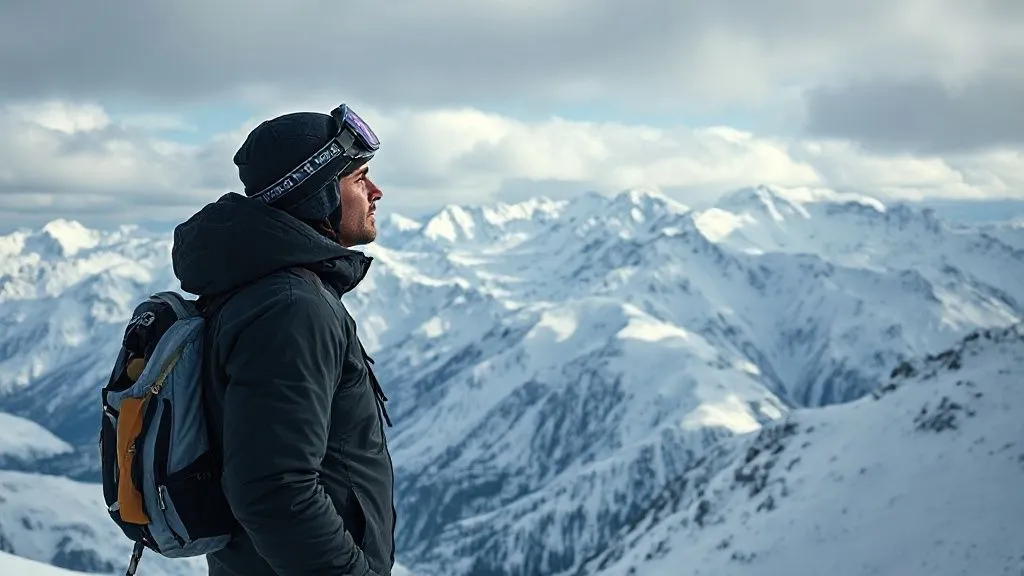
How to Make Critical Go/No-Go Decisions in Dynamic Avalanche Terrain?
For over two decades, I've navigated some of the most beautiful, yet unforgiving, avalanche-prone terrain across the globe. I've witnessed the exhilarating highs of perfect powder turns and, tragically, the devastating lows when critical decisions were either missed or tragically misjudged. This isn't just a sport; it's a profound engagement with nature's raw power, demanding respect, knowledge, and an unwavering commitment to safety.
The core challenge for any backcountry enthusiast isn't just knowing the theory of avalanches, but translating that knowledge into actionable, life-saving go/no-go decisions in the heat of the moment, when conditions are constantly shifting. The sheer complexity of snow science, combined with the inherent human desire to push limits, creates a volatile cocktail where misjudgment can have irreversible consequences. It's a problem that demands more than just a checklist; it requires a deep understanding of the 'why' behind every choice.
In this comprehensive guide, I'll share my framework for approaching these critical decisions, blending years of field experience with established avalanche science. We'll explore the art of reading the mountain, understanding yourself and your group, and applying a robust 5-rule decision-making process that I've honed over countless days in the field. My goal is to equip you not just with facts, but with the judgment and confidence to make sound, conservative choices, ensuring you return home safely after every adventure.
Understanding the Avalanche Problem: A Holistic View
Before we can even talk about making decisions, we must first grasp the multifaceted nature of the avalanche problem itself. It's not a single entity but a dynamic interplay of factors that can change by the hour, or even by the minute. My approach has always been to view the mountain as a living, breathing system, constantly communicating its stability or instability.
"The mountain doesn't care how much experience you have; it only responds to the forces acting upon it. Your job is to listen, interpret, and respect its language."
This means moving beyond a superficial understanding of the avalanche forecast to a deep appreciation of the underlying mechanisms. It's about recognizing that every snowflake, every gust of wind, and every temperature fluctuation contributes to the overall snowpack stability. Ignoring any of these components is akin to reading only half a map.
The Three Pillars of Avalanche Safety
At its core, avalanche safety hinges on understanding the intricate relationship between three fundamental pillars:
- Snowpack: The layered structure of the snow, its weaknesses, and its strengths. This includes understanding facets, hoar frost, melt-freeze crusts, and how they interact.
- Weather: Current and recent weather patterns, including snowfall, wind direction and speed, temperature, and solar radiation, all of which directly influence snowpack development and stability.
- Terrain: The angle, aspect, elevation, and shape of the slope, including features like cornices, gullies, and forest openings that can concentrate stress or act as terrain traps.
To truly make informed go/no-go decisions, you must actively seek to synthesize information from all three pillars. This holistic perspective is the bedrock upon which all sound judgment is built. For comprehensive and up-to-date regional information, I always consult official sources. For example, the National Avalanche Center provides invaluable forecasts and educational resources across the U.S.
The Pre-Trip Planning Imperative: Setting the Stage for Success
The most critical go/no-go decisions often begin long before you ever step foot on snow. Effective pre-trip planning is not just a formality; it's a non-negotiable step that lays the foundation for all subsequent choices. I've seen countless groups get into trouble simply because they skipped or rushed this crucial phase.
Gathering Intelligence: Before You Even Touch Snow
My planning process is meticulous, almost ritualistic, because it forces me to confront potential hazards from the comfort of my home, where emotions and 'summit fever' are less likely to cloud judgment. Here's my typical approach:
- Thorough Avalanche Forecast Review: Read the local avalanche forecast. Don't just skim the hazard rating; dig into the 'why.' What are the specific avalanche problems? What elevations and aspects are affected? How confident are forecasters? What's the historical context?
- Weather Forecast Analysis: Beyond temperature and precipitation, pay close attention to wind speed and direction, cloud cover, and solar radiation. Strong winds are particularly concerning as they transport snow, building dangerous wind slabs.
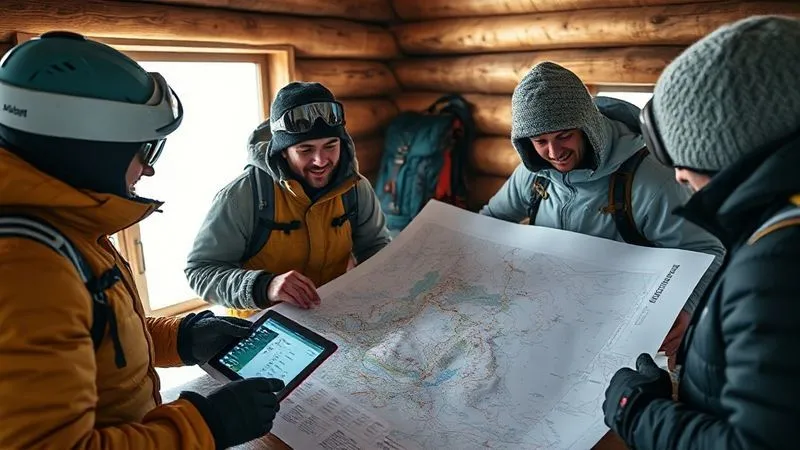
- Route Selection & Alternative Planning: Study maps (digital and paper). Identify potential routes, escape options, and terrain traps. Always have a Plan B (and C!). Discuss bail-out points and conservative alternatives if conditions are marginal.
- Group Dynamics & Skill Assessment: Honestly assess the skill level, fitness, and experience of every member of your group. The weakest link often dictates the group's safe operational limits. Ensure everyone is on the same page regarding objectives and risk tolerance.
- Gear Check & Emergency Preparedness: Confirm all safety gear (transceiver, shovel, probe) is functional and accessible. Ensure communication devices are charged, first-aid kits are stocked, and everyone knows how to use their equipment effectively.
This detailed intelligence gathering allows you to form an initial mental model of the day's conditions and potential hazards. It's your first opportunity to make a 'no-go' decision if the forecast or conditions are unequivocally poor, saving you the time and risk of even driving to the trailhead.
On-Site Assessment: Reading the Mountain's Language
Even with impeccable pre-trip planning, the mountain always has the final say. Once you're in the field, your senses become your most vital tools. This phase is about continuous observation, cross-referencing your planned assumptions with the reality unfolding around you. This is where the 'dynamic' part of dynamic avalanche terrain truly comes into play.
Observation is Key: What the Terrain is Telling You
I train myself and my mentees to be hyper-aware of subtle cues. It's like learning a new language – the mountain's language. Here are some of the critical observations I'm constantly making:
- Snow Surface Conditions: Is the snow faceted, wind-blown, or crusty? Are there signs of recent natural avalanches or cornice collapses? Are surface hoar crystals present?
- Recent Avalanche Activity: Look for crowns, debris piles, or glide cracks. Even small slides in similar terrain can be huge red flags, indicating widespread instability.
- Wind Patterns: Observe wind direction, speed, and evidence of snow transport (e.g., plumes of snow, wind scoured areas, or pillowing). Wind slabs are notoriously tricky and often triggerable.
- Temperature Changes: Significant warming, especially after a cold snap, can rapidly destabilize the snowpack, leading to wet loose or glide avalanches. Rapid cooling can cause faceting.
- 'Whumphing' Sounds & Cracks: These are clear signs of a collapsing weak layer within the snowpack. A 'whumph' means you've just initiated a fracture, and a larger avalanche could be next. Cracks propagating in the snow surface are equally alarming.
- Ski Pen & Hand Shear Tests: While not definitive, these simple tests can give you immediate feedback on snowpack strength and layering. A quick ski pole probe can reveal depth and layering.
"Every step you take, every turn you make, should be an opportunity to gather more information. The mountain is constantly whispering secrets; are you listening?"
The Avaluator 2.0 and Other Decision Aids
While intuition and experience are paramount, decision aids can provide a structured approach, especially for less experienced users or in ambiguous situations. Tools like the Avaluator 2.0 offer a systematic way to weigh various factors (hazard rating, terrain exposure, observations) to arrive at a go/no-go recommendation. It's a useful framework, but remember, it's a tool to support your judgment, not replace it. Your critical thinking remains the ultimate safety net.
The Go/No-Go Framework: My 5 Critical Decision Rules
After decades of backcountry travel, I've distilled my decision-making process into five critical rules. These aren't just guidelines; they are non-negotiable principles that have kept me and my partners safe. They demand discipline, humility, and an unwavering commitment to conservative choices.
Rule 1: The 'Red Flag' Rule – When to Turn Back, No Questions Asked
This is the simplest, yet often hardest, rule to follow. If you encounter any undeniable 'red flags,' the decision is a categorical 'no-go.' There's no negotiation, no 'just a little further.' These include:
- A 'High' or 'Extreme' avalanche hazard rating for your intended terrain.
- Recent natural avalanche activity, especially large or widespread slides.
- Audible 'whumphing' or visible shooting cracks in the snowpack.
- Significant new snow (e.g., >30 cm in 24 hours) or rapid warming.
- Persistent slab problems identified in the forecast, especially if you lack experience with them.
Your ego is not worth your life or the lives of your partners. When the mountain screams 'no,' you listen.
Rule 2: The 'Margin of Safety' Rule – Always Build in Buffer
Never push the limits of what you perceive as safe. Always operate with a significant margin of safety. This means:
- Choosing less steep slopes (below 30 degrees) when uncertainty is high.
- Staying on supported terrain features (ridges, benches) rather than unsupported slopes.
- Maintaining generous spacing between group members, especially on questionable terrain.
- Having clear escape routes or safe zones identified at all times.
I've always found that the most conservative decision is usually the best one. There's no shame in turning around; the mountains will always be there another day.
Rule 3: The 'Human Factor' Rule – Managing Yourself and Your Group
Avalanche accidents are rarely just about the snowpack; human factors play a huge role. I've personally seen how 'summit fever,' group dynamics, familiarity with terrain, and even simple fatigue can lead to poor judgment. Be acutely aware of:
- Heuristic Traps: Familiarity (FACETS: Familiarity, Acceptance, Commitment, Expert Halo, Tracks, Social Proof), where past success or group pressure overrides critical thinking.
- Group Dynamics: Is everyone contributing to the decision-making? Is anyone being silenced? Is there an 'expert halo' around one individual that prevents others from speaking up?
- Fatigue & Stress: Tired minds make poor decisions. Recognize when you or your partners are reaching their physical or mental limits.
Case Study: The Illusion of Expert Immunity
I recall a specific incident involving a highly experienced guide, 'Mark,' leading a group of clients. The avalanche forecast was moderate, with a persistent slab problem identified. Mark, having skied this particular drainage hundreds of times, felt a strong sense of familiarity. Despite a client pointing out some minor wind-loading on an aspect, Mark dismissed it, relying on his 'gut' and the fact that he'd never seen that slope slide before. Halfway across the slope, a large section released, catching the last two clients. Thankfully, they were only partially buried and quickly rescued, but the close call was a stark reminder. Mark's familiarity and 'expert halo' had led him to ignore critical observations and the persistent slab warning, almost resulting in tragedy. This event deeply reinforced for me the importance of constant vigilance and humility, regardless of experience.
For more insights into the psychological aspects of backcountry decision-making, I often refer to studies on human factors. The American Avalanche Association publishes excellent articles and resources in this area, including research on heuristic traps.
Rule 4: The 'Terrain Trap' Rule – Identifying and Avoiding High-Consequence Areas
An avalanche doesn't have to be massive to be deadly if it pushes you into a terrain trap. These are features that dramatically increase the consequences of even a small slide. Always identify and actively avoid them when conditions are questionable:
- Gullies & Ravines: These funnel snow and can bury you deeply.
- Cliffs & Crevasses: A ride over these can be fatal.
- Dense Timber & Tree Wells: Even a small slide can pin you against trees or in a tree well, leading to suffocation.
- Lakes & Rivers: Being swept into icy water is a dire scenario.
The presence of terrain traps alone can often be enough to make a 'no-go' decision for a particular slope, even if the general avalanche hazard seems moderate. It's about minimizing the consequences, not just the likelihood.
Rule 5: The 'Dynamic Assessment' Rule – Re-evaluating Continuously
The mountain is not static. Conditions change. Your go/no-go decision is not a one-time event at the trailhead; it's a continuous process throughout your day. Every time you transition, every time you gain a new vantage point, every time you feel a change in the snow, you must re-evaluate. Ask yourself:
- Have conditions changed since we started? (e.g., new snow, warming, increased wind)
- Are my observations aligning with the forecast? If not, why?
- Is the group still cohesive and making good decisions?
- Does this next slope feel 'right'?
- What's my escape route if things go wrong on this specific pitch?
If any of these re-evaluations raise significant concerns, be prepared to adjust your plan, choose a safer route, or turn around. Flexibility and adaptability are hallmarks of experienced backcountry travelers.
| Decision Factor | Go Threshold | No-Go Trigger |
|---|---|---|
| Avalanche Hazard Rating | Low/Moderate (with caution) | High/Extreme, or Moderate with specific persistent problems |
| Recent Avalanche Activity | None observed, old/stable activity | New natural avalanches, whumphing, shooting cracks |
| Weather (Current/Forecast) | Stable temps, light winds, no heavy precip | Rapid warming/cooling, strong winds, heavy snowfall |
| Terrain (Slope Angle/Aspect) | Low-angle, supported terrain, safe aspects | Steep, unsupported slopes, known problem aspects, terrain traps |
| Group Factors | Experienced, cohesive, good communication, low fatigue | Inexperienced members, poor communication, high fatigue, 'summit fever' |
What to Do When Conditions Change (And They Will)
It's not a matter of if, but when, conditions will change during your backcountry day. The key is how you respond. Panic is not an option; a structured, calm response is essential. I've learned to anticipate these changes and have a clear protocol for addressing them.
Adapting Your Plan: The Art of Flexibility
When the mountain throws a curveball, here's my recommended process:
- Acknowledge the Change: Don't ignore or minimize new information. Be honest with yourself and your group about what you're observing.
- Re-assess the Situation: Go back to the three pillars of avalanche safety (snowpack, weather, terrain). How have they been affected? What new hazards have emerged or intensified?
- Communicate with Your Group: Openly discuss the new information and its implications. Ensure everyone understands the revised risk profile. Collaborative decision-making is crucial here.
- Modify Your Plan: This could mean choosing a less aggressive route, sticking to lower-angle terrain, or simply turning around. Be willing to adjust your objectives.
- Execute the New Plan Safely: If turning around, do so in the safest possible manner, avoiding hazards on your descent. If continuing, do so with heightened awareness and conservative choices.
Remember, a successful day in the backcountry is one where everyone returns home safely, regardless of whether you achieved your original objective. Flexibility is a sign of wisdom, not weakness. For more resources on adapting to changing conditions and general backcountry safety, reputable organizations like Avalanche Canada offer excellent educational materials and daily forecasts.
Developing Your Intuition and Judgment
While frameworks and rules are invaluable, true mastery in dynamic avalanche terrain comes from developing a finely tuned intuition and sound judgment. This isn't something you acquire overnight; it's the cumulative result of experience, education, and honest self-reflection.
Experience is the Best Teacher (But Not the Only One)
My journey has taught me that while field experience is irreplaceable, it must be coupled with continuous learning:
- Formal Education: Invest in accredited avalanche safety courses (AIARE 1, 2, Pro 1, etc.). These provide the theoretical foundation and practical skills you need.
- Mentorship: Seek out experienced backcountry travelers who are willing to share their knowledge and guide you. Learning from others' wisdom (and mistakes) is incredibly valuable.
- Debriefing: After every trip, take time to debrief with your group. What went well? What could have been done differently? Were your decisions sound? This reflective practice accelerates learning.
- Reading & Research: Stay current with avalanche science, accident reports, and new safety techniques. The field is constantly evolving.
- Practice, Practice, Practice: Regularly practice your rescue skills with your transceiver, shovel, and probe. Speed and proficiency can save lives.
"Humility is your most important piece of safety gear. The mountain is infinitely more powerful than you are. Respect that, and it might just let you pass."
Cultivating this blend of knowledge, experience, and humility will empower you to make critical go/no-go decisions not just safely, but with a quiet confidence that comes from truly understanding the environment you're in.
Frequently Asked Questions (FAQ)
How much avalanche training is truly enough before venturing into complex terrain? While an AIARE 1 (or equivalent) is the absolute minimum, I strongly recommend an AIARE 2 course to gain a deeper understanding of snow science and advanced decision-making. Continuous learning, mentorship, and extensive field experience with experienced partners are essential for venturing into truly complex terrain. There's no 'enough' when it comes to safety; it's a lifelong commitment to learning.
Can I rely solely on the daily avalanche forecast for my go/no-go decision? Absolutely not. The forecast is a crucial piece of the puzzle, providing a regional overview and identifying potential problems. However, it's a generalized assessment. Your on-site observations, specific to your chosen route and local micro-terrain, are equally vital. Always verify the forecast with what you're seeing, hearing, and feeling on the ground. If your observations contradict the forecast, trust your observations and err on the side of caution.
What if my group wants to push on, but I feel uneasy about the conditions? This is a classic human factor dilemma. Your unease is a valid data point. In the backcountry, the most conservative member of the group dictates the risk tolerance. Speak up clearly and calmly, explaining your concerns based on your observations and judgment. Be prepared to turn around alone if necessary, though ideally, you've established this 'no-go' protocol with your group beforehand. Peer pressure can be deadly; your safety is paramount.
How do I handle fear or anxiety when making critical decisions in the backcountry? Fear is a natural and often healthy response to real danger. It becomes problematic when it paralyzes you or leads to irrational decisions. The best way to manage fear is through preparation, knowledge, and experience. The more you understand avalanche phenomena and your decision-making framework, the more confidence you'll build. Practice mindfulness, take deep breaths, and focus on the immediate, observable facts. If fear consistently overwhelms you, consider more training or sticking to lower-consequence terrain until your confidence grows.
What's the most common mistake experienced backcountry travelers make regarding go/no-go decisions? In my experience, the most common mistake, even among experienced individuals, is succumbing to heuristic traps, particularly 'familiarity' and 'expert halo.' Believing that a slope is safe because you've skied it many times before, or deferring blindly to someone else's 'expert' opinion without questioning, can lead to catastrophic errors. Always treat every day and every slope as if it's your first time, applying the same rigorous assessment, regardless of past success or who you're with.
Key Takeaways and Final Thoughts
Navigating dynamic avalanche terrain demands more than just skill; it requires a profound respect for the mountains, continuous learning, and an unwavering commitment to conservative decision-making. My decades in the backcountry have reinforced that safety is not a guarantee, but a constant, active pursuit. Here are the critical takeaways:
- Comprehensive Pre-Trip Planning is Non-Negotiable: Your journey begins at home, gathering intelligence and forming initial go/no-go decisions.
- Continuous On-Site Observation is Paramount: The mountain speaks; learn to listen to its language through snow, weather, and terrain cues.
- Adhere to the 5 Critical Decision Rules: Employ the 'Red Flag,' 'Margin of Safety,' 'Human Factor,' 'Terrain Trap,' and 'Dynamic Assessment' rules as your guiding principles.
- Prioritize Human Factors: Be vigilant against heuristic traps, groupthink, and individual biases that can cloud judgment.
- Embrace Flexibility and Humility: Conditions will change. Be prepared to adapt your plans, turn around, and always acknowledge the mountain's power.
- Invest in Lifelong Learning: Formal education, mentorship, and debriefing are crucial for developing intuition and sound judgment.
The backcountry offers unparalleled beauty and exhilaration, but it demands your absolute best. By internalizing these principles and consistently applying a disciplined approach to your go/no-go decisions, you'll not only enhance your safety but also deepen your connection to the wild. May your turns be deep, and your decisions be sound. Stay safe out there, and I'll see you on the ridge.
Recommended Reading
- Securing Unlisted Luxury Villas: VIP Privacy Strategies Revealed
- Glamping Outdoor Kitchen Setup Ideas: Create Your Dream Campsite!
- 7 Strategies: How Skilled Volunteers Avoid Creating Local Dependency?
- Unlock Stress-Free Journeys: Your Essential Packing List for Disabled Travelers
- The Ultimate Guide: How to Select Family Friendly Tours for All Ages

Your email address will not be published. Required fields are marked *