


How Can Skilled Volunteers Avoid Creating Local Dependency?
For over 15 years in the volunteer travel sector, I've witnessed the incredible power of skilled volunteers to drive positive change. I've also, however, seen well-intentioned efforts inadvertently create a cycle of dependency, undermining the very communities they sought to uplift. It's a paradox that keeps many dedicated professionals awake at night: how do we offer our expertise without disempowering those we aim to serve?
The problem isn't a lack of generosity or skill; it's often a lack of understanding regarding the intricate dynamics of community development and the long-term implications of short-term interventions. When skilled volunteers step in to 'fix' problems, they can inadvertently sideline local talent, disrupt local economies, and leave a void when they depart, hindering true sustainable growth.
This article isn't about discouraging skilled volunteering. Quite the opposite. It's about empowering you, the dedicated professional, with actionable frameworks, real-world insights, and expert strategies to ensure your contributions foster genuine self-reliance. We'll explore how can skilled volunteers avoid creating local dependency, transforming your impact from temporary relief to lasting empowerment.
Understanding the Dependency Trap: A Critical Look
Before we can truly avoid dependency, we must understand its nature. Dependency in volunteering isn't always overt; it's often a subtle, gradual erosion of local capacity and initiative. It arises when external aid or expertise becomes an indispensable part of a community's functioning, rather than a temporary catalyst for self-sufficiency.
"The greatest good you can do for another is not just to share your riches but to reveal to him his own." - Benjamin Disraeli. This sentiment perfectly encapsulates the ethical imperative for skilled volunteers: to empower, not to perpetually provide.
I've observed countless scenarios where projects, though successful during the volunteer's tenure, crumbled shortly after their departure because local systems weren't adequately strengthened. This isn't a failure of the community; it's a structural flaw in the volunteer engagement model.
The Subtle Signs of Dependency
- Lack of Local Initiative: Community members wait for external volunteers to propose or lead projects, rather than initiating them independently.
- Skill Gaps Post-Departure: Critical tasks or services cease or degrade significantly after volunteers leave because local personnel were not adequately trained or empowered.
- Resource Over-reliance: Projects become dependent on foreign funding, equipment, or materials, without a plan for local sourcing or financial sustainability.
- Erosion of Local Expertise: Local professionals or artisans are overlooked or undervalued in favor of external volunteers, leading to a loss of respect for indigenous knowledge.
- Unrealistic Expectations: Communities begin to expect continuous external support, leading to disappointment and disengagement when it inevitably ends.
Principle 1: Prioritizing Local Ownership and Needs Assessment
The foundation of ethical and sustainable volunteering lies in genuine local ownership. This isn't just a buzzword; it's a profound shift from a 'top-down' aid mentality to a 'bottom-up' partnership. My experience has shown that projects conceived and led by the community itself, with volunteers acting as facilitators, are exponentially more sustainable.
Before any skilled volunteer even considers stepping into a project, a thorough, participatory needs assessment is paramount. This isn't about what *we think* they need; it's about what *they identify* as their most pressing challenges and highest priorities. It's about listening, not dictating.
- Engage Deeply with Local Stakeholders: Spend significant time with community leaders, local NGOs, government officials, and everyday citizens. Understand their history, culture, and existing coping mechanisms.
- Facilitate, Don't Dominate, Discussions: Use tools like focus groups, community mapping, and appreciative inquiry to help locals articulate their needs and envision solutions. Your role is to guide the conversation, not provide all the answers.
- Identify Existing Strengths and Resources: Focus on what the community already possesses – its human capital, natural resources, social networks, and traditional knowledge. Build upon these strengths.
- Co-create Project Goals and Metrics: Ensure that project objectives and the ways success will be measured are mutually agreed upon, reflecting local priorities and values.
- Document Local Agreements: Formalize agreements on roles, responsibilities, and timelines to ensure clarity and accountability for all parties, especially local partners.

According to a study published in the Stanford Social Innovation Review, projects with high levels of community participation and ownership consistently demonstrate greater long-term success and resilience. This isn't surprising; people are more invested in solutions they helped create.
Principle 2: Capacity Building Over Direct Service Delivery
This is arguably the most crucial principle for how can skilled volunteers avoid creating local dependency. The goal of a skilled volunteer should never be to become indispensable. Instead, it should be to make themselves obsolete, in the best possible way, by empowering local individuals and institutions to perform the tasks independently. This means a fundamental shift from 'doing for' to 'doing with' and ultimately 'enabling them to do'.
If you're an engineer, don't just build the bridge; teach local engineers how to design, construct, and maintain it. If you're a health professional, don't just treat patients; train local healthcare workers and establish sustainable health education programs. This focus on skill transfer and mentorship builds lasting capacity.
Designing for Skill Transfer, Not Just Tasks
- Identify Key Local Counterparts: Before arrival, or immediately upon arrival, identify individuals or teams who will be mentored and trained. Ensure they are motivated and committed to the project's long-term success.
- Develop a Tailored Training Plan: Work with counterparts to design a curriculum that addresses specific skill gaps. This should be hands-on, culturally appropriate, and delivered in a way that respects local learning styles.
- Co-Work and Shadowing: Instead of working in isolation, perform tasks side-by-side with local counterparts, allowing them to observe, learn, and eventually lead. Gradually shift responsibility.
- Provide Constructive Feedback and Support: Offer regular, empathetic feedback. Celebrate progress and provide ongoing support as local teams take on more complex responsibilities.
- Create Learning Resources: Develop simple, accessible manuals, checklists, or video tutorials that local teams can refer to after your departure.
As highlighted by the World Bank's approach to Capacity Development, true development is about strengthening institutions and empowering people to address their own development challenges effectively. Your skills are a tool for enablement, not a permanent solution.
Principle 3: Implementing Robust Exit Strategies from Day One
The conversation about your departure should begin the moment you arrive. This might sound counterintuitive, but a well-planned exit strategy is the ultimate indicator of a project's sustainability and how can skilled volunteers avoid creating local dependency. It forces all parties to think about the long-term viability of the initiative without external support.
An exit strategy isn't about abandoning a project; it's about ensuring a smooth, responsible transition of leadership, knowledge, and resources to local hands. It's a testament to the success of your capacity-building efforts.
Case Study: The 'Bridge Builder' Initiative in Ghana
I recall working with a team of civil engineers on the 'Bridge Builder' Initiative in a rural region of Ghana. The community desperately needed a durable bridge to access markets and healthcare, but they lacked the specific engineering expertise. Rather than simply building the bridge, the volunteer team, from day one, embedded a comprehensive exit strategy.
Their initial assessment involved identifying three promising local apprentices from the community's existing construction workers. These apprentices were paid a fair wage throughout the project. The project plan included dedicated daily training sessions on structural design, material sourcing, and maintenance. Every step of the bridge construction, from surveying to concrete mixing and rebar tying, was a hands-on learning opportunity for the apprentices, guided by the volunteers. Documentation, including blueprints and maintenance manuals translated into the local dialect, was meticulously prepared. By the time the bridge was inaugurated, six months later, the apprentices were not just skilled laborers; they were competent bridge builders and maintenance technicians, capable of overseeing future projects and training others. The volunteer team departed, not with a sense of unfinished business, but with pride in having left behind not just a bridge, but a sustainable local capacity to build and maintain vital infrastructure. This demonstrated how can skilled volunteers avoid creating local dependency by focusing on legacy over presence.
"Leaving a legacy isn't about what you leave for people. It's about what you leave in people." This profound insight guides truly ethical volunteer work. Your legacy should be the empowerment of others.
Principle 4: Fostering Sustainable Systems and Local Leadership
Beyond individual skill transfer, skilled volunteers must also consider the broader systemic context. Are you helping to establish or strengthen local institutions, governance structures, or financial mechanisms that will sustain the project's benefits long after your departure? This often involves working with local NGOs, community-based organizations, and even local government.
My experience has taught me that a focus on systemic resilience is key to ensuring that initiatives don't collapse when external support dwindles. This means thinking about funding models, supply chains, and decision-making processes that are locally viable.
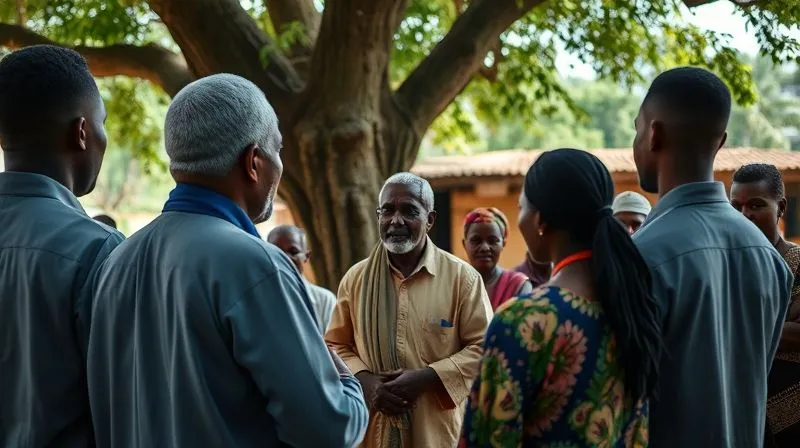
Measuring Long-Term Impact Beyond Volunteer Presence
To truly understand if you're fostering sustainable systems, you need to measure the right things. It's not just about the number of people trained, but whether those people are actively using their skills and leading new initiatives.
| Metric | Dependency Focus | Sustainability Focus |
|---|---|---|
| Local Leadership Index | Volunteer-led decisions, external project management | Community-led initiatives, local decision-making bodies |
| Skill Utilization Rate | Skills used only when volunteers are present | Skills actively applied in ongoing local projects |
| Funding Diversification | Reliance on external grants/volunteer funding | Local fundraising, government support, social enterprise models |
| Institutional Strength | Weak local governance, ad-hoc groups | Strong local NGOs, formalized community committees |
| Community Resilience Score | Vulnerable to external shocks, slow recovery | Ability to adapt, innovate, and recover independently |
As documented by the United Nations Development Programme (UNDP), effective development hinges on building robust national and local capacities that can drive their own progress, moving beyond temporary aid.
Principle 5: Ethical Communication and Realistic Expectations
Communication is a powerful tool, and in the context of skilled volunteering, it can either build or break trust and foster or prevent dependency. It's crucial to be transparent, honest, and realistic with all stakeholders – the community, local partners, and even your own sending organization.
I've seen projects falter because volunteers made implicit promises they couldn't keep, or because local communities misunderstood the temporary nature of the support. Managing expectations from the outset is a non-negotiable step in how can skilled volunteers avoid creating local dependency.
- Be Clear About Timelines: Explicitly state the duration of your involvement and the project's expected trajectory post-departure.
- Define Roles and Responsibilities: Clearly outline who is responsible for what, emphasizing the local community's evolving leadership role.
- Avoid the 'Savior' Narrative: Frame your involvement as a partnership, a collaboration, not as a rescue mission. Emphasize mutual learning and respect.
- Communicate Challenges Openly: If the project faces difficulties, discuss them honestly with local partners. Work together to find solutions.
- Set Realistic Goals: Avoid over-promising. Focus on achievable, measurable outcomes that contribute to long-term sustainability.
Avoiding the 'Hero Volunteer' Narrative
The media often portrays volunteers as heroes, flying in to save the day. While well-intentioned, this narrative can be incredibly damaging. It perpetuates the idea that local communities are helpless and reinforces a power imbalance. Skilled volunteers should actively work against this narrative, highlighting the agency, strength, and resilience of the communities they work with.
Principle 6: Continuous Learning, Adaptation, and Feedback Loops
No project plan is perfect, and community contexts are dynamic. The most effective skilled volunteers I've worked with are those who embrace continuous learning, are flexible, and actively seek feedback. Rigidity in project implementation can quickly lead to irrelevance or, worse, unintended negative consequences.
Establishing robust feedback loops ensures that the project remains aligned with local needs and can adapt to changing circumstances. This iterative approach is vital for ensuring that your efforts truly contribute to sustainable development.
- Regular Check-ins: Schedule frequent, informal check-ins with local counterparts and community members to gauge progress and identify challenges.
- Formal Review Meetings: Conduct periodic formal review meetings with all stakeholders to assess project milestones against agreed-upon goals.
- Anonymous Feedback Mechanisms: Implement anonymous suggestion boxes or surveys to allow community members to provide honest feedback without fear.
- Reflect and Adjust: Be prepared to modify your approach, timeline, or even project goals based on the feedback received. Flexibility is a strength, not a weakness.
- Document Lessons Learned: Keep a detailed record of what worked, what didn't, and why. Share these insights with future volunteers and local partners.

The concept of Adaptive Management in Development, as explored by organizations like the Overseas Development Institute (ODI), underscores the necessity of iterative planning and implementation in complex environments to achieve lasting impact.
Principle 7: Collaborative Partnerships with Local NGOs and Experts
You don't have to go it alone. In fact, you shouldn't. Partnering with established local Non-Governmental Organizations (NGOs), community-based organizations (CBOs), or local experts is one of the most effective ways to ensure your work is culturally appropriate, impactful, and sustainable. These organizations possess invaluable institutional knowledge, local networks, and a long-term commitment to the community.
When skilled volunteers collaborate with local entities, they leverage existing infrastructure and expertise, amplifying their impact and ensuring continuity. This also helps in how can skilled volunteers avoid creating local dependency by integrating into existing, rather than creating new, structures.
Leveraging Local Expertise for Greater Reach
Local NGOs often have years of experience navigating the specific challenges of a region. They understand the political landscape, cultural nuances, and the most effective communication channels. By working alongside them, you gain access to this invaluable knowledge and ensure your project is built on a foundation of local wisdom.
Furthermore, these partnerships provide a natural handover mechanism. When your volunteer term ends, the local NGO can seamlessly continue the work, often with enhanced capacity thanks to your skill transfer. This is a powerful model for sustainable development.

The USAID's focus on Local Capacity Building strongly advocates for empowering local partners as the primary drivers of sustainable development, recognizing their intrinsic value and long-term commitment.
Frequently Asked Questions (FAQ)
Q: How do I know if I'm accidentally creating dependency? A: Look for signs like increased reliance on your decision-making, a decline in local initiative, or a lack of local follow-through on tasks you've delegated. If critical project functions cease or falter significantly after your departure, it's a strong indicator. Regular, honest feedback from local partners is crucial for self-assessment.
Q: What if the local community explicitly asks for direct service rather than capacity building? A: This is a common and complex situation. While immediate needs are pressing, it's vital to gently guide the conversation towards sustainable solutions. Explain the long-term benefits of skill transfer and empowerment. Offer to address immediate needs while simultaneously initiating capacity-building efforts. Frame it as 'teaching to fish' while providing some fish for now. Transparency about your role and the temporary nature of your support is key.
Q: How can I effectively measure the impact of my capacity-building efforts? A: Beyond quantitative metrics like the number of people trained, focus on qualitative and behavioral changes. Are trained individuals actively applying their skills? Are they training others? Has local leadership emerged or strengthened? Are local institutions more robust? Use pre- and post-assessments, observe behavior, conduct interviews, and track the initiation of new, locally-led projects. The table in Principle 4 offers good starting points for metrics.
Q: What role do volunteer sending agencies play in preventing dependency? A: Sending agencies have a critical responsibility. They should rigorously vet projects for genuine local ownership and sustainability plans, provide comprehensive pre-departure training on ethical volunteering and dependency avoidance, and offer ongoing support and mentorship to volunteers. They also need to ensure realistic expectations are set for both volunteers and host communities.
Q: Is it always possible to completely avoid creating any form of dependency? A: While complete avoidance might be an idealistic goal in every single scenario, particularly in acute humanitarian crises, the objective in development-focused skilled volunteering is to minimize it and proactively build mechanisms for self-sufficiency. The principles outlined here are designed to mitigate dependency to the greatest extent possible, fostering resilience and empowering communities to thrive independently. It's a continuous journey of learning and adaptation.
Key Takeaways and Final Thoughts
The journey of a skilled volunteer is one of immense potential, but it's also fraught with ethical complexities. By consciously adopting a mindset of empowerment, collaboration, and long-term sustainability, we can ensure our contributions genuinely uplift communities rather than inadvertently fostering dependency. To recap, remember these seven critical principles:
- Prioritize Local Ownership: Let communities lead their own development.
- Focus on Capacity Building: Teach, mentor, and empower, don't just do.
- Implement Robust Exit Strategies: Plan for your departure from day one.
- Foster Sustainable Systems: Build local institutions and leadership.
- Communicate Ethically: Be transparent and manage expectations realistically.
- Embrace Continuous Learning: Be adaptable and responsive to feedback.
- Collaborate with Local Experts: Partner with existing NGOs and community leaders.
Your expertise is a valuable gift, but its true power lies in how it enables others to discover and harness their own. By committing to these principles, you're not just offering a service; you're investing in a future where communities stand strong, self-reliant, and truly empowered. Let your legacy be one of sustainable change, where your presence sparks enduring local solutions. How can skilled volunteers avoid creating local dependency? By becoming catalysts for self-reliance.
Recommended Reading
- Unlock the Magic: Discover Kid-Friendly Destinations That Offer Educational Fun
- Your Ultimate Guide: How to Navigate City Public Transport Easily
- How Can Historical Reenactments Boost Employee Engagement? 7 Proven Paths
- Unlocking Safe Routes: Your Ultimate Guide to Assessing Avalanche Terrain for Backcountry Skiing
- Unveiling the Hidden Health Effects of Private Space Travel: Are You Ready?





Your email address will not be published. Required fields are marked *