


How to Manage Client Panic During Unexpected Glacier Whiteout?
For over two decades navigating the world's most challenging alpine environments, I've faced my share of unexpected turns. One particular experience, high on a remote Patagonian glacier, saw a sudden, impenetrable whiteout descend upon our group. The immediate shift from clear, expansive views to a suffocating, featureless void was palpable, and I felt the tremor of fear ripple through my clients.
The problem with a glacier whiteout isn't just the loss of visibility; it's the profound sensory deprivation that strips away all familiar cues – horizon, depth, direction. This disorienting void can quickly trigger a primal fight-or-flight response, escalating into full-blown panic among even the most seasoned adventurers. For a guide, this moment is a crucible, testing not just navigation skills, but leadership, empathy, and the ability to maintain calm under extreme pressure.
This article will equip you with actionable frameworks, communication strategies, and psychological tools, drawn from years of firsthand experience and industry best practices. We'll delve into the critical steps required to manage client panic during unexpected glacier whiteout, transforming a potentially catastrophic situation into a managed challenge. My goal is to empower you to not just survive, but to lead with confidence and competence when the world turns white.
Understanding the Psychology of Panic in Extreme Environments
Before we can effectively manage client panic, we must first understand its roots. Panic is not a weakness; it's a hardwired survival mechanism, albeit one that can become counterproductive in complex situations. In the featureless expanse of a glacier whiteout, the brain is starved of sensory input, leading to profound disorientation and a heightened sense of vulnerability.
The Fight, Flight, or Freeze Response
When faced with a perceived threat, our sympathetic nervous system kicks into gear. Hormones like adrenaline surge, leading to increased heart rate, rapid breathing, and tunnel vision. Clients might become agitated (fight), attempt to flee (flight), or become completely unresponsive (freeze). Each response poses unique challenges for a guide.
Panic is a natural, albeit overwhelming, human response to perceived life-threatening situations. In a whiteout, the brain struggles to process sensory input, leading to a profound sense of disorientation and vulnerability. Your role isn't to eliminate fear, but to manage its destructive potential.
Understanding these physiological and psychological shifts is the first step. Your clients are not being irrational; their bodies are reacting to an extreme stressor. Your response must be informed by this understanding, focusing on re-establishing a sense of control and safety.
- Loss of Visual Cues: The primary trigger for disorientation and fear.
- Isolation: Feeling cut off from the known world, amplifying vulnerability.
- Uncertainty: Not knowing the way forward or what dangers lie ahead.
- Physical Discomfort: Cold, wind, fatigue can exacerbate psychological stress.
- Past Trauma: Previous negative experiences can be re-triggered.
Pre-Trip Preparations: Building Trust Before the Storm Hits
The most effective way to manage client panic during an unexpected glacier whiteout begins long before you even set foot on the ice. Building a foundation of trust and competence is paramount. Clients who trust their guide's abilities are far more likely to remain calm and follow instructions when crisis strikes.
Clear Communication of Risks and Contingencies
Transparency is key. During the pre-trip briefing, I always make it a point to discuss potential hazards, including whiteout conditions. I explain what a whiteout entails, how we would respond, and the specific roles everyone would play. This isn't meant to scare them, but to empower them with knowledge and demonstrate my preparedness.
Gear and Training for Guides: Your Foundation of Confidence
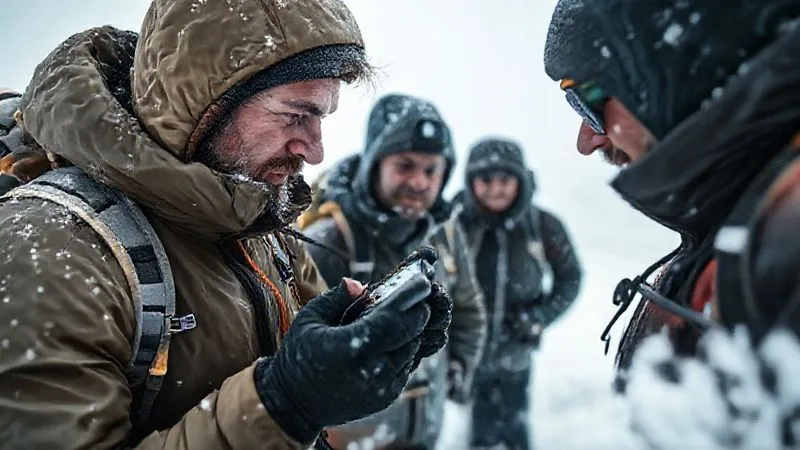
Your competence is your greatest asset. Meticulous gear checks, redundant navigation tools (GPS, compass, altimeter, satellite communication), and a well-stocked emergency kit are non-negotiable. More importantly, your own training in navigation, first aid, and crisis management must be current and robust. This internal confidence radiates outward, reassuring your clients even in silence.
A well-briefed client is a more resilient client. Transparency about potential hazards, coupled with visible competence, lays the groundwork for trust long before any emergency arises. As the UIAA Safety Commission emphasizes, risk education is a cornerstone of responsible alpine guiding.
Demonstrating a calm, organized approach from the outset instills faith. Clients observe your actions, your preparation, and your demeanor. This continuous assessment builds an invisible shield of trust that will prove invaluable when the unexpected happens.

Immediate Response: First Actions When the Whiteout Strikes
The moment a whiteout descends, your immediate actions are critical. Hesitation can amplify client fear, while decisive, controlled movements can stabilize the situation. This is where your training kicks in, overriding the natural urge to panic yourself.
Halt, Assess, and Communicate: The "Stop" Protocol
My first command is always "STOP!" This immediately halts forward motion, preventing further disorientation or accidental falls into crevasses. Once stopped, I quickly assess the situation: How sudden was the whiteout? What's the terrain like? How are my clients reacting? Then, I communicate briefly and clearly.
Establishing Physical Contact and Security
In a whiteout, the loss of visual reference can make people feel incredibly alone. I instruct clients to huddle close, often forming a tight group, perhaps with ropes connecting us. This physical connection provides a tangible sense of security and prevents anyone from inadvertently wandering off. It's a simple act that profoundly reduces feelings of isolation and vulnerability.
- Halt Immediately: Stop all movement to prevent further disorientation or accidents.
- Secure the Group: Ensure everyone is roped up and/or in close physical contact.
- Orient Yourself: Take a quick GPS fix or compass bearing if possible, even if it's just a general direction.
- Initial Communication: "We're in a whiteout. Stay calm, stay close. I know what to do."
- Visibility Check: Determine if you can see anything at all (e.g., your feet, the person next to you).
- Assess Client Reactions: Observe body language, listen for signs of panic.
Mastering Communication in Zero Visibility: Your Most Potent Tool
When the world goes white, your voice becomes the lighthouse. Effective communication is not just about conveying information; it's about projecting confidence, empathy, and control. It's the most powerful tool you have to manage client panic during unexpected glacier whiteout.
The Power of a Calm, Authoritative Voice
Your tone of voice is more important than the words themselves. A calm, steady, and authoritative voice reassures clients that you are in control, even if they can't see anything. Avoid shouting or showing any signs of your own anxiety. Speak clearly, deliberately, and with conviction.
Simple, Direct Instructions: Avoiding Overload
In a state of panic, complex instructions are impossible to process. Keep your commands simple, direct, and actionable. "Take a step forward," "Hold my hand," "Clip into the rope here." Break down tasks into the smallest possible steps. Repeat if necessary, and ensure understanding.
Active Listening and Acknowledging Fear
While you need to be in charge, it's crucial to acknowledge your clients' fears. "I understand this is scary," or "It's okay to feel anxious." This validates their emotions and builds trust, preventing their fear from escalating into full-blown panic. Ask simple questions like, "Are you feeling okay?" or "Can you hear me clearly?" to maintain engagement.
| Communication Strategy | Benefit in Whiteout | Guide Action |
|---|---|---|
| Calm Tone | Reduces client anxiety, projects control | Lower voice pitch, speak slowly, deep breaths |
| Clear Instructions | Minimizes confusion, promotes action | Use short sentences, specific verbs, confirm understanding |
| Empathy & Validation | Builds trust, defuses emotional outbursts | Acknowledge fear, 'It's okay to be scared, we'll get through this' |
| Future-Oriented Language | Instills hope, focuses on solution | Talk about next steps, 'Our next goal is...', 'We will reach...' |
| Limit Information Overload | Prevents further panic, maintains focus | Share only essential, actionable information |
According to research published by the American Psychological Association, clear, empathetic communication is a cornerstone of managing stress and anxiety in high-pressure situations. Your ability to maintain this connection is paramount.
Tactical Navigation and Shelter: Practical Steps to Safety
Once communication is established and initial panic is managed, your focus shifts to practical steps for safety and potential egress. This requires a blend of technical skill and decisive leadership, even when your own senses are struggling.
Utilizing GPS, Altimeters, and Wands
Your navigation tools become your eyes. A pre-loaded GPS with your route, along with a backup, is essential. An altimeter helps confirm your position on a slope. In extreme whiteouts, I often deploy wands or flags to mark a short, safe path forward, moving slowly and deliberately. If movement is impossible or unsafe, the priority shifts to shelter.
Emergency Shelter Construction: A Psychological Anchor
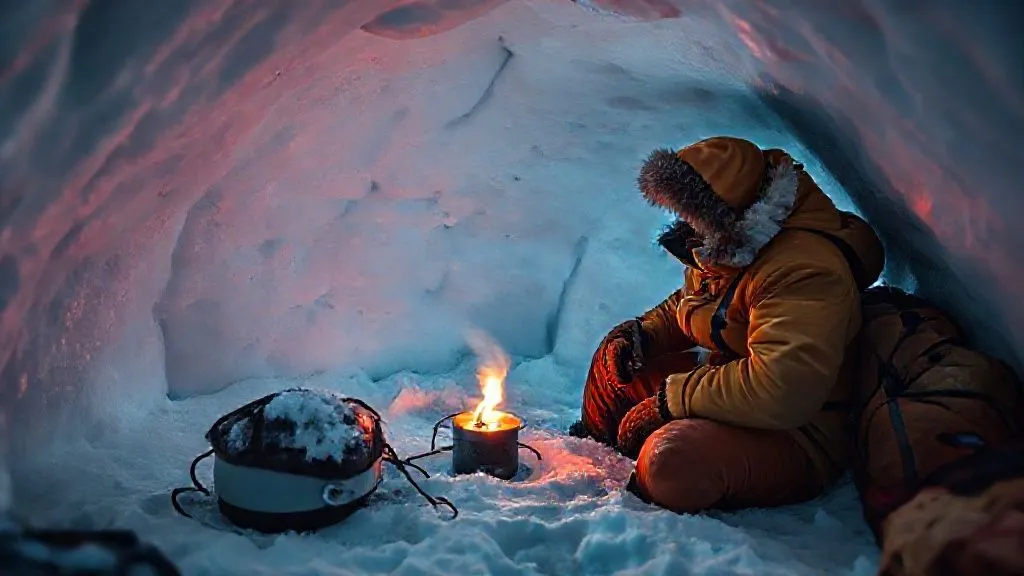
Sometimes, the safest option is to hunker down. Digging a snow trench, a snow cave, or deploying an emergency bivy sack provides physical shelter from the elements and, crucially, a psychological anchor. It gives clients a tangible sense of safety and a focus point, reducing the overwhelming feeling of being exposed and lost. The act of building it can also provide a distracting task.
Case Study: Navigating the Piz Palü Plateau
A few years ago, guiding a group across the Piz Palü plateau in the Bernina Alps, an unexpected storm front brought zero visibility. One client, new to alpine travel, started hyperventilating. I immediately halted, secured the rope team, and established verbal contact. Instead of pushing on, which felt instinctively wrong, I made the call to dig an emergency snow shelter. We spent the next two hours constructing a surprisingly comfortable cave. The physical task, combined with my calm instructions, gave the client a sense of purpose and control. By the time the weather cleared, their panic had subsided, replaced by a sense of accomplishment and trust. We then navigated safely off the plateau using GPS waypoints I'd pre-loaded.
Psychological First Aid: Calming Minds Amidst Chaos
Beyond the practical steps, providing psychological first aid is crucial to manage client panic during unexpected glacier whiteout. This involves specific techniques to help clients regulate their emotions and regain a sense of composure. Your ability to project serenity is key.
Distraction Techniques and Sensory Focus
In a whiteout, the mind can race, creating worst-case scenarios. Gently redirecting their focus can be incredibly effective. Ask them to describe the feeling of the snow, the sound of the wind, or to focus on a small, tangible object like their glove. Engaging other senses can help ground them in reality. A simple snack or warm drink can also be a powerful distraction, offering comfort and a sense of normalcy.
Controlled Breathing and Grounding Exercises
Teach them simple breathing exercises. "Breathe in for four counts, hold for four, exhale for six." This activates the parasympathetic nervous system, counteracting the panic response. Grounding exercises, like pressing their feet firmly into the snow or focusing on the feeling of the rope, can help them reconnect with their physical body and the present moment, rather than being lost in their thoughts.
As Dr. Peter Suedfeld, an expert in human adaptation to extreme environments, notes, 'The human mind abhors a vacuum.' In a whiteout, that vacuum can be filled with terrifying imaginings. Providing concrete tasks and sensory anchors can be incredibly powerful for managing panic, especially when visual cues are absent.
Remember, your presence alone is often a powerful calming force. Your steady gaze, reassuring words, and confident demeanor can be the anchor your clients desperately need in a disorienting world. Be patient, be present, and provide constant, gentle guidance.
Post-Incident Debriefing: Learning and Rebuilding Confidence
The experience doesn't end when you safely descend from the glacier. The aftermath of a whiteout, especially one involving client panic, requires careful handling to ensure long-term well-being and to reinforce trust. This is a crucial, often overlooked, aspect of guiding.
The Importance of a Safe Space for Reflection
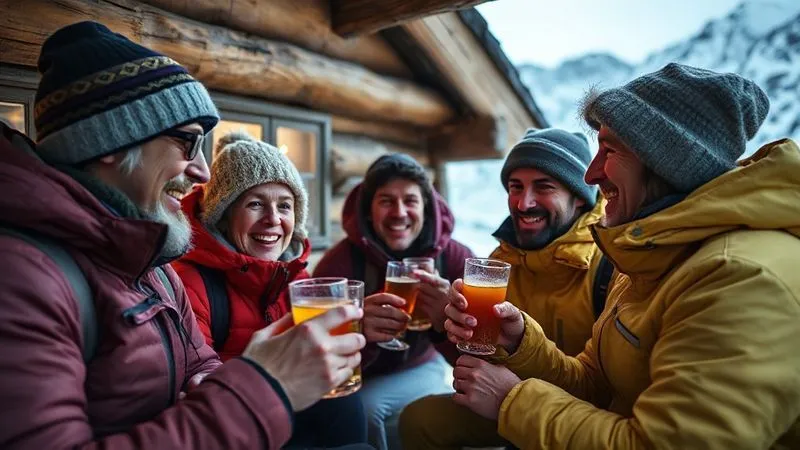
Once you're in a safe environment, create an opportunity for a debrief. This should be a non-judgmental space where clients can share their feelings, fears, and observations without shame. Listen actively, validate their experiences, and acknowledge the difficulty of the situation. This process helps them to mentally process the event and prevent potential long-term anxiety.
Reinforcing Positive Actions and Learning Points
Highlight the positive actions taken, both by you and by them. "You did incredibly well staying calm when I asked," or "Your quick response in huddling together was crucial." This reinforces their resilience and helps them see the experience as one of growth, rather than just trauma. Discuss what was learned and how future preparations might be adjusted.
| Debriefing Stage | Purpose | Key Action |
|---|---|---|
| Immediate Check-in (On-site) | Ensure physical safety, initial emotional release | Warm drinks, dry clothes, quick verbal check |
| Formal Debrief (Post-adventure) | Process experience, identify learnings, reinforce positives | Structured discussion, allow clients to share feelings, guide's feedback |
| Follow-up (Days/Weeks later) | Long-term well-being, reinforce positive memory | Email/call to check-in, offer resources if needed |
A well-handled debrief can solidify the client-guide relationship, turning a terrifying experience into a powerful memory of overcoming adversity together. It’s an opportunity to reinforce your expertise and their trust, ensuring they remain enthusiastic about future alpine adventures.
Effective debriefing is also a critical component of professional growth for guides, as highlighted by resources from organizations like the International Federation of Mountain Guides Associations (IFMGA), which advocates for continuous learning and reflection.
Frequently Asked Questions (FAQ)
How do I distinguish between normal fear and true panic? Normal fear is a heightened state of awareness, where a client might be anxious but can still follow instructions and communicate rationally. True panic involves a loss of rational thought, hyperventilation, refusal to move, or erratic behavior. Look for signs like glazed eyes, inability to respond, or attempts to flee. Your initial communication and observation are key here.
What if a client refuses to follow instructions? This is challenging. First, try to re-establish eye contact (if possible) and speak their name firmly but calmly. Reiterate the direct instruction and the immediate consequence of not following it, e.g., "John, you must hold my hand now for your safety." If they are in a "freeze" state, gentle physical guidance (e.g., placing their hand on the rope) might be necessary, accompanied by reassuring words. In extreme cases, you may need to physically secure them to prevent harm, while continuing verbal reassurance.
How long can one realistically endure a whiteout with clients? This depends entirely on the conditions, client fitness, and available shelter. In severe cold, wind, and exposure, even a few hours can be critical. If you can create a safe, warm shelter (snow cave, bivy), you can endure much longer. The key is to prioritize shelter and warmth if movement is unsafe or inefficient. Always have enough emergency supplies for an unplanned overnight stay.
Should I always tell clients the full extent of the danger? This is a delicate balance. While transparency is important during pre-trip briefings, in the immediate crisis of a whiteout, providing too much detail about potential dangers can escalate panic. Focus on actionable information and reassurance. You are the expert and are handling it. "We are in a whiteout, but we are safe here, and I know exactly what our next steps are." You can debrief more fully once safety is assured.
What are the legal implications if a client is injured during a whiteout due to panic? Legal implications vary by jurisdiction and the specifics of your guiding contract. However, demonstrating that you followed industry best practices, maintained proper safety protocols, provided clear instructions, and attempted to mitigate panic through established psychological first aid techniques will be crucial. Comprehensive liability insurance and clear waivers are essential. Document everything you do, especially during an incident. Consulting with legal counsel specialized in adventure tourism is always advisable.
Key Takeaways and Final Thoughts
Navigating an unexpected glacier whiteout with clients is arguably one of the most demanding challenges an alpine guide can face. It tests not only your technical skills but, more profoundly, your leadership, empathy, and ability to manage human psychology under extreme duress. The capacity to manage client panic during unexpected glacier whiteout is not just a skill; it’s a testament to your professionalism and dedication.
- Preparation is Paramount: Build trust through transparent briefings and visible competence.
- Immediate Action is Decisive: Halt, secure, and communicate with authority and calm.
- Communication is Your Anchor: Use a steady voice, simple instructions, and active listening.
- Prioritize Safety and Shelter: Utilize navigation tools and be prepared to hunker down.
- Offer Psychological First Aid: Employ distraction and grounding techniques to calm minds.
- Debrief Thoughtfully: Foster reflection and reinforce positive actions post-incident.
Remember, your clients look to you for strength and direction. By mastering these strategies, you not only ensure their physical safety but also safeguard their mental well-being, transforming a potentially traumatic experience into a powerful testament to resilience and the extraordinary bond between a guide and their adventurers. Stay vigilant, stay prepared, and continue to lead with wisdom and heart in the magnificent, unpredictable world of alpine exploration.
Recommended Reading
- Unlock Free Adventures: Your Ultimate Guide to Discovering Local Events on a Budget
- Designing Profitable Light Festival Tours for Luxury Clients: My 6-Step Blueprint
- 7 Pro Strategies: How to Minimize Hidden Charges on Luxury Cruises
- 5 Steps: Design Durable, Highly Stylish Festival Fashion That Lasts
- 5 Steps: How to Identify Ethical Volunteer Programs for Professionals?

Your email address will not be published. Required fields are marked *