


How to navigate city public transport without wasting time?
For over two decades, I've crisscrossed the globe, from the sprawling metros of Tokyo to the intricate tram networks of Lisbon. In my extensive travels, I've observed a common frustration among visitors and even locals: the perplexing challenge of efficiently navigating city public transport. It's a universal experience to feel overwhelmed by foreign maps, endless queues, and the gnawing fear of missing a crucial connection.
This isn't just about getting from point A to point B; it's about reclaiming precious travel time. Wasted minutes fumbling for tickets or deciphering confusing schedules can quickly add up, stealing away moments you could be spending exploring a hidden alleyway, savoring a local coffee, or simply relaxing. It's a drain on your energy and can significantly diminish the joy of a city break.
That's precisely why I've distilled my years of experience into this definitive guide. I'm going to share actionable strategies, drawing on insights from urban planning and real-world travel, to transform your public transport experience. You'll learn frameworks and expert tips that ensure you navigate city public transport without wasting time, turning what many see as a chore into a seamless part of your adventure.
1. Master the Digital Toolkit: Your Pocket Navigator
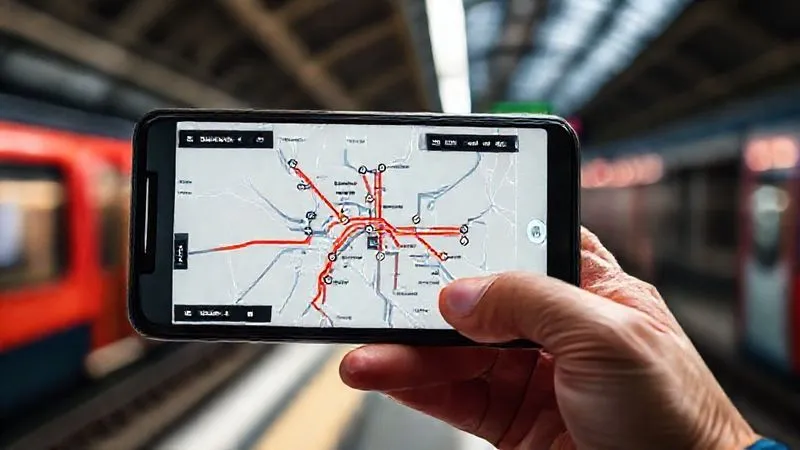
In today's hyper-connected world, your smartphone is your most potent weapon against wasted time on public transport. Gone are the days of solely relying on bulky paper maps or deciphering static timetables. Modern apps offer real-time data, route planning, and even ticketing, making them indispensable.
I always recommend starting with a robust journey planner. Apps like Google Maps, Citymapper, or local transport authority apps are invaluable. They provide not just the fastest routes but also real-time departure and arrival times, platform numbers, and even service disruption alerts. This proactive awareness is crucial for avoiding unexpected delays.
Actionable Steps for Digital Mastery:
- Download Before You Go: Install the primary navigation app for your destination city (e.g., Transport for London app for London, MTA for New York) *before* you arrive. This saves data and ensures you're ready immediately.
- Offline Maps & Schedules: Many apps allow you to download maps and even specific route schedules for offline use. This is a lifesaver if you lose signal or want to conserve data.
- Familiarize Yourself: Spend 10-15 minutes playing with the app before your first journey. Understand how to search for destinations, view alternative routes, and check for real-time updates.
According to a study by Deloitte on the Future of Mobility, integrated digital platforms are key to enhancing user experience and efficiency in urban transport systems. Embracing these tools isn't just convenient; it's a strategic move.
2. Smart Ticketing: Bypass the Queues
Nothing wastes time quite like standing in a long queue for a ticket when your train or bus is about to depart. Modern cities offer a multitude of cashless and contactless ticketing options designed for speed and convenience. Understanding these options is paramount to efficient travel.
In my experience, the single biggest time-saver here is investing in a rechargeable smart card or utilizing contactless payment methods. Systems like London's Oyster card, New York's OMNY, or Japan's Suica/Pasmo cards allow for quick tap-and-go entry and exit, eliminating the need for single-use tickets. Many cities now also accept direct payment via credit/debit card or mobile wallet (Apple Pay, Google Pay) directly on readers.
Case Study: How Sarah, the Digital Nomad, Conquered Berlin's BVG
Sarah, a digital nomad, arrived in Berlin for a two-week stay. Initially, she spent valuable minutes at ticket machines, fumbling with cash and deciphering zone maps, often missing her connecting tram. After two days of frustration, she remembered my advice. She purchased a 'FahrCard' (Berlin's equivalent to a smart card) and loaded it with a weekly pass. The transformation was immediate. She could tap on and off, effortlessly transferring between U-Bahn, S-Bahn, trams, and buses without a second thought, saving an estimated 15-20 minutes per day. This freed up time for her to explore more of Berlin's vibrant neighborhoods and even attend a spontaneous language exchange meet-up.
Expert Insight: Always research the local smart card or contactless options *before* you arrive. It's often cheaper, faster, and much less stressful than buying individual tickets. Some cities even offer tourist-specific passes that combine transport with attraction discounts.
3. Deciphering the Network: Beyond the Tourist Map
A city's public transport network can seem like an impenetrable labyrinth at first glance. However, by understanding its underlying logic, you can navigate with far greater confidence and speed. This involves more than just knowing your start and end points; it's about grasping the system's rhythm and structure.
I often advise travelers to look for patterns. Most major cities have a core hub or a central line that connects key areas. Identifying these arterial routes can provide a mental framework for the entire system. Understanding the difference between express and local services, or peak versus off-peak schedules, can also dramatically impact your travel time. Don't be afraid to study the full network map for a few minutes; it's an investment that pays dividends.
Understanding Service Types:
- Metro/Subway/U-Bahn: Typically fastest for longer distances, less affected by surface traffic.
- Trams/Light Rail: Excellent for mid-range distances, often scenic, but can be impacted by road congestion.
- Buses: Offer the most extensive coverage, great for short distances and specific neighborhoods, but most susceptible to traffic delays.
- Commuter Trains (S-Bahn): Connect city centers to suburbs, useful for day trips outside the immediate urban core.
Pro Tip: Pay attention to the direction of travel, not just the line number. Many lines are circular or have multiple branches, and heading the wrong way, even for one stop, can be a significant time sink. Always double-check the final destination displayed on the train/bus or platform.
| Transport Mode | Pros | Cons | Ideal Use |
|---|---|---|---|
| Metro/Subway | Fast, high capacity, traffic-immune | Limited stops, often underground | Long distances, city-wide travel |
| Tram/Light Rail | Surface views, frequent, eco-friendly | Traffic-dependent, limited network | Mid-range, specific corridors |
| Bus | Extensive coverage, flexible routes | Slow, traffic-prone, frequent stops | Short distances, neighborhood access |
4. Leveraging Real-Time Information: Your Dynamic Edge
Even with the best planning, unforeseen circumstances can arise: a sudden service disruption, an unexpected delay, or a platform change. This is where real-time information truly shines. Relying solely on static schedules in such dynamic environments is a recipe for wasted time and frustration.
Modern transport apps, as mentioned earlier, are your primary source for this. However, don't overlook other channels. Many stations have digital display boards showing live departure times and delay alerts. Social media, particularly the official accounts of local transport authorities, often provide immediate updates on major incidents. I've personally averted numerous delays by quickly checking Twitter for the latest information before heading to a station.
Staying Ahead of Disruptions:
- Activate Notifications: Enable push notifications for your chosen transport app, especially for lines you plan to use heavily.
- Check Digital Displays: Always glance at the electronic boards at stations; they often have the most up-to-the-minute information.
- Follow Social Media: A quick search for the city's transport authority on platforms like X (formerly Twitter) can yield critical real-time alerts.
- Listen to Announcements: In stations and on board, announcements often provide vital information about delays, diversions, or platform changes.
As marketing guru Seth Godin often says, "The market wants to know." In the context of public transport, travelers want to know what's happening *now*. Providing and utilizing real-time data is a fundamental aspect of modern, efficient urban mobility, as highlighted by articles in Forbes on smart city technologies.
5. Strategic Timing: Beat the Crowds and Delays
The flow of a city's public transport system is heavily dictated by its daily rhythm. Understanding and adapting to this rhythm is a powerful strategy to navigate city public transport without wasting time. The concept is simple: avoid peak hours whenever possible.
Peak hours, typically during morning (7-9 AM) and evening (5-7 PM) commutes, mean crowded trains, slower boarding times, and increased chances of minor delays snowballing into significant ones. If your schedule allows, planning your journeys during off-peak times can offer a dramatically different experience – more space, faster travel, and a much more relaxed atmosphere. This not only saves time but also enhances the overall enjoyment of your journey.
Optimizing Your Travel Schedule:
- Early Bird Advantage: If you need to travel during traditional peak hours, aim to depart just before the rush begins (e.g., 6:30 AM).
- Midday Exploration: Plan your major movements and transfers between 10 AM and 4 PM.
- Evening Considerations: If traveling after 7 PM, be aware that service frequency might decrease, but crowds will likely have dispersed.
- Weekend Differences: Weekend schedules often differ from weekdays. Always check the specific timetable for Saturday/Sunday.
6. The Art of the Transfer: Seamless Connections
Transfers are often where significant time can be lost. A poorly planned transfer can mean a long walk between platforms, missing a connection by minutes, or even getting lost in a complex station. Mastering the art of the transfer is crucial for efficient multi-leg journeys.
My advice here is twofold: plan for minimal transfers and understand the transfer points. Use your digital toolkit to identify routes with the fewest changes. If a transfer is unavoidable, zoom in on the station map within your app. Many large stations have multiple levels or separate buildings for different lines. Knowing whether you need to go up, down, or walk a block helps immensely. Look for clear signage within the station – they are designed to guide you, even if in a foreign language.
Streamlining Your Transfers:
- Platform Proximity: When planning, look for routes where connecting lines are on adjacent platforms or within the same station area, minimizing walking.
- Exit Strategy: If you know your exit station, identify the carriage closest to the exit you need. This can save valuable minutes, especially in long trains.
- Observe Local Flow: Watch how locals navigate busy interchange stations. They often have unwritten rules or preferred routes.
Expert Insight: Don't underestimate the power of 'just-in-time' transfers. Real-time apps often tell you if you can make a tight connection. Trust the data, but always have a backup plan for the next available service. This is particularly relevant in cities like London or Paris, where connections can be complex. You can often find detailed station maps on official transport websites, like Transport for London's Tube map, which show interchange points clearly.
7. Etiquette and Awareness: Smooth Operator
While not directly about routes or tickets, understanding and adhering to local public transport etiquette can significantly contribute to a smoother, faster journey for everyone, including yourself. A chaotic boarding process or blocked walkways invariably leads to delays.
I've observed that cultures vary, but some principles are universal. Stand on the right, walk on the left on escalators (or vice-versa, depending on local custom). Allow passengers to alight before attempting to board. Keep your bags close and out of the way. Don't block doors. These seem like minor points, but collective adherence to these unwritten rules ensures a fluid movement of people, preventing bottlenecks and accelerating the entire process. Respecting these norms means you're part of the solution, not the problem.
Cultivating a Seamless Transit Experience:
- Mind the Gap: Always be aware of the space between the platform and the train.
- Priority Seating: Respect designated seating for the elderly, pregnant, or disabled.
- Quiet Zones: Some systems have quiet zones; respect them by keeping conversations and phone calls low.
- Prepare to Board/Alight: Have your smart card ready, and move towards the door a stop or two before your destination.
These simple acts of consideration contribute to an efficient system. A recent article in Lonely Planet on public transport etiquette emphasizes how these small actions collectively improve the experience for all.
8. Emergency Preparedness: Always a Step Ahead
Even the most seasoned traveler encounters unexpected issues. A forgotten wallet, a sudden line closure, or a lost phone can turn a smooth journey into a stressful ordeal. Being prepared for these eventualities is another layer of efficiency that prevents wasted time and unnecessary panic.
I always carry a small emergency kit, both physically and digitally. This includes a backup payment method (a separate credit card or some local currency), a portable phone charger, and a physical copy of my most critical route or a simple city map. Knowing basic phrases in the local language, especially for asking directions or for help, can also be incredibly valuable. These small precautions ensure that even when things go awry, you have the tools to quickly get back on track.
Your Emergency Preparedness Checklist:
- Backup Payment: Always have a secondary payment method, preferably in a different wallet or pocket.
- Portable Charger: A dead phone means no navigation, no real-time updates, and no emergency contact.
- Offline Information: Download maps and essential contact numbers for offline access.
- Local Phrases: Learn 'Excuse me,' 'Which way to...?', 'Help,' and 'Thank you' in the local language.
- Emergency Contacts: Have a physical note with emergency contact numbers and your accommodation details.
Being prepared isn't about expecting the worst; it's about empowering yourself to handle the unexpected gracefully, ensuring minimal disruption to your valuable travel time.
Frequently Asked Questions (FAQ)
Is it better to buy a daily pass or single tickets for navigating city public transport without wasting time? Generally, for tourists planning multiple journeys within a day, a daily or multi-day pass is almost always more time-efficient and often more cost-effective. It eliminates the need to purchase individual tickets for each ride, saving you from queues and fumbling for change. Always compare the pass price to your estimated number of single rides. For very infrequent use (1-2 rides in a day), single tickets might suffice, but for true time-saving, passes are superior.
What if I don't have internet access for real-time apps while on public transport? This is a common concern! Before you leave your accommodation or a Wi-Fi zone, ensure you've downloaded offline maps and route information from your chosen navigation app (e.g., Google Maps allows this). Additionally, keep a physical map of the public transport system and your destination points. Many major stations also offer free Wi-Fi, allowing you to quickly check updates before continuing your journey.
How do I deal with unexpected delays or strikes on public transport? First, check real-time information sources immediately (app notifications, digital displays, social media). If a delay is minor, waiting might be the best option. For major disruptions or strikes, look for alternative routes (your app should suggest these) or consider alternative transport modes like ride-sharing, taxis, or even walking if the distance is manageable. Always have a backup plan in mind and a small buffer in your schedule.
Are there any safety tips for late-night public transport? Yes, safety is paramount. Stick to well-lit, busy stations and platforms. If possible, avoid traveling alone late at night. Always be aware of your surroundings, keep your phone charged, and consider pre-booking a taxi or ride-share if you feel uncomfortable. On trains or buses, choose carriages with other passengers. Trust your instincts; if a situation feels unsafe, remove yourself from it.
How far in advance should I plan my public transport routes for efficient travel? For daily, routine travel within a city, a few minutes before departure using a real-time app is usually sufficient. However, for critical journeys (e.g., to the airport, or for timed reservations), I recommend planning at least a day in advance to understand the route, check for scheduled maintenance, and identify potential alternative options. Always add a buffer of 15-30 minutes for important trips to account for unforeseen minor delays.
Key Takeaways and Final Thoughts
- Embrace Digital Tools: Your smartphone, loaded with local transport apps, is your ultimate guide for real-time planning and navigation.
- Smart Ticketing is Key: Opt for rechargeable smart cards or contactless payments to bypass queues and save precious minutes at every turnstile.
- Understand the Network: Familiarize yourself with the city's transport logic, identifying key routes and service types to make informed choices.
- Leverage Real-Time Data: Stay updated with live alerts from apps and station displays to adapt quickly to any unforeseen disruptions.
- Strategic Timing & Transfers: Avoid peak hours and plan your transfers intelligently to minimize crowding and maximize seamless connections.
- Practice Awareness & Etiquette: Contribute to a smooth system by following local norms, which benefits everyone's travel efficiency.
- Be Prepared: Carry backup payment, a portable charger, and offline information to handle unexpected situations without panic.
Navigating city public transport doesn't have to be a source of stress or wasted time. By adopting these expert strategies, you're not just optimizing your journey; you're reclaiming your precious time, enhancing your travel experience, and truly immersing yourself in the rhythm of the city. Travel smart, explore more, and let the city's pulse carry you efficiently to your next adventure.
Recommended Reading
- 7 Critical Steps to Avoid Fatal Errors on Remote Adventure Trips
- The Ultimate Guide: How to Avoid Scams When Booking Beachfront Villas?
- How Do Ski Resorts Adapt to Declining Snowfall? 7 Innovative Strategies
- 5 Steps: How to Identify Ethical Volunteer Programs for Professionals?
- 7 Proven Steps: How to Prevent Over-Tourism Degrading Natural Wonders





Your email address will not be published. Required fields are marked *