

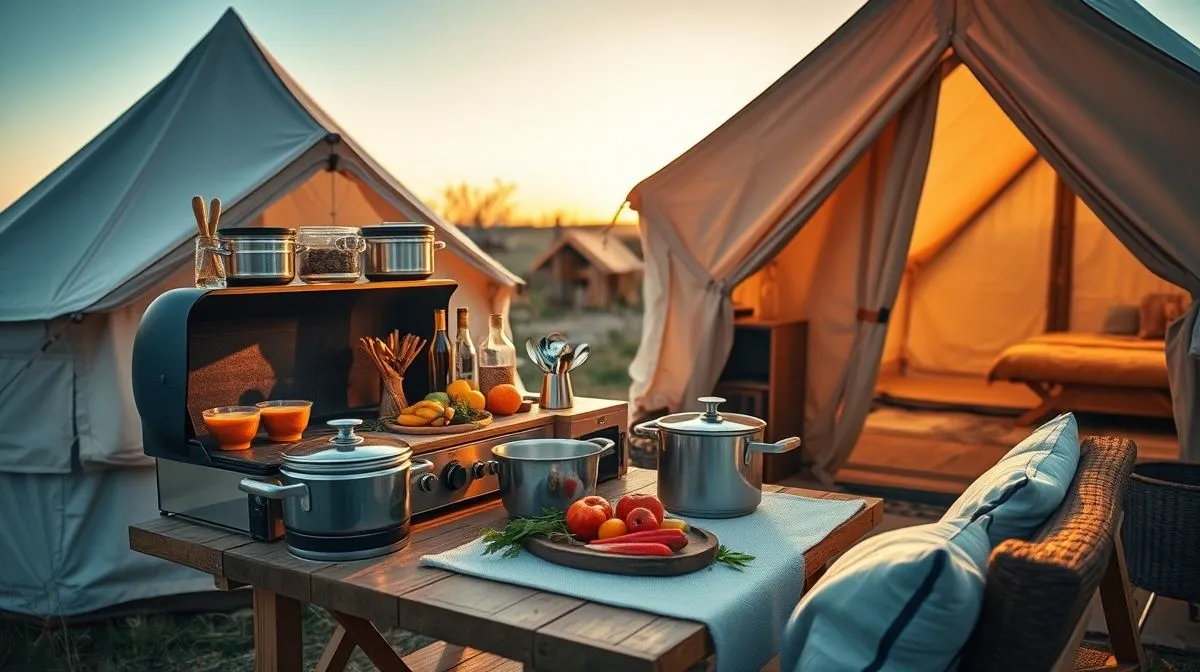
Mastering the Art of Organization: How to Organize a Compact Glamping Outdoor Kitchen
Imagine this: the sun sets over a breathtaking vista, a gentle breeze rustles through the trees, and the aroma of a gourmet meal wafts from your outdoor kitchen. Sounds idyllic, doesn't it? Now, imagine the reality for many: a jumbled mess of pots, pans, and forgotten ingredients, turning a serene glamping experience into a frustrating culinary challenge.
The allure of glamping lies in combining the beauty of nature with the comforts of home, but often, the kitchen is where this dream falters. Limited space, the need for portability, and the desire for delicious, fresh meals present a unique problem. How do you create a functional, efficient, and enjoyable cooking space when every inch counts?
This comprehensive guide will equip you with the knowledge to expertly organize a compact glamping outdoor kitchen, ensuring your culinary adventures are as seamless and satisfying as the breathtaking landscapes surrounding you. From essential gear to ingenious storage hacks, prepare to transform your outdoor cooking experience.
Why a Well-Organized Glamping Kitchen is a Game-Changer
A meticulously organized glamping kitchen isn't just about aesthetics; it's about elevating your entire outdoor experience. It's the difference between a rushed, frustrating meal preparation and a relaxed, enjoyable culinary ritual under the open sky.
Efficiency and Time-Saving
When every item has its place, you spend less time searching and more time cooking and enjoying. This translates to quicker meal prep, less stress, and more precious moments spent exploring or relaxing. An efficient setup means you can whip up anything from a simple breakfast to a multi-course dinner with surprising ease, even in a compact space.
Safety and Hygiene
Clutter breeds accidents. Sharp knives, hot pots, and open flames demand a clear, organized workspace. Furthermore, proper organization facilitates better food handling and cleaning protocols, crucial for preventing foodborne illnesses in an outdoor environment. A clean kitchen is a safe kitchen, especially when dealing with fresh produce and meats.
Enhanced Culinary Experience
A well-ordered kitchen inspires creativity. When ingredients are accessible and tools are at hand, you're more likely to experiment and enjoy the cooking process itself. This transforms outdoor cooking from a chore into a highlight of your glamping trip, allowing you to truly savor every bite.
Essential Gear for Your Compact Glamping Kitchen
The foundation of an organized kitchen begins with smart gear selection. Opt for multi-purpose, durable, and space-saving items. Remember, less is often more, but quality is paramount.
Cooking Appliances
- Portable Stove: A two-burner propane stove is often ideal, offering versatility for various dishes. Look for models with a compact footprint and integrated wind screens.
- Compact Grill: If grilling is a must, consider a small, foldable charcoal or gas grill. Some models double as a fire pit, saving even more space.
- Fuel: Always carry enough fuel for your trip, stored safely away from heat sources.
Utensils and Cookware
- Nesting Pot/Pan Set: These are invaluable, as they fit inside each other, drastically reducing bulk. Opt for lightweight yet durable materials like anodized aluminum or titanium.
- Multi-Tool Utensils: Spatulas that combine with tongs, or sets that clip together, save space. Silicone-tipped utensils are gentle on non-stick surfaces and easy to clean.
- Sharp Knife Set: A chef's knife, paring knife, and a small serrated knife are usually sufficient. Store them safely in a sheath or roll.
- Cutting Board: A collapsible or foldable cutting board is ideal. Some even fit over sinks or coolers to maximize prep space.
Food Storage Solutions
- Collapsible Containers: Silicone food containers collapse flat when empty, saving significant space.
- Airtight Bins: For dry goods like pasta, rice, or coffee, sturdy, airtight containers protect against moisture and pests.
- Cooler: A high-quality cooler with excellent insulation is critical for perishables. Consider models with integrated dividers or baskets for better organization.
Strategic Layout and Workflow Design
The efficiency of how you organize a compact glamping outdoor kitchen hinges on a thoughtful layout. Think about your cooking process and design 'zones' to streamline your workflow, even in a confined area.
The 'Zone' System
Divide your kitchen into distinct zones: prep, cooking, washing, and storage. This minimizes unnecessary movement and keeps your workspace tidy.
- Prep Zone: This area should be clear, with your cutting board, knives, and ingredients within easy reach.
- Cooking Zone: Centered around your stove or grill, with cooking utensils, spices, and oils readily available.
- Washing Zone: A designated area for dirty dishes, usually with two collapsible basins (one for washing, one for rinsing).
- Storage Zone: Where all non-active items are kept, ensuring they are accessible but out of the way.
Vertical Storage Hacks
When horizontal space is limited, go vertical! This is a cornerstone of efficient compact organization.
- Hanging Organizers: Mesh or canvas organizers with multiple pockets can hang from tent poles, vehicle racks, or even tree branches, holding utensils, spices, or small dry goods.
- S-Hooks and Carabiners: Use these to hang pots, pans, mugs, or even dish towels from a tension rod or a dedicated hanging line.
- Magnetic Strips: Affix a strong magnetic strip to a stable surface (like the side of a storage box or a vehicle) to hold knives and other metal utensils securely.
Maximizing Counter Space
Every flat surface is valuable. Be creative in expanding your usable area.
- Foldable Tables: A small, sturdy foldable table can serve as your primary prep surface.
- Cooler Top: A hard-top cooler can double as an additional counter or seating.
- Cutting Board Covers: Some cutting boards are designed to fit over sinks or even stove burners when not in use, creating extra space.
Smart Storage Solutions and Space-Saving Hacks
Beyond the layout, the specific containers and methods you use for packing and storing your gear are vital for effective glamping kitchen organization.
Collapsible and Nesting Items
These are your best friends. From silicone bowls and colanders that fold flat to nesting pot sets, they drastically reduce the volume of your packed kitchen. Consider collapsible water jugs and dish basins too.
Magnetic Strips and Hooks
As mentioned, magnetic strips are perfect for knives and metal utensils, keeping them secure and accessible. Adhesive hooks or suction cups can hold lighter items like oven mitts or small towels on smooth surfaces.
Repurposing Containers
Don't throw away those empty spice jars or plastic peanut butter containers. Cleaned thoroughly, they are excellent for portioning spices, oils, or small amounts of dry ingredients like flour or sugar. Small pill organizers can even be used for tiny spice portions.
The Power of a Dedicated Kitchen Box
Invest in one or two sturdy, stackable storage bins or a dedicated chuck box. This acts as your mobile pantry and kitchen cabinet. Pack it logically, with frequently used items on top. Labeling the bins can save a lot of time and frustration upon arrival.
Food Management: Keeping it Fresh and Compact
Food is at the heart of any kitchen, and managing it efficiently in a compact glamping setup requires foresight and smart packing techniques.
Pre-Prepping and Portioning
Before you leave home, do as much prep work as possible. Chop vegetables, portion meats, mix dry ingredients for pancakes, or even pre-make sauces. Store these in airtight, clearly labeled containers or zip-top bags. This significantly reduces on-site work and waste.
Smart Cooler Packing
Layer your cooler strategically. Place items you'll need first on top. Use block ice or frozen water bottles (which can double as drinking water) for longer-lasting cooling. Keep raw meats separate and at the bottom. For comprehensive food safety guidelines, consult resources like the CDC's Guide to Food Safety.
Dry Goods Decanting
Instead of bringing entire bags or boxes of pasta, rice, or cereal, decant the amount you need into smaller, airtight, labeled containers or heavy-duty zip-top bags. This minimizes bulk and protects food from moisture and pests.
Common Mistakes to Avoid in Your Glamping Kitchen Setup
Even with the best intentions, a few common pitfalls can derail your compact glamping kitchen efforts. Learning from these can save you a lot of hassle.
Overpacking Unnecessary Items
The biggest mistake is bringing too much. Resist the urge to pack every kitchen gadget you own. Stick to multi-purpose items and only what you truly need for your planned meals. A good rule of thumb: if it only serves one very specific purpose, reconsider bringing it.
Ignoring Weather Conditions
Failing to account for rain, wind, or extreme temperatures can ruin your cooking experience. Ensure your setup is protected from the elements, and have backup cooking options if your primary stove isn't windproof. Pack extra tarps or a pop-up shelter if adverse weather is expected.
Neglecting Cleanup Protocols
A compact kitchen gets dirty quickly. Leaving dishes or food scraps out attracts pests and creates unsanitary conditions. Establish a 'clean as you go' mentality. Have a dedicated washing station and follow Leave No Trace principles for waste disposal, packing out all food scraps and greywater.
Advanced Tips for the Glamping Gourmet
For those looking to push their compact glamping outdoor kitchen to the next level, consider these innovative ideas that enhance sustainability and convenience.
Solar Power Integration
Consider a portable solar panel setup to power small appliances like a blender for smoothies, a coffee grinder, or even a small electric cooler. This reduces reliance on propane and offers a sustainable energy source for modern conveniences.
Water Conservation Techniques
Water is often a precious resource in glamping. Use a spray bottle for rinsing dishes to minimize water usage, and collect greywater in a dedicated basin for proper disposal. Look into biodegradable soaps that are safe for outdoor environments. For more on sustainable outdoor practices, resources like the EPA's outdoor environmental topics can provide insights.
Custom DIY Solutions
If you're handy, consider building a custom chuck box or a modular kitchen system that perfectly fits your vehicle or glamping setup. This allows for ultimate customization, ensuring every tool and ingredient has its bespoke place. Simple additions like a roll-up utensil organizer or a custom spice kit can make a huge difference.
Frequently Asked Questions (FAQ)
What's the most crucial item for a compact glamping kitchen? The most crucial item is a reliable, compact two-burner stove. It allows for versatile cooking and is the heart of most outdoor meals.
How do I keep food fresh without a large fridge? Utilize a high-quality cooler with block ice or frozen water bottles. Pre-freeze meals and meats, and consider a portable electric cooler if you have a power source. Prioritize non-perishable and shelf-stable items.
Can I use regular kitchen items for glamping? While some items like a good knife or sturdy cutting board can cross over, it's generally better to use purpose-built camping/glamping gear. These items are designed to be compact, lightweight, durable, and often nest or fold, which regular kitchenware typically isn't.
What are some eco-friendly glamping kitchen tips? Minimize waste by pre-portioning food, use reusable containers, opt for biodegradable soaps, conserve water, and always pack out all your trash, including food scraps and greywater.
How often should I clean my glamping kitchen gear? Clean as you go! Wash dishes and wipe down surfaces immediately after each meal. A thorough cleaning should be done at the end of each trip to ensure longevity and hygiene of your gear.
Recommended Reading
- Unlock Accessible Adventures: Your Ultimate Guide to Disability-Friendly Travel
- Unlock Meaningful Volunteer Travel: A Global Citizen's Guide
- The Ultimate Guide to Keeping Teenagers Entertained on Family Cruises
- The Ultimate Guide: How to Determine If a Frozen Lake is Safe?
- The Secret to Designing Your Dream Bespoke Luxury Glamping Itinerary
Conclusion
Transforming your outdoor culinary space from chaotic to captivating is entirely achievable with thoughtful planning and strategic organization. By embracing the principles of smart gear selection, efficient layout design, and clever storage solutions, you gain the ability to seamlessly organize a compact glamping outdoor kitchen. This isn't just about cooking; it's about enhancing your entire glamping experience, allowing you to create unforgettable meals and memories amidst nature's grandeur. So, pack smart, cook well, and savor every moment of your next outdoor adventure!

Your email address will not be published. Required fields are marked *