


How to plan enriching educational family trips with busy work schedules?
For over 15 years in the family travel niche, I've witnessed a recurring dilemma among passionate parents: the yearning to provide their children with enriching, educational travel experiences often clashes head-on with the relentless demands of a busy professional life. It's a tightrope walk many of us know all too well – wanting to inspire curiosity and global awareness in our kids, but feeling utterly overwhelmed by the logistics and time commitment.
The problem isn't a lack of desire; it's the perceived impossibility of integrating meaningful educational travel into already packed work schedules, school commitments, and everyday life. Parents often feel they have to choose between career progression and providing these invaluable learning opportunities, leading to guilt, missed chances, and the belief that extensive, immersive travel is only for those with unlimited time or resources.
This article isn't about magical solutions, but rather about practical, actionable frameworks that I've seen work for countless busy families. I'll share expert insights, real-world strategies, and step-by-step guidance on how to plan enriching educational family trips, even when your calendar feels like a battlefield. My promise is to equip you with the tools to transform that yearning into tangible, unforgettable learning adventures for your family.
The Core Philosophy: Redefining "Educational Travel" for Busy Families
Before we dive into the 'how,' let's redefine what educational travel truly means, especially for families navigating tight schedules. It's not solely about visiting museums or historical sites, though those are certainly valuable components. For busy families, educational travel is about fostering curiosity, critical thinking, adaptability, and a deeper understanding of the world, often through less conventional means.
Beyond the Classroom: Everyday Learning Opportunities
In my experience, the most profound learning often happens outside traditional educational settings. Educational travel for busy families means seeking out opportunities for hands-on exploration, cultural immersion, and real-world problem-solving. This could be anything from understanding a local ecosystem to learning about a community's history through its food or art.
It's about making every interaction a learning moment, whether it's deciphering a foreign menu, observing local artisans at work, or simply navigating public transport in a new city. The emphasis shifts from passive consumption of information to active engagement and discovery. This experiential learning approach is not only more effective but also more flexible, making it ideal for incorporating into shorter, more frequent trips.
Strategic Planning: Maximizing Impact, Minimizing Time Investment
The cornerstone of successful educational family travel with busy schedules is strategic planning. Time is your most precious commodity, so every planning minute must be efficient and purposeful. This isn't about adding more to your plate, but about optimizing what you already do.
Step 1: Micro-Planning and Themed Getaways
Forget the notion that educational trips must be weeks long and involve multiple continents. For busy families, the power lies in micro-planning and focusing on themed getaways. These are shorter trips, often 3-5 days, centered around a specific educational theme or destination.
- Choose a Specific Theme: Instead of a general 'cultural trip,' pick a narrow focus like 'volcanoes and geology,' 'colonial history,' 'marine biology,' or 'indigenous art.' This immediately streamlines your research.
- Research 2-3 Key Sites: With a theme in mind, identify a handful of high-impact educational sites or experiences that directly relate. Prioritize quality over quantity.
- Book Accommodation Strategically: Opt for lodging that minimizes travel time to your chosen sites. Consider unique stays like farmhouses, eco-lodges, or historical inns that align with your theme for added immersion.
Case Study: The "Dinosaur Dig" Weekend
I recently advised a family, both parents working demanding tech jobs, who desperately wanted to ignite their 7-year-old's passion for dinosaurs. A two-week trip out west was out of the question. Instead, we planned a 3-day "Dinosaur Dig" weekend. They visited a top-tier natural history museum on day one, focusing specifically on its paleontology exhibits. Day two involved a drive to a nearby fossil park, where they participated in a guided 'mock dig' and learned about local geological formations. Pre-trip, they watched age-appropriate documentaries and read books together. The result was a profoundly engaging, educational experience that felt like a grand adventure, all accomplished with minimal time off work. The concentrated focus amplified the learning, proving that quality trumps duration.
| Trip Type | Educational Focus | Time Investment | Logistics |
|---|---|---|---|
| Micro-Trip (3-4 days) | High, specific theme | Low | Simplified, local/regional |
| Extended Trip (7-10 days) | Moderate, broader themes | High | Complex, international/cross-country |
Step 2: Leverage Technology for Seamless Logistics
In today's digital age, technology is your best friend for streamlining travel planning. From booking flights to curating educational content, smart tools can dramatically reduce your planning burden.
- All-in-One Booking Platforms: Use sites like Google Flights, Skyscanner, or Kayak for efficient comparison of flights and accommodations. Set price alerts to snag deals without constant monitoring.
- Educational Apps & Podcasts: Before you go, download apps relevant to your destination's history, culture, or natural environment. Many museums offer excellent virtual tours or audio guides that can be used on-site or as pre-trip learning tools. Podcasts can turn car rides into engaging lessons.
- Shared Family Calendars & Itinerary Planners: Utilize tools like Google Calendar or Trello to share itineraries, booking confirmations, and activity schedules with all family members. This keeps everyone informed and reduces last-minute questions.
According to a study by Google Travel, 60% of family travel planners use multiple devices for research and booking, highlighting the need for streamlined digital tools. Embracing these technologies can cut down hours of manual research and coordination. Think with Google Travel Insights
Integrating Learning: Before, During, and After the Journey
True educational travel isn't a single event; it's a continuous process that extends beyond the destination itself. By integrating learning into the pre-trip, on-site, and post-trip phases, you amplify its impact and create lasting memories.
Pre-Trip Engagement: Building Anticipation and Knowledge
The learning journey begins long before you pack your bags. Pre-trip engagement builds anticipation, provides context, and ensures children arrive at the destination with a foundational understanding, making on-site experiences far more meaningful.
- Curated Reading Lists: Gather age-appropriate books, fiction or non-fiction, related to your destination's history, culture, or natural wonders. Read them together as a family.
- Documentaries and Films: Watch engaging documentaries or even family-friendly movies set in or about your destination. This visual context can be incredibly powerful.
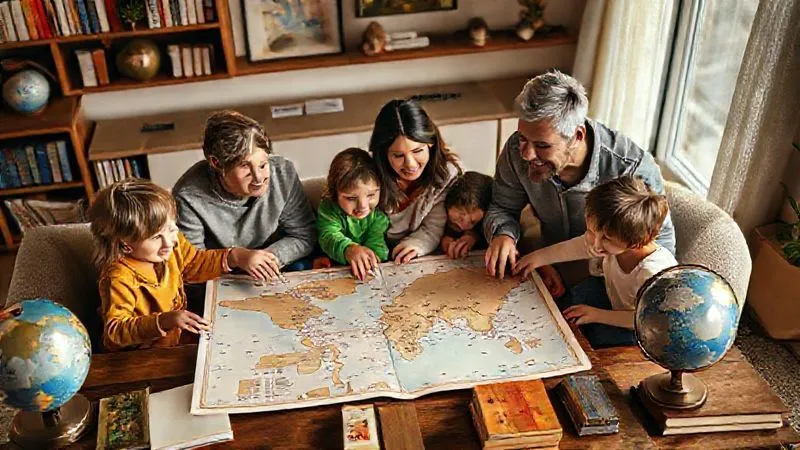
- Map Skills and Geography: Pull out a physical map or globe. Trace your route, identify landmarks, and discuss the geography of the region. This is a fantastic hands-on skill-builder.
On-Site Immersion: Active Participation
Once you're at your destination, the focus shifts to active, experiential learning. This is where children move from passive observation to active participation, making the lessons truly stick.
- Guided Tours and Workshops: Whenever possible, opt for child-friendly guided tours or workshops. Many museums and parks offer programs specifically designed for younger learners.
- Scavenger Hunts and Field Journals: Create simple scavenger hunts for museums or natural parks, encouraging observation. Provide field journals for children to sketch, write observations, or collect small mementos.
- Engage with Locals: Encourage polite interactions with local people. Ordering food, asking for directions (with parental supervision), or simply observing daily life can be incredibly insightful cultural lessons.
"The best education happens not when you're told something, but when you discover it for yourself." This ethos of active discovery is at the heart of truly enriching educational travel.
Post-Trip Reflection: Solidifying Lessons
The learning doesn't end when you return home. The post-trip phase is crucial for solidifying new knowledge, processing experiences, and making connections to broader concepts.
- Memory Books or Scrapbooks: Create a family memory book using photos, ticket stubs, and written reflections. This is a wonderful way to revisit the trip and reinforce learning.
- Presentations or Storytelling: Encourage children to share their favorite parts of the trip with family or friends. They can create a short presentation, draw pictures, or simply tell stories.
- Follow-Up Research: If a particular topic sparked intense interest, follow up with more books, documentaries, or even local experts. Keep the flame of curiosity burning.
Budgeting for Brainpower: Smart Financial Planning
One of the biggest concerns for busy families is the financial aspect of travel. However, educational travel doesn't have to be prohibitively expensive. With smart budgeting and strategic spending, you can create enriching experiences without breaking the bank.
Smart Savings & Spending Strategies
I've helped many families realize that a substantial budget isn't a prerequisite for impactful educational trips. It's about being resourceful and making informed choices.
- Travel Off-Peak: If your schedule allows, traveling during shoulder seasons (spring or fall) or even off-season can drastically reduce costs for flights, accommodation, and even some activities. Fewer crowds also often lead to a more focused learning environment.
- Leverage Memberships: Invest in annual memberships to local museums, zoos, or science centers. Many offer reciprocal benefits, granting you free or discounted entry to similar institutions across the country, turning a local membership into a national travel pass.
- Seek Free Educational Activities: Many cities offer free walking tours, public art installations, historical markers, and beautiful parks or nature trails that are inherently educational. Don't overlook your local library for travel guides and educational resources.
- DIY Educational Packs: Instead of expensive souvenir-shop guides, create your own. Print out maps, historical facts, and activity sheets related to your destination. This is not only cheaper but also more personalized.
| Strategy | Benefit | Impact on Schedule |
|---|---|---|
| Travel Off-Peak | Lower costs, fewer crowds, more focused learning | Requires flexibility, potentially longer lead time |
| Leverage Memberships | Free/discounted entry to museums, parks | Pre-planning membership acquisition |
| DIY Educational Packs | Personalized learning, cost-effective | Requires pre-trip preparation time |
It's also worth noting that many cultural institutions and national parks offer free virtual tours, which can be a fantastic way to "pre-visit" a destination or reinforce learning after a trip, all from the comfort of your home. Smithsonian Magazine frequently highlights such opportunities.
The Art of Delegation & Time Blocking: Making Space in Your Calendar
The biggest hurdle for busy parents is often not the desire or the budget, but the sheer lack of time to plan. This is where strategic time management and, yes, the art of delegation come into play.
Strategic Time Blocking for Planning
I always advise clients to treat travel planning like any other important project: allocate dedicated time slots. You wouldn't tackle a major work report without blocking out time, so why treat your family's educational growth any differently?
- Schedule a "Travel Brainstorm" Evening: Dedicate one evening to a family meeting. Discuss potential themes, destinations, and activities. Involve the children to boost their buy-in and excitement.
- Block 1-2 Hours Weekly for Research/Booking: Instead of sporadic, fragmented efforts, set aside a consistent block of time each week. This could be Saturday morning while the kids are at an activity, or an hour after they're asleep. Focus on one task per block (e.g., flights one week, accommodation the next).
- Delegate Small Tasks to Older Children: Empower older children by giving them age-appropriate research tasks. They can look up interesting facts about a historical figure, find local restaurants, or research public transport options. This not only lightens your load but also boosts their engagement and research skills.
Work-Life Integration, Not Separation
For many professionals, the lines between work and life are increasingly blurred. Instead of fighting this, consider how you can integrate your desire for educational travel into your existing work-life framework. Can you leverage remote work options, flexible hours, or strategically timed long weekends?

Some companies offer 'work from anywhere' policies, allowing you to extend a trip by working remotely for a few days before or after the educational portion. This requires clear communication with your employer and setting firm boundaries for when you are 'on' and 'off' work. As Harvard Business Review often emphasizes, effective time management and communication are crucial for managing demanding schedules and integrating personal pursuits successfully. Harvard Business Review
Overcoming Common Hurdles: Practical Solutions for Busy Parents
Even with the best intentions and strategies, challenges will inevitably arise. As an expert in family travel, I've heard every excuse and concern. Here are solutions to the most common hurdles busy parents face:
"Too Tired to Plan" Syndrome
This is perhaps the most universal complaint. After a long day of work and family responsibilities, the thought of adding travel planning can feel insurmountable.
- Solution: Start Small & Use Templates: Don't aim for perfection. Begin with a short, local trip that requires minimal planning. Reuse successful itineraries or create a simple template for future trips. Delegate tasks, as mentioned, and remember that even 15-minute bursts of planning can add up.
"Kids Aren't Interested" Challenge
Sometimes, despite your best efforts, children might seem unenthusiastic, especially if they associate 'educational' with 'boring.'
- Solution: Involve Them & Make it Interactive: The earlier you involve children in the planning process, the more invested they will be. Let them choose a theme or an activity. Focus on hands-on experiences, interactive exhibits, and opportunities for play. Turn learning into a game or a challenge.
"Budget Constraints" Reality
Even with smart budgeting, financial worries can still be a significant deterrent.
- Solution: Prioritize Experiences & Leverage Free Resources: Focus your budget on core educational experiences rather than luxury accommodations or excessive dining. Explore free walking tours, public parks, libraries, and community events. Consider camping or staying with friends/family to cut costs. Remember, the most valuable lessons don't always come with a price tag.
Measuring Success: Beyond the Postcard
How do you know if your meticulously planned, time-efficient educational family trip was truly enriching? The metrics aren't always tangible, but they are profoundly impactful.
Observational Learning & Dialogue
The most immediate indicator of success is your children's engagement. Are they asking more questions? Are they making connections between what they saw and what they learned in school or read in books? Are they discussing the trip long after it's over? These are all signs of deep, meaningful learning.
- Increased Curiosity: Children who are truly engaged will demonstrate a heightened sense of wonder and a desire to understand more about the world around them.
- Thoughtful Questions: Beyond simple 'what' questions, look for 'why' and 'how' questions, indicating deeper cognitive processing.
- Relating Experiences: When they connect a historical site to a story they read or a natural phenomenon to a science lesson, you know the learning has integrated.
Skill Development & New Perspectives
Educational travel, even short bursts of it, cultivates a host of invaluable life skills and broadens perspectives.
- Practical Skills: Navigating maps, understanding public transport, managing a small budget, or even ordering food in a new language all build practical competence.
- Cultural Empathy: Exposure to different cultures, even within your own country, fosters understanding, tolerance, and empathy.
- Problem-Solving: Unexpected travel hiccups become opportunities for family problem-solving, building resilience and adaptability.
- Global Awareness: Children begin to see themselves as part of a larger world, understanding interconnectedness and diversity.
The success of an educational family trip isn't measured by the number of sites visited or the miles traveled, but by the spark of curiosity ignited, the skills developed, and the lasting impact on your children's understanding of themselves and their place in the world.
Frequently Asked Questions (FAQ)
How do I ensure my kids stay engaged during educational trips? The key is involvement and interactivity. Let them help choose the theme or destination, give them age-appropriate tasks (like map reading or finding specific items), and prioritize hands-on experiences over passive observation. Incorporate games, journals, and opportunities for them to lead. Pre-trip excitement-building with books and documentaries also makes a huge difference.
Is it possible to take educational trips on a very tight budget? Absolutely! Focus on micro-trips to local or regional destinations. Leverage free resources like public parks, libraries, and free museum days. Pack your own food, consider camping or staying with friends/family, and utilize memberships for reciprocal entry. Many cities offer free walking tours and historical markers that provide rich educational content without cost.
How can I minimize the stress of planning these trips with a demanding job? Strategic time blocking is crucial. Dedicate specific, consistent time slots for planning, rather than trying to fit it in haphazardly. Utilize technology for research and booking efficiency. Most importantly, delegate tasks to your partner and older children. Remember, a perfectly planned trip isn't the goal; an enriching experience is. Embrace imperfection and flexibility.
What if my children are different ages with varying interests? This is a common challenge. Try to find a theme that has broad appeal, or plan activities that offer different levels of engagement. For example, at a museum, one child might focus on sketching while another listens to an audio guide. Incorporate elements of choice, allowing each child to pick one activity. Sometimes, splitting up for short periods (one parent with one child, then switching) can also be effective.
Should I take time off work, or can I integrate educational travel into existing breaks? Both approaches have merit, and the best choice depends on your specific work flexibility. For busy schedules, integrating educational travel into existing long weekends, school breaks, or by leveraging remote work options is often more feasible. Micro-trips are excellent for this. Taking dedicated time off is ideal for longer, more immersive journeys, but don't let the inability to do so stop you from planning shorter, impactful trips.
Key Takeaways and Final Thoughts
- Redefine Educational Travel: It's not just museums; it's about fostering curiosity and experiential learning in any context.
- Embrace Micro-Planning: Shorter, themed trips are your best friend for maximizing impact with limited time.
- Leverage Technology: Use apps and online tools to streamline every aspect of planning and learning.
- Integrate Learning: Make education a continuous process – before, during, and after the trip.
- Budget Smartly: Educational doesn't mean expensive; seek out free resources and off-peak travel.
- Master Time Management: Use time blocking and delegation to make space for planning in your busy schedule.
As an industry veteran, I've seen firsthand that the most valuable family memories and profound educational experiences aren't reserved for those with endless leisure. They are forged by intentionality, smart planning, and a commitment to nurturing curiosity. You absolutely can plan enriching educational family trips, even with a busy work schedule. It requires a shift in perspective, a dose of strategic planning, and a willingness to embrace the journey. Start small, stay consistent, and watch your family's world – and your children's minds – expand.
Recommended Reading
- 5 Proven Strategies: Last-Minute Michelin Bookings for VIP Clients
- Jet Lag & Toddlers: 7 Pro Strategies for Overseas Business Trips
- 7 Secrets to Find Private Luxury Sunbathing Beaches for Elite Clients
- Wild Camping Checklist for Beginners UK: Your Essential Guide
- The Ultimate Guide: How to Avoid Museum Fatigue on Your Cultural Trip




Your email address will not be published. Required fields are marked *